

Kitten Teething Pain: How to Stop Them From Chewing Your Fingers
Introduction:
Kitten teething pain is a major reason why your adorable new pet suddenly transforms into a tiny land shark. You sit down to relax but those razor sharp teeth instantly target your moving fingers. This painful biting behavior leaves many new cat owners feeling completely overwhelmed and frustrated. Fortunately, you can easily guide your pet past this difficult developmental milestone with the right strategies.
Understanding this uncomfortable phase helps you protect your hands while supporting your growing animal. Your tiny companion is not biting because they are naturally aggressive or mean. Instead, they are simply trying to soothe their aching gums in the only way they know how. This guide will teach you exactly how to manage this behavior safely and effectively.
Your brand new pet undergoes massive physical changes during their first few months at home. You probably just mastered the basic kitten care guide steps for their first day in your house. Now, you must quickly adapt to their changing physical and behavioral needs. Let us dive into the best ways to handle this chewing phase together.
Understanding Kitten Teething Pain and Biting

Your young cat experiences significant discomfort when their adult teeth begin pushing through sensitive gum tissue. This natural process triggers a powerful urge to gnaw on every single object in sight. Therefore, your moving fingers look like the perfect chew toy to a frustrated animal. You must learn to recognize the clear signs of teething in kittens to help them effectively.
Common kitten teething symptoms include heavy drooling, swollen gums, and a sudden refusal to eat dry food. You might also notice your pet shaking their head frequently or pawing at their mouth. Additionally, teething and chewing behavior in kittens often peaks around four to five months of age. Owners frequently find tiny, shed baby teeth scattered on the floor or near food bowls.
According to the experts at PetMD, this dental discomfort drives the intense desire to chew on firm surfaces. This natural chewing action actually helps the new adult teeth break through the tough gums. However, you should never allow your hands to become the primary target for this behavior. Recognizing these physical changes is your very first step toward creating a peaceful, bite free home.
How to Handle Teething and Chewing Behavior in Kittens

You must establish clear boundaries immediately when your young cat starts targeting your bare skin. First, never use your fingers or toes as toys during active playtime. This common mistake teaches your young pet that biting humans is an acceptable game. Instead, always keep a safe distance between your hands and their sharp teeth.
If your pet bites your hand, make a sudden, low pitched sound to signal your discomfort. Next, immediately remove your hand from their mouth and stop all interaction for a short moment. This teaches your pet that biting results in the instant loss of their favorite playmate. Consistency is absolutely vital because every family member must enforce this exact same rule.
Consider a real life example involving a young cat named Oliver who constantly bit his owner’s ankles. His owner stopped moving completely every single time Oliver targeted her feet. Furthermore, she immediately redirected his energy by tossing a soft crinkle ball across the room. Oliver quickly learned that human skin is not a toy, and his bad habit vanished within two weeks.
Best Remedies for Kitten Teething Pain

You can easily provide your sore pet with safe relief by using targeted kitten teething solutions at home. For example, cold items work wonders for numbing irritated gum tissue and reducing swelling. You can wet a clean, soft washcloth and place it in your freezer for one hour. Afterward, let your pet chew on the cold cloth while supervising them closely to ensure safety.
Additionally, food choices play a massive role in alleviating kitten teething discomfort during mealtime. Hard kibble can sometimes hurt tender gums, which makes eating a very painful chore. You can mix warm water or low sodium broth into their regular food to soften it. Alternatively, offer smooth wet food to ensure they receive proper nutrition without experiencing extra pain.
If your pet is very young, you might still be mastering the essential kitten weaning steps from milk to solid food. Dental discomfort can sometimes disrupt this dietary transition, so you must remain patient and gentle. Offering slightly chilled wet food can solve two problems at once by nourishing them and numbing their gums.
Choosing the Right Teething Toys for Kittens

Providing appropriate chew items is the most effective way to protect your furniture and fingers. The best teething toys for kittens are durable, soft, and completely free of dangerous small parts. Look for toys made from soft rubber or specialized mesh material that cleans teeth safely. These unique textures massage the gums gently while satisfying the natural urge to chew.
You can also find specialized plush toys that you can chill safely in the refrigerator. The cool temperature provides instant kitten teething relief during long, painful chewing sessions. Avoid toys with loose strings, plastic beads, or feathers that your pet could accidentally swallow. Damaged toys should go straight into the trash to prevent dangerous intestinal blockages.
Keep these special toys readily available in every room where your young cat likes to hang out. If they start chewing on your shoes or wires, gently place a toy in their mouth instead. This positive redirection teaches them exactly what objects are safe to chew. Your pet will quickly learn to seek out their own toys whenever their mouth aches.
When Do Kittens Stop Teething Completely?
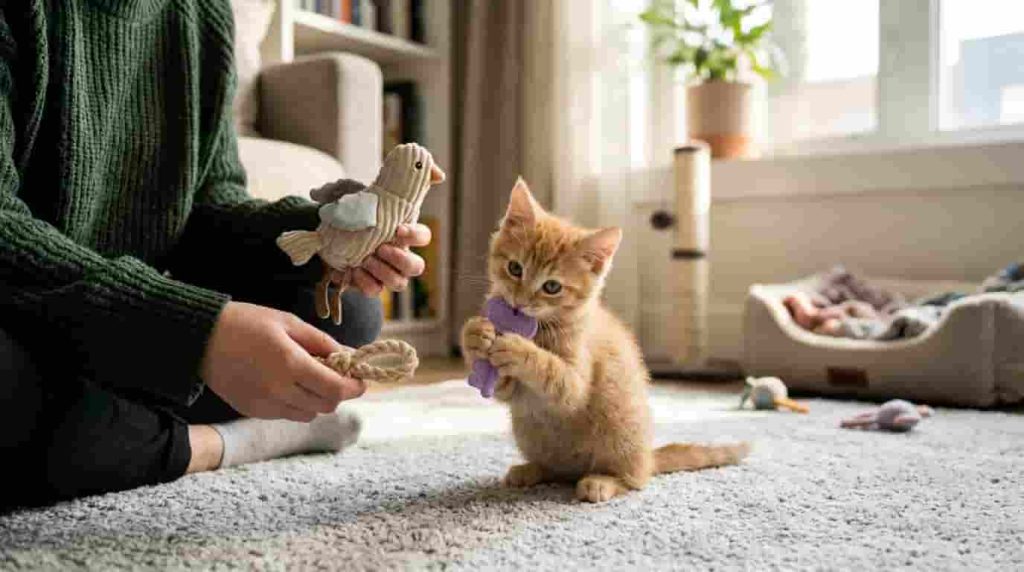
Many exhausted owners constantly wonder when do kittens stop teething and return to normal behavior. The entire teething in kittens process generally concludes by the time they reach six or seven months old. By this age, all thirty two permanent adult teeth should be firmly in place. Consequently, the destructive chewing behavior and random biting should decrease significantly.
You can easily track this progress by checking the kitten teething timeline as they grow. Baby incisors appear around three weeks, followed closely by canine teeth at four weeks of age. The adult teeth begin replacing these sharp baby teeth around three to four months of age. Knowing this schedule helps you plan your training and manage your expectations effectively.
However, you must contact your vet if you notice double teeth in their mouth. This happens when a baby tooth refuses to fall out while the adult tooth grows in. This painful condition requires professional veterinary care to prevent severe alignment issues and infection. Regular dental checks during this milestone ensure your pet grows up completely healthy.
Advanced Training Tips for Young Cats

Managing chewing behavior is just one part of raising a well behaved adult cat. You are likely juggling multiple training goals at once during this busy life stage. For instance, you might currently be researching easy ways to teach kitten potty training habits to your new pet. Combining behavioral training with a consistent daily routine creates a secure environment for your animal.
Always praise your pet generously when they choose to chew on their toys instead of you. Use a warm, happy voice and offer a healthy treat as an immediate reward. Positive reinforcement builds a strong bond of trust and encourages good behavior permanently. Punishment, on the other hand, only frightens your pet and creates unnecessary stress.
Make sure your young cat gets plenty of daily mental and physical exercise. Bored animals often chew on household items or bite owners simply to get attention. Spend at least twenty minutes twice a day playing with interactive wand toys. A tired cat is generally a well behaved cat who sleeps peacefully through the night.
Creating a Safe Home Environment

You must thoroughly kitten proof your living space to protect both your pet and your belongings. Hide all exposed electrical cords inside protective plastic tubes or behind heavy furniture. Teething animals love the chewy texture of wires, which poses a severe risk of electric shock. Additionally, remove all toxic houseplants from areas where your curious pet can reach them.
Keep your personal items like shoes, socks, and headphones safely stored inside closed closets. These everyday objects carry your comforting scent, making them highly attractive to a teething animal. Providing a dedicated space with their own blankets and toys helps them feel secure. A safe environment reduces anxiety and minimizes opportunities for destructive chewing behavior.
When to Consult Your Veterinarian

Most young cats get through this dental phase without experiencing any major medical complications. However, you should monitor their mouth regularly for any signs of severe trouble. Bleeding gums, extreme foul breath, or complete refusal to eat require immediate professional attention. Your veterinarian can examine their mouth safely and prescribe safe options for how to soothe kitten teething pain.
Never give your pet human pain medications like aspirin or ibuprofen under any circumstances. These common household drugs are highly toxic to felines and can cause fatal organ failure. Your vet can provide safe, species specific remedies for kitten teething pain if needed. Trust the professionals at institutions like the Cornell University College of Veterinary Medicine for accurate health advice.
Conclusion
Managing intense kitten teething pain requires plenty of patience, consistency, and the right tools. You can easily protect your fingers by redirecting your pet to safe, chilled chew toys. Remember that this painful biting phase is temporary and will pass within a few months. Consistent training now ensures your young pet grows into a gentle, loving adult companion.
Have you successfully survived the chaotic teething phase with your own young cat? What unique toys or methods did you use to soothe your teething kittens? Please share your best stories and tips in the comment section below to help other owners.
Frequently Asked Questions
How can I safely soothe kitten teething pain at home?
You can offer soft, chilled rubber toys or a frozen damp washcloth to chew on. Additionally, switching them to soft wet food makes eating much more comfortable. Spend extra time playing with wand toys to distract them.
The most intense discomfort generally lasts for about three to four months total. This phase begins around three months of age and finishes completely by month seven. Your pet will feel much better once all adult teeth arrive.
Yes, you can offer small ice cubes or frozen wet treats under close supervision. The cold temperature provides excellent kitten teething relief by numbing their sore gums. Make sure the cubes are small enough to prevent choking hazards.
Your pet is targeting your fingers because the movement triggers their natural hunting instinct. Furthermore, the firm pressure of your skin helps relieve the pressure in their gums. You must redirect this behavior to toys immediately.
Common signs include increased chewing, drooling, clear gum swelling, and occasional mild irritability. You might also notice a slight decrease in their appetite for hard kibble. Some pets may also meow more frequently.