

Kitten Care Guide: The First 24 Hours with Your New Baby
Introduction:
Kitten care guide instructions are absolutely crucial when you first bring a tiny, shivering feline through your front door. You might feel incredibly anxious as your new pet hides silently underneath the living room couch. This common hiding response leaves many fresh owners feeling completely unsure about how to comfort their animal. Fortunately, you can easily create a safe space by managing their environment carefully during this vital transition period.
Your primary goal during the initial day is simply building a secure perimeter that reduces sensory overload. Young animals experience intense fear when you suddenly expose them to large rooms and loud household noises. Therefore, you must isolate them in a single quiet room equipped with basic necessities immediately. This practical approach allows your tiny companion to process their new surroundings without feeling completely overwhelmed.
Preparing your home for this arrival requires specific supplies and a highly structured plan of action. You may already feel familiar with the essential kitten potty training methods for young cats from your early research. However, today is entirely about establishing emotional comfort and physical safety rather than enforcing strict household rules. Let us explore the best ways to navigate these critical first twenty four hours together.
Setting Up a Safe Sanctuary Room

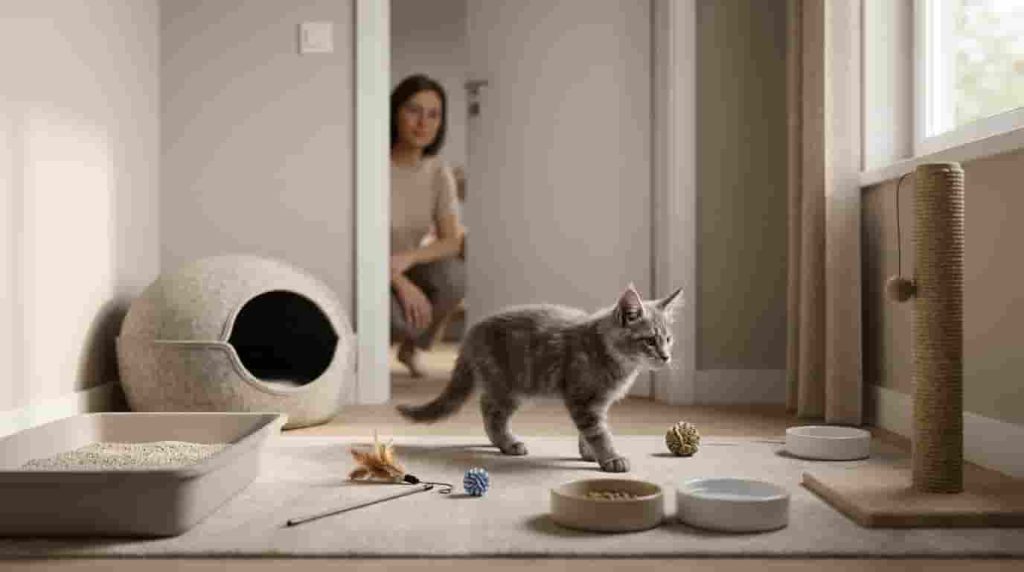
Creating a designated sanctuary space is the foundation of excellent indoor kitten care tips for any home. A small bathroom or spare bedroom works best because you can easily close the door completely. Remove all dangerous electrical wires, heavy unstable objects, and small items that a curious animal might swallow. Additionally, block off tight spaces behind large appliances where a frightened pet could get stuck.
Place a cozy, high sided cat bed lined with soft fleece blankets in a quiet corner. You can also include a worn t shirt that carries your natural scent inside the sleeping area. This simple trick helps the young animal bond with your unique smell while they rest peacefully. Keep the room temperature warm because small felines can drop their body heat very quickly when stressed.
According to veterinary experts at PetMD, extreme environmental changes trigger elevated stress hormones in young felines. This anxiety can cause a temporary loss of appetite or minor digestive issues during the first night. Therefore, you should limit foot traffic and keep household visitors away until your pet feels secure. Minimizing initial noise creates a smooth transition and protects their fragile immune system from unnecessary strain.
Introducing Essential Equipment on Day One
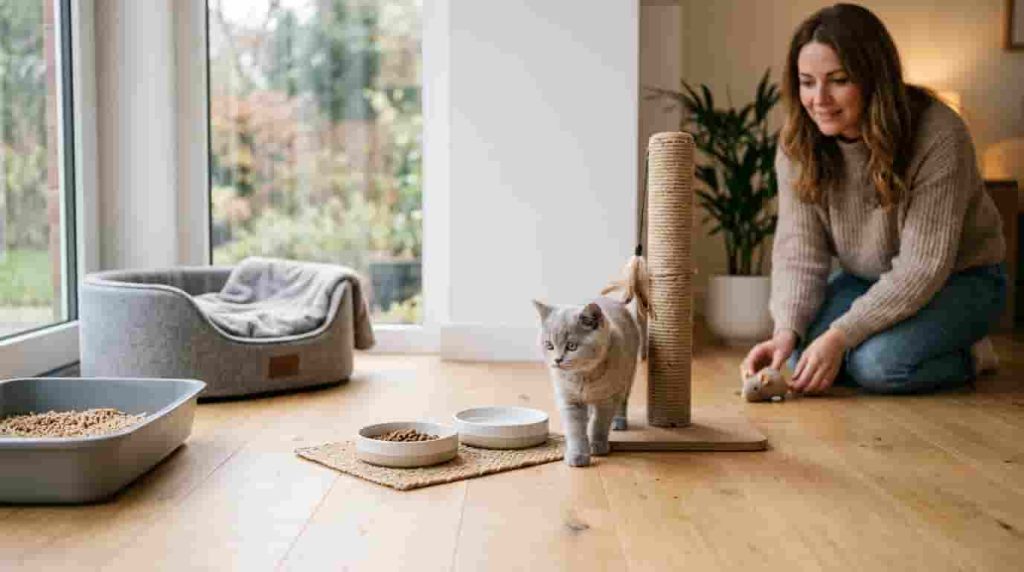
You must arrange their food, water, and waste stations carefully to encourage positive habits from the start. Place the food dishes as far away from the bathroom tray as physically possible within the room. Felines naturally refuse to eat near their elimination areas because they possess a strong instinct for cleanliness. Furthermore, use heavy ceramic bowls that do not tip over when your pet climbs on them.
- Provide a shallow litter tray with low sides so small legs can step inside easily.
- Fill the box with unscented, fine grained clumping material that feels soft on tiny paws.
- Offer fresh, filtered water in a wide bowl to prevent whisker fatigue during drinking.
- Set up a sturdy scratching post to satisfy their natural urge to stretch their claws.
If you are currently managing a very young animal, you might need to review specific kitten weaning steps for transitioning to solid food. Always ask the previous shelter or breeder what exact diet the animal ate before moving to your house. Sudden food changes can cause severe stomach upset, so keep their meals completely consistent during this stressful day.
First Night Meal Tips and Nutrition

Providing the best kitten food ensures your growing pet receives proper nourishment during this rapid developmental stage. Choose premium canned wet formulas that feature real chicken, turkey, or fish as the primary ingredient. Wet food provides excellent hydration, which is incredibly vital for maintaining overall health during stressful moves. Offer small portions every few hours rather than serving one massive meal all at once.
If your pet refuses to eat initially, do not panic or force the food into their mouth. You can warm the wet food slightly in your microwave to enhance its rich, meaty aroma. This warm temperature mimics maternal milk and often encourages a nervous animal to take their first bite. Always sit quietly on the floor near the dish to offer gentle encouragement without crowding them.
Consider a real life example involving a new owner named Sarah who brought home a kitten named Luna. Luna spent her first six hours crying loudly from the back of a dark closet. Sarah placed a warm dish of food near the closet opening and stepped back to give her space. Luna eventually crept out, ate the entire meal, and immediately curled up on Sarah’s lap for a nap.
Understanding Early Kitten Behavior Basics
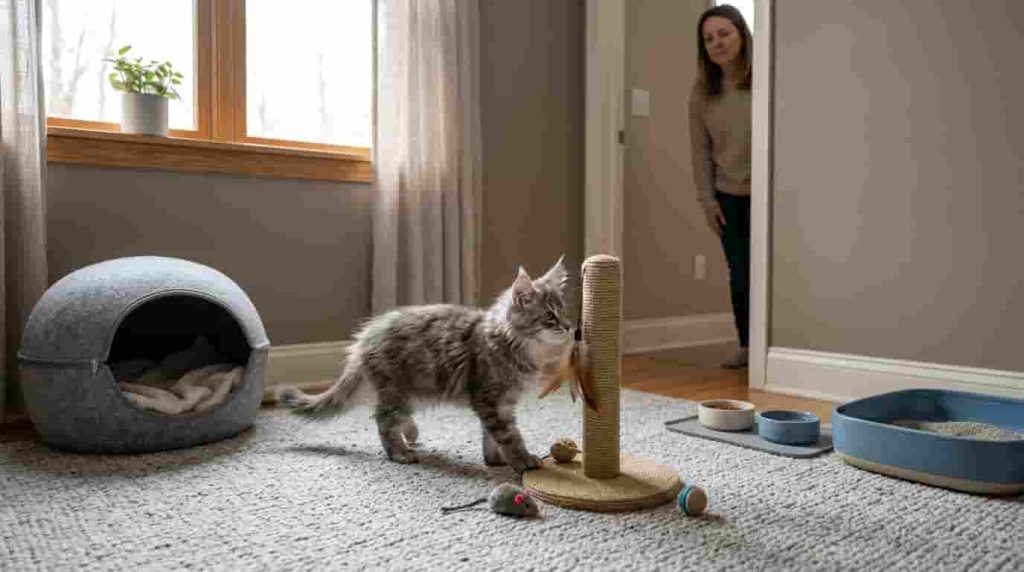
Learning to decode unique kitten behavior basics helps you respond correctly to your pet’s emotional cues. A happy animal displays a upright tail, relaxed ears, and may make soft chirping sounds when you approach. Conversely, a terrified feline will flatten their ears, hiss softly, or crouch tightly into a tiny ball. You must respect these clear boundaries and allow your animal to set the pace for interaction.
Never drag a hiding pet out of their chosen safety spot by force under any circumstances. This aggressive action destroys trust instantly and teaches the young animal to fear your hands permanently. Instead, sit quietly on the floor and speak in a low, soothing voice while reading a book. Your calm presence will eventually coax the curious creature out of their shell naturally over time.
You can expect some vocal crying during the initial night as they miss their mother and littermates. This behavior is completely normal, so try placing a warm hot water bottle under their bedding. The gentle warmth mimics the comforting sensation of sleeping next to their family, which settles them quickly. This thoughtful step prevents midnight loneliness and ensures everyone in your house gets some much needed sleep.
Establishing Long-Term Health Routines
Planning your medical schedule early is an essential part of caring for kittens responsibly over their lifetime. You should contact a local veterinary clinic to book a wellness exam within their first week home. This initial visit allows a doctor to check for internal parasites, ear mites, and general physical wellness. Furthermore, the medical team will create a customized kitten vaccination schedule to protect against contagious diseases.
- Schedule core vaccines like FVRCP starting around six to eight weeks of age.
- Discuss safe flea and tick prevention products that fit their current body weight.
- Ask your veterinarian for specific kitten health tips regarding weight gain and growth.
- Keep a dedicated folder for all medical records and adoption paperwork for easy access.
During these early veterinary conversations, ask your provider for expert kitten grooming advice to keep their coat healthy. Starting gentle handling routines now makes future nail trims and ear cleanings incredibly easy for both of you. Early exposure to grooming tools prevents behavioral resistance as your small pet transforms into a large adult cat.
Navigating Initial Socialization and Play

Safe kitten playtime activities help burn off frantic energy while building a strong bond of trust with you. Use interactive wand toys with dangling feathers to encourage natural hunting behaviors like stalking and pouncing safely. However, never use your bare fingers or toes as moving targets during these high energy games. This common mistake can cause major issues later when your pet experiences painful kitten teething pain and starts chewing everything.
- Keep play sessions short and frequent to match their rapidly changing energy levels.
- Provide soft crinkle balls and plush mice that they can carry safely in their mouth.
- Put away all string toys after use to prevent accidental swallowing or dangerous entanglement.
- Offer praise and a healthy treat immediately after a successful hunting game finishes.
Proper kitten socialization involves introducing your pet to various sights, sounds, and gentle human touches daily. Rub their tiny paws, look inside their ears, and touch their belly gently while they feel relaxed. This positive handling prepares them for future medical exams and ensures they grow into a confident adult. A well socialized animal handles changes easily and remains friendly toward household guests throughout their life.
Introduction to Household Boundaries
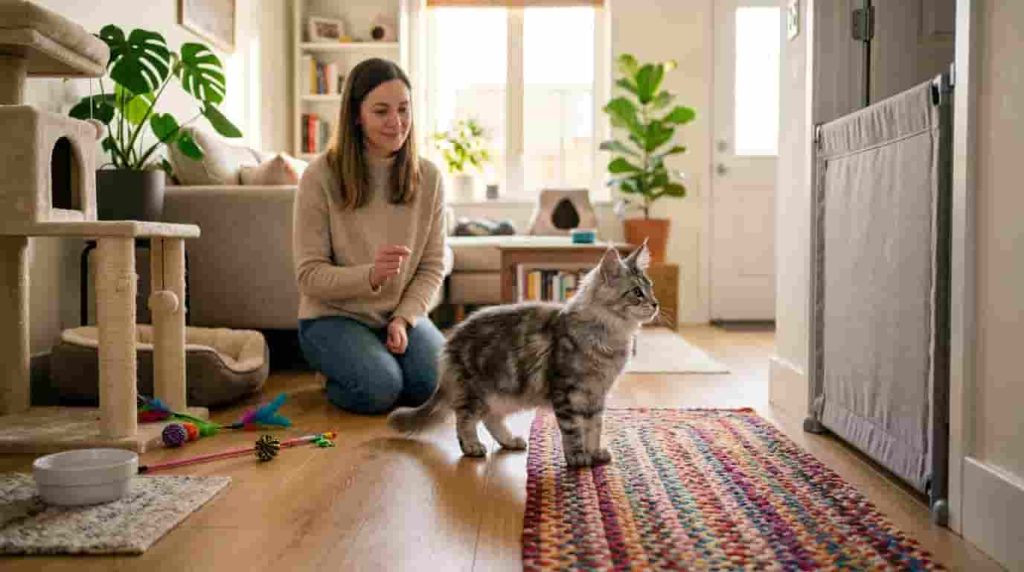
As the first day concludes, you can slowly begin basic kitten behavior training within their secure sanctuary room. Use consistent verbal cues like a soft no when they attempt to climb up dangerous window curtains. Always redirect their attention to an appropriate scratching post or toy immediately after correcting the bad behavior. This clear guidance teaches them the house rules without using any scary physical punishments.
You can also begin early kitten litter box training by placing them in the tray after every nap. Most felines learn this routine within a single day due to their natural survival instincts. Keep the tray meticulously clean by scooping waste out at least twice a day. A clean bathroom area guarantees long term success and keeps your household smelling completely fresh.
Preparing for the Days Ahead
Once the initial twenty four hours pass successfully, you can gradually expand their access to the rest of your home. Open the sanctuary door slightly and let them explore the adjacent hallway completely at their own pace. Keep a close eye on their movements to ensure they do not encounter any hidden household hazards. This slow, methodical expansion builds immense confidence and completes the initial phase of your kitten care journey.
Conclusion
Surviving the first day with a new pet requires a detailed kitten care guide, deep patience, and quiet boundaries. By providing a dedicated sanctuary room, you offer your animal the best chance for emotional and physical success. Remember that building deep trust takes time, so celebrate every tiny milestone your pet achieves this week. Your loving consistency today forms the absolute foundation for a joyful, lifetime friendship with your cat.
What unique methods did you use to comfort your young feline during their very first night home? Did your new baby prefer hiding under the bed or exploring their toys right away? Please share your personal adoption stories and tips in the comment section below to help other new parents!
Frequently Asked Questions
Place a warm hot water bottle wrapped in a towel directly inside their sleeping bed to mimic littermates. Additionally, leave a soft nightlight on and play gentle classical music to soothe their anxiety. This extra comfort helps them drift off to sleep without feeling completely isolated.
The most effective strategy is leaving the animal completely alone in their chosen safe hiding spot. Sit quietly on the floor nearby while speaking softly so they adapt to your normal voice. Never pull them out by force because this creates permanent fear.
You should book a wellness exam within the first three to five days of bringing them home. This visit ensures they receive a proper kitten vaccination schedule and a thorough physical health check. Your vet can also look for common parasites safely.
Offer small portions of premium wet food every three to four hours within their quiet room. Young felines have tiny stomachs that require frequent nourishing meals to maintain steady blood sugar levels. Always remove any leftover canned food after thirty minutes.
Begin by gently touching their paws, ears, and belly with your fingers while they are sleepy. Introduce a soft bristle brush slowly by letting them sniff the tool before smooth strokes occur. This positive handling ensures they accept grooming essentials happily as they grow.