Cat Night Zoomies: Why Your Cat Runs Wild at 3 AM
Introduction
Cat night zoomies are one of the most bewildering things a cat owner ever experiences. You finally drift off to sleep. Then your cat launches into a full sprint down the hallway like the house is on fire.
You are not alone. Millions of cat owners deal with this exact situation every single night. The good news is that cat night zoomies are not random craziness at all. There is a completely logical biological explanation behind every wild midnight lap around your living room.
Understanding why cats behave this way gives you real power to change it. Furthermore, knowing what triggers these late-night bursts helps you stop losing sleep over something that is actually very fixable. This article breaks down the science, the causes, and the specific steps you can take starting tonight.
Cat Night Zoomies: The Real Biological Reason Behind Them
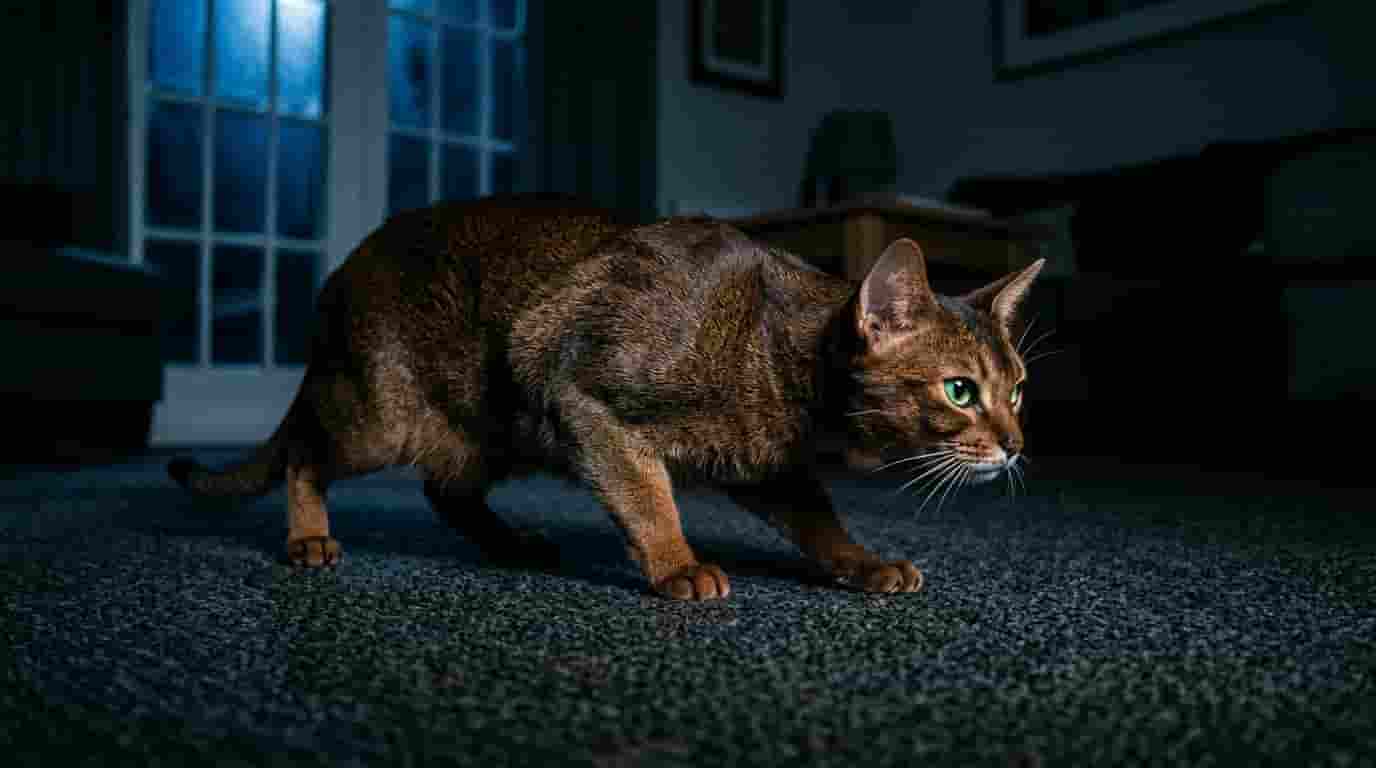
Cats are not fully nocturnal animals. However, they are what scientists call crepuscular, which means they are naturally most active at dawn and dusk. Their bodies are hard-wired to hunt, chase, and sprint during low-light hours.
This instinct runs incredibly deep. Even indoor cats who have never hunted a single mouse in their lives still carry this internal biological clock. Therefore, when your living room goes dark at midnight, something inside your cat flips on like a light switch.
Their pupils dilate to capture maximum light. Their muscles fill with energy and readiness. Their instincts push them to move, chase, and burn off that stored energy before the next sleep cycle begins.
According to PetMD, this behavior connects directly to a cat’s ancestral hunting schedule and is completely normal feline behavior in domestic cats. It does not mean your cat is hyperactive, anxious, or poorly trained in any way.
Additionally, indoor cats often have no outlet for their natural predatory energy during the day. All of that unspent energy builds up steadily through quiet afternoon hours. As a result, it explodes in a spectacular burst of nighttime cat antics the moment darkness falls.
How Daytime Boredom Fuels Late-Night Cat Energy

Many cat owners overlook the powerful connection between daytime boredom and nighttime chaos. A cat that sleeps all day with zero stimulation is basically charging itself like a battery. By midnight, that battery is completely full and ready to discharge dramatically.
Think about feline behavioral patterns this way. Wild cats spend hours each day stalking, hunting, and chasing prey. Your indoor cat does not get that physical or mental outlet. Therefore, their body finds another way to burn that energy, and unfortunately that way usually involves your furniture and your sleep.
Consider what happened to Marcus in Chicago, a first-time cat owner who could not understand why his two-year-old tabby, Biscuit, ran circles around his bedroom every night at 2 AM. Marcus started adding two short play sessions during the day using a feather wand toy. Within one week, Biscuit slept through the night consistently.
The solution was not complicated at all. Biscuit simply needed an appropriate outlet for his natural energy during waking hours. This one change completely transformed their nighttime experience together.
What Triggers Cats Running Around at Night
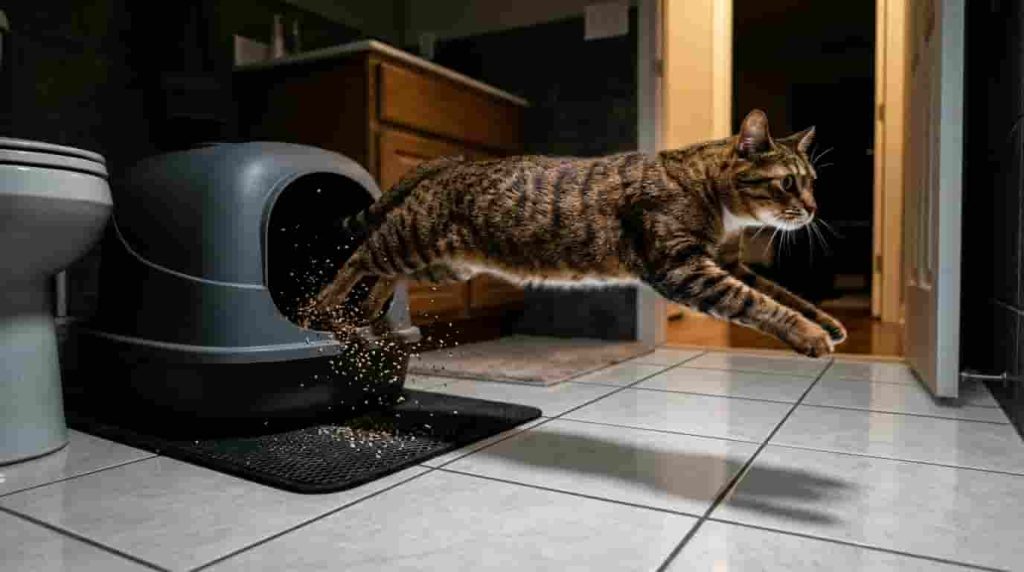
Not all cat zoomies are the same. Some happen purely from pent-up energy. Others have different triggers that are equally important to understand before you try to fix the problem.
Here are the most common triggers behind nighttime cat antics:
- Unspent predatory energy from a boring or unstimulating daytime routine
- Hunger because cats often become more active and alert right before their feeding time
- Attention seeking when cats learn that zooming around gets a reaction from sleepy owners
- Post-litter box excitement which is extremely common and has its own fun nickname among cat owners
- Stress or anxiety from changes in the home environment, new pets, or household tension
- Young age because kittens and cats under three years old naturally have significantly more energy
If your cat primarily zooms right after using the litter box, that is completely normal behavior. It connects to a nerve response that actually triggers a burst of relief and energy in many cats.
However, if zoomies come with signs of distress, aggression, or unusual vocalizations, that deserves closer attention. You can learn more about reading those signals in this guide on cat body language. Your cat’s posture and movement during these moments tells you a great deal about the cause behind them.
Understanding Playful Cats at Night Versus Anxious Cats
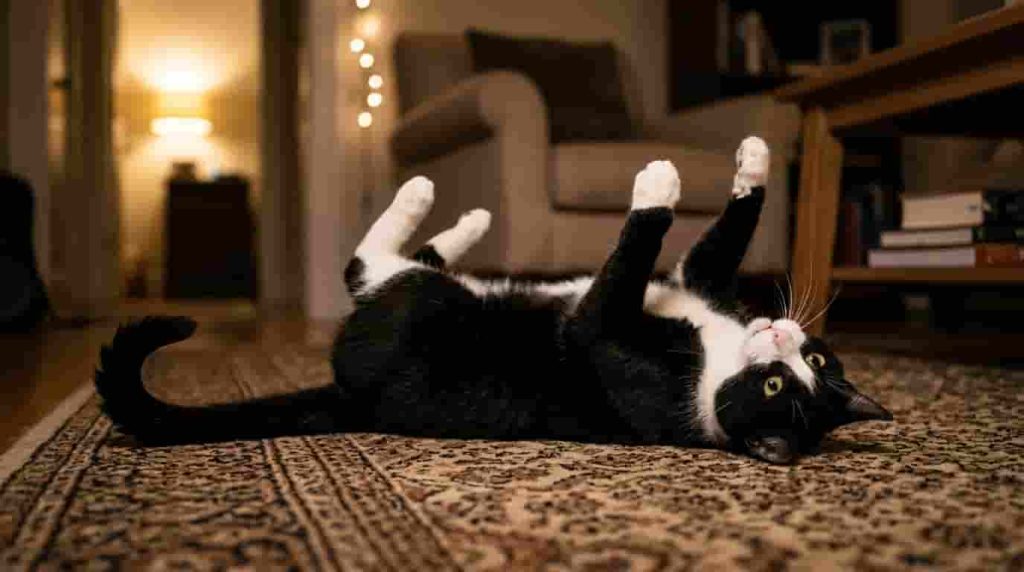
There is an important difference between a cat happily zooming for fun and a cat pacing restlessly from stress. Learning to tell these apart helps you respond in the right way each time.
A playful zooming cat looks loose and bouncy. Their tail curves upward, their eyes are bright and wide, and they frequently stop to play-pounce on objects along the way. This cat is simply burning energy and enjoying the rush.
An anxious or stressed cat looks very different. Their body stays low and tense. Their tail moves in tight, jerky motions. They may also vocalize in ways that sound more urgent or distressed than playful.
Unusual nighttime vocalizations often carry their own meaning beyond zoomies. Reading about cat meowing meanings can help you figure out whether your cat is expressing pure joy or something they genuinely need from you right away.
How to Calm Cat Behavior at Night Without Losing Your Mind
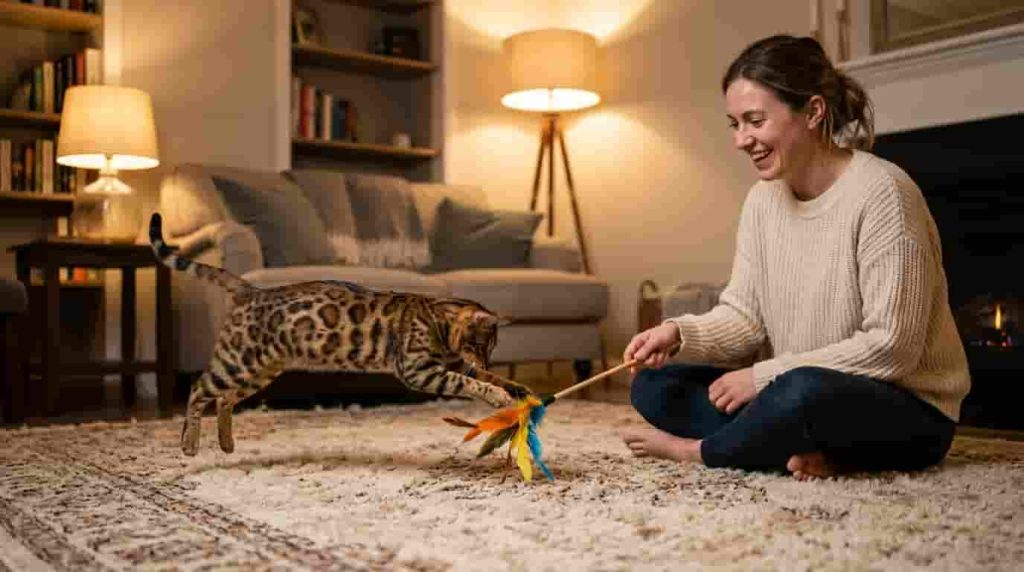
Now for the part you actually came here for. These strategies genuinely work when applied with consistency and patience. None of them require expensive equipment or drastic changes to your lifestyle.
1. Schedule an active play session before bed. This single habit produces the biggest results for most cat owners. Spend 15 to 20 minutes playing intensely with a wand toy or laser pointer right before your bedtime. You trigger their hunt-catch-kill cycle and allow it to fully complete before lights go out.
2. Feed your cat their largest meal right after playtime. In the wild, cats eat after a successful hunt. Following play with food mimics this natural sequence perfectly. A full belly after play sends a powerful biological signal to your cat that it is now time to rest and sleep.
3. Add daytime enrichment to reduce late-night cat energy. Give your cat more things to engage with during the day so they arrive at bedtime already partially tired. Good options include:
- Window perches with outdoor bird views
- Puzzle feeders and treat-dispensing toys
- Cardboard boxes and paper bags for independent exploration
- Rotating toy selection so items always feel fresh and new
4. Create a calming pre-sleep environment. Dim the lights in your home about an hour before bed. Lower your activity and noise levels gradually. Cats read environmental cues very well, and a quieter home signals to them that rest time is approaching.
5. Keep your bedroom door closed if needed. This is a perfectly reasonable boundary while you work on adjusting your cat’s routine. It does not harm your cat emotionally. It simply gives you the sleep you need to function while the training process takes time to work.
Interestingly, a well-rested and stimulated cat shows far more affectionate behaviors during the day. You might notice more cat kneading habits and even the soothing vibrations described in cat purring science during quiet daytime hours as a direct result of a better nighttime routine.
When Cat Night Zoomies Signal a Bigger Problem

Most cases of nighttime zooming are completely harmless and easy to manage. However, certain situations do call for a veterinary visit to rule out underlying health concerns.
Book a vet appointment if your cat shows:
- Sudden onset of intense nighttime activity with no clear change in routine
- Zoomies paired with loud, distressed vocalizations throughout the night
- Significant weight loss alongside increased nighttime hyperactivity
- Disorientation or bumping into furniture during their nighttime runs
- Aggressive behavior during or immediately after zooming episodes
Hyperthyroidism in older cats frequently causes a sudden increase in restless nighttime energy. Additionally, cognitive dysfunction in senior cats can disrupt normal sleep cycles and cause nighttime confusion and activity.
If nighttime zooming ever crosses into scratching or biting, that is a separate behavior issue worth addressing directly. The article on cat aggression issues covers exactly how to handle that specific situation step by step.
Conclusion
Cat night zoomies are one of the most normal and biologically grounded behaviors your cat expresses. They are crepuscular hunters at heart, and their bodies push them to move when darkness arrives regardless of your sleep schedule.
The solution always starts with looking honestly at your cat’s daytime routine. More stimulation, structured play before bed, and a post-play meal work together to reset your cat’s activity patterns naturally. Managing cat night zoomies does not require punishment or frustration on your part.
With a little consistency and the right routine in place, both you and your cat can finally sleep through the night peacefully. Have you dealt with cat night zoomies in your own home? Drop your experience in the comments below and share what worked best for you!
Frequently Asked Questions
Your cat runs at night because their biology drives them toward peak activity during low-light hours. This connects to deep ancestral hunting instincts that remain strong even in fully domestic cats. A structured play session and a meal before your bedtime helps redirect this energy to earlier evening hours.
Yes, cat zoomies at night are completely normal and very common across all cat breeds and ages. Younger cats and kittens tend to zoom more frequently because they carry higher baseline energy levels. Most cats naturally calm down as they age and as their daily routine becomes more enriching.
Start with a 15 to 20 minute play session right before your bedtime every single night. Follow that play session immediately with your cat’s largest meal of the day. This simple two-step routine reduces late-night energy dramatically for most cats within one to two weeks.
Post-litter box zoomies happen because of a nerve response connected to the vagus nerve during elimination. This nerve triggers a wave of relief and energy that sends some cats sprinting away happily. It is completely harmless and actually signals that your cat feels comfortable and safe in their environment.
Most cats reduce their zooming frequency significantly after age three as their baseline energy levels naturally settle. Senior cats over ten years old rarely zoom at all during nighttime hours. However, every cat is different, and some energetic adult cats continue occasional zoomies well into middle age.