
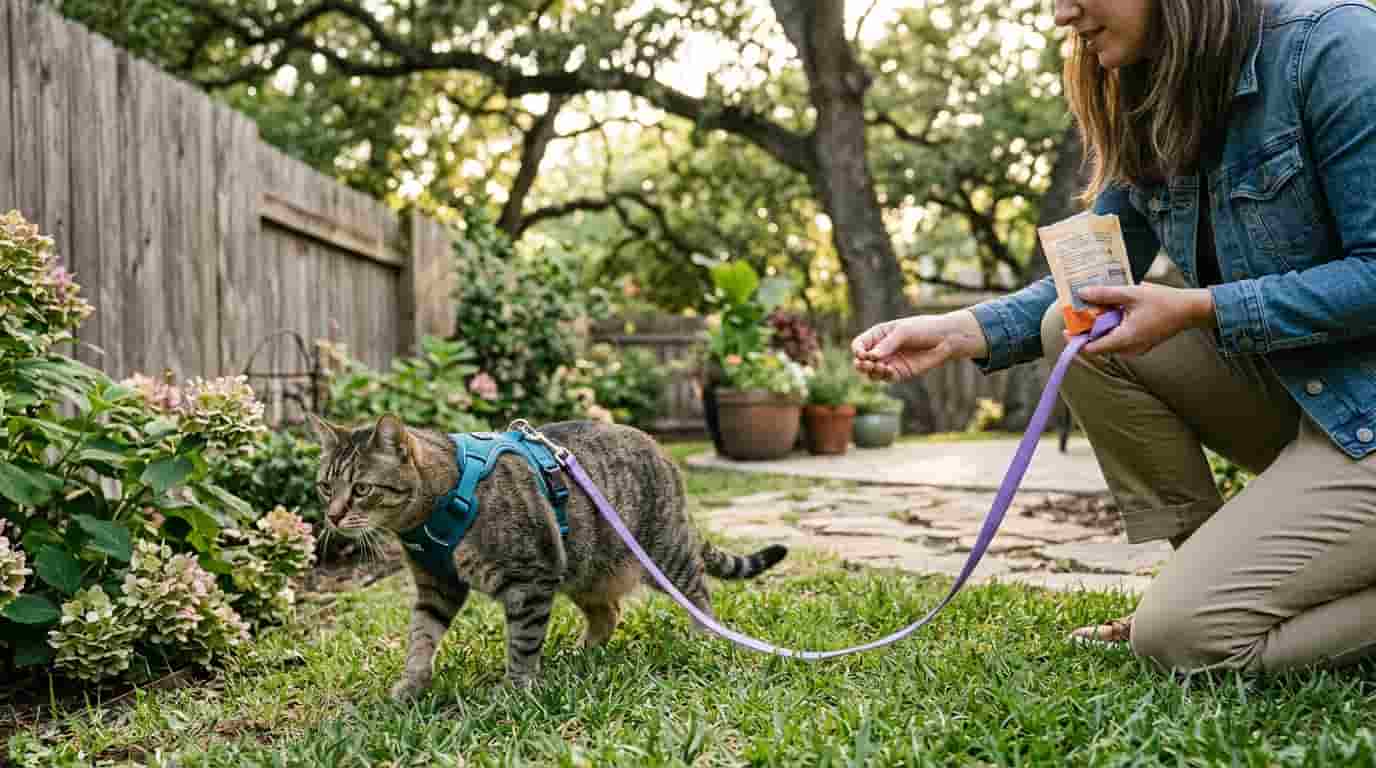
Cat Leash Training: Yes you can actually walk your cat.
Introduction:
Cat Leash Training seems impossible to most feline owners. You might wonder why anyone would ever try to walk a cat. Do they not just prefer staying inside their safe, warm home?
Surprisingly, many cats love exploring the big world outside. You just need the right approach to make it happen safely. This journey requires patience, small steps, and plenty of love.
Getting Started With Effective Cat Leash Training

Cat Leash Training starts long before you step outside. First, you must select the best cat harness for leash training. Avoid neck collars, as they put too much strain on their delicate throats.
A secure, well-fitted harness keeps your cat safe from escapes. Let your cat wear the harness inside for short periods. They need time to feel comfortable with the extra gear.
ASPCA experts suggest rewarding your cat with treats during these early stages. This positive association builds their confidence and reduces anxiety. Therefore, you turn the harness into a signal for something fun.
Simple Steps to Leash Train a Cat
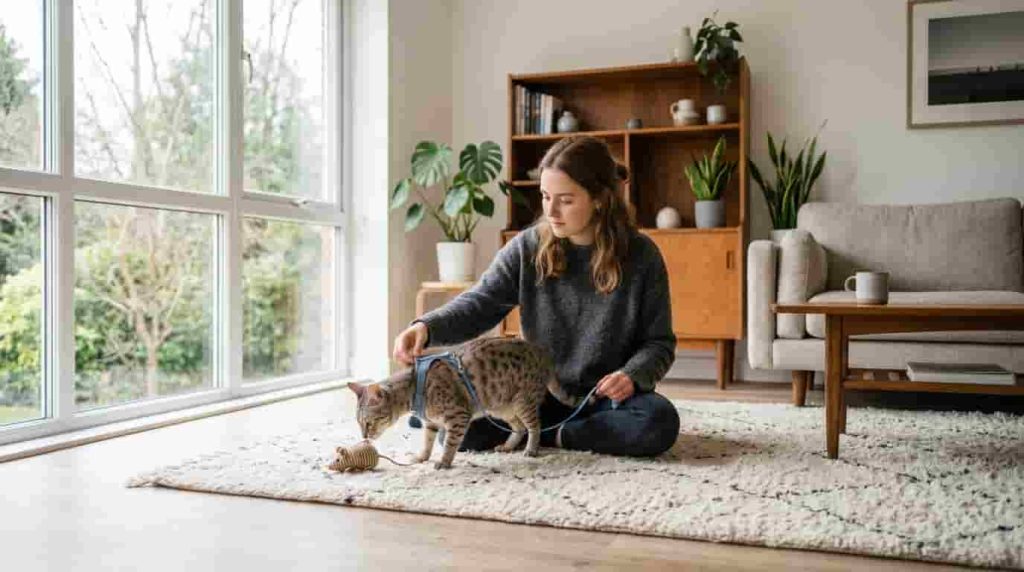
Follow these steps to leash train a cat at your own pace. First, introduce the leash inside your home. Attach it to the harness while they explore the living room.
Always keep these sessions brief and very lighthearted. Finally, try moving toward the front door for a few minutes. You want your cat to feel confident in every new space.
Never pull or drag your cat during these practice sessions. They lead the walk, not you. This subtle difference matters a lot for their mental comfort.
How to Train a Cat to Walk on a Leash Successfully

You must understand that leash training for cats requires different goals. You do not march them down the sidewalk like a dog. Instead, you follow their lead and observe their interests.
Walking your cat on a leash should feel like a guided adventure. Let them sniff the grass and explore interesting bushes. You serve as their companion and their protector during the outing.
Some owners notice that certain feline personalities enjoy it more than others. You can read Cat Breed Personalities: Which breed fits your lifestyle best to see if yours fits. Energetic cats often adapt to this outdoor time very quickly.
Effective Cat Leash Training Techniques
Use these effective cat leash training techniques to keep them calm. Keep your first outdoor trips very quiet and secluded. A loud street or a barking dog scares them easily.
Start in a fenced yard or a very quiet corner of your property. If your cat freezes, simply wait patiently for them to relax. They explore at their own speed when they feel safe.
Additionally, use a long leash to give them a bit of freedom. This allows them to investigate without feeling trapped. A relaxed cat enjoys the experience much more than one on a short lead.
Indoor Cat Leash Training for Better Results
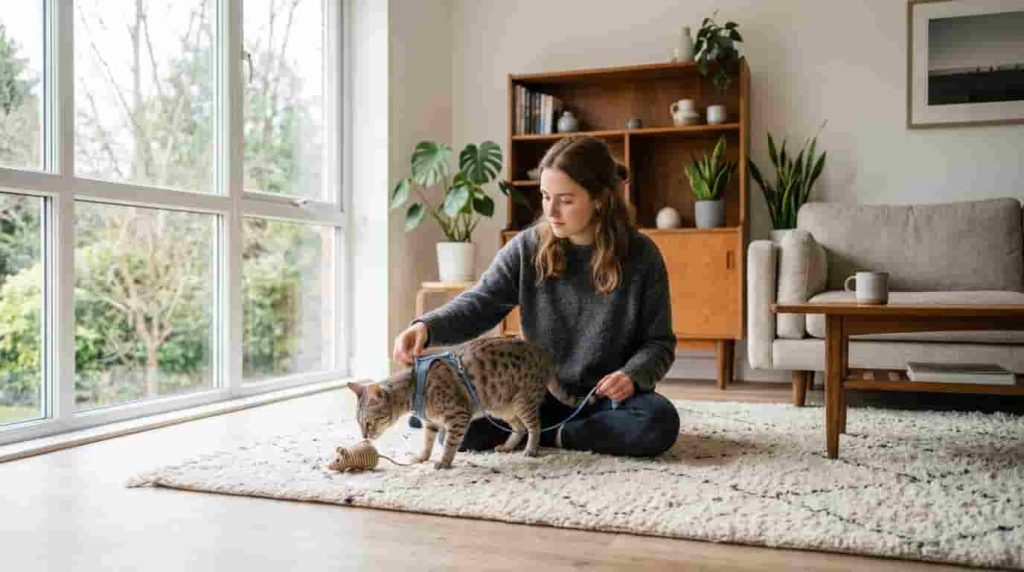
You can practice indoor cat leash training during rainy days. Create an obstacle course in your hallway to keep things interesting. This builds their focus and their walking skills indoors first.
Indoor practice creates a safe space for them to learn. Therefore, they worry less about outside distractions. Many owners find success by repeating these indoor drills daily.
If your cat struggles, remember that every animal learns differently. Maybe your cat prefers a Cat Birthday Party: Fun ways to celebrate your pets big day instead. Not every cat needs to go outside to stay happy.
Why Cat Behavior Training With a Leash Works
Cat behavior training with a leash strengthens your deep bond. It gives them mental stimulation and new scents to enjoy. You provide a safer outlet for their natural hunting instincts.
Also, be aware of your cat’s unique coat and breed traits. You might find more insight in Cat Calico Facts: The unique genetics of the tri color cats if you have one. Some patterns or breeds have very specific temperaments.
Stay consistent with your cat training leash techniques each week. Small progress adds up to big successes over time. You gain a confident walking partner with just a little effort.
Choosing the Best Cat Leash Training Methods
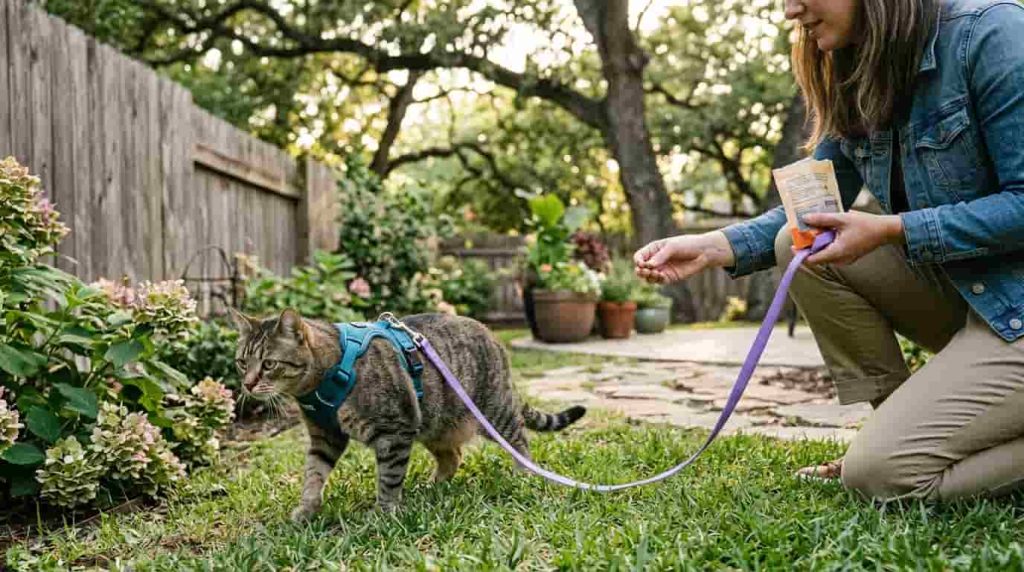
You might search for the best cat leash training methods online. Most experts agree that safety comes before everything else. Always check your harness fit before you leave the house.
If your cat shows signs of panic, head back inside immediately. Do not push them if they feel overwhelmed or scared. Walking should feel rewarding for both of you.
Finally, keep your outdoor sessions short and sweet. Ten minutes of sniffing often wears them out more than a long walk. They experience a lot of sensory input during this time.
Maintaining Your Cat Behavior Leash Training
Keep your cat behavior leash training routine very simple. You should always walk at the same time every day. This creates a predictable rhythm that they learn to love.
Also, bring plenty of high-value treats for every outdoor excursion. You want to reward them for staying close to your side. Positive reinforcement is the secret to all cat leash training.
Be aware of your environment and keep a close eye on your surroundings. A calm, controlled, and quiet walk keeps your cat feeling confident. You create amazing memories by simply following their curious paws.
Final Thoughts on Cat Leash Training Success
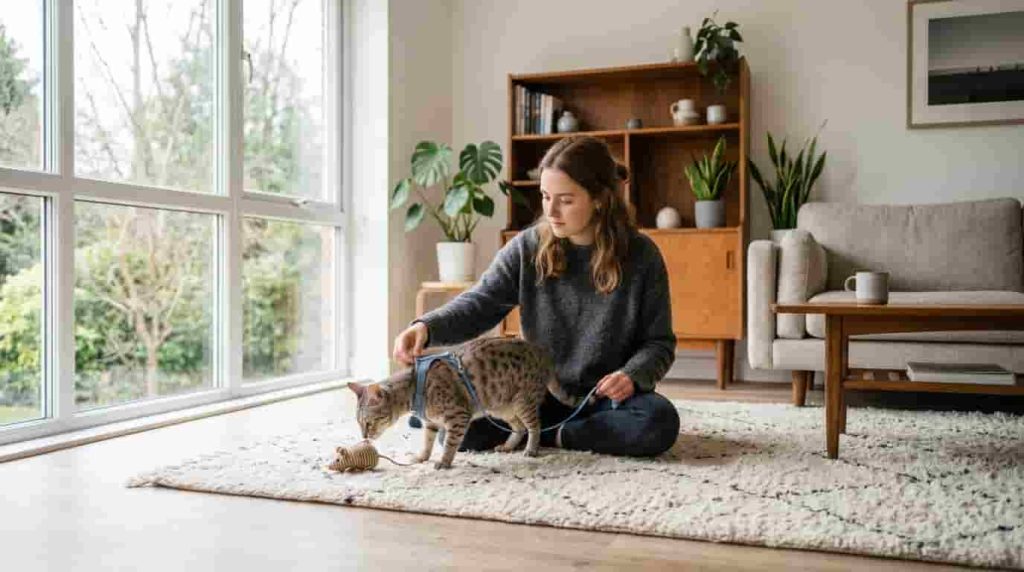
Cat Leash Training brings a fun, new dimension to your life together. It takes time, but the results make it worth the effort. You build a deep trust that lasts a lifetime.
Take your time with every step of the journey. If you need to stop, simply try again another day. Your cat appreciates your patience and your consistent support.
Do you plan to try walking your cat this weekend? Please share your plans or your own experience in the comments below!
Frequently Asked Questions
Yes, it is safe if you use a secure harness and walk in a calm area. Always supervise your cat closely to prevent any accidents.
You need a well-fitted H-style or vest harness designed for cats. Avoid using a neck collar, as it poses a serious risk to their throat.
Training times vary depending on your cat’s personality. Some cats learn in a few weeks, while others need months of consistent indoor practice.
No, keep your first walks to a quiet, private area. Busy parks, loud noises, and dogs easily overwhelm and scare a new learner.
Be patient and do not force them. Let them explore your home on a leash first, or consider if they simply prefer indoor play.