
Cat Tail Positions: A Visual Guide to Cats Moods
Introduction:
Cat tail positions provide a direct window into your pet’s current emotional state and daily stress levels. Have you ever tried to pet your favorite feline only to receive a sudden, sharp scratch on your hand? It can feel incredibly frustrating when your furry companion reacts aggressively to your gentle touch without warning. However, domestic felines always use physical movements to communicate their boundaries long before they resort to scratching.
Learning the subtle nuances of cat body language cues allows you to prevent painful misunderstandings entirely. Also, interpreting cat tails correctly helps you provide a safer, happier, and more comfortable environment for your pet. Let us explore the fascinating world of feline tail language so you can read your animal perfectly every day.
Decoding Positive Cat Tail Positions

Understanding friendly cat tail positions helps you recognize exactly when your beloved animal feels safe, content, and playful. First, a high, upright tail that points toward the ceiling indicates immense confidence, security, and pure happiness. Many veterinary behaviorists call this specific look the happy greeting posture because felines use it to welcome trusted friends. Additionally, a slight curve at the very tip of an upright tail resembles a friendly question mark shape. This charming shape shows that your pet feels highly curious and open to receiving gentle chin scratches immediately.
Furthermore, a gently vibrating or quivering upright tail shows extreme excitement and anticipation during regular dinner or play hours. For instance, you might see this lovely movement when you open a fresh can of delicious wet food. It means your feline companion feels ecstatic to share physical space with you in that exact moment. Understanding cat tails during these pleasant moments ensures that you can confidently maximize your daily bonding time together.
When your pet feels exceptionally relaxed and loving, they might also use their eyes to communicate affection. You can learn about this quiet expression by reading Cat Slow Blinking: The secret way cats say I love you. Combining these physical signals gives you a complete view of your pet’s happiness.
Understanding Playful Feline Tail Behavior

Playful feline tail behavior can sometimes look confusing to new owners because it involves quick, dynamic movements. For example, a kitty might hook its tail low to the ground before pouncing on a toy mouse. This action shows focused concentration and active hunting instincts during energetic interactive play sessions. Additionally, you might notice your pet wrapping their long appendage gently around your ankle or arm.
This sweet behavior serves as a feline hug that signifies deep trust, companionship, and social bonding. Therefore, you should always respond with soft praise or a favorite treat to reinforce this wonderful behavior. Recognizing these positive cat tail meanings makes daily life with your animal much more rewarding and fun.
Recognizing Low and Tucked Cat Tail Signals
Next, you must learn to identify defensive cat tail signals that indicate fear, anxiety, or submission. A low tail position that drops below the level of the back usually signals deep unease or caution. Your pet might carry their appendage low while exploring an unfamiliar room or meeting a strange visitor. Therefore, this posture shows that your housecat feels uncertain about the safety of their current surroundings.
Here are the most common low feline postures:
- Dropped straight down to the floor
- Tucked tightly between the back legs
- Wrapped rigidly around a hunched body
- Dragging heavily during slow movement
If the danger intensifies, the animal will tuck its appendage tightly between its hind legs for protection. This tight position protects a vulnerable body part from potential injuries during a sudden physical fight with a predator. Also, it makes the animal look smaller and less threatening to any dominant animals nearby. According to experts at VCA Animal Hospitals, a tucked posture always demands immediate space and calm intervention.
If your pet stays in this fearful state, they may look for an isolated sanctuary to hide. You can discover how to manage this situation by reading Cat Hiding Behavior: When to worry if your cat staying out of sight. Never force a terrified animal out of its chosen sanctuary because doing so increases panic.
Signs of Chronic Emotional Distress
Sometimes, a permanently dropped tail points toward long-term emotional problems rather than temporary fear from loud noises. If your companion keeps their body low for days, they might be suffering from deep psychological unhappiness. You must watch for other changes like severe lethargy, hiding habits, or a sudden loss of appetite.
To help your pet recover completely, you can read our comprehensive guide on Cat Depression Symptoms: How to tell if your pet is feeling sad. Addressing these behavioral issues early prevents chronic stress from harming your pet’s physical immune system over time.
Interpreting Angry and Aggressive Cat Tail Movements
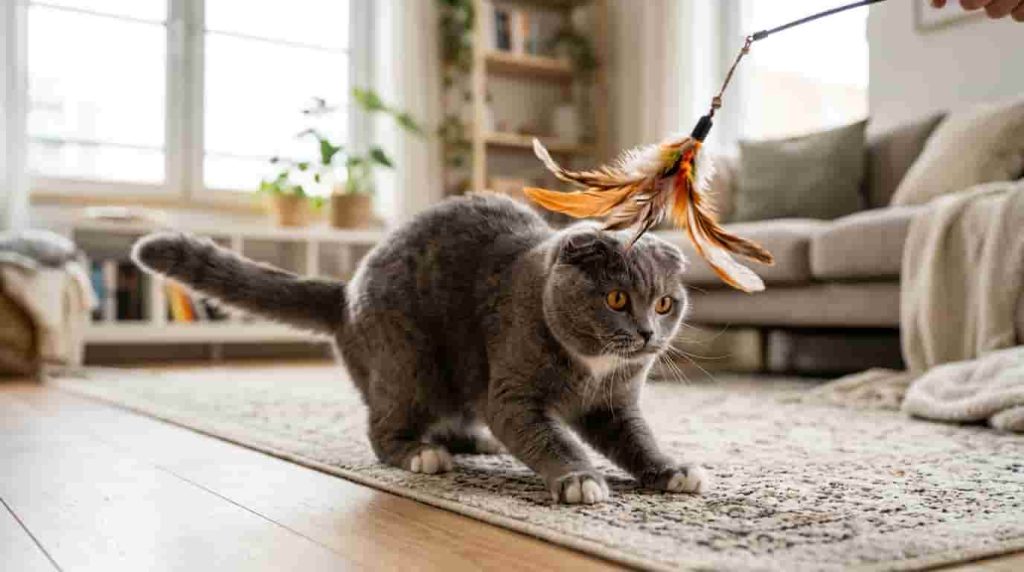
Interpreting cat tail movements accurately during tense situations can easily protect you and your family from injury. A swishing, thrashing, or thumping tail indicates extreme irritation, anger, or high emotional arousal in domestic felines. For example, your pet might thump their appendage heavily against the living room floor while you brush their fur. This rhythmic thumping means your pet wants you to stop the current activity immediately without exception.
Look for these key signs of high feline anger:
- Rapid side-to-side whipping motions
- Heavy thumping against hard floors
- Puffed up fur resembling a bottle brush
- Rigid arching of the main spine
Additionally, tail flicking in cats involves sharp, twitching movements at the very tip of the fur appendage. This subtle twitching often shows growing impatience or internal conflict before a sudden physical strike or bite occurs. Therefore, you must stop touching your pet the moment you notice these twitching signals. Also, look closely at their eyes because wide dilated pupils always accompany an angry, irritated feline.
Furthermore, a puffed-up tail that resembles a bristly bottle brush indicates maximum terror, aggression, or self-defense. The animal puffs out its fur to appear much larger and more intimidating to an approaching enemy. This dramatic posture usually occurs alongside a rigidly arched back, exposed teeth, and loud, defensive hissing sounds.
A Real Life Example of Decoding Cat Tail Positions

Let us look at a real life situation that many passionate cat parents can easily relate to today. A dedicated owner named David recently adopted an energetic young rescue cat named Felix from a local shelter. One afternoon, David noticed Felix sitting on the windowsill while watching outdoor birds fly across the backyard. Felix’s appendage was twitching rapidly from side to side, and his ears twisted backward toward the room.
Here is Felix’s behavioral profile during this event:
- Target: Outdoor birds in the yard
- Appendage action: Rapid side-to-side twitching
- Ear position: Twisted backward alertly
- Meaning: Intense predatory frustration
David initially thought this rapid cat tail behavior meant Felix felt happy and excited to watch the birds. Consequently, he reached down to pet Felix’s head without realizing the animal felt intensely frustrated by the window glass. Felix instantly turned and nipped David’s hand because he experienced a common behavioral issue called redirected aggression.
David quickly researched cat tail communication online to understand what went wrong during the interaction. He learned that rapid twitching actually indicates high emotional arousal, tension, or deep predatory frustration. From that day forward, David always looked for a calm, upright tail before initiating physical contact with Felix. This simple change completely eliminated accidental scratches and helped build an incredibly strong bond between them.
Medical Reasons for Abnormal Feline Tail Positions
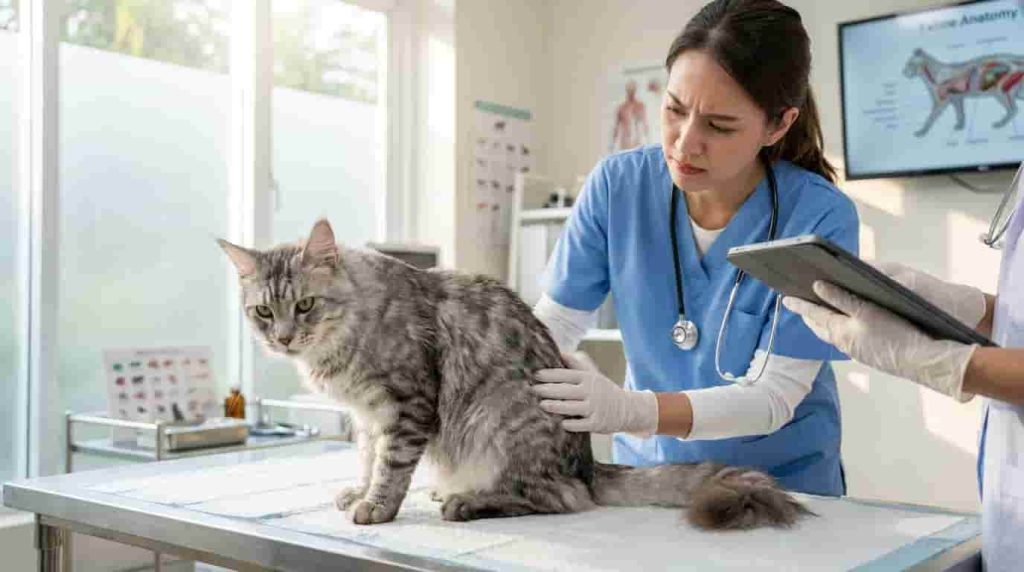
If your pet displays unusual or limp cat tail positions suddenly, you must evaluate their physical health. According to medical specialists at the ASPCA, physical injuries can alter feline body language cues instantly. For instance, a cat can easily sprain, fracture, or dislocate its delicate tail vertebrae during outdoor adventures. A painful door slam or an accidental step on the appendage can also cause severe nerve damage.
Watch out for these physical injury warning signs:
- Tail hanging completely limp or dead
- Inability to lift or wag the appendage
- Swelling or open wounds along the spine
- Extreme pain when you touch the lower back
When a feline experiences acute pain, they will hold their appendage low or completely rigid to avoid movement. They might also cry loudly or bite if you accidentally touch the sensitive area near their lower spine. Therefore, sudden abnormal posture shifts always require a prompt visit to an emergency veterinary clinic. A professional veterinarian can take detailed x-rays to diagnose fractures and prescribe effective pain relief medications.
Conclusion
In conclusion, mastering the variety of cat tail positions is an essential skill for every dedicated pet owner. By observing these visual signals daily, you can easily decode your companion’s shifting emotions and personal boundaries. Remember to respect an angry or fearful appendage by giving your housecat plenty of quiet personal space. Providing this respect and understanding will make your furry companion feel incredibly secure, valued, and loved. Ultimately, using the focus keyphrase cat tail positions naturally helps you build an unbreakable bond of trust with your pet.
Has your favorite feline companion ever given you a clear warning sign using their expressive tail? What special movements does your pet use to tell you that they want treats or playtime? Please share your wonderful experiences, clever tips, and stories in the comments section below!
Frequently Asked Questions
Unlike dogs, felines do not wag their appendages to show happiness or friendly excitement. A wagging or swishing feline tail typically indicates growing irritation, intense emotional arousal, or frustration. If you see this movement, you should give your pet some space to calm down completely.
Twitching the tip of the appendage usually means your pet is focusing intensely on something specific. This movement occurs frequently when a housecat watches birds outside or stalks a toy mouse during playtime. However, it can also signal slight impatience if you are petting them for too long.
A feline puffs out its fur to appear much larger and more intimidating to potential predators or enemies. This automatic physical reaction comes from a natural survival instinct designed to prevent physical attacks. It shows that your pet feels deeply threatened, startled, or trapped in an unsafe situation.
Yes, cats possess excellent conscious control over their appendages for balancing, running, and intentional communication. However, certain subtle movements like quivering or puffing up happen as involuntary reactions to extreme excitement or terror. These quick physical responses match the animal’s immediate nervous system activity perfectly.
A broken or sprained appendage will usually hang completely limp and lifeless behind the animal’s body. Your pet will also show intense pain, avoid regular movement, and hiss if you touch their lower back. You must take your kitty to a veterinarian immediately if you suspect a serious physical injury.