
New Research Reveals Why Some Cats’ Eye Color Changes
Cat eye colour changes have puzzled owners and vets for years. New research now reveals the biological reasons behind shifting feline eye pigmentation, and some of those reasons carry important health signals cat owners should not ignore. Scientists say the causes range from normal developmental shifts to early warning signs of underlying conditions.
What New Research Says About Cat Eye Colour Changes
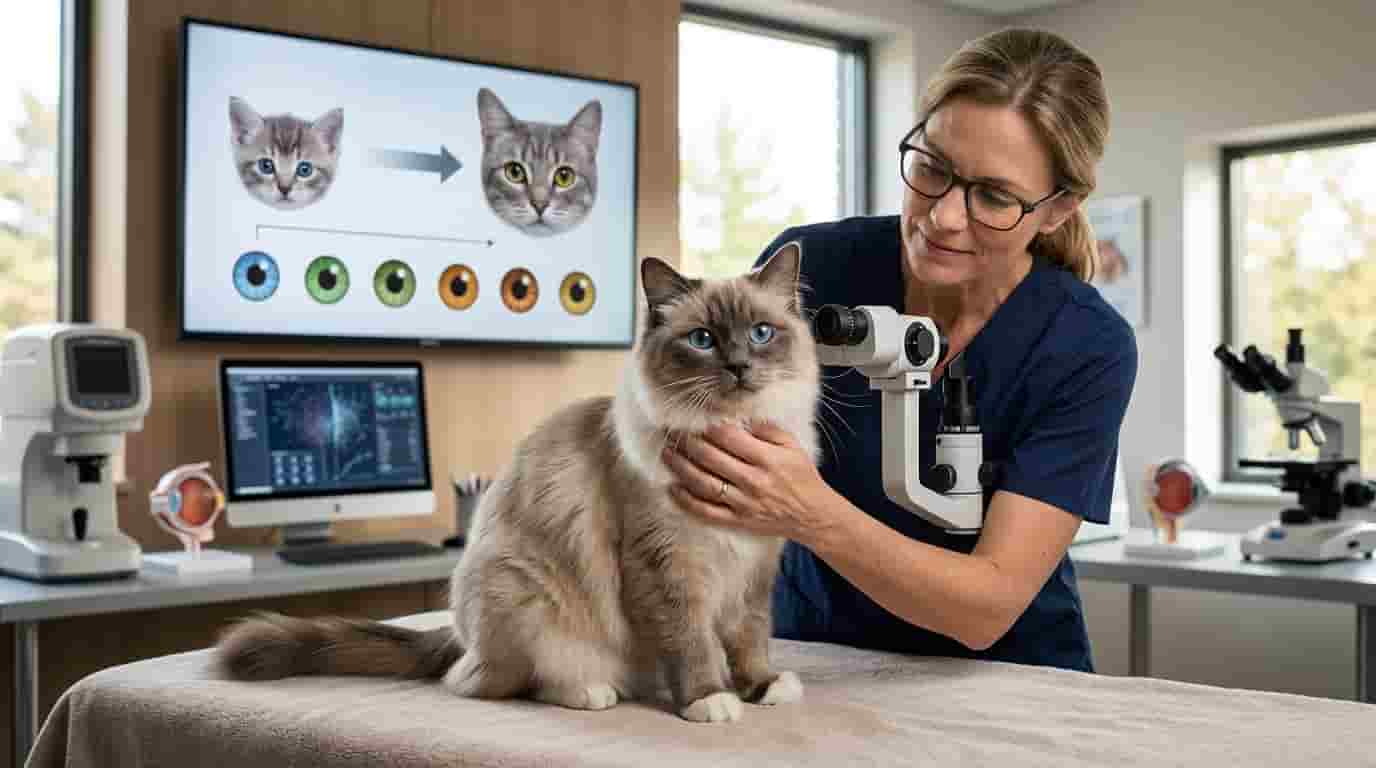
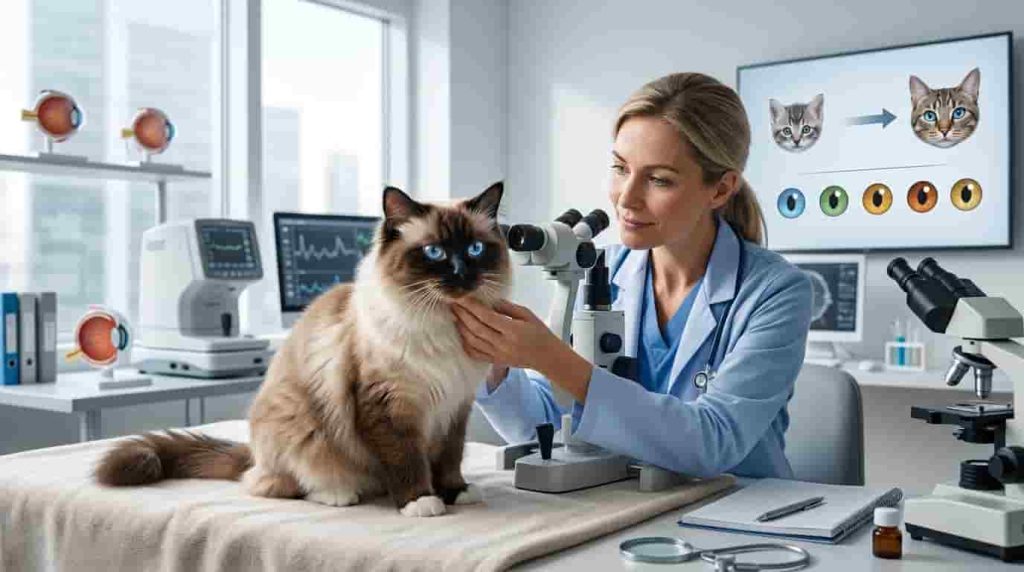
Researchers studying feline eye pigmentation shifts found three primary causes behind colour changes in cats. First, young cats naturally experience cat eye colour changes as they age. Kittens are almost always born with blue eyes. As melanin production increases during development, cat eye pigment alterations shift those eyes toward green, gold, amber, or copper. This process typically completes by the time a cat reaches one year old.
Second, light conditions temporarily alter how feline eye color variations appear. Pupils expand in low light and contract in bright light, which changes how pigment reflects and makes the eye look different shades at different times. Therefore, fluctuating feline eye shades during the day do not always signal a problem. They often reflect normal ocular response to the environment.
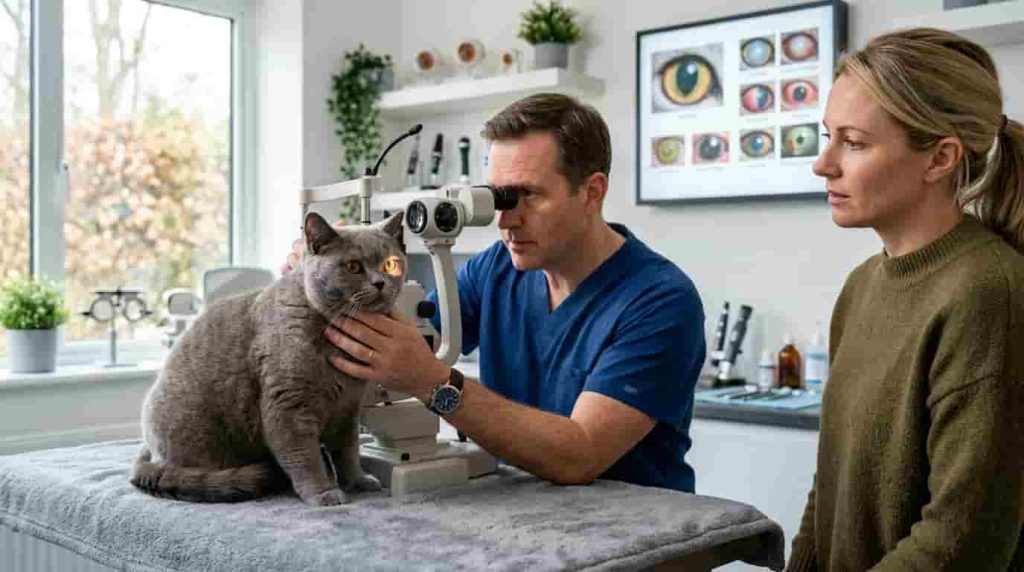
Third, and most critically, sudden or unexplained cat eye colour changes in adult cats can signal serious health issues. Researchers flagged uveitis, hypertension, and certain cancers as conditions that can alter cat eye pigmentation shifts visibly. As a result, any unexpected colour change in an adult cat warrants a prompt veterinary examination.
This research adds to a growing picture of how feline biology holds important clues about overall cat health. Similarly, Scientists Explain Why Cats Have More Bones Than Humans shows how structural biology in cats carries direct implications for how owners care for their pets.
When Cat Eye Appearance Changes Signal a Health Warning
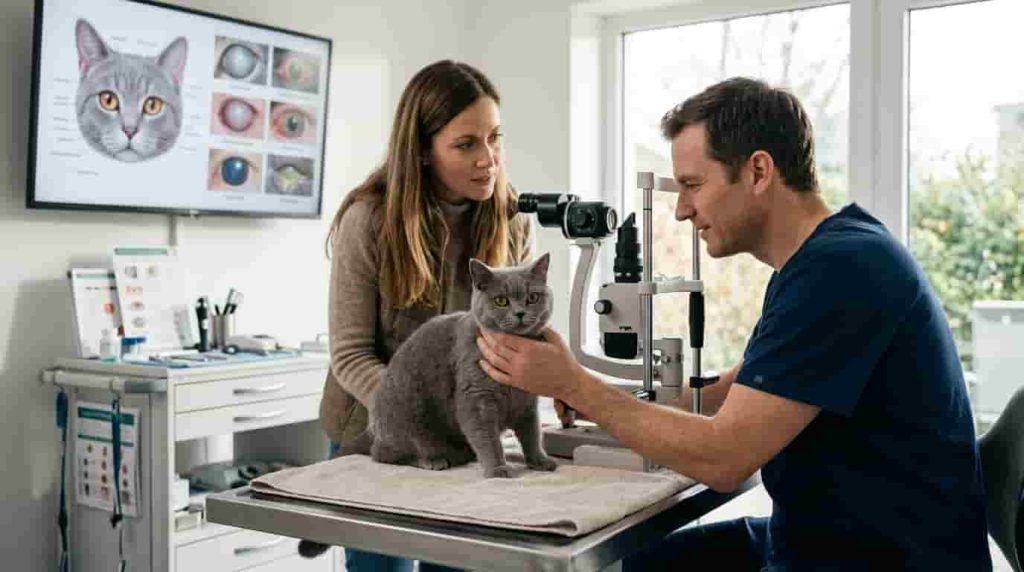
Not every cat eye colour transformation is harmless. Researchers identified specific changes that owners should treat as urgent warning signs. These include:
- A single eye shifting colour while the other stays the same
- A sudden darkening or clouding of the iris in an adult cat
- Visible redness or swelling alongside any colour shift
- A milky or grey film developing across the eye surface
- Any colour change accompanied by squinting or eye discharge
According to Cornell University College of Veterinary Medicine, changes in cat eye pigmentation in adult cats should always trigger a veterinary visit. Many of the underlying causes are treatable when caught early, but they progress quickly without intervention.
One real example: a cat owner in Edinburgh named Tom noticed his eight year old cat Pepper’s left eye had shifted from its usual bright green to a dull brownish yellow over several weeks. Tom initially assumed it was a lighting effect. However, a vet visit revealed early stage uveitis. Early treatment preserved most of Pepper’s vision in that eye. Tom’s quick action after noticing the cat eye appearance change made a significant difference.
Understanding Heterochromia and Permanent Cat Eye Pigmentation Differences
Some cats display two completely different coloured eyes permanently. This condition is called heterochromia and it results from uneven melanin distribution during development. It is not a sign of illness. White cats and cats carrying the white spotting gene show heterochromia more frequently than other breeds. Additionally, some cats display sectoral heterochromia, where two colours appear within a single iris. These permanent feline eye color variations are genetic and require no treatment.
Cat eye biology sits within a broader story of fascinating feline sensory science. You can explore another dimension of it in Cats Can See in Six Times Less Light Than Humans, Study Explains, which explains how the feline visual system far outperforms human night vision.
Furthermore, cat biology holds other unique identification features worth knowing about. Read Scientists Say Every Cat Has a Unique Nose Print to discover another biological marker that makes every cat completely distinct.
Conclusion
Cat eye colour changes tell a story about your cat’s health that owners should learn to read. Developmental shifts in kittens are normal. Temporary cat eye hue modifications in different lighting conditions are harmless. However, sudden or one-sided changes in adult cats demand immediate veterinary attention. The research is clear: catching these signals early saves vision and, in some cases, saves lives. Share this article with every cat owner you know so they understand what to watch for in their own cat’s eyes.
Frequently Asked Questions
Kittens are born with blue eyes because melanin production has not yet started fully. As melanin increases during the first year, cat eye colour changes naturally toward the cat’s permanent adult shade.
Yes, pupils expand and contract with light levels, which changes how pigment reflects and makes eye colour appear to shift. This is a normal feline eye response, not a sign of illness.
Any sudden colour change in an adult cat’s eye, especially in only one eye, warrants an immediate vet visit. Conditions like uveitis and hypertension can cause cat eye pigmentation shifts and progress quickly without treatment.