Cat First Aid: Essential skills for every emergency at home
Introduction:
Cat First Aid skills are critical for pet owners because accidents happen when you least expect them. You might hear a sudden crash in the kitchen during dinner.
Suddenly, your cat streaks past you with a deep cut on their front paw. Panic sets in as you watch blood drip onto the clean floor tiles.
Knowing exactly how to react during those first few minutes can change everything for your pet. This guide will teach you essential cat first aid techniques for home use. You will learn how to stabilize your pet safely using standard household materials. Additionally, you will discover when you must travel to an emergency clinic.
Building a Dedicated First Aid Kit for Cats
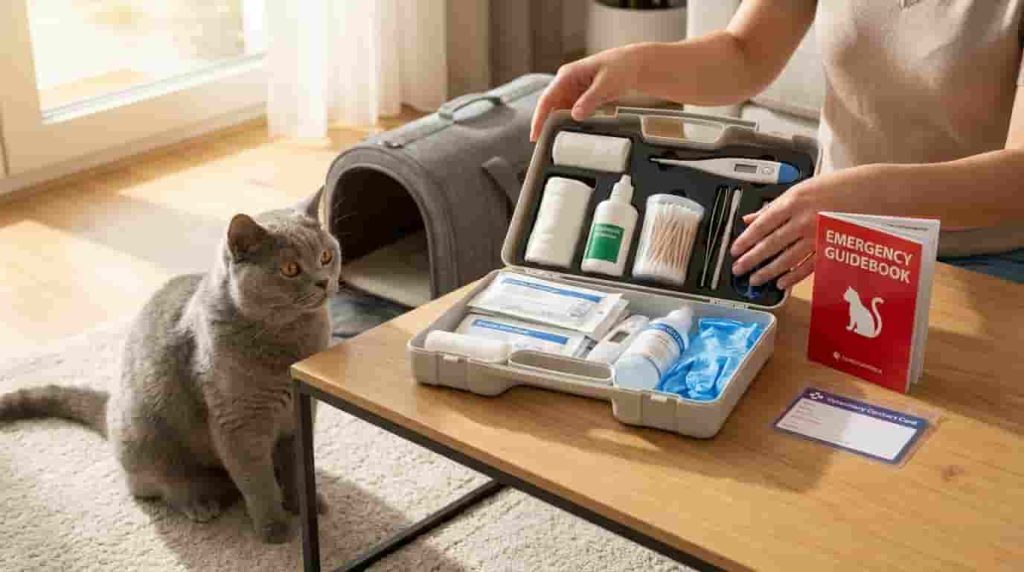
Many pet parents do not keep a proper cat emergency kit ready in their homes. You might think your human medical supplies will work fine for common cat health emergencies.
However, feline injuries require specialized medical items to avoid causing more pain. For example, my neighbor Linda tried to wrap her cat’s scratched ear using standard human adhesive tape.
The sticky tape pulled the cat’s fur and caused severe panic during the emergency response. She had to visit a clinic just to get the sticky tape removed safely.
This stressful mistake could have been avoided by keeping a cohesive vet wrap bandage at home. This specific medical wrap sticks securely to itself instead of pulling on delicate pet fur.
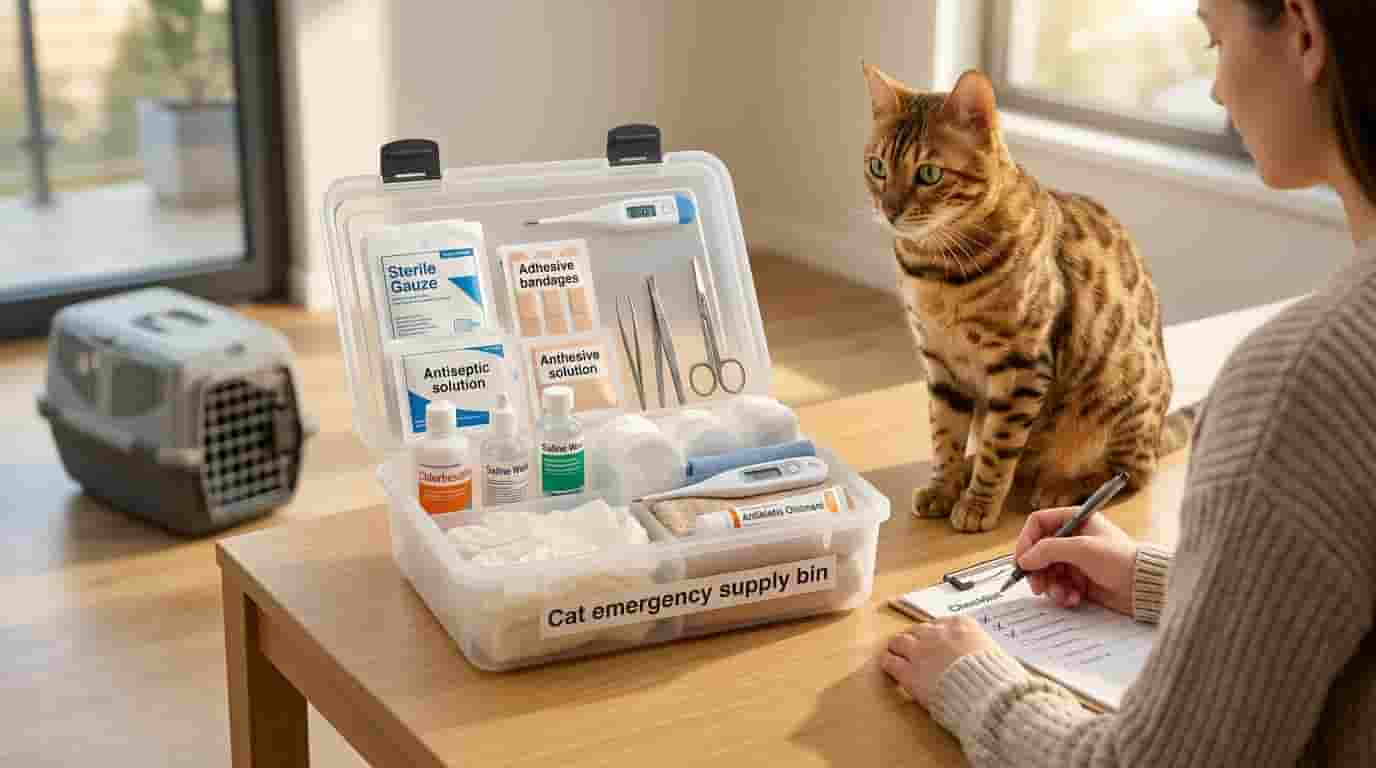
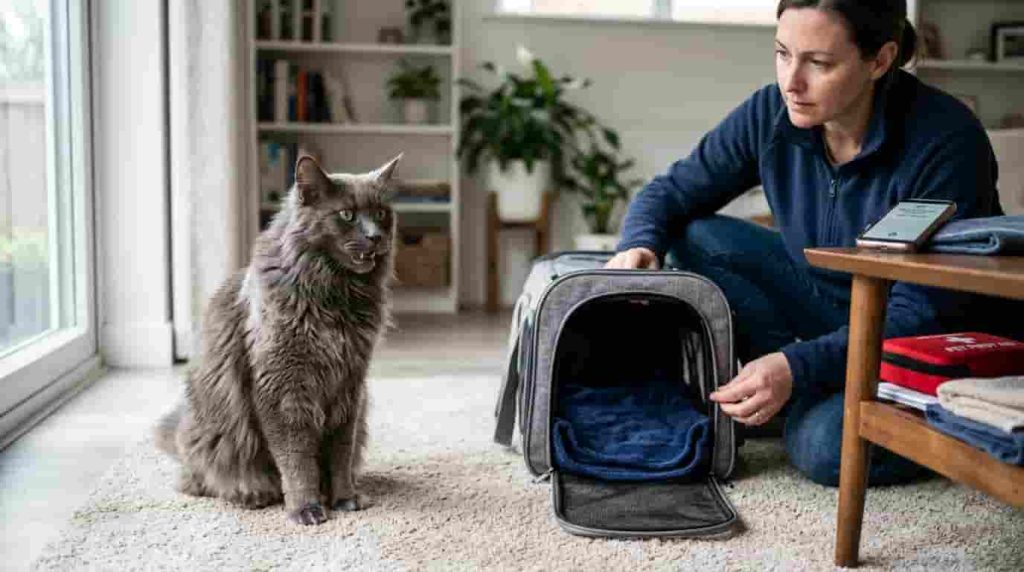
You should store your specialized pet medical supplies inside a clean waterproof container. Keep this bin in an easily accessible location known to everyone in your family.
Furthermore, you must check the expiration dates on your cleansing solutions twice a year. Having fresh medical supplies ready ensures a fast cat emergency response when every second counts.
Essential Supplies for Your Home Emergency Bin
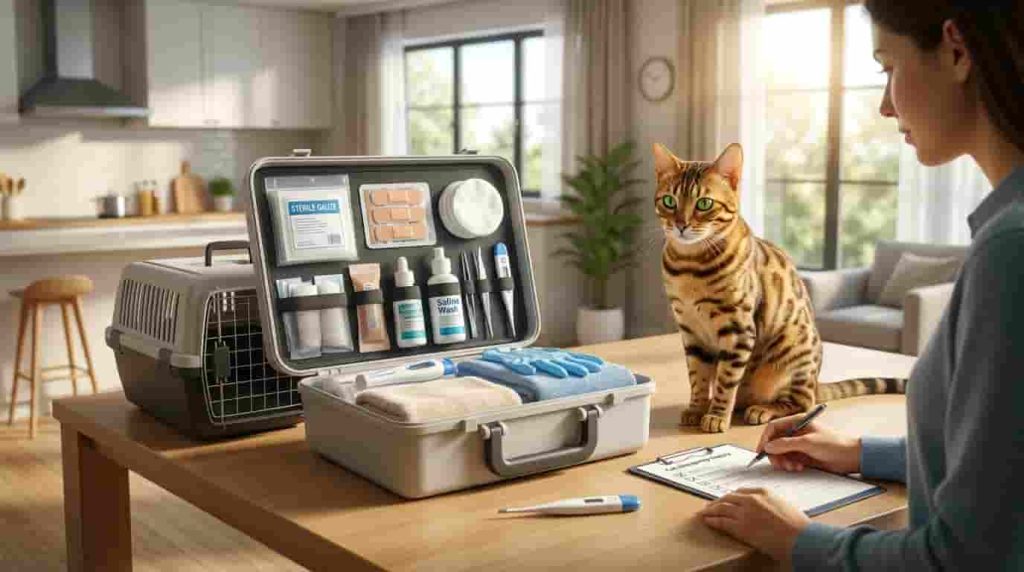
You can easily build an effective medical bin using standard items from a local pharmacy. Ensure your home container always holds these basic tools for treating cat injuries safely.
- Cohesive vet wrap: This flexible gauze bandage sticks only to itself without pulling fur.
- Sterile saline solution: Use this gentle fluid to flush out dirty wounds or irritated eyes.
- Blunt tipped scissors: These scissors cut away tight strings safely without snipping feline skin.
- Digital rectal thermometer: This tool measures internal heat accurately during sudden pet illnesses.
You should review these items regularly to keep your home kit prepared for action. Being fully equipped prevents unnecessary panic when a sudden injury occurs in your household.
Step by Step Actions for Treating Cat Injuries Safely

You must prioritize personal safety when managing acute feline emergency care at home. An injured animal will often bite or scratch their favorite person because of severe pain.
First, drape a thick bath towel gently over your cat’s shoulders to restrain them securely. This classic burrito wrapping method protects your hands from sharp claws during the physical evaluation.
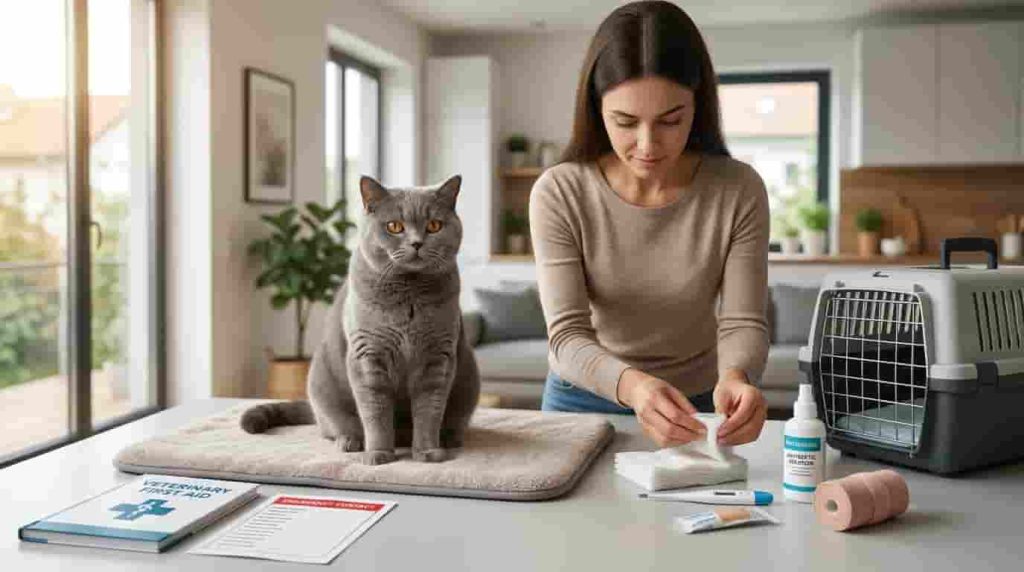
Next, inspect the damaged area under a bright light to locate the exact source of bleeding. Apply firm pressure directly to the wound using a clean square of sterile gauze.
Hold the gauze pad in place for three minutes without lifting it to check the progress. This steady pressure helps the blood clot naturally over the open skin tear.
You can apply a clean veterinary first aid for cats wrap once the bleeding slows down. Never wrap the flexible bandage too tightly around an injured leg or paw.
According to emergency care guidelines from the ASPCA, tight bandages cut off vital blood circulation entirely. Therefore, you should always verify that you can fit two fingers easily beneath the wrap.
Managing Severe Feline Breathing Emergencies at Home
A choking incident requires fast physical action to clear the airway before your pet loses consciousness. You must look for frantic pawing at the mouth or pale blue tongue coloration.
First, open the jaws gently by pressing your fingers against the sides of their lips. Look directly inside the throat to see if a small toy or bone is visible.
Next, use your fingers to sweep the foreign object out if it feels loose. Do not push blindly because you might shove the object deeper into the windpipe.
Finally, implement basic cat cpr instructions if your pet stops breathing completely. Give small breaths through their nose while holding their mouth firmly closed with your hand.
Differentiating Injury Trauma from Internal Medical Illnesses
You should learn to separate physical trauma from sudden cat illness first aid scenarios. A broken bone from a bad fall presents obvious physical markers like limping.
However, internal medical emergencies can stay hidden from pet parents for several days. For instance, look for sudden Cat Vomiting Causes because frequent vomiting can point to a deadly intestinal blockage.
This dangerous condition requires immediate emergency veterinary care for cats rather than simple home monitoring. Watch your pet closely for signs of extreme abdominal pain or vocal whimpering.
You must also check for systemic changes by performing simple Cat Dehydration Tests at home. Sticky gums and slow skin response mean your pet needs immediate intravenous fluid support.
Critical Medical Warning: A male cat that strains in the litter box without passing urine faces a fatal blockage. This specific situation constitutes a massive emergency that requires immediate surgical intervention at a hospital.
You can also evaluate their internal heat levels if you completed basic cat first aid training. Look for obvious Cat Fever Signs like burning ears, dry nose, and sudden shivering behaviours. High internal heat means an infection is moving rapidly through their bloodstream.
Veterinary Rules for Immediate Transportation

Some specific situations require an immediate departure for the nearest emergency animal clinic. You should skip home care steps entirely if you observe any of these warning signs:
- Your pet swallows a known household poison or a toxic lily plant leaf.
- The cat experiences a hard fall and cannot move their rear legs.
- You observe active seizures that last for more than sixty seconds straight.
- The cat loses consciousness completely and does not respond to your voice.
Taking instant action ensures your pet receives professional diagnostics during a major health crisis. Do not waste valuable time waiting for an regular appointment.
Proactive Habits for Eliminating Home Safety Hazards

You can easily prevent many pet first aid for cats scenarios by pet proofing your home. Consistent attention to small details keeps your furry family members away from hidden household dangers.
First, store all sewing needles, embroidery threads, and loose dental floss inside secure drawers. Cats love playing with dangling strings but often swallow them during daily play sessions.
Consequently, these linear items can twist the intestines tightly and cause fatal tissue damage. This simple storage habit eliminates a major cause of surgical feline emergencies.
Next, audit your indoor houseplants to remove toxic varieties like peace lilies and sago palms. Keep all human medications locked safely inside bathroom cabinets far away from counter surfaces.
Finally, read a modern cat first aid manual to refresh your safety knowledge annually. Preparing your mind beforehand helps you maintain total control when an unexpected crisis occurs.
Conclusion
Mastering basic cat first aid skills allows you to protect your pet when an accident happens. Knowing how to apply bandages and stop bleeding gives you confidence during a home crisis. Remember that your home care actions serve to stabilize your pet safely for transportation.
You must always follow up your home care with a professional examination at a clinic. Vets possess the specialized tools needed to ensure full recovery from deep tissue injuries.
Have you ever faced a sudden emergency with your pet at home? Please share your personal stories in the comments section below to help other pet parents learn.
Frequently Asked Questions
Your home kit should contain cohesive vet wrap bandages, sterile gauze pads, and blunt scissors. You should also include sterile saline solution for flushing wounds and a digital rectal thermometer. Keep your local emergency vet phone number taped directly to the container lid.
Open the jaws gently to check the back of the throat for visible foreign objects. Use a finger sweep to remove the item only if it is loose and easily reachable. Never push your finger deep into the throat because you might jam the object further down.
Seek immediate veterinary care if your cat struggles to breathe or loses consciousness completely. You must go to a clinic immediately for deep wounds with heavy bleeding or suspected poisoning. Straining to urinate also requires an instant emergency visit.
No, you must never give human pain medications like ibuprofen or acetaminophen to a cat. These human drugs are highly toxic to felines and can cause fatal liver or kidney failure. Always wait for a veterinarian to prescribe safe pet specific medications.
You can take certified online courses through authoritative organizations like the American Red Cross. Many local veterinary hospitals also offer seasonal workshops covering basic pet handling and CPR. Reading updated veterinary books keeps your emergency response skills sharp.