Cat Window Stress: When seeing outside cats causes redirected aggression.
Introduction:
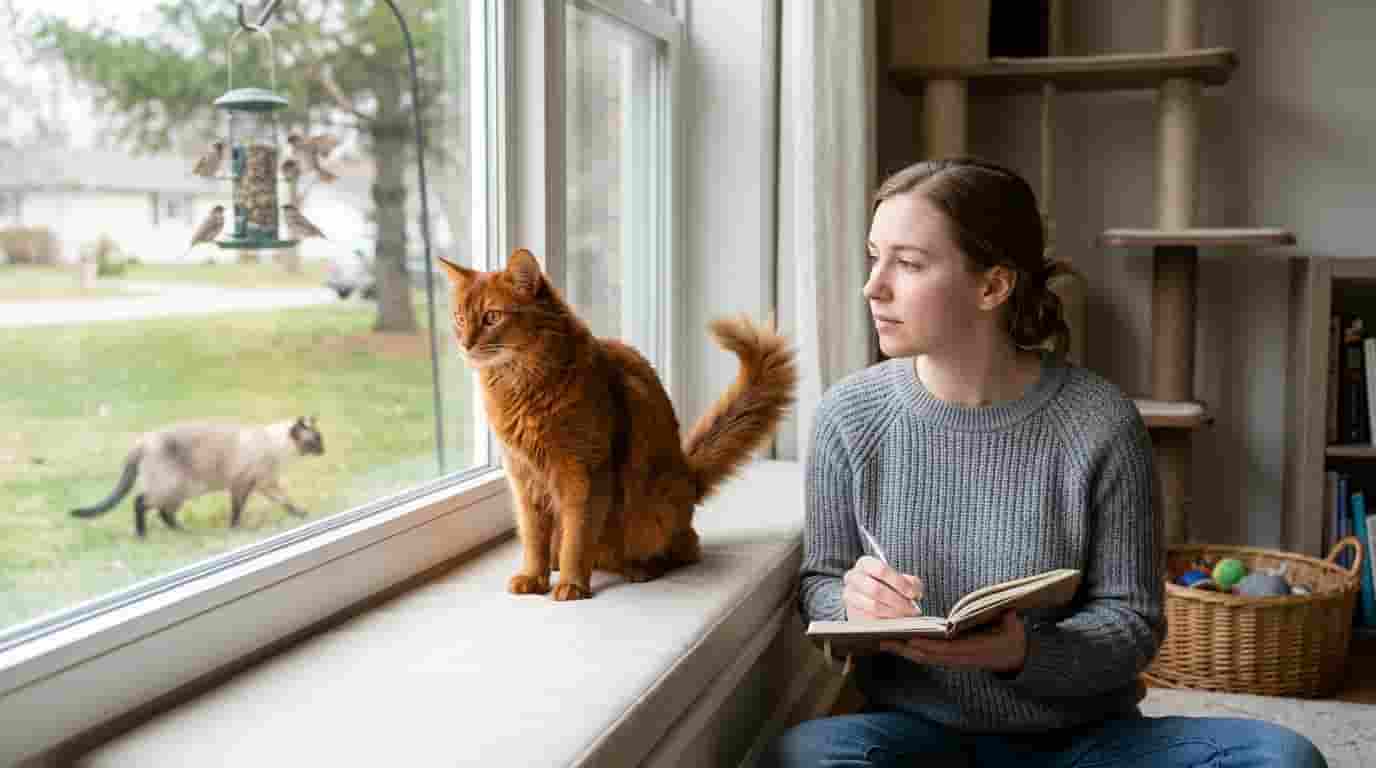
Cat Window Stress is a serious hidden issue that many indoor pet owners face unexpectedly. You might be petting your calm kitty while they look out the glass pane. Suddenly, another animal walks across your yard or garden fence outside. Your favorite pet instantly turns around and fiercely attacks your hand or another household pet.
This distressing behavior happens because the window acts as a physical barrier to their hunting instincts. Your indoor pet wants to defend its territory but cannot actually reach the target animal. Therefore, they direct that high emotional tension onto the closest person or object inside.
Understanding this reaction helps you build a safe environment for your feline companion. This comprehensive guide will show you how to manage this specific stress effectively. We will share practical tips to restore peace and harmony to your beautiful home today.
Cat Window Stress Explained
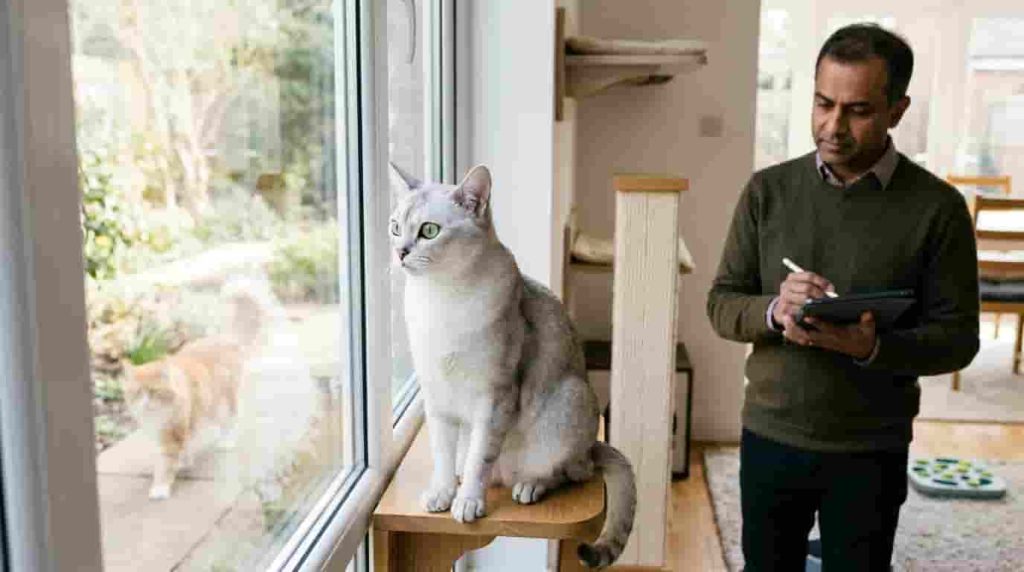
To handle Cat Window Stress properly, we must first look at why indoor felines react so strongly. Your pet views the entire house as their personal kingdom that they must protect daily. When an outdoor intruder appears near the glass, your pet enters a primal fight or flight state. Their heart rate spikes immediately and their adrenaline levels surge to extreme heights.
Because they cannot attack the real intruder, they feel incredibly trapped and frustrated. Consequently, this built up energy explodes as sudden redirected aggression toward innocent bystanders. Many owners do not realize that the window view actually causes this terrifying behavior change.
Instead, people often assume their pet has suddenly developed a random mean streak out of nowhere. You might experience similar behavioral challenges if your pet is prone to general household anxiety. For instance, some pets develop bad habits like Cat Cord Chewing when they feel bored or scared.
Both issues stem from a distinct lack of control over their immediate environment. Therefore, providing successful pet behavior solutions requires us to look closely at their daily visual triggers. We must actively manage what our indoor pets see throughout the day to ensure feline anxiety relief.
Identifying the Visual Triggers
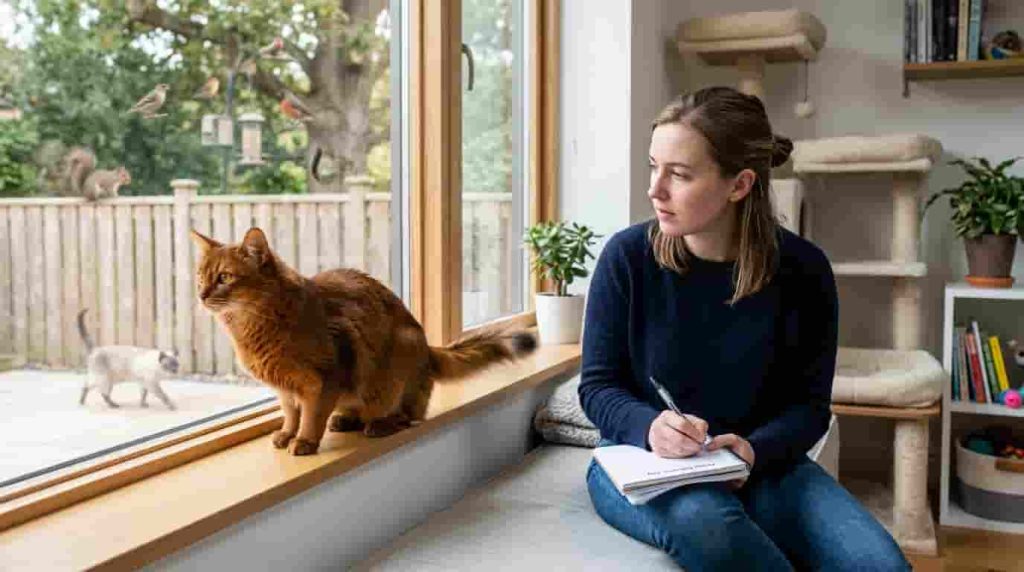
When we analyze the causes of Cat Window Stress, we discover that specific animals trigger higher irritation levels. Stray cats usually cause the most intense territorial responses because they represent direct competition. Additionally, fast birds or small squirrels can trigger a frustrated predatory drive very quickly.
A helpful article from the ASPCA notes that redirected aggression is one of the most dangerous types of feline behavior. This specific reaction happens because the cat loses total control over its emotional responses. They enter a reactive zone where they do not recognize their loving owners at all.
Therefore, you must learn to read the early body language of a highly agitated pet. Look for a twitching tail, flattened ears, or growling sounds while they stare outside. These subtle signs tell you that your indoor companion is currently experiencing intense pressure.
Furthermore, you can compare these reactions to other unique behavioral responses around the home. Some cats show confusion when exploring their reflection, as seen in Cat Mirror Self Awareness studies.
However, seeing a real outside animal triggers a much stronger survival instinct than a harmless reflection. You must take action before that high stress turns into a physical attack on your family.
| REACTION LEVEL | PHYSICAL SIGNS | REQUIRED ACTION |
| Low Tension | Fixed staring, slight tail twitching | Distract with a noisy toy |
| Medium Tension | Low growling, flattened ears, puffed fur | Block the window view completely |
| High Tension | Loud hissing, screeching, striking out | Evacuate the room safely immediately |
Understanding the Mechanics of Redirected Aggression
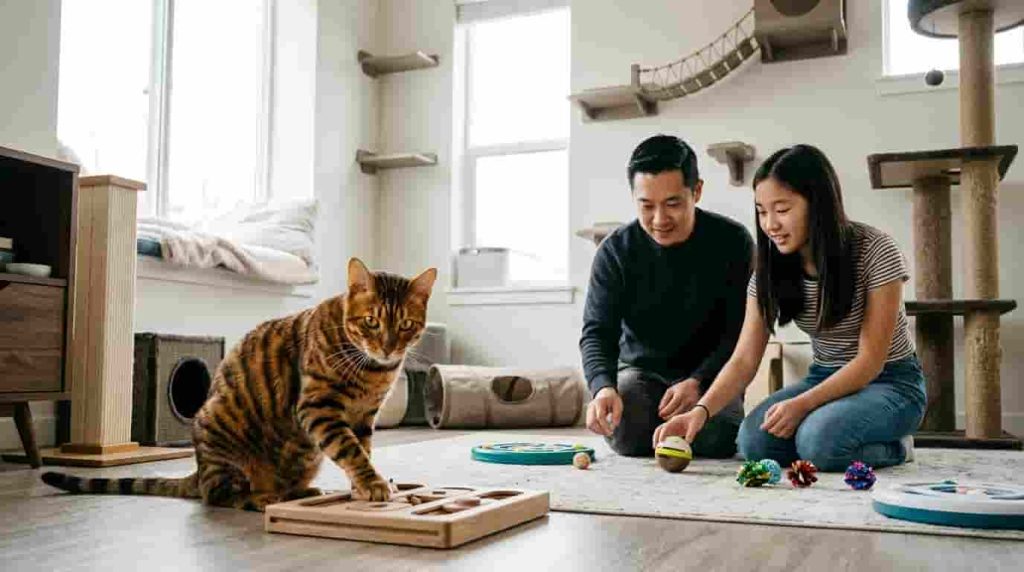
The mechanics of redirected aggression are simple yet devastating for unsuspecting pet parents. When your pet watches an enemy, its nervous system locks into an intense survival mode. This state can last for several hours even after the outside animal walks away.
As a result, you might walk past your cat much later and trigger an attack. The cat is not actually mad at you during that stressful moment. They are simply reacting to the leftover adrenaline still pumping through their tiny body.
Creative Calming Solutions for Indoor Cats
Fortunately, you can use several creative calming solutions for indoor cats to lower these high tension levels. Your first major goal is to break the direct visual connection to the outside world. You can install a temporary calming cat window treatment like frosted window film on the glass.
This specific film blocks the view of outdoor animals while letting beautiful sunlight into your room. Additionally, you should consider moving any furniture away from that specific problematic view. If your pet cannot climb up high, they cannot obsess over the outside yard.
This simple step helps reduce cat stress at windows without ruining your home decor. Next, you can focus on providing alternative forms of high quality indoor cat enrichment. For example, you can introduce puzzle feeders that challenge their minds during mealtime.
These fun games distract their brains from the territorial battles happening outside your walls. This method works well for other behavioral problems, such as managing Cat Plant Nibbling tendencies. When you give cats a better outlet for their energy, their bad behaviors disappear.
Designing a Stress Free Environment
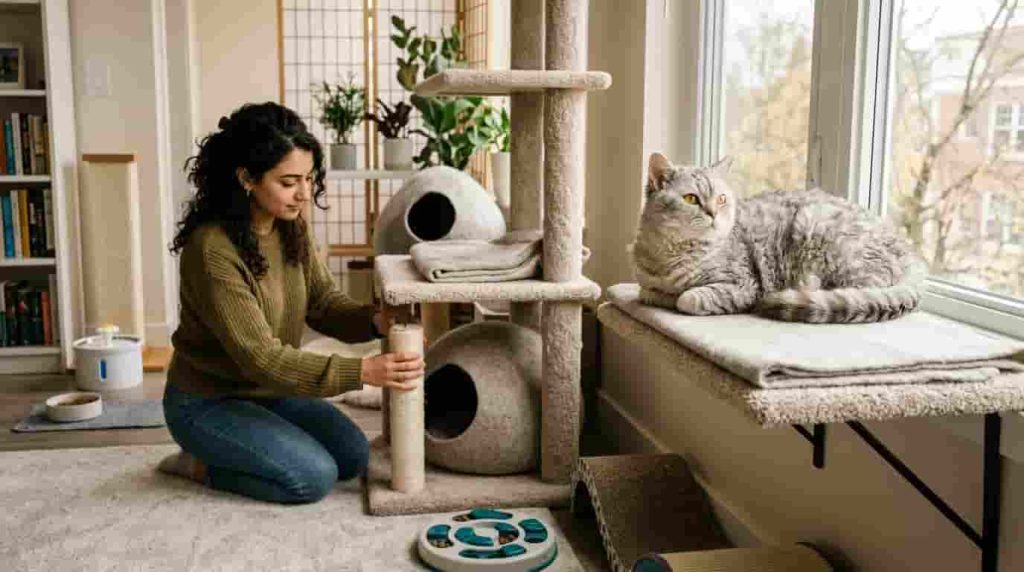
Creating a stress-free environment for cats requires a careful balance of view management and comfort. You do not have to banish your pet from every single pane of glass in the house. Instead, you should choose safe viewpoints that do not face high traffic stray cat areas.
You can install a special calming cat window perch on a quiet window in the back room. This designated spot allows them to enjoy the outdoor view without facing constant territorial threats. According to experts at VCA Animal Hospitals, environmental management is the best way to prevent feline stress.
By controlling their access to triggers, you naturally reduce cat stress at home. Furthermore, you can enhance these specific areas with comforting items like soft fleece blankets. A cozy window perch for anxious cats provides a sense of security and safety.
Your pet will begin to associate the glass pane with relaxation rather than intense combat. Additionally, you can try using synthetic feline pheromone sprays around the cozy perch. These natural scent products send comforting signals that assist with feline stress management.
Implementing Cat Behavior Modification
You can also use basic cat behavior modification to change how your pet reacts to outside sights. When you see your cat look outside calmly, give them a delicious treats immediately. This simple action rewards them for remaining relaxed in the presence of outdoor movement.
However, you must never punish your pet if they start hissing at the glass. Punishment will only increase their overall fear and make the problem much worse. Instead, try to guide them away from the glass pane using a feather wand toy.
The Power of Behavioral Enrichment for Cats
Providing rich behavioral enrichment for cats is vital for keeping their minds active and healthy. A bored indoor cat is much more likely to develop extreme reactions to outside stimuli. You can set up an indoor climbing tree away from the main windows to encourage exercise.
This active setup helps burn off the excess energy that usually fuels territorial aggression. As a result, you will notice a major improvement in their general daily behavior. Your home will become a peaceful sanctuary where your pet feels completely safe and content.
Professional Cat Behavior Therapy Options
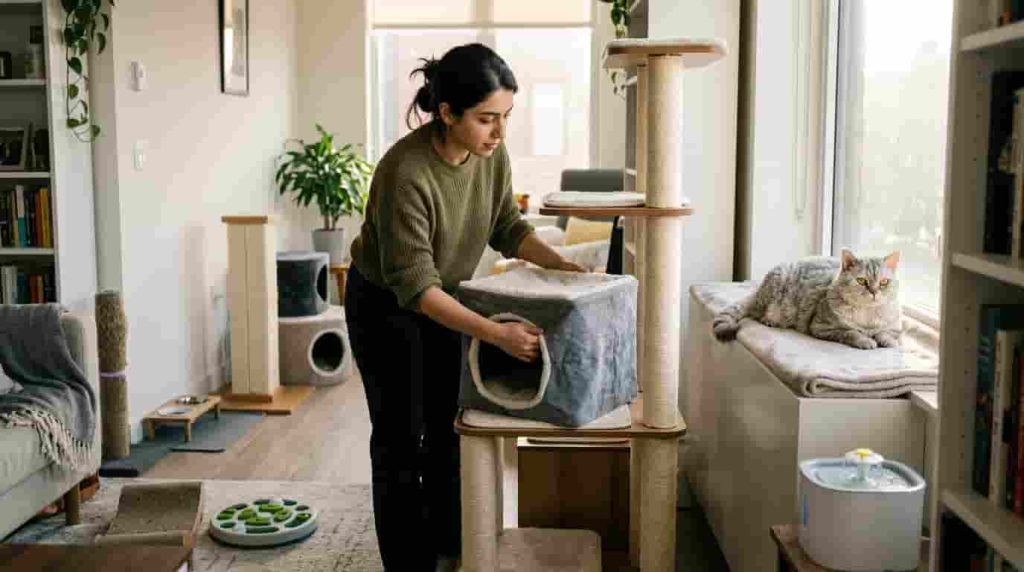
Sometimes, managing Cat Window Stress requires professional help from a certified animal behaviorist. If your pet continues to attack family members, you must seek expert guidance right away. A professional can design a customized cat behavior therapy plan for your specific household layout.
They might suggest advanced calming techniques for cats that involve structured desensitization exercises. In severe cases, a veterinarian might prescribe temporary anxiety medication to help your pet calm down. This medical support allows the behavior training to work more effectively over time.
Additionally, you can explore ways to reduce cat stress naturally through herbal supplements or calming music. Many owners find that classical music helps soothe an anxious feline mind quite beautifully.
Combine these soothing sounds with practical cat-friendly home improvements for the absolute best results. For instance, creating high vertical walkways gives your pet a safe place to escape from danger. When cats can climb high above the room, they naturally feel more secure and less defensive.
Evaluating Stress Free Window Perches
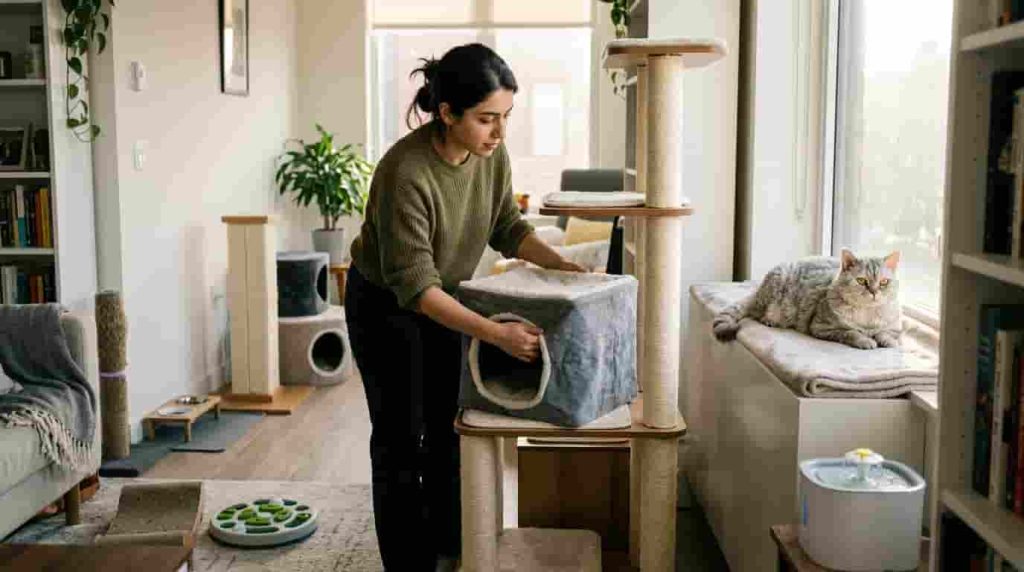
When shopping for stress-free window perches, look for sturdy models that do not wobble at all. A shaky perch will only increase your pet’s general anxiety and make them feel unsafe. Choose a secure design that attaches firmly to your wall or the window frame directly.
This reliable structure ensures your cat feels completely grounded while they watch the outside world. This sense of physical stability is highly important for lowering their overall baseline stress levels.
Long Term Cat Stress Reduction Tips
For long term success, you must remain highly consistent with your cat stress reduction tips. Keep outside stray animals away from your yard by using motion activated water sprinklers. These humane tools discourage neighborhood cats from roaming near your windows and upsetting your pet.
Furthermore, ensure your pet has plenty of quiet hiding spots deep inside the house. A dark closet or a cardboard box can provide the perfect safe zone during a stressful moment. When your cat has a place to hide, they rarely feel forced to fight.
Conclusion
In conclusion, Cat Window Stress is a manageable condition that requires patience, understanding, and quick action. By blocking visual triggers and enhancing indoor cat enrichment, you can successfully eliminate redirected aggression. You will protect your family while helping your beloved pet live a much happier life.
Always remember to move slowly when making changes to your pet’s main environment. Consistency is the true key to achieving lasting peace within your feline household.
Have you ever witnessed your kitty suddenly snap after staring out the front window? Please share your personal stories and favorite cat anxiety relief tips in the comments below!
Frequently Asked Questions
Your indoor cat gets mad because they see the outside animal as an immediate threat to their territory. Since the glass blocks them from defending the yard, their frustration turns into extreme agitation.
Redirected aggression can last from a few hours to a couple of days in highly sensitive cats. It takes a long time for the stress hormones to clear out of their system completely.
Yes, a secure perch placed at a quiet window can help by providing a safe viewpoint. It allows your pet to watch the world without facing direct territorial threats from neighborhood strays.
The fastest way is to block their view of the outside triggers using opaque film or blinds. Removing the visual stimulus immediately lowers their arousal levels and prevents sudden aggressive outbursts.
You only need to treat the specific windows where your pet regularly encounters outside animals. Focus on low windows that face active yards where stray cats or neighbor dogs walk by frequently.