
Cat Hunting Geckos: Is It Safe for Cats to Eat Wall Geckos?
Introduction:
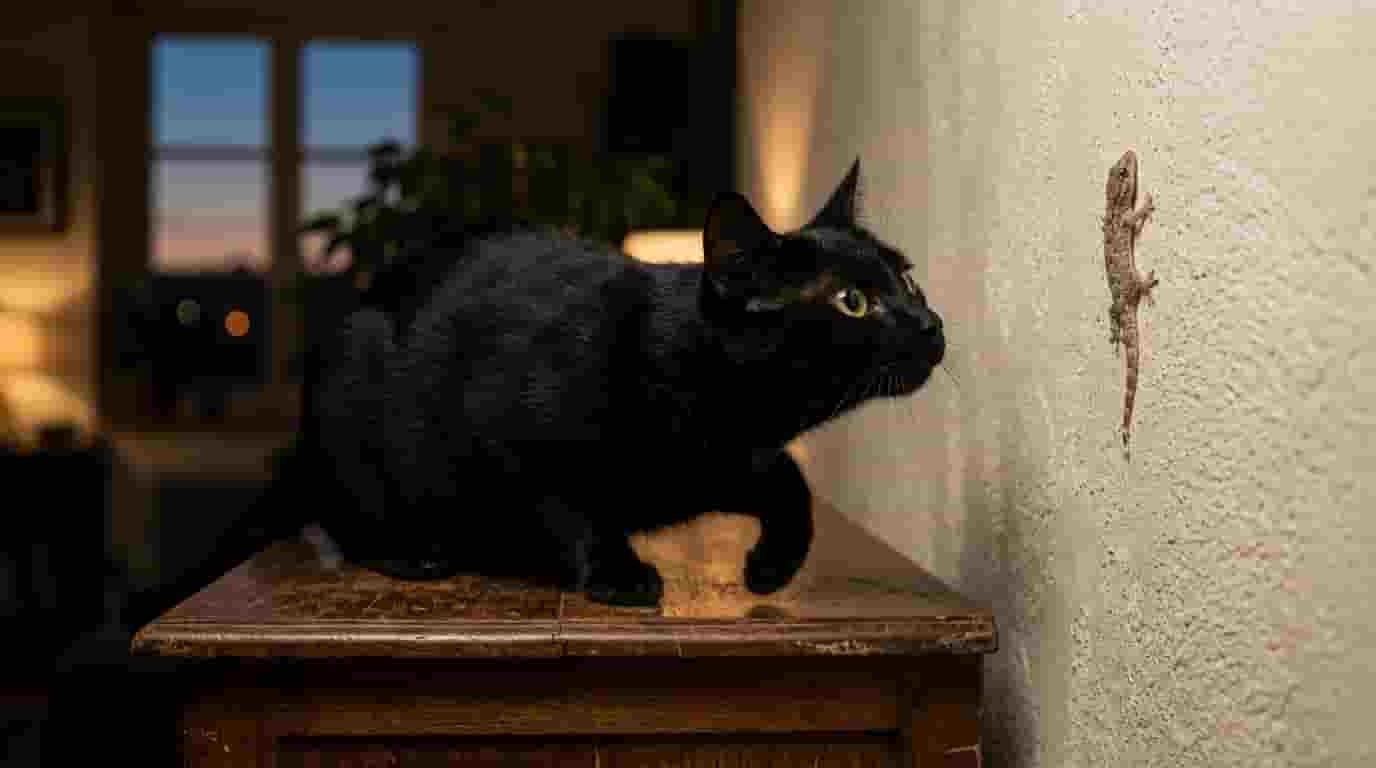
Cat hunting geckos is one of the most common sights for cat owners living in Nigeria and across tropical Africa. You hear a soft thud from the wall. Your cat freezes completely. Their tail twitches once, twice. Then they launch upward and swat a small house gecko clean off the ceiling.
Most owners laugh it off the first time. However, the concern arrives the moment that gecko ends up in your cat’s mouth. Is the gecko toxic? Could your cat get sick? Should you try to remove it or let nature take its course?
These are the questions thousands of cat owners in warm climates search for every single day. Cat hunting geckos happens regardless of whether your home is spotless or not, because wall geckos are simply everywhere in tropical environments and your cat’s hunting instinct responds to any small moving creature automatically.
This guide answers the safety question directly and completely. You will learn what real risks exist when cats eat geckos, which warning signs require urgent veterinary attention, and practical ways to manage this hunting behaviour without frustrating yourself or your cat.
Cat Hunting Geckos: What the Real Risks Actually Are

The first thing most owners want to know is simple. Are wall geckos poisonous to cats? The short answer is no, common house geckos found on Nigerian walls are not directly toxic to cats in the way that some frogs, toads, and brightly coloured lizards are in other parts of the world.
However, that does not mean eating a gecko carries zero risk. Several indirect health concerns make cat hunting geckos a behaviour worth monitoring carefully even when the gecko itself is harmless.
Here are the real risks your cat faces after catching and eating a wall gecko:
- Salmonella bacteria which geckos carry on their skin and in their digestive tracts. Cats that eat infected geckos can develop salmonellosis, causing vomiting, diarrhoea, lethargy, and fever. The same bacteria can transfer to humans through contact with an infected cat.
- Parasitic infection from flatworms called liver flukes which geckos sometimes carry as intermediate hosts. Cats that regularly eat geckos face a cumulative risk of internal parasite infection over time.
- Pesticide poisoning which is the most serious and most overlooked risk of all. Geckos eat insects heavily and store pesticide residues from poisoned insects in their own tissues. A cat that eats a gecko recently exposed to insecticide can suffer secondary poisoning even though the gecko itself was not the direct source.
- Choking or internal injury from gecko bones and the rigid cartilage structures in larger wall geckos, particularly if your cat swallows the gecko quickly and without proper chewing.
According to VCA Animal Hospitals, while most common house lizards and geckos do not carry direct toxins dangerous to cats, the secondary risks from parasites and bacteria make regular gecko consumption genuinely worth discussing with your vet.
Warning Signs to Watch After Your Cat Eats a Gecko

Most cats that eat an occasional house gecko show no symptoms at all and suffer no lasting harm. However, knowing which warning signs require immediate veterinary attention gives you the confidence to act quickly when something does go wrong.
Watch your cat closely for these symptoms in the hours following gecko consumption:
- Vomiting or repeated retching beyond a single episode immediately after eating
- Loose or watery stools developing within twelve to twenty-four hours
- Drooling excessively or pawing at the mouth as though something is stuck
- Lethargy and reluctance to move that feels clearly different from normal sleepiness
- Loss of appetite that extends beyond one missed meal
- Trembling, muscle twitching, or difficulty walking which point toward possible pesticide toxicity
- Pale or yellowish gums which can indicate liver stress from parasite-related damage
Any neurological symptoms including trembling, loss of coordination, or sudden collapse require emergency veterinary care without delay. These symptoms point most strongly toward secondary pesticide poisoning rather than a direct gecko-related risk and need urgent professional treatment.
Take a moment to consider whether your home or neighbourhood uses pest control sprays regularly. Homes where insecticides are applied frequently to walls and ceilings carry a much higher secondary poisoning risk to cats that hunt geckos on those same surfaces.
Why Cats Cannot Stop Hunting Geckos Even When You Try to Prevent It
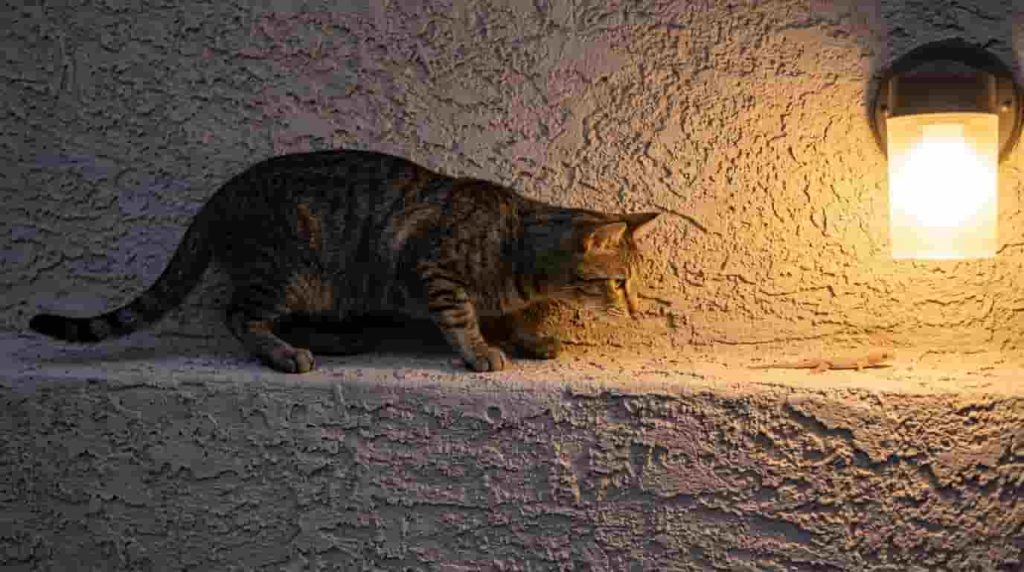
Understanding why cat hunting geckos happens so persistently helps you set realistic expectations around managing the behaviour. Your cat does not hunt geckos out of hunger. They hunt them because every moving small animal activates a predatory sequence so deeply wired into feline biology that no amount of indoor comfort ever fully switches it off.
Geckos make perfect prey targets for cats because they check every box that triggers the hunting response simultaneously. They move in fast unpredictable bursts that mirror prey flight patterns. They stick to vertical surfaces that challenge a cat’s agility in a satisfying way. They are the right size to feel manageable but exciting enough to sustain the stalk-and-chase sequence through its full natural arc.
Consider what Adaeze in Port Harcourt discovered with her two-year-old cat Kosi. Kosi had never shown interest in the house geckos for his first year of life. Then one gecko fell from the wall directly in front of him during an evening. Kosi caught it in under three seconds. From that moment on, Kosi became an obsessive gecko hunter, patrolling the walls every evening after dark when geckos became most active. Adaeze could not remove the geckos from her environment. However, she redirected Kosi’s peak evening hunting energy into a fifteen-minute wand toy session right at dusk, which reduced his gecko catches significantly over the following months.
This redirection approach works because it satisfies the same predatory drive that geckos trigger, without the associated health risks that come from actual gecko consumption.
How Cat Predatory Behaviour Differs Between Indoor and Outdoor Cats
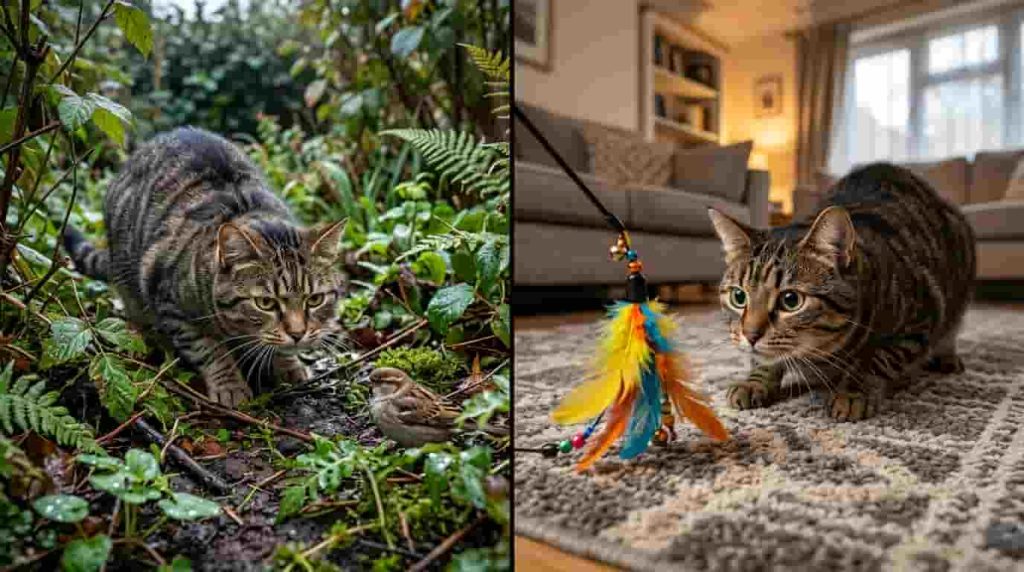
Indoor cats and outdoor cats both hunt geckos, but their behaviour patterns and exposure risks differ in important ways. Understanding these differences helps you tailor your management approach to your specific cat’s situation.
Indoor cats that hunt wall geckos inside the home face primarily the pesticide secondary poisoning risk, particularly in homes where regular pest control treatments are applied to interior walls. Their gecko exposure is consistent but typically limited to the house gecko species common in Nigerian homes.
Outdoor cats and semi-indoor cats face a wider range of reptile species and therefore a more variable risk profile. They encounter larger lizards, skinks, and occasionally different gecko species with varying parasite loads. Their prey volume is also much higher, which means cumulative parasite exposure builds more quickly over time.
For both groups, regular deworming forms the single most important protective measure you can take. Cats that hunt geckos regularly should receive parasite treatment more frequently than the standard once or twice yearly schedule most owners follow. Your vet recommends the right deworming interval based on how actively your cat hunts and what their parasite test results show.
Feline predatory behaviour does not exist in isolation. It connects directly to a cat’s overall stimulation level, territorial confidence, and daily energy output. Reading about cat scent marking gives you additional context about how cats define and manage their territory, which shapes where and how intensely they hunt within their home environment.
Practical Ways to Reduce How Often Your Cat Catches Geckos

Complete prevention of cat hunting geckos in a tropical home is essentially impossible without removing your cat’s access to every gecko-inhabited space, which is neither practical nor fair to your cat. However, several realistic strategies reduce gecko contact and the health risks that come with it.
1. Increase interactive play at peak gecko activity times. House geckos become most active on walls in the early evening and at night. Scheduling an energetic play session with a wand toy or laser during this window redirects your cat’s hunting drive before they direct it at the geckos. This approach consistently reduces hunting frequency without frustrating your cat or suppressing their natural behaviour entirely.
2. Keep your cat’s parasite prevention strictly up to date. Speak with your vet about increasing deworming frequency if your cat hunts and eats geckos regularly. Monthly or quarterly deworming may be more appropriate than standard annual schedules for active hunters in tropical environments.
3. Reconsider your pest control approach. If your home uses pesticide sprays on interior walls and ceilings, the geckos living there accumulate those chemicals over time. Switching to gecko-safe pest control methods or avoiding wall and ceiling sprays in areas your cat accesses reduces secondary poisoning risk significantly.
4. Watch for and promptly remove gecko carcasses. A dead gecko left in your cat’s reach is just as likely to be consumed as a live one and may carry higher bacterial loads after death. Remove any gecko remains you find promptly to reduce your cat’s exposure.
5. Monitor for changes in hunting intensity. A sudden dramatic increase in gecko hunting behaviour can signal that your cat feels understimulated, anxious, or bored. Increased predatory behaviour sometimes accompanies separation anxiety in cats left alone for long daily periods. The article on cat separation anxiety gives targeted practical strategies for owners who spend long hours away from home and need stimulation solutions that work within Nigerian working schedules.
Cats in multi-pet households sometimes ramp up hunting and territorial behaviours during periods of household tension. If you recently added a new pet, reading about cat jealousy signs helps you recognise whether increased hunting connects to social stress rather than simple boredom. Additionally, cats that show heightened predatory arousal sometimes redirect that energy into biting during human play sessions. The guide on cat biting during play covers exactly how to manage that redirection with consistent and effective training.
When to Call Your Vet After a Gecko Incident

Most single gecko encounters require only monitoring rather than emergency veterinary intervention. However, certain situations always warrant a phone call to your vet, even if symptoms seem mild at first.
Call your vet promptly if:
- Your cat shows any neurological symptoms including trembling, twitching, or loss of coordination
- Vomiting or diarrhoea continues for more than twenty-four hours after eating a gecko
- Your cat stops eating for more than one full day following a gecko encounter
- You know or suspect the gecko was exposed to pesticide spray before your cat caught it
- Your cat catches and eats geckos multiple times per week over an extended period
The ASPCA Animal Poison Control Center provides around-the-clock guidance for suspected poisoning cases and can advise on whether your cat’s specific symptoms require emergency treatment or careful home monitoring.
Conclusion
Cat hunting geckos is a deeply natural behaviour that every tropical cat owner encounters sooner or later. The good news is that a single house gecko rarely causes serious harm. However, the cumulative risks from parasites, bacteria, and especially pesticide secondary poisoning make this a behaviour worth managing thoughtfully rather than ignoring completely.
Keep parasite prevention current, eliminate pesticide exposure on gecko surfaces where possible, and redirect your cat’s peak hunting energy into daily interactive play sessions. Watch closely after any gecko is eaten and contact your vet immediately if neurological symptoms appear.
Cat hunting geckos will never stop entirely, but with the right approach you significantly reduce the health risks while still honouring your cat’s natural instincts. Has your cat ever caught or eaten a gecko? Share your experience in the comments and tell us whether your cat showed any symptoms afterward and what your vet advised!
Frequently Asked Questions
Common house wall geckos found in Nigerian homes are not directly toxic to cats in the way that some brightly coloured tropical frogs and toads are. However, geckos carry salmonella bacteria, parasites, and pesticide residues from the insects they eat, all of which can harm your cat indirectly. Monitor your cat closely after any gecko is eaten and contact your vet if symptoms develop.
Most cats eat the occasional gecko without any visible symptoms at all. Some cats develop mild vomiting or loose stools in the hours following ingestion as a result of bacteria or irritation. Seek immediate veterinary attention if your cat shows trembling, loss of coordination, or refuses to eat for more than a day after eating a gecko.
Complete prevention is very difficult in tropical homes where geckos are plentiful and your cat’s hunting instinct is always active. Scheduling energetic interactive play sessions during the early evening when geckos are most active redirects your cat’s hunting drive most effectively. Keeping parasite treatment current reduces the health consequences of any gecko catches that do happen.
Yes, cats can acquire internal parasites including flatworms from eating geckos that carry them as intermediate hosts. The risk increases significantly in cats that hunt and eat geckos frequently over an extended period. Regular veterinary deworming at intervals appropriate for an active hunter reduces this risk considerably.
A single gecko encounter typically requires careful monitoring at home rather than an immediate vet visit in most cases. However, call your vet promptly if your cat shows any neurological symptoms, prolonged vomiting or diarrhoea, complete loss of appetite, or if the gecko was likely exposed to pesticide spray before your cat caught it. Early intervention produces much better outcomes when pesticide secondary poisoning is involved.