Cat Plant Nibbling: Training your pet to leave the houseplants alone.
Introduction:
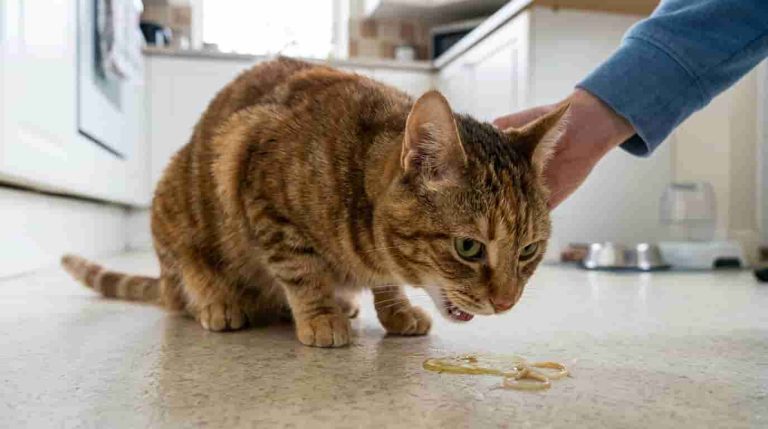
Cat Plant Nibbling is a common household habit that frustrates many indoor gardeners and pet owners today. You might bring home a beautiful new fern or a lush palm to brighten up your living space. Within minutes, your curious kitty is chewing the delicate leaves and digging in the fresh potting soil.
This destructive behavior damages your beloved greenery and poses a major threat to feline health. Many popular decorative greens carry severe toxins that can make an indoor cat incredibly sick. Therefore, you must intervene quickly to establish clear boundaries between your feline friend and your greenery.
Understanding the root cause of this behavior allows you to protect your home garden effectively. This step by step training guide will teach you how to deter cats from nibbling plants safely. We will explore simple methods to keep your pets healthy and your indoor garden thriving.
Cat Plant Nibbling Triggers and Causes
To stop Cat Plant Nibbling permanently, we must first examine why our feline companions love eating foliage. In the wild, felines often consume rough grass to help move hairballs through their digestive tracts. Your indoor pet retains these exact same wild instincts even when living entirely inside a modern home.
Therefore, they target your favorite houseplants because they lack access to natural outdoor fields. Additionally, the gentle movement of hanging leaves triggers their primal predatory drive during the day. A long, dangling leaf looks exactly like a fun toy waiting to be captured and chewed.
This natural desire for physical stimulation can lead to other annoying household habits if left unchecked. For instance, bored felines often turn to dangerous behaviors like Cat Cord Chewing to satisfy their need to chew.
Both issues point to a distinct lack of appropriate sensory outlets within their daily living space. You must change your approach to indoor gardening to address these natural feline habits successfully. We need to provide better alternatives that satisfy their deep biological drives without destroying our valuable decor.
Identifying Toxic and Safe Foliage
When you manage a pet friendly garden, you must identify which species pose a danger to your pet. Certain beautiful flowers like lilies, tulips, and sago palms carry extreme plant toxicity levels for domestic felines. Eating even a tiny piece of a toxic leaf can cause sudden kidney failure or death.
An informational guide from the ASPCA confirms that thousands of pets suffer from accidental poisonings each year. This heartbreaking statistic highlights why every owner must study toxic plants to cats before visiting a nursery. You should replace any dangerous greenery with certified non-toxic plants for cats as soon as possible.
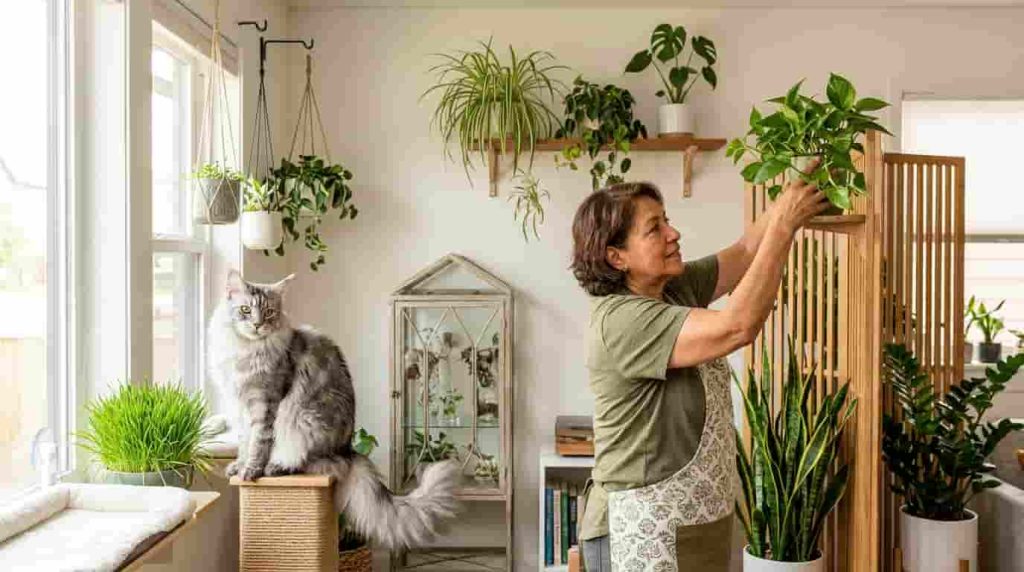
Fortunately, you can choose from many gorgeous varieties that will not harm your adventurous furry companion. Options like spider plants, Boston ferns, and parlor palms qualify as excellent cat-safe indoor plants for homes.
Furthermore, you can compare this plant training process to how you manage other complex feline behaviors. If your kitty experiences Cat Window Stress from seeing outdoor strays, you change their environment to help them relax.
Similarly, you must adjust your home layout to protect plants from cats while keeping the environment peaceful. Let us look at specific physical barriers that keep your greenery pristine and completely out of reach.
| HAZARD LEVEL | PLANT VARIETY | REQUIRED PLACEMENT |
| Dangerous | Lilies, English Ivy, Pothos | Remove from the home completely |
| Moderate Warning | True Ferns, Spider Plants | Place on high shelves or hangers |
| Safe Option | Cat Grass, Organic Catnip | Keep on the floor for easy access |
Creating Effective Physical Boundaries

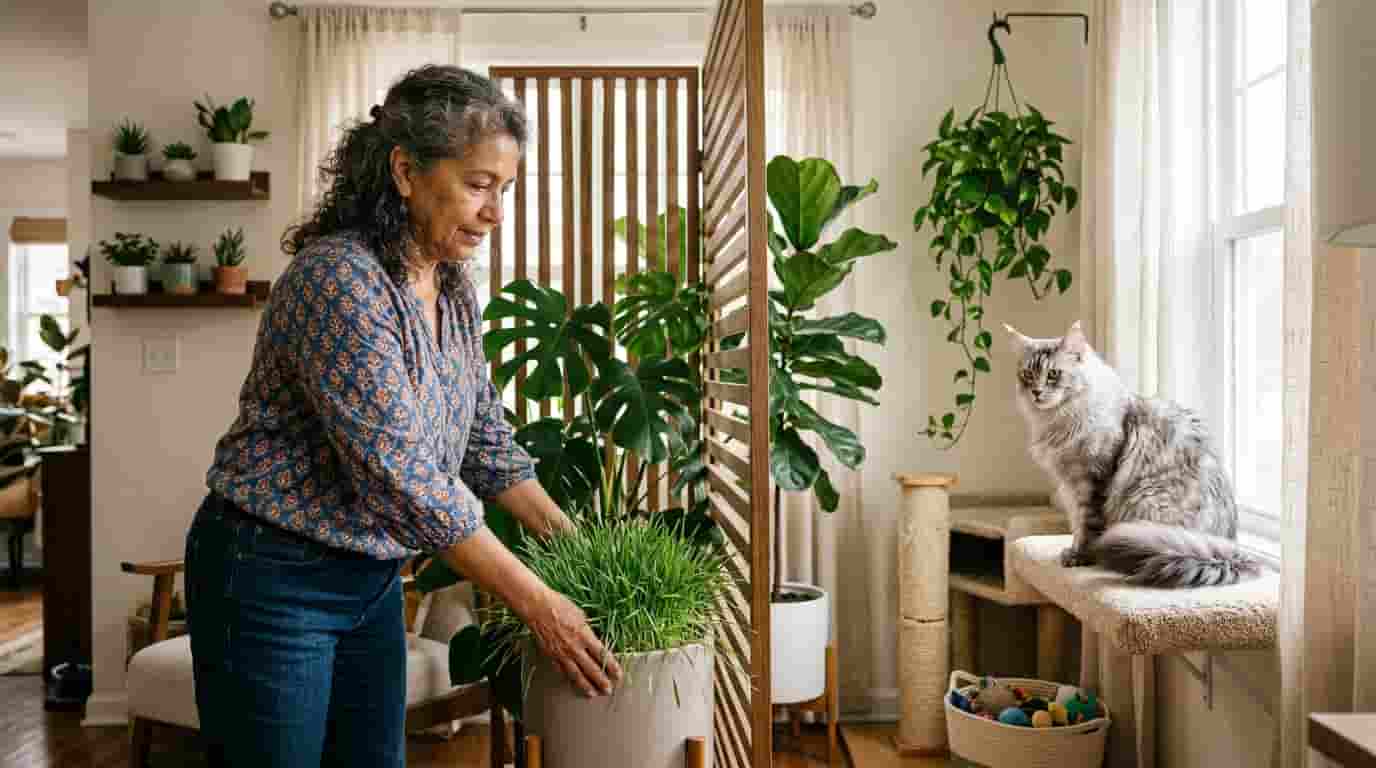
Creating physical boundaries is the fastest way to shield your beautiful collection from curious feline teeth. First, you can place your smaller pots inside glass terrariums or sturdy wire cages. This elegant setup allows light to reach the soil while preventing your pet from touching the leaves.
Next, you can try hanging your favorite trailing vines directly from secure ceiling hooks. Ensure the vines remain high enough so your cat cannot strike them from nearby furniture pieces. Finally, you can dedicate a specific room as a secure greenhouse zone and lock the door.
Introducing Smart Repellent Methods
Additionally, you can use smart natural repellents to teach your pet that your greenery tastes bad. Felines possess an incredibly sensitive sense of smell that guides their daily interaction with the environment. You can spray a diluted mixture of bitter apple or citrus juices directly onto the leaves.
The sour scent will immediately deter cats from nibbling plants without harming the delicate vegetative tissues. This training technique relies on basic pet psychology to build a negative association with the pots.
Over time, your kitty will choose to avoid those specific areas of the living room entirely. This habit change is similar to how felines learn to ignore mirrors in Cat Mirror Self Awareness experiments. They realize the object offers no reward and smartly choose to focus their attention elsewhere.
Offering Safe Green Alternatives

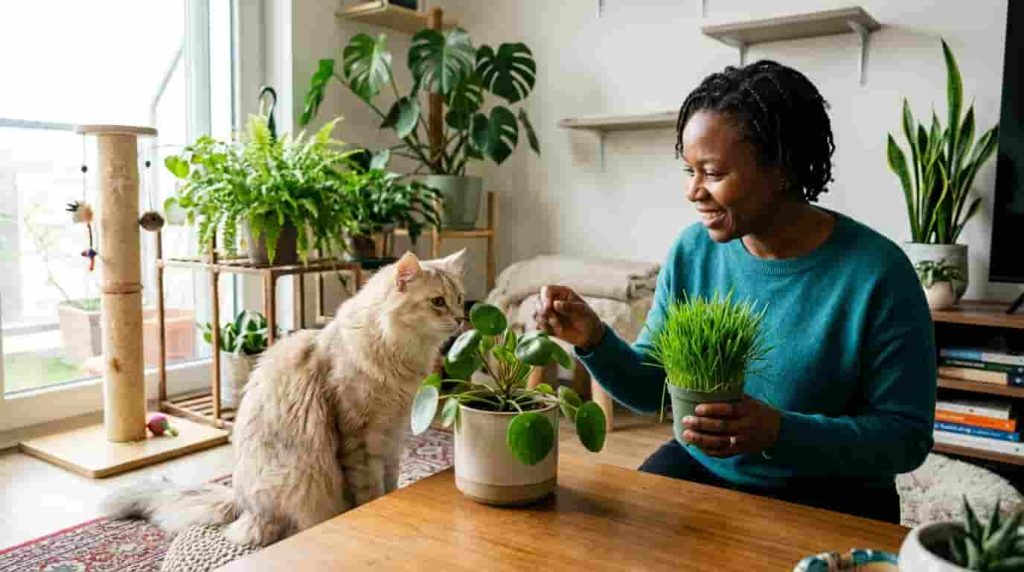
Successfully stopping Cat Plant Nibbling requires you to provide a healthy alternative for your pet to enjoy. You cannot simply banish all greenery without satisfying their natural biological urge to consume rough fiber. Therefore, you should purchase a small tray of organic cat grass from your local pet store.
Place this special treat directly on the floor near their food bowl for easy access. According to veterinary experts at PetMD, offering fresh sprouted oats provides excellent behavioral enrichment for cats. This safe option gives them a legal outlet to satisfy their urge to bite leaves.
Your cat will quickly learn to prefer this tasty grass over your tough, bitter indoor houseplants. Furthermore, you can enhance this dedicated pet zone by adding a small pot of fresh catnip.
This smart addition creates a wonderful distraction that keeps their nose away from your decorative pots. You will successfully protect plants from cats by redirecting their curiosity to a safe destination.
How to Protect Plants from Cats Using Texture
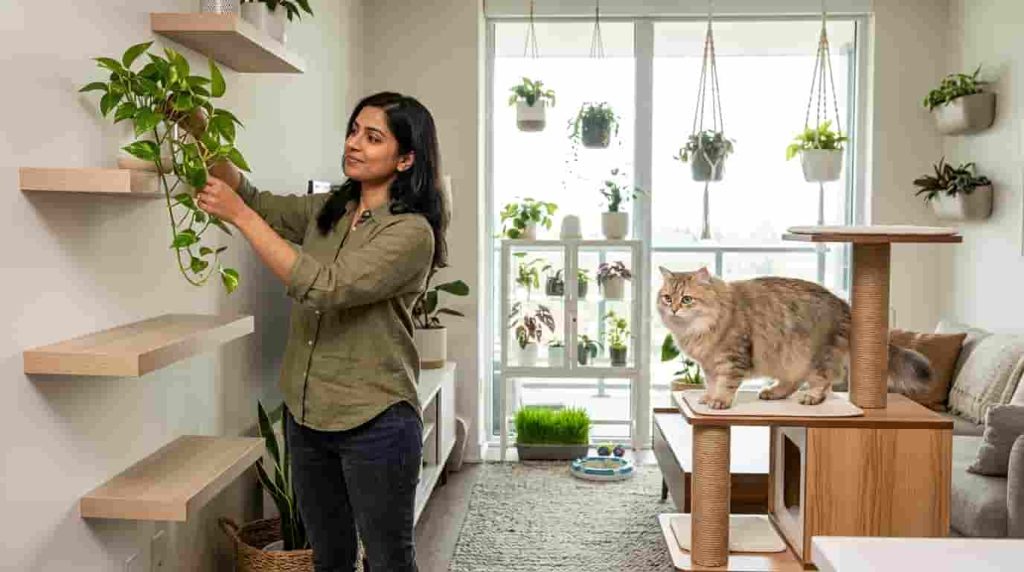
You can also alter the texture of the soil to prevent your kitty from digging around the roots. Felines dislike walking on rough or prickly surfaces because their paw pads are highly sensitive. Try covering the exposed potting soil with a thick layer of large, smooth river rocks.
Alternatively, you can place pieces of crinkly aluminum foil directly around the base of the container. These simple cat-proof houseplants modifications make the area incredibly unappealing to your pet. Next, try moving your largest pots into heavy ceramic containers that your cat cannot tip over.
Long Term Cat Friendly Gardening Tips
For long term success, you should focus on implementing practical cat-friendly gardening tips throughout your home. Keep your pets fully entertained by scheduling regular play sessions with interactive wand toys every evening. A tired feline is much less likely to wander around looking for leaves to chew out of boredom.
Additionally, ensure your indoor companion has plenty of crunchy kibble or dental treats to satisfy their chewing needs. This dietary addition helps fulfill their physical urge to bite without risking exposure to plant toxicity. Your home will remain a beautifully green space where plants and pets coexist in perfect harmony.
Designing a Cat Proof Houseplants Environment
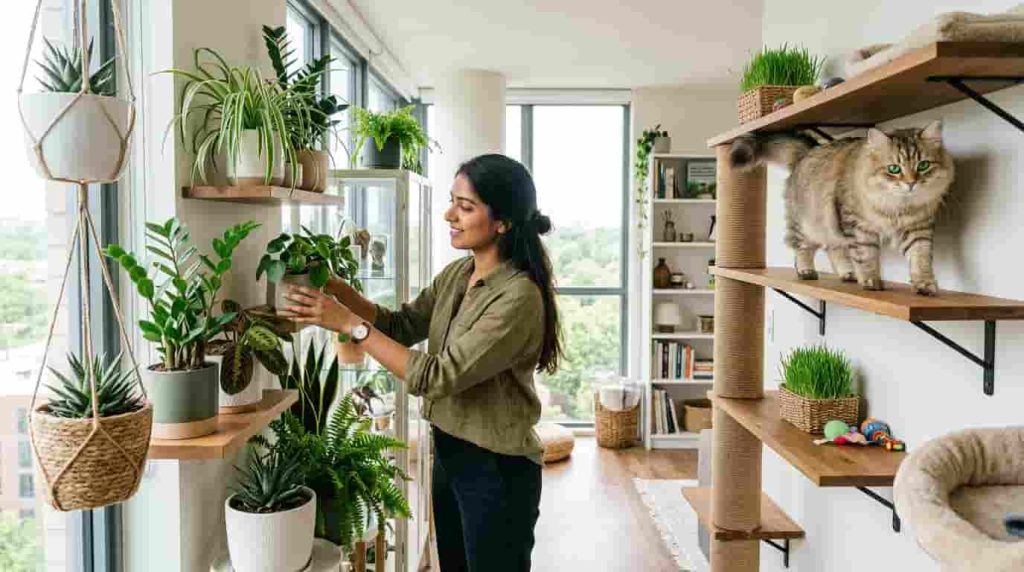
Designing a space filled with plants cats won’t eat requires some basic knowledge of feline preferences. Felines generally avoid species that possess thick, waxy leaves or strong, pungent aromas like rosemary and lavender. You can strategically place these aromatic varieties near the front of your shelves to act as shields.
They form a natural barrier that protects your more delicate ferns hiding directly behind them. If you need advanced assistance, you can consult a professional for custom cat behavior modification strategies.
They can evaluate your specific household layout to help you design a stress-free environment for cats. Many owners find that changing the height of their plant stands solves the issue completely.
Combine these high stands with interesting climbing trees to give your pet better vantage points. When your cat has a dedicated tree to climb, they will ignore your indoor gardening projects. You will enjoy a gorgeous home that showcases your love for both nature and your animals.
Understanding Feline Habits and Boredom
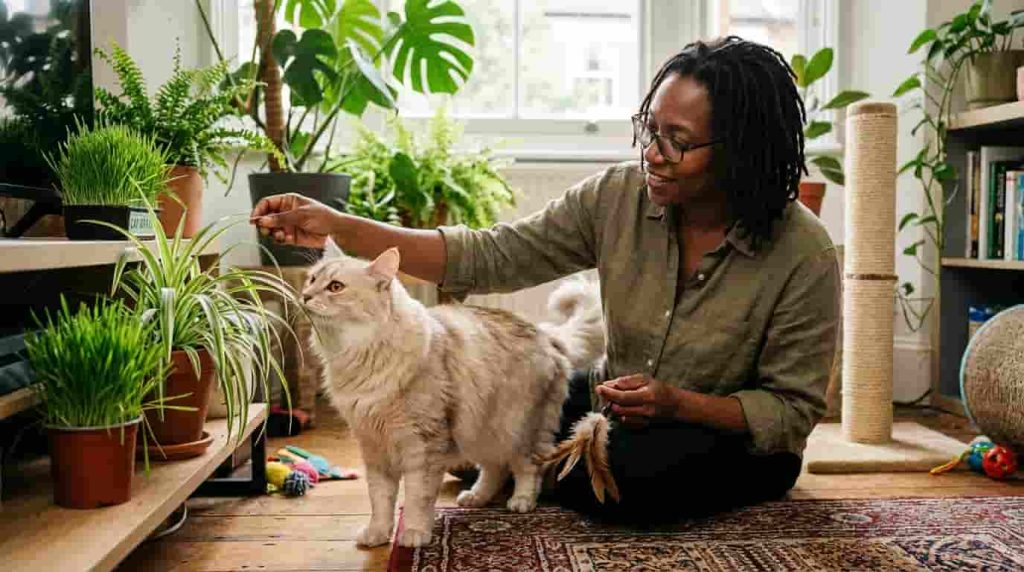
We must remember that repetitive Cat Plant Nibbling often signals a deeper need for mental stimulation. Indoor felines require consistent puzzles and games to keep their active minds sharp and focused.
If they feel neglected, they will target your greenery simply to get your immediate attention. Therefore, you should ignore the bad behavior and reward them when they play with their own toys. This positive approach builds a strong bond while saving your valuable greenery from destruction.
The Importance of Prevention Tips
Consistently applying these basic prevention tips will save you from expensive trips to the emergency veterinary clinic. Check the status of every new flower pot before you bring it past your front door.
Keep an active list of emergency numbers on your refrigerator in case an accidental ingestion occurs. Being prepared is the absolute best way to ensure proper care for your beloved animal companion.
Conclusion
In conclusion, managing Cat Window Stress and Cat Plant Nibbling requires consistent effort, proper tools, and lots of patience. By replacing dangerous species with non-toxic plants for cats, you ensure a safe home for everyone.
You can use natural repellents and offer tasty cat grass to redirect their destructive chewing habits successfully. These simple changes allow you to enjoy a beautiful indoor garden without compromising your pet’s safety.
Always keep their environment stimulating and monitor their reactions to new household additions closely. With the right training approach, your cat will happily leave your beautiful houseplants alone.
Have you successfully trained your kitty to stay away from your favorite decorative indoor greenery? Please share your top cat-friendly houseplants tips and experiences in the comments section down below!
Frequently Asked Questions
Your cat chews on houseplants because they have a natural instinct to consume fiber for digestion. They also bite leaves out of sheer boredom or because the moving greenery looks like a toy.
You can spray a safe, diluted citrus or bitter apple mixture directly onto the green foliage. Felines strongly dislike these specific sour smells and will quickly learn to avoid those treated pots.
Lilies, pothos, English ivy, and peace lilies are extremely dangerous and toxic to your pet. You should remove these hazardous varieties from your household immediately to prevent accidental poisoning.
Yes, providing a dedicated tray of fresh cat grass works wonderfully to redirect their chewing habits. Felines prefer the taste of fresh oat grass over bitter, tough decorative household greenery.
You must contact your emergency veterinarian or the animal poison control center immediately for guidance. Do not wait for symptoms to appear because early medical treatment can save your pet’s life.