
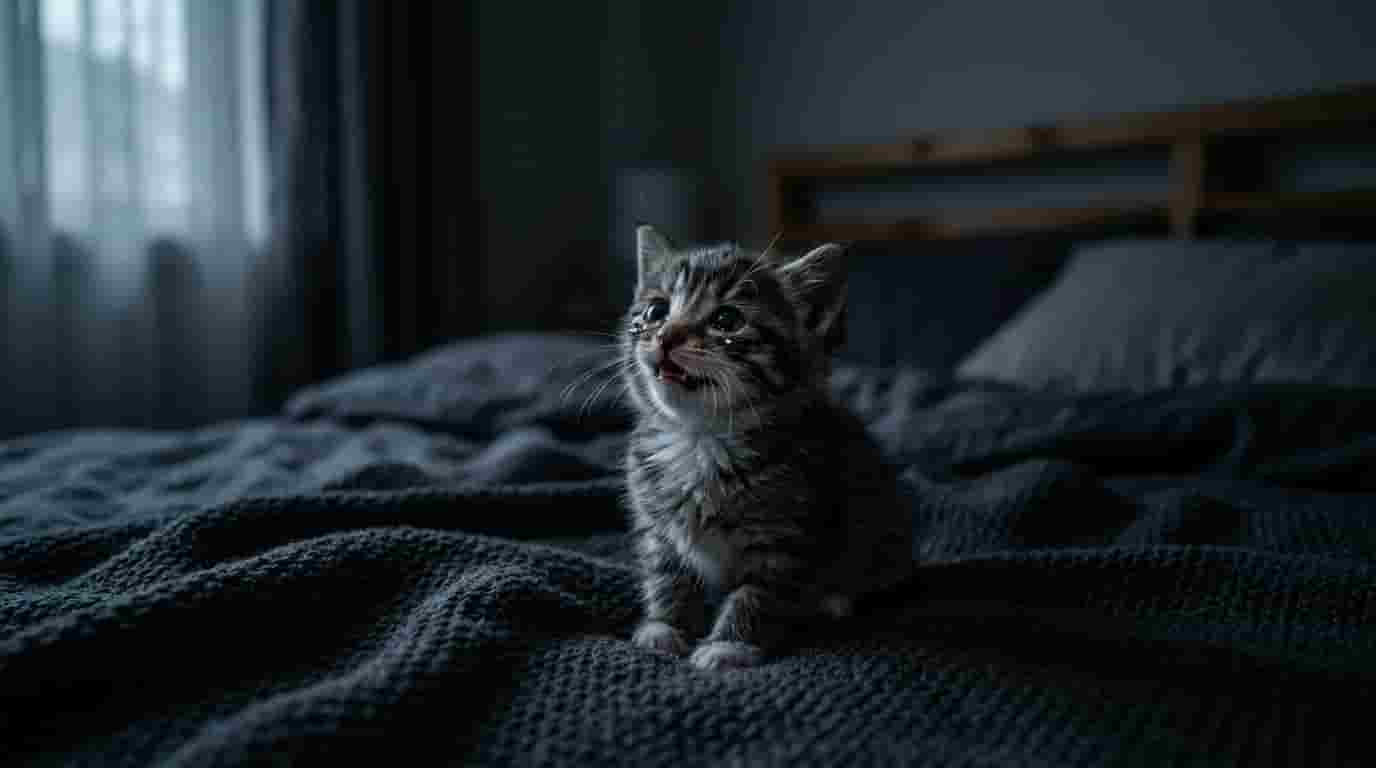
Kitten crying at night: Why Is My Kitten Crying All Night? Causes and Solutions
Introduction:
Kitten crying at night disturbs essential human sleep while signaling deep emotional distress in a newly adopted pet. Why does a tiny, peaceful daytime companion suddenly start wailing loudly the moment you turn off bedroom lights?
David brought home a two month old rescued pet named Milo on a cool Friday afternoon. He spent hours playing with colorful string toys, sharing gourmet treats, and cuddling together on the living room couch.
Everything felt warm and comforting until the midnight hour arrived.
Suddenly, loud, piercing meows echoed continuously down the dark hallway. David rushed out of bed, expecting a severe physical emergency or sudden physical injury inside the quiet kitchen.
Instead, he found Milo standing completely healthy near his scratching post, vocalizing toward the empty ceiling.
David tried petting him, filling his food bowl, and opening bedroom doors. Yet, the moment David returned to bed, the loud vocal calls started all over again.
Many new owners experience this exact middle of the night frustration during early adoption weeks. Young felines face a sudden transition when leaving mothers, littermates, and familiar scents behind.
Understanding nighttime instincts helps you restore peaceful sleep while offering comfort to your young pet. Let us explore the surprising reasons behind late night vocalizing and learn how to solve them safely.
1. Uncovering Causes of a Kitten Crying at Night

Understanding a kitten crying at night requires exploring how young felines experience sudden environmental changes. Leaving a warm litter box means losing constant body heat and reassuring heartbeat sounds from mother cats.
Because dark rooms increase feelings of isolation, young pets call out to locate their missing family members.
These instincts compel young animals to seek protection from larger caregivers when darkness falls.
Unpacking Reasons for Kitten Crying at Night in New Homes
Analyzing reasons for kitten crying at night reveals strong psychological triggers behind nighttime vocalization patterns. Emotional stress spikes when silence fills the home and humans retreat behind closed bedroom doors.
You can learn about maternal bonds and early separation by reading How to Tell if a Mother Cat Is Rejecting Her Kittens today.
Veterinary research from the Cornell Feline Health Center confirms that separation anxiety causes temporary vocal distress in young felines. Creating cozy sleeping spaces reduces these anxiety spikes, helping your pet settle down faster each night.
2. Navigating Feline Nighttime Energy Cycles
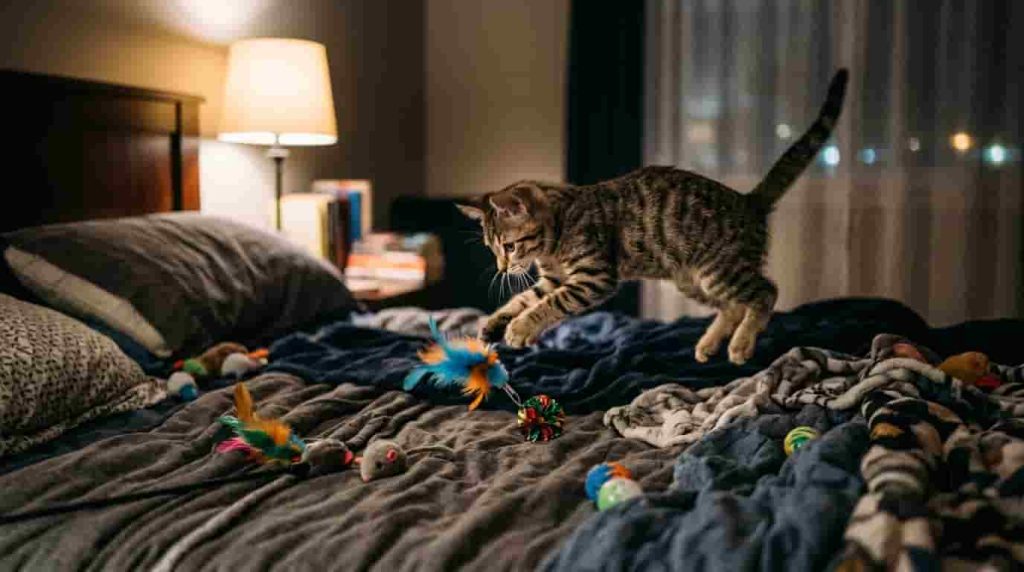
Felines naturally operate on crepuscular activity patterns, meaning their energy peaks around dawn and dusk. Young pets spend daytime hours napping deeply while human owners work at desks or handle household chores.
Consequently, your pet wakes up fully energized right when you prepare for restful night sleep.
They express this stored physical energy through loud calling, running through hallways, and pouncing on blankets.
Managing Kitten Nighttime Behavior and Play Patterns
Adjusting kitten nighttime behavior requires burning off stored physical stamina before bedtime arrives. Engage your companion in vigorous play sessions using long feather wands thirty minutes before sleeping.
Follow high energy play with a warm, protein-rich late dinner to trigger natural post-meal grooming and sleepiness.
You can discover weight tracking and nutritional details in Why Is My Kitten Not Gaining Weight? Common Causes and What to Do right now.
- Run your pet with interactive wand teasers until they pant lightly.
- Provide a hearty late meal immediately after finishing active play sessions.
- Hide treat puzzles around living rooms to engage natural hunting instincts.
- Avoid giving active attention when your pet vocalizes purely for play.
Matching play routines to natural hunting cycles encourages long, uninterrupted sleeping periods throughout the night.
3. Creating Soothing Spaces for Calming a Crying Kitten at Night
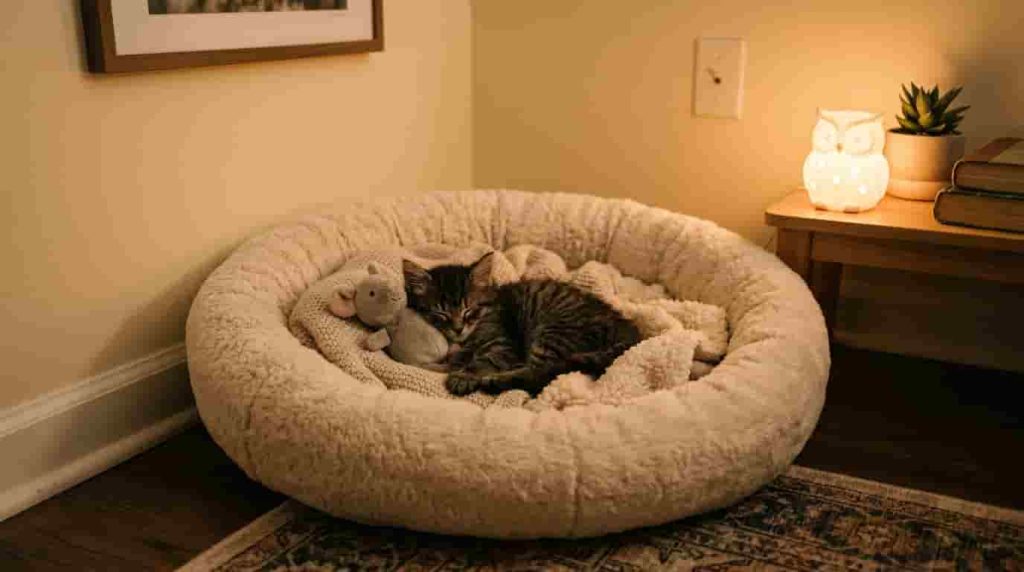
Cold rooms and empty floors exacerbate loneliness for young animals accustomed to sleeping in warm feline piles. Providing warm blanket nests and comforting sound items reduces anxiety significantly during quiet hours.
Placing a safe heating pad beneath blankets recreates the soothing warmth of mother cats and littermates.
Additionally, ticking clocks wrapped in towels imitate steady maternal heartbeats, reassuring anxious young minds.
Implementing Kitten Crying Solutions for Peaceful Nights
Applying proven kitten crying solutions turns noisy bedrooms into quiet, restful spaces for everyone. Place a soft plush toy inside the sleeping box to offer a physical companion for cozy cuddling.
Position safe nightlights near feeding areas so your companion navigates dark hallways with complete confidence.
You can explore behavioral training methods by checking out How to Prevent Single Kitten Syndrome: Tips for Raising a Well-Adjusted Cat today.
Guidance from the American Veterinary Medical Association highlights the importance of providing secure sleeping environments for young animals. Warm, comfortable sleeping spaces eliminate cold stress, allowing your companion to rest peacefully until morning light.
4. Solving Health Issues and Kitten Crying in the Middle of the Night

Physical discomfort, hidden illnesses, or sudden hunger frequently cause a kitten crying in the middle of the night. Intestinal parasites, cold temperatures, or low blood sugar levels trigger intense vocal distress in young bodies.
Because small stomachs digest food quickly, young pets often wake up hungry after four hours of sleep.
Providing automated feeders or small midnight kibble portions prevents hunger-induced calling during dark hours.
Mastering Steps for Comforting a Crying Kitten
Developing clear habits for comforting a crying kitten ensures physical health needs receive fast attention. Check litter boxes regularly to confirm clean surfaces remain accessible throughout the entire night.
If your pet vocalizes continuously despite food and warmth, schedule a comprehensive veterinary health checkup immediately.
- Verify that fresh water and clean litter boxes remain available all night.
- Provide automatic feeders to release small food portions around three in the morning.
- Check for signs of physical pain like limping, bloating, or warm fever.
- Maintain steady room temperatures to protect small bodies from chilly night drafts.
Addressing physical needs quickly guarantees your companion stays healthy, comfortable, and quiet until daybreak.
5. Preventing Behavioral Traps and Soothing a Meowing Kitten

Accidentally reinforcing bad habits occurs when owners jump out of bed every time a kitten keeps crying at night. If you run over with treats whenever meowing happens, your pet learns that noise controls human actions.
Consequently, vocalizing transforms into a deliberate strategy to demand middle of the night play sessions.
Establishing consistent boundaries teaches young animals that nighttime hours remain strictly dedicated to sleeping.
Applying Expert Methods for Soothing a Meowing Kitten
Mastering methods for soothing a meowing kitten involves ignoring demand calling while rewarding calm, quiet behavior. Keep bedroom doors open or closed consistently so your pet learns clear household physical boundaries.
If nighttime calling persists, provide safe solo enrichment toys that occupy young minds quietly without human help.
- Ignore demand meowing completely to avoid reinforcing noisy attention-seeking habits.
- Reward quiet behavior with gentle morning greetings and delicious breakfast treats.
- Provide quiet plush balls and soft kicker toys for solo night play.
- Maintain strict, predictable daily feeding and bedtime schedules every single evening.
Consistent responses build reliable habits, ensuring peaceful sleep for your pet and your family long term.
Final Thoughts on a Kitten Crying at Night
Resolving a kitten crying at night requires patience, structured play, warm sleeping spaces, and consistent nightly boundaries. You now understand how separation stress, crepuscular energy, room coldness, and attention seeking drive midnight vocalization.
Applying these practical solutions helps your young pet feel secure, calm, and quiet throughout dark hours.
Replacing middle of the night frustration with predictable care routines strengthens your bond with your feline companion. Providing warm bedding and energetic evening play guarantees sweet dreams and quiet nights for your home.
Did your young pet ever wake you up with loud midnight meowing sessions? Share your personal stories and soothing solutions in the comments section below!
Frequently Asked Questions
A young pet vocalizes at night due to separation anxiety, stored physical energy, cold temperatures, or midnight hunger. Leaving littermates creates loneliness that manifests as loud calling during dark, quiet home hours. Providing warm bedding, evening play, and late meals resolves nighttime calling effectively.
Yes, you should ignore demand vocalization if you have satisfied all basic physical needs like food, water, and warmth. Running to comfort your pet every time they vocalize teaches them that meowing commands human attention. However, inspect your pet quietly if you suspect sudden physical injury or illness.
Engage your pet in vigorous play sessions using wand toys thirty minutes before your actual bedtime. Follow active play with a warm, protein-rich meal to trigger natural grooming and post-meal sleepiness. Provide warm sleeping boxes with safe heat pads to keep them comfortable until morning.
Place your pet in a small, cozy room or secure enclosure equipped with warm blankets, food, water, and litter. Adding a safe heating pad and ticking clock recreates maternal warmth and heartbeats, reducing first night stress. Keep the area quiet and free from scary household noises.
Yes, most young pets adjust to new home schedules within one to two weeks of consistent training. Establishing predictable play, feeding, and bedtime routines helps them feel secure and comfortable in dark rooms. Consistent boundaries ensure your pet learns that nighttime remains strictly for quiet resting.