
Cat biting during play: How to Train Your Kitten to Be Gentle
Introduction:
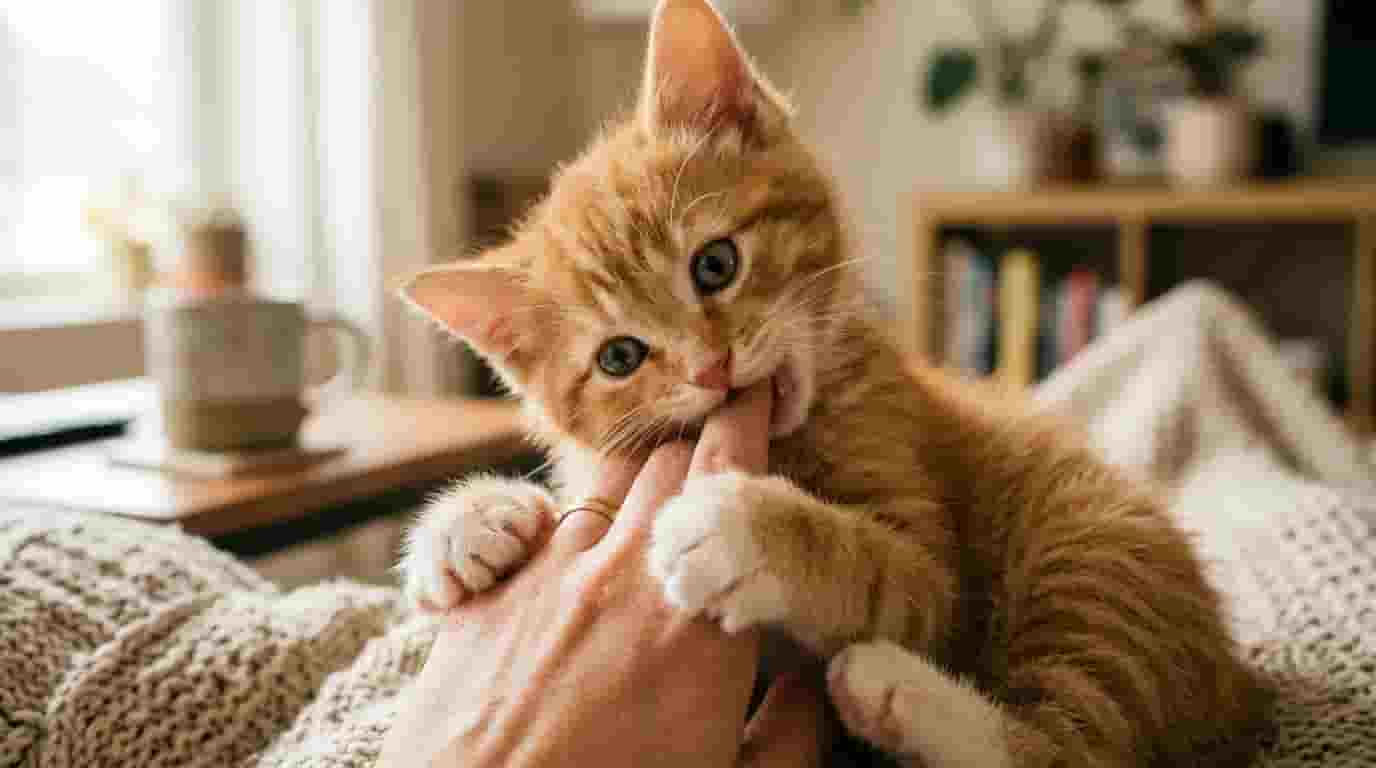
Cat biting during play is something almost every kitten owner deals with at some point. Your kitten pounces on your hand, wraps around your wrist, and chomps down hard enough to leave a mark. It feels aggressive, but in most cases it is simply normal feline play behaviour that never got properly redirected.
The real problem is not that kittens bite. The problem is that nobody taught them not to bite humans specifically. Therefore, the solution is not punishment or frustration. It is consistent and patient training that teaches your kitten where biting belongs and where it absolutely does not.
Additionally, cat biting during play tends to get worse if you ignore it in the early weeks. A kitten that bites at eight weeks old becomes a cat that bites at two years old unless the behavior gets redirected early. The good news is that kittens respond very well to training when you use the right approach consistently.
This guide explains exactly why kittens bite during play, how to read the signals before a bite happens, and the step-by-step techniques that teach your cat to be genuinely gentle. By the end, you will have everything you need to make playtime fun and pain-free for everyone involved.
Cat biting during play: Why Kittens Bite in the First Place
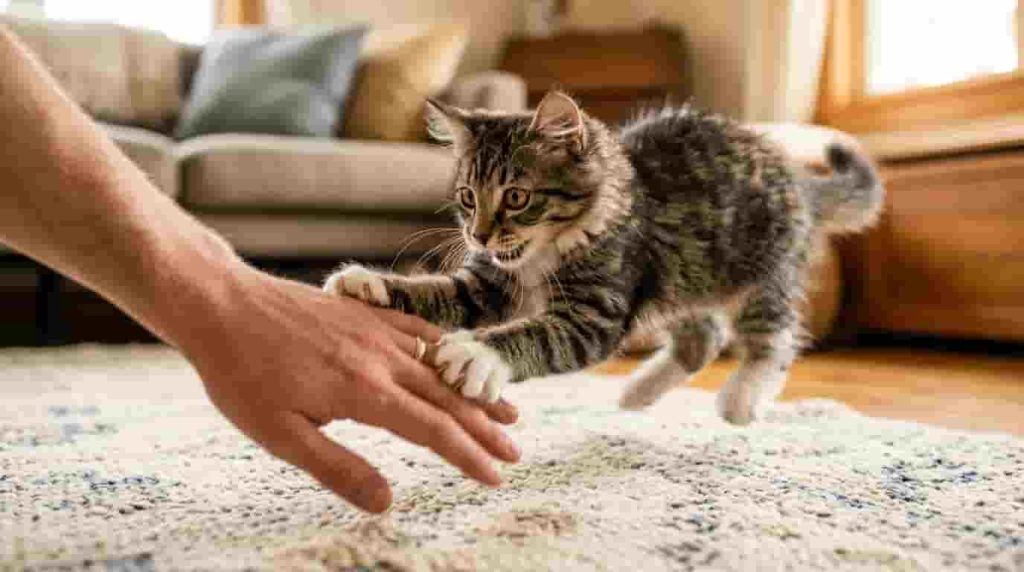
Cat biting during play almost always starts with one simple fact. Kittens are born hunters. Their instinct to stalk, pounce, grab, and bite is hardwired into them from birth. Therefore, when your hand waves in front of a kitten, it sees prey and responds exactly the way nature designed it to.
However, the real issue goes deeper than basic hunting instinct. Kittens learn bite inhibition, meaning how hard they can safely bite, through rough-and-tumble play with their littermates. When one kitten bites another too hard, the bitten kitten yelps and stops playing. As a result, the biter learns quickly that excessive biting ends the fun.
Kittens separated from their littermates too early never fully learn this lesson. Additionally, single kittens raised without siblings miss out on this natural feedback system entirely. Therefore, they arrive in human homes with sharp teeth, strong instincts, and no internal limit on how hard they can bite.
How Littermate Play Shapes a Kitten’s Bite Habits

Understanding feline behavior starts with recognizing what healthy kitten socialization looks like. Kittens between two and twelve weeks old spend enormous amounts of time wrestling, chasing, and biting each other in their litter. This play period is when they develop the most important social and physical skills of their lives.
During this window, each kitten learns three critical things through repeated play interactions:
- Bite pressure control: Biting too hard produces a yelp and ends the game. Gentler biting keeps the play going.
- Reading body language: Kittens learn when a playmate is overstimulated and about to react. This builds feline social awareness early.
- Play versus threat distinction: Kittens learn to separate playful wrestling from genuinely hostile encounters with other cats.
When a kitten misses part of this socialization window, it arrives in your home with incomplete social skills. Therefore, your job as an owner is to teach the lessons that the littermates never finished. Furthermore, if you are introducing a new kitten into a home with an older cat, our article on Cat jealousy signs: Introducing a new kitten to your old cat covers how to manage that transition smoothly for both animals.
How to Read the Signals Before a Bite Happens

Stopping playful cat biting becomes much easier once you recognize the signals that come right before a bite. Kittens do not switch from calm to biting without warning. They telegraph exactly what is coming if you know what to look for.
Watch for these pre-bite signals during play sessions:
- Tail flicking or lashing: Your kitten is becoming overstimulated and is nearing a tipping point.
- Pupils dilating suddenly: Your kitten has shifted into a full predatory mindset.
- Body lowering and haunches wiggling: Your kitten is about to pounce. This is the classic hunt preparation posture.
- Ears flattening slightly sideways: Your kitten feels intensely focused and ready to strike.
- Skin rippling along the back: Stimulation is reaching a critical level and a bite or scratch is imminent.
When you see two or more of these signals during a play session, pause the game immediately. Give your kitten thirty seconds to reset before continuing. As a result, you interrupt the cycle before the bite happens rather than reacting after the fact.
Additionally, some kittens combine biting with face rubbing on your hands and legs, which is actually a separate affectionate behavior. Our article on Cat scent marking: Why your pet rubs their face on your legs explains the difference between affectionate rubbing and overstimulated biting behavior clearly.
Step-by-Step Training Techniques to Stop Cat biting during play

Stopping cat biting during play requires a consistent approach that you apply the same way every single time. Inconsistency is the most common reason training fails for most kitten owners. Therefore, everyone in the household needs to follow the exact same rules from day one.
Follow these steps in order every time your kitten bites during play:
- Stop all movement immediately. When your kitten bites your hand, freeze completely. Movement triggers the prey response and makes the biting more intense. Stillness communicates that this particular game is over.
- Use a clear and calm vocal cue. Say “ouch” or “no” in a firm but not loud voice. You are not punishing your kitten. You are giving it a consistent signal that the bite crossed a boundary.
- Withdraw your attention for thirty to sixty seconds. Stand up, turn away, and ignore your kitten briefly. This mirrors exactly what a littermate would do after a too-hard bite.
- Redirect immediately to an appropriate toy. After the brief pause, offer a wand toy, feather teaser, or crinkle ball. Direct the hunting energy toward a proper target right away.
- Reward gentle play consistently. When your kitten plays nicely without biting your skin, praise it calmly and keep the game going. This teaches your kitten that gentle play means the fun continues.
- Never use your hands or feet as toys. This is the single most important rule in behavior training for cats. Hands that wiggle and dangle teach kittens that human skin is a perfectly acceptable target.
According to ASPCA, redirecting a kitten’s biting behavior toward appropriate toys is the most effective long-term solution for play aggression in cats. Furthermore, consistent redirection across every household member produces results far faster than inconsistent correction.
The Right Toys to Redirect Biting Away From Your Hands
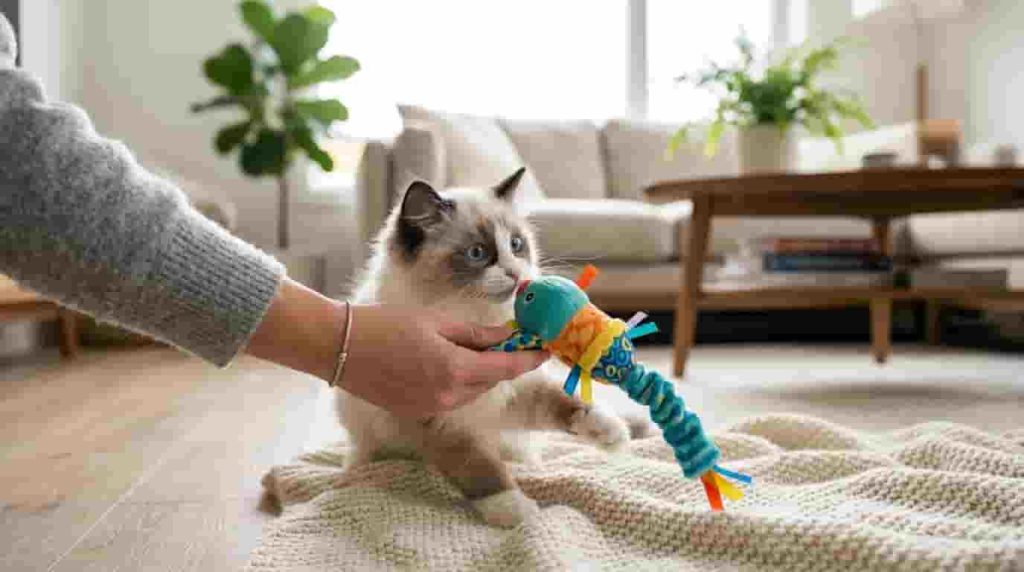
Choosing the right cat toys for biting and redirecting makes a significant difference in how quickly your kitten learns. The goal is to give your kitten an outlet that satisfies the hunting instinct fully without involving your hands or feet at any point.
Here are the best toy types for redirecting cat biting during play:
- Wand toys and feather teasers: These keep your hand at a safe distance while triggering the full hunt-and-catch sequence your kitten craves.
- Crinkle balls and lightweight springs: Your kitten can bite, kick, and wrestle these without any human limb involvement.
- Stuffed kicker toys: Designed specifically for cats that like to grab and bunny-kick while biting. These absorb intense play energy very effectively.
- Puzzle feeders and treat toys: These redirect mental energy and reduce boredom-based biting that occurs when kittens need stimulation but do not have enough to do.
Rotate toys regularly to keep your kitten interested. A bored kitten with the same three toys will almost always return to hunting your hands and ankles out of sheer frustration.
Building Gentle Play Habits That Last a Lifetime

Real life example: Adaeze from Lagos adopted a four-month-old kitten named Choco who bit her hands and ankles every single evening without fail. After two weeks of using wand toys exclusively during play sessions and freezing every time Choco made contact with her skin, the biting dropped by about eighty percent. By week four, Choco played through entire sessions without a single bite. Adaeze said the freeze-and-redirect method felt strange at first but worked faster than anything else she had tried.
Consistent daily play sessions of fifteen to twenty minutes twice a day reduce the frustration and excess energy that fuel most playful cat biting. Additionally, a well-exercised kitten is a calmer and more manageable companion throughout the rest of the day.
Some kittens bite more intensely when left alone for long hours. If your kitten seems especially destructive or bite-prone during evenings, our article on Cat separation anxiety: Tips for Nigerians working 9-to-5 jobs addresses how extended alone time affects kitten behavior and what you can do about it.
Also, if your kitten shows unusual interest in small creatures like geckos around the home and you are worried about what that hunting behavior means, read our article on Cat hunting geckos: Is it safe for cats to eat wall geckos? for practical safety guidance.
Conclusion
Cat biting during play is a learned behavior pattern that responds very well to the right training approach. Therefore, start by removing your hands from the equation entirely and introducing proper toys immediately. Additionally, apply the freeze-and-redirect method consistently every single time a bite happens, without exceptions.
Understanding cat biting during play means recognizing that your kitten is not being mean or aggressive. It is simply being a kitten with misdirected instincts. As a result, your consistent response over two to four weeks will reshape those instincts into genuinely gentle play habits that stay for life.
Did this guide help you manage your kitten’s biting? Share your experience in the comments below and tell us which technique made the biggest difference for you and your cat.
Frequently Asked Questions
Your kitten bites during play because its hunting instincts treat moving hands and feet as prey targets. Kittens separated from their littermates early often miss the bite-inhibition lessons that siblings teach through play. Consistent redirection to toys is the most effective solution available to you right now.
Most kittens naturally reduce play biting between six and twelve months as their energy levels stabilize and they mature socially. However, without proper training the biting habit can persist well into adulthood. Starting redirection training as early as eight weeks produces the fastest and most lasting results.
No, scruffing a kitten to stop biting is not recommended by veterinary behaviorists. It increases fear and anxiety without teaching the kitten what behavior you actually want instead. The freeze-and-redirect method is far more effective and keeps your relationship with your kitten positive and trusting.
Gentle biting followed by licking is a social grooming behavior known as allogrooming. Your cat is treating you the way it would treat a trusted companion. This is different from hard playful biting and is actually a sign of deep affection and comfort with you.
Most kittens show clear improvement within two to four weeks of consistent training using the freeze-and-redirect approach. Full results depend on how consistently everyone in the household applies the same rules. The more consistent the training, the faster and more permanent the results will be.