
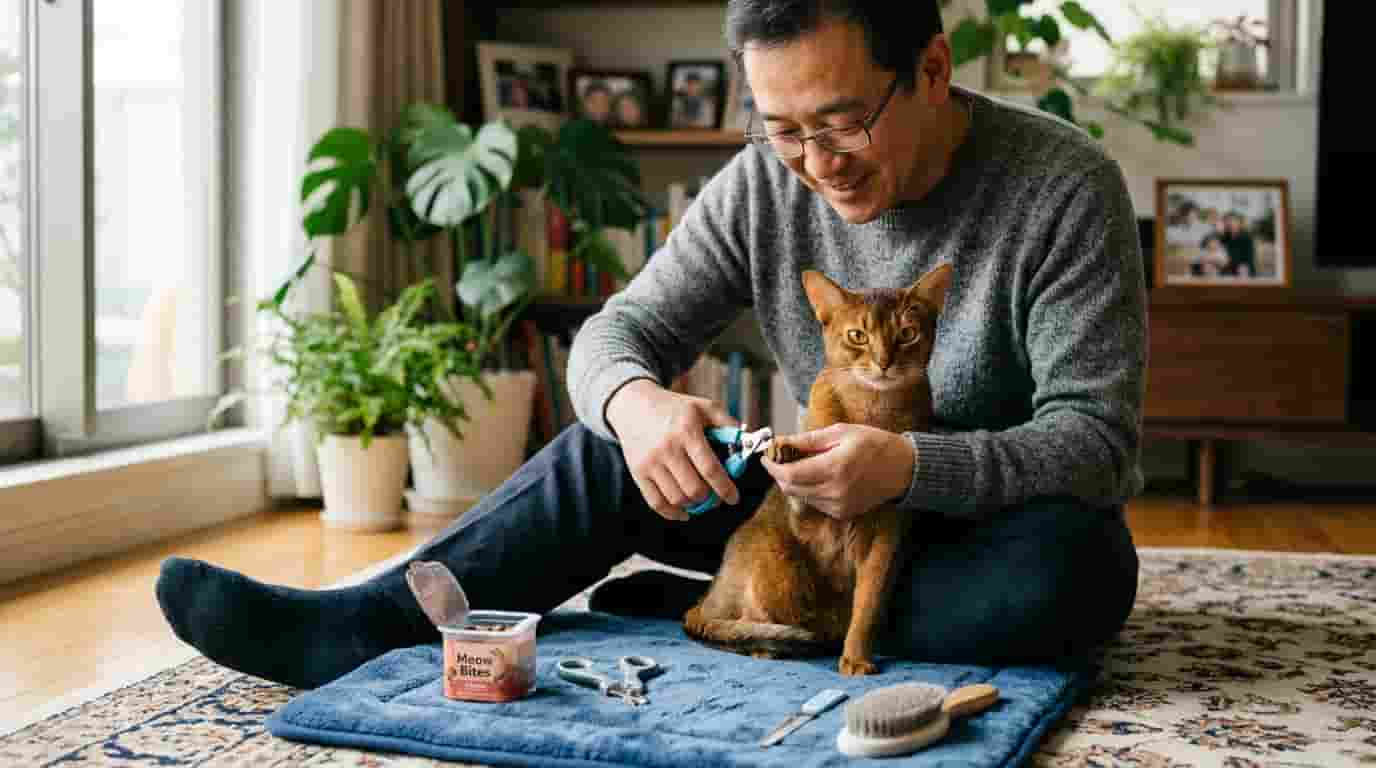
Cat Nail Clipping: How to Trim Your Cat’s Nails Safely at Home.
Introduction:
Cat nail clipping often feels like a daunting battle for many pet parents. You pull out the trimmers and your friendly feline suddenly turns into a furry whirlwind of sharp claws. However, you can master this essential grooming skill without stress or scratches.
Regular maintenance protects your furniture and keeps your kitty healthy. This comprehensive cat grooming guide will walk you through the process step by step. We will help you transform a scary chore into a calm, bonding routine for you and your pet.
Why Cat Nail Clipping Matters for Your Feline Friend
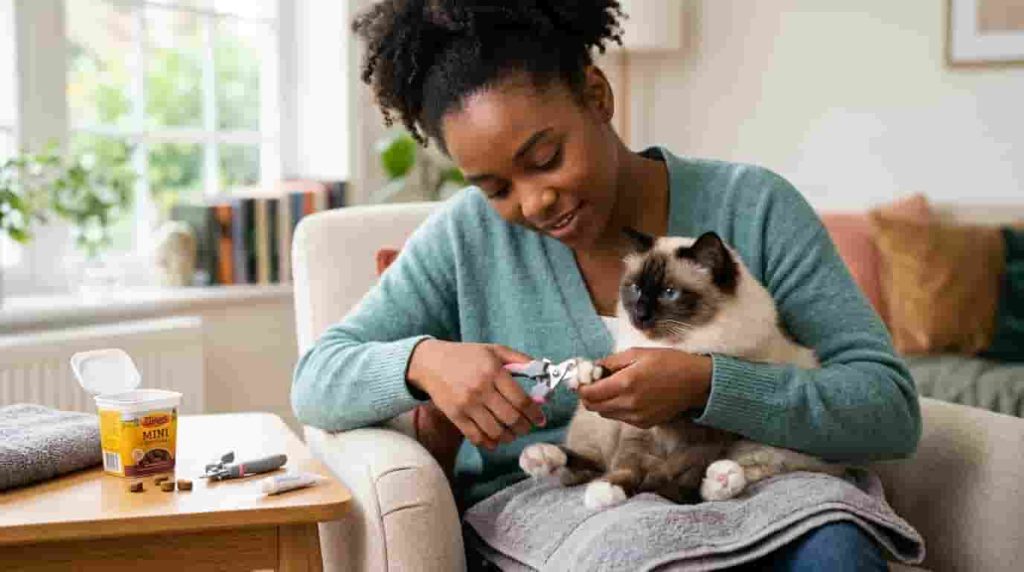
The importance of trimming cat nails goes far beyond saving your favorite living room sofa from shreds. Regular trimming prevents painful ingrown claws that can pierce your cat’s sensitive paw pads. Additionally, long claws can snag on carpets or blankets and cause painful tears.
According to the ASPCA, regular nail maintenance is vital for indoor cats. Older cats especially need help because they do not wear down their claws naturally anymore. Therefore, consistent cat nail care tips keep your pet moving comfortably and safely.
Healthy paws contribute directly to your cat’s overall happiness and mobility. You can easily prevent severe discomfort by establishing a simple routine at home. If your cat also struggles with other hygiene tasks, you can read our comprehensive cat bathing guide to keep them clean and comfortable.
Choosing the Best Cat Nail Clippers for the Job
You must select the right cat nail trimming tools before you begin the process. Human nail clippers can crush the claw and cause your cat pain. Instead, look for specialized scissor-style trimmers or small guillotine clippers designed specifically for felines.
The best cat nail clippers feature sharp stainless steel blades and non-slip handles for a secure grip. These tools allow you to make quick, clean cuts without splitting the nail. High-quality tools ensure a fast process, which keeps your cat much calmer.
A Step-by-Step Cat Nail Clipping Tutorial for Beginners

First, find a quiet room away from distractions and other household pets. Place your cat comfortably in your lap facing away from you. Massage each toe gently to extend the claw before you bring out any tools.
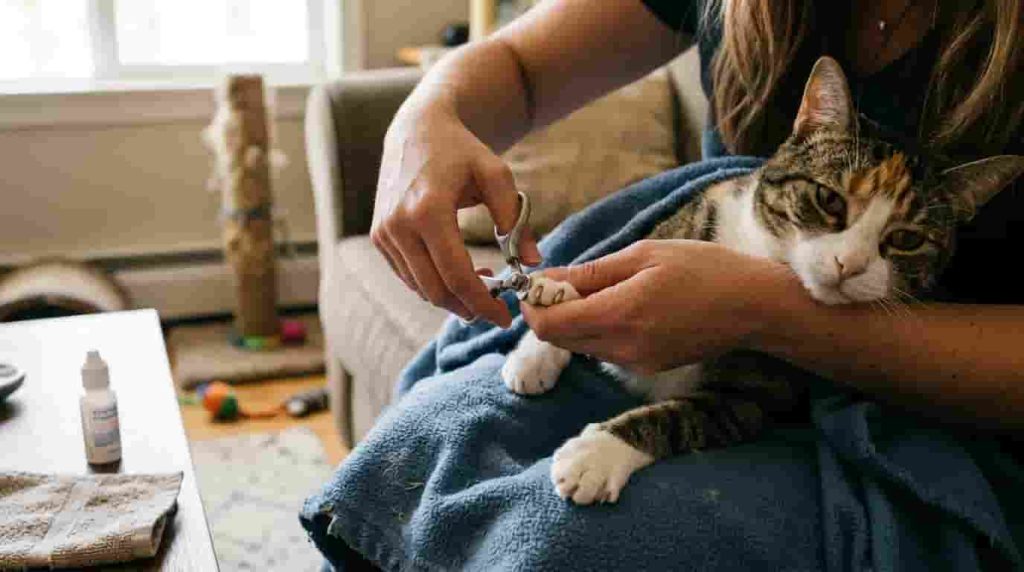
Next, hold the paw firmly but gently between your fingers. Press the top and bottom of the paw pad to expose the sharp nail. Always locate the pink part inside the nail, which people call the quick.
Finally, clip only the sharp white tip of the nail. Never cut near the pink quick because it contains sensitive nerves and blood vessels. If you accidentally cause bleeding, apply a small amount of styptic powder immediately to stop it.
Essential Cat Nail Clipping Safety Tips to Remember

Never rush the process during your first few attempts at home. You can trim just one or two nails per session to keep things positive. Praise your cat constantly and offer high-value treats after every successful clip.
Consider using a large, soft towel to wrap your cat gently if they wiggle too much. This swaddling technique keeps their limbs secure and prevents accidental scratches. However, you should stop immediately if your cat becomes highly stressed or aggressive.
Some cats simply refuse to cooperate during home grooming sessions. You might want to look into professional cat nail clipping services if the process causes too much anxiety. Experts can handle difficult cats safely while you learn the best techniques.
Proper handling skills will also help you manage other tricky health routines. For example, you can use similar calming methods found in our guide on cat pilling tricks to give medicine easily.
Best Practices for Cat Nail Trimming Success
Patience serves as your greatest tool when mastering diy cat grooming at home. You should introduce the clipping tools to your cat days before you actually use them. Let your kitty sniff the clippers and reward them with treats for their curiosity.
Create a positive association by clipping a piece of dry spaghetti to mimic the cutting sound. This clever trick helps your cat get used to the strange noise without any fear. As a result, your pet will remain relaxed when the real trimming begins.
Regular handling from a young age makes grooming much easier later in life. If you establish these best practices for cat nail trimming early, your cat will accept the routine. You can also apply these patient training methods to other grooming habits, such as our helpful cat brushing guide.
Preventing Cat Nail Problems and Injuries
Overgrown claws can split easily and lead to painful bacterial infections. Inspect your cat’s paws weekly to catch any potential issues before they become severe. Look for signs of limping, constant licking, or visible swelling around the toes.
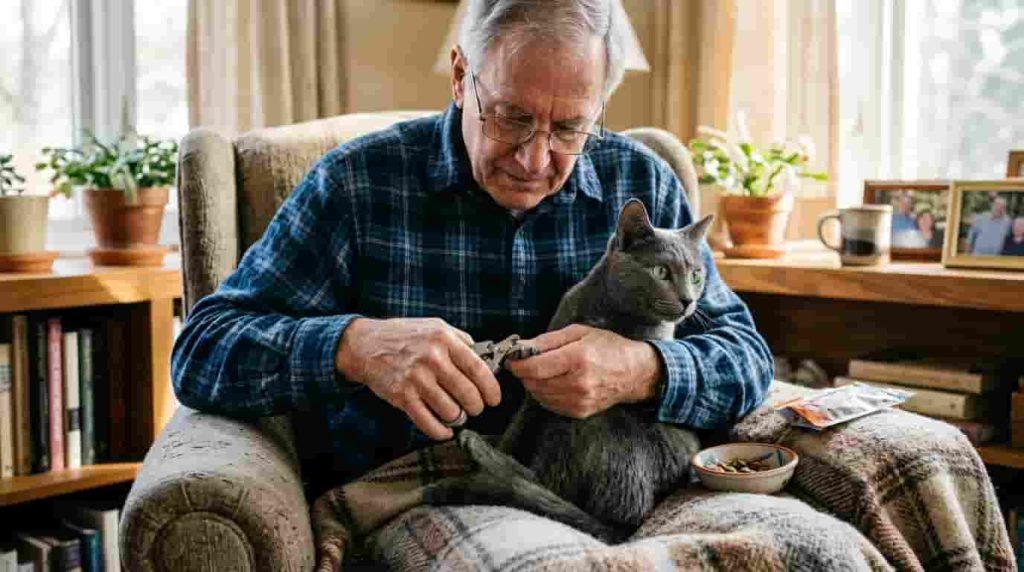
According to the Cornell University College of Veterinary Medicine, regular claw maintenance prevents painful mobility issues in aging felines. Older cats often develop thick, brittle nails that require extra care and attention. Therefore, consistent care protects your senior cat’s joint health and comfort.
Making Cat Grooming at Home a Peaceful Routine

Consistency changes everything when you practice cat nail trimming at home. Schedule your grooming sessions when your cat is naturally sleepy or relaxed after a large meal. Avoid trimming right after a high-energy play session when your cat wants to run.
One cat owner shared that her cat, Bella, used to run away at the mere sight of trimmers. However, she started giving Bella a lickable treat only during paw massages. Now, Bella purrs happily and waits patiently for her routine claw maintenance.
A calm environment helps with all aspects of feline behavior and training. For instance, relaxed cats are much less likely to develop stress-related litter box issues. If you face behavioral challenges, check out our guide on cat pooping outside litter box or read our cat litter training guide.
Conclusion
Mastering cat nail clipping requires time, patience, and the right tools. You can protect your home and keep your feline companion healthy by following these steps carefully. Always prioritize your cat’s comfort and celebrate small victories with plenty of love and treats.
Do you trim your cat’s nails at home, or do you visit a professional groomer? Please share your personal stories and favorite grooming tips in the comments below!
Frequently Asked Questions
You should typically trim your cat’s nails every two to three weeks. Outdoor cats may need less frequent trims because their lifestyle wears claws down naturally. Regular inspections help you determine the best schedule for your specific pet.
First, do not panic because your cat will feed off your anxious energy. Apply styptic powder or a little cornstarch to the nail tip with gentle pressure. The bleeding should stop within a few minutes, and you should reward your cat immediately.
Cats have highly sensitive paws filled with nerve endings that protect them from danger. They often associate paw touching with restraint or vulnerability, which triggers their defense mechanism. You can fix this by gently massaging their paws daily without any tools.
You should avoid human clippers because they bend and crush the round feline nail structure. This crushing action can cause painful splitting, cracking, or tearing of the claw. Specialized cat trimmers offer a much cleaner and safer cut.
You can absolutely train an older cat to accept nail trimming with patience. Start very slowly by introducing the tools and rewarding your senior cat with favorite treats. Older cats actually need regular trims because they cannot shed their nail sheaths easily.