
Cat Bathing Guide: How to Wash Your Cat Without Getting Scratched
Introduction:
Cat Bathing Guide tips can save your skin and your peace of mind. Most felines absolutely hate water. As a result, bath time often turns into a stressful battle for both of you. You might end up with painful scratches while your feline hides under the bed. Luckily, you can transform this chaotic chore into a calm experience with the right approach.
Furthermore, you do not need to dread the water anymore. This comprehensive guide will teach you how to handle your pet safely. We will cover preparation, soothing methods, and quick washing tactics. Therefore, you can keep your pet fresh without risking a trip to the doctor. Let us dive into the best ways to master this grooming challenge.
First, you must understand that preparation is the most important part of the process. Your feline can feel your anxiety. Because of this, staying calm helps your pet remain peaceful too. You will learn how to set up your bathroom for success. Additionally, we will share the exact steps to keep those sharp claws away from your arms.
Why You Need a Good Cat Bathing Guide
Many owners wonder if felines actually need standard water baths. Usually, these clean animals groom themselves effectively using their rough tongues. However, sticky messes or skin medical issues require human intervention. For example, my friend Sarah recently faced this exact problem with her fluffy tabby, Milo. Milo rolled in some fresh garage oil, so he needed immediate help. Sarah panicked because Milo usually fights water fiercely.
Thankfully, she followed a proper cat bathing guide to handle the sticky situation safely. She learned that rushing the process always leads to sudden scratches. You must introduce water slowly to avoid triggering their flight response. Consequently, Milo left the tub clean and Sarah remained completely scratch free. This success shows that any owner can master bathing a cat at home with patience.
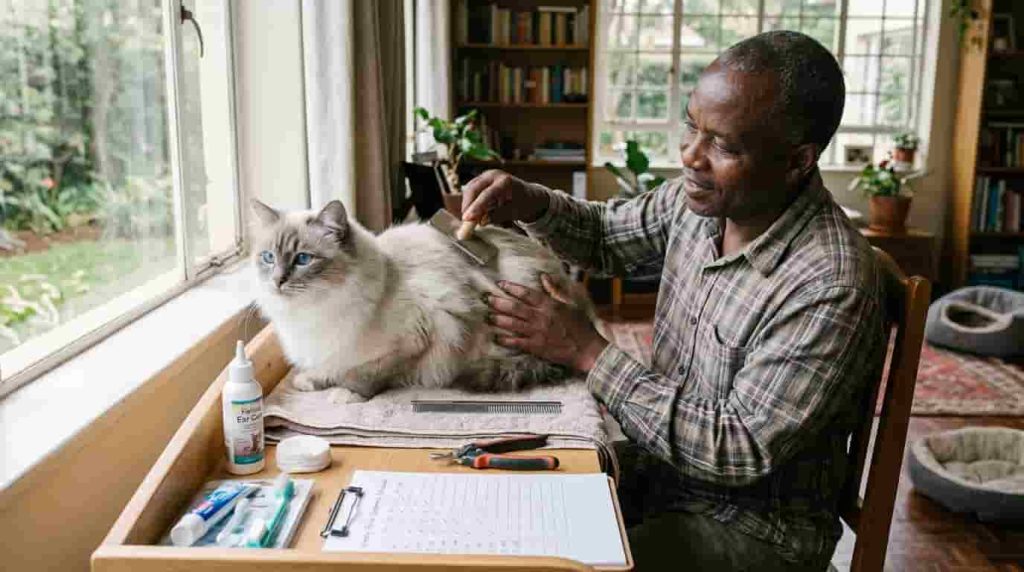
Additionally, standard cat hygiene involves more than just occasional water washes. Regular brushing helps remove dead fur before it mats. If your pet hates brushes, you can read our Cat Brushing Guide: How to Groom a Cat That Hates Being Brushed for helpful advice. Combining brushing with proper cat care ensures a healthy coat. Therefore, you will rarely need to give full baths.
Essential Cat Bathing Supplies for Success
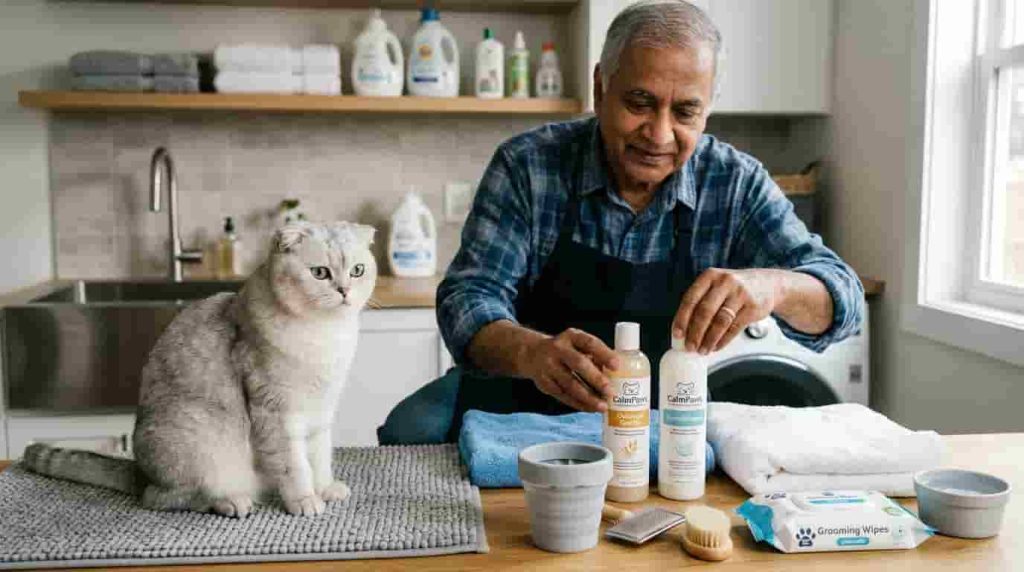
You must gather your tools before you bring your pet into the bathroom. Chasing a wet feline because you forgot a towel creates total chaos. First, place a non-slip rubber mat inside your sink or tub. This mat gives your pet secure traction, which reduces their immediate panic. Next, grab several dry towels and a large plastic cup for rinsing.
Choosing the right cleaning formula is also vital for skin health. Never use human shampoo or dog shampoo on your feline friend. These products can dry out their skin or cause severe irritation. Instead, buy the best cat shampoo available at your local pet store. Look for a gentle, fragrance free formula that rinses off quickly.
Furthermore, having the right cat bathing supplies nearby keeps the process moving fast. You want to minimize the time your pet spends in the water. Keep the shampoo bottle open and within arms reach. Place your towels right next to the tub for instant wrapping. Preparation prevents escapes and keeps you in total control.
Critical Pre Bath Steps to Avoid Injury
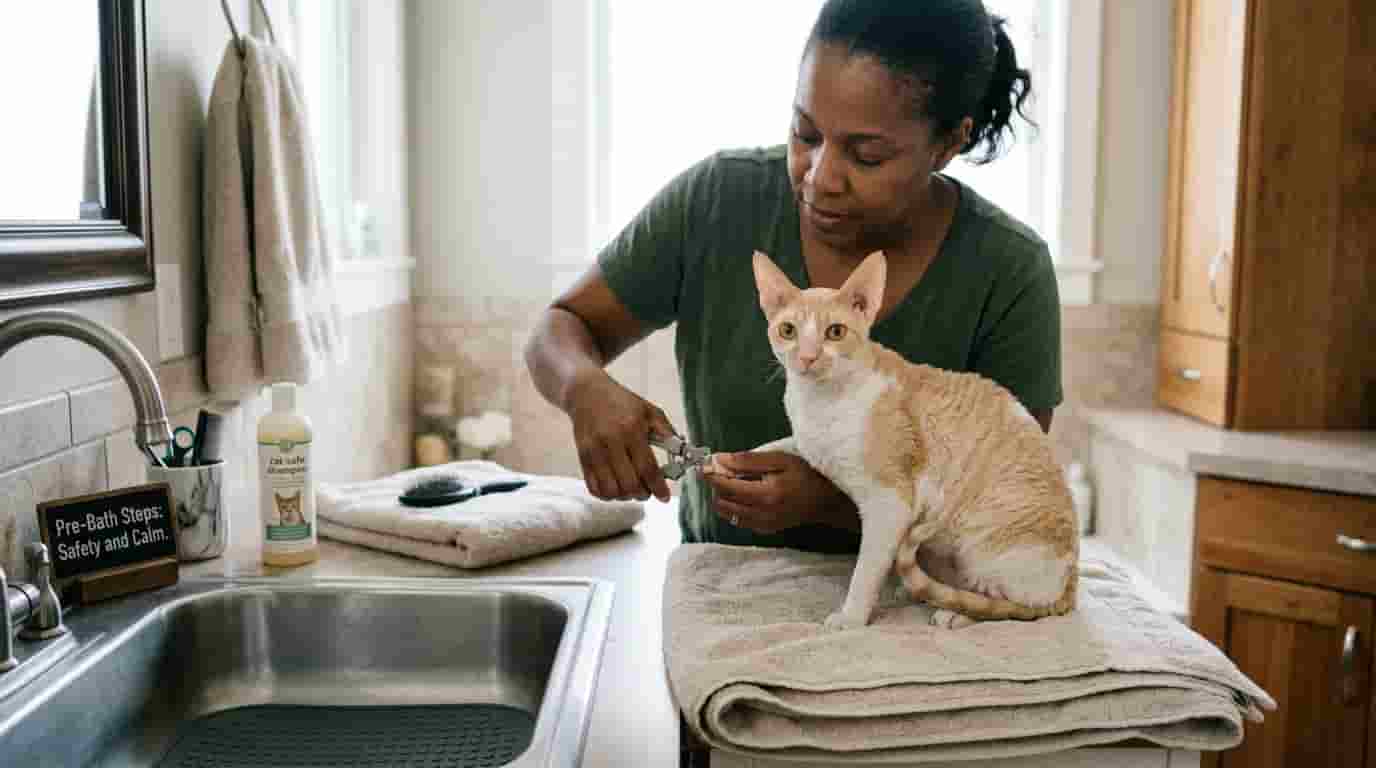
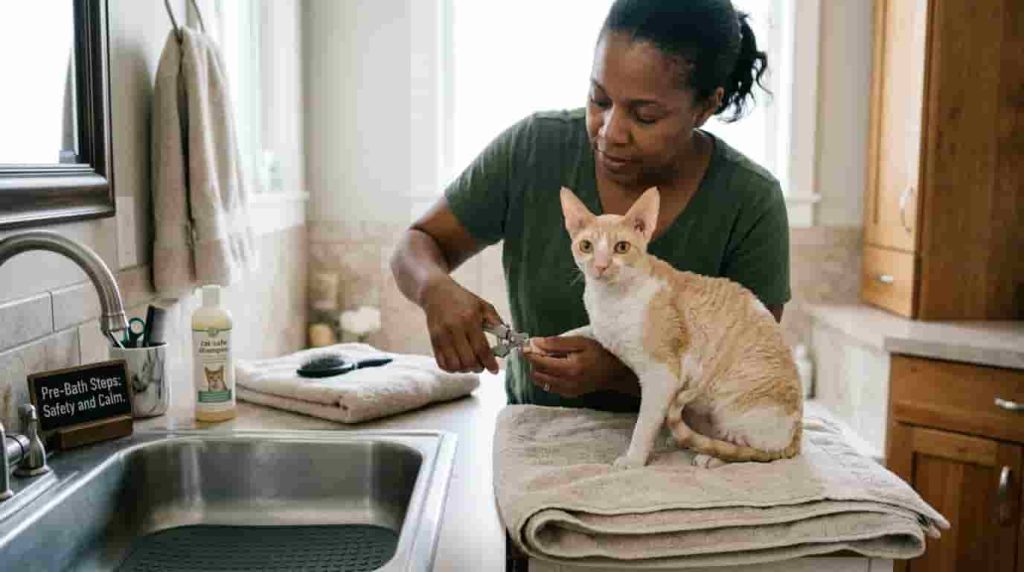
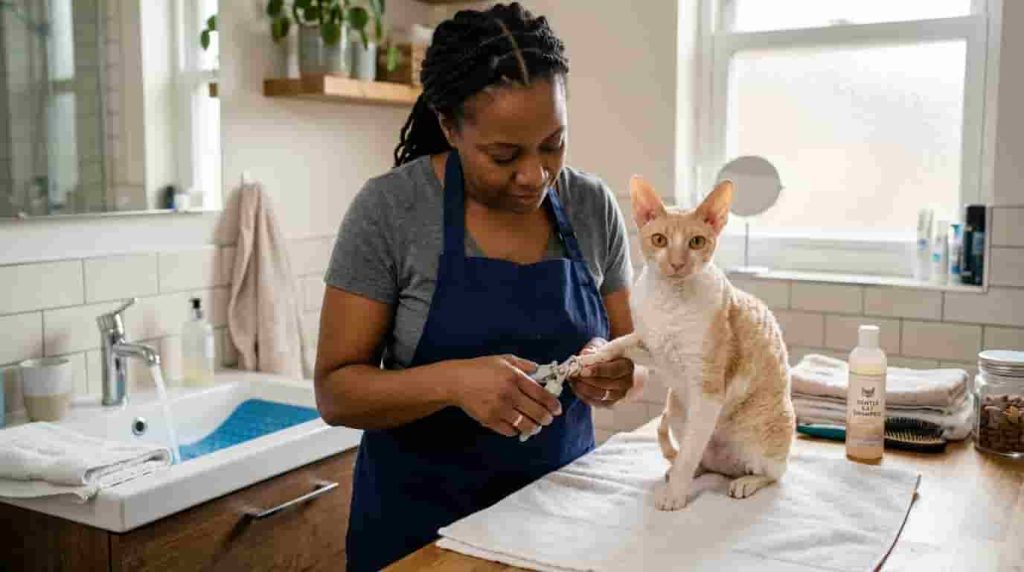
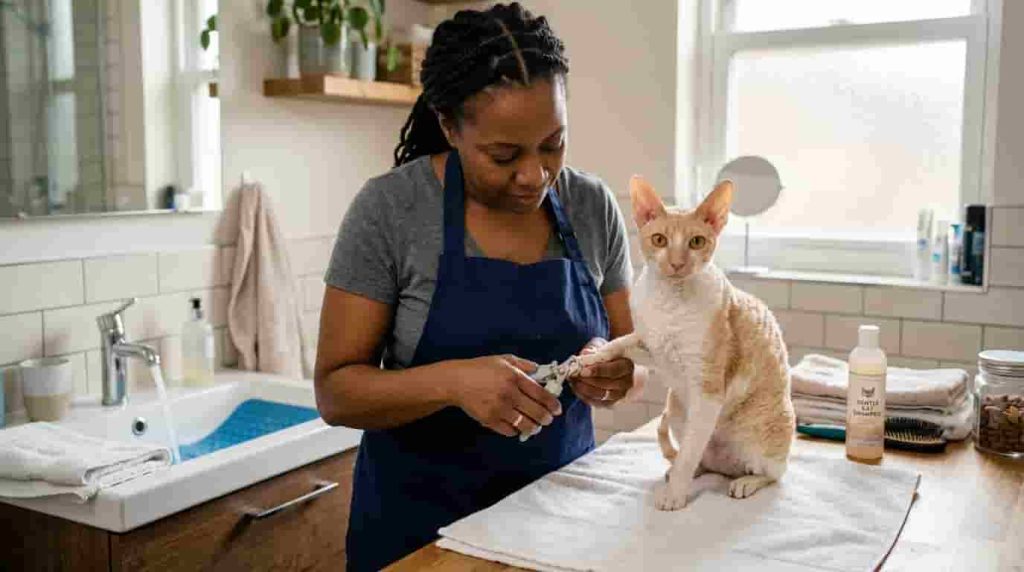
You should always trim your pets nails before you start the water. Short nails cannot pierce your skin easily if the pet panics. If you feel nervous about this part, check out our guide on Cat Nail Clipping: How to Trim Your Cat’s Nails Safely at Home. This simple preparation step protects your arms from deep scratches.
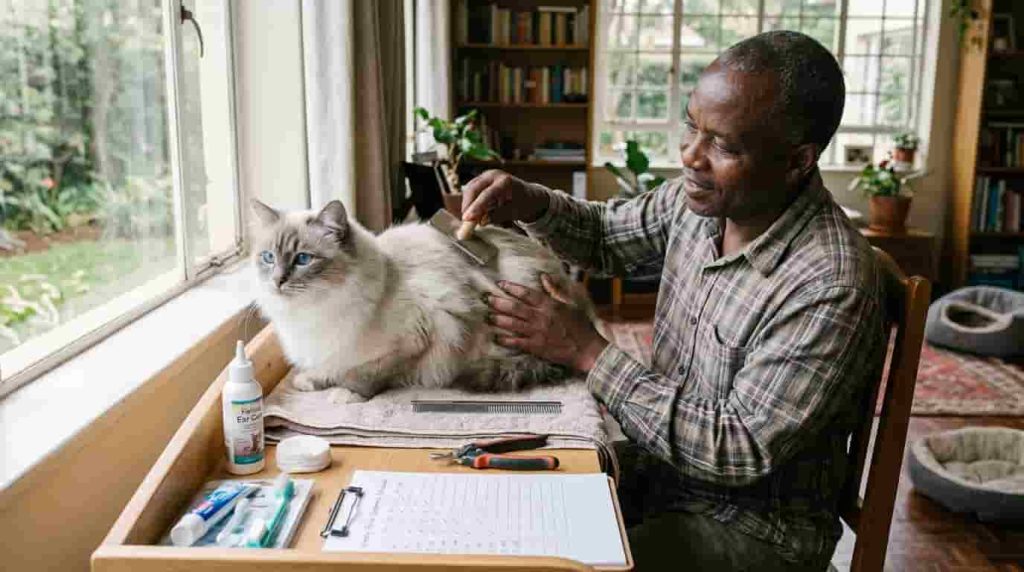
Next, give your pet a thorough brushing to remove loose fur. Water tangles loose hair into tight knots that are painful to remove later. According to the ASPCA, brushing before a bath makes the washing process much more effective. It also allows you to check for hidden skin lumps or fleas.
Finally, tire your pet out with a long play session before the bath. A tired feline has less energy to fight the water. Use a feather wand to encourage jumping and running. Afterward, offer a small treat to create a positive association with the bathroom space.
Master These Safe Cat Bathing Techniques
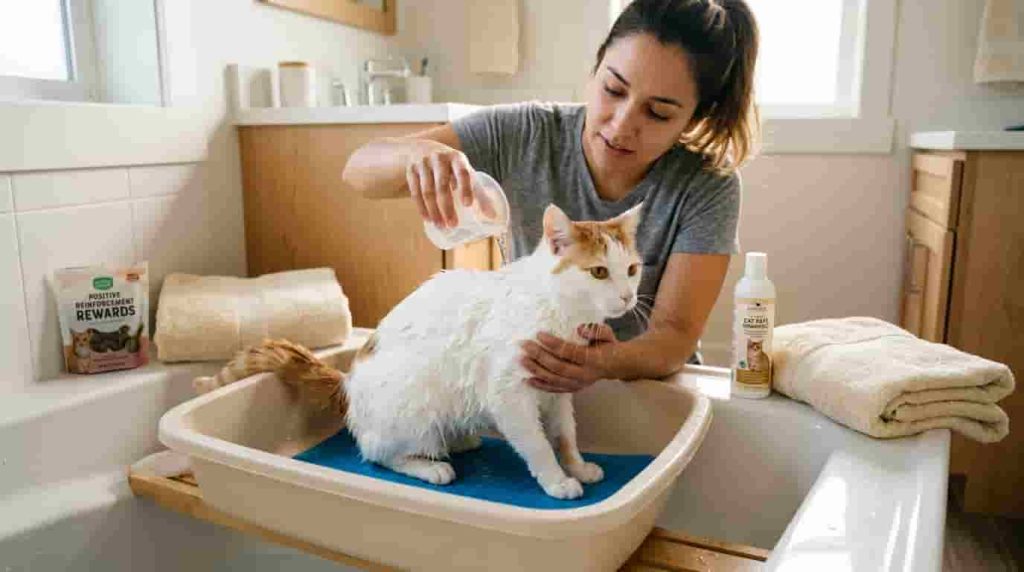
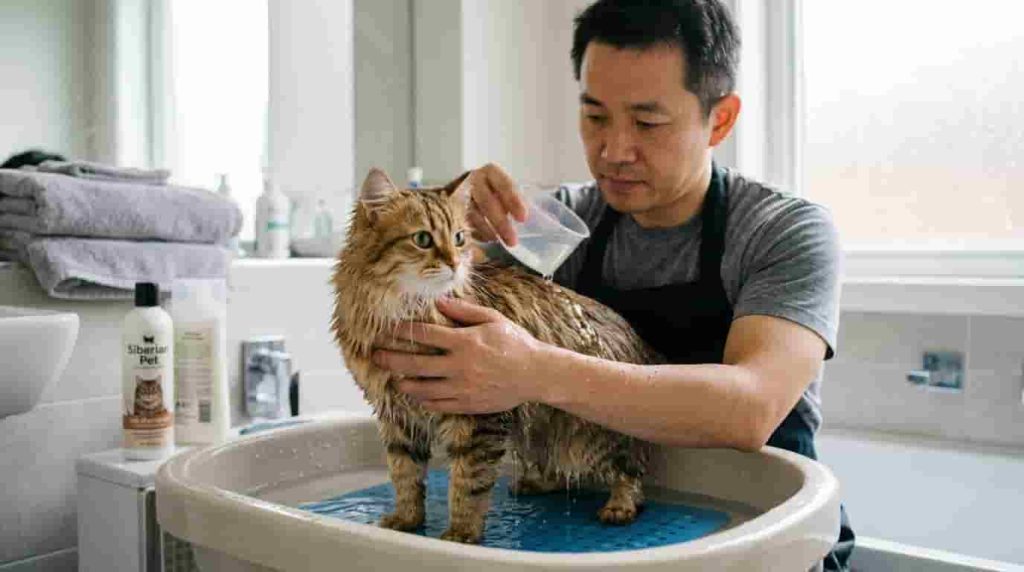
Now you are ready to begin the actual washing process. First, fill the tub with a few inches of lukewarm water. The water should feel warm but never hot on your inner wrist. Next, gently lower your pet into the tub while speaking softly. Keep one hand on their shoulder to provide comfort and prevent jumping.
Use your plastic cup to pour water over their body slowly. Avoid the face, eyes, and ears completely because water inside ears causes infections. Apply a small amount of the best cat shampoo for bathing along their back. Massage the formula gently into their fur using calm, circular motions.
Furthermore, effective cat bathing techniques rely heavily on speed and gentleness. Work the lather down to the legs and under the belly quickly. Rinse the fur thoroughly with clean, warm water from the cup. You must remove all soap residue because your pet will lick themselves later. Leftover shampoo can cause an upset stomach or skin rashes.
Understanding Recommended Cat Bath Frequency
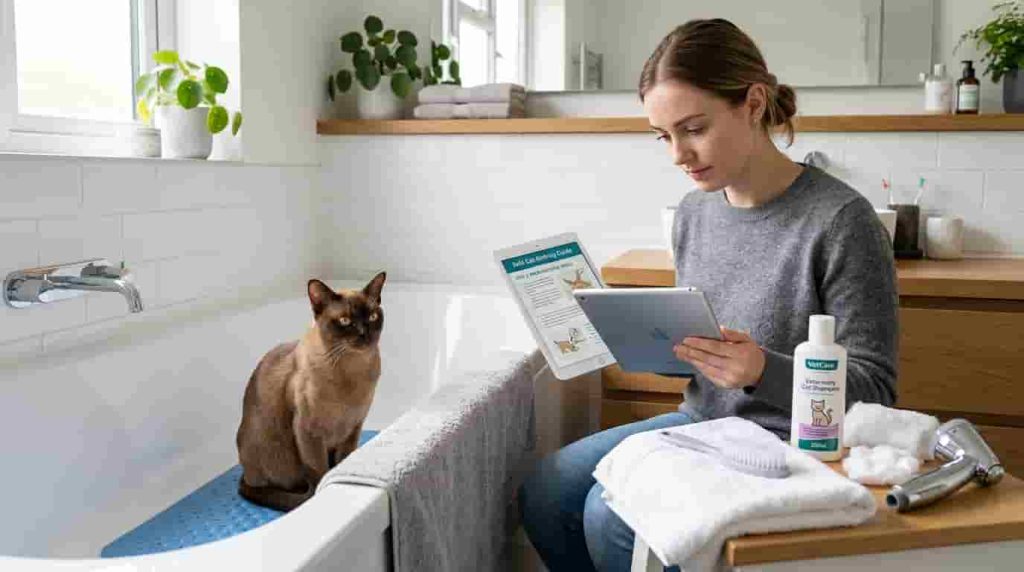
You might wonder how often your pet needs a full water wash. Fortunately, the ideal cat bath frequency is actually quite low for most indoor pets. Healthy felines only need a bath every few months. In contrast, outdoor pets or senior cats might need more frequent washing.
Expert veterinarians at the Cornell University College of Veterinary Medicine state that excessive bathing damages natural coat oils. These oils keep the skin hydrated and protect against environmental irritants. Therefore, bathing too often causes itchy, dry skin. Stick to a minimal schedule unless your vet recommends a specific medical routine.
Sometimes, lifestyle changes alter your pets cleanliness needs. For example, older pets often struggle to reach their hindquarters. As a result, they need extra assistance to stay clean and comfortable. Always monitor their coat condition to decide if a bath is truly necessary.
Expert Tips for Bathing Cats with Low Stress
You can use specific tricks to make the experience much less terrifying. First, consider using a specialized grooming bag for highly aggressive pets. This mesh bag restrains the paws while letting water and soap pass through. Alternatively, you can place a window bird feeder outside the bathroom window as a distraction.
Additionally, proper grooming cats tactics require a quiet environment. Close the bathroom door to keep other family pets away. Turn off loud exhaust fans that might startle a nervous feline. You can also play soft classical music to create a peaceful atmosphere.
Moreover, these simple tips for bathing cats focus on reducing sensory overload. Use a washcloth to clean their face instead of pouring water. Dip the cloth in warm water and wipe around the eyes gently. This method keeps your pet calm and protects sensitive facial areas.
Post Bath Drying and Rewards
Once the rinsing is done, immediately wrap your pet in a large towel. Hold them close to your body to provide warmth and comfort. Rub their fur gently to absorb as much water as possible. You will likely need two or three dry towels to finish the job.
Never use a human hair dryer on your pet. The loud noise scares them, and the hot air can burn their delicate skin easily. Let them air dry in a warm, draft free room instead. Keep windows closed until their coat dries completely.
Finally, reward your pet with their favorite high value treats. Praise them generously for surviving the ordeal. This positive reinforcement teaches them that baths lead to delicious rewards. Consequently, the next grooming session will become much easier for both of you.
Maintaining a Complete Cat Grooming Routine
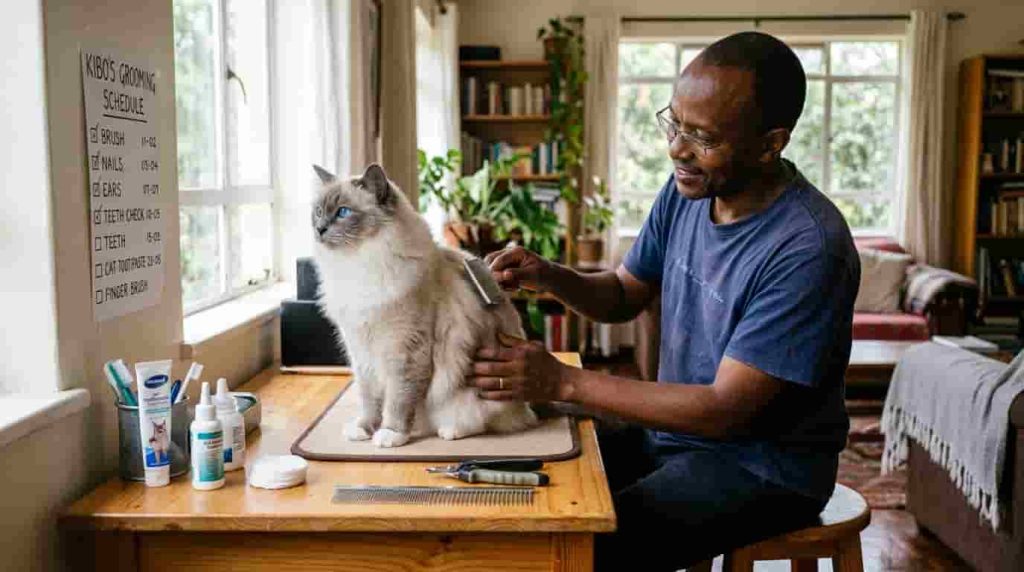
A great cat grooming routine involves several different care steps. You should check their ears weekly for dirt or wax buildup. Wipe the outer ear gently with a damp cotton ball if needed. Also, remember to look at their teeth for signs of redness.
Sometimes, grooming stress causes temporary behavior changes in sensitive pets. If your pet gets upset, they might neglect their bathroom habits briefly. For advice on handling accidents, read our article on Cat Pooping Outside Litter Box: Why It Happens and How to Fix It Fast. Understanding these behaviors helps you support your pet through stressful times.
Additionally, keeping a clean box reduces the need for frequent baths. If you are training a new kitten, check out the Cat Litter Training Guide: How to Get Your Cat to Poop in One Spot Every Time. A clean environment naturally leads to a cleaner coat. Therefore, proactive management saves you time and effort.
Advanced Cat Bath Techniques for Difficult Pets
If your pet continues to fight, you may need alternative cat bath techniques. You can buy waterless foaming shampoos at your local pet shop. You simply massage the foam into the fur and brush it out. This method eliminates the need for water completely.
Another option involves using a specialized calming spray before the bath begins. These sprays mimic natural feline pheromones to reduce anxiety levels. Mist the bathroom walls or your towels fifteen minutes before starting. Many owners report excellent results with this soothing method.
Finally, do not hesitate to seek professional help if the task remains impossible. Some felines simply cannot tolerate water manipulation at home. Professional groomers have specialized equipment to handle aggressive pets safely. Your personal safety is always the top priority during any grooming attempt.
Medical Considerations for Feline Bathing
Sometimes, you must give baths to treat specific medical conditions like ringworm. In these cases, your veterinarian will prescribe a medicated shampoo. You must follow the bottle instructions precisely for the treatment to work. Often, these formulas must sit on the skin for ten minutes.
To keep your pet calm during this waiting time, hold them securely in a dry towel. Distract them with a lickable treat paste during the wait. This trick prevents them from licking the medicated soap off their fur.
If you must give your pet medication after their bath, it can feel overwhelming. You can learn easier methods by reading Cat Pilling Tricks: How to Give a Stubborn Cat a Pill Without the Struggle. Combining these healthcare skills makes you a highly competent pet parent. Your pet will stay healthy, clean, and comfortable under your careful supervision.
Conclusion
Mastering this cat bathing guide takes time, patience, and the right approach. Remember to prepare your tools, trim those sharp claws, and move quickly through the water steps. Using these methods protects your skin while keeping your beloved pet clean. Always prioritize a calm environment to make the experience easier for everyone involved.
How does your feline friend react to water? Do you have any secret tricks that work wonders in your household? Please share your experiences and tips in the comments section below!
Frequently Asked Questions
You should trim your pets nails completely before starting the bath. Additionally, place a non-slip rubber mat in the tub so they feel secure. Move slowly and use a calm voice to keep them from panicking.
Indoor felines rarely need water baths because they groom themselves constantly. However, they do need help if they get into sticky, toxic, or filthy messes. Senior pets might also need assistance if they have arthritis.
You must always use a specially formulated, fragrance free pet shampoo. Never use human or dog products because they damage feline skin pH levels. Look for gentle, oatmeal based formulas for the best results.
Wrap your pet in a large, warm towel immediately after rinsing. Rub their fur gently to absorb the excess moisture. Avoid loud human hair dryers because they can burn skin and terrify your pet
Most healthy felines only require a bath once every few months. Bathing them too frequently strips away essential natural coat oils. This stripping causes dry, itchy skin and coat irritation.