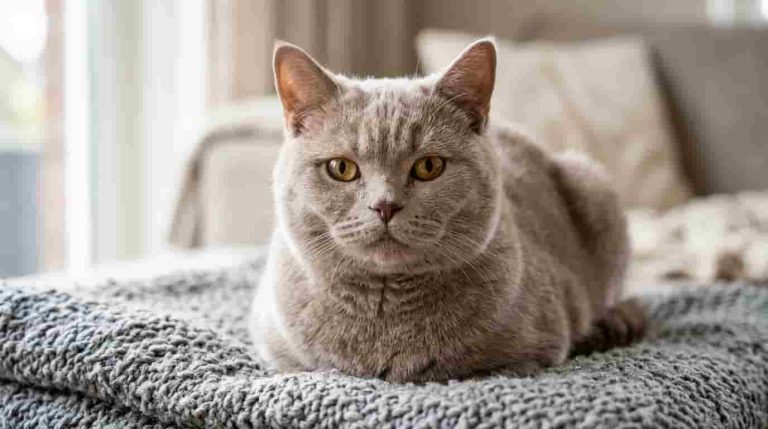
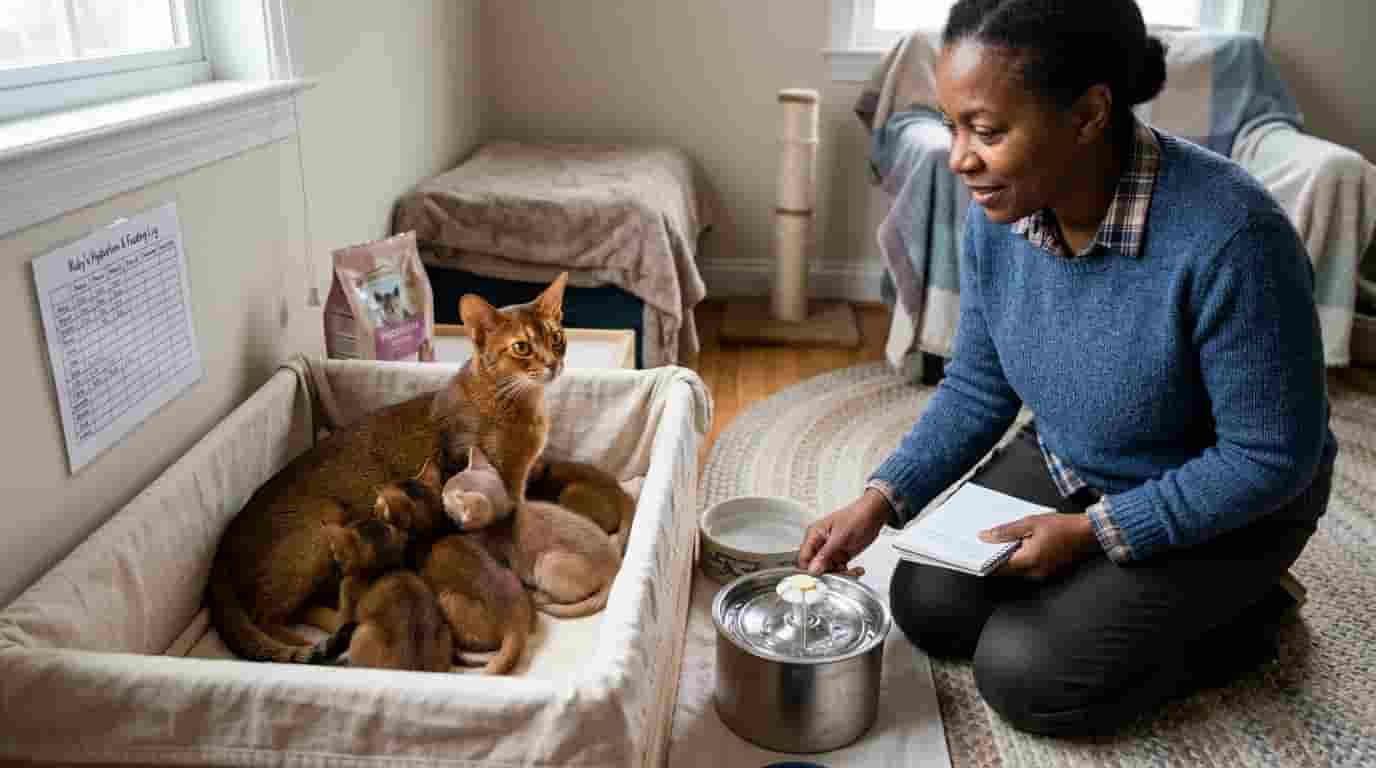
Cat Nursing Mom: Nutritional needs for a mother with kittens.
Introduction:
Cat Nursing Mom health depends entirely on receiving the correct balance of dense calories and essential nutrients every single day. Watching your feline give birth brings immense joy but also introduces critical caretaking responsibilities immediately. Many owners do not realize that a lactating cat requires up to four times her normal food intake. Consequently, improper feeding can cause severe malnutrition and halt milk production entirely.
This comprehensive guide will show you exactly how to manage a lactating cat diet effectively. If you have a solitary newborn without a mother, read Cat Orphan Kitten: How to bottle feed a baby with no mother. Monitoring growth is also vital, so review Cat Kitten Weight: How to tell if your baby cat is growing right. Finally, ensure she has privacy by checking Cat Box Location: Where to put the litter tray for maximum peace.
First, you must understand the massive physical toll that feline lactation takes on a female body. Producing milk consumes more energy than pregnancy itself because the kittens grow incredibly fast during early development. Therefore, your primary goal during this postpartum period is providing unrestricted access to high-quality nutrients.
Cat Nursing Mom: Caloric Demands and Feeding Choices
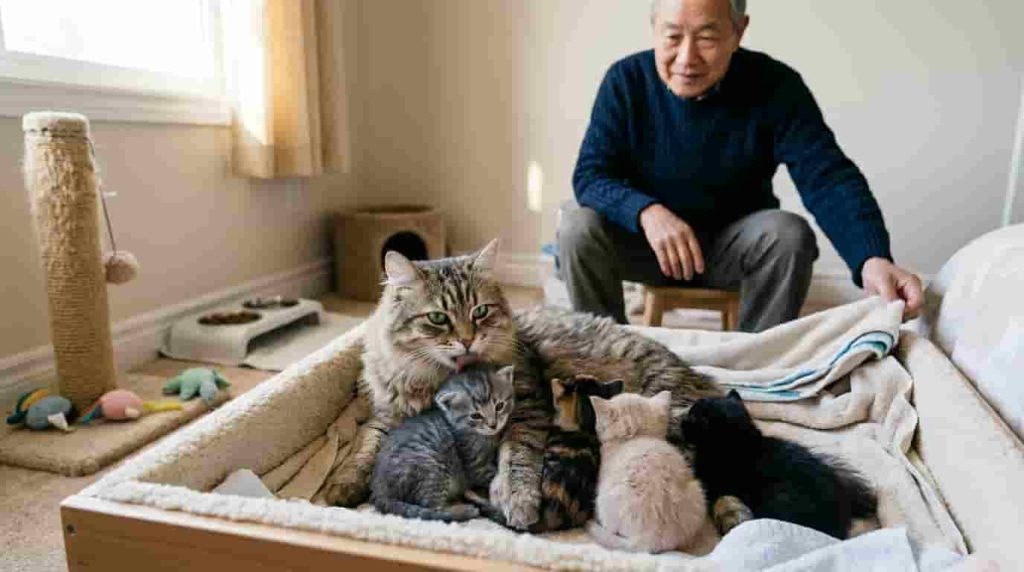
The nutritional choices you make directly affect both mother cat care and newborn kitten care simultaneously. A Cat Nursing Mom needs specialized food that contains high levels of protein, fats, and essential minerals like calcium. Regular adult maintenance kibble simply cannot fulfill these intense metabolic requirements over several weeks of continuous nursing.
| Lactation Week | Daily Energy Requirement | Ideal Food Type |
| Weeks 1 and 2 | 1.5 to 2x Normal Energy | Premium Kitten Growth Wet |
| Weeks 3 and 4 | 2.5 to 3x Normal Energy | Wet slurry and dry kibble |
| Weeks 5 and 6 | 3.5 to 4x Normal Energy | Mix of kitten food styles |
| Week 7 (Weaning) | Gradually reduce to normal | Standard Adult Cat Food |
Therefore, professional veterinary groups recommend feeding the nursing queen cat a premium commercial kitten formula. Kitten food contains superior calorie density and higher calcium levels than standard adult cat food. Additionally, you should implement free choice feeding so she can eat whenever her body signals hunger.
Managing Hydration and Critical Fluid Levels
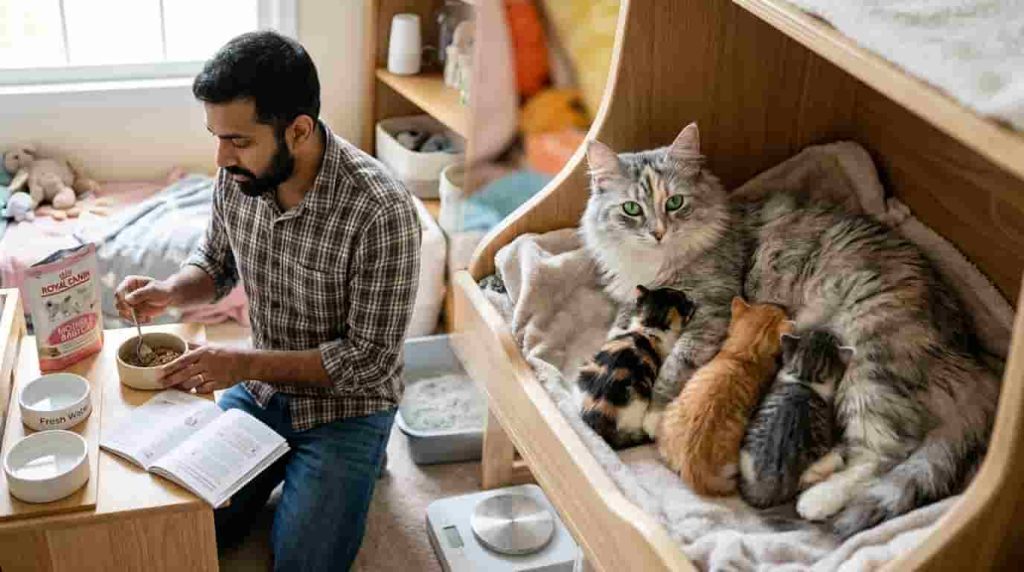
A lactating feline produces a massive volume of milk daily to sustain her fast-growing litter. Because milk consists mostly of water, dehydration can stop milk production within a few short hours. Furthermore, severe dehydration causes dangerous kidney stress and alters crucial lactating cat behavior patterns negatively.
My neighbor Tunde rescued a pregnant stray cat from his street corner last winter. After she gave birth, he noticed her milk supply dropped significantly by the second week. He immediately placed three extra water bowls around her nesting area and added wet food to her daily routine. As a result of these quick changes, her hydration levels stabilized and the kitten feeding process continued successfully.
- Place multiple water dishes directly next to her chosen nesting box.
- Use wide ceramic or stainless steel bowls to avoid whisker fatigue entirely.
- Offer low-sodium chicken broth as an occasional treat to boost fluid intake.
Understanding Feline Maternal Instincts and Environment
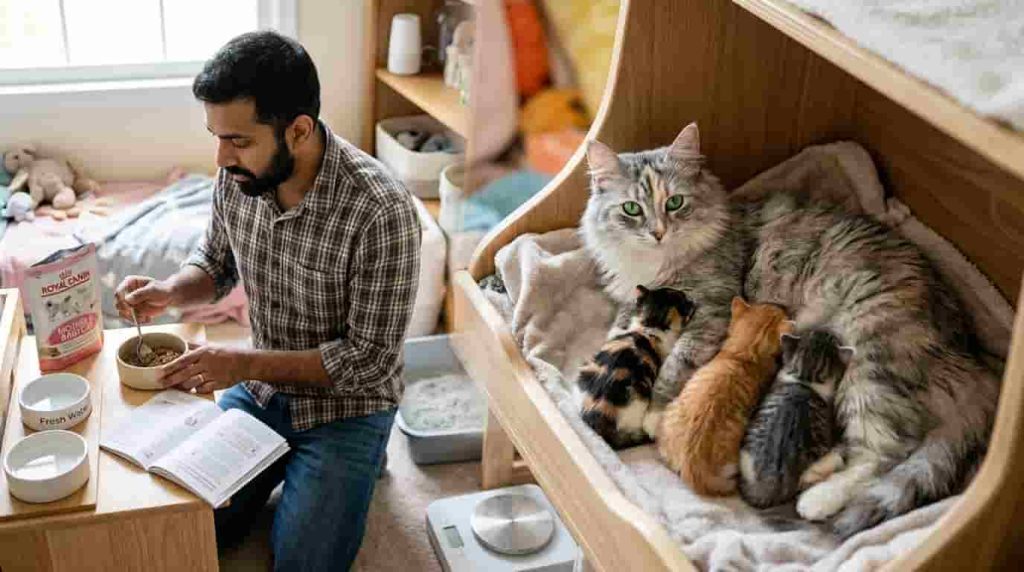
Creating a calm, quiet environment allows natural feline maternal instincts to take over without unnecessary stress. A highly stressed queen may actively neglect her babies or move them to dangerous household locations constantly. Therefore, keep human foot traffic to an absolute minimum around her designated sanctuary space.
According to the experts at PetMD, severe anxiety can physically block the release of milk hormones in lactating animals. Additionally, keep your other household pets completely away from the nursing area during the first month. This simple boundary ensures the vulnerable family feels totally secure during early newborn cat care.
Step-by-Step Nutrition Management Plan
Transitioning the Diet Safely
Introduce the premium kitten formula gradually during the final week of her feline pregnancy. Mix the new growth food with her regular adult kibble over several days to avoid digestive upset. Consequently, her stomach will adapt comfortably before the intense lactation period begins.
Implementing Free Choice Feeding
Leave a fresh bowl of dry kitten kibble out for the Cat Nursing Mom twenty-four hours a day. She requires access to food during late-night hours because kittens feed around the clock continuously. Additionally, supplement this dry food with wet meals at least three times daily.
Signs of Nutritional Deficiencies and Illness
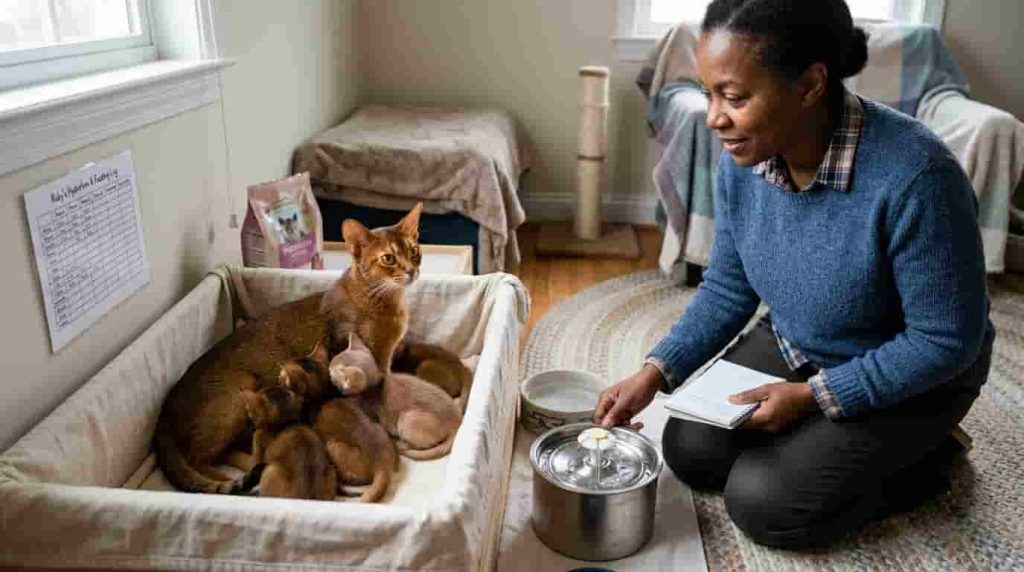
You must monitor the health of your postpartum cat care setup with extreme vigilance daily. For example, a sudden drop in blood calcium levels can cause a life-threatening condition called eclampsia or milk fever. This dangerous medical emergency requires immediate intervention from a qualified professional veterinarian.
Watch out for specific warning signs such as muscle tremors, extreme restlessness, or a stiff, uncoordinated gait. Additionally, contact your local clinic if the mother cat health degrades or if she develops hot, swollen mammary glands. These symptoms often point to mastitis, which makes kitten nursing incredibly painful for the mother.
Transitioning to the Kitten Weaning Process
The natural kitten weaning process usually starts around the fourth or fifth week of development. At this specific milestone, the babies begin showing a curious interest in their mother’s food bowl. Therefore, you should provide a shallow dish containing a soft mixture of warm water and canned kitten food.
| Weaning Phase | Mother’s Diet Focus | Kitten Diet Focus |
| Phase 1 (Week 4) | Full kitten formula diet | Warm milk formula slurry |
| Phase 2 (Week 5) | Full kitten formula diet | Wet canned growth food |
| Phase 3 (Week 6) | Slightly reduced portions | Softened dry kitten kibble |
| Phase 4 (Week 7) | Standard adult food transition | Solid kitten food only |
As the babies consume more solid food, the physical demand on the Cat Nursing Mom decreases naturally. Consequently, you can slowly reduce her daily portion sizes over the next two weeks. This gradual reduction helps dry up her milk supply safely without causing painful engorgement.
Bonding with a Nursing Cat Safely
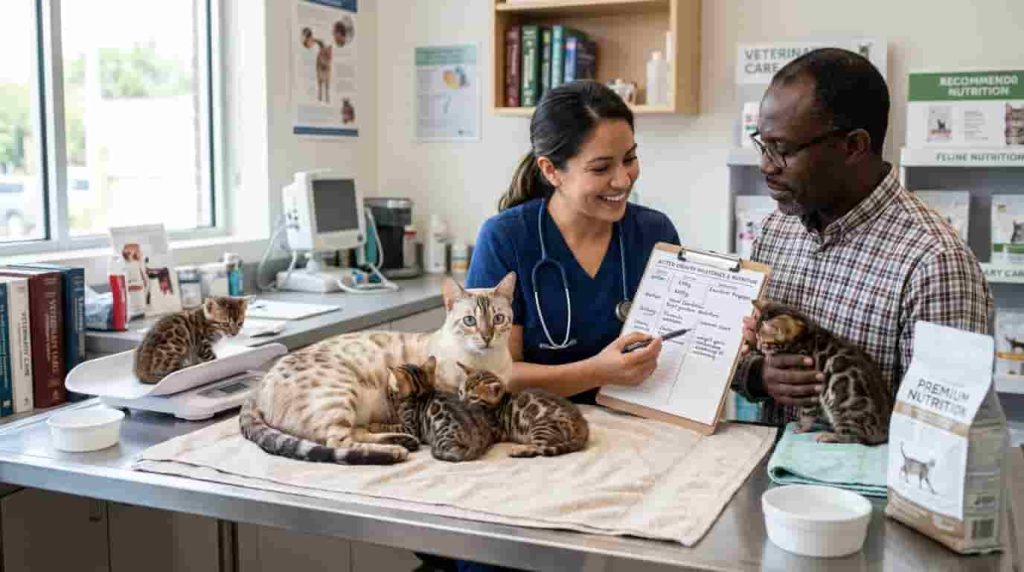
Supporting a lactating cat requires a delicate balance between active caregiving and respectful distance. While she needs your help with nutrition, she also values her privacy deeply during this sensitive time. Therefore, always speak in soft tones whenever you approach the nesting box to change her food dishes.
Furthermore, avoid handling the newborns excessively during the first two weeks of life. The queen tracks her babies using scent, so changing their smell can disrupt normal maternal behavior. Once the eyes open fully, you can begin gentle socialization steps with veterinary approval.
Long-Term Health Benefits of Correct Nutrition
Providing excellent care for a mama cat now prevents serious health complications further down the road. Poor nutrition during lactation leaves the mother skeletal, weak, and highly vulnerable to chronic immune diseases. Conversely, a well-fed queen maintains her muscle mass and transitions back to normal adult life effortlessly.
Once the weaning process finishes completely, schedule a veterinary visit to discuss spaying your feline companion. Spaying prevents future unplanned litters and eliminates the risk of uterine infections entirely. Ultimately, your dedication to her current nutritional needs ensures a vibrant future for the whole feline family.
Conclusion
Nurturing a Cat Nursing Mom requires a consistent supply of premium, calorie-dense food and excellent hydration support. By offering unlimited access to kitten formula, you protect the health of both the mother and her growing litter. This careful management transforms a physically demanding period into a highly successful rearing experience.
Have you ever managed a lactating cat and her newborns in your home before? Please share your feeding stories and tips in the comments section below to help other pet parents!
Frequently Asked Questions
No, normal adult food lacks the necessary calorie density and calcium levels to support milk production. You must feed her a premium kitten growth formula to prevent severe nutritional deficiencies. This diet should continue until the kittens finish weaning completely.
A lactating feline loses weight if she does not consume enough calories to balance her daily milk production. Ensure she has continuous, unrestricted access to high-protein dry kibble and canned wet food twenty-four hours a day. If weight loss continues, consult a veterinarian immediately to check for hidden parasites.
A lactating mother requires significantly more water than a typical adult cat to maintain her milk supply. You should provide multiple clean water bowls around her nest and offer wet food daily to increase fluids. Dehydration will cause her milk production to stop entirely within hours.
You should begin transitioning her back to standard adult food once the kittens reach seven or eight weeks old. At this stage, the weaning process is complete and the babies eat solid food independently. Change the diet slowly over one week to prevent digestive irritation.
A complete loss of appetite in a lactating cat is a major medical emergency that requires urgent veterinary care. This behavior often indicates severe conditions like uterine infections, mastitis, or dangerously low blood calcium levels. Never wait more than twenty-four hours to seek professional assistance.