Cat Pooping Outside Litter Box: Why It Happens and How to Fix It Fast.
Introduction:
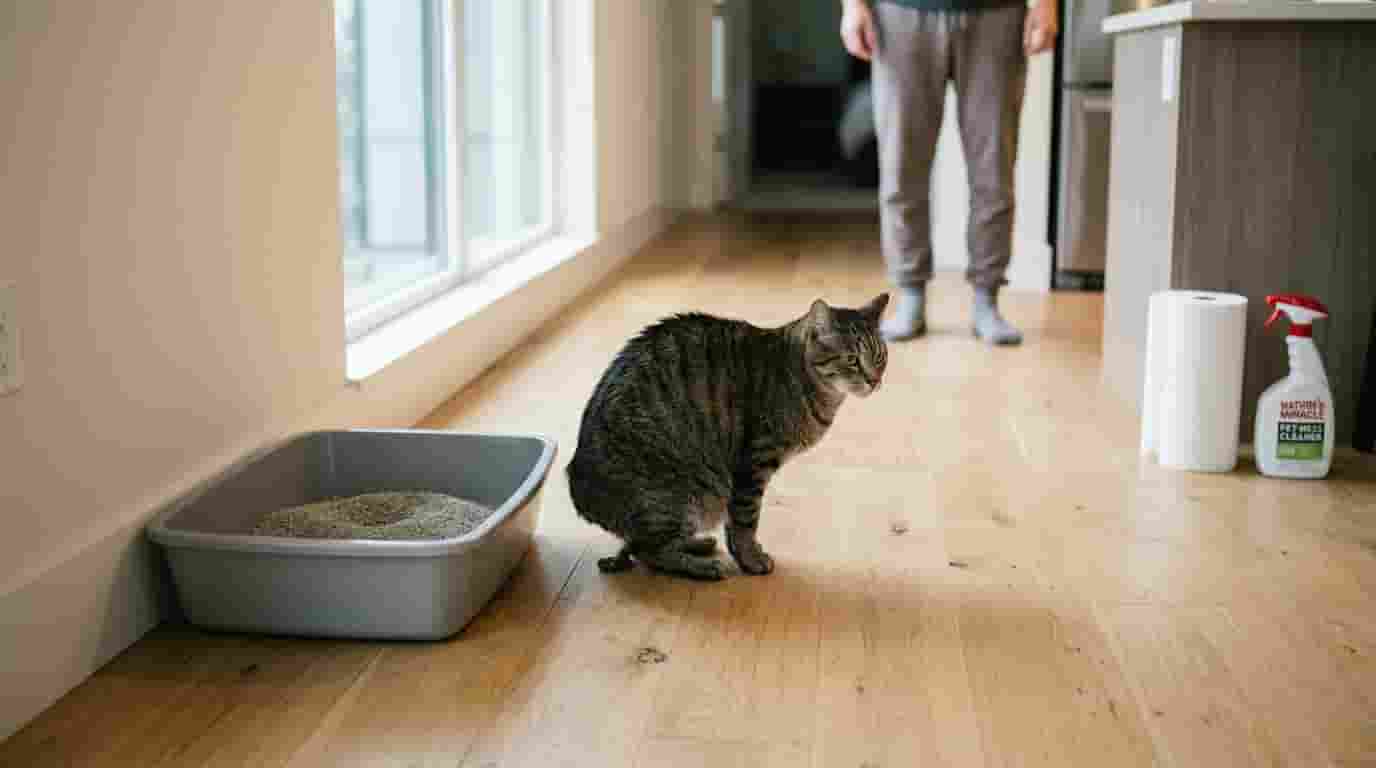
Cat pooping outside litter box issues can drive any pet owner crazy. You walk into your living room and find a smelly mess on your favorite rug. This frustrating accident ruins your morning and makes your home smell terrible.
However, you can solve these sudden cat litter box problems with a few simple changes. This unique guide will look beyond basic cleanliness to fix your pet’s bathroom habits completely. We will explore hidden environmental triggers that most owners completely ignore.
Therefore, you will learn how to read your pet’s subtle body language. Understanding their message helps you correct these difficult cat behavior issues quickly. Let us dive into the best ways to fix your pet’s daily toilet choices today.
The Root Causes of a Cat Pooping Outside Litter Box
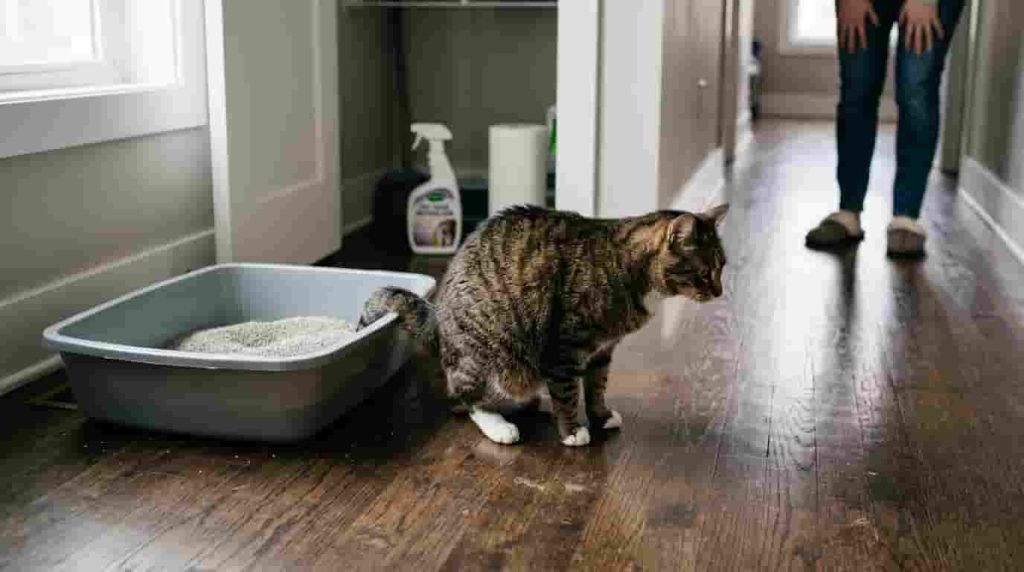
Hidden medical issues often serve as the main reason behind sudden changes in your pet’s bathroom choices. Conditions like constipation or painful arthritis can make entering a high plastic pan very difficult. Therefore, you must check for cat health concerns before changing any training routines.
According to PetMD, painful bowel movements can cause a feline to avoid their pan entirely. The animal incorrectly connects the physical pain with the physical location of the pan. Consequently, your furry friend seeks out soft carpets to ease their physical distress.
You should schedule a quick veterinary visit to rule out serious underlying illnesses first. If your vet gives a clean bill of health, you can focus on behavioral training for cats. Correcting household stressors will help you manage your pet’s unique daily needs.
Hidden Triggers for Cat Litter Box Problems
- The plastic pan sits too close to loud household appliances like a noisy washing machine.
- Your chosen location lacks a clear escape route, which makes your pet feel cornered.
- You switched to a scented clay brand that irritates your cat’s sensitive nose.
- The sides of the box are simply too high for an senior feline to climb over.
Simple Solutions for Cats Pooping Outside Litter Box Mistakes
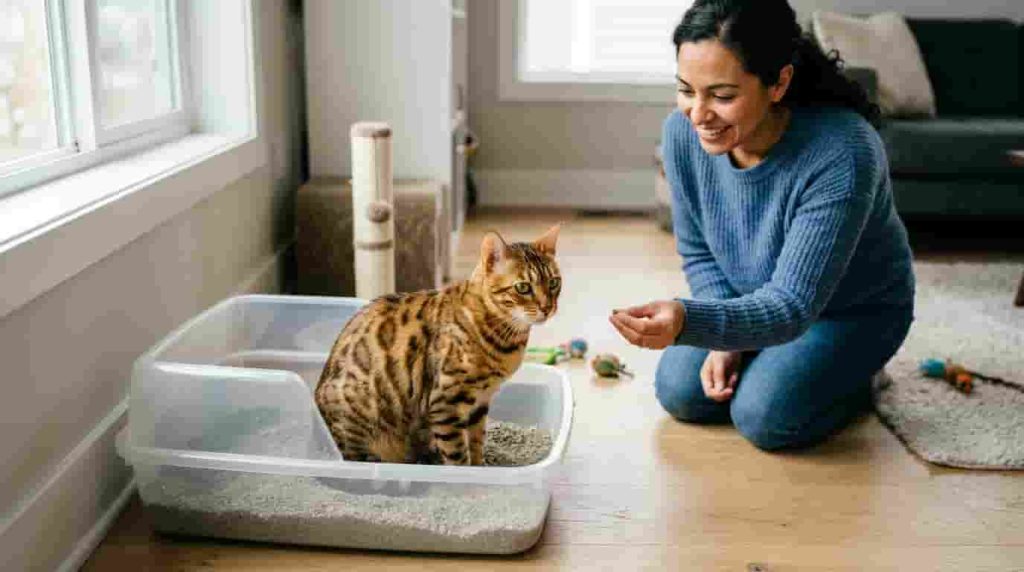
First, you must add more open plastic pans throughout your living space immediately. The golden rule states you always need one more pan than the total number of cats. This easy addition prevents territorial fights and gives your pet plenty of safe choices.
Next, wash every soiled carpet area thoroughly using a specialized enzymatic cleaner. Standard household detergents contain ammonia, which actually smells exactly like real animal urine. As a result, your pet might return to the same spot to repeat the bad behavior.
Finally, try changing the actual style of the pan to suit your pet’s specific preferences. Many felines despise covered hoods because these domes trap intense odors inside. Removing the top lid can provide one of the best solutions for cats pooping outside litter box issues.
Effective Cat Training Tips for Clean Floors
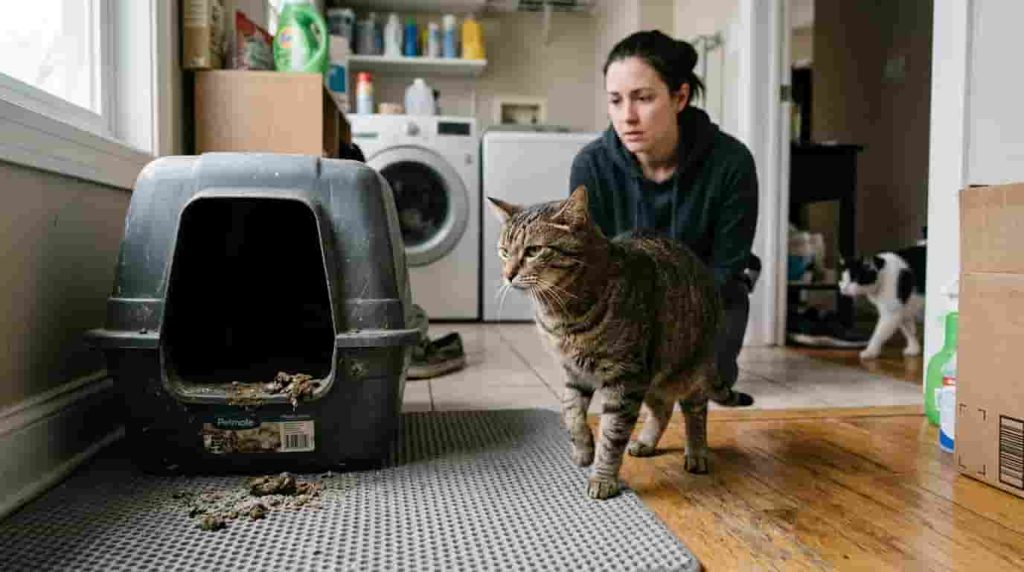
Consistency plays a massive role when you are training your cat to use their proper bathroom space. You can try moving the pan directly over the exact spot where the accidents keep happening. Once your pet uses it reliably, move the pan back to your preferred spot very slowly.
One cat owner named Dave dealt with a severe case of cat marking behavior on his hallway floor. He realized his cat Luna hated the new automatic self-cleaning pan because the sudden motor noise scared her away. Dave replaced the electronic device with a traditional open pan, and Luna stopped having accidents immediately.
Understanding your pet’s reactions will help you handle other challenging pet care routines with confidence. For example, a calm environment makes a difference when you practice techniques found in our cat brushing guide. Reducing daily household anxiety makes your pet much more receptive to overall training.
How to Stop Cat From Pooping Outside Litter Box Areas Long Term
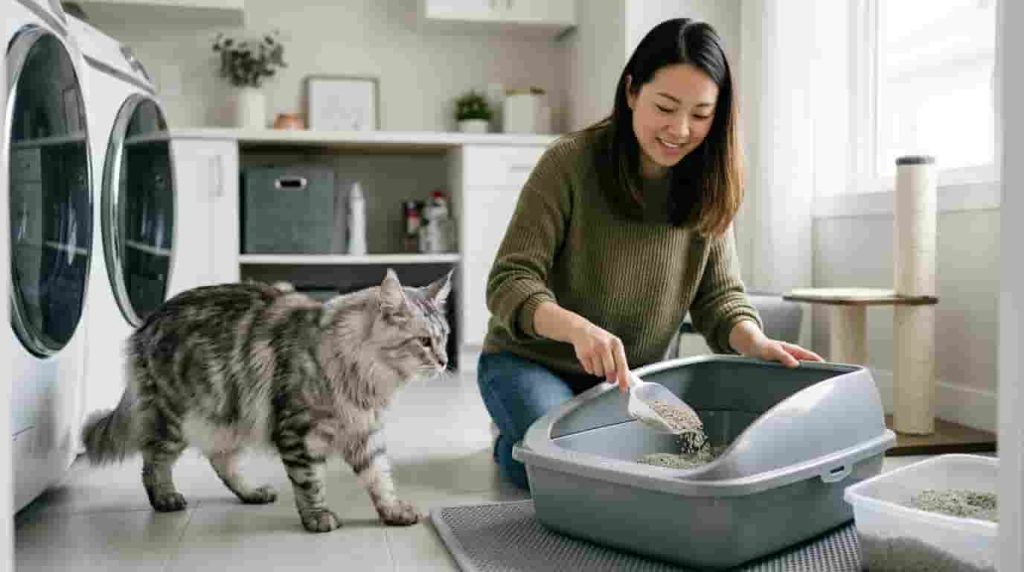
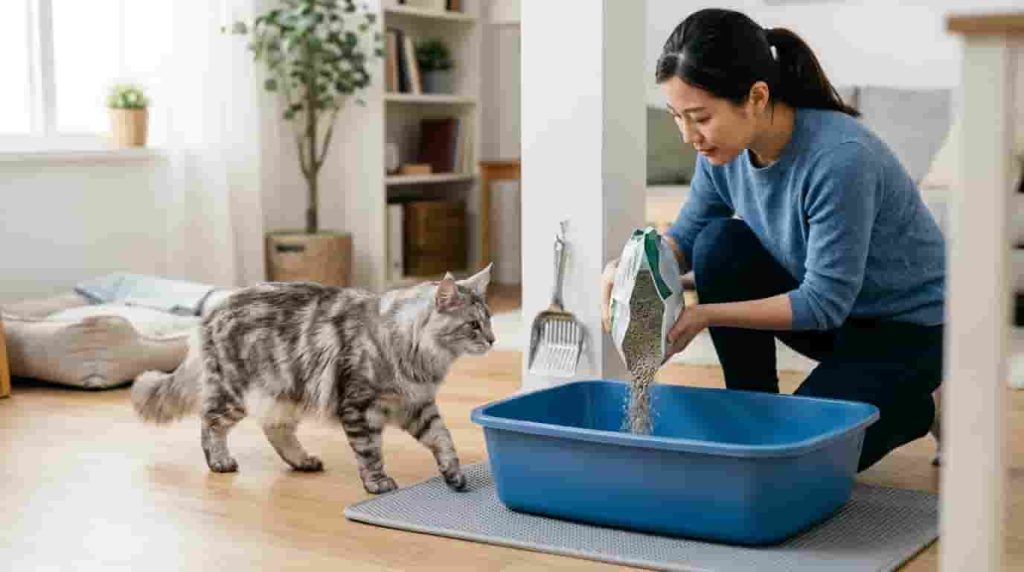
Choosing the correct type of substrate changes everything when you practice litter box training at home. Most felines prefer fine-grained, unscented clumping clay because it feels very soft against their sensitive paws. Avoid buying fancy scented varieties that smell like strong perfume to a small animal.
Additionally, maintain a consistent depth of about two inches of material within the container. Deep material creates an unstable surface that makes your cat feel unsafe while digging. Finding the perfect balance ensures your pet feels secure every time they step inside.
Proper environmental adjustments can prevent many common behavioral issues from developing in the first place. If you want to build great habits from the start, read our complete cat litter training guide. This resource helps you establish excellent cat toilet habits for younger kittens and older rescue cats alike.
Smart Feline Behavior Solutions for Anxious Pets
Stress from neighborhood stray animals can cause your pet to stop using their indoor facilities completely. Your indoor cat might feel a sudden urge to defend their territory near windows or glass doors. You can block their view of the yard using heavy blinds to reduce this anxiety quickly.
Using pheromone diffusers throughout the house also provides excellent feline behavior solutions for anxious pets. These devices emit comforting scents that mimic a mother cat’s natural calming pheromones. Consequently, your pet will feel secure and stop performing negative behaviors around your home.
Building a secure bond through regular pampering sessions further reduces stress-induced accidents. You can combine this behavioral therapy with practical physical upkeep by following our cat nail clipping guide. Trimming claws regularly ensures they do not snag on the pan liners or scratching posts.
Overcoming Stubborn Cat Behavior Problems Habitually
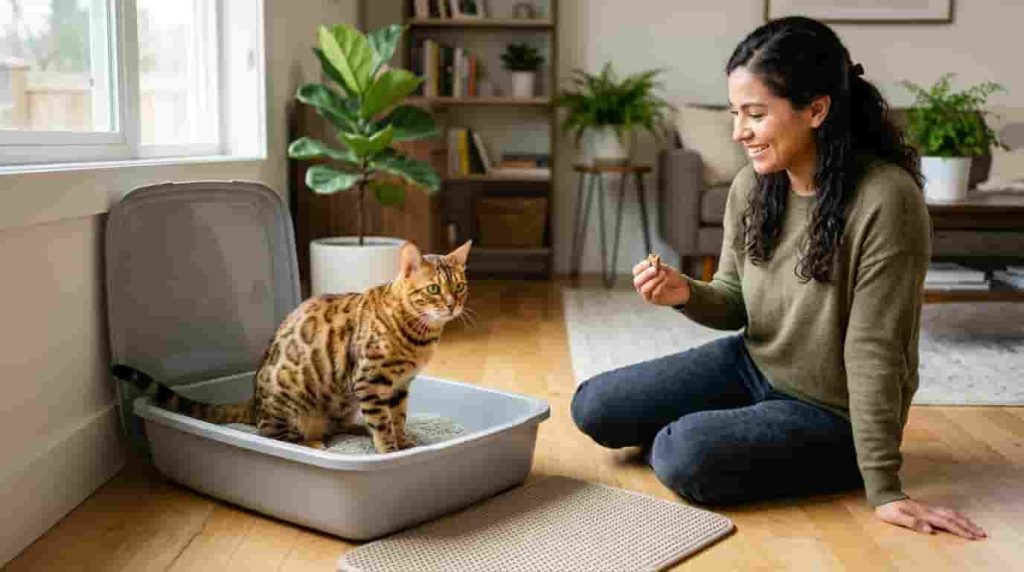
A strict cleaning schedule remains your strongest weapon for preventing cat accidents on your expensive rugs. Scoop the waste out of the pans at least twice a day without exception. Wash the entire container with warm water and mild soap once every two weeks to remove embedded odors.
Furthermore, pay close attention to changes in your pet’s daily routines or diet. Sudden food adjustments can cause loose stools, which makes it harder for your cat to reach their bathroom in time. Keep lifestyle changes gradual to protect your companion’s sensitive digestive tract.
Healthy bathroom habits usually reflect a calm animal that feels completely content in their environment. If stress causes other issues like a dirty coat, look at our cat bathing guide for safe washing tips. Keeping your pet clean and comfortable prevents a wide variety of cat behavior problems.
Correcting Indoor Cat Potty Habits Safely
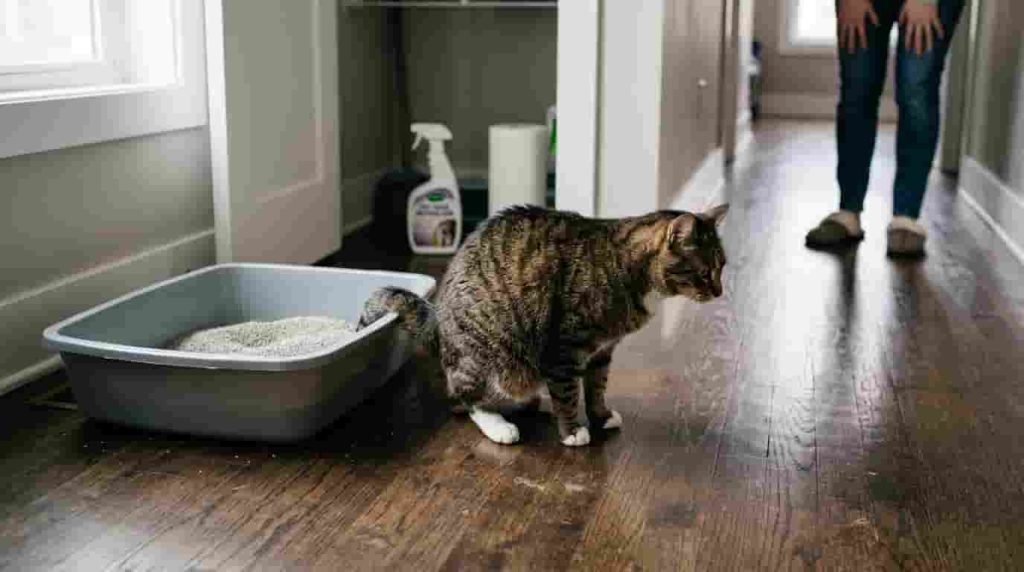
Older felines often suffer from hidden joint stiffness that makes using traditional facilities difficult. You can cut a low entryway into the side of the plastic pan using heavy scissors. This modification allows a senior pet to walk inside easily without jumping over a high edge.
Sometimes, a medical treatment requires you to administer pills, which can cause temporary behavioral stress. If this chore creates tension, you can use the methods in our guide on cat pilling tricks. Keeping healthcare routines peaceful prevents your cat from acting out by fouling your home floors.
Summary of the Best Ways to Eliminate Cat Litter Box Problems
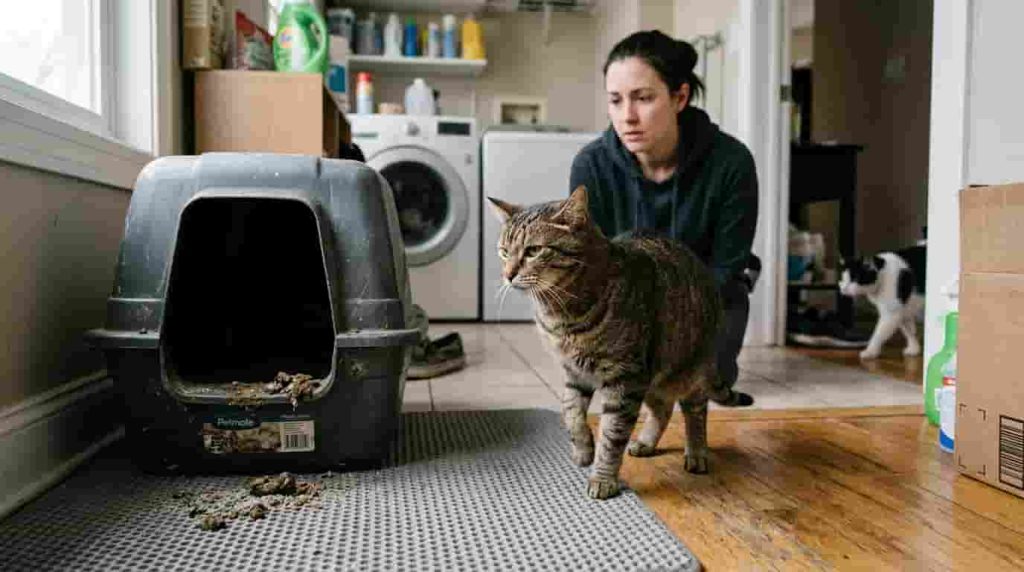
In conclusion, addressing a case of a cat pooping outside litter box requires a mixture of medical checks and environmental changes. You can eliminate cat litter box problems completely by keeping your facilities clean, quiet, and easily accessible. Always watch your pet’s actions closely and celebrate every small step toward success.
Remember that patience and understanding will guide your pet back to excellent bathroom habits. Your home will remain clean, and your feline friend will feel safe and secure once again.
Have you ever managed a pet that refused to use its pan properly? Please share your personal stories and successful training solutions in the comment section below!
Frequently Asked Questions
Your cat might avoid the box due to underlying medical issues, dirty litter, or stress. Felines prefer quiet areas and very clean surfaces when they relieve themselves. Identifying recent household changes can help you solve the issue quickly.
First, visit your vet to ensure your cat does not suffer from digestive pain. Next, add an extra open pan in a quiet, low traffic room. Finally, clean all soiled areas with an enzyme destroyer to erase the scent completely.
Yes, cats naturally despise using a smelly or heavily soiled plastic container. If you leave waste inside for days, your pet will find alternative clean surfaces. Scooping the pan twice a day prevents these unpleasant household accidents.
Most cats prefer fine, unscented clumping litter because it matches natural soil texture. Avoid heavily scented products because artificial perfumes easily overwhelm a feline’s sensitive sense of smell. Keep the depth at two inches so they feel completely stable.
This behavior usually means your cat wants to use the facility but dislikes a specific feature. The box might be too small for them to turn around comfortably. Try upgrading to a larger open container to give your pet plenty of space.