How to Bottle Feed a Kitten Without Its Mother the Right Way
Introduction:
How to bottle feed a kitten is a critical skill when you find a tiny orphan crying for help. A helpless newborn depends completely on you for warm milk and gentle care to survive.
You might feel nervous holding a creature so small and fragile. Fortunately, learning how to bottle feed a kitten without its mother becomes easy once you follow a few basic rules.
Many well-meaning cat rescuers accidentally put young kittens in danger by making one common mistake during mealtime. Did you know that holding a baby cat on its back like a human baby can flood its lungs with milk?
This tiny mistake often leads to fatal lung infections. Instead, you must keep the baby flat on its belly while it nurses.
Safe hand rearing kittens requires patience, proper tools, and the right techniques. You will learn every step to keep your little orphan healthy and strong today.
How to Bottle Feed a Kitten step by Step for Safe Nursing
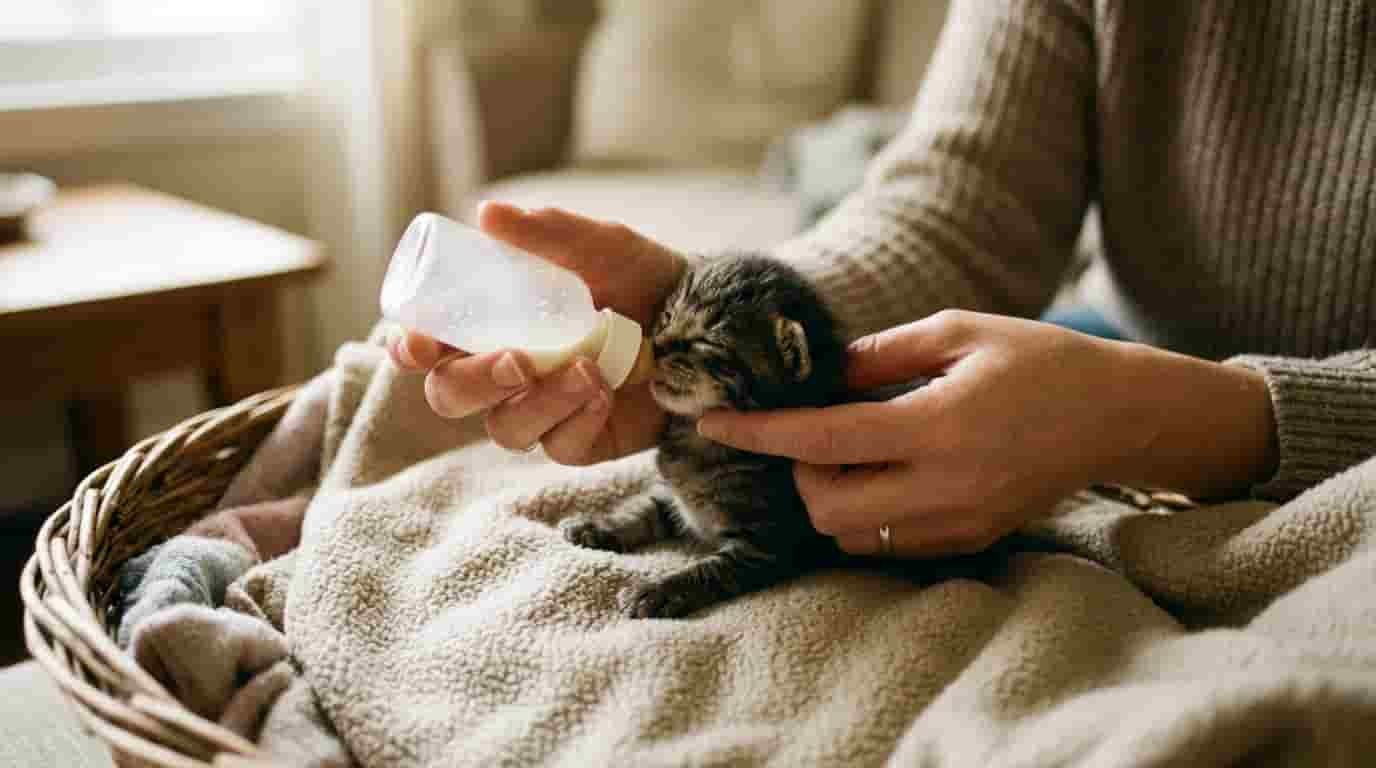
Understanding how to bottle feed a kitten properly starts with gathering the correct supplies before your baby cat gets hungry. You should never give cow milk to a young cat because it causes severe stomach distress.
Always use a commercial kitten formula designed specifically for feline nursing needs. You can buy kitten care essentials at local pet stores or veterinary clinics.
Essential Supplies for Hand Rearing Kittens
- Specialized kitten nursing bottle with a small silicone nipple
- High quality commercial kitten formula
- Soft warm washcloths for cleaning up
- Digital kitchen scale to track daily weight gain
Prepare the commercial milk by warming it to body temperature. Test a small drop on your inner wrist first. The liquid should feel comfortably warm but never hot.
Position the baby cat flat on its stomach on a soft towel. Never flip the little creature onto its back while feeding.
Insert the bottle nipple gently into the mouth. Allow the baby to latch on and suck naturally at its own steady pace.
Never squeeze the bottle to force liquid into the mouth. Squeezing causes the liquid to enter the lungs rather than the stomach.
Building a Safe Kitten Feeding Schedule by Age
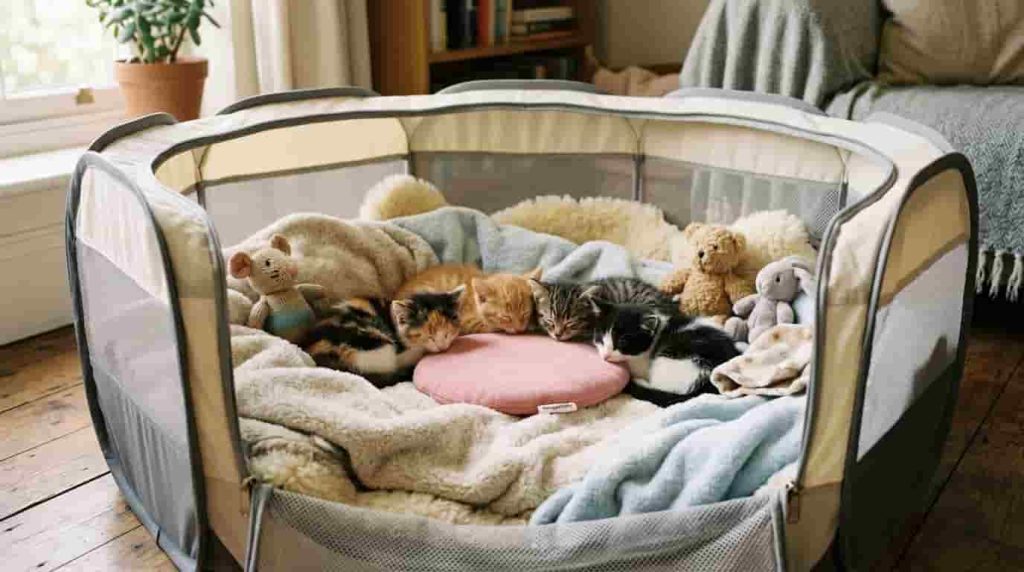
Young babies need frequent nursing sessions around the clock to thrive. Their tiny stomachs can only hold small amounts of liquid at one time.
Creating a consistent feeding schedule for kittens prevents low blood sugar and dehydration. You must stick to a strict routine during the first few weeks of life.
| Age of Kitten | Feeding Frequency | Amount Per Feed |
| 1 to 7 Days | Every 2 hours | 2 to 4 ml |
| 8 to 14 Days | Every 3 hours | 5 to 7 ml |
| 15 to 21 Days | Every 4 hours | 8 to 10 ml |
| 22 to 28 Days | Every 5 hours | 11 to 14 ml |
The American Society for the Prevention of Cruelty to Animals (ASPCA) recommends keeping newborn orphans warm with heating pads before offering any food. Cold baby cats cannot digest formula properly, which leads to life-threatening complications.
Track the weight of your baby daily using your digital scale. Steady weight gain shows that your feeding schedule for orphaned kittens works well.
If you want a detailed breakdown of weekly care routines, check out our guide on How to Raise a Kitten Without Its Mother: Complete Week-by-Week Guide.
Overcoming Common Kitten Feeding Problems and Safety Risks
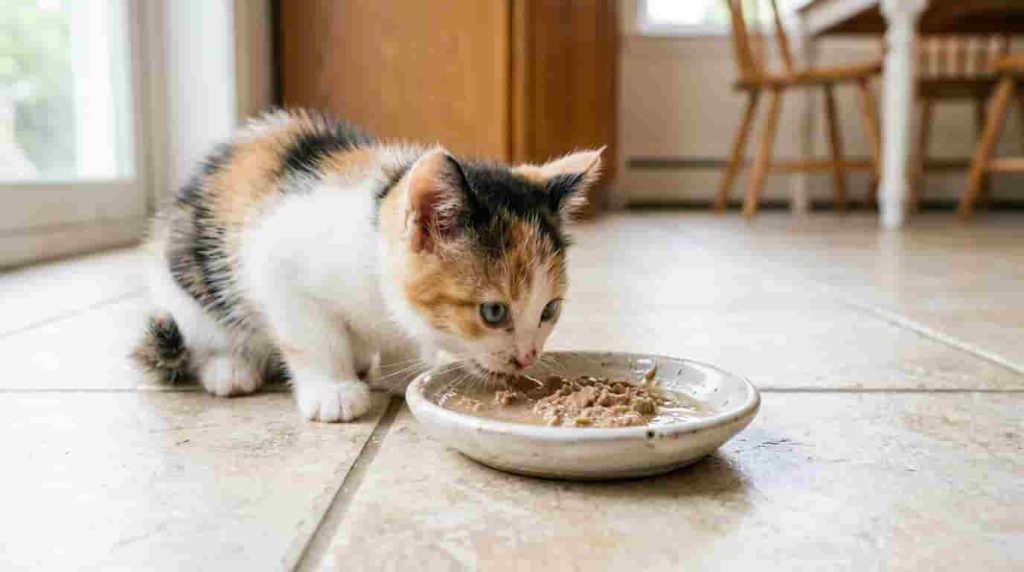
Even experienced caregivers encounter unexpected issues when nursing baby cats. Understanding how to bottle feed a kitten safely means knowing how to spot red flags early.
Refusal to suckle is a major issue among young orphans. A baby cat might reject the nipple if the liquid is too cold or if the nipple hole is too small.
Warm the liquid slightly and try again. You can also warm the rubber nipple in hot water to make it more appealing to the baby.
Solving Daily Kitten Bottle Feeding Tips Issues
- Check liquid temperature on your inner wrist before every session
- Keep the baby cat warm because cold bodies reject food
- Clean the baby face with a damp warm cloth after nursing
- Stimulate the bottom gently to help the baby go to the bathroom
Many caregivers forget that newborn kittens cannot go to the bathroom by themselves. The mother cat usually licks them to encourage elimination after every single meal.
You must mimic this natural mother behavior after every bottle session. Take a warm damp cotton ball and rub the genital area gently until the baby pees and poops.
Skipping this step causes dangerous constipation and stomach swelling. Keep reading to learn how to keep your orphan healthy long term.
For more details on round-the-clock newborn care, read our full article on Newborn Kitten Care Without Mother: Everything You Need to Know.
Expert Newborn Kitten Feeding Guide for Healthy Growth
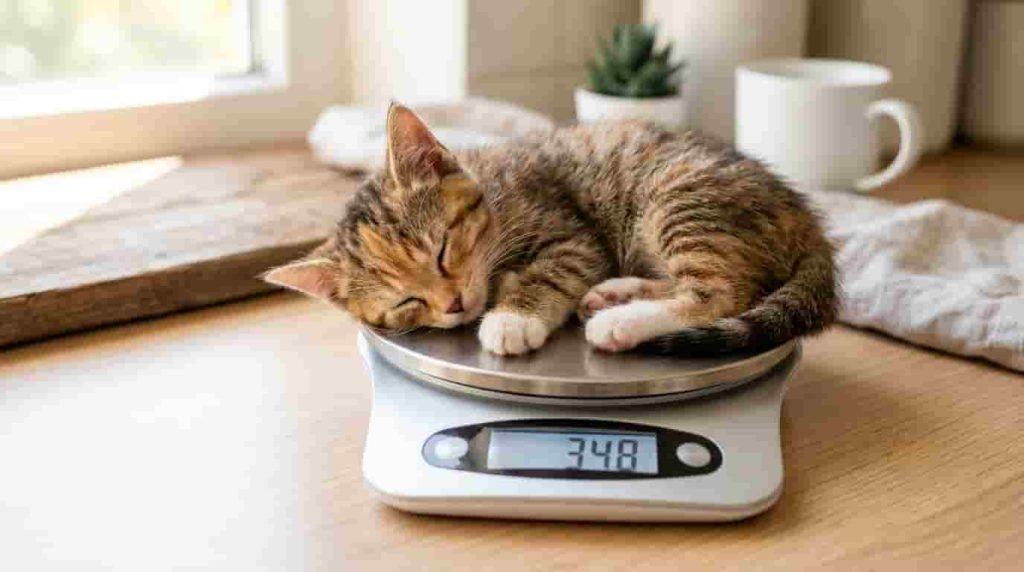
Proper orphaned kitten care involves daily monitoring and constant attention. Veterinary professionals at Cornell University College of Veterinary Medicine emphasize that proper hand-rearing techniques reduce mortality rates in rescue kittens significantly.
Watch out for formula coming out of the nose during feeding. Stop feeding immediately if liquid leaks from the nostrils.
This sign means the milk flow is too fast or the baby is swallowing wrong. Hold the baby upright gently to clear the airway before trying again slowly.
Keep track of daily progress in a small notebook or phone app. Healthy babies gain around ten to fifteen grams every single day.
Transitioning to Solid Foods Comfortably
- Introduce solid food around four weeks of age
- Mix kitten formula with wet canned kitten food to create a smooth gruel
- Offer the gruel on a flat shallow dish
- Continue offering the bottle while the baby learns to lap food
Weaning takes time and patience as your baby cat learns new skills. Never force a baby cat to stop bottle nursing suddenly.
Allow the little one to explore the gruel at a natural pace. Soon the baby will rely entirely on big cat food for energy.
If you need help setting up exact daily schedules, check our comprehensive post on How to Feed a Kitten Without Its Mother: Safe Feeding Schedule from Birth to 8 Weeks.
Master the Art of Caring for Orphaned Kittens
Learning how to bottle feed a kitten takes dedicated practice, gentle handling, and constant patience. You now possess the practical knowledge to save a vulnerable life safely.
Remember to keep the baby cat flat on its stomach while nursing. Always warm the formula properly and stimulate the belly after every single meal.
Your care gives a vulnerable baby cat the chance to grow into a strong adult cat. Learning how to bottle feed a kitten without its mother is one of the most rewarding journeys a cat lover can experience.
Have you ever hand raised a young orphan before? Share your personal stories, tips, or questions in the comments section below!
Frequently Asked Questions
No, you should never feed cow milk to a newborn cat. Cow milk causes severe stomach pain, diarrhea, and dangerous dehydration. Always use a commercial kitten formula instead.
Newborn babies need to eat every two hours during their first week of life. You can slowly increase the time between feedings as the baby grows older.
Liquid coming out of the nose means the milk flow is moving too fast. Stop feeding right away and check the nipple hole size to prevent lung infections.
A well fed baby cat will have a comfortably rounded stomach and sleep peacefully after meals. Weighing the baby daily on a digital scale ensures steady weight gain.
You can start introducing soft wet food gruel around four weeks of age. Most kittens finish weaning off the bottle completely by eight weeks of age.