Why Does My Cat Meow When I Leave? Causes and What It Means
Introduction
Why Does My Cat Meow When I Leave is a question many cat owners ask after hearing their cat cry, call, or meow as they walk out of a room or leave the house.
Cats may meow when an owner leaves because they want attention, dislike a closed door, are responding to a routine change, want something, or feel stressed about being alone. The meaning depends on the cat’s personality, age, environment, and whether the behavior is new or excessive. Not every meow means separation anxiety. Readers should learn how to distinguish normal cat communication from signs that may need attention.
Why Does My Cat Meow When I Leave?

Cat meowing can serve as a vital form of communication, and a cat may vocalize when a person leaves because the departure changes something the cat cares about. When you walk away, your feline friend notices the shift immediately. Understanding cat meows requires looking closely at the context rather than relying on the sound alone, as the same cat may use different feline vocalizations for completely different needs throughout the day.
The main possibilities for this behavior include:
- Your cat wants your attention or interactive play.
- Your cat expects you to stay nearby in the same room.
- A closed door blocks access to you or a favorite space.
- Your cat wants food, water, or another essential resource.
- Your cat has learned through past reinforcement that meowing brings you back.
- Your cat dislikes being left alone or separated from family members.
- Stress, anxiety, underlying aging issues, or illness may contribute in some complex cases.
Context always matters more than the sound alone. By evaluating your cat’s daily habits, you can better decode what those parting cries actually mean.
Common Reasons Cats Meow When Their Owners Leave
Your Cat Wants Attention or Interaction
Some cats are naturally social and may protest when a favorite person stops interacting with them. Felines form strong bonds with their human companions, and a sudden departure can disrupt a moment of bonding.
Situations that commonly trigger this include:
- Leaving during an active play session or right after using a feather wand.
- Walking away while the cat is actively seeking physical affection or petting.
- Ending a conversation or interactive vocal exchange abruptly.
- Changing a familiar, comforting routine that the cat looks forward to daily.
A brief meow in these moments may simply be a normal attempt at cat communication, letting you know they are not quite ready for the interaction to end.
Your Cat Does Not Like Closed Doors
Many cat owners search for answers regarding cat meowing at door and cat meow when I leave room behaviors. Closed doors are a notorious source of frustration for domestic felines because they disrupt their sense of territory and routine.
Some cats dislike barriers because:
- They want unrestricted physical access to the room you just entered.
- They are intensely curious about what is happening behind the solid barrier.
- They prefer controlling where they can go and monitoring their human family.
- They associate the closed door directly with being separated from a person they love.
This behavior does not always mean emotional distress or separation anxiety in cats. Sometimes the cat simply objects to losing access to a preferred space.
Your Cat Has Learned That Meowing Brings You Back
Cats are smart learners through consequence. Consider a realistic hypothetical example: A cat meows when its owner leaves the room. The owner returns each time to check on the cat or offer soothing words. Over time, the cat learns that vocalizing gets the person’s attention and prompts them to return.
This does not mean the cat is being manipulative or calculating. It simply means the behavior has been positively reinforced. To balance this, owners should focus on responding consistently rather than repeatedly returning during non-urgent vocalizing.
Your Cat Wants Something
A departure often happens at the exact same time as an unmet physical or environmental need. Before assuming an emotional cause, check the basics of your cat’s environment.
Possible triggers include:
- Hunger or anticipation of an upcoming mealtime.
- An empty water bowl that needs refreshing.
- A dirty litter box that requires immediate scooping.
- A favorite toy being trapped under furniture or unavailable.
- A strong desire to play or burn off excess energy.
- Wanting access to another room, window perch, or sunbeam.
Encouraging owners to look at the full picture prevents misdiagnosing normal requests as behavioral disorders.
Routine Changes Can Trigger More Vocalizing
Cats thrive on predictability. They notice even the most subtle shifts in daily routines, which can spark uncertainty and increased vocalization.
Common routine disruptors include:
- Leaving for work at a different time or adjusting your weekly schedule.
- Spending less time at home due to travel or new commitments.
- Moving furniture or rearranging household items.
- A new family member, roommate, or pet entering the home.
- Changes in feeding, grooming, or dedicated play schedules.
Increased cat meowing often reflects uncertainty and a request for reassurance about a changed routine.
Why Does My Cat Meow When I Leave the House?
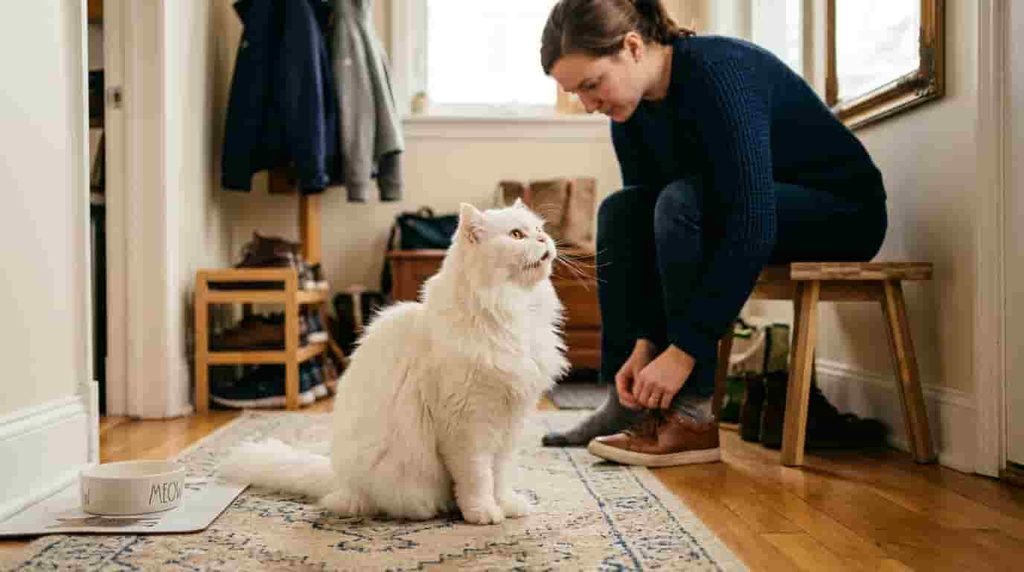
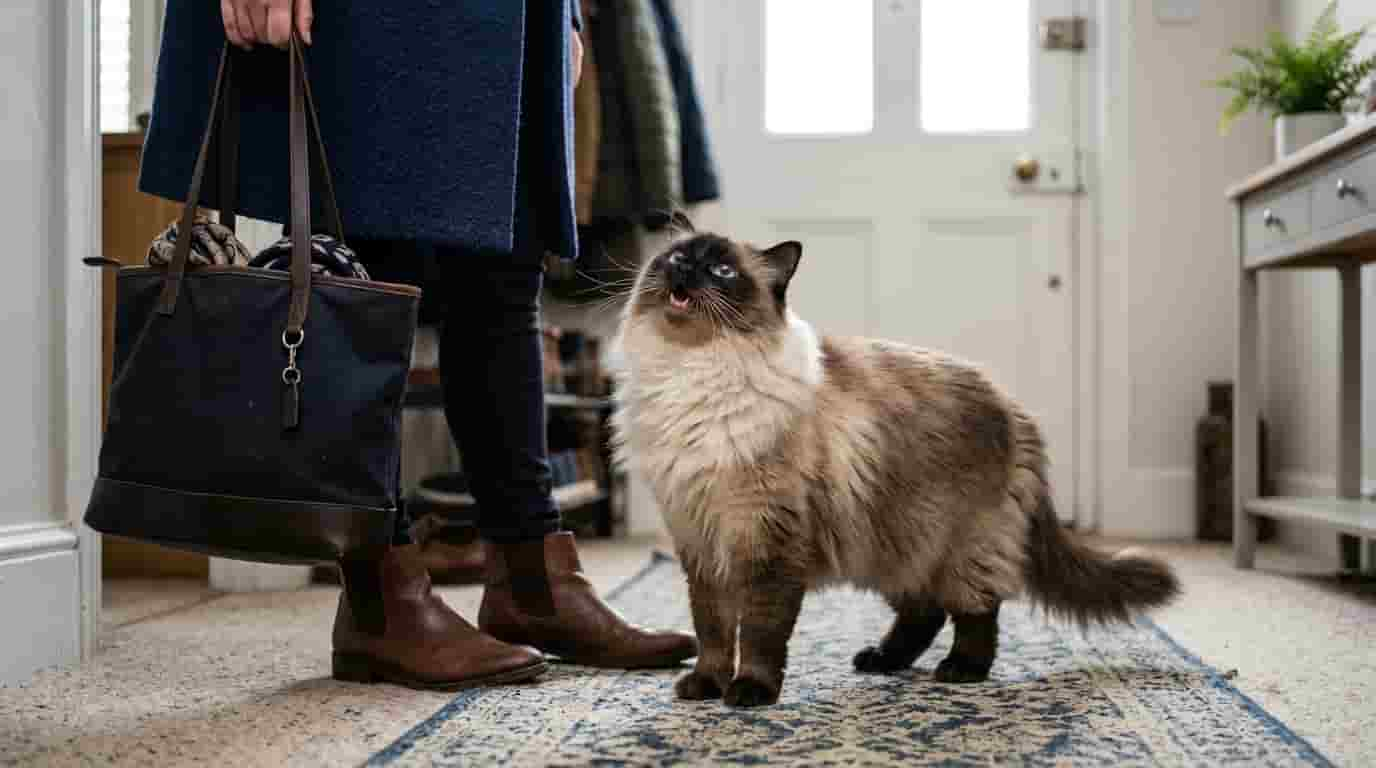
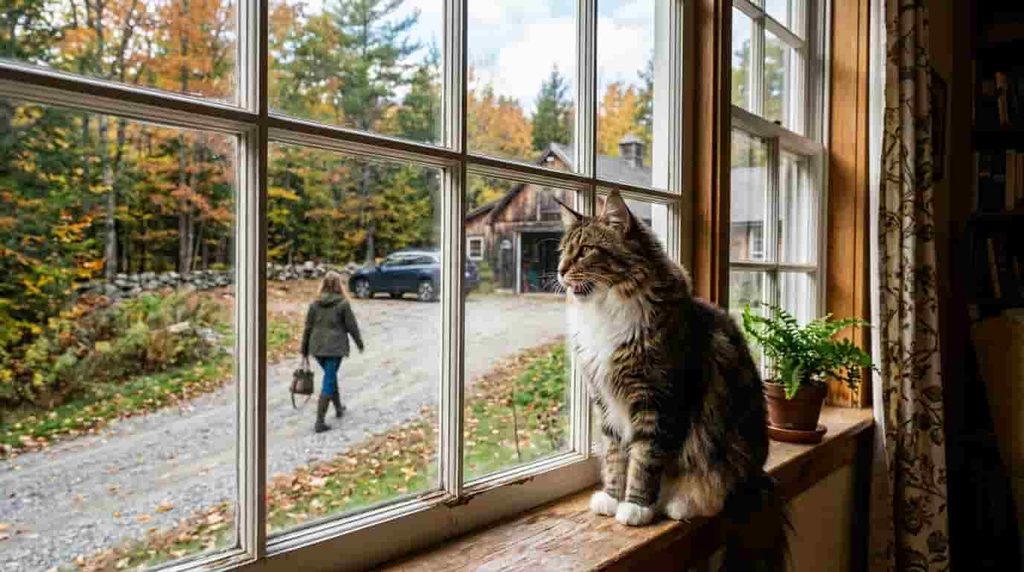
Leaving the house can trigger a stronger reaction than simply leaving a room because the cat recognizes specific, high-stakes departure cues. Cats are keen observers of human behavior.
Common departure cues include:
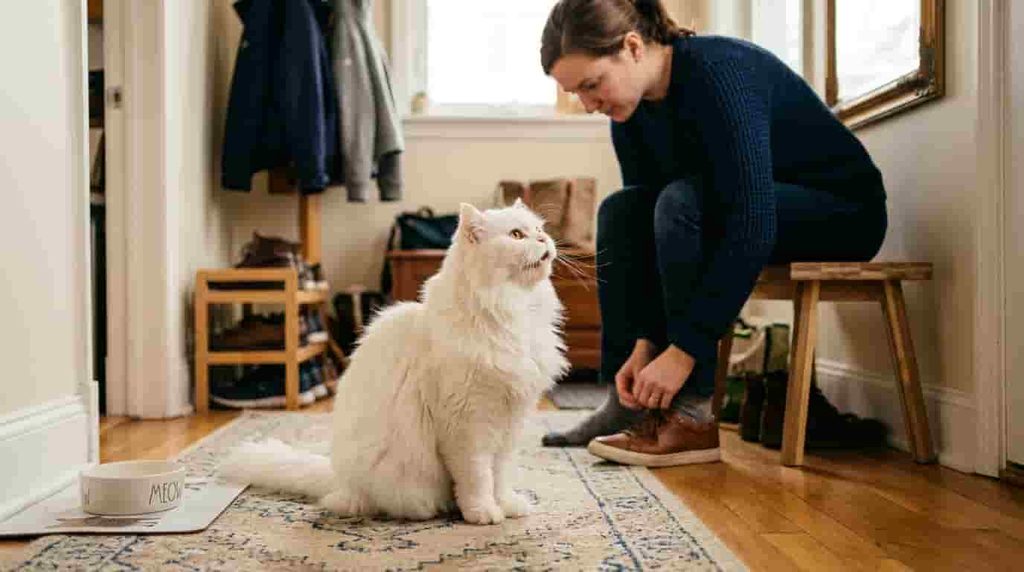
- Picking up house or car keys.
- Putting on shoes, boots, or outdoor jackets.
- Packing a work bag, gym bag, or suitcase.
- Following a rigid, highly predictable work routine.
- Saying elaborate or dramatic goodbyes.
Cats form strong associations between repeated events and their ultimate outcomes. It helps to distinguish between a few casual meows as the owner leaves, temporary vocalizing that stops within minutes, and persistent distress or excessive meowing in cats. Persistent distress may require closer observation and environmental adjustments.
Is My Cat Lonely or Experiencing Separation Anxiety?
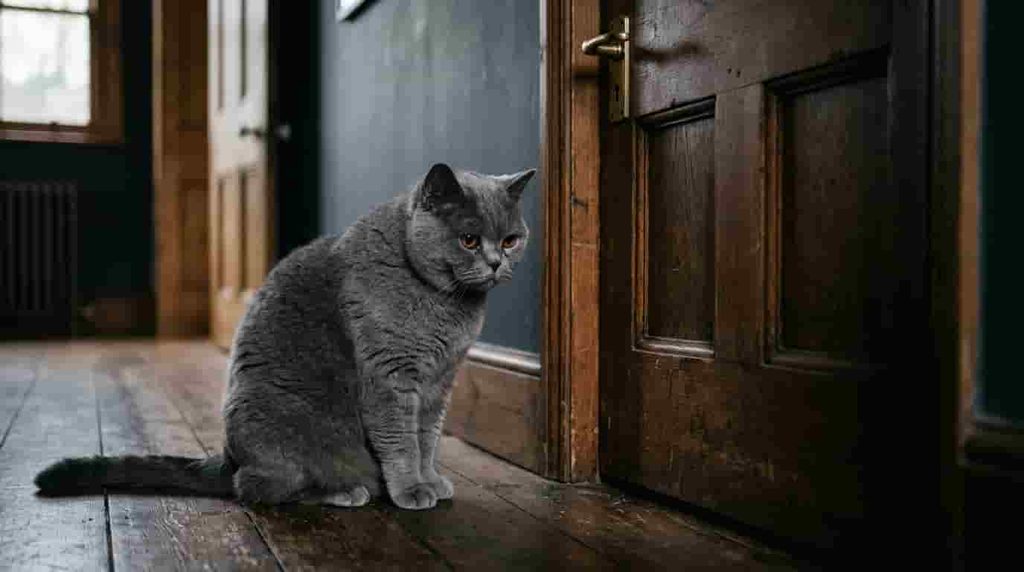
Loneliness and separation-related distress are distinct concepts in feline behavior, though they are often lumped together by worried pet parents.
A simple distinction helps clarify the difference:
- Normal social behavior: The cat calls after you briefly as you walk out the door, but settles down quickly to nap or explore.
- Possible distress: The cat becomes highly upset when left alone, stays agitated for long periods, and shows other accompanying behavior changes.
Introducing separation anxiety in cats requires care. Not every vocal cat has a medical or behavioral disorder. Persistent distress should always be evaluated in the context of the cat’s overall health, history, and daily behavior patterns.
Signs Your Cat May Be Stressed When You Leave
Excessive or Persistent Vocalizing
The duration, intensity, and change from the cat’s normal baseline behavior matter immensely. When evaluating excessive meowing in cats, look for situations that deserve closer attention:
- Loud, distress-toned meowing or howling that continues for long periods after departure.
- Sudden, unexplained excessive meowing in a cat that was previously quiet.
- Vocalizing paired with other unusual, frantic physical behaviors.
Destructive or Disruptive Behavior
Some stressed cats may scratch furniture, damage household objects, or behave disruptively when left alone. However, owners must avoid assuming that all destruction automatically means severe anxiety; sometimes it is simply boredom, lack of scratching posts, or pent-up predatory energy.
Changes in Eating, Grooming, or Litter Box Habits
Broader changes in daily behavior signal that a cat’s wellbeing may be compromised. Alterations in appetite, over-grooming leading to bald patches, or skipping the litter box can stem from multiple causes, including chronic stress or underlying medical problems. Always recommend veterinary advice when these changes are persistent or concerning.
Following You Constantly Before You Leave
Increased clinginess, tripping your feet as you walk, or shadowing your every move before departure can sometimes be part of a stress pattern, especially if it appears suddenly. Connect this to the broader topic of cat behavior without overinterpreting normal feline affection.
How Do I Know If My Cat Is Sad When I Leave?
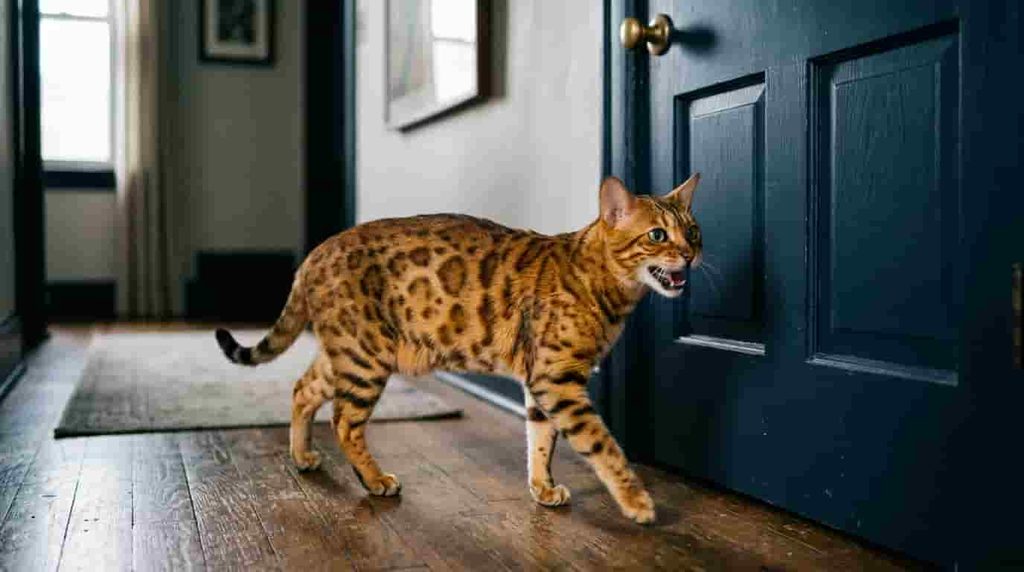
Owners cannot determine a feline emotional state from one isolated behavior alone. Instead, look for clear patterns by asking key questions:
- Does the cat settle down shortly after you leave the house or room?
- Is the vocalization behavior brand new, or has it happened for years?
- Does the cat show other physical or behavioral changes?
- Does the cat behave differently when other people are present in the home?
- Does the behavior occur strictly during departures, or happen randomly?
A single meow does not prove sadness. Cats vocalize for many reasons, and understanding their unique communication style takes patience.
Why Is My Cat Meowing When I’m Not in the Room?
Cats often call out from another room because they are actively searching for a person, responding to a distant sound, seeking attention, expecting a routine event, or simply communicating across a distance.
The cat’s response when you call back or enter the room is telling. For a deeper dive into vocal interactions, check out Why Does My Cat Meow When I Talk to It? What It Means
to understand how cats respond during direct conversation.
Why Some Cats Meow More Than Others
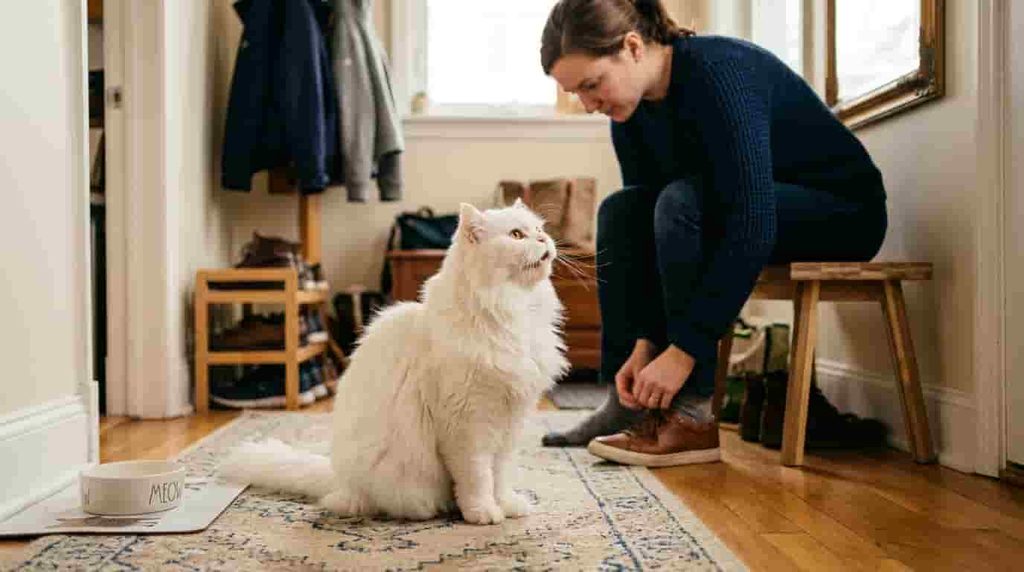
Individual differences play a massive role in cat communication. Factors influencing vocal tendencies include:
- Personality: Some cats are naturally chatty, while others are quiet observers.
- Breed tendencies: Certain breeds, such as Siamese or Oriental cats, are renowned for being more vocal.
- Early experiences: How a cat was socialized as a kitten impacts adult communication habits.
- Social environment: Single-cat households versus multi-cat homes shape how cats express needs.
- Age: Senior cats may vocalize more due to sensory decline or cognitive changes.
- Daily routine: Predictable environments foster different communication styles than chaotic ones.
Avoid making broad assumptions that every cat from a particular breed will behave identically. Understanding cat meows involves respecting each individual cat’s unique normal patterns.
How to Reduce Cat Meowing When You Leave
Meet Your Cat’s Basic Needs Before Leaving
Before walking out the door, take a quick moment to check:
- Fresh food and clean, cool water are readily available.
- A clean litter box is scooped and accessible.
- A comfortable, cozy resting area or sunlit spot is open.
- Appropriate temperature and a safe indoor environment are maintained.
This simple check rules out obvious physical reasons for calling out.
Create a Predictable Routine
A consistent departure routine helps some cats feel more secure. Keep feeding, play, and rest patterns reasonably predictable where possible. While this won’t solve every behavioral quirk, structure provides immense comfort to anxious felines.
Provide Play and Mental Stimulation
Interactive play before leaving helps cats release pent-up energy and settle afterward. Suitable enrichment tools include:
- Interactive feather toys and kickers.
- Sturdy scratching posts and upright scratching angles.
- Safe climbing shelves and vertical territory.
- Food puzzles, puzzle feeders, and treat-dispensing toys.
Keep the advice focused on reducing boredom rather than presenting enrichment as a cure-all for clinical anxiety.
Avoid Making Departures Too Dramatic

Calm, ordinary departures work best for most cats. Avoid making a big production out of leaving, which can heighten your cat’s anticipation and stress. Never use punishment or scolding for meowing, as punishment only increases fear and damages trust.
Be Careful About Reinforcing Every Meow
Repeatedly returning every time a cat vocalizes can unintentionally reinforce the behavior. However, owners should always check if the cat is injured, trapped, ill, or facing an urgent physical problem before ignoring any cries.
Give Your Cat a Comfortable Environment While Alone
Set up your space to make time alone more appealing:
- Safe resting spots away from heavy household traffic.
- Unrestricted access to appropriate, safe rooms.
- A familiar blanket or bed carrying your scent.
- Environmental enrichment like bird-watching window videos or soft background noise.
The goal is to make time alone comfortable, not simply distract the cat temporarily.
What Not to Do When Your Cat Meows as You Leave

Avoid common pitfalls that can escalate stress, damage your bond, or obscure the root cause of your cat’s vocalizations.
- Do not punish or yell at the cat: Screaming or spraying water increases fear, destroys trust, and worsens anxiety.
- Do not assume every meow means separation anxiety: Jumping to extreme conclusions prevents you from noticing simple fixes like an empty water bowl.
- Do not ignore sudden behavior changes: Sudden shifts in vocalization or routine habits warrant close attention, not dismissal.
- Do not dramatically change routines without considering the cat’s needs: Major disruptions without transition periods can trigger stress responses.
- Do not repeatedly reward non-urgent vocalizing: Giving in to attention-seeking cries teaches the cat to meow louder and longer.
When Should You Talk to a Veterinarian?

Sudden or excessive vocalization is sometimes associated with underlying health problems, especially when accompanied by other physical changes.
Signs that justify veterinary attention include:
- A sudden, dramatic increase in meowing.
- Noticeable changes in appetite, thirst, or drinking habits.
- Unexplained weight loss or gain.
- Litter box changes, straining, or accidents outside the box.
- Confusion, disorientation, or pacing.
- Subtle signs of chronic pain or arthritis.
- Changes in sleep cycles or overall activity levels.
- An older cat developing completely new vocal behaviors.
While this article cannot diagnose the cause of an individual cat’s behavior, consulting a veterinarian ensures physical health issues are ruled out promptly.
When to Consider a Cat Behavior Professional
When a veterinary evaluation rules out medical issues but your cat still shows significant distress when left alone, it is time to seek professional guidance.
Situations benefiting from a behaviorist include:
- Persistent, severe distress during departures that does not improve with environmental changes.
- Ongoing destructive behavior targeting doors, carpets, or furniture.
- Severe changes in daily behavior that impact household harmony.
- Extreme difficulty settling when alone for any length of time.
Your veterinarian can recommend appropriate behavioral support, certified cat behavior consultants, or veterinary behaviorists for specialized assistance.
Understanding Different Cat Sounds
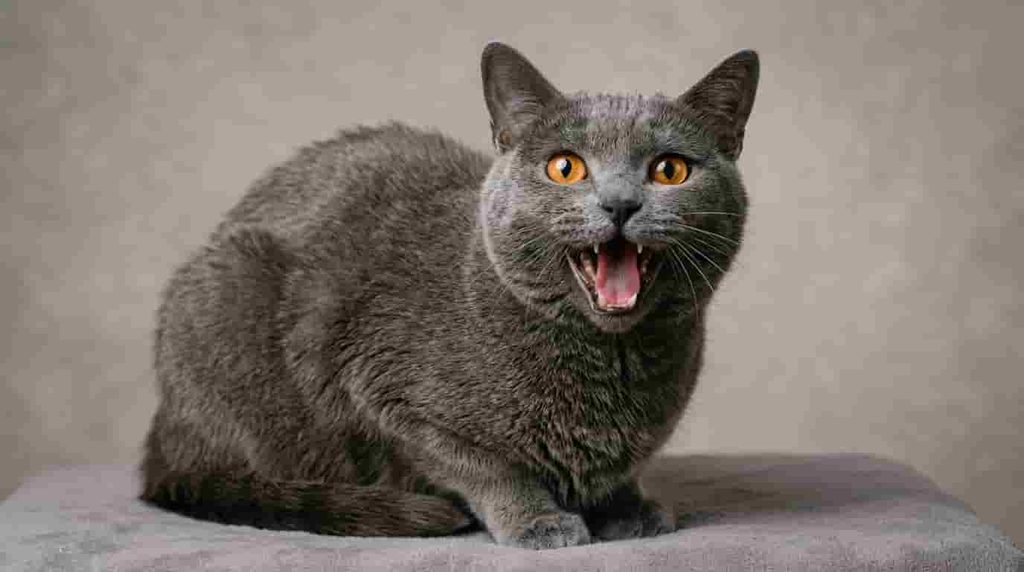
Not all feline vocalizations mean the same thing. Cats use a rich vocabulary to communicate their internal states.
A cat may express themselves through:
- Meows: General communication used primarily for humans.
- Chirps: Friendly greetings often used by mother cats to kittens.
- Trills: Happy, upward-inflected sounds signaling excitement.
- Yowls: Louder, drawn-out calls often linked to mating urges, stress, or distress.
- Hissing: Defensive expressions of fear, anger, or discomfort.
For a more detailed guide to different feline vocalizations, explore Why Does My Cat Make Weird Noises? Common Sounds Explained
Could Fear or Conflict Be Behind the Meowing?
Sometimes a cat vocalizes because it feels uneasy about something connected to the owner’s departure or home environment.
Possible situations include:
- Another household pet becomes more active or aggressive when the owner leaves.
- The cat is avoiding a specific person or animal in the home.
- A stressful environmental event occurs near departure time, such as loud street noise.
- The cat feels unsafe in a particular part of the house.
Hissing is a separate form of communication often connected with fear, discomfort, or territorial conflict. For deeper insight, read Why Does My Cat Hiss at Me? Causes and What It Means if you are dealing with defensive behaviors.
A Simple Checklist for Understanding Your Cat’s Meowing
Keep track of these diagnostic details to identify patterns and provide useful information to your veterinarian:
- When does the meowing start in relation to your departure?
- Does it happen when you leave a room, the house, or both?
- How long does the vocalization continue after you walk away?
- Is the meow different from your cat’s usual greeting sound?
- What happens when you return to the room or house?
- Has anything changed in your cat’s routine, diet, or environment recently?
- Are there other cat anxiety signs or health changes present?
- Is the behavior brand new, or has it progressively become more intense?
Why Does My Cat Meow When I Leave? The Bottom Line
A cat may meow when an owner leaves for many reasons, including attention-seeking, curiosity, frustration about a closed door, routine habits, learned behaviors, boredom, or underlying stress. Context matters immensely. A brief meow from a healthy cat that quickly settles is entirely different from persistent distress or sudden excessive vocalization.
Observe the pattern, meet your cat’s basic needs, provide a comfortable, enriching environment, and seek veterinary advice when behavior changes are sudden, severe, or accompanied by other physical symptoms.
Does your cat meow when you leave the room or the house, and have you noticed what usually triggers it? Share your experience in the comments below!
Frequently Asked Questions
Why does my cat cry when I leave?
Crying or meowing may be an attempt to communicate, seek attention, or respond to separation. Persistent distress combined with other behavior changes deserves closer professional attention.
Why does my cat meow loudly when I leave for work?
This is often driven by departure routines, anticipation, and the possibility that the cat has learned to associate certain cues (like keys or shoes) with being alone. Observe whether your cat settles shortly after you depart.
Should I ignore my cat when it meows as I leave?
The answer depends on the root cause. Avoid reinforcing attention-seeking vocalization with extra fuss, but never ignore signs of illness, injury, fear, or genuine distress.
Do cats know when their owners are leaving?
Yes, cats can learn to recognize repeated departure cues and daily routines, such as picking up shoes, grabbing keys, or packing a work bag.
Will getting another cat stop my cat from meowing when I leave?
Another cat is not automatically a solution. Some cats enjoy feline companionship, while others strictly prefer living as solo pets. A new animal should never be introduced solely as a quick fix for vocalization issues.