
Why Does My Cat Hiss at Me? Causes and What It Means
Introduction
Why Does My Cat Hiss at Me? This is a question that instantly captures the attention and worries of any devoted cat owner. Discovering that your feline companion is suddenly hissing at you can feel startling, confusing, and even a little heartbreaking. It is completely natural to wonder if your cat suddenly dislikes you, distrusts you, or has experienced a sudden shift in personality.
However, the direct answer is reassuring: hissing is usually a warning or a defensive form of cat communication, rather than a sign that your cat dislikes its owner. Felines use hissing as an instinctive communication tool when they feel overwhelmed. Fear, stress, pain, overstimulation, territorial concerns, unfamiliar smells, and unwanted handling can all trigger a hiss.
This article will help you understand what caused the hiss, read accompanying body language, respond safely, and know when veterinary help may be needed.
What Does It Mean When a Cat Hisses at You?

When a cat hisses at you, it is primarily a warning signal. Cats do not hiss out of malice, spite, or premeditated anger. Instead, they hiss to create distance from something that makes them uncomfortable, frightened, threatened, or overstimulated.
Context matters immensely. One isolated hiss from a cat that was startled by a sudden loud noise means something very different from repeated hissing combined with aggressive body language. Understanding the difference helps you respond correctly.
A Hiss Is Usually a Request for Space
A hiss is often your cat’s way of communicating discomfort before they escalate to swatting, scratching, or biting. It is an audible boundary. When you hear that sharp sound, the best response is to pause rather than punish the behavior. Punishing a cat for hissing teaches them that their warning system is unacceptable, which can cause them to skip the warning phase entirely in the future and jump straight to defensive aggression.
Look at the Rest of Your Cat’s Body Language
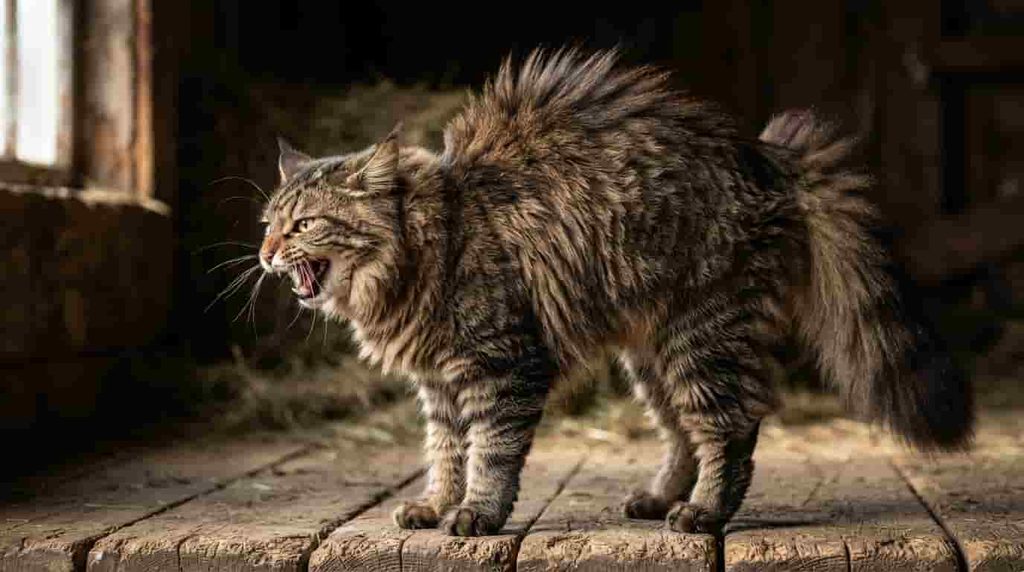
To truly understand why your cat hissed, you must look at their entire physical posture. Understanding cat body language and feline body language naturally involves observing several key physical indicators:
- Flattened or sideways “airplane” ears
- A tense, lowered, or crouched body
- Widened or dilated pupils
- An arched back and raised, bristled fur
- A puffed tail or lashing tail movements
- Intentionally turning away or attempting to escape
Why Does My Cat Hiss at Me? Common Causes
Every hiss tells a story. To address the behavior effectively, it helps to explore the most common cat behavior triggers without assuming that every hiss has the exact same root cause.
Fear or Feeling Threatened
New environments, unfamiliar people, loud household sounds, sudden movements, or feeling physically cornered can instantly trigger terror. Even a familiar owner may trigger a defensive response if the cat feels frightened at that precise moment. If you loom over a frightened cat or approach too quickly, their survival instincts kick in.
Pain or Physical Discomfort
Cats are notorious for hiding their pain. If a cat hisses when you touch, lift, or approach a specific part of their body, they may be experiencing localized pain or chronic discomfort. Sudden changes in behavior always deserve close attention. While you should avoid diagnosing your cat yourself, remember that a veterinarian should always assess persistent or unexplained behavior changes.
Overstimulation During Petting or Play
Many cats enjoy interaction, but only up to a strict threshold. Once that threshold is crossed, affection turns into sensory overload. Warning signs often appear long before the hiss, such as subtle skin twitching, tail tip movement, or sudden body tension. This dynamic ties directly into the search intent behind cat hissed at me while petting.
Unwanted Handling or Being Picked Up
Some felines simply despise being restrained or picked up. If a cat hisses when you lift them off the ground, they are usually communicating that they want their physical freedom back immediately. This directly addresses the PAA variation: cat hisses at me when I pick her up.
Stress and Changes in the Environment
Cats are creatures of habit who thrive on predictability. Common stressors include:
- Moving to a new home
- Rearranging furniture or household items
- Having visitors or repair workers over
- Increased household noise or activity
- Disruptions in daily routines
- Introduction of new pets or people
Connecting this back to broader cat behavior, chronic stress lowers a cat’s threshold for defensiveness, making them much quicker to hiss.
Territorial Concerns and Another Animal
A new kitten or another pet can deeply disrupt a cat’s sense of security and territory. The situation of cat hissing at me after new kitten is a classic scenario where resident cats feel threatened by an interloper. This can also involve redirected stress or frustration, where the cat is upset by an outside animal (like a stray cat outside the window) and directs their frustration at the nearest human.
Unfamiliar Scents
Cats perceive the world largely through scent. If you smell like an unfamiliar animal, or if your cat has just returned from a veterinary clinic smelling like antiseptic and fear, they may not immediately recognize you. This explains the common phenomenon of a cat hissing at me after vet visit.
Can a Cat Hiss at You and Still Love You?

The short answer is yes, absolutely.
Hissing reflects the cat’s emotional state in a particular moment rather than providing a complete, permanent measure of the human-cat relationship. Consider these everyday examples:
- A normally affectionate lap cat hissing because a visitor dropped a heavy pan in the kitchen, startling them.
- A deeply bonded cat hissing because you accidentally touched a sore spot on their paw.
- A stressed cat reacting defensively to an unfamiliar veterinary scent on your jacket.
Reassure yourself that an isolated hiss does not mean your bond is broken, though repeated, unprovoked behavior changes should still be evaluated.
Is a Cat Hiss a Warning?
Yes, a cat hiss is universally a warning. It is their way of saying, “I am uncomfortable,” “Move away,” or “Do not continue what you are doing.”
It is vital to respect this warning. Ignoring warning signals and pushing forward increases the risk of escalation, potentially leading to bites or deep scratches.
Is It Worse When a Cat Hisses or Growls?
Neither sound automatically tells the whole story on its own. Both can signal discomfort, fear, stress, or a defensive warning. Instead of trying to rank sounds by severity, consider the surrounding situation and body language.
If you want to understand other vocalizations your cat might make around the house, check out this guide on Why Does My Cat Make Weird Noises? Common Sounds Explained for deep insights into feline communication.
Why Does My Cat Suddenly Hiss at Me?
When a cat hissed at me for the first time or a cat hissing at me all of a sudden happens out of nowhere, it can feel alarming. A sudden change in behavior should always prompt owners to look for what changed in the cat’s environment or health status.
Check for Recent Changes
Run through a practical checklist to identify recent triggers:
- New pets, foster animals, or frequent visitors in the home
- Changes in feeding schedules or household routine
- Unfamiliar smells on your clothes, shoes, or hands
- A recent trip, grooming appointment, or veterinary visit
- Changes in how, where, or how often the cat is being touched
- Increased noise, construction, or activity levels nearby
Consider Possible Pain or Illness
Sudden hissing, especially when combined with other behavioral shifts, warrants professional veterinary attention. Signs that make a professional medical assessment crucial include:
- Reduced appetite or refusal to eat
- Hiding away more than usual
- Limping, stiffness, or difficulty jumping up
- Extreme sensitivity to being touched anywhere on the body
- Sudden changes in litter box habits or elimination outside the box
- Other unexplained behavioral shifts
Why Does My Cat Hiss at Me but Still Want to Be Petted?

This seemingly contradictory behavior can confuse many pet owners. Cats can experience mixed feelings—they may crave social connection and comfort, yet feel anxious or overwhelmed as soon as physical contact begins. This stems from overstimulation, internal conflict, or a desire to control the terms of the interaction. Paying close attention to subtle shifts in posture helps prevent these mixed-signal moments.
Learn Your Cat’s Early Warning Signs
Before a hiss ever escapes your cat’s mouth, they usually display subtle micro-signals. Learning to spot these early warnings gives you time to stop:
- A twitching or flicking tail tip
- Ears turning back or pivoting sideways
- Sudden body stiffness or freezing
- Skin rippling or twitching along the back
- Turning the head slowly toward your hand
- Shifting weight backward or preparing to move away
How Should You Respond When Your Cat Hisses at You?
When a cat hisses, your reaction dictates whether the situation de-escalates or spirals into aggression. Follow this calm, step-by-step approach:
Step 1: Stop What You Are Doing
Immediately freeze and stop petting, picking up, approaching, or continuing whatever interaction you were engaged in.
Step 2: Give Your Cat Space
Allow the cat physical room to move away. Never corner, chase, or pursue a cat that is trying to retreat, as this forces a defensive attack.
Step 3: Stay Calm
Avoid yelling, making sudden movements, or punishing the cat. A frightened, stressed cat will only become more defensive if they perceive you as a threat.
Step 4: Observe the Situation
Take a mental inventory of the context:
- What happened immediately before the hiss?
- Was the cat touched in a specific spot?
- Was another pet or animal nearby?
- Was there a sudden new sound or smell?
- Has the cat’s overall behavior changed recently?
Step 5: Let Your Cat Choose When to Reconnect
Allow time for the cat’s adrenaline to settle. Offer calm, low-pressure interactions later, letting the cat approach you voluntarily when they feel secure again.
Is It Okay to Hiss Back at a Cat?

It is generally best not to hiss back at a cat. While some internet myths suggest mimicking cat sounds to establish dominance, cats do not interpret human hissing the way they interpret feline communication. Instead, hissing back can increase their fear, confusion, and tension, making them view you as an unpredictable threat. Stick to calm, quiet behavior and give them space instead.
Common Mistakes to Avoid
When dealing with a defensive cat, avoid these frequent pitfalls:
- Punishing the cat for hissing or expressing fear
- Yelling, scolding, or using harsh vocal tones
- Forcing physical contact when the cat wants to be left alone
- Staring directly into the eyes of a frightened cat (which is perceived as a threat)
- Cornering the cat in a room or narrow hallway
- Assuming the cat is acting out of malice or being “bad”
- Ignoring sudden behavior changes that could stem from underlying pain
How to Help a Cat Feel Safer and Less Defensive
Focusing on proactive management helps prevent defensive hissing before it starts.
Respect Personal Space
Always let the cat dictate the terms of affection. Avoid forcing cuddles, holding them tightly, or handling them when they are trying to rest.
Create Predictable Routines
Consistent daily schedules for feeding, interactive play, and quiet rest help anxious cats feel secure in their environment.
Provide Safe Places
Ensure your home is rich in vertical and hidden retreats, such as:
- Quiet, low-traffic rooms
- Elevated cat trees, shelves, or resting spots
- Enclosed cat caves or secure cardboard boxes
- Areas positioned far away from busy household commotion
Introduce Changes Gradually
When welcoming new people, new pets, or altering the home layout, take a slow, desensitized approach. Gradual introductions prevent sensory overload.
Use Play and Positive Interaction Carefully
Channel hunting energy into wand toys rather than hands or feet. Avoid pushing play past the point where the cat shows signs of fatigue or overstimulation.
A Simple Way to Figure Out Why Your Cat Is Hissing

Gaining clarity often comes down to structured observation. Try using the simple “Before, During, and After” Method to decode your cat’s triggers.
Before the Hiss
Ask yourself:
- What exact activity was happening?
- Who or what was nearby in the room?
- Was the cat eating, resting, playing, or grooming?
During the Hiss
Observe:
- What was their exact body position?
- Where were their ears and whiskers pointing?
- How was their tail moving?
- Were they trying to escape or standing their ground?
After the Hiss
Consider:
- Did the cat calm down quickly after getting space?
- Did they return to normal grooming or resting behavior?
- Does this exact behavior happen repeatedly in similar situations?
Hypothetical Example: A cat repeatedly hisses only when picked up immediately after an intense feather-wand play session. The owner notices tail flicking and body stiffness beforehand, suggesting the cat is overstimulated from play and unwilling to be handled at that moment.
When Should You Contact a Veterinarian About Cat Hissing?
While occasional hissing during startling moments is normal, veterinary advice is crucial when hissing is:
- Sudden and completely out of character for your cat
- Persistent, escalating, or becoming much more frequent
- Accompanied by physical sensitivity or pain when touched
- Linked to changes in appetite, thirst, or litter box habits
- Accompanied by excessive hiding, reduced activity, or mobility issues
- Part of a broader pattern of sudden aggression
Remember that hissing alone does not diagnose an illness, but sudden behavioral shifts frequently signal underlying pain or discomfort that requires professional medical evaluation.
Understanding Hissing as Part of Cat Communication
Hissing is only one small piece of a rich communication puzzle. Felines use a wide vocabulary of vocalizations, body postures, scent cues, and subtle visual signals to express their needs.
For readers who want to understand how cats communicate differently with people through sound, exploring topics like Why Does My Cat Meow When I Talk to It? What It Means
offers great context. Similarly, understanding separation anxiety through resources like Why Does My Cat Meow When I Leave? Causes and What It Means helps bridge the gap between human routines and feline emotional health.
Conclusion: Why Does My Cat Hiss at Me?

Cats usually hiss because they feel uncomfortable, threatened, frightened, overstimulated, stressed, or physically vulnerable. Hissing does not mean a cat dislikes or no longer trusts its owner; it simply means their boundaries are being crossed in that moment.
By respecting the warning, identifying possible triggers, and watching for sudden behavioral changes, you can restore harmony. Always seek veterinary guidance when hissing appears suddenly or accompanies other concerning signs of illness or pain. Why Does My Cat Hiss at Me? Ultimately, it is a call for patience, understanding, and space.
What situation usually causes your cat to hiss? Share your experiences in the comments below!
Frequently Asked Questions
Why does my cat hiss at me when I walk by?
Your cat may be startled, stressed, guarding a favorite resting space, or reacting to a sound or shadow nearby. Observe their body language and the surrounding environment to see if something triggered their defensive reaction.
Why does my cat hiss at me when playing?
This usually points to overstimulation. High-energy play can cross the line from fun into frustration or sensory overload. Always stop play immediately if your cat becomes tense, defensive, or starts hissing.
Why does my cat hiss at me after a vet visit?
Unfamiliar clinical scents, residual fear, stress, and temporary changes in how your cat perceives people or other pets can cause post-vet defensiveness. Give your cat a quiet, low-traffic space to settle down.
Can I rebuild trust after my cat hisses at me?
Yes, trust can easily be supported through calm, predictable, and respectful interactions. Give your cat total control over when physical contact happens, and let them approach you on their own terms.
Should I worry if my cat suddenly starts hissing at everyone?
A sudden, widespread behavior change across the entire household deserves immediate attention. It is strongly recommended to seek veterinary guidance, especially if physical discomfort, hiding, or other behavioral shifts are present.