Can Cats Eat Pumpkin? Benefits, Risks, Serving Size and Safe Ways to Feed It
Introduction:
Can cats eat pumpkin? As a concerned pet owner navigating your cat’s dietary needs, you might be surprised to learn that plain, properly prepared pumpkin can generally be offered to cats in small amounts. However, preparation, source, and exact portion size matter significantly.
Cat owners often consider adding pumpkin to their pet’s diet as a source of digestive support, dietary fiber, and a gentle option for occasional constipation or loose stool concerns. While pumpkin is widely discussed in pet care communities, it is crucial to distinguish between safe, plain pumpkin and popular human pumpkin products containing added sugar, spices, dairy, toxic artificial sweeteners like xylitol, or other harmful ingredients.
In this complete guide, we will cover everything you need to know about feeding pumpkin to your feline companion safely:
- The core health benefits and safety factors of plain pumpkin
- The potential risks and side effects of overfeeding fiber
- Practical serving sizes and frequency guidelines
- Which pumpkin forms are safe versus which foods to strictly avoid
- A step-by-step method for introducing pumpkin into your cat’s diet
- Clear indicators for when digestive issues require professional veterinary care
Can Cats Eat Pumpkin Safely?
Is plain pumpkin safe for cats?
Yes, plain pumpkin is generally safe for most healthy cats when served in strict moderation. Unlike many human foods that contain toxic compounds or high fat content, raw or cooked plain pumpkin flesh is non-toxic to felines.
However, plain pumpkin is fundamentally different from processed pumpkin foods found on grocery store shelves. It should always be treated as an occasional dietary addition or temporary supplement rather than a replacement for a nutritionally complete, meat-based cat food. Because cats are obligate carnivores, their bodies are designed to derive primary nutrition from animal protein, not plant matter. Proper preparation—ensuring the pumpkin is plain, free of additions, and cooked or pureed for digestability—is what makes it safe.
What type of pumpkin is best for cats?
When selecting pumpkin for your cat, simplicity is critical. The best options include:
- Plain Canned Pumpkin Puree: This is often the easiest and most consistent option. Look for cans labeled strictly as “100% Pure Pumpkin” or “Solid Pack Pumpkin.”
- Plain Cooked Fresh Pumpkin: Steamed, boiled, or baked fresh pumpkin flesh without any added oil, butter, salt, or seasoning.
Always check the ingredient label carefully on canned products. The only listed ingredient should be “pumpkin” (or pumpkin and water). Avoid any products containing preservatives, added sodium, sugar, spices, or pumpkin pie mix.
Can cats eat pumpkin every day?
Feeding pumpkin to a cat every single day is generally not recommended unless specifically advised by your veterinarian for a managed chronic health condition.
Because pumpkin is high in fiber, daily consumption can alter nutrient absorption, dilute necessary calorie intake, or cause persistent digestive upset if given unnecessarily. A cat’s baseline diet must remain nutritionally balanced through standard feline food. Furthermore, if your cat suffers from daily digestive issues, using pumpkin continuously without professional guidance can mask underlying medical conditions—such as inflammatory bowel disease (IBD), kidney disease, or internal parasites—that require direct medical treatment.
What Are the Benefits of Pumpkin for Cats?
While pumpkin is not a substitute for complete animal nutrition, its unique structural composition offers specific functional benefits for feline digestion when used correctly.
Pumpkin provides fiber
Pumpkin is rich in both soluble and insoluble dietary fiber. Fiber plays a vital regulatory role in the digestive system:
- Soluble Fiber: Absorbs excess water in the digestive tract, forming a gel-like substance that slows down digestion and adds bulk to liquid or watery stools.
- Insoluble Fiber: Adds bulk to the stool and stimulates normal intestinal contractions (peristalsis), helping push material through the colon.
It is important to distinguish between using fiber for mild, temporary digestive support and attempting to treat a serious underlying medical problem with food alone.
Pumpkin may help with stool consistency
Due to its dual fiber profile, pumpkin can help stabilize mild fluctuations in stool consistency. In cases of mild, uncomplicating diarrhea, the soluble fiber absorbs moisture to firm up the stool. Conversely, in mild cases of sluggish bowel movements, insoluble fiber draws moisture into hard stool and encourages gentle elimination.
However, diarrhea and constipation have vast, distinct medical causes ranging from infections to dietary indiscretion. Pumpkin should be viewed as a supportive measure, not a guaranteed medical cure.
Pumpkin adds variety without replacing a balanced diet
For cats that enjoy the taste or texture, a small dab of plain pumpkin can serve as a low-calorie, hydrating treat addition. It offers a way to mix up a cat’s food routine without adding significant extra fat or animal protein calories, which can be useful for cats on strict weight-management plans under veterinary supervision. Many owners exploring safe produce choices often compare pumpkin with other options like checking if can cats eat carrots when cooked, or asking if can cats eat apples as a crisp treat.
Does pumpkin help cats with constipation?
Yes, pumpkin can help mild, temporary constipation in cats due to its high fiber and water content. The fiber helps retain moisture within the intestinal tract, making hard stools softer and easier to pass.
However, severe or chronic constipation in cats is a dangerous medical state that pumpkin alone cannot fix. You must seek immediate veterinary attention if your cat shows warning signs of severe blockage or megacolon, including:
- Repeated, fruitless straining in the litter box
- Passing no stool for more than 48 hours
- Crying, vocalization, or obvious pain while attempting to defecate
- Concurrent vomiting or retching
- Complete loss of appetite
- Lethargy, weakness, or hiding behavior
How Much Pumpkin Can Cats Eat?
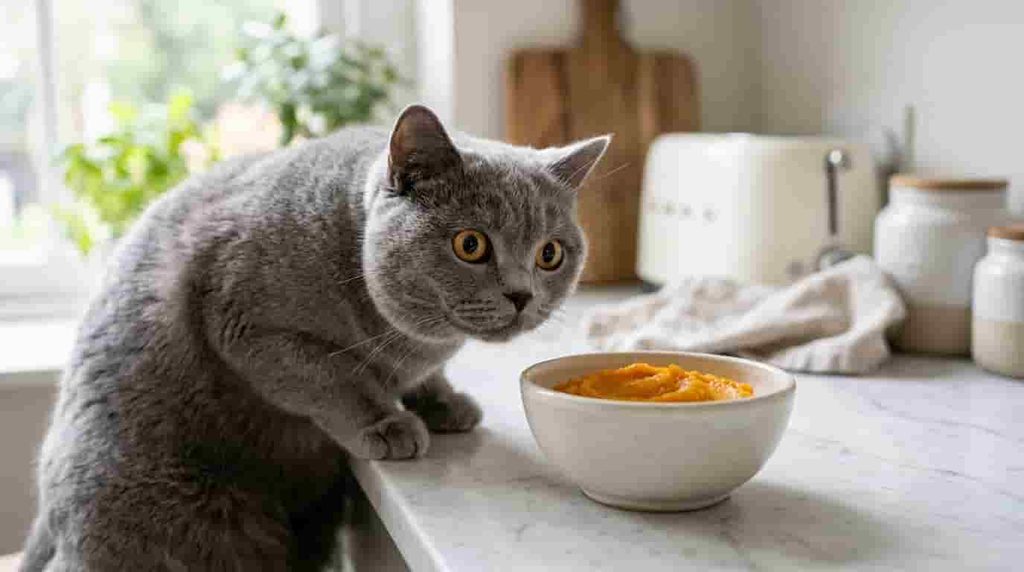
Determining the correct portion size is critical when feeding pumpkin to cats. Because their digestive tracts are compact and sensitive, a little fiber goes a very long way.
| Cat’s Body Weight | Recommended Daily Pumpkin Portion |
| Small Cats (Under 8 lbs) | 1/4 to 1/2 Teaspoon |
| Medium Cats (8 to 12 lbs) | 1/2 to 1 Teaspoon |
| Large Cats (Over 12 lbs) | 1 to 1 1/2 Teaspoons |
Start with a small amount
When introducing pumpkin for the first time, start with a minimal fraction of the recommended serving—such as 1/4 teaspoon. Introducing high-fiber foods suddenly can shock a cat’s GI tract, causing gas, cramping, or sudden diarrhea. Never assume a universal serving size fits every animal.
Factors that affect serving size
Appropriate pumpkin portions vary based on several key factors:
- Cat’s Size and Weight: Smaller cats require significantly less fiber than larger breeds.
- Age: Senior cats or young kittens have vastly different digestive sensitivities and nutritional demands.
- Existing Diet: Cats fed dry kibble diets may react differently to added fiber and moisture compared to cats eating wet canned diets.
- Digestive Sensitivity: Cats prone to sensitive stomachs require much smaller, slower introductions.
- Specific Reason for Use: Temporary stool firming requires a different approach than routine hairball management.
- Veterinary Recommendations: Always defer to specific portion sizes provided by your cat’s veterinarian.
How often can you give pumpkin?
For general treat purposes or mild digestive maintenance, offering pumpkin 1 to 2 times per week or as a temporary 3-to-5-day addition during mild stool changes is usually appropriate. More pumpkin is not better; excessive frequency disrupts normal digestion.
How much is too much pumpkin for cats?
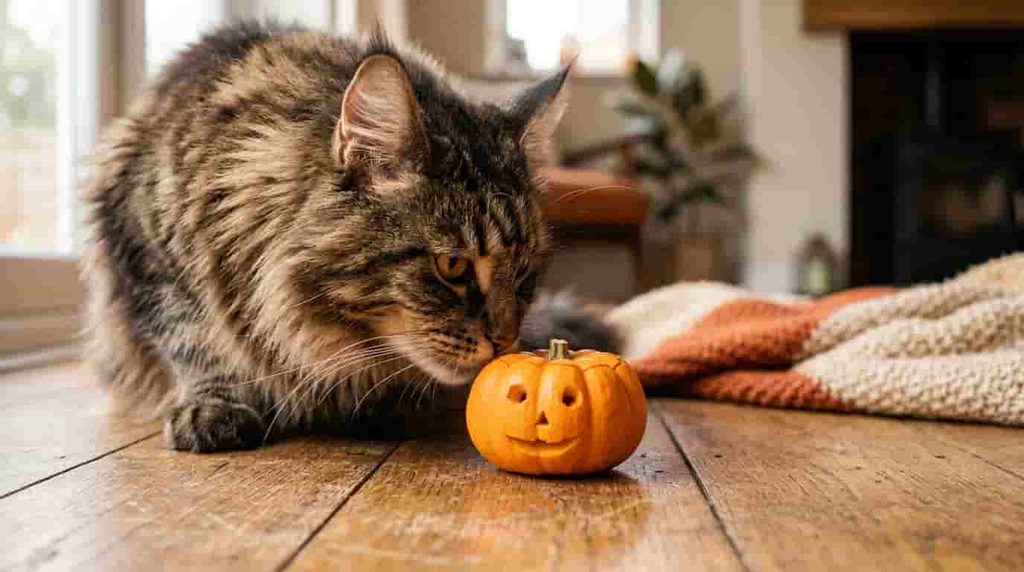
Giving more than 1 to 2 tablespoons per day to an average-sized cat is generally considered excessive.
Because a cat’s colon is optimized for processing protein and fats, overloading it with plant fiber speeds up gastrointestinal transit time too much, pulling water out of the body or preventing key nutrient absorption from their primary food.
Signs the pumpkin portion is too large include:
- Unusually loose, watery, or voluminous stools
- Abdominal bloating and gas
- Vomiting or regurgitation
- Refusal to eat food mixed with pumpkin
- Signs of digestive discomfort (restlessness, crouched posture)
How to Prepare Pumpkin for Cats
Proper preparation ensures pumpkin is easily digestible and completely free of toxic or irritating additives.
Cooked pumpkin
If preparing fresh pumpkin at home, you must cook it thoroughly. Raw pumpkin flesh is tough, fibrous, and difficult for a cat’s stomach to break down, which can lead to indigestion or choking.
- Steam or boil fresh pumpkin chunks in plain water until tender.
- Never use cooking oils, butter, salt, garlic, onion, or seasonings during preparation.
- Allow the cooked pumpkin to cool completely before processing or serving.
Plain pumpkin puree
Plain canned pumpkin puree is the most practical choice for most owners.
- Always double-check the ingredient list on the back of the can.
- Ensure the label lists 100% pumpkin without added sodium or spices.
- Store opened canned pumpkin in a sealed glass or plastic container in the refrigerator for up to 4 days, or freeze small 1-teaspoon portions in ice cube trays for long-term use.
Fresh pumpkin
When harvesting or buying fresh pumpkin:
- Wash the outer skin thoroughly to remove dirt and pesticides.
- Scoop out all inner stringy pulp and seeds.
- Peel away the tough outer skin completely; feed only the inner orange flesh.
- Cook until soft, cool, and mash or puree into a smooth, lump-free consistency.
Pumpkin mixed with regular cat food
To serve pumpkin to your cat, mix the measured portion directly into their standard wet or canned cat food. Combining it with wet food distributes the flavor and texture smoothly, making it far more palatable and preventing the cat from eating too quickly. Keep pumpkin strictly as a minor mix-in rather than a standalone meal.
Can Cats Eat Pumpkin Puree?
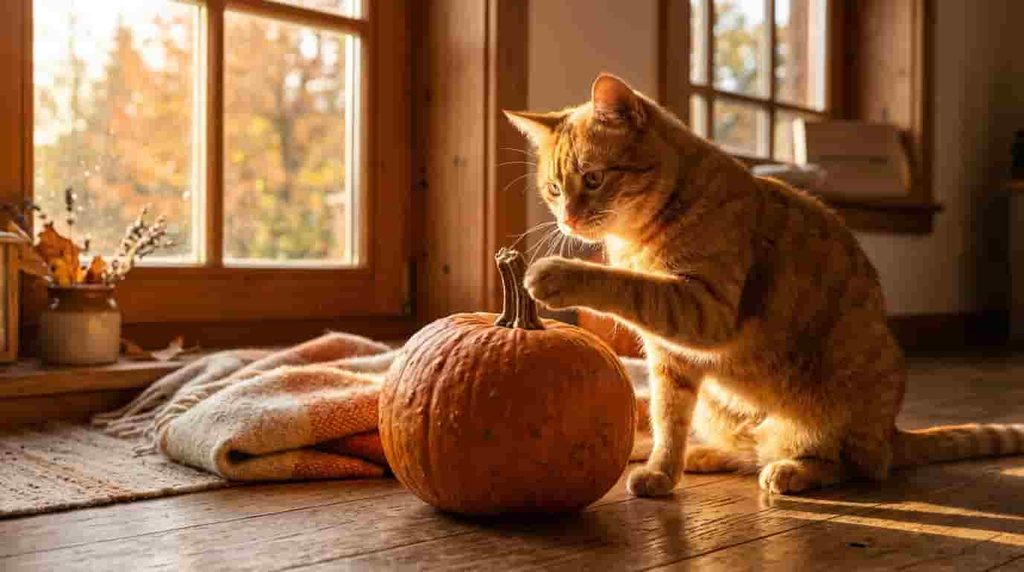
Yes, cats can eat pumpkin puree, provided it is 100% plain pumpkin with no added ingredients. Pureed pumpkin is actually the preferred form for cats because its smooth texture mixes seamlessly into wet food and is easy on the feline digestive tract.
However, pet owners must exercise extreme caution at the grocery store to avoid confusing plain pumpkin puree with pumpkin pie filling.
| Feature | Plain Pumpkin Puree | Pumpkin Pie Filling |
| Ingredients | 100% Pumpkin Flesh | Pumpkin, Sugar, Water, Spices |
| Spices (Nutmeg/Clove) | None (Safe) | Present (Toxic/Irritating) |
| Added Sugars/Syrups | None | High (Risk of Obesity/Diabetes) |
| Artificial Sweeteners | None | May contain Xylitol (Toxic) |
| Safety for Cats | SAFE in small amounts | STRICTLY UNSAFE / DANGEROUS |
If you choose to make homemade puree, ensure it is blended thoroughly with a tiny amount of plain water until completely smooth, ensuring no hard lumps remain that could pose a minor choking risk.
Which Pumpkin Foods Should Cats Avoid?
While plain pumpkin flesh is safe, processed human pumpkin foods are almost universally unsafe or harmful to cats.
Can cats eat pumpkin pie?
No, cats should never eat pumpkin pie. Pumpkin pie contains high levels of added sugars, heavy cream or condensed milk, and harmful warm spices like nutmeg, cinnamon, and cloves. Nutmeg contains a compound called myristicin, which can be toxic to cats in larger amounts, causing abdominal distress, increased heart rate, and disorientation. Furthermore, pie crusts are rich in saturated fats, which can trigger acute pancreatitis in felines.
Can cats eat pumpkin bread?
No, cats should not eat pumpkin bread or pumpkin muffins. Baked goods are packed with refined sugars, butter, oils, and spices that cats cannot process efficiently. Furthermore, some baked pumpkin goods contain raisins (which cause kidney damage in pets) or the artificial sweetener xylitol, which is extremely toxic.
Can cats eat pumpkin soup?
No, human pumpkin soup recipes are unsuitable for cats. Most pumpkin soups are prepared using heavy cream, sodium-heavy broths, butter, and aromatics like onions, leeks, garlic, or garlic powder. All members of the Allium family (onions, garlic, chives) are toxic to cats, damaging their red blood cells and causing Heinz body anemia.
Can cats eat pumpkin seed oil?
Pumpkin seed oil is highly concentrated and fundamentally different from pumpkin flesh or puree. While some commercial pet supplements incorporate processed seed oils for fatty acid content, giving human-grade pumpkin seed oil to your cat without precise veterinary dosage guidelines can lead to severe stomach upset, diarrhea, and caloric overload. Always consult your vet before offering oil supplements.
Can cats eat pumpkin seeds?
Plain, raw, or dry-roasted pumpkin seeds (pepitas) are technically non-toxic, but they carry notable risks:
- Choking Hazard: Whole seeds can easily lodge in a cat’s throat or esophagus.
- Digestive Blockage: The tough outer shell of unshelled seeds is extremely difficult for a cat to digest, potentially causing GI irritation or impaction.
- Salt and Seasonings: Commercial pumpkin seeds are heavily salted, spiced, or roasted in unhealthy oils.
If pumpkin seeds are ever offered, they must be raw, completely unshelled, crushed into a fine powder, and given in microscopic amounts under veterinary advice. For standard pet owners, it is safer to avoid feeding seeds entirely.
Pumpkin and Cat Digestion: What Owners Should Know
Using pumpkin for feline digestive health is a widespread home practice, but understanding how it operates within the body prevents misuse.
Pumpkin for diarrhea
When a cat experiences mild, sudden diarrhea due to a minor dietary change, the soluble fiber in pumpkin can absorb excess intestinal fluid, helping solidify the stool. However, diarrhea is frequently caused by bacterial infections, viral pathogens, intestinal parasites (like Giardia or roundworms), or dietary allergies. Pumpkin cannot eliminate pathogens or fix food allergies; if diarrhea lasts longer than 24 to 48 hours, veterinary intervention is required.
Pumpkin for constipation
For mild bowel sluggishness, the fiber and high water content in canned pumpkin add bulk and hydration to hard feces, facilitating easier passage through the colon. However, chronic constipation in cats is frequently a symptom of underlying dehydration, kidney dysfunction, spinal pain, or feline idiopathic megacolon. Relying on pumpkin long-term without diagnosing the root cause can lead to dangerous intestinal blockages.
Does pumpkin deworm cats?
No, pumpkin does not deworm cats. There is a popular myth that raw pumpkin seeds contain a compound called curcurbitin that eliminates intestinal parasites in pets. While cucurbitin has been studied in laboratory settings, feeding pumpkin or pumpkin seeds to a cat is not an effective, proven, or safe substitute for proper veterinary deworming medications. Suspected internal parasites must be diagnosed via a professional fecal exam and treated with targeted, prescription anthelmintics.
Common Mistakes When Feeding Pumpkin to Cats
To avoid accidental health issues, steer clear of these frequent mistakes:
- Giving too much at once: Starting with tablespoon-sized portions instead of fractions of a teaspoon can trigger severe diarrhea and stomach cramps.
- Using pumpkin pie filling instead of plain pumpkin: Accidental toxic exposure to spices, high sugar content, or artificial sweeteners occurs when owners buy pie mix by mistake.
- Adding sugar, butter, or spices: Preparing fresh pumpkin with seasonings suitable for humans makes the food harmful to felines.
- Feeding human pumpkin desserts: Offering cakes, cookies, or bread containing pumpkin introduces unnecessary fats and toxic ingredients.
- Introducing pumpkin too quickly: Failing to transition the new food gradually into the cat’s regular meals disrupts normal gut bacteria.
- Replacing too much regular food: Substituting pumpkin for standard cat food deprives your obligate carnivore of essential animal proteins, taurine, and vital vitamins.
- Assuming pumpkin fixes persistent digestive issues: Treating chronic vomiting, diarrhea, or constipation with pumpkin delays necessary medical diagnosis.
- Ignoring symptoms that need veterinary attention: Failing to notice warning signs like lethargy, pain, or straining in the litter box while waiting for pumpkin to work.
How to Introduce Pumpkin Into Your Cat’s Diet
If your veterinarian agrees that plain pumpkin is a safe addition for your cat, follow this structured 5-step process:
1.Choose plain pumpkin:Verify ingredient labels carefully.
Purchase 100% pure canned pumpkin puree or prepare plain, unsalted fresh pumpkin flesh at home. Confirm there are zero additives, spices, sugars, or oils listed.
2.Start with a minimal amount:Prevent gastrointestinal shock.
Measure out a tiny test portion—no more than 1/4 teaspoon for an adult cat. This allows you to test both their tolerance and willingness to eat it.
3.Mix it with familiar food:Ensure ease of consumption.
Thoroughly blend the pumpkin into your cat’s standard wet or canned food. Mixing it completely prevents the cat from picking around the new ingredient or consuming it too rapidly.
4.Monitor your cat closely:Observe over a 24-to-48-hour window.
Watch your cat’s behavior, appetite, and litter box habits. Keep a close eye out for negative reactions such as loose stools, gas, vomiting, or appetite loss.
5.Adjust or stop based on response:Prioritize comfort and safety.
If your cat tolerates the initial portion well, you may gradually maintain the recommended dose (up to 1 teaspoon for average adult cats). If any digestive upset or refusal occurs, discontinue immediately.
Example Scenario
An adult indoor cat experiencing a minor, occasional hairball issue or slightly dry stool may be offered 1/4 teaspoon of plain canned pumpkin mixed into their wet food once daily for two days, provided the owner confirms with their vet first and carefully monitors the cat’s energy, appetite, and litter box output throughout the transition.
When Should You Talk to a Veterinarian?
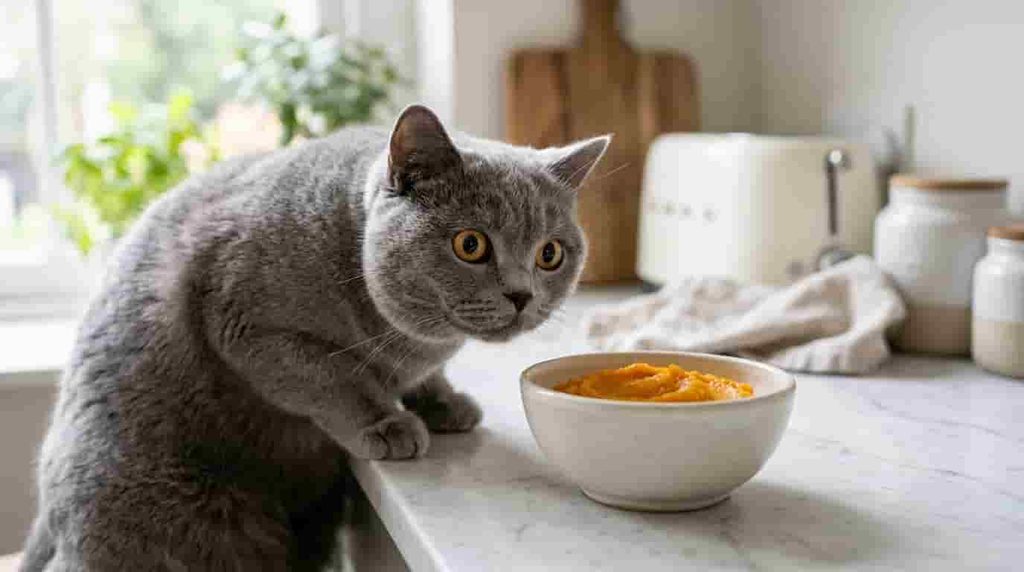
Digestive issues in felines can escalate quickly into life-threatening emergencies, particularly when severe constipation or dehydration is involved.
Digestive symptoms that should not be ignored
Seek immediate veterinary assistance if your cat exhibits any of the following clinical signs:
- Diarrhea lasting longer than 24–48 hours
- Complete absence of bowel movements for more than 48 hours
- Persistent or severe vomiting
- Visible blood (bright red or dark tarry spots) in the stool or litter box
- Vocalizing, crying, or straining excessively while trying to eliminate
- Abdominal swelling, rigidity, or intense pain when touched
- Complete refusal to eat (anorexia) lasting over 24 hours
- Marked lethargy, hiding, or unexplained weakness
Why pumpkin should not replace veterinary care
Dietary fiber is a general gut regulator, but it cannot repair internal infections, treat kidney failure, clear intestinal blockages, or eradicate parasites. Attempting to manage serious digestive illness with home dietary changes delays proper diagnosis and can allow manageable conditions to become critical. Always use educational information as a guide for conversation with your vet, not a diagnostic tool.
Can Cats Eat Pumpkin? The Bottom Line
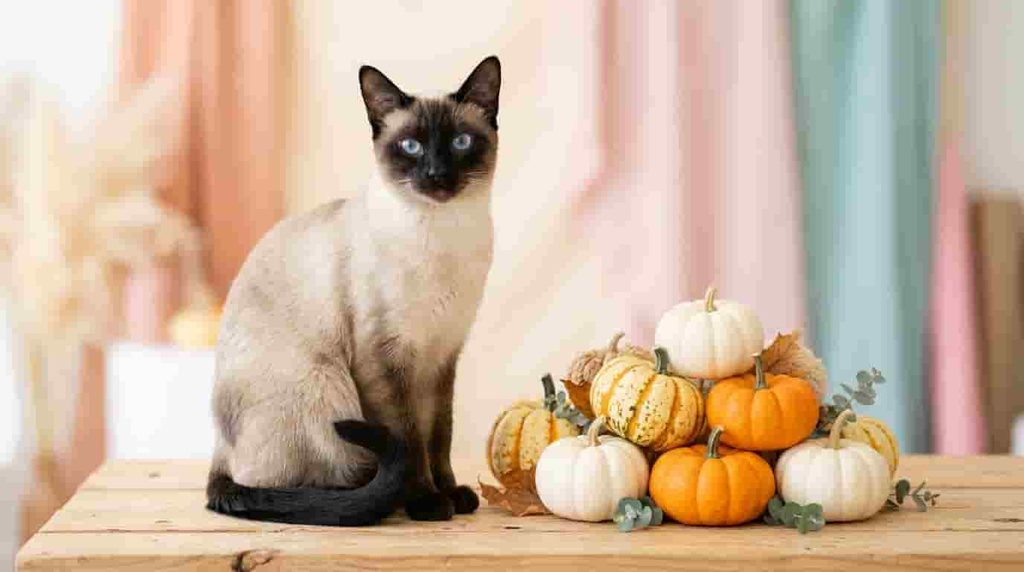
So, can cats eat pumpkin? Plain, properly prepared pumpkin can be a safe, effective, and fiber-rich addition to your cat’s diet when offered in small, controlled amounts. The key to feeding pumpkin safely lies in keeping it 100% plain, avoiding toxic human desserts and pumpkin pie mixes, and introducing it slowly into your pet’s routine.
While pumpkin provides great functional support for occasional mild digestive fluctuations, it should never replace a balanced, meat-based diet or professional medical care. If your cat suffers from persistent GI distress, straining, or changes in behavior, consult your veterinarian promptly to keep your companion happy and healthy.
Frequently Asked Questions
Can cats eat pumpkin every day?
Feeding pumpkin daily is generally unnecessary unless explicitly recommended by your veterinarian. Because cats are obligate carnivores, regular overfeeding of plant fiber can disrupt normal nutrient absorption and cause stomach upset.
Can cats eat pumpkin puree?
Yes, cats can eat plain, 100% pure pumpkin puree in small amounts. However, you must never feed pumpkin pie filling, which contains sugars, fats, and toxic spices like nutmeg.
Why do cats like pumpkin so much?
Cats are often drawn to the smooth texture and mild, earthy flavor of pumpkin when mixed with wet food. However, preferences vary, and some cats may reject plant-based foods entirely.
How much is too much pumpkin for cats?
Exceeding 1 to 2 tablespoons per day for an average adult cat is considered excessive. Too much pumpkin leads to loose stools, gas, cramping, vomiting, or nutritional imbalances.
Which vegetables can a cat eat?
In addition to plain pumpkin, cats can occasionally eat tiny portions of cooked, unseasoned vegetables like peeled carrots, plain green beans, or steamed broccoli. Just as cat owners often ask if can cats eat bananas
as a high-potassium snack, non-meat treats should always stay under 10% of their daily intake because cats remain obligate carnivores.