

Can Cats Eat Apples? Are Apple Slices, Skin and Applesauce Safe?
Introduction:
Can cats eat apples? The short answer is yes, but only in very small, carefully prepared amounts. Plain apple flesh is generally safe and non-toxic for cats, but it should strictly remain an occasional treat rather than a regular staple of their diet. As obligate carnivores, cats possess digestive systems specifically evolved to thrive on animal protein and fats, not plant matter or fruit sugars.
While an apple slice might seem like a fresh, healthy snack to share with your pet, how you prepare the fruit makes all the difference. Raw apple slices can pose choking hazards if cut too large, while apple seeds and stems contain cyanogenic glycosides (cyanide compounds) that can be harmful if consumed in quantity. Furthermore, processed apple products like sweetened applesauce or canned apple pie filling often contain added sugars, cinnamon, or artificial ingredients that can cause severe gastrointestinal distress.
In this comprehensive guide, we will examine:
- The overall safety profile of plain apple flesh
- Critical differences between apple skin, seeds, core, and flesh
- Whether plain or flavored applesauce is safe for felines
- Step-by-step instructions for safely feeding apples to your cat
- Common feeding mistakes and signs of digestive intolerance
- How apples compare to other safe human treats
Can Cats Eat Apples Safely?

Are Apples Safe for Cats?
When properly prepared, plain apple flesh is safe for healthy cats to eat in moderation. Apples are not listed as toxic to cats by veterinary toxicology organizations like the ASPCA. However, calling a food “safe” simply means it will not poison your cat when consumed in tiny quantities—it does not mean apples are a necessary or highly beneficial addition to a feline diet.
Because cats derive their primary nutrition from meat, their digestive tracts lack the specialized enzymes required to process large amounts of plant carbohydrates and complex sugars. Introducing too much fruit can disrupt the delicate microflora of a cat’s gut, leading to gastrointestinal issues like diarrhea, bloating, or stomach upset.
What Part of the Apple Can Cats Eat?
Not every part of an apple is equal when it comes to feline safety. Before offering any fruit to your cat, refer to this practical breakdown:
| Apple Part | General Safety Guidance | Feline Risk Factor |
| Apple Flesh | Safe in tiny, bite-sized pieces | Low (when unseasoned) |
| Apple Skin | Best removed before feeding | Moderate (digestive strain / choking) |
| Apple Seeds | Never feed (contains cyanogenic glycosides) | High (potential toxicity) |
| Apple Core | Never feed (tough and fibrous) | High (choking / GI blockage) |
| Stem & Leaves | Never feed (contains cyanide compounds) | High (potential toxicity) |
| Plain Applesauce | Safe in tiny amounts (unsweetened) | Low to Moderate |
| Flavored Applesauce | Never feed (added sugar, spices, or xylitol) | High (GI upset / toxicity) |
How Much Apple Is Too Much?
Portion control is critical when introducing any new food to your cat. Treats—including fruits, vegetables, and commercial treats—should never exceed 10% of a cat’s total daily caloric intake, with 5% or less being a safer target for non-essential foods like apples.
A single tiny, cube-shaped piece of apple (about the size of a standard fingernail or pea) is more than enough for a cat in one sitting. Offering larger portions introduces unnecessary fructose (fruit sugar) into your cat’s digestive system, which can contribute to weight gain, dental issues, and loose stools over time.
Can Cats Eat Apples With the Skin?
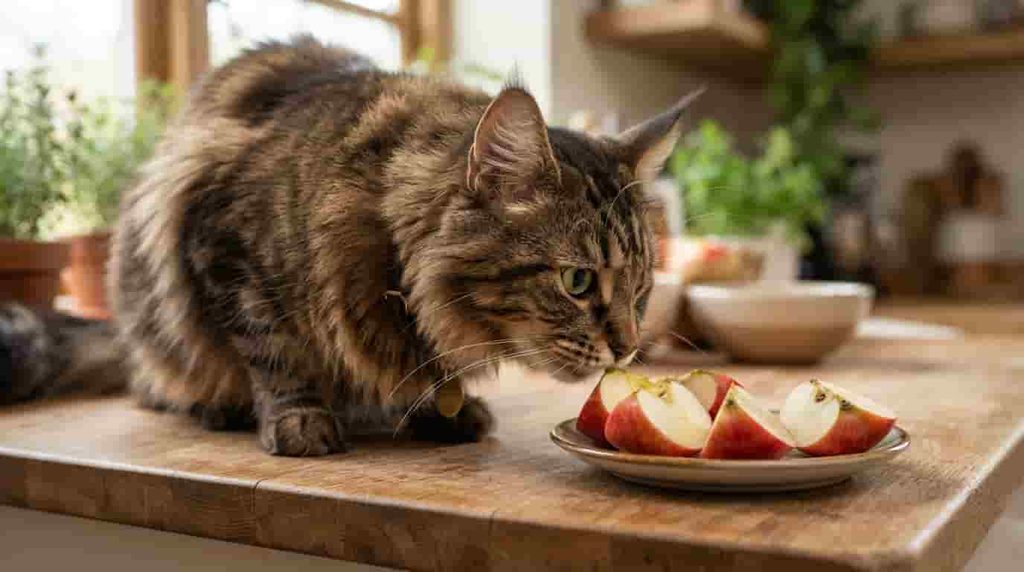
Is Apple Skin Safe for Cats?
Technically, apple skin is non-toxic to cats, but leaving the peel on is generally not recommended. Apple skins are dense in tough plant fiber that can be extremely difficult for a cat’s short digestive tract to break down.
In addition to being tough to digest, apple peel can cling to the roof of a cat’s mouth or create a slight choking risk if a piece gets caught in their throat. Commercial apples are also frequently treated with synthetic waxes or pesticides; even thorough washing may leave residues that could upset a sensitive feline stomach.
Why Removing the Skin May Be the Simpler Choice
Peeling an apple before offering a tiny piece to your cat eliminates several potential issues at once:
- It removes tough fiber that could cause stomach cramping or vomiting.
- It eliminates potential surface pesticide or wax residues.
- It makes the piece easier to slice into small, manageable cubes.
- It allows you to inspect the flesh underneath for any bruising or decay.
How to Prepare Apple Pieces
To ensure maximum safety when serving fresh apple to your cat, follow these simple preparation rules:
- Wash the whole apple thoroughly under cold running water.
- Peel the outer skin entirely off the section you intend to cut.
- Slice a small piece away from the core, making sure zero seeds or core tissue are included.
- Dice the plain flesh into tiny, pea-sized morsels.
- Offer a single piece to your cat as a rare reward.
Can Cats Eat Apple Seeds and the Core?

Why Apple Seeds Should Be Removed
Apple seeds must never be fed to cats under any circumstances. Like the seeds of cherries, plums, and peaches, apple seeds contain amygdalin, a cyanogenic glycoside compound that releases hydrogen cyanide when chewed or crushed by digestive enzymes.
While a human would need to chew and swallow a substantial number of apple seeds to experience toxic effects, a cat’s small body weight makes them significantly more vulnerable to toxin exposure. Always meticulously remove every seed before preparing apple pieces for your pet.
What About the Apple Core?
The tough, fibrous center of an apple is equally hazardous for cats, albeit for a different reason. The core is hard, difficult to chew, and poses a major choking risk. If a cat attempts to swallow a chunk of an apple core whole, it can become lodged in the esophagus or cause a mechanical obstruction in the stomach or intestinal tract.
What Should You Do If Your Cat Eats a Seed?
If your cat accidentally swallows a single, intact apple seed dropped on the floor, there is usually no cause for immediate panic. Whole, uncrushed seeds often pass through the digestive system without releasing significant amounts of toxin.
However, if your cat has consumed multiple seeds, crushed seeds, or stem tissue, you should monitor them closely for signs of toxicity or illness. Symptoms of cyanide exposure include:
- Dilated pupils
- Severe difficulty breathing or rapid panting
- Bright red gums
- Drooling, vomiting, or muscle tremors
Important: If you suspect your cat has ingested multiple apple seeds or is exhibiting any of these symptoms, contact your veterinarian or an animal poison control center immediately.
Can Cats Eat Applesauce?

Is Plain Applesauce Safe for Cats?
Plain, unsweetened applesauce cooked without any added sugar, preservatives, or spices can be offered to cats in micro-amounts (such as a drop on the tip of a spoon). Because applesauce consists of cooked, pureed apple flesh, it is soft and easy for cats to swallow.
However, even plain applesauce provides zero nutritional necessity for a cat. It consists primarily of carbohydrates, water, and soluble fiber, none of which are required in a complete feline diet.
| Applesauce Type | Cat Safety Status |
| Plain, Unsweetened | Safe in tiny amounts (1/4 teaspoon max) |
| Sweetened (Added Sugar) | Avoid (Contributes to obesity, diabetes, and loose stool) |
| Cinnamon or Spiced | Avoid (Cinnamon and spices irritate feline GI lining) |
| Sugar-Free (Xylitol) | TOXIC (Artificial sweeteners can be extremely dangerous) |
Why Flavored Applesauce Can Be a Problem
Commercial applesauce products are frequently packed with ingredients that are harmful to felines:
- Added Sugars & High Fructose Corn Syrup: Excess sugar causes sharp blood glucose spikes, promotes obesity, and frequently triggers diarrhea in cats.
- Artificial Sweeteners (Xylitol/Erythritol): Xylitol is extremely toxic to many pets and can induce rapid insulin release, liver damage, or hypoglycemia.
- Preservatives (Ascorbic Acid / Sodium Benzoate): Concentrated food acids and chemical preservatives can irritate the delicate lining of the feline stomach.
Can Cats Eat Applesauce With Cinnamon?
No, cats should not eat applesauce made with cinnamon or other autumnal spices. Cinnamon contains compounds (such as cinnamaldehyde) that can irritate a cat’s mouth, esophagus, and digestive tract. In high concentrations or powdered form, cinnamon can cause respiratory distress, coughing, or liver discomfort in felines. Always stick strictly to unseasoned foods.
Can Cats Eat Green Apples?

Does Apple Variety Matter?
Whether an apple is a Granny Smith (green), Gala, Honeycrisp, or Red Delicious (red) makes very little difference regarding basic feline safety. All standard culinary apple varieties feature non-toxic flesh accompanied by toxic seeds and fibrous cores.
Green apples tend to have a higher acid content and a tart taste profile compared to sweeter red varieties. The higher acidity in green apples may cause mild stomach upset in cats with sensitive digestion, though some cats are indifferent to the difference in taste.
Should Green Apples Be Prepared Differently?
No special preparation is required for green apples beyond standard safety protocols. Always peel the green skin, remove the core and all seeds completely, and slice the crisp flesh into pea-sized bits before serving.
Can Cats Eat Apples With Other Fruits?
If you enjoy making fruit salads or offering mixed snacks, it is vital to know which fruit combinations are safe for your feline companion.
Can Cats Eat Apples and Bananas?
Yes, cats can eat small amounts of apple alongside tiny pieces of banana, provided both fruits are served plain and unseasoned. Bananas are non-toxic to cats and offer small amounts of potassium and fiber, though they are also high in sugar and calories.
If you are curious about introducing bananas safely, learn more in our detailed guide on Can Cats Eat Bananas? Safety, Benefits, Risks and How Much to Give
Can Cats Eat Apples and Strawberries?
Cats can consume small bits of fresh strawberry paired with apple flesh. Strawberries contain high water content and antioxidants, but like apples, they should only be served chopped and in extreme moderation.
Can Cats Eat Apples and Blueberries?
Blueberries are another non-toxic fruit option often included in premium commercial cat foods for their antioxidant profile. A single blueberry served alongside a tiny cube of plain apple makes a safe, low-calorie treat combo.
Can Cats Eat Apples and Oranges?
No. Cats should never eat apples alongside oranges or any other citrus fruits (such as lemons, limes, or grapefruits). Citrus fruits contain essential oils (like limonene and linalool) and psoralens that are toxic to cats, causing severe gastrointestinal irritation, vomiting, diarrhea, or central nervous system depression.
Why Do Cats Love Apples?

Do Cats Actually Taste Sweetness?
It is a common misconception that cats crave apples because they enjoy sweet flavors. In reality, members of the feline family (Felidae) possess a genetic mutation that deletes the functional sweet taste receptor gene (Tas1r2). Because cats cannot taste sweetness at all, they are not attracted to the natural fruit sugars found in apples.
Why Might a Cat Show Interest in an Apple?
If your cat eagerly sniffs or licks an apple slice, their interest is usually driven by other factors:
- Texture & Crunch: The firm, wet texture of a fresh apple slice can be fascinating to a curious cat.
- Novelty & Odor: Cats are naturally inquisitive creatures that inspect unfamiliar scents in their environment.
- Owner Interaction: Cats often investigate whatever food their human companions are eating out of social curiosity.
- Hydration Content: The crisp, watery bite of fresh fruit can appeal to cats seeking quick moisture.
What If My Cat Completely Ignores Apples?
If your cat turns their nose up at an apple slice, do not be surprised or concerned. It is completely natural for an obligate carnivore to ignore fruit entirely in favor of meat-based foods. You should never force a cat to eat apples or any other plant product.
Apples and Feline Nutrition: Are They Actually Healthy for Cats?
While apples are considered a dietary powerfood for humans, their nutritional impact on cats is minimal.
Cats and Human Food
Humans are omnivores that rely on a diverse diet of fruits, vegetables, grains, and proteins. Cats, by contrast, are obligate carnivores. Their metabolic pathways are specifically wired to process animal tissues for energy, amino acids (like taurine and arginine), and vitamins.
While certain human foods are non-toxic, “safe to eat” is very different from “nutritionally necessary.”
Where Fruit Fits Into a Cat’s Diet
Commercial cat foods formulated to meet AAFCO standards already deliver 100% of the vitamins, minerals, and fatty acids your cat requires to thrive. Fruits like apples do not add necessary nutrients that your cat isn’t already receiving from their core diet.
Furthermore, overeating fruit can introduce unnecessary calories and carbohydrates that lead to feline obesity and metabolic strain over time.
Are Apples a Healthy Snack for Cats?
Apples do contain small amounts of Vitamin C, Vitamin A, and dietary fiber. However:
- Cats naturally synthesize their own Vitamin C in their livers and do not require dietary sources.
- Cats cannot efficiently convert plant beta-carotene into active Vitamin A, requiring preformed Vitamin A from animal sources instead.
- While dietary fiber can aid bowel motility, high-fiber commercial feeds or plain canned pumpkin are far safer ways to support digestion.
If you are exploring other safe plant-based foods to support your pet’s digestion, consider reading our guides on Can Cats Eat Carrots? Raw, Cooked and Safe Ways to Serve Them
or learning how plain squash supports gut health in Can Cats Eat Pumpkin? Benefits, Risks, Serving Size and Safe Ways to Feed It
How to Feed Apples to Your Cat Safely

Follow this step-by-step preparation procedure every time you offer fresh apple to your pet:
1.Choose a Fresh Apple:Select ripe, sound produce.
Select a fresh, firm apple free of mold, decay, or heavy bruising. Never feed fermenting or rotting fruit to a cat.
2.Wash It Thoroughly:Eliminate dirt and surface residues.
Rinse the whole apple under running cold water while scrubbing gently with your hands or a vegetable brush.
3.Remove the Core, Seeds, and Stem:Crucial safety step.
Cut around the center core carefully. Throw away the stem, entire core, and every single seed immediately into a closed bin.
4.Peel the Outer Skin:Reduce digestive difficulty.
Use a vegetable peeler or sharp knife to strip away the tough outer skin from the portion of apple you plan to use.
5.Dice into Micro-Pieces:Prevent choking hazards.
Cut the peeled apple flesh into tiny, pea-sized cubes (roughly 1/4 inch or smaller).
6.Offer a Tiny Amount:Strict portion control.
Place a single bite-sized piece in your cat’s bowl or on a clean surface as an occasional treat reward.
7.Monitor Your Cat Afterward:Check for intolerance.
Observe your cat for 24 hours to ensure they do not experience digestive issues, vomiting, or loose stools.
Common Mistakes Cat Owners Make When Feeding Apples
Avoid these common preparation and feeding errors to keep your cat safe:
- Offering Whole Apples or Large Slices: Whole apples prevent you from removing seeds and create major choking hazards.
- Leaving Seeds or Stems Intact: Ingesting seeds exposes your pet to hazardous cyanogenic compounds.
- Leaving the Skin On: Tough skin increases the risk of choking and digestive upset.
- Feeding Processed or Sweetened Applesauce: Commercial applesauce contains high sugars, spices, or artificial sweeteners that can harm cats.
- Adding Human Toppings: Drizzling apples with caramel, honey, cinnamon, or peanut butter adds excess fat, calories, and toxic risks.
- Feeding Apples Too Frequently: Offering fruit daily can displace complete feline nutrition and contribute to obesity.
- Assuming All Fruits Are Safe: Assuming that because apples are non-toxic, all fruits (like grapes, raisins, or citrus) are safe.
When Should Cats Avoid Apples?

Cats With Sensitive Digestion
Cats prone to frequent gastroenteritis, irritable bowel syndrome (IBS), or sensitive stomachs should avoid fruits altogether. Introducing novel plant fibers can easily trigger severe bouts of diarrhea or abdominal pain.
Cats With Specific Dietary Restrictions
Apples should be strictly avoided in cats with specific health conditions:
- Diabetic Cats: The natural fructose in apples can cause unwanted spikes in blood glucose levels.
- Overweight Cats: Extra fruit calories contribute to unwanted weight gain and liver strain.
- Cats on Prescription Diets: Cats receiving specialized veterinary diets for kidney, urinary, or gastrointestinal care should not receive unapproved treats.
Cats That Show a Reaction
Discontinue feeding apples immediately if your cat exhibits any of the following warning signs:
- Vomiting or dry heaving
- Diarrhea or unusually soft stool
- Abdominal bloating or excessive gas
- Lethargy or unwillingness to eat regular food
When to Contact a Veterinarian
Contact your veterinarian if your cat experiences persistent digestive symptoms lasting longer than 24 hours, swallows an apple core chunk, or consumes a significant number of apple seeds.
What Other Fruits Can Cats Eat?
While fruits should remain rare additions to a cat’s bowl, several other options are non-toxic when prepared safely:
- Watermelon: Seedless, rindless watermelon flesh provides excellent hydration support in hot weather.
- Cantaloupe: High in moisture and naturally low in fat, cantaloupe is often enjoyed by curious cats.
- Blueberries: Rich in antioxidants and perfectly sized as single micro-treats.
- Strawberries: Safe when washed, stemmed, and cut into tiny pieces.
Always research each fruit individually before feeding, as items like grapes, raisins, cherries, and citrus fruits are toxic to cats.
A Simple Apple-Safety Checklist for Cat Owners
Before sharing an apple with your cat, run through this quick pre-feeding checklist:
- [ ] Is the apple fresh, washed, and free of rot or mold?
- [ ] Has the stem been removed and discarded?
- [ ] Has the tough core been cut away completely?
- [ ] Have all seeds been meticulously removed and thrown away?
- [ ] Has the tough outer peel/skin been removed?
- [ ] Is the plain flesh diced into tiny, pea-sized pieces?
- [ ] Is the piece completely free of sugar, butter, cinnamon, or toppings?
- [ ] Is this treat keeping well within the 10% daily treat limit?
Can Cats Eat Apples? The Bottom Line

So, can cats eat apples? Yes, cats can safely consume small, plain, bite-sized pieces of fresh apple flesh as an occasional treat. However, apples are not a necessary or vital component of feline nutrition. Always peel the fruit, remove every seed and core section, and offer only micro-portions. Avoid processed applesauce, flavored products, or toppings that contain added sugar or spices.
The safest apple for a cat is always a small, plain piece of properly prepared flesh—never a sweetened human snack!
Does your cat enjoy trying small bites of safe fruits, or do they stick strictly to meat treats? Let us know in the comments below!
Frequently Asked Questions
Can Cats Eat Applesauce?
Cats can eat tiny amounts of plain, unsweetened applesauce, but it offers no real nutritional value. Avoid commercial applesauce products containing added sugars, cinnamon, or artificial sweeteners like xylitol.
Can Cats Eat Apples With Skin?
It is best to peel apples before offering them to cats. Apple skin is tough, difficult for cats to digest, and may carry surface waxes or pesticide residues.
Can Cats Eat Apples and Bananas?
Yes, cats can eat small, plain pieces of both apples and bananas as occasional treats, provided seeds and peels are removed and portions are kept extremely small.
What Fruit Is Not Toxic to Cats?
Non-toxic fruits for cats include apples (flesh only), bananas, blueberries, seedless watermelon, cantaloupe, and strawberries. Always prepare them plain and without seeds, cores, or rinds.
What Is a Cat’s Favorite Fruit?
Cats lack sweet taste receptors, so they do not have a universal “favorite” fruit. Most cats show little interest in fruit, though some may enjoy the texture or moisture of cantaloupe, watermelon, or fresh apples.