Cat Sleep Habits: Why they spend 16 hours a day napping
Introduction:
Cat sleep habits often worry new pet parents who wonder if their furry friend is actually sick or depressed. You might notice your kitty snoozing through the entire morning, afternoon, and evening without moving very much. This behavior can make you feel quite lonely when you want to play with your companion animal at home. However, massive daily rest periods represent a perfectly normal biological survival strategy for all healthy domesticated felines.
Understanding these fascinating feline sleep patterns will help you stop worrying about your pet’s health unnecessarily. First, you must realize that predatory animals require extra energy reserves to hunt successfully in the wild. Even though your indoor kitty hunts a plush mouse toy instead of a live bird, their biology remains identical. This guide will explore the real reasons why cats sleep so much throughout their lives.
Decoding the Biological Cat Sleep Habits
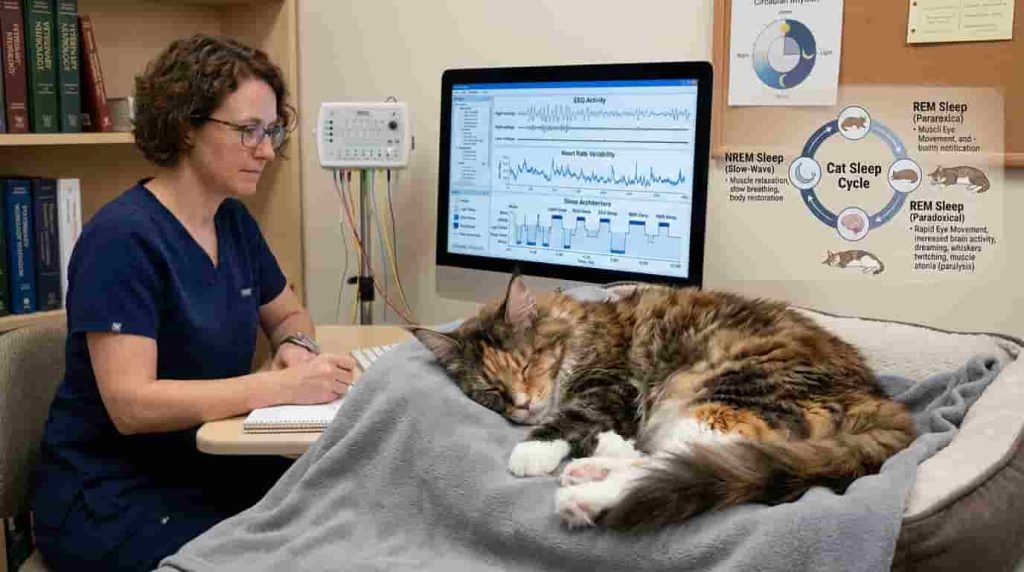
Evolutionary traits dictate the unusual cat sleep habits we observe on our living room couches every single day. For instance, my neighbor Clara recently adopted a sweet orange tabby named Rusty from a local rescue group. She felt incredibly anxious because Rusty spent his first three weeks napping in various corners of the house. She initially assumed the poor kitten suffered from severe exhaustion or a hidden chronic health problem.
Fortunately, a quick veterinary checkup confirmed that Rusty was simply enjoying standard, healthy cat nap habits. Wild felines exert enormous bursts of adrenaline and physical speed to chase down fast prey animals during hunts. Consequently, your pet needs to recharge their muscles frequently to stay ready for any sudden active play sessions. You can learn to separate normal rest cycles from true cat boredom signs to maximize happiness.
Navigating the Complex Cat Sleep Cycle
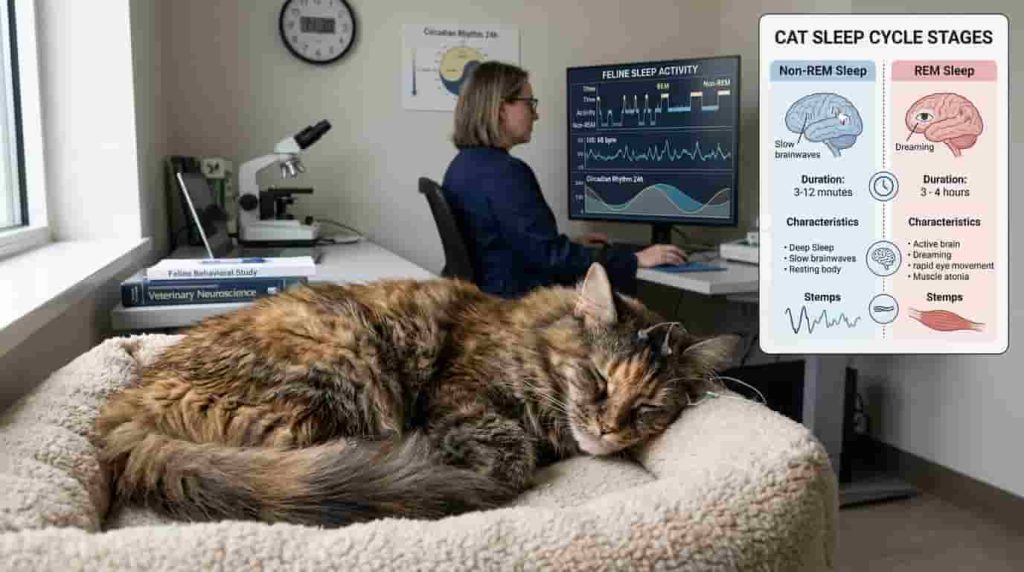
A standard cat sleep cycle operates quite differently than the continuous resting blocks that humans utilize each night. Felines usually divide their daily rest routines into a series of short, highly efficient light dozing sessions. During these brief periods, your kitty remains fully alert to nearby sounds and shifting air currents in the room. This light slumber allows them to spring into immediate action if a dangerous predator enters their immediate territory.
- The light dozing phase lasts about fifteen to thirty minutes.
- Cats keep their senses active to detect nearby movements easily.
- Muscle tension remains high so the body can jump instantly.
Additionally, your pet experiences a deep rest phase that lasts for only about five or ten minutes total. According to the veterinary experts at PetMD, felines display rapid eye movements during this deep slumber phase. Therefore, scientists believe that felines actually process their daily adventures and dream about hunting while they rest peacefully.
Analyzing Common Cat Sleeping Positions
You can learn a great deal about your pet’s current comfort levels by studying unique cat sleeping positions. For example, a kitty that rolls onto their back exposes their soft belly completely to the entire room. This specific posture shows that your animal companion feels entirely safe, happy, and relaxed in your immediate presence.
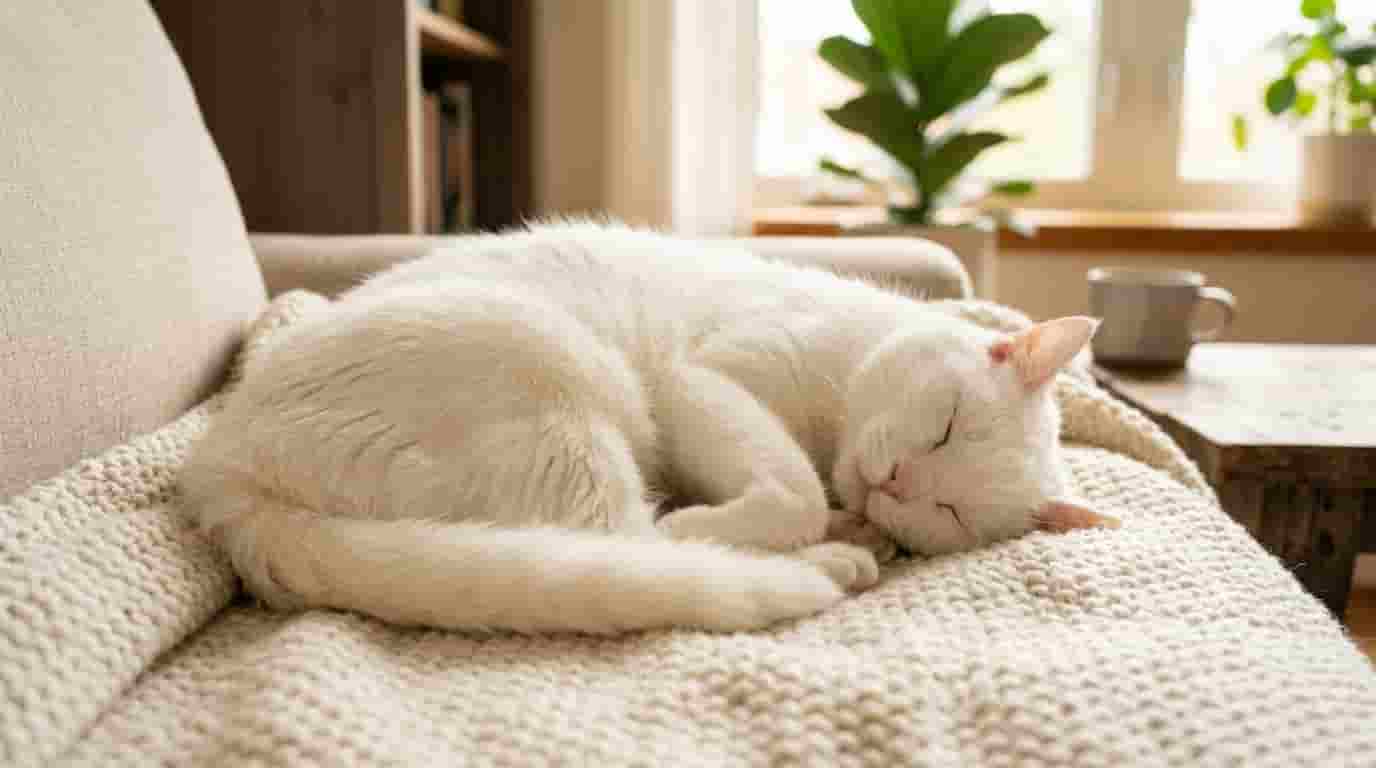
Conversely, the classic tightly curled crescent shape helps felines conserve vital body heat during cold winter months. This compact position also protects their vulnerable internal organs from potential attacks while they snooze in the open.
Managing Wild Nocturnal Cat Behavior
Many pet owners struggle to rest because their felines display wild nocturnal cat behavior around midnight. Felines are naturally crepuscular, which means they become most active during the twilight hours of dawn and dusk. Consequently, your kitty might sprint across your bed or meow loudly while you try to fall asleep.
- Provide a massive interactive play session right before your bedtime.
- Feed your pet their main meal late at night.
- Avoid acknowledging or rewarding their midnight attention seeking cries.
Environmental Disturbances to Cat’s Sleep
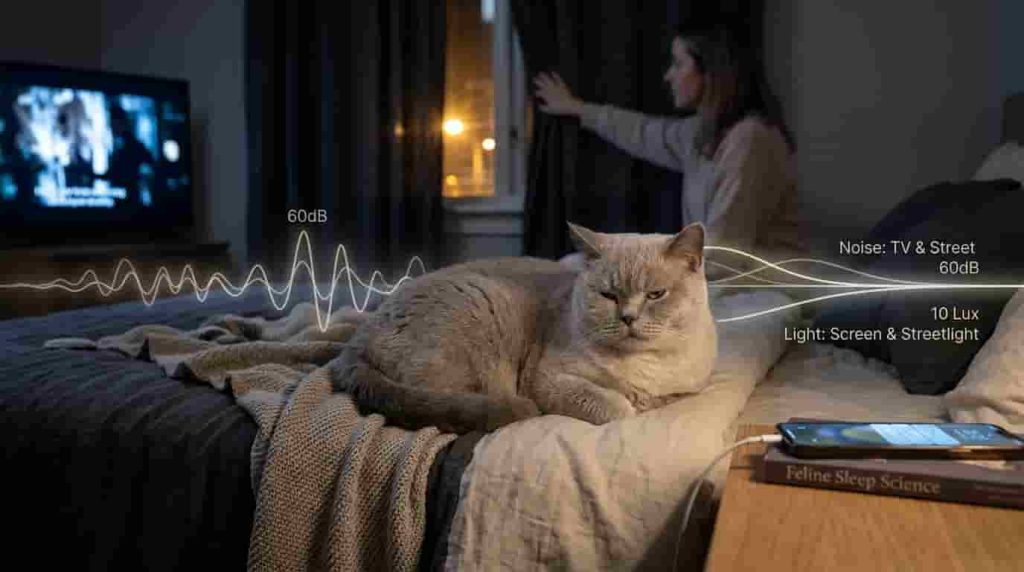
Creating a calm, predictable environment is essential for improving cat sleep quality and protecting natural sleep cycles for cats. Sudden loud noises, shifting furniture arrangements, or new family members can easily cause significant disturbances to cat’s sleep. Therefore, you should place their resting areas far away from noisy washing machines and high traffic hallways.
Furthermore, finding the best cat bed involves choosing soft materials that match your pet’s favorite style of resting. Some felines prefer covered, cave-like structures that offer total privacy and protection from overhead household lights. Other kitties prefer elevated plush mats that allow them to monitor the entire room while they snooze comfortably.
Capturing Peaceful Moments on Camera

When your furry friend finally settles into an adorable position, you might want to take a quick photo. However, sudden lens movements can disrupt their light rest cycle and cause them to look away immediately.
- Approach your sleeping pet slowly without making loud footstep noises.
- Turn off your smartphone camera flash to avoid startling them.
- Use natural ambient room light to capture their soft fur textures.
If you want better results when they wake up, check out our cat photography tricks.
Understanding Sudden Vision and Sleep Links
Healthy eyes require consistent rest to maintain their sharp, specialized night vision capabilities over a lifetime of use. Your pet relies on their eyes to communicate their boundaries clearly to other animals living in your home.
- Rest restores the sensitive cells inside the feline retina.
- Alert eyes help cats establish healthy boundaries with companions.
- Deep slumber prevents chronic eye strain from everyday hunting play.
To learn more about how felines use their eyes when awake, read why staring can be a sign of war or love.
Evaluating the Major Reasons Cats Sleep a Lot
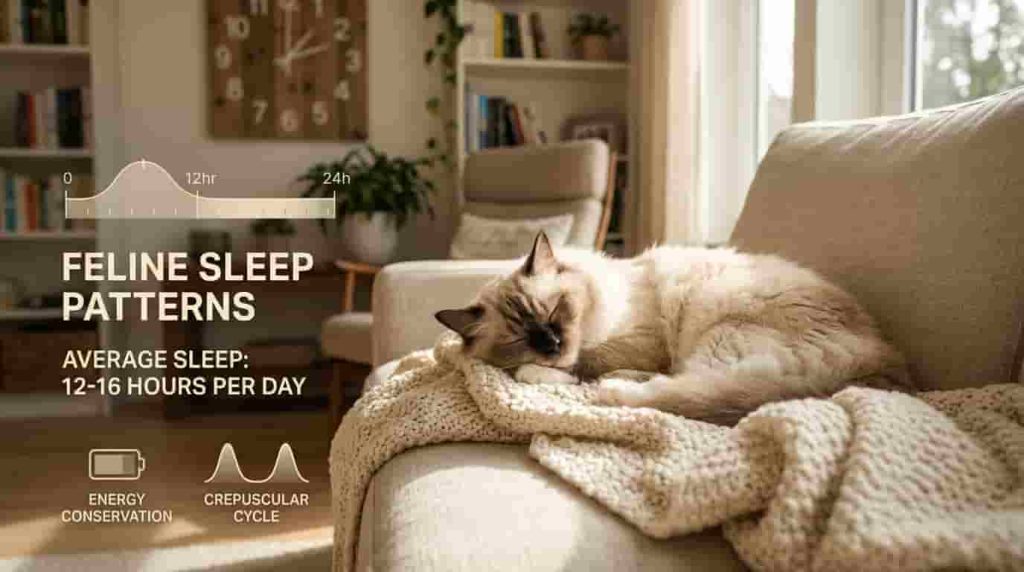
As your pet grows from a tiny kitten into a senior, you will notice shifts in how cats sleep. Age stands out as one of the most significant reasons cats sleep a lot throughout their lives. Tiny newborn kittens require massive amounts of deep rest because growth hormones release primarily while they snooze soundly.
- Kittens sleep to develop healthy muscles and strong bones.
- Adult felines rest to conserve energy for playful bursts.
- Senior cats nap longer because their joints feel sore.
Therefore, you should never disturb a resting senior cat unless you suspect a serious medical emergency. Allow them to dictate their own feline rest routines to ensure they stay comfortable, happy, and pain free.
How Much Do Cats Sleep on Average?
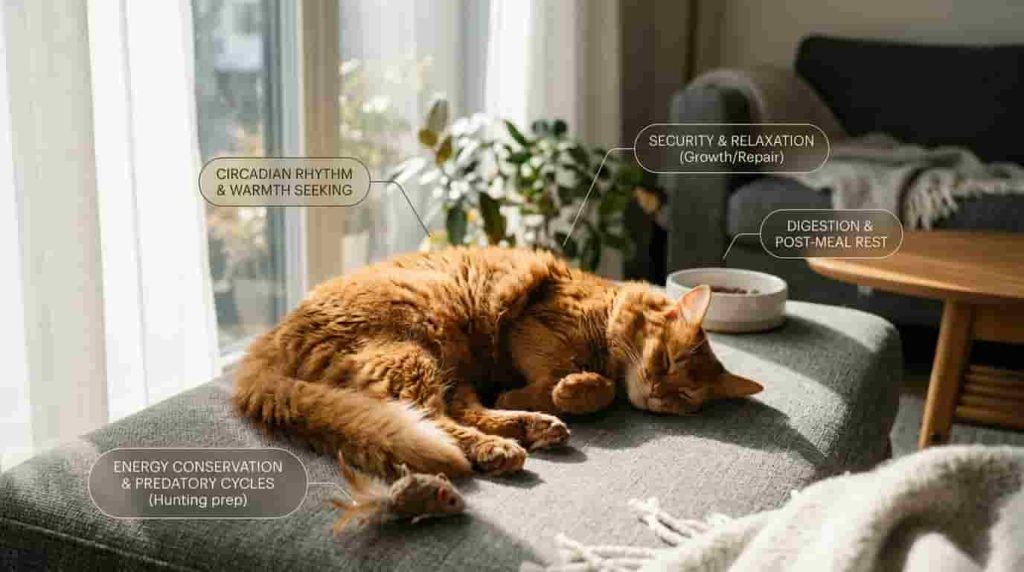
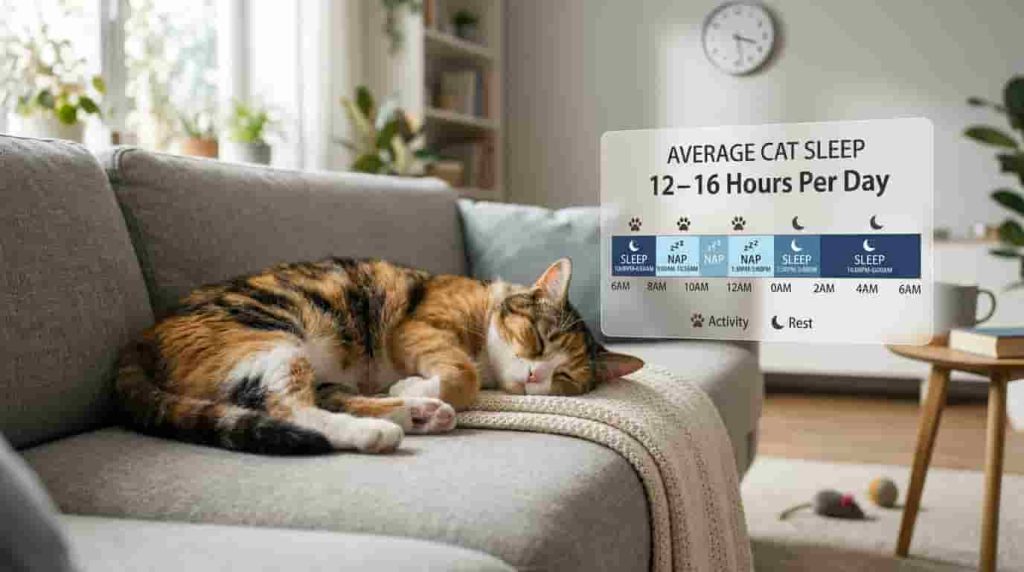
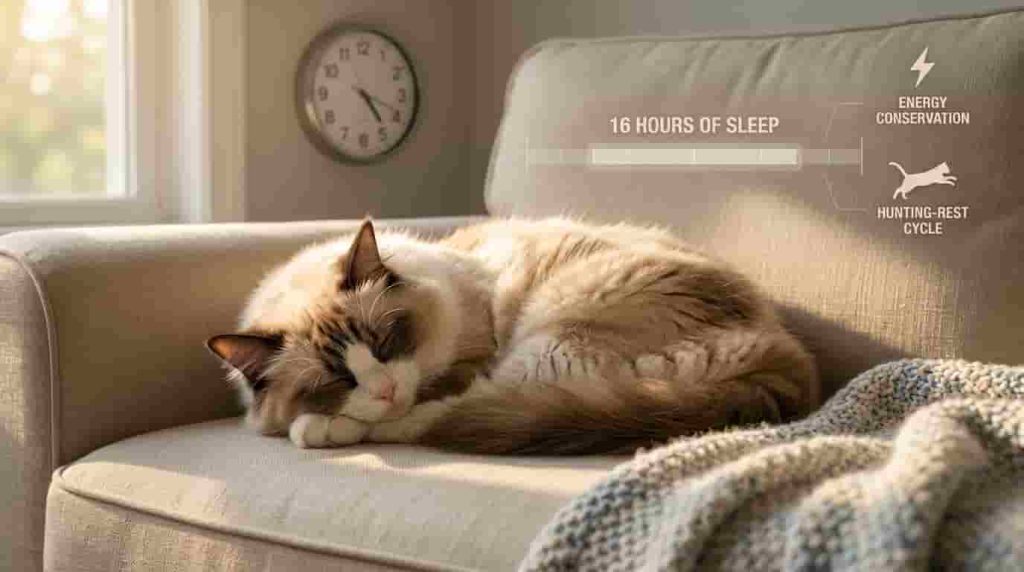
People often ask exactly how much do cats sleep when compared to other common domesticated household pets. On average, a healthy adult feline will spend anywhere from twelve to sixteen hours resting each day. Furthermore, some perfectly healthy senior felines can easily extend that number up to twenty hours total.
Consequently, you do not need to panic if you find your pet napping through most major events. Just monitor their behavior during their active hours to ensure they eat well and use the box properly.
Conclusion: Embracing Natural Cat Sleep Habits
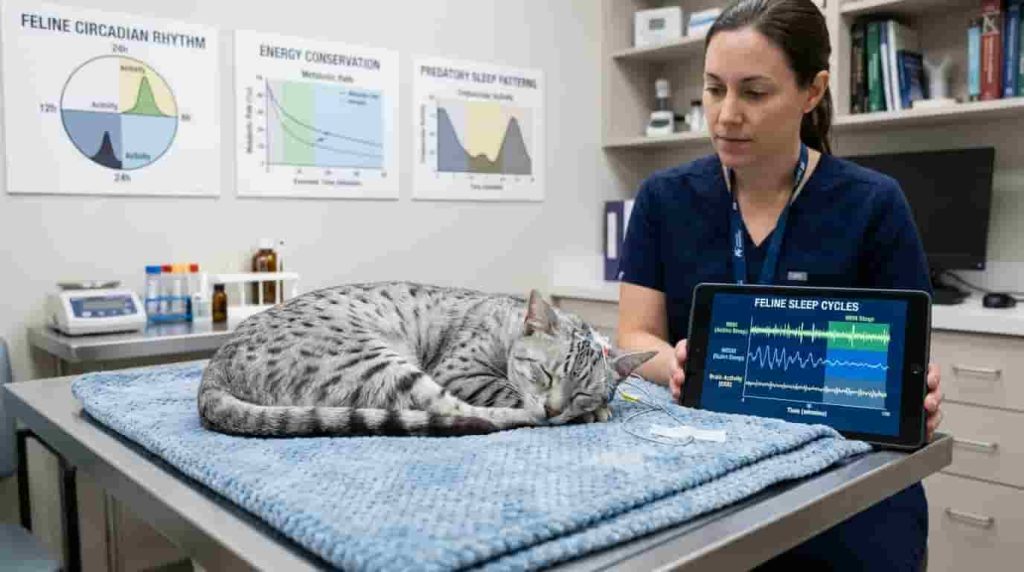
In conclusion, understanding biological cat sleep habits will help you provide the best possible care for your pet. Massive daily rest routines allow felines to maintain their sharp predatory instincts and recover from intense play sessions. By respecting their natural sleep cycles, you ensure your feline companion stays emotionally secure and physically fit.
Where does your favorite kitty prefer to take their longest afternoon naps around your home? Do they love curling up on your computer keyboard or finding hidden spots inside your dark bedroom closet? Please share your funny stories and pet observations in the comment section below this article!
Frequently Asked Questions
Cats often sleep longer during rainy days because the drop in atmospheric pressure makes them feel naturally cozy. Additionally, the lack of bright sunlight signals their biological clock that it is time to rest their bodies. This habit mirrors wild behavior where hunting becomes less successful during heavy downpours.
Yes, felines absolutely experience vivid dreams during the rapid eye movement phase of their normal sleep cycle. You might notice their whiskers twitching, their paws moving, or small squeaking noises coming from their mouth. These physical movements indicate your kitty is likely dreaming about chasing toys or exploring the backyard.
Felines possess an incredibly flexible spine and highly loose joints that allow them to contort easily. This unique anatomy lets them squeeze into tight spaces that offer extra warmth and protection from predators. What looks painful to a human actually feels perfectly supportive and comforting to a flexible feline.
Yes, a sudden and unexpected change in their normal rest routines can indicate pain or an underlying illness. If your kitty stops eating, avoids jumping, or grooms excessively after waking up, consult a veterinarian immediately. Early professional intervention is the best way to protect your pet’s long term health.
You can stop this behavior by establishing a strict feeding schedule that avoids rewarding early morning cries. Do not get out of bed or offer treats when your kitty meows at your bedroom door. Additionally, provide interactive food puzzles late at night to keep their brains busy while you rest.