Cat Photography Tricks: How to get your pet to look at the camera.
Introduction:
Cat photography tricks are essential for any pet parent who wants to capture beautiful family memories. Every owner faces the exact same frustrating problem when they pull out their smartphone for a quick photo session. You position your kitty perfectly in the light, but they immediately turn their head away from the lens. This sudden avoidance happens because felines naturally view a large, dark smartphone lens as a giant staring eye. Consequently, capturing cats on camera requires a lot more than just pointing your device and pressing the shutter.
Learning how to properly direct your pet’s attention will enhance your cat photo tips dramatically. First, you must understand feline body language and adapt your approach to match their sensitive hunting instincts. This guide will provide expert advice on cat photography to help you master creative techniques for cat portraits. Therefore, you can stop wasting your phone storage on blurry, empty backgrounds and starts taking professional shots.
Mastering Cat Photography Tricks for Direct Focus
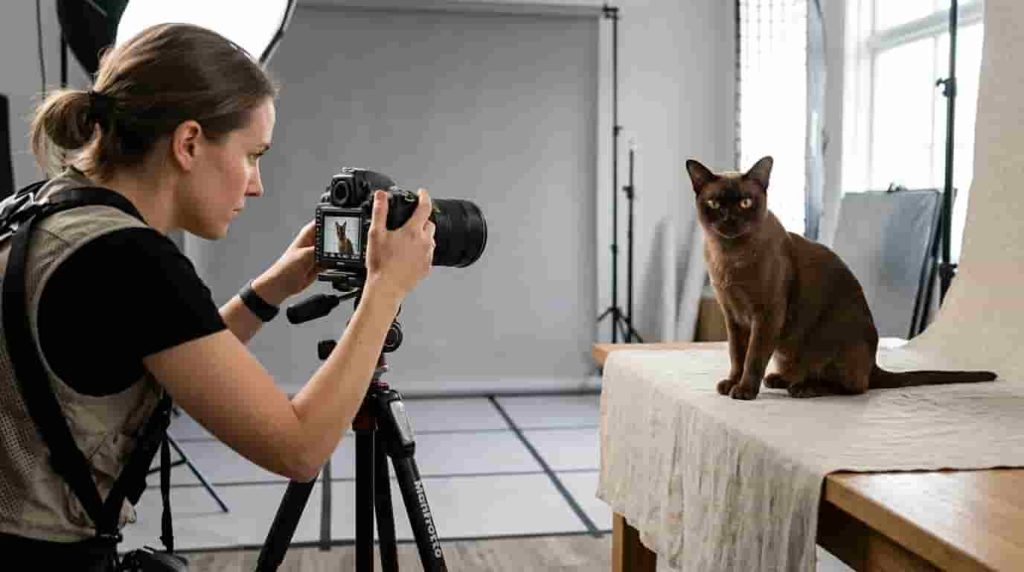
Implementing the right cat photography tricks will transform your daily camera sessions from a stressful chore into a fun game. For instance, my photography client Sarah wanted a beautiful holiday portrait of her calico cat named Chloe. She spent hours waving random objects around, but Chloe simply ignored the smartphone completely and walked into the kitchen. I showed Sarah how to use specific sound triggers and high value treats to change Chloe’s behavior. Within five minutes, Chloe looked directly into the lens and Sarah captured a stunning, sharp image for her holiday card.
The most effective feline photography tricks usually involve using the element of surprise to capture their natural curiosity. You can hold a small crinkly plastic wrapper or a tiny bell directly above your phone casing. This unexpected sound triggers their natural instinct to scan the room for potential prey animals or treats. Additionally, you should keep your photo sessions under two minutes long to prevent your animal companion from losing interest. If your kitty starts showing sudden irritation during the shoot, you might want to review typical cat boredom signs.
Creative Cat Photography and Lighting Secrets
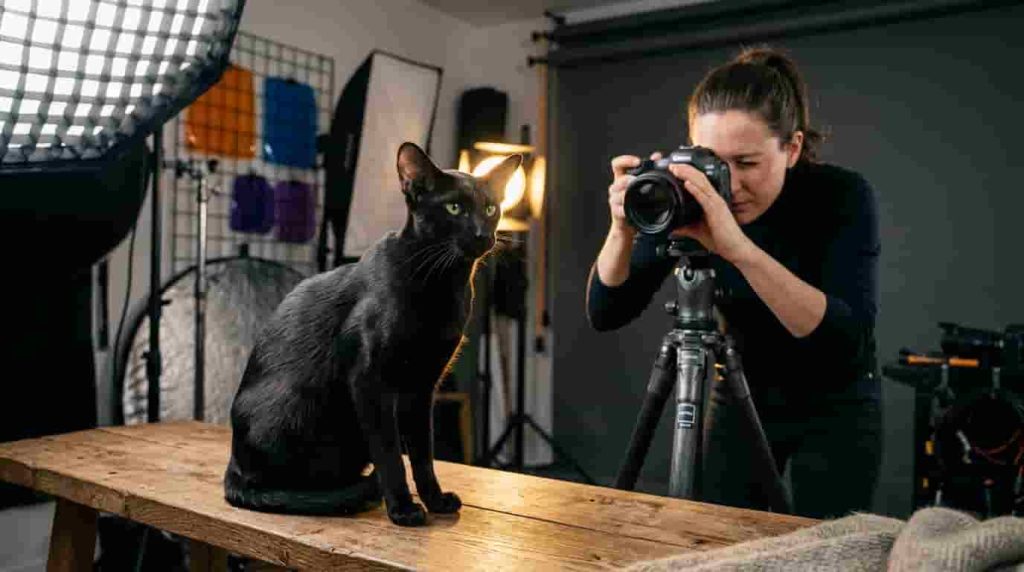
Achieving stunning cat photo techniques requires a solid understanding of how light interacts with sensitive feline eyes. You should always choose natural light cat photography over harsh, artificial electronic flash bulbs whenever you take pictures inside. A sudden bright flash can easily startle a timid animal and cause them to hide under the bed. Furthermore, artificial light often produces a strange, distracting glow inside the eyes that ruins your beautiful portrait composition.
Instead, position your pet near a large open living room window during the early morning hours. This soft ambient light fills the space beautifully and highlights the intricate textures of their thick winter fur coat. According to the veterinary experts at PetMD, felines possess a highly reflective layer behind their retinas that magnifies available light rays. Because of this unique biology, soft indirect sunlight produces the most dazzling, natural expressions in your pet portraits. You can also study how their eyes react during these moments by reading about why staring can be a sign of war or love.
Finding the Best Angles for Cat Photos
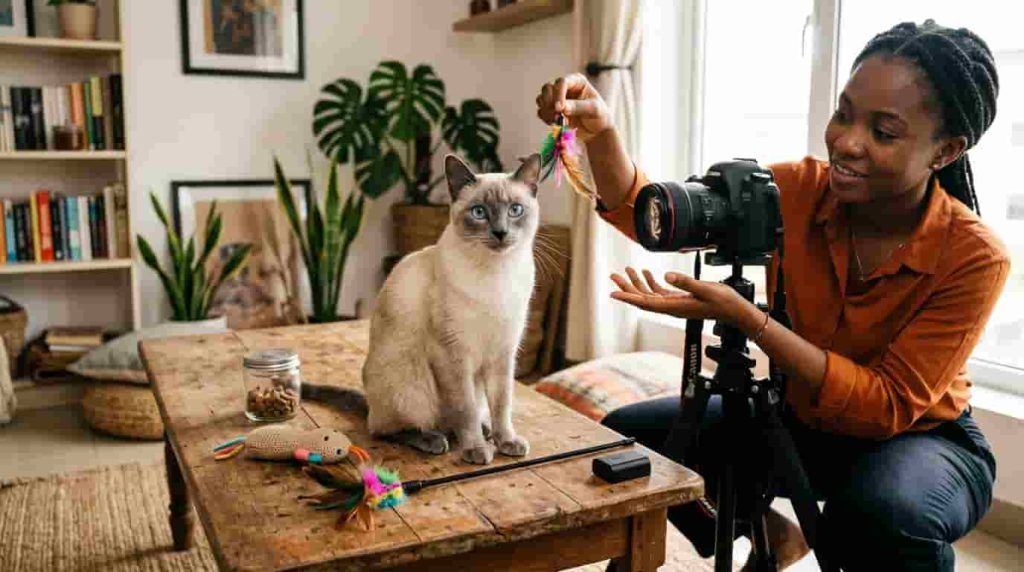
To elevate your pet photography techniques, you must change your physical perspective when taking a shot. Never photograph your feline companion while standing up straight and looking down at the carpeted floor. This high angle makes your animal look small and fails to show their true facial expressions.
Instead, drop down to your hands and knees so your camera sits directly at your pet’s eye level. This simple adjustment creates an intimate, professional feeling that immediately draws the viewer into the image.
- Lie flat on your stomach for low angle action shots.
- Sit quietly on the floor during grooming sessions.
- Tilt your phone slightly upward to create a heroic pose.
Essential Kitty Photo Hacks Using Toys
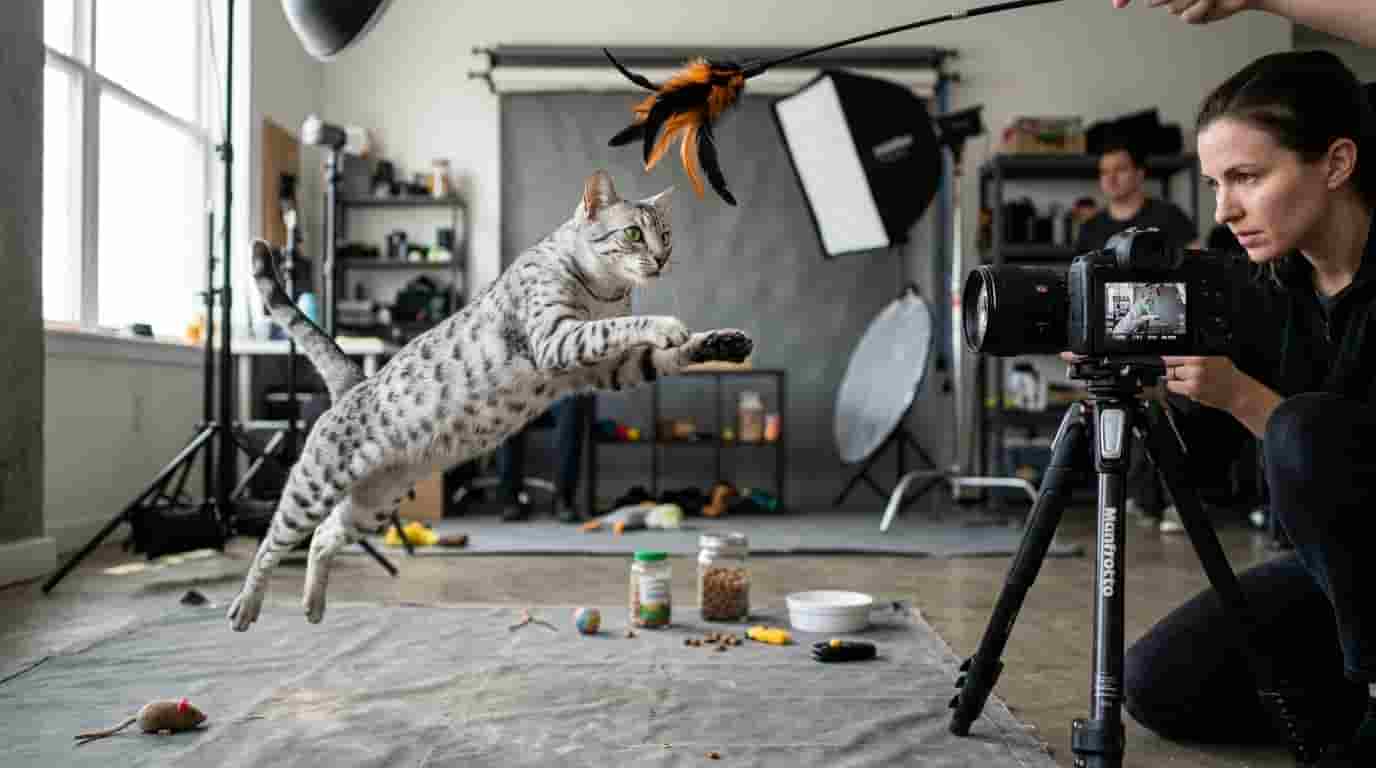
You can build a highly effective toolkit of kitty photo hacks using simple items found around your kitchen. For example, attach a long colorful feather wand to the top of your camera device with a rubber band. This clever setup leaves your hands completely free to steady the lens and snap pictures quickly.
- Rub a tiny bit of catnip onto your phone case.
- Use a slow moving laser pointer just above the lens.
- Toss a small treats ball right before clicking the shutter.
Professional Cat Photography Tips for Composition
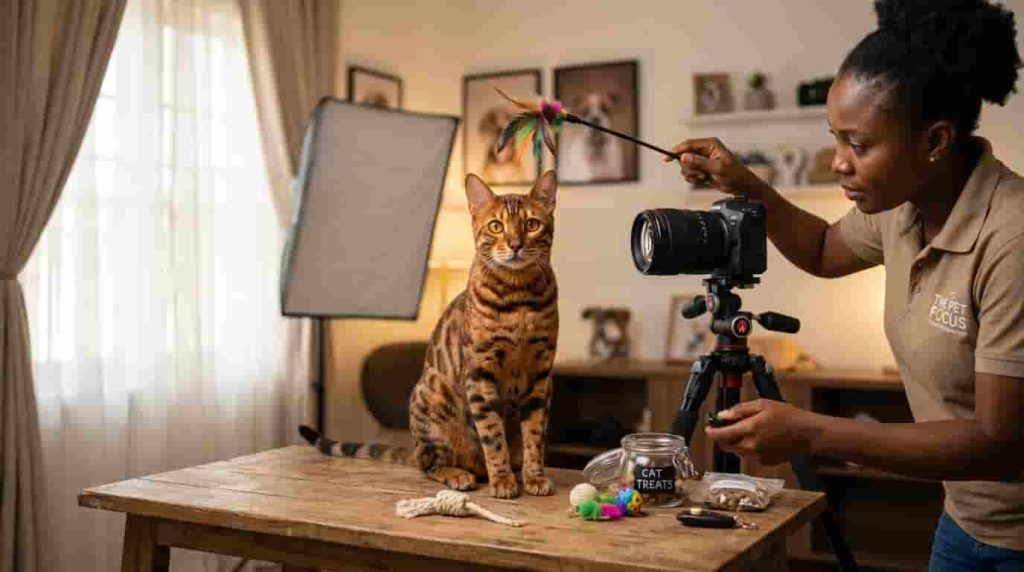
Mastering cat photo composition requires patience and an understanding of the classic rule of thirds. Imagine your camera screen divided into a neat grid with nine equal rectangular boxes. Try to place your kitty’s mesmerizing eyes at the intersection points of these grid lines to maximize visual impact. This professional framing technique creates a much more balanced and artistic portrait than simply centering the pet every time.
Additionally, pay close attention to the background elements behind your pet before you capture the shot. A cluttered room filled with dirty laundry or messy cables will distract from your gorgeous animal subject. Therefore, clear away any unnecessary household items to ensure your kitty remains the main focus of the image. If your pet falls fast asleep while you clear the room, you can learn more about why they spend 16 hours a day napping.
Smart Feline Photography Techniques for Action
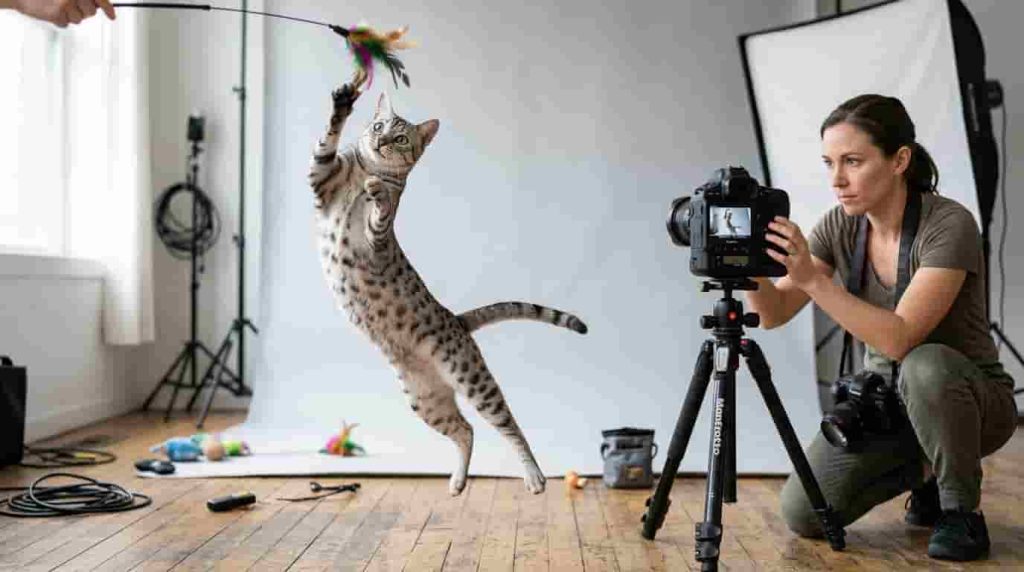
Photographing cats at home becomes much more challenging when they are sprinting, jumping, or playing with toys. You need to adjust your smartphone settings to use burst mode to capture these rapid movements without blur. This setting allows your camera to take multiple rapid photos in a fraction of a single second.
- Hold down the shutter button to activate the burst feature.
- Select the sharpest image from the series later on.
- Ensure the room has maximum lighting to prevent motion blur.
These reliable feline photography techniques ensure you never miss a spectacular mid-air leap or a funny playing expression. With practice, you will naturally enhance your cat photography skills and build a gorgeous digital album of your pet.
Tips for Capturing Memorable Photos of Your Cat
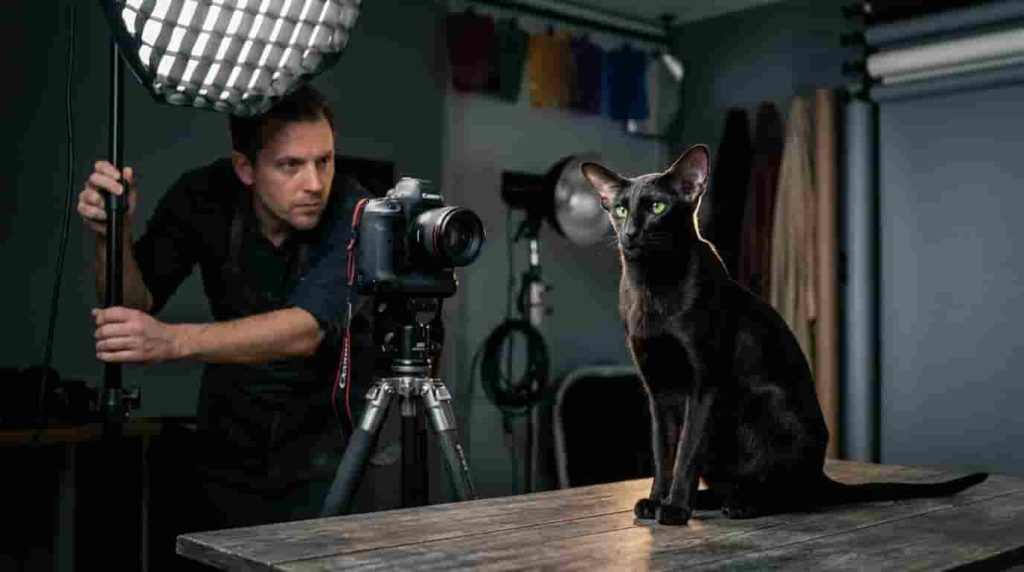
Every successful pet photography tricks guide emphasizes the immense importance of maintaining a calm, stress free environment. Felines sense human frustration easily, so yelling or forcing them into poses will never produce good results. Instead, keep your voice soft, offer plenty of praise, and reward every good behavior with tasty treats.
- Let your kitty investigate the camera equipment first.
- Never hold your pet down against their will for a photo.
- End the session immediately if their tail thumps angrily.
Following these tips for capturing memorable photos of your cat ensures your pet always associates the camera with rewards. Consequently, they will become much more cooperative subjects during all of your future creative cat photography sessions.
Finding Fresh Cat Photography Ideas

If you run out of unique cat picture ideas, try focusing on the tiny details of your pet. Take close up macro shots of their textured nose leather, their long white whiskers, or their soft paws. These intimate portraits tell a beautiful story about your pet’s unique physical features without requiring them to stare directly.
- Capture the sunlight catching the edges of their ears.
- Photograph their silhouette against a bright window at sunset.
- Zoom in on the unique patterns of their tabby stripes.
Consistently testing these diverse cat photography ideas will keep your social media feed looking highly engaging and creative. Soon, you will have a collection of secrets to stunning cat photos that you can share with friends.
Conclusion: Mastering Cat Photography Tricks
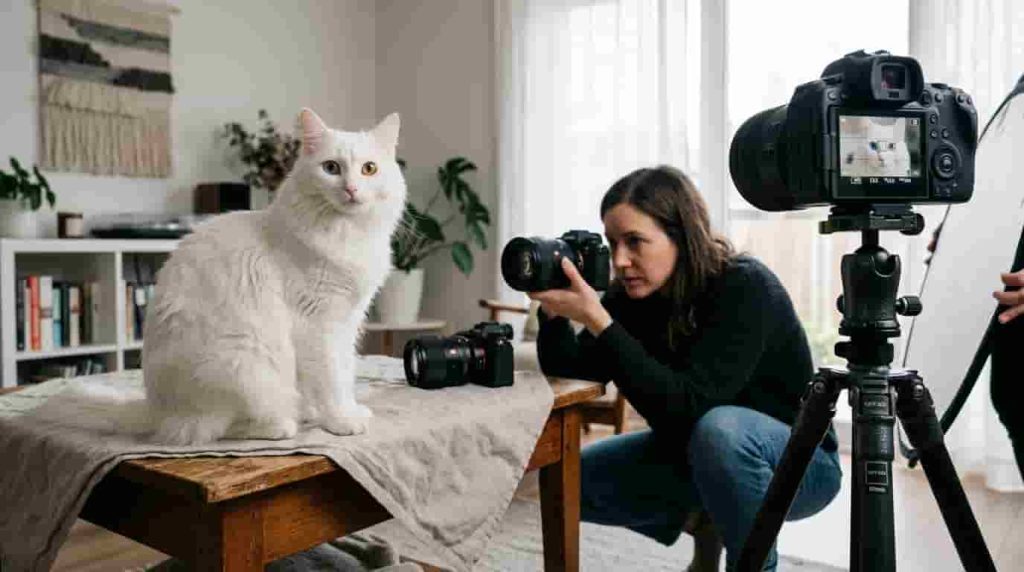
In conclusion, utilizing smart cat photography tricks is the best way to capture your pet’s true personality on camera. From using soft natural light to dropping down to eye level, these methods guarantee beautiful, professional results. Remember to use surprise sounds and rewards to get that perfect, captivating look toward your phone lens.
What is your favorite trick for getting your furry companion to sit still for a quick picture? Do they respond better to the sound of a crinkly treat bag or a high pitched whistle? Please share your best pet photography tricks and favorite photos in the comment section below this post!
Frequently Asked Questions
Cats often walk toward the camera because they are highly curious about the strange device in your hand. To prevent this, use a zoom lens from across the room so you can maintain a safe distance. This distance allows you to capture natural behaviors without disrupting their current comfort zone or activity.
You should use a fast shutter speed of at least one over two hundred and fifty seconds to freeze motion. Additionally, widen your aperture setting to let in maximum light and create a beautiful blurry background effect. If you use a smartphone, simply turn on the automated action or sports mode feature.
Your pet looks away because the shiny glass lens resembles a large, unblinking predator eye in nature. Direct eye contact feels highly confrontational to felines, so they look away to avoid starting a fight. Using treats and fun sounds helps distract them from this natural defensive instinct.
You must use a bright, evenly lit background to create a clear silhouette of your dark animal. Avoid dark corners and position your pet near a sunny window to highlight the subtle highlights in their fur. Additionally, manually adjust your camera exposure slider upward to reveal the beautiful details of their face.
Yes, you can absolutely use positive reinforcement training to teach your pet to look at the lens. Give them a delicious lickable treat every single time they glance toward your smartphone device on command. Over time, your kitty will happily sit and pose because they expect a tasty food reward.