Cat Pupil Dilation: What it means when eyes go completely black.
Introduction:
Cat pupil dilation is a fascinating visual transformation that every feline guardian witnesses on a daily basis. Your pet might have thin vertical slits one moment but possess massive dark circles the very next. This rapid change happens because the iris muscles adjust instantly to manage incoming light levels. Therefore, understanding cat eyes requires you to look closely at these subtle shifts.
Recognizing normal versus abnormal pupil size in cats will help you protect your furry family member from hidden pain. Sometimes, large dark eyes mean your pet is simply ready to pounce on a favorite feather toy. However, constant pupil dilation in felines can also indicate a serious underlying medical emergency. This guide will walk you through the reasons for cat pupil dilation step by step.
Normal Reasons for Cat Pupil Dilation
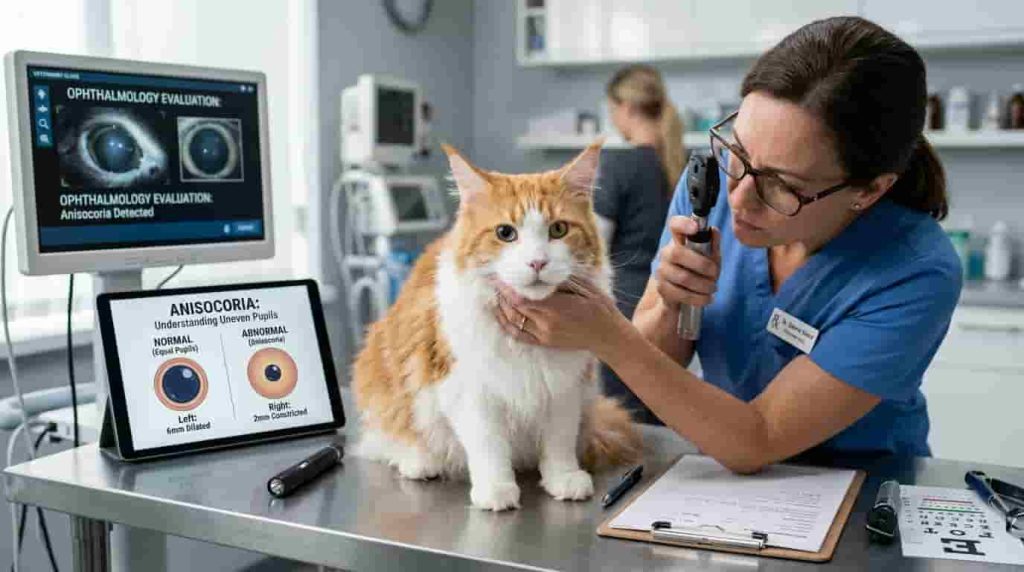
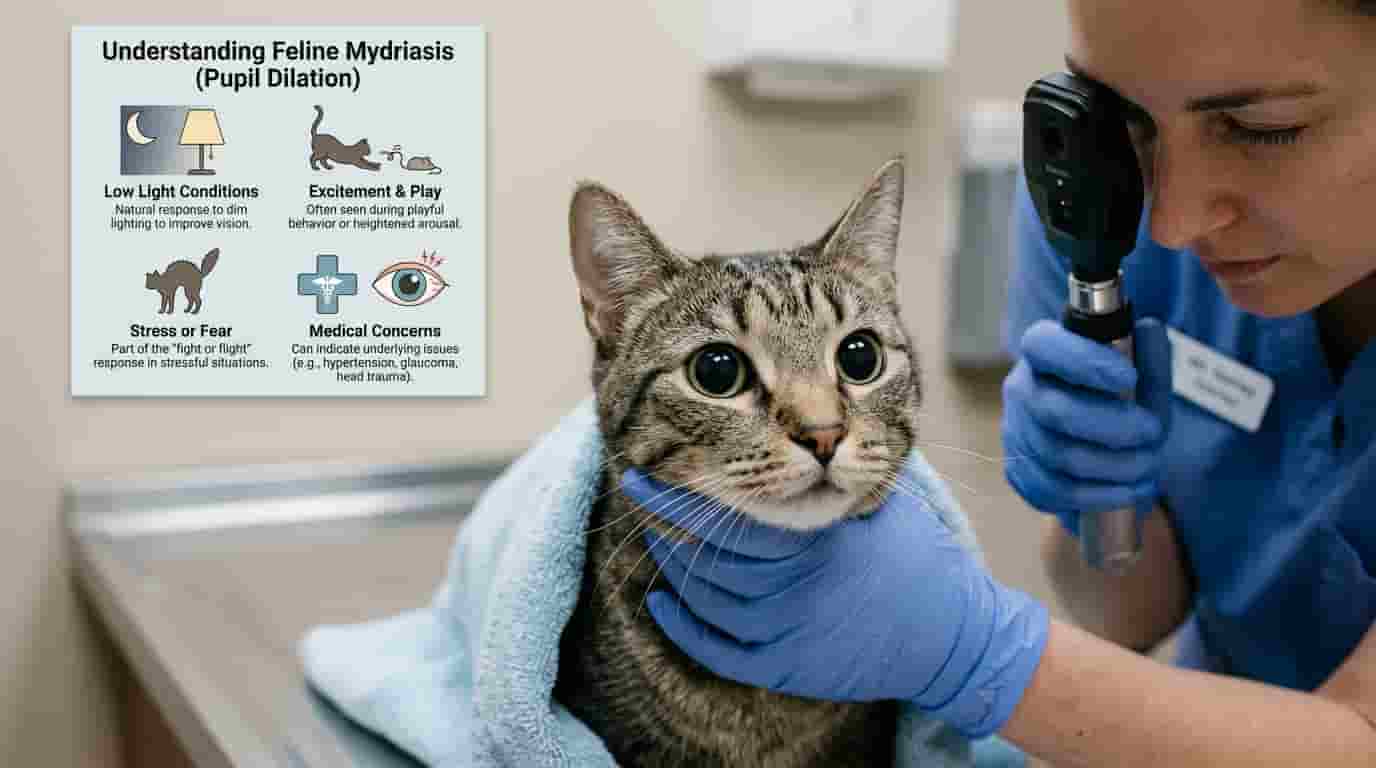
Tracking changes in your cat pupil size is an excellent way to read their current emotional state. For example, sudden excitement or a rush of adrenaline will cause the pupils to expand rapidly. This physical reaction prepares the feline body to hunt prey or flee from a perceived threat.
- Playfulness triggers temporary expansion during toy chases.
- Fear causes wide eyes to gather maximum environmental data.
- Low lighting naturally forces the iris to open wide.
According to a comprehensive guide by PetMD, healthy eyes adjust symmetrically based on the brightness of the surrounding room. Therefore, you should see both pupils shrink into thin vertical slits when you turn on a bright lamp. If the circles remain large in bright light, your pet might be experiencing underlying cat health issues.
Environmental Factors and Feline Eye Health
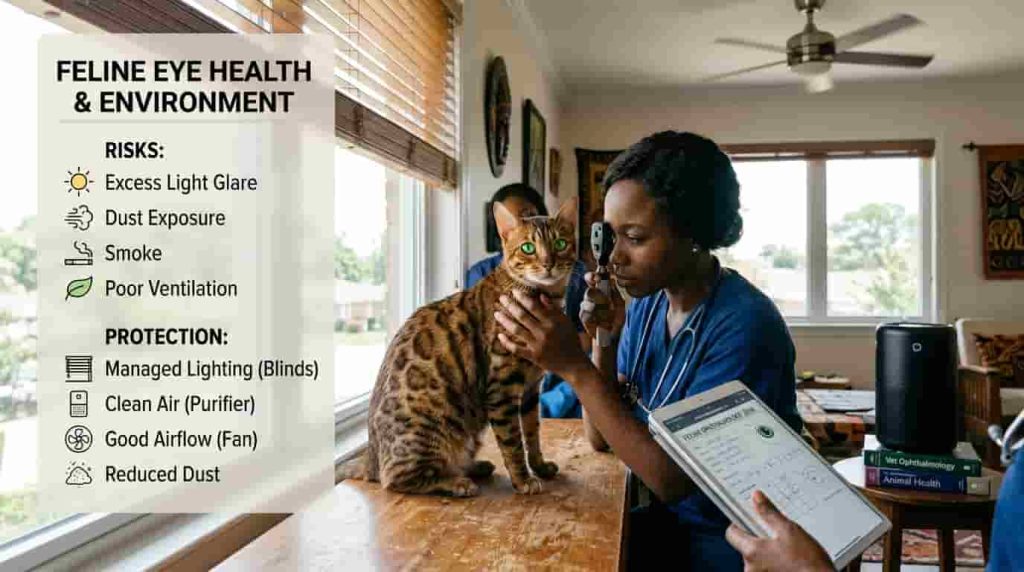
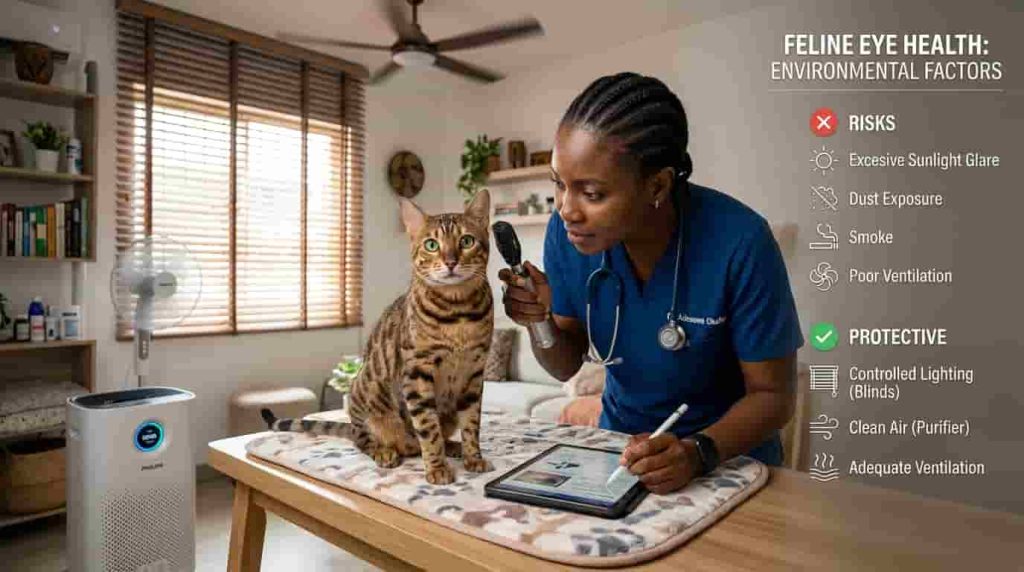
Environmental triggers play a massive role in general cat eye care and daily visual comfort. For instance, my client Jessica noticed her rescue cat Bella had completely dark eyes every afternoon. Jessica worried that Bella was developing severe cat vision problems because the dilation lasted for hours.
I asked Jessica to look closely at the window curtains in her living room. The thick drapes blocked all natural sunlight, which created a very dark environment for the pet. Once Jessica opened the curtains, Bella’s feline pupil size returned to a normal thin shape immediately.
This simple case shows how normal lighting shifts change your cat’s appearance throughout the day. However, you must stay vigilant if the large size continues in a well lit space. Persistent dilation often serves as the very first warning sign of complex cat eye conditions.
Identifying Abnormal Pupil Size in Cats
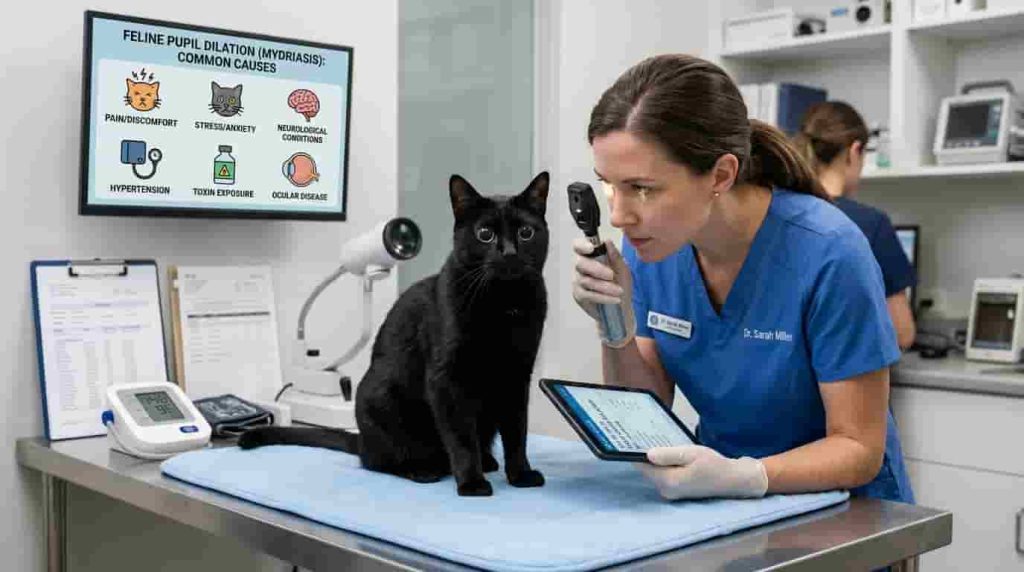
Spotting signs of cat eye issues requires you to compare the behavior of both eyes simultaneously. A healthy feline should always display matching circles that react to light at the exact same speed. If one pupil looks significantly larger than the other, your companion is experiencing a medical condition called anisocoria.
- Anisocoria causes uneven sizing between the two eyes.
- Slow reactions to light indicate potential nerve pathway damage.
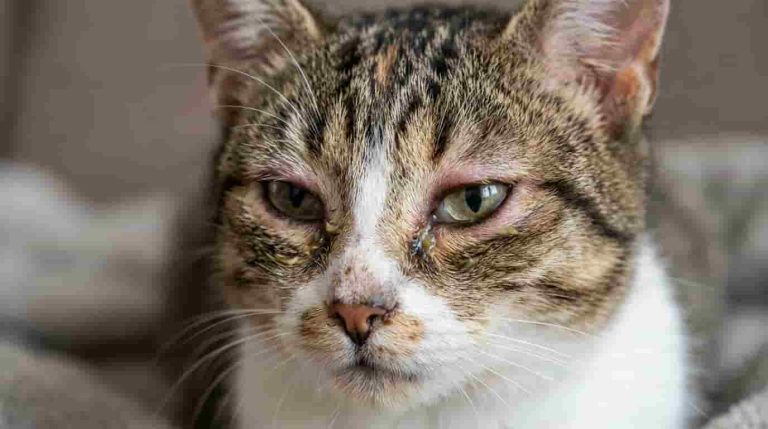
- Cloudiness inside the large dark circle signals active inflammation.
Veterinary professionals use a specialized cat eye examination to look for microscopic scratches on the clear cornea. They also measure internal fluid pressure to rule out painful conditions like feline glaucoma. Finding these physical abnormalities early prevents permanent vision loss and preserves long term feline eye health.
Underlying Medical Causes of Dilated Pupils in Cats
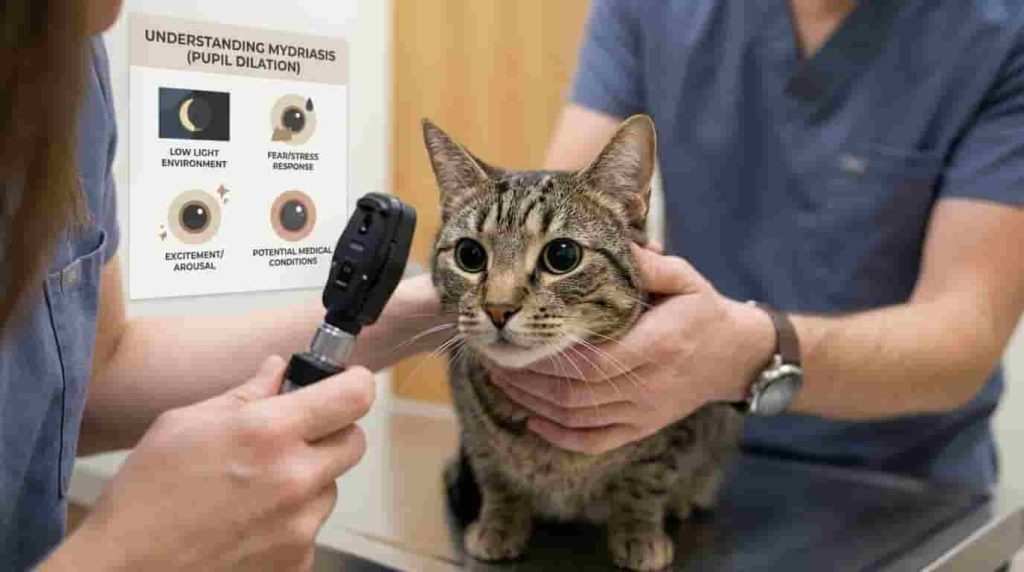
Many serious systemic illnesses can cause permanent dilated pupils in cats without showing obvious outward signs. For example, high blood pressure is a leading cause of sudden ocular changes in senior felines. This internal pressure can cause the delicate retina to detach from the back of the eye completely.
According to veterinary researchers at the Cornell University College of Veterinary Medicine, hypertension often stems from underlying kidney disease. When the kidneys struggle, blood pressure spikes and alters the internal mechanics of the eye. Therefore, diagnosing cat eye conditions often requires looking at the health of the entire feline body.
Other dangerous triggers include severe head trauma, internal brain tumors, or accidental exposure to toxic household chemicals. These emergencies disrupt the normal neurological signals that travel from the brain to the eye muscles. Consequently, the iris freezes in an open position and cannot protect the retina from bright light.
Ocular Impacts of Internal Systemic Diseases
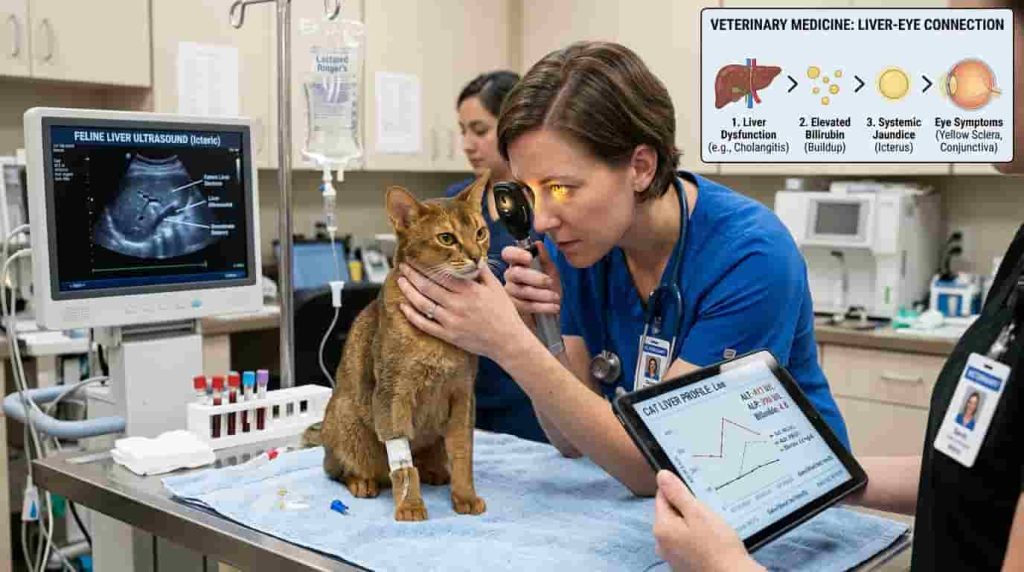
Serious internal issues can eventually impact how your feline companion processes light and behaves at home. For instance, advanced organ failure can cause toxin accumulation that damages delicate cranial nerves over time. To better understand these deep internal connections, you can read about cat liver failure: recognizing jaundice and yellow skin early.
Furthermore, poor circulation from cardiovascular issues can suddenly alter normal feline ocular functions during daily rest periods. You can learn more about tracking these internal shifts by reading our guide on cat heart rate: how to measure beats per minute during rest. Monitoring these vital signs helps you catch subtle health declines before they cause permanent blindness.
The Process of Managing Cat Liver Issues and Eyes
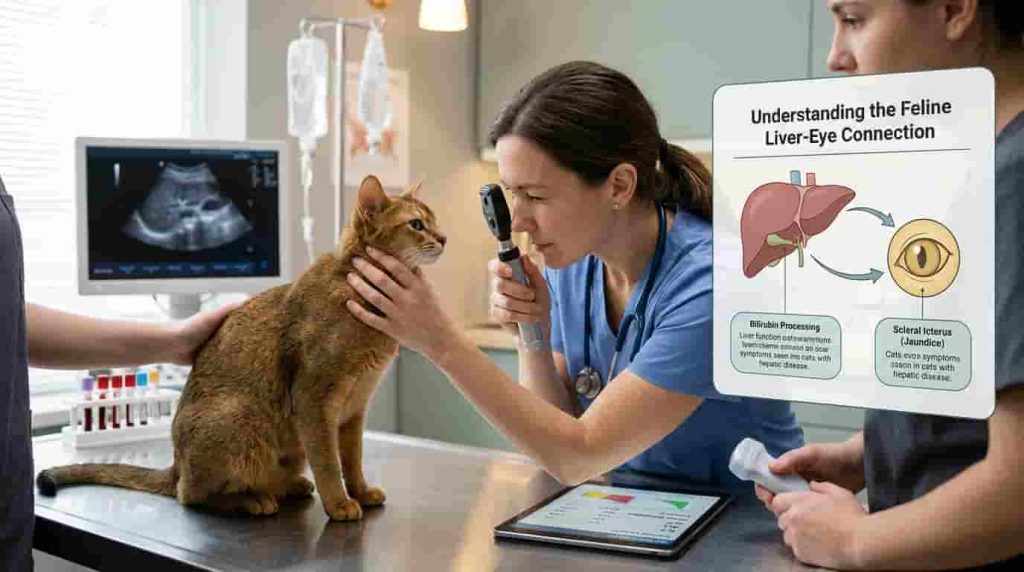
When systemic diseases alter the eyes, veterinarians must focus on stabilizing the primary internal illness first. For example, a cat with severe anemia might require emergency transfusions to restore proper oxygen delivery to the optic nerve. You can explore this topic further by reading about cat blood types: why knowing your pets group can save their life.
- Medications can lower blood pressure to save the retinas.
- Intravenous fluids help flush dangerous toxins out of the blood.
- Specialized eye drops reduce painful internal ocular swelling.
Properly managing cat liver issues and cardiovascular strain can actually help restore normal pupil reactions over time. However, success depends entirely on getting a fast, accurate diagnosis at a fully equipped veterinary hospital. Never delay medical care if your cat’s eyes remain wide for an entire day.
What to Expect During a Cat Eye Examination
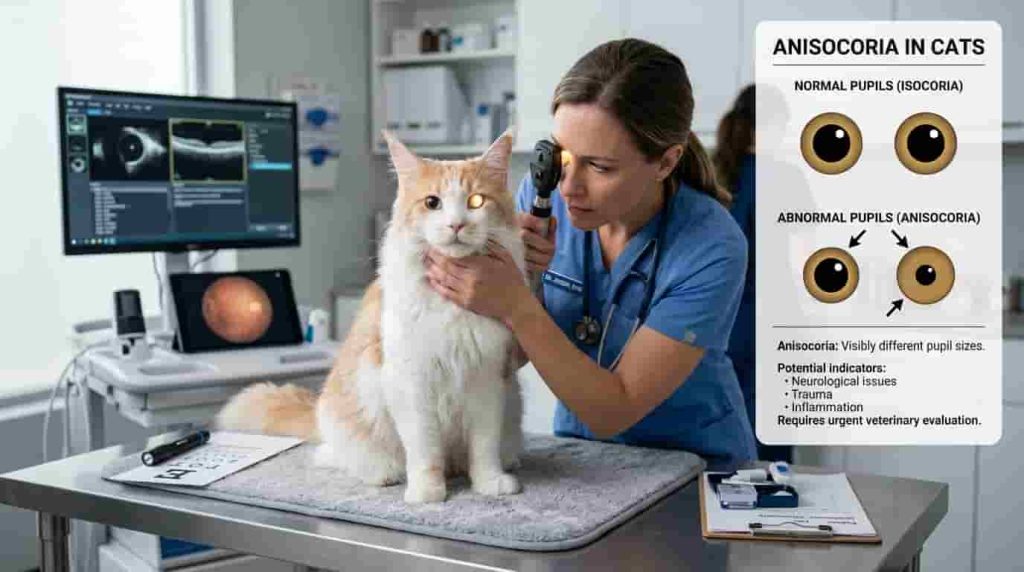
When you visit the clinic for cat ocular issues, the vet will follow a specific diagnostic routine. First, they will dim the room lights completely to see how the pupils respond to a small flashlight. This initial step helps them identify which specific nerve pathway is failing to communicate.
Next, they will use a specialized tool called a tonometer to check the pressure inside each eye globe. High numbers point toward glaucoma, while very low numbers can signal deep internal infections or advanced inflammation. Finally, they may apply special glowing drops to highlight any hidden scratches on the surface.
What to Expect During a Cat Eye Examination
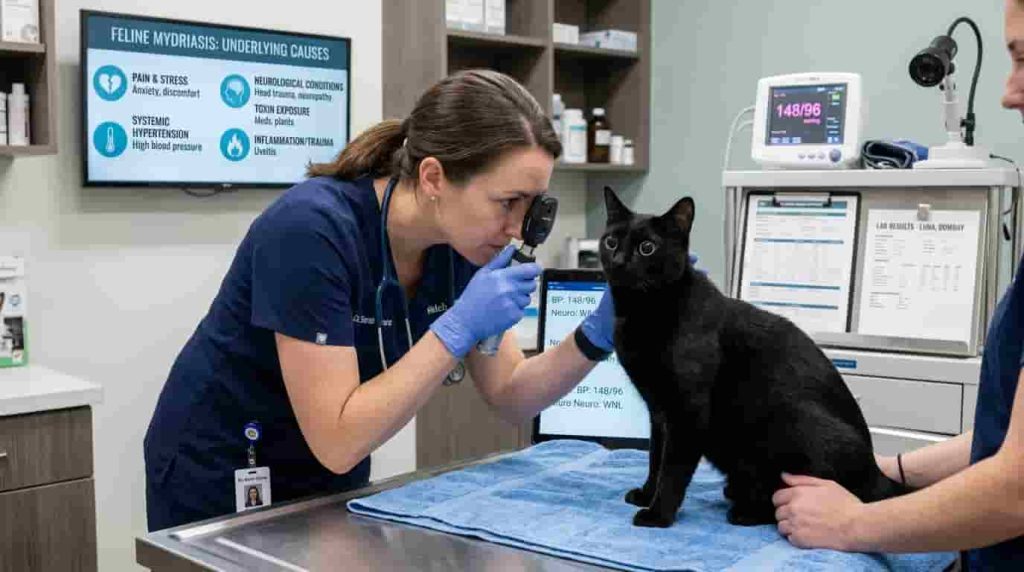
Protecting your pet’s vision requires a safe indoor environment and regular veterinary checkups twice a year. Keep dangerous household cleaners, automotive fluids, and toxic plants locked away in secure cabinets. Additionally, feed your feline a balanced diet rich in essential amino acids like taurine to support retinal health.
Clean away any crusty discharge from the corners of their eyes using a soft, damp cloth daily. Avoid using human eye drops or old leftover pet medications without consulting your veterinarian first. By providing consistent care, you can ensure your cat’s eyes remain bright, healthy, and beautifully responsive.
Conclusion: Tracking Cat Pupil Dilation for Safety
In conclusion, paying close attention to cat pupil dilation is a vital part of everyday pet ownership. While wide dark eyes usually mean your feline is excited or playing, constant expansion requires professional attention. Always check your cat’s eyes in a brightly lit room to ensure the pupils shrink normally.
Does your favorite feline friend get giant black eyes right before they pounce on a toy? Have you ever noticed an unusual change in your pet’s pupil size during the day? Please share your personal stories and ask your questions in the comment section below this post!
Frequently Asked Questions
Persistent round pupils in a bright room usually indicate an underlying medical issue like high blood pressure or nerve damage. This condition prevents the iris muscles from constricting properly to block out excess light. You should schedule a veterinary exam immediately to check their internal health.
Yes, high anxiety or sudden fear triggers a large release of adrenaline that widens the pupils instantly. This natural reaction allows the cat to see potential escape routes more clearly during a scary event. The eyes should return to a normal slit shape once the pet calms down.
Uneven pupil size is a medical emergency known as anisocoria and requires immediate veterinary evaluation. This symptom can point toward a recent head injury, a brain lesion, or localized eye disease. Do not wait to see if the eye fixes itself over time.
Senior cats often develop a benign condition called iris atrophy, which weakens the muscles that control the pupil. This weakness can cause the pupils to remain slightly larger even in normal room lighting. However, a vet must rule out hypertension before assuming the change is just old age.
Veterinarians use specialized lights to test pupillary reflexes and measure intraocular pressure with a tonometer. They may also perform blood tests to check for kidney disease or systemic infections that alter blood pressure. These steps help them pinpoint the exact source of the ocular change.