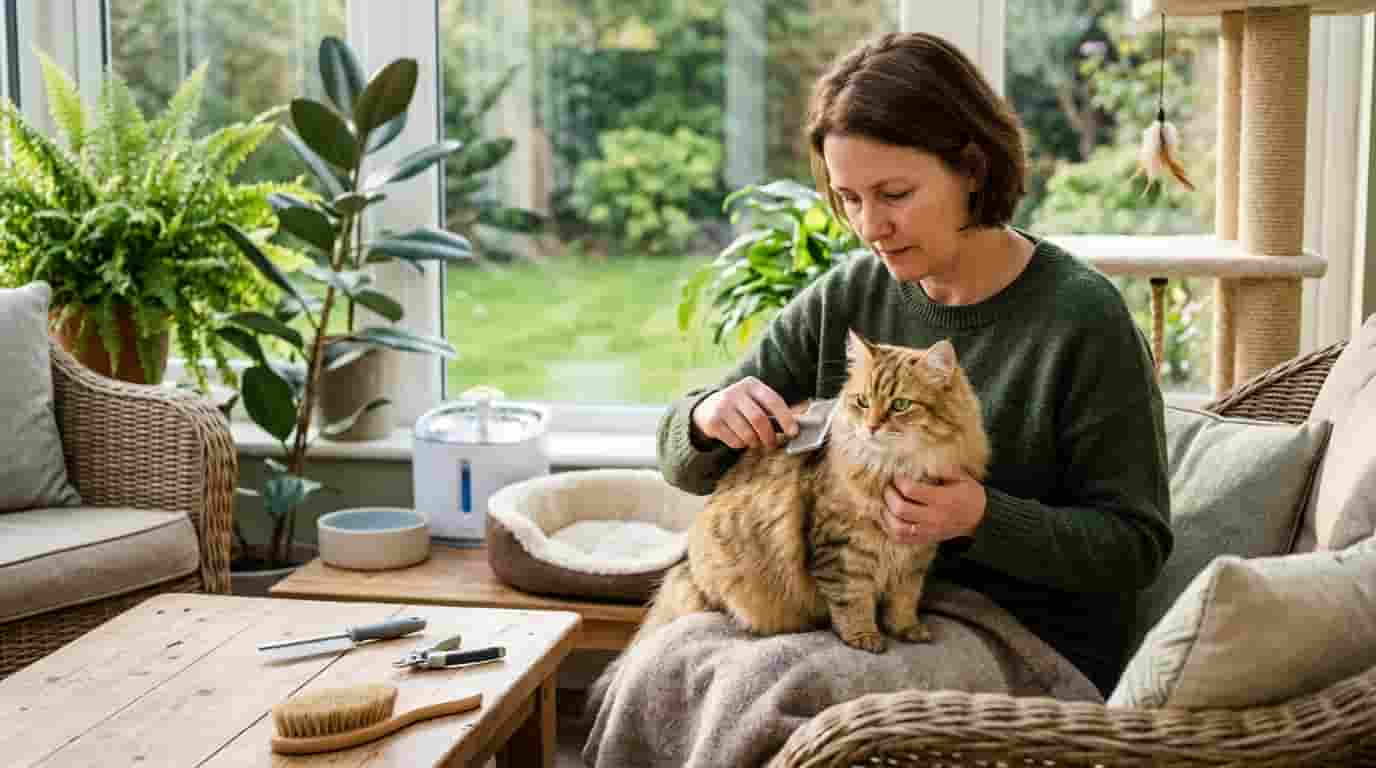
Cat Hairball Control: Natural remedies to stop the hacking.
Introduction:
Cat Hairball Control represents a vital area of daily feline wellness that affects almost every indoor pet parent worldwide. Have you ever woken up to the sound of your precious companion coughing violently on your clean bedroom rug? Many owners feel completely helpless because they assume that vomiting up wet clumps of fur is just an unavoidable part of feline ownership. Therefore, implementing proactive Cat Hairball Control routines helps protect your animal’s delicate digestive tract from dangerous internal blockages.
This detailed guide will analyze how loose fur accumulates inside the stomach during standard daily self grooming sessions. First, we will look at how high fiber diets and natural oils work together to reduce cat hairballs smoothly. Next, you will learn to separate standard grooming habits from excessive shedding patterns driven by hidden household stress. Finally, we will share simple grooming techniques to catch dead undercoat hairs before your companion swallows them down.
Protecting your pet requires moving past petroleum jellies to discover safe, plant based hairball remedies for cats. Let us look closely at how simple dietary updates can support your pet’s digestive health starting today.
Cat Hairball Control: The Biological Origin of Digestive Fur Accumulation
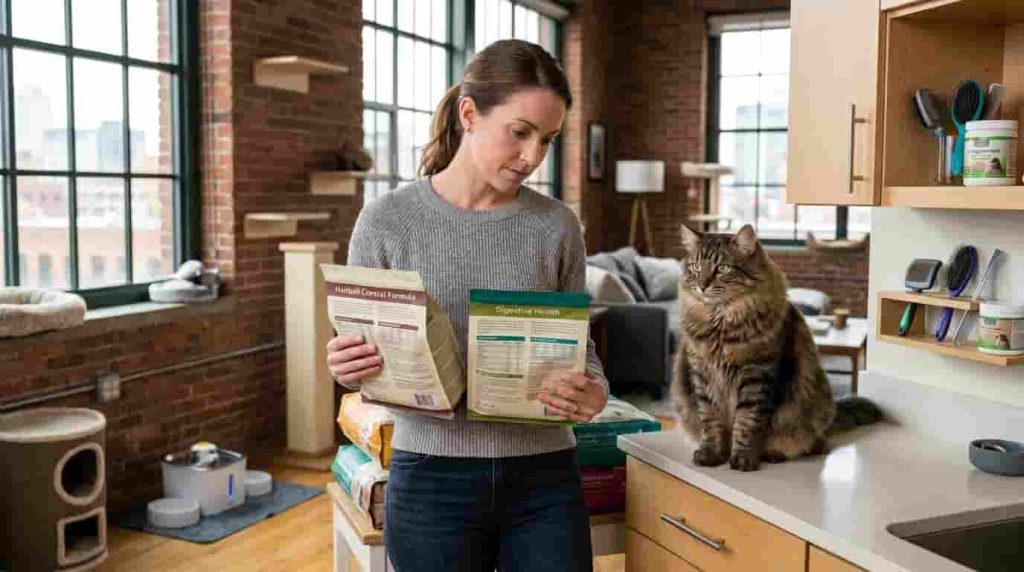
Understanding the true necessity of Cat Hairball Control requires examining the unique anatomy of the feline tongue. Felines possess hundreds of backward facing hooks called papillae, which act exactly like a rigid hairbrush during grooming. When your animal licks its coat, these small spines pull away loose undercoat hairs very efficiently. Because of the backward angle, your domestic companion cannot spit the loose fur out of its mouth.
Additionally, a healthy digestive system can normally pass small amounts of swallowed hair through the intestines without issues. However, if the stomach lacks proper moisture or fiber, the trapped fur begins to bind together tightly. This binding process creates an elongated cylindrical mass that blocks the regular movement of incoming food particles. Many people assume their pets are fine just because they only hack up a clump once a month.
However, chronic hacking shows that the natural elimination process is failing to function properly inside the stomach. This biological breakdown proves why active Cat Hairball Control remains an essential chore for every single indoor cat parent. Let us examine how different hairball management styles compare to help you choose the best option for your home.
| Management Approach | Primary Physical Action | Main Benefit for the Feline |
| Daily Hand Brushing | Removes loose undercoat fur before self grooming happens | Eliminates the root cause of the hairball formation |
| Soluble Dietary Fiber | Adds healthy bulk to move trapped hair through intestines | Promotes smooth daily bathroom habits naturally |
| Organic Plant Oils | Lubricates the stomach lining to slide hair along easily | Soothes the digestive system without using chemicals |
The Dangerous Connection Between Obesity and Hairball Frequency

Failing to implement proper cat hairball prevention can lead to serious health complications if your pet carries extra weight. Heavy felines often experience sluggish digestive motility, which means their intestines move food and fur much more slowly. To help your pet stay trim, read our guide on Cat Obesity Risks: How to help your fat cat lose weight right away. Keeping your companion at a healthy weight allows their digestive system to flush out loose hair columns quite easily.
Furthermore, a local pet owner named Amina noticed her overweight Persian cat hacking continuously every single spring season. She realized that the heavy animal could not bend properly to groom her lower back area cleanly. As a result, the neglected coat developed deep mats that shed loose strands whenever the animal moved around.
She used a stainless steel greyhound comb to pull away the dead undercoat fibers before they caused trouble. This simple change provided immediate cat hairball relief because the volume of swallowed fur dropped by half within weeks. This real life example shows how active grooming routines form the foundation of proper hairball treatment for cats. Let us look at how other subtle health checks can improve your pet care routine.
Inspecting Ear Flaps to Prevent Stress Induced Over Grooming
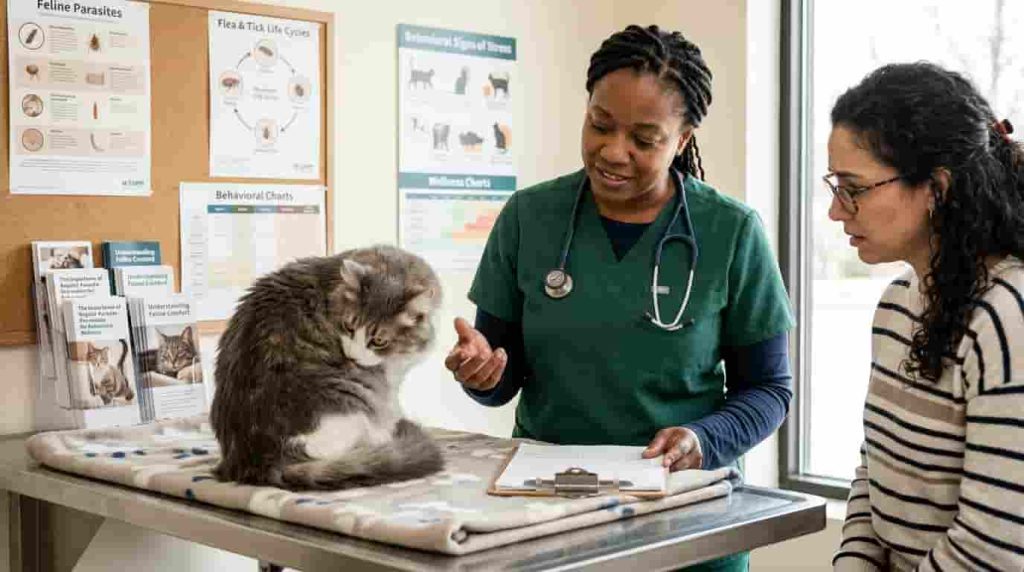
Anxious felines often lick their fur continuously as a self soothing mechanism when they deal with hidden discomfort. This frantic over grooming behavior causes them to swallow massive amounts of hair, making Cat Hairball Control difficult. For instance, read our guide on Cat Ear Mites: How to Spot, Clean and Treat Infected Ears Fast immediately. Clearing up these painful ear pests lowers baseline anxiety and stops the nervous licking habits that cause huge hairballs.
Monitoring Spinal Flexibility to Support Natural Grooming Habits
Sore joints can prevent older felines from twisted positions, forcing them to neglect parts of their coat. When loose hair builds up on the skin, it detaches in large clumps that the animal swallows later. To support your senior pet, view our advice on Cat Arthritis Care: Making life easier for your stiff senior cat today. Keeping their joints comfortable ensures they can groom themselves evenly without developing thick, problematic mats across their body.
Natural Ways to Control Cat Hairballs Using Dietary Fiber
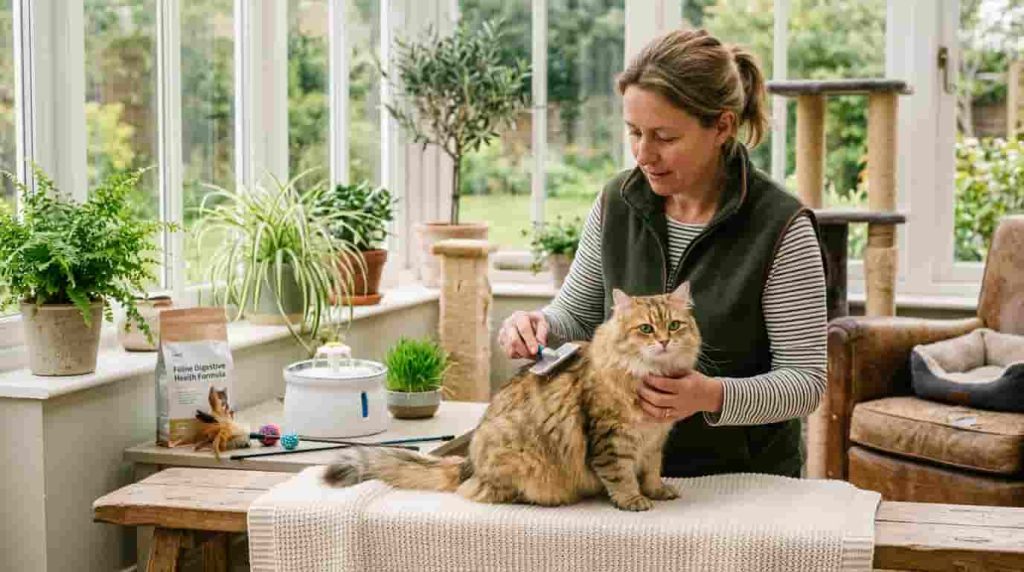
Adding premium soluble fiber to your pet’s daily meals is the best cat hairball control strategy available. You can mix one tablespoon of pure, unflavored canned pumpkin puree directly into their wet canned food morning and night. This natural additive provides an excellent source of moisture and bulk to sweep trapped hair through the stomach. According to clinical veterinary nutrition profiles published by the ASPCA, dietary fiber improves general gut movement safely.
Additionally, you can grow a small container of organic oat grass right on your kitchen window sill. Felines naturally crave fresh greens because the roughage helps them clear out uncomfortable blockages from their digestive tracts. This natural remedies for cat hairballs option keeps your companion entertained while supporting their internal metabolic health simultaneously.
Make sure you avoid using generic backyard grass because outdoor lawns often contain toxic chemical fertilizers or pesticides. Purchasing a certified indoor sprouting kit guarantees that your pet enjoys clean roughage without facing any health risks. Let us look at how using premium commercial food formulas can further optimize your management results.
Selecting the Best Cat Food for Hairball Control

Upgrading to a specialized dry kibble formulation can significantly reduce the frequency of your companion’s hacking episodes. Look for premium recipes that list real meat as the first ingredient alongside natural cellulose or beet pulp fibers. These high quality ingredients help bind loose hairs to food particles so they pass quietly into the litter box.
Furthermore, you can supplement their daily meals with specialized hairball control supplements for cats to achieve faster results. Many modern hairball prevention products use cold pressed flaxseed oil to lubricate the intestines without disrupting normal vitamin absorption.
Unlike old school mineral oils, these natural plant extracts supply beneficial omega fatty acids that improve coat health. A shiny, well nourished coat sheds far less hair during the intense spring and autumn seasonal transitions. Your careful dietary choices will help transform a chronically hacking pet into a vibrant, comfortable household companion. Let us review the essential guidelines for maintaining a great grooming routine at home.
- Brush your long haired pet for five minutes every single morning to collect loose undercoat fur.
- Wipe your pet’s body with a damp microfiber cloth weekly to catch flying dander easily.
- Offer small gelatin based hairball treats twice a week to keep the stomach lubricated.
- Provide multiple clean water fountains across the house to encourage daily drinking habits.
When to See a Veterinarian for Hairball Complications
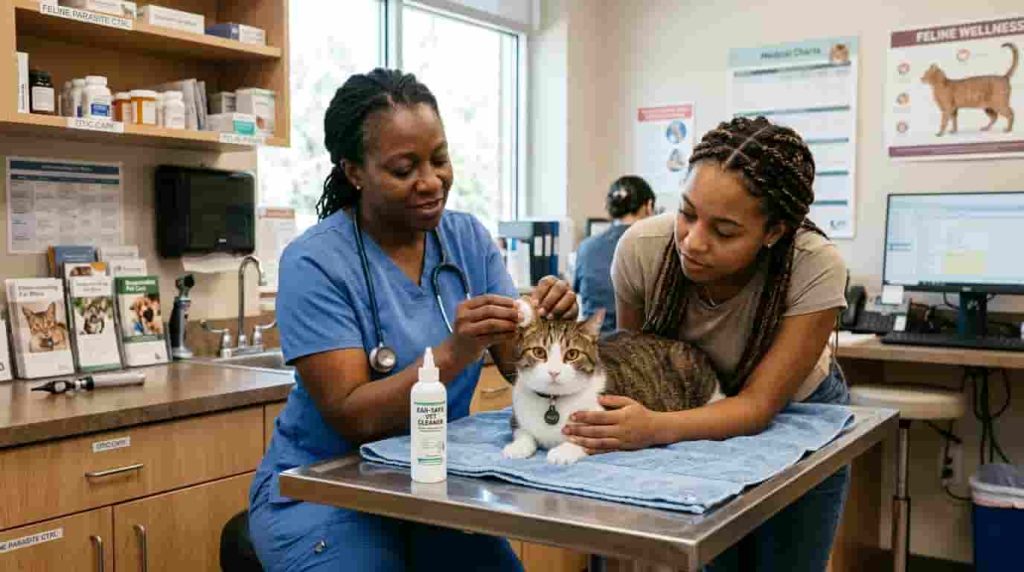
Differentiating a simple hairball from a life threatening intestinal blockage requires monitoring your pet’s behavior after a hacking session. If your companion spends hours dry heaving without producing any fur, they need immediate veterinary medical attention. This continuous unproductive gagging indicates that a large mass is completely stuck inside the narrow intestinal tract.
Therefore, you should contact the experts at PetMD or your local clinic to schedule an emergency evaluation. A professional veterinarian will use diagnostic x-rays to locate the exact position of the dense obstruction.
If the mass is too large to pass, they may need to perform emergency surgery to protect the bowel. Acting quickly prevents dangerous tissue damage and ensures your beloved animal companion makes a full and rapid recovery. Your vigilant tracking keeps your pet safe from the hidden dangers of severe unmanaged fur accumulation.
Conclusion
In conclusion, achieving reliable Cat Hairball Control requires a steady blend of daily brushing habits and high fiber nutrition. By understanding how the feline tongue collects loose fur, you can step in with a brush before problems start. These small preventative actions save your animal companion from the physical distress of chronic throat irritation and dry heaving.
Always utilize natural pumpkin puree and high quality plant oils to keep their digestive tract moving smoothly every day. Your consistent care will help your domestic friend stay active, comfortable, and emotionally secure through every changing season. With the right strategies in place, you can maintain perfect Cat Hairball Control and enjoy a cleaner home.
Has your beautiful animal companion ever shown a strong preference for eating fresh window grass over canned pumpkin treats? Please share your personal remedy stories and drop your unique grooming questions in the comment section down below!
Frequently Asked Questions
Your pet is swallowing loose hairs during daily self grooming sessions because their tongue hooks pull away dead fur. If their diet lacks sufficient moisture or fiber, these swallowed hairs bind together instead of passing normally.
The safest home option is mixing a teaspoon of plain canned pumpkin or unsweetened applesauce into their wet food. This addition supplies the necessary soluble fiber to push the trapped mass safely out into the litter box.
You should use preventative pastes or oil supplements two to three times a week during peak shedding seasons. Always follow the specific dosage guidelines printed on the packaging to avoid causing diarrhea or loose stools.
Yes, a lack of water causes the digestive tract to dry out, which makes swallowed fur pack together tightly. You must provide fresh running water fountains to keep things moving smoothly through the intestinal loops.
You must seek immediate emergency care if your pet stops eating, becomes lethargic, or has a bloated stomach. These symptoms indicate a total internal blockage that requires prompt surgical intervention from a professional doctor.