Cat Purring Science: Why They Vibrate and What It Means for Your Health
Introduction
Cat purring science is one of the most fascinating areas of feline research available today. Most cat owners hear purring as simple contentment. However, scientists have discovered that the vibrations a purring cat produces carry far more meaning and biological power than most people ever expect.
Your cat does not only purr when it feels happy. Cats also purr when stressed, injured, or trying to self-soothe during difficult moments. Therefore, understanding exactly why cats purr helps you respond to your pet much more accurately.
Additionally, cat purring science reveals remarkable benefits for human health. Studies suggest that the frequency of a cat’s purr may reduce stress, lower blood pressure, and even support bone repair in people who spend regular time near a purring cat.
This article covers how purring physically works inside your cat’s body, what different purring patterns mean, and how purring science connects directly to your everyday health. By the end, you will never hear your cat’s purr the same way again.
Cat Purring Science: How Cats Actually Produce That Sound
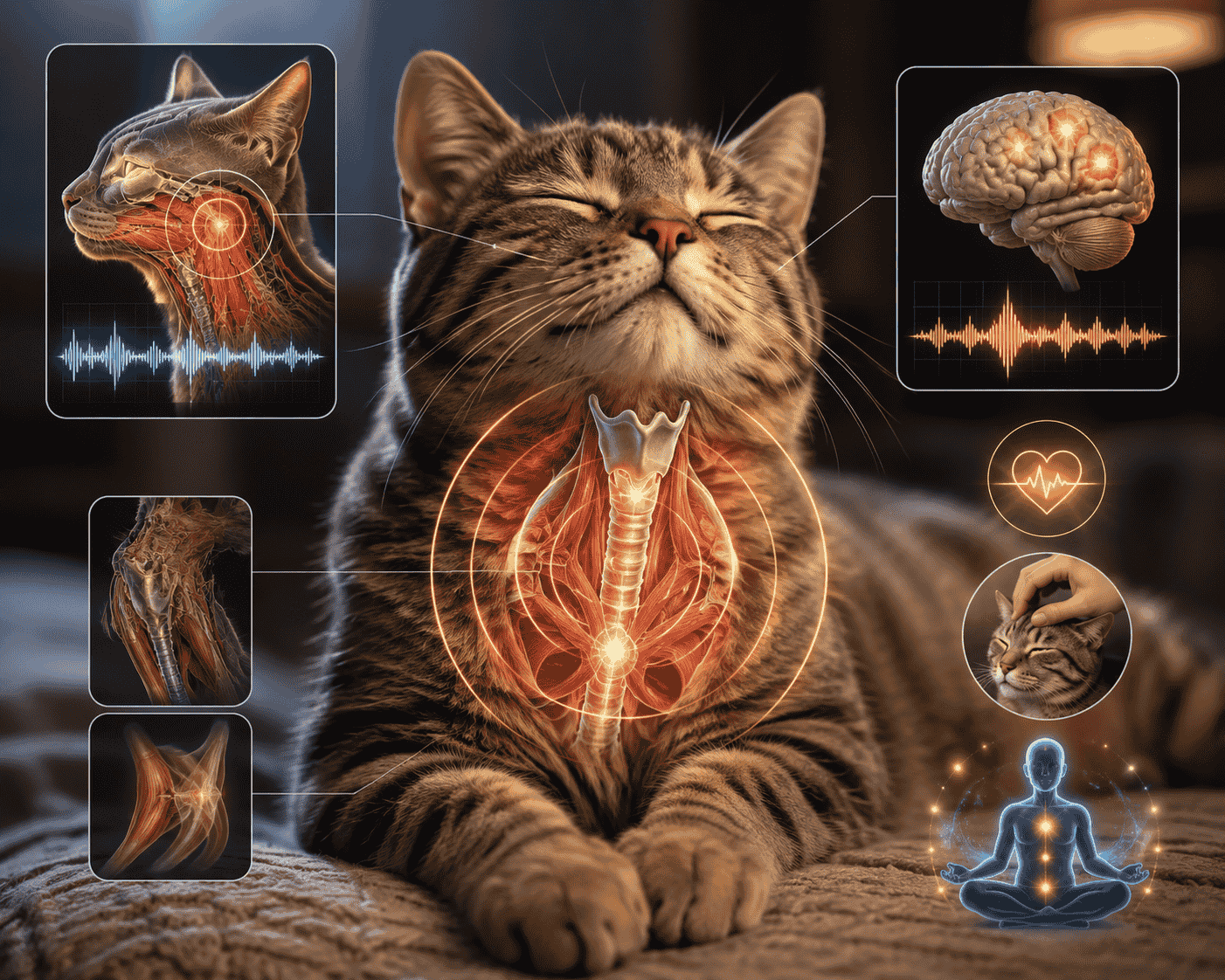
Understanding cat purring science starts with the basic mechanics behind the sound. Cats do not have a special organ dedicated to purring. Instead, they produce it by rapidly contracting and relaxing the muscles in their larynx, or voice box, at a remarkably consistent rate.
This muscle movement happens around 25 to 150 times per second. The movement separates and closes the vocal cords during both inhalation and exhalation. Therefore, a cat can purr continuously without ever pausing to draw a full breath.
This is what makes purring so different from every other cat sound. Meowing only happens during exhalation. Purring, however, runs as a continuous motor through the entire breathing cycle. That smooth and unbroken rhythm is exactly what creates the deeply soothing quality humans respond to so naturally.
Furthermore, not all cats can purr in the traditional sense. Big cats like lions and tigers roar because of a different structure in their hyoid bone. Only smaller wild cats and domestic cats produce the true continuous purr. This makes purring in domestic cats a uniquely evolved and specialized trait.
Purring Frequency Analysis: What the Vibrations Do to Living Tissue
The real power in cat purring science lies in the specific frequency range cats produce. Most cats purr between 25 and 50 Hz, though some reach up to 150 Hz. These frequencies overlap directly with ranges that scientists link to tissue repair and improved bone density.
Here is what different frequencies may do for living tissue:
- 25 to 50 Hz: Linked to bone healing and natural pain relief in research settings.
- 50 to 100 Hz: Associated with muscle repair and reduced inflammation responses.
- 100 to 150 Hz: Connected to improved circulation and faster wound recovery.
According to VCA Animal Hospitals, the frequency range of a cat’s purr falls within ranges that researchers have identified as therapeutically beneficial to living tissue. Therefore, sitting near a purring cat may offer real physiological effects beyond simply feeling relaxed.
Additionally, this purring frequency analysis helps explain why cat owners often feel noticeably calmer after time with their pet. The vibrations your body absorbs are not just pleasant sounds. They are physical forces acting on your nervous system in measurable ways.
How Purring Benefits Your Physical and Mental Health
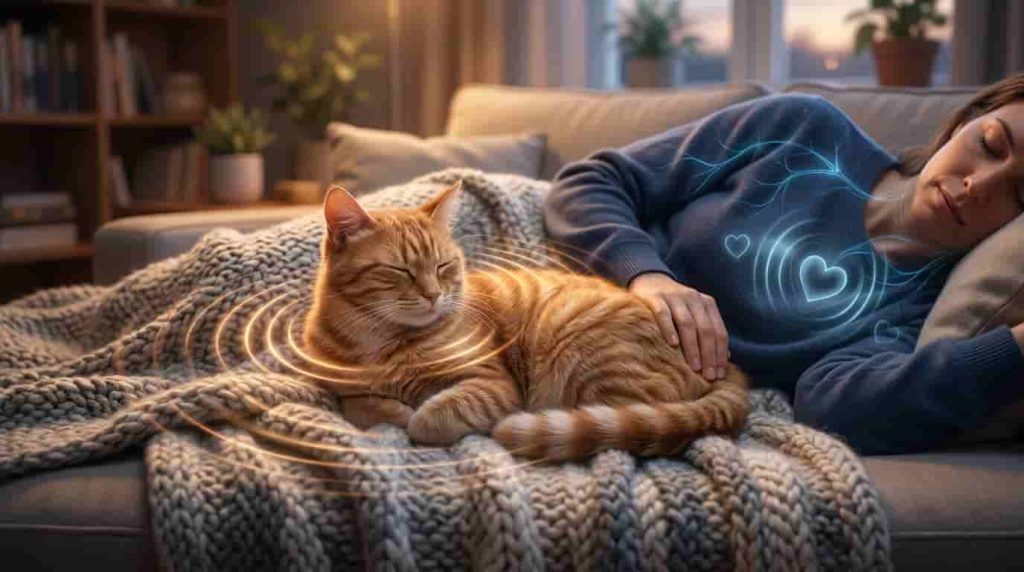
The benefits of cat purring extend well beyond stress relief after a hard day. Feline behavior research continues to uncover ways that regular exposure to a purring cat improves human health outcomes in surprising ways.
Here are the most significant pet health benefits linked to living with a purring cat:
- Lower stress and cortisol levels: Cat owners who spend time near a purring cat show measurably lower stress hormone levels in multiple studies.
- Reduced blood pressure: The calming effect of purring vibrations helps the cardiovascular system maintain healthier pressure readings over time.
- Lower heart attack risk: Research found that cat owners were around 40 percent less likely to die from heart attacks compared to people without cats.
- Improved sleep quality: Many owners report falling asleep faster and staying asleep longer when a cat purrs nearby throughout the night.
- Reduced loneliness and anxiety: The cat-human bond created through purring provides consistent emotional support for people living alone.
Real life example: James, a retired teacher from Ohio, adopted a cat named Biscuit after his doctor flagged high blood pressure as a serious concern. Within six months of Biscuit sleeping on his chest each night, James reported that his blood pressure readings had dropped meaningfully. His doctor noted the consistent improvement at every follow-up visit.
For the full picture of your cat’s communication style, our guide on Cat Body Language: How to read your pet’s silent signals helps you connect what you hear with what you see in your cat’s posture and movements.
Solicitation Purring vs Contentment Purring: Two Very Different Sounds
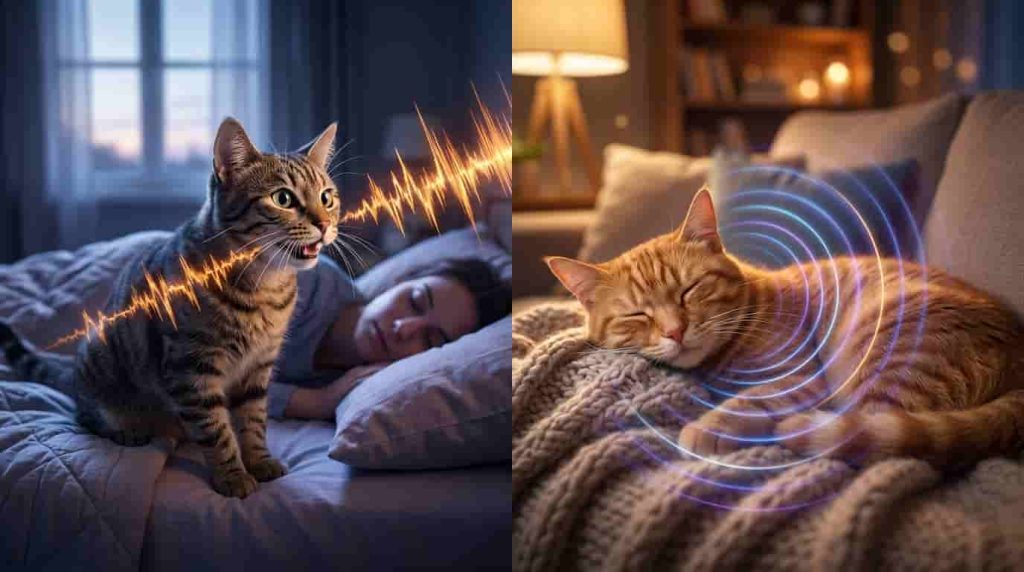
Not all purrs carry the same message, and this distinction is one of the most compelling discoveries in cat purring science. Researchers at the University of Sussex identified two entirely different types of purring that cats use in specific situations.
Contentment purring happens when your cat feels safe and genuinely comfortable. The sound is low, even, and smooth from start to finish. You hear this type most often when your cat relaxes on your lap or settles in for a long nap.
Solicitation purring sounds noticeably different to most listeners. It combines a regular purr with a higher-frequency cry embedded inside the sound. This embedded cry activates the same region of the human brain that responds to a baby crying. Therefore, humans feel an almost instinctive urge to respond right away, which is exactly what the cat intends.
Cats use solicitation purring specifically to prompt feeding or immediate attention from their owners. Additionally, research shows that even people who have never owned cats can distinguish this type of purr from the contentment version. This suggests cats have genuinely evolved a communication tool designed to influence human behavior in a highly targeted way.
If you want to understand how cats layer vocal communication beyond purring, check out our article on Cat Meowing Meanings: What your cat is trying to tell you.
When Cats Purr to Heal Themselves
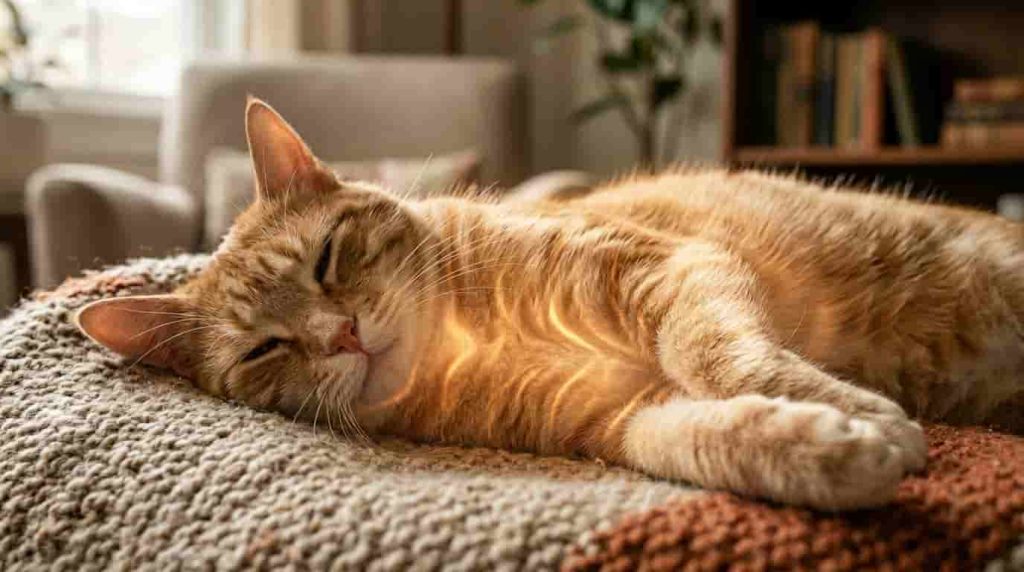
One of the most remarkable findings in feline vocalization research is that cats do not only purr for others. They also purr to heal themselves. This self-directed purring appears during illness, injury, or high-stress situations where the cat needs to self-soothe and recover.
The physiological effects of purring on a cat’s own body are significant. The vibrations stimulate bone density maintenance, reduce inflammation, and help the cat manage pain during difficult recovery periods. This explains why cats frequently purr immediately after surgery or when visibly unwell.
Watch for these situations where your cat may purr for self-healing reasons:
- After a stressful vet visit or car ride
- During or after an injury or illness
- When giving birth or nursing kittens
- In unfamiliar or frightening environments
- While hiding and clearly feeling unwell
Therefore, if your cat purrs but also shows signs of distress or withdrawal, do not assume everything is fine. Combine the sound with what you observe in its behavior and posture. If purring appears alongside unusual aggression or biting, visit our article on Cat Aggression Issues: How to stop biting and scratching for good.
Also, cats often combine self-soothing purring with kneading behavior. Read our article on Cat Kneading Habits: Why your cat makes biscuits on your lap to understand how these two comforting behaviors work together.
And if your cat purrs contentedly during the day but explodes with energy late at night, our piece on Cat Night Zoomies: Why your pet runs wild at 3 AM explains exactly why that energy shift happens.
Conclusion
Cat purring science reveals that your cat’s vibrations carry far more meaning than simple happiness. Therefore, the next time your cat settles beside you and starts its quiet motor, recognize it as one of nature’s most impressive forms of communication and natural healing. Additionally, remember that purring benefits both of you in real and measurable ways every single day.
Cat purring science continues to expand as researchers uncover new connections between feline vibrations and human health. As a result, owning a cat may genuinely support your heart, your stress levels, and your overall well-being in ways science is still discovering. Your cat is quietly doing more for you than you ever realized.
Did anything in this article surprise you about what purring actually does? Share your experience in the comments below and tell us how your cat’s purring has affected your daily life.
Frequently Asked Questions
Cats purr during illness and pain as a form of self-soothing and self-repair. The vibrations they produce fall within frequencies that researchers link to tissue healing and natural pain reduction. A purring sick cat is not necessarily content but may actively be trying to comfort and heal itself.
Yes, research strongly suggests that regular exposure to a purring cat reduces stress, lowers blood pressure, and may reduce your risk of cardiovascular disease. The vibrations and the emotional bond created through purring both contribute to measurable health improvements in cat owners over time.
Louder purring does not always indicate more contentment. Some cats are naturally louder purrers based on the size and structure of their larynx. Additionally, a cat may purr more loudly and urgently when it needs something specific, such as food, comfort, or your immediate attention.
Many cat owners report noticeably reduced anxiety after spending time near a purring cat. The combination of vibration frequency and the calming cat-human bond both contribute to lower anxiety levels in people. Current research supports purring as a genuinely therapeutic experience for most cat owners.