Cat Orphan Kitten: How to bottle feed a baby with no mother.
Introduction:
Cat Orphan Kitten care is a critical emergency skill that saves helpless lives every single day. Finding a cold, crying newborn feline in your yard brings immediate panic and stress. Most rescuers do not know how to replicate maternal warmth or milk correctly. However, your fast actions determine whether this tiny baby survives the first crucial night.
This complete guide will show you exactly how to stabilize and nurse an abandoned infant. If you want to learn about natural nursing setups, check our guide on Cat Nursing Mom: Nutritional needs for a mother with kittens. Understanding maternal nutrition helps you see what vital nutrients your fragile bottle baby is missing.
First, you must assess the age and body condition of the newborn animal. You can track their daily physical progress by reading Cat Kitten Weight: How to tell if your baby cat is growing right. Finally, plan a quiet home setup by reviewing Cat Box Location: Where to put the litter tray for maximum peace.
Cat Orphan Kitten: Essential Setup and Warming Rules
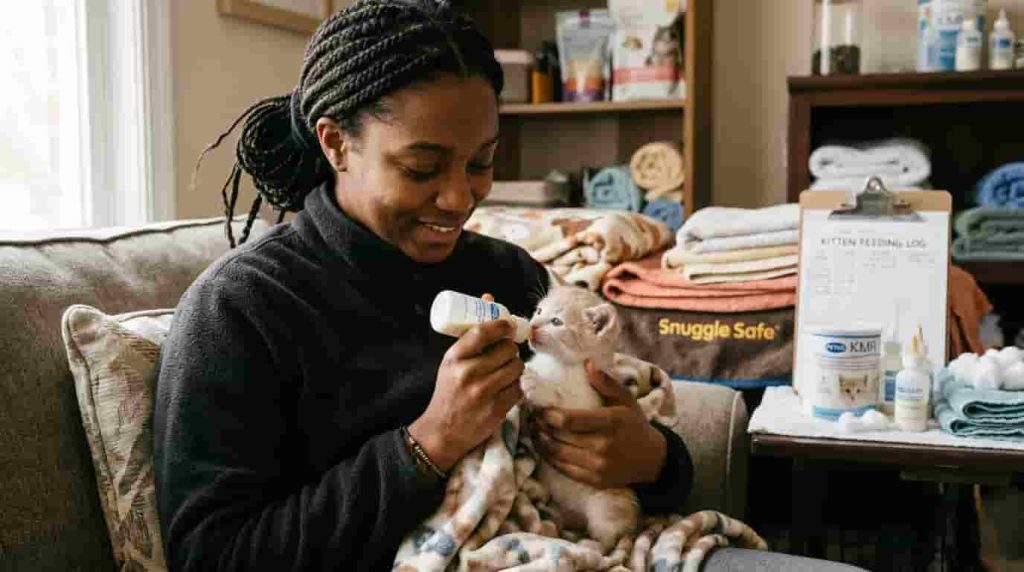
You must never feed a cold Cat Orphan Kitten under any circumstance. Because cold babies cannot digest food, pouring milk into their stomachs causes fatal system failure. First, create a homemade incubator using a deep plastic box or a secure pet carrier. Line the bottom with thick fleece blankets to trap body heat safely.
Next, place a wrapped heating pad or a warm water bottle inside the nest. Ensure the heat source covers only half of the box area. As a result, the young animal can crawl away if the space gets too hot. Additionally, keep the room temperature steady and completely free from cold window drafts.
Choosing the Right Milk Formula for Your Baby
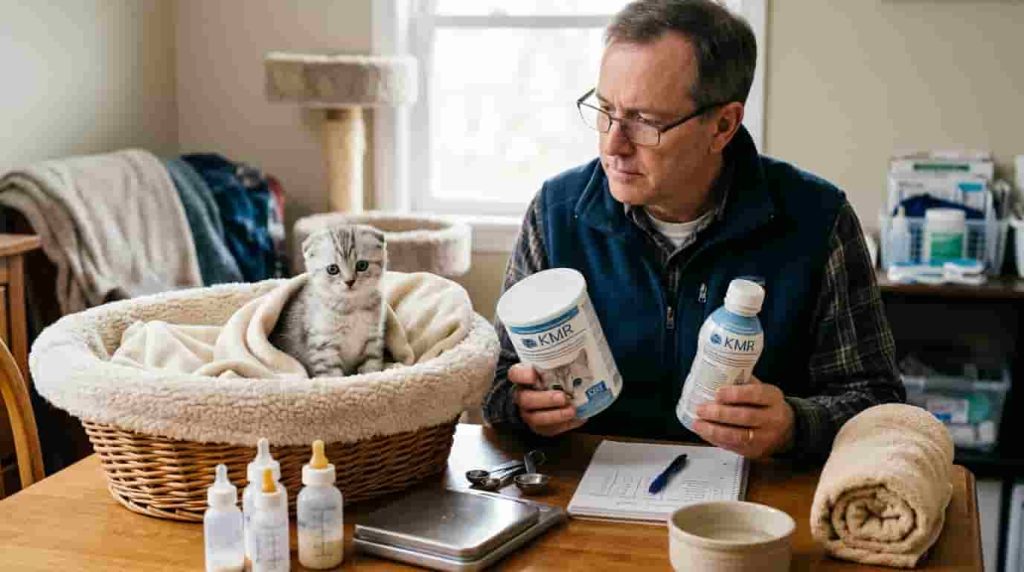
Regular cow milk will quickly kill a fragile Cat Orphan Kitten due to high lactose. Therefore, you must purchase a specialized feline milk replacer from a local pet store. These powder formulas match the dense calories and fats found in natural feline milk. Furthermore, always mix the powder with warm water according to the package instructions.
My friend Sarah once found three abandoned kittens under her wooden porch last summer. She immediately contacted a local feline rescue group to acquire emergency feeding supplies. Because she used proper formula, those beautiful rescue kittens grew into incredibly strong feline companions. You can mirror this success by following strict veterinary feeding protocols exactly.
| Kitten Age | Feeding Frequency | Feed Amount per 100g |
| 1 to 7 Days Old | Every 2 to 3 Hours | 4 to 5 ml |
| 8 to 14 Days Old | Every 3 to 4 Hours | 6 to 7 ml |
| 15 to 21 Days Old | Every 4 Hours | 8 to 9 ml |
| 22 to 28 Days Old | Every 4 to 6 Hours | 10 to 12 ml |
Step by Step Bottle Feeding Technique
Positioning the Newborn Correctly
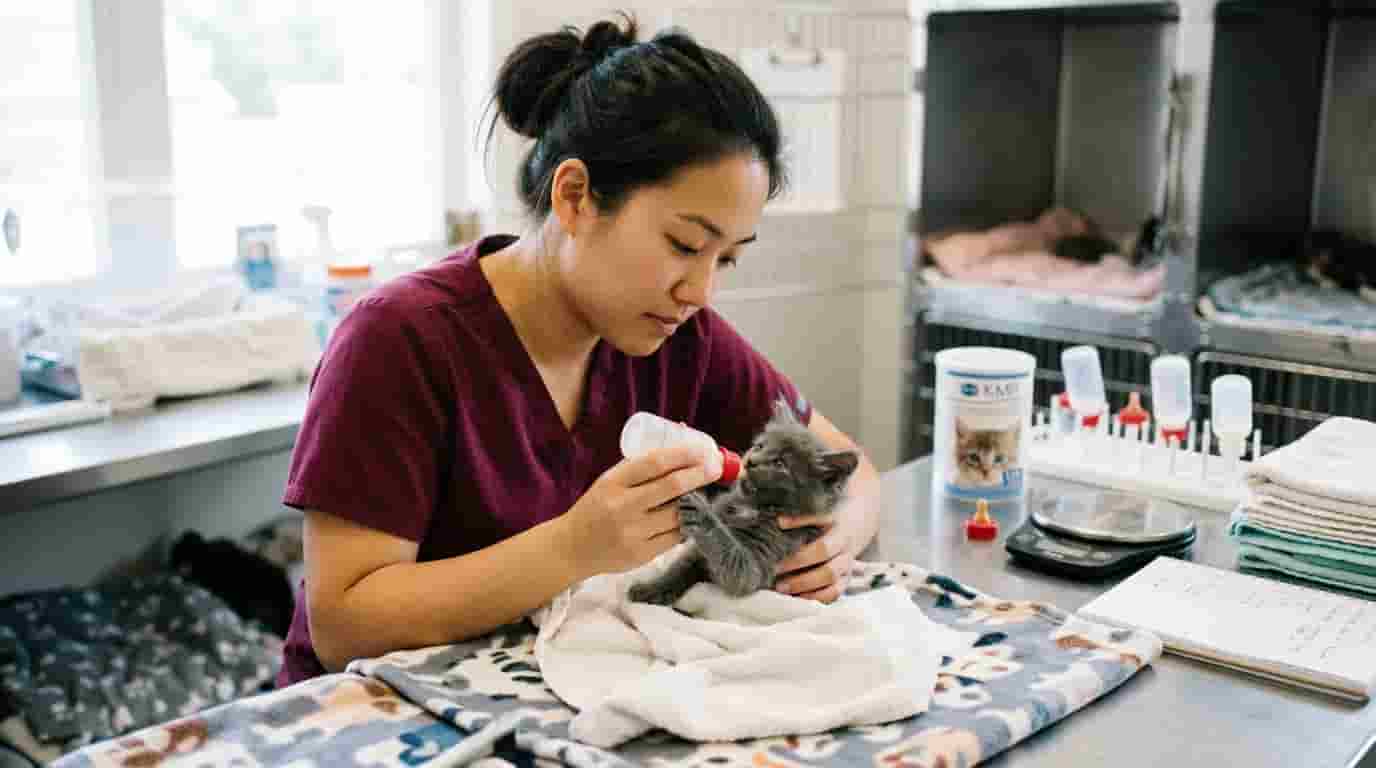
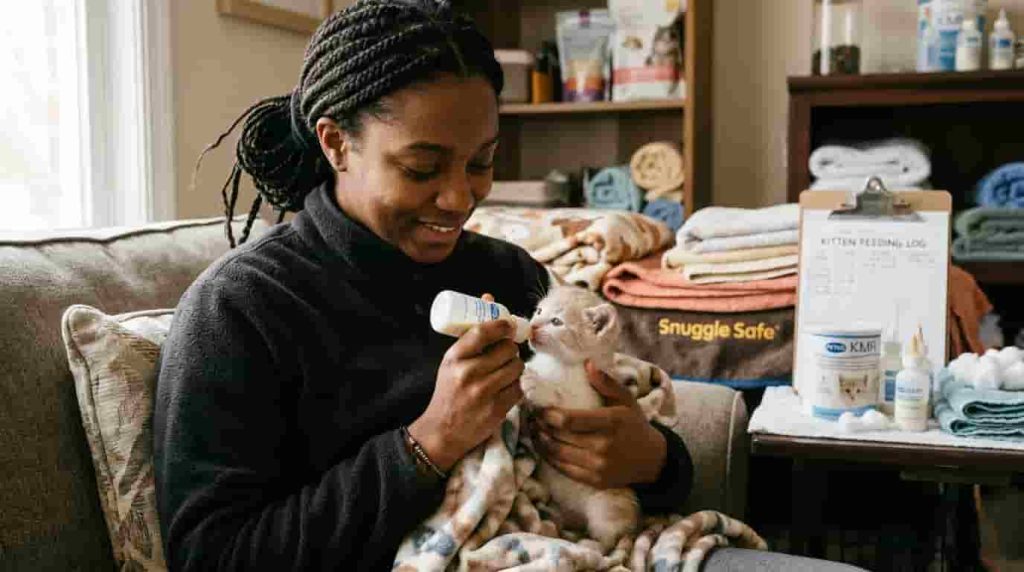
Position the Cat Orphan Kitten flat on its stomach during every single feeding session. Never hold the animal on its back like a human baby because milk will enter the lungs. Gently support the chin with your fingers to keep the head steady.
Inserting the Nipple Safely
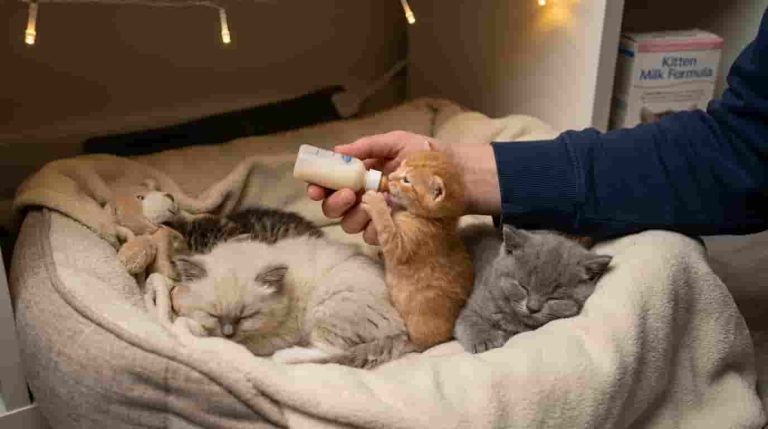
Invert the warm bottle and let a tiny drop of formula form on the tip. Next, slide the rubber nipple into the mouth to trigger the natural sucking reflex. Let the baby suckle at its own pace without squeezing the plastic bottle.
Stimulating Bathroom Elimination After Meals
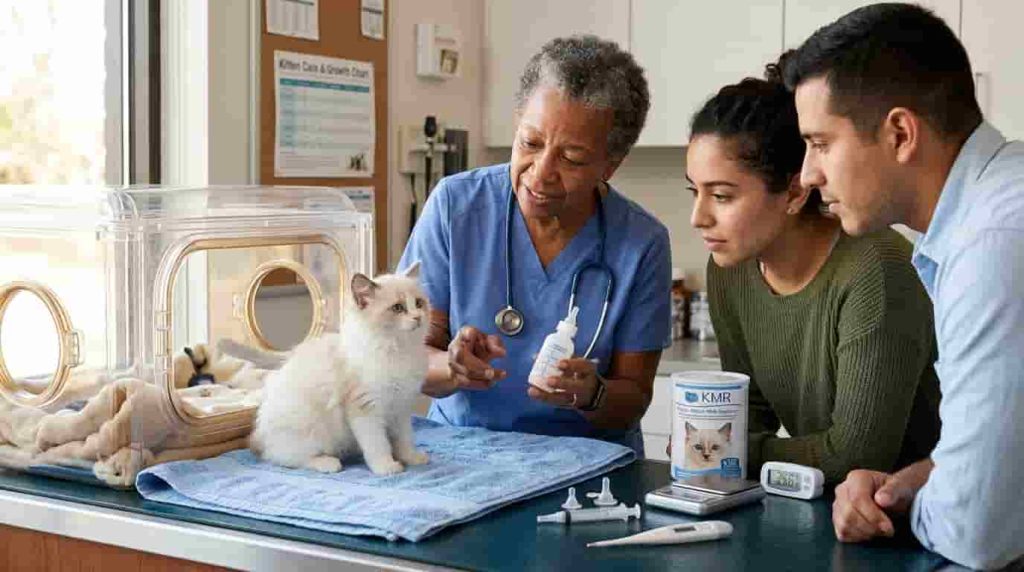
A young Cat Orphan Kitten cannot urinate or defecate without external physical help. In nature, the mother cat licks the belly to stimulate these digestive waste functions. Therefore, you must replicate this vital action using a warm, damp cotton ball. Gently rub the genital region in a steady circular motion after every meal.
Continue this soft rubbing process until the tiny body finishes releasing all solid waste. Healthy urine should appear pale yellow or completely clear on your white paper towel. However, contact an animal shelter veterinarian if the stool looks watery or bloody. Always wipe the skin dry to avoid painful urine burns or hair loss.
Common Healthcare Mistakes to Avoid Entirely
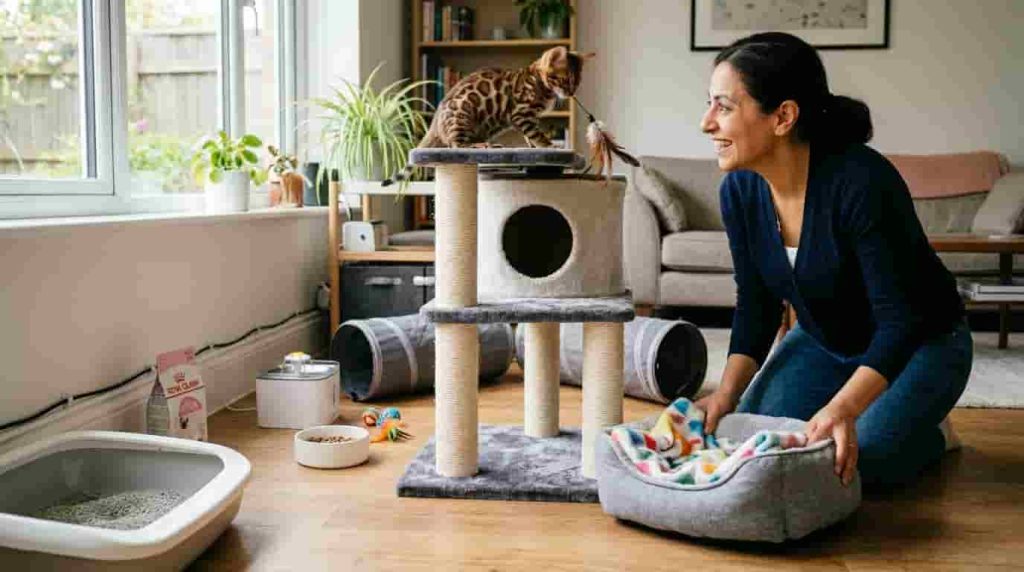
Many people who adopt a kitten try to feed them with a plastic medicine dropper. However, droppers force milk down the throat too fast and cause immediate choking. According to the ASPCA, aspiration pneumonia is a leading cause of death in hand-reared pets. Using a proper newborn nipple prevents fluid from entering the delicate respiratory system.
Additionally, always sterilize your feeding utensils in boiling water after every use. Bacteria grow rapidly inside leftover milk residue and cause severe stomach infections. If the baby stops sucking halfway through a meal, do not force the bottle. Instead, check the milk temperature or wait one hour before trying again.
- Never use cold formula because it drops core body heat.
- Avoid overfeeding to prevent dangerous bloating and diarrhea.
- Do not let other household pets touch the newborn.
Transitioning to Solid Foods and Weaning
The weaning process usually begins when your Cat Orphan Kitten reaches four weeks old. At this stage, their tiny front teeth start pushing through the gums clearly. First, mix your warm liquid formula with high quality canned kitten food. Offer this smooth slurry on a shallow saucer to encourage lapping behavior.
Additionally, decrease the frequency of bottle sessions slowly over two full weeks. Provide fresh drinking water in a heavy bowl that cannot tip over. Most homeless cats learn to eat solid kibble completely by eight weeks of age. Then, they are fully ready to find permanent, loving cat homes.
Finding Long Term Community Support

You do not have to complete this intense rescue journey entirely by yourself. Many people join a local feline adoption center to share resources and tips. These networks offer crucial orphaned cat support when you feel overwhelmed by sleepless nights. Furthermore, local volunteers can help you look for a permanent foster home.
If your work schedule prevents frequent daytime feedings, contact a stray cat rescue group. They often have experienced bottle feeders who can take over temporary care. Saving feline lives requires a dedicated community of passionate volunteers working together. Your efforts give these abandoned pets a real second chance at a happy life.
Preparing Your Home for Kitten Adoption
Creating a Safe Zone
Before you look for orphaned kittens for adoption, secure a single room. Block all tiny gaps behind heavy appliances and remove dangerous electrical cords. Place cozy blankets on the floor so the growing babies cannot fall.
Setting Up the Litter Box
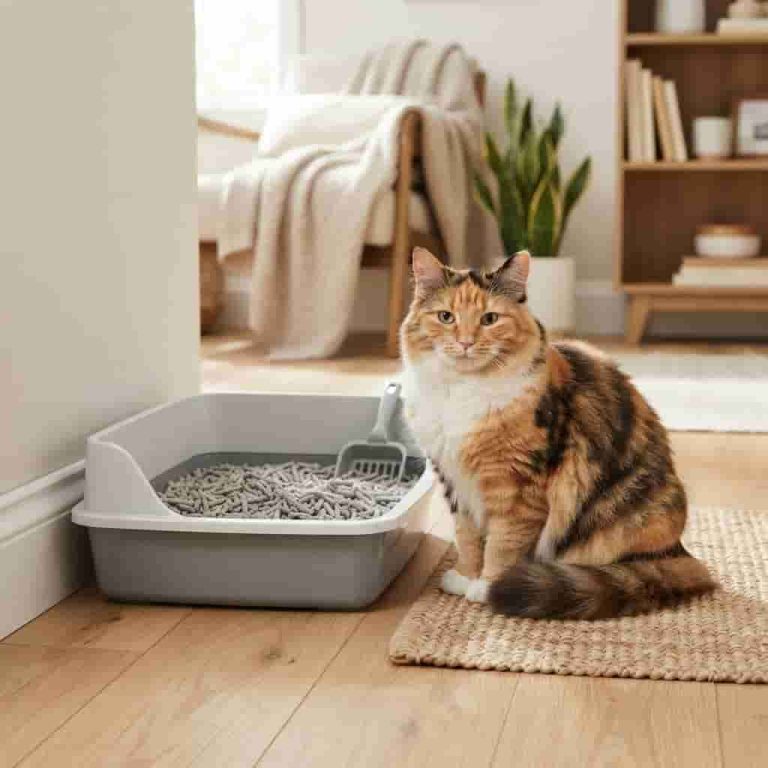
Introduce a low-sided litter tray as soon as weaning begins successfully. Use non-clumping paper pellets because babies often try to eat the litter. Keep the tray close to their sleeping nest so they find it easily.
The Importance of Professional Veterinary Guidance
Caring for orphaned cats requires regular checkups with a qualified local veterinarian. Expert medical evaluations help track development and catch hidden parasites early. According to PetMD, young strays face high risks of fleas and respiratory viruses. Early medical intervention keeps your fragile rescue cats safe and healthy.
Your veterinarian will also design a proper vaccination schedule starting at six weeks. These essential shots prevent deadly feline distemper and upper respiratory infections. Additionally, discuss flea prevention options that are safe for low body weights. Professional guidance transforms vulnerable strays into thriving adult feline companions.
Choosing a Local Animal Shelter for Help
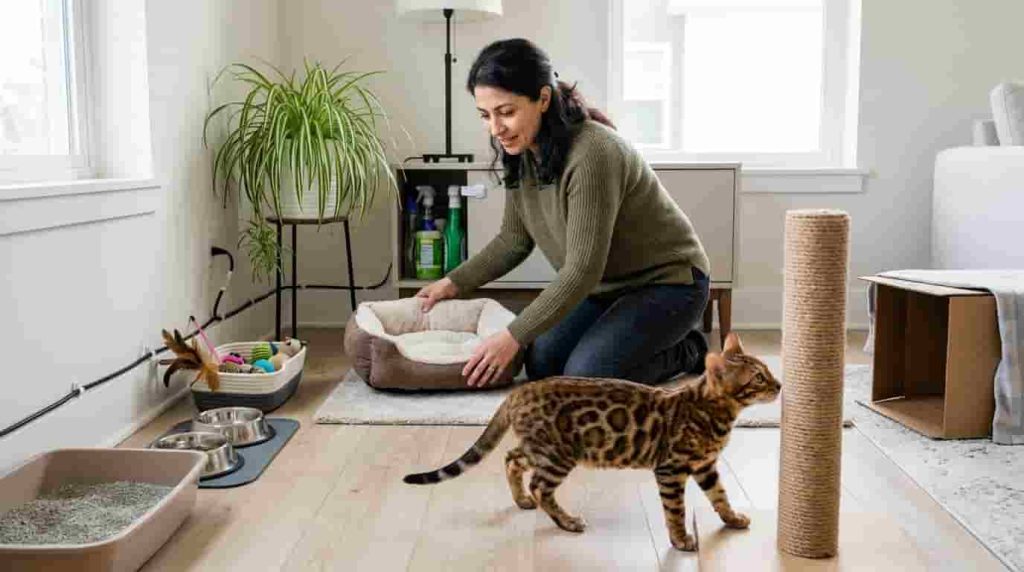
If your resources run low, a reputable stray cat shelter can provide immediate aid. Many facilities offer free formula and medical supplies to active neighborhood fosters. This vital kitten welfare support helps community members manage the financial stress of rescue. Therefore, never hesitate to call an established homeless cat sanctuary near you.
Many shelters also handle the entire screening process when the babies are ready. They ensure your fosters go to safe homes that understand feline needs. By collaborating with a shelter, you maximize the survival rate of every kitten. Together, the community reduces the population of homeless cats on the local streets.
Conclusion
Successfully raising a Cat Orphan Kitten requires immense patience, regular feedings, and deep emotional dedication. While the sleepless nights feel incredibly exhausting, watching them grow into strong adults is beautiful. Your kind actions directly protect a vulnerable life that has no other hope. Proper warmth, clean bottles, and veterinary care ensure these babies thrive long term.
Have you ever raised an abandoned baby cat in your home before? Please share your rescue stories and feeding tips in the comments below to help cats in need!
Frequently Asked Questions
Newborn babies under one week old require feeding every two to three hours around the clock. As they grow older, you can stretch the interval to every four hours safely. By the fourth week, they can go five hours between meals.
You must gently stimulate the kitten using a warm, damp cloth after every single meal. If they do not pass stool for over twenty-four hours, contact a veterinarian immediately. Mild dehydration is usually the primary cause of constipation in bottle babies.
No, regular cow milk causes severe diarrhea and fatal dehydration in young felines. You must always use a specialized feline milk replacer powder from a pet store. This product contains the exact fats and proteins their growing bodies require.
A warm baby will feel energetic, have pink skin, and sleep peacefully in the nest. If they are cold, they will cry constantly or become completely limp and unresponsive. Always check their heating pad before starting a bottle feeding session.
They can start learning to use a shallow litter box around four weeks of age. This timing matches the exact period when they begin eating solid food slurries. Always use safe, non-clumping paper litter during this early training stage.