

How Many Litter Boxes Should You Have? The 1-Plus-1 Rule Explained
Introduction:
How Many Litter Boxes Should You Have? It is a question almost every cat owner asks, whether bringing home a first kitten or managing a bustling multi-cat household. A common debate among pet parents is whether a single tray is sufficient or if having multiple litter boxes for cats is a necessity. The standard, professional recommendation used by veterinarians and feline behaviorists is the 1-plus-1 rule: you should provide one litter box per cat, plus one extra.
While this guideline serves as the ideal baseline, it is important to treat it as an adaptable starting point rather than an absolute mandate. Every home and every cat is different. Factors such as individual personality, house layout, square footage, feline mobility, and the complex social dynamics between pets can alter your optimal number of litter boxes.
In this comprehensive guide, we will break down:
- The fundamentals of the 1-plus-1 rule and how it applies to households with one to seven cats
- Whether one box is truly enough for a single cat
- The psychological and territorial reasons cats require multiple options
- Strategic litter box placement throughout your home, including multi-level layouts
- How to manage multi-cat households to prevent resource guarding
- Key indicators that your current setup needs an upgrade
- How to address persistent feline house-soiling issues
How Many Litter Boxes Should You Have?

To determine the ideal litter box per cat ratio, veterinarians rely on the standard 1-plus-1 formula. Following this math gives your household a reliable starting point:
- 1 cat: 2 litter boxes
- 2 cats: 3 litter boxes
- 3 cats: 4 litter boxes
- 4 cats: 5 litter boxes
- 5 cats: 6 litter boxes
- 6 cats: 7 litter boxes
- 7 cats: 8 litter boxes
This formula ensures that your cat toilet ratio remains balanced, reducing the likelihood of territorial disputes, hygiene issues, and stress-related elimination outside the box. However, achieving the best litter box setup requires looking beyond sheer numbers.
An extra box provides choice, security, and convenience. If one tray is currently being used, dirty, or blocked by another pet, a secondary option ensures a cat always has a safe place to go. Furthermore, quantity means very little if all trays are grouped in a single room. Proper spatial distribution across your floor plan is just as critical as the total count.
- Step 1: Count total number of cats in household.
- Step 2: Add 1 extra box to the total count ($N + 1$).
- Step 3: Distribute total boxes across separate, quiet zones in the home.
What is the Golden Rule for Litter Boxes?
The golden rule for litter boxes is simple: $N + 1$, where $N$ represents the total number of cats in the household.
The practical purpose of this guideline is to eliminate competition over essential resources. Cats are naturally territorial creatures that value personal space, clean conditions, and easy escape routes when feeling vulnerable. While some easygoing cats might tolerate fewer trays without immediate behavioral issues, others will quickly develop anxiety, leading to inappropriate elimination on carpets or furniture. Focus on your cats’ individual behaviors and stress levels rather than rigidly adhering to a single arbitrary number.
How Many Litter Boxes Do You Need for One Cat?

Is one litter box enough for one cat? While millions of single-cat owners utilize just one box without an issue, feline behaviorists generally advise providing two.
Providing a second tray offers distinct behavioral benefits. Cats naturally prefer separating their liquid and solid elimination. Having two distinct stations allows them to keep these functions separate if they choose.
Two boxes become especially beneficial in specific living conditions:
- Multi-level homes: A cat on the top floor shouldn’t have to journey to the basement when nature calls.
- Large single-story floor plans: Long distances can deter kittens, seniors, or ailing pets.
- Older or mobility-limited cats: Felines suffering from arthritis or kidney disease require quick, low-effort access to a tray.
- Cats with a history of litter box avoidance: Secondary options help break negative associations with a specific area or tray.
You do not need two identical setups. Offering different styles—such as one open tray and one high-sided option—can help you discover your pet’s precise preferences. Place these boxes in distinct, quiet rooms rather than side-by-side to maximize their practical benefit.
- Primary Location: Quiet bedroom or hallway station.
- Secondary Location: Main living space or spare room station.
- Result: Gives options for privacy, waste separation, and instant ease of access.
Why Do I Need 2 Litter Boxes for 1 Cat?
Cats appreciate clean conditions and options. If a single box becomes soiled while you are at work, a picky cat may refuse to use it a second time, choosing your living room rug instead.
Having two boxes also acts as a diagnostic tool for owners. If your cat suddenly stops using Box A in the laundry room but consistently uses Box B in the spare bedroom, you immediately learn that the laundry room environment—perhaps due to a noisy washing machine spin cycle—is causing stress.
How Many Litter Boxes for 2 Cats?

When determining the optimal number of litter boxes for two cats, the baseline recommendation is three boxes.
Two cats do not always share resources harmoniously. Feline social structures are dynamic and subtle; even cats that groom each other can experience passive competition. When only two boxes are provided, one assertive cat can easily block access to both trays simply by lounging in a hallway or doorway.
To prevent resource guarding, spread the three boxes across separate zones in your home:
- Zone 1: Bedroom placement (Box 1)
- Zone 2: Home office placement (Box 2)
- Zone 3: Guest bathroom placement (Box 3)
Pay close attention to subtle signs of tension between your two cats:
- One cat hovering near or guarding the entrance to a room containing a box
- A cat actively avoiding a specific floor or hallway
- Unexplained accidents on soft surfaces
- A cat waiting nervously for another to leave the litter area before approaching
How Many Litter Boxes for 3 Cats?
For a three-cat household, the recommended starting point is four litter boxes.
As your feline population grows, the potential for social tension increases exponentially. Three cats create complex social dynamics involving subgroup pairings, territorial boundaries, and varied routines. Spreading four litter trays across your living space ensures that every cat maintains safe, stress-free access to a toilet at any hour.
Grouping four boxes together in a single room or basement setup fails to deliver the practical benefit of the $N + 1$ rule. From a feline perspective, multiple trays lined up side-by-side count as one large litter box. If a dominant cat decides to sit in that room, access to all four trays is effectively blocked.
Distribute the four boxes across various quiet zones in your home to accommodate individual territorial preferences.
How Many Litter Boxes for 4 Cats?
Managing four cats requires five litter boxes distributed thoughtfully across your floor plan.
With four or more cats, careful environmental planning becomes essential for long-term harmony. You are no longer managing individual traits, but an entire home ecosystem.
When designing your ideal litter box count for four cats, focus on the following core factors:
- Multiple Levels: Position at least one or two trays on every occupied floor of the house.
- Room Separation: Avoid putting more than one box in any single room unless the space is exceptionally large and offers multiple entry/exit pathways.
- Quiet vs. Busy Areas: Balance convenience with peace; avoid placing trays in high-traffic zones like kitchens or entryways.
- Escape Routes: Choose open areas or trays with multiple exit options so a cornered cat never feels trapped inside or outside the box.
How Many Litter Boxes for 5 Cats?

For five cats, you should provide six litter boxes as your starting base.
Determining litter box needs for multiple cats at this scale turns maintenance into a routine daily responsibility. It can be tempting to downsize to four or five trays if certain boxes appear underutilized, but this is often a mistake.
Cats frequently shift their preferences based on household activity, time of day, seasonal temperatures, or subtle shifts in group hierarchy. A box that sits empty all morning may become a crucial escape choice during busy evening hours. Monitor usage patterns over several weeks before considering any changes to your setup.
How Many Litter Boxes for 6 or 7 Cats?
How Many Litter Boxes for 6 Cats?
For six cats, the starting recommendation is seven litter boxes.
Managing a multi-cat household of six requires active oversight of territorial dynamics and resource availability. Trays must be spread strategically across multiple rooms and living levels. In a group this large, watching for subtle signs of stress—such as rapid visits, hesitation at doorways, or tail-flicking around litter areas—helps you catch social friction before it leads to house-soiling.
How Many Litter Boxes for 7 Cats?
For seven cats, you should aim for eight litter boxes.
Providing eight separate stations can stretch the spatial limits of a typical home. If space limitations prevent you from setting up eight distinct locations, you must compensate with exceptional maintenance:
- Scoop all trays twice daily.
- Use larger, open-style containers to increase physical space.
- Choose high-performance, low-dust clumping litter.
- Keep sightlines clear around every box location.
If persistent elimination issues happen in a group of seven, the culprit is rarely just a shortage of boxes—it often points to underlying social friction, territorial stress, or health issues that require direct attention.
Why Is the 1-Plus-1 Rule Helpful for Multi-Cat Homes?

The core strength of the $N + 1$ rule is that it mitigates competition before behavior problems begin:
- Eliminates Competition: Reduces waiting time and territorial tension over limited resources.
- Provides Clean Alternatives: Gives cats hygienic options when one box is soiled or occupied.
- Prevents Territorial Guarding: Stops aggressive cats from blocking access to all litter trays simultaneously.
- Supports Individual Preferences: Accommodates individual preferences for locations, box styles, or litter types.
The goal of this strategy is not to assign exclusive, personal boxes to specific cats. Rather, it ensures that every feline has continuous, safe access to a clean toilet without needing to confront or bypass a rival housemate.
However, sheer numbers cannot compensate for poor placement. Five boxes grouped together in a dark, noisy basement closet still function as a single, high-stress location to your pets.
Does Each Cat Need Its Own Litter Box?
No, cats do not naturally claim personal, exclusive ownership over a single litter box.
Most cats in a stable group will happily share available boxes, provided those boxes are clean, accessible, and free from territorial conflict. The critical factor is overall availability and distribution—ensuring any cat can find an open, safe tray at any given moment.
Where Should You Put Litter Boxes?
Proper placement is just as critical as maintaining an optimal number of litter boxes. The ideal location balances privacy, ease of access, and safety.
Cats naturally seek out calm, low-traffic areas where they can toilet without unexpected interruptions. However, “private” should not mean “isolated” or “trapped.” A cat cornered in a dead-end closet by a dog or another cat will quickly build a negative association with that space and seek alternative locations, like your living room carpet.
- Poor Placement Example: Dead-end corners, spaces near loud washing machines, or rooms with a single entry point where cats feel trapped.
- Ideal Placement Example: Quiet spare rooms with clear sightlines and multiple open exit paths where cats feel secure.
Where Should You Not Put a Litter Box?
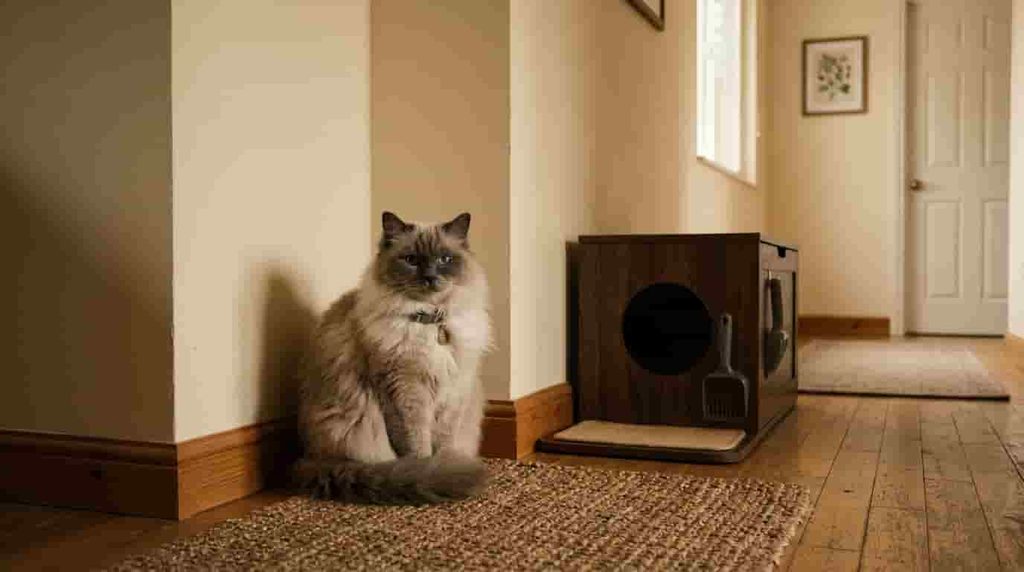
Avoid placing litter boxes in the following spaces:
- Next to noisy appliances: Washing machines, dryers, or furnaces that clank or start unexpectedly.
- High-traffic hallways: Entryways, busy corridors, or near kids’ play areas.
- Tight, dead-end corners: Spots with zero escape options if another pet approaches.
- Inaccessible areas: Behind heavy doors that might accidentally swing shut.
- Near feeding zones: Cats instinctively refuse to eliminate near their food and water bowls.
- Dog-accessible spaces: Areas where a dog can harass, trap, or disturb the cat.
Convenience for the human should never override safety and comfort for the cat.
Should Litter Boxes Be Placed Next to Each Other?
Placing litter boxes directly next to each other is a frequent setup mistake.
When two or three trays are lined up side-by-side, your cats view them as one giant litter box. If an intimidating cat sits near that bank of trays, all of them become unavailable to timid housemates. Always space your trays out across different areas or rooms to offer distinct, independent options.
How Many Litter Boxes Should You Have in a Multi-Level Home?
In multi-story houses, vertical layout is just as important as total square footage. You should place at least one accessible litter box on every active level of your home.
Cats frequently restrict their daily movement to specific floors based on territorial comfort, age, or household noise. Forcing a senior cat with stiff joints to navigate two flights of carpeted stairs to reach a single basement box is a direct recipe for house-soiling accidents.
- Upper Floor (Bedrooms & Office): Place Box 1 in a spare bedroom closet.
- Main Floor (Kitchen & Living Area): Place Box 2 in a quiet corner of the study.
- Lower Level (Rec Room & Basement): Place Box 3 in the guest bath and Box 4 in utility storage.
Consider a practical real-world scenario: A three-cat household living in a two-story home with a basement requires four boxes under the $N+1$ rule. Rather than lining all four up in the basement laundry room, a far superior layout places one box on the upper floor, two on the main floor in distinct areas, and one in the basement.
What Makes a Good Litter Box Setup?
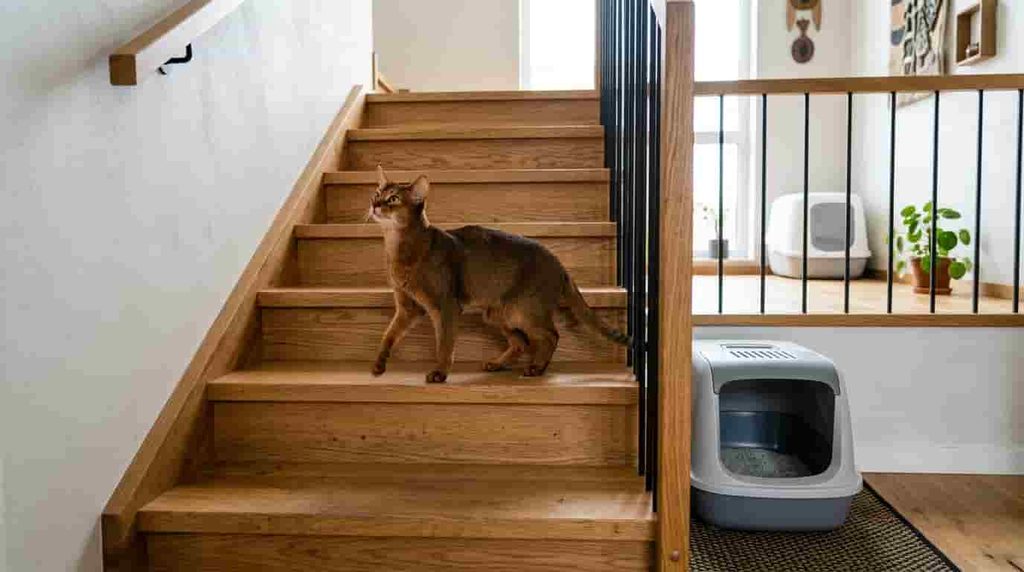
Box count is only one element of a successful feline sanitation plan. An ideal setup requires careful attention to physical container design and maintenance habits:
- Container Size: The box should be at least 1.5 times the length of your cat from nose to the base of the tail. Large storage totes with entry holes cut into the sides make excellent, cost-effective options.
- Entry Height: Ensure low-entry sides for kittens, seniors, or cats with joint pain.
- Uncovered vs. Covered: Most cats prefer uncovered boxes because they offer clear sightlines and superior odor ventilation. Covered boxes can trap dust, concentrate smells, and make cats feel cornered.
- Litter Type: Unscented, fine-grained clumping clay litters closely resemble natural sand and are preferred by the vast majority of cats.
- Litter Depth: Maintain a depth of 2 to 3 inches—too deep can feel unstable underfoot, while too shallow makes scooping difficult.
How Often Should Litter Boxes Be Cleaned?
Maintaining a clean litter tray is vital to preventing house-soiling issues. Scoop every litter box at least once to twice daily.
In multi-cat households, trays accumulate waste rapidly. A dirty box causes stress, forces cats to hold their urine, and drives them to seek cleaner surfaces like rugs, bath mats, or furniture. Perform a complete litter dump, box scrub (using mild, unscented dish soap), and refill with fresh litter every two to four weeks for clumping litters, or weekly for non-clumping varieties.
How Do You Know If You Need More Litter Boxes?
Your cat’s daily habits will show you whether your current setup is working. Clear indicators that you need to add more boxes include:
- Urinating or defecating within a few feet of an existing box
- Seeking out soft household surfaces like bath mats, rugs, laundry piles, or furniture
- Hovering near a box, vocalizing, or hesitating before stepping inside
- One cat actively blocking or ambushing another near litter locations
- Sudden avoidance of a box that was previously used without issue
When house-soiling issues emerge, it is critical to evaluate medical factors alongside environmental setup. For a complete guide on diagnosing house-soiling behavior, read our comprehensive article on Why Is My Cat Peeing Outside the Litter Box? Causes and Solutions
What If Your Cat Still Avoids the Litter Box?

If you have implemented the $N + 1$ rule and spread clean boxes throughout your home, yet elimination issues persist, the count itself is likely not the primary trigger.
Common alternative causes of persistent avoidance include:
- Medical Discomfort: Urinary tract infections (UTIs), feline lower urinary tract disease (FLUTD), bladder stones, or arthritis pain during stepping into the box.
- Substrate Aversion: Dislike of artificial fragrances, sharp crystal litters, or dusty pine pellets.
- Negative Associations: Being startled by a loud appliance or frightened by another pet while using the box.
- Container Dislike: Trays that are too small, covered hoods that trap smells, or high entry walls.
When a cat develops a strong aversion to its tray, adding extra boxes with identical litter rarely resolves the issue. To understand how to reverse this behavior, consult our detailed walkthrough on Why Does My Cat Suddenly Hate the Litter Box? Causes and Solutions
What If My Cat Pees on the Bed Instead?
Urinating on elevated, soft surfaces like duvet covers or mattresses often points to severe stress, territorial insecurity, or acute physical pain.
Elevated surfaces offer vulnerable cats high vantage points where they can survey their surroundings while eliminating, far away from potential floor-level threats or aggressive housemates. Beds also hold high concentrations of your scent, which provides comforting reassurance to a stressed pet.
Because bed-soiling requires targeted environmental intervention, review our dedicated resource on Why Does My Cat Pee on My Bed? Causes and How to Stop It for a step-by-step resolution plan.
What If My Cat Poops Outside the Litter Box?
Inappropriate defecation (often referred to as middening when used as territorial marking) requires a distinct evaluation approach from inappropriate urination.
While urine accidents frequently point to medical conditions like UTIs or FLUTD, stool left outside the box is often tied to:
- Constipation, diarrhea, or anal gland discomfort
- A box that already contains urine clumps, leaving no clean space for defecation
- Strong preference for a specific floor texture (e.g., tile or smooth wood)
- Environmental changes or anxiety triggered by new animals or visitors
If your cat consistently deposits stool on your floors despite maintaining adequate box numbers, consult our guide on Why Does My Cat Poop on the Floor? Causes and How to Stop It
to identify behavioral and digestive fixes.
Common Litter Box Mistakes to Avoid
| Mistake | Why It Causes Problems | Feline-Friendly Solution |
| Clustering Boxes | Grouping all trays in one room makes them function as a single resource, allowing dominant cats to block access. | Spread boxes across separate rooms and different levels of your home. |
| Prioritizing Human Convenience | Tucking trays into dark, noisy utility closets or distant basements makes them inconvenient or scary for cats to access. | Choose quiet, accessible living spaces with clear sightlines. |
| Delaying Daily Scooping | Expecting cats to reuse heavily soiled litter leads directly to box aversion and carpet accidents. | Establish a routine to scoop every box 1–2 times daily. |
| Abrupt Litter Changes | Switching litter brands, textures, or scents overnight can startle sensitive cats into avoiding the box. | Transition new litter gradually over 7–10 days by mixing it into the old brand. |
| Using Heavily Scented Litters | Artificial floral fragrances mask odors for humans but irritate sensitive feline respiratory systems and noses. | Stick strictly to unscented clumping litters that absorb moisture naturally. |
| Assuming Every Accident Needs a Box | Adding more trays will not fix underlying medical pain, UTIs, or severe inter-cat aggression. | Rule out medical causes with a vet visit before buying extra trays. |
How to Manage Multiple Litter Boxes Without Feeling Overwhelmed

Maintaining several litter boxes for cats does not have to eat up your entire day. Establishing a structured daily workflow keeps your home fresh and manageable:
- Keep Supplies Stationed at Every Zone: Place a scoop, a small covered waste caddy, and a box of litter near every major litter box location rather than lugging supplies across the house.
- Scoop at Fixed Times: Tie scooping to existing daily habits—such as once in the morning while your coffee brews and once in the evening after dinner.
- Use High-Quality Litter Mats: Position wide, double-layer honeycomb litter mats under every tray to trap loose granules before they track across your floors.
- Monitor Habits During Cleaning: Use your daily scoop routine as a health check. Note abnormal urine clump sizes, unusually hard stool, or trays that go completely unused over several days.
A Practical Litter Box Number Guide
Use this quick-reference table to identify the standard starting point for maintaining an optimal litter box per cat ratio in your home:
| Number of Cats | Starting Number of Litter Boxes | Recommended Spatial Distribution |
| 1 Cat | 2 Boxes | 2 separate rooms or 1 per floor |
| 2 Cats | 3 Boxes | 2 distinct living areas + 1 quiet spare room |
| 3 Cats | 4 Boxes | Distributed across at least 2 separate floors |
| 4 Cats | 5 Boxes | Spread across all active living zones and levels |
| 5 Cats | 6 Boxes | Multiple rooms per floor with varied open entry points |
| 6 Cats | 7 Boxes | Comprehensive coverage; double stations in large living spaces |
| 7 Cats | 8 Boxes | Extensive home coverage coupled with twice-daily scooping |
Note: Adjust these starting numbers based on home layout, feline health, mobility limitations, and social dynamics between pets.
A Realistic Hypothetical Example: Three Cats, Four Boxes
To visualize how the 1-plus-1 rule operates in a real household, consider this practical scenario:
The Household: Sarah lives in a two-story home with three cats: Oliver (an assertive 4-year-old), Maya (a shy 6-year-old), and Leo (an 11-year-old senior with mild arthritis).
The Initial Setup: Sarah originally kept two litter boxes placed side-by-side in her basement laundry room.
The Problem: Oliver began lounging at the top of the basement stairs, casually watching the hallway. Maya felt intimidated passing him and started urinating on the upstairs guest bedroom rug. Meanwhile, senior Leo struggled with the steep basement stairs and began defecating on the hallway hardwood.
The Solution: Sarah applied the $N + 1$ rule and upgraded her setup to four boxes spread across her home:
- Box 1 (Main Floor): A low-entry, open tray placed in the quiet study for senior Leo.
- Box 2 (Upper Floor): An open box situated in the guest bedroom where Maya feels secure.
- Box 3 (Upper Floor): A secondary tray placed in the master bathroom.
- Box 4 (Basement): A clean tray kept in the original laundry area for Oliver.
The Outcome: Oliver could no longer block access to every tray from a single spot. Maya stopped soilings on the bedroom rug, and Leo easily used the low-entry main-floor box without navigating the stairs.
When Litter Box Problems May Need Veterinary Attention
Inappropriate elimination is frequently caused by underlying medical illness rather than simple misbehavior or box placement errors. Felines naturally hide physical pain, and changes in their toilet habits are often the very first warning sign.
- Straining or Frequent Trips: Repeatedly entering the box without producing urine.
- Blood in Urine: Pink, red, or dark discoloration in the litter box.
- Vocalizing While Using the Box: Crying, howling, or displaying distress while eliminating.
- Unsuccessful Attempts: Straining with zero urine output.
CRITICAL MEDICAL EMERGENCY:
A male cat that is straining, attempting to urinate repeatedly, and producing little to no urine may suffer from a life-threatening urethral blockage. This is a critical medical emergency that requires immediate veterinary care.
Frequently Asked Questions About Litter Box Quantity
How many litter boxes do you really need?
The gold standard recommendation is one litter box per cat, plus one extra ($N + 1$). For example, a single cat benefits from two boxes, while a two-cat household ideally needs three. Adjustments should be made based on your house size, layout, and cat dynamics.
Is 3 litter boxes enough for 3 cats?
Three litter boxes can work for three cats if the animals are extremely friendly with each other, live in a compact single-story home, and the trays are kept immaculately clean. However, the official behavioral recommendation calls for four boxes to reduce potential competition and stress.
How many litter boxes do I need for 4 cats?
You should aim for five litter boxes spread across different rooms and floors in your home. Ensure these boxes are placed in distinct locations rather than grouped in a single room.
Can two cats share one litter box?
While some friendly cats will physically share a single box without outward fighting, relying on one box for two cats is generally risky. It accelerates waste buildup, increases odor, and can trigger sudden territorial guarding or house-soiling accidents.
Do litter boxes need to be in separate rooms?
Yes, placing boxes in separate rooms or distinct zones is far better than lining them up together. Clustering trays causes cats to view them as a single large box, which defeats the purpose of providing extra resources.
Conclusion — Choosing the Right Number of Litter Boxes
When asking yourself, “How Many Litter Boxes Should You Have?”, remember that the 1-plus-1 rule remains your most reliable starting guide:
- 1 cat = 2 boxes
- 2 cats = 3 boxes
- 3 cats = 4 boxes
- 4 cats = 5 boxes
However, establishing a clean, comfortable environment requires balancing quantity with strategic placement, proper box sizing, unscented litters, and consistent daily scooping. Always monitor your pets’ daily routines and social interactions, making sure to consult your veterinarian immediately if you notice sudden changes in habits, signs of pain, or elimination outside the box.
How many cats live in your home, and how many litter boxes do you currently maintain? Have you found a placement strategy that keeps the peace in your house? Share your experience and tips in the comments below!