Snowshoe Cat: Personality, Price, Lifespan, Health Issues and Characteristics
Introduction:
Snowshoe Cat companions are among the most visually striking and emotionally engaging pets in the feline world. Combining the sleek elegance and pointed markings of the Siamese with the classic white paws of the American Shorthair, the Snowshoe Cat captures attention instantly. Beyond their unique coat, prospective owners are often drawn to their expressive blue eyes and dynamic personality. When researching this breed, people typically want to know what to expect regarding their personality, size, characteristics, price, lifespan, grooming needs, and long-term health concerns.
Understanding this breed requires looking past its handsome exterior. While their inverted “V” facial markings and white “boots” make them visually unmistakable, their emotional requirements and daily care needs are what truly define life with one. They are intensely social, vocal, and deeply attached to their human companions. Prospective owners must evaluate whether their household can accommodate a cat that thrives on active engagement and companionship rather than solitude.
What Is a Snowshoe Cat?

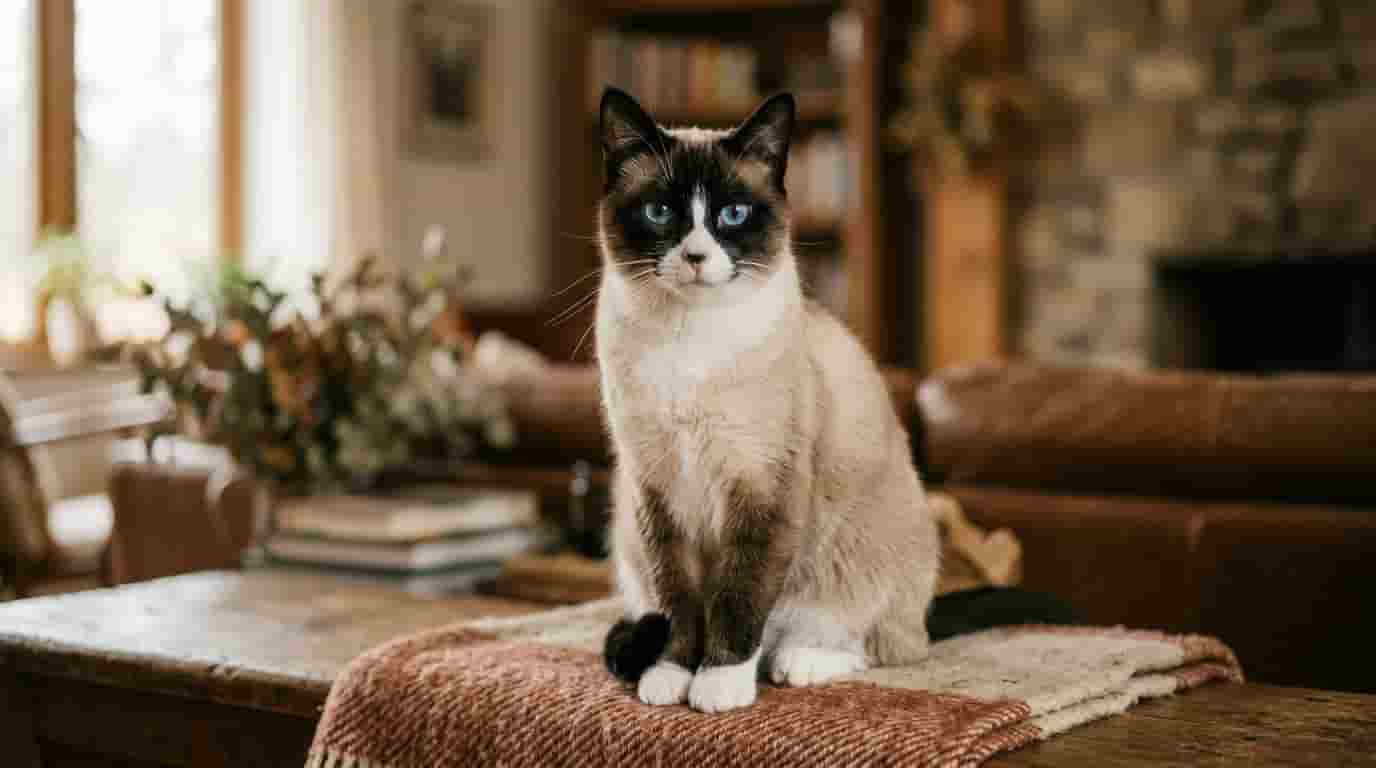
The Snowshoe Cat is a rare domestic feline breed recognized for its distinctive pointed coat, vivid blue eyes, and four bright white paws that give the impression of wearing small shoes. Originating in the United States, the breed was established by crossing Siamese cats with American Shorthairs, yielding a sturdy, medium-sized animal that balances the athletic elegance of oriental breeds with the robust build of traditional working cats.
Unlike breeds with heavy, dense undercoats, the Snowshoe possesses a single, short-to-medium coat that lies flat against the body. Their build is moderate—neither overly long like a modern Siamese nor heavy-set like a British Shorthair. Their defining hallmark is the contrast between dark point coloration on the ears, face, tail, and legs, paired with clean white markings on the muzzle and feet. Because the genetic factors governing these white patterns are complex, individual cats vary significantly in the exact placement and symmetry of their white markings.
Snowshoe Cat Origin and History

The history of the Snowshoe Cat began in the late 1960s in Philadelphia, Pennsylvania. Feline breeder Dorothy Hinds-Daugherty discovered three kittens in a Siamese litter that each possessed white feet. Intrigued by this unusual combination, she began a dedicated breeding program to preserve and stabilize the trait. She crossed these pointed cats with bicolor American Shorthairs, creating a foundation stock that possessed both the pointed coloration and the white mitted feet.
Developing the breed proved challenging. The genetics responsible for the white facial “V” mask and the white boots are controlled by recessive genes and piebald distribution factors that are notoriously difficult to predict. As a result, breeding cats that meet strict show standards remains a complex task. Over the subsequent decades, breeders worked to secure recognition from major feline registries, including the International Cat Association (TICA) and the Cat Fanciers’ Association (CFA). Today, while the breed is fully recognized, it remains relatively rare due to the difficulty of consistently producing ideal coat markings.
Snowshoe Cat Characteristics and Appearance
The appearance of a Snowshoe Cat is a study in balance. They exhibit moderate proportions in every aspect of their anatomy, avoiding extreme physical exaggerations.
What Does a Snowshoe Cat Look Like?
A standard Snowshoe features a medium-sized, semi-foreign body type that feels firm, muscular, and surprisingly heavy when lifted. The head is a modified wedge shape with rounded contours, forming an equilateral triangle where the muzzle, cheekbones, and ears align harmoniously.
- Ears: Medium to medium-large with slightly rounded tips, continuing the line of the wedge-shaped head.
- Eyes: Walnut-shaped, bright, expressive, and always a vivid shade of blue.
- Legs and Paws: Legs are medium in length with bone structure proportional to the body; paws are medium, oval, and cleanly marked with white.
- Tail: Medium-length, tapering slightly toward the tip, matching the balance of the body.
- Coat: Short to medium-short, smooth, and lying close to the body with no distinct undercoat.
Snowshoe Cat Colors and Markings
The Snowshoe pattern is defined by the contrast between its base body color, dark points, and white accent markings. Felines of this breed are born entirely white; their dark points and markings begin to develop over the first few weeks and months of life, deepening as they mature.
- Point Colors: Seal Point (dark brown), Blue Point (slate gray), Chocolate, or Lilac.
- Facial Markings: An inverted “V” shape of white covering the muzzle and extending between the eyes.
- Chest & Underbelly: Predominantly white or pale cream.
- Front Paws: White “mittens” ending at or near the wrist joint.
- Hind Paws: White “boots” extending higher up the leg, often reaching the hock joint.
Because piebald gene expression is highly variable, many pet-quality Snowshoes feature asymmetrical facial patterns or white spots that extend higher or lower than official show standards require. These variations do not affect the cat’s health or temperament.
Snowshoe Cat Size and Weight
Snowshoes are medium to medium-large felines. Males are generally noticeably larger and heavier than females, displaying broader chests and firmer muscle tone.
- Male Weight: 9 to 13 pounds (4.0 to 5.9 kg)
- Female Weight: 7 to 10 pounds (3.1 to 4.5 kg)
- Height: 8 to 11 inches at the shoulder
- Overall Build: Athletic and firm; weight should reflect solid muscle rather than excess body fat.
Veterinarians evaluate a Snowshoe’s health using a body condition score rather than relying solely on scale weight. Because they possess a firm build inherited from the American Shorthair lineage, a healthy cat should have a discernible waist line when viewed from above and a slight abdominal tuck.
Snowshoe Cat Personality and Temperament
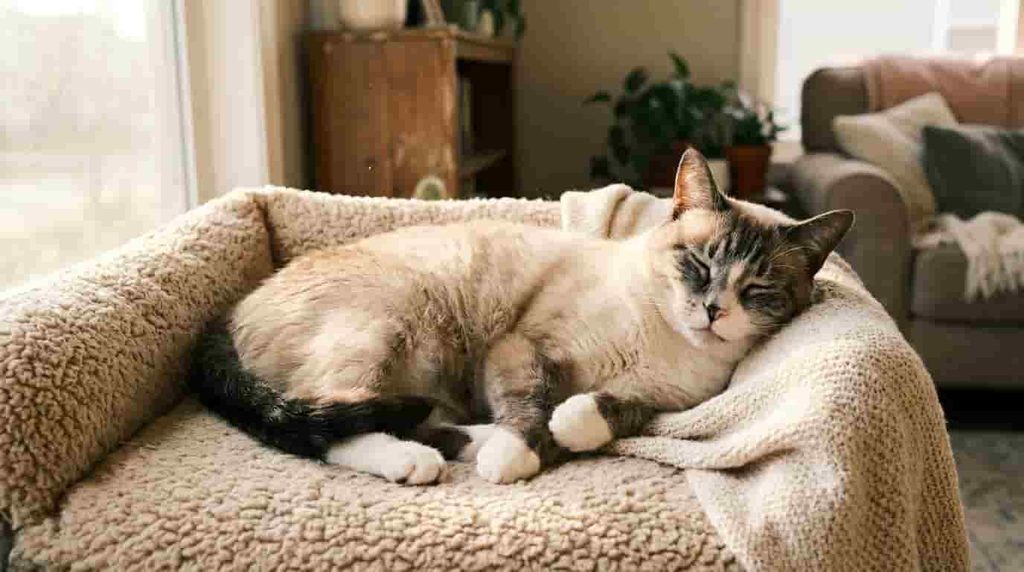
The personality of the Snowshoe Cat is one of its most compelling attributes. Known for their human-centric behavior, these cats form deep, enduring bonds with their households.
Are Snowshoe Cats Affectionate?
Snowshoes are extraordinarily affectionate, often seeking constant proximity to their chosen humans. They are classic “lap cats,” though their affection is dynamic rather than passive. They prefer to participate directly in daily household routines—following owners from room to room, sitting on keyboards during work hours, or curling up beside their owners at night.
Many individual Snowshoes select a “primary” person within a household with whom they establish an exceptionally tight bond, though they remain warm and welcoming toward other family members. They do not tolerate prolonged isolation well; cats left alone for extended daily periods can develop anxiety or destructive habits.
Are Snowshoe Cats Vocal?
Inheriting traits from their Siamese ancestors, Snowshoes are communicative, though their voices are softer, melodier, and less harsh than the traditional Siamese “meow.”
They use a broad range of vocalizations—soft chirps, trills, purrs, and gentle meows—to express their feelings, demand mealtime service, or greet their humans at the door. Owners can easily distinguish between a casual “hello” trill and a demand for attention. A sudden shift toward continuous, high-pitched, or distressed vocalization should be evaluated by a veterinarian, as it may signal pain, stress, or underlying medical issues.
Are Snowshoe Cats Good Family Cats?
Snowshoes excel in active family environments due to their tolerant, confident nature. They generally enjoy the attention that comes with a busy household, provided children are taught how to handle pets respectfully.
Because they are patient and rarely aggressive, they adapt well to child-led play, provided they have escape routes and elevated resting spaces where they can retreat if feeling overwhelmed. As with any feline, early socialization and adult supervision during interactions with young children are essential for long-term safety and comfort.
Do Snowshoe Cats Get Along With Other Pets?
Snowshoes are socially oriented cats that typically thrive in multi-pet homes. They frequently build strong bonds with other cats and live harmoniously with cat-friendly dogs.
To ensure successful integration with other animals:
- Provide Separate Spaces: Initially confine new pets to a quiet room with their own resources (litter box, food, water).
- Scent Exchange: Swap bedding between animals before physical introductions take place.
- Controlled Visual Contact: Use baby gates or slightly opened doors to allow pets to see each other safely.
- Gradual Physical Meetings: Facilitate short, supervised sessions, rewarding calm behavior with treats.
- Resource Abundance: Maintain multiple litter boxes and feeding stations across the home to prevent territorial friction.
Snowshoe Cat Intelligence, Activity and Behavior
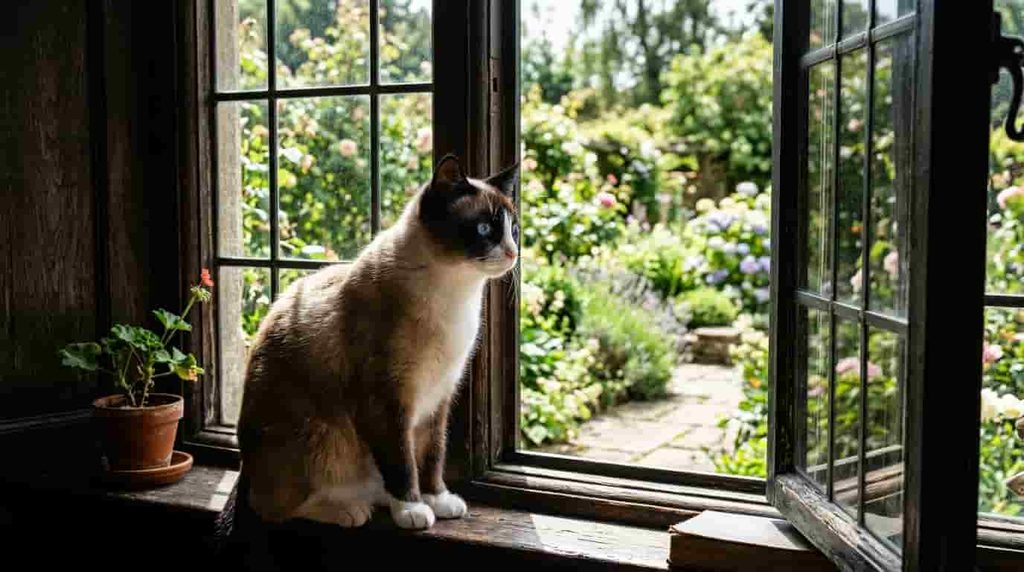
Snowshoes are bright, curious, and energetic animals that require mental and physical engagement to remain balanced.
Are Snowshoe Cats Playful?
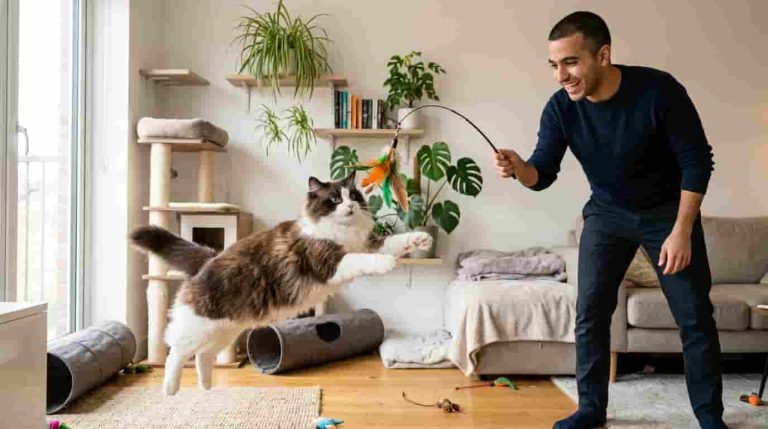
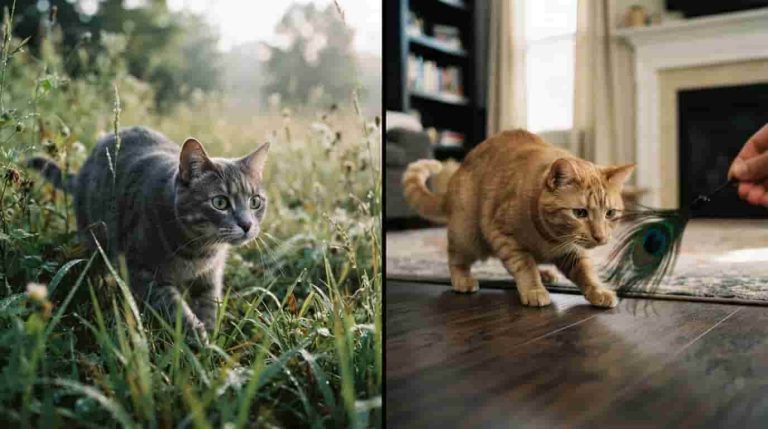
Playfulness remains a defining trait of the Snowshoe throughout its life, extending well into its senior years. They enjoy interactive games that simulate hunting behaviors, such as chasing feather wands, retrieving thrown toys, or tracking moving laser points (which should always end on a tangible toy or treat to prevent frustration).
Regular daily play sessions lasting 15 to 20 minutes help burn off excess energy, reduce stress, and maintain healthy joint mobility and body condition.
Do Snowshoe Cats Need Mental Stimulation?
Due to their sharp intelligence, Snowshoes require environmental enrichment. A bored Snowshoe will invent its own entertainment, which may involve opening cabinet doors, knocking objects off counters, or manipulating door handles.
To keep their minds active, provide:
- Puzzle Feeders: Treat mazes or foraging mats that make mealtimes mentally engaging.
- Vertical Space: Multi-level cat trees, wall shelves, and window perches that allow them to monitor their environment.
- Toy Rotation: Changing available toys weekly to maintain novelty and curiosity.
- Trick Training: Teaching simple commands (such as “sit,” “high five,” or fetch) using positive reinforcement and treats.
Common Snowshoe Cat Behaviors
A unique trait seen in many Snowshoes is a fascination with running water. It is common for them to swat at dripping faucets, splash around in water bowls, or inspect the bathtub after a shower.
Additionally, they are known for their perching preferences. Inheriting a preference for elevated viewpoints, they frequently seek out high vantage points like the tops of refrigerators, bookcases, or high shelving. They also display strong “shadowing” behavior, trailing owners closely around the house to observe chores, cooking, and daily tasks.
Snowshoe Cat Care and Grooming
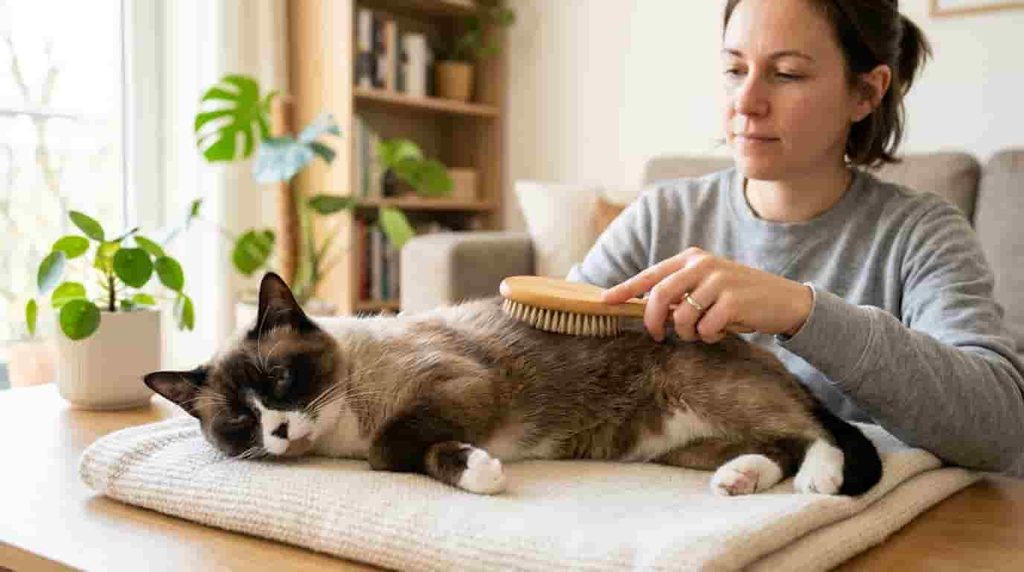
Maintaining a Snowshoe Cat is straightforward due to their short, low-maintenance coat, but consistent basic care is essential for overall health.
How Much Grooming Does a Snowshoe Cat Need?
Snowshoes possess a smooth coat without a dense, woolly undercoat, making grooming relatively simple compared to longhaired breeds.
- Coat Brushing: Once or twice a week with a rubber curry brush or soft slicker brush removes loose hair, distributes natural skin oils, and minimizes hairballs.
- Nail Trimming: Trim claw tips every two to three weeks using cat-specific clippers to prevent snagging and scratching.
- Ear Care: Inspect ears weekly for dirt, redness, or dark wax buildup. Clean as needed with a vet-approved ear solution on a cotton ball (never insert swabs into the ear canal).
- Dental Hygiene: Brush teeth several times a week using feline-safe toothpaste to prevent periodontal disease, which is common in domestic cats.
Snowshoe Cat Bathing Needs
Snowshoe Cats rarely require formal baths. Felines are meticulous self-groomers, and their short coat resists dirt buildup under normal indoor conditions.
Bathing is generally reserved for situations where the cat has contacted greasy, sticky, or toxic substances, or if recommended by a veterinarian as part of a therapeutic treatment for skin conditions. If a bath becomes necessary, use lukewarm water and a mild, fragrance-free shampoo formulated specifically for cats.
Feeding and Weight Management
Providing appropriate nutrition tailored to the cat’s age, weight, and activity level is critical. High-quality commercial cat foods featuring named animal proteins (such as chicken, turkey, or salmon) as primary ingredients support their lean muscle build.
A combination of wet and dry food is often recommended. Wet food supplies hydration that supports kidney and urinary tract health, while high-protein dry kibble offers convenient calorie balance. Free-feeding (leaving food out constantly) should be avoided to prevent obesity. Measure daily portions carefully, divide meals into morning and evening feedings, and ensure fresh, clean water is available at all times.
Snowshoe Cat Health Issues
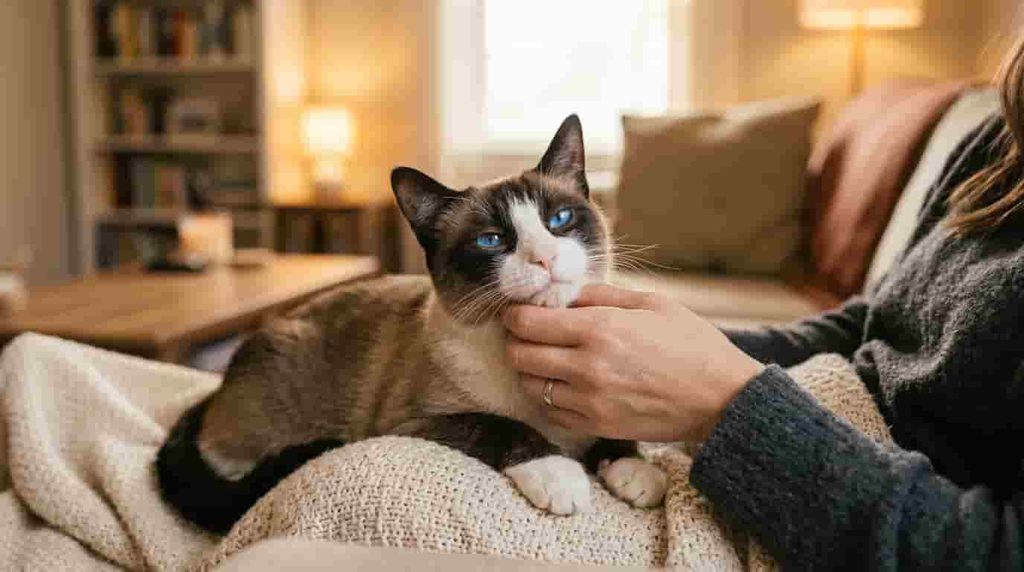
While Snowshoes are generally healthy and robust, they can inherit genetic predispositions from their ancestral Siamese and American Shorthair lines, as well as general health issues common to all domestic cats.
Common Health Concerns to Know About
Responsible breeding practices have reduced the incidence of several inherited traits, but owners should stay informed about potential conditions:
- Strabismus (Crossed Eyes): A legacy trait from early Siamese lines where the optic nerves route signals differently, causing slight eye crossing. While historically common, modern breeding has minimized this condition. It generally does not cause pain or significantly impair indoor vision.
- Kinked Tails: A benign structural irregularity in the tail vertebrae. Like strabismus, it is a cosmetic trait inherited from Siamese ancestors and causes no discomfort or functional impairment.
- Hypertrophic Cardiomyopathy (HCM): The most common primary heart disease in cats, characterized by abnormal thickening of the heart’s muscular walls. HCM can affect many breeds, making routine veterinary screening and echocardiograms (if recommended) valuable for early detection.
- Periodontal Disease: Inflammation and infection of the tissues surrounding the teeth caused by plaque buildup. Left untreated, it leads to tooth loss and potential systemic health complications affecting organ systems.
- Renal Insufficiency: Chronic kidney disease is a common health issue in aging felines across all breeds. Early signs include increased thirst, frequent urination, and weight loss.
How to Keep a Snowshoe Cat Healthy
Preventive care is key to maintaining long-term health and wellness. Owners should establish a routine that includes:
- Annual Veterinary Exams: Wellness checkups every 12 months (or every 6 months for senior cats over 10 years old) to monitor weight, blood work, and organ function.
- Core Vaccinations: Immunizations against rabies, feline panleukopenia, feline calicivirus, and feline herpesvirus as recommended by your veterinarian.
- Parasite Prevention: Year-round preventative treatment for fleas, ticks, heartworm, and intestinal parasites.
- Consistent Dental Care: Home brushing combined with professional veterinary dental cleanings when necessary.
- Indoor Lifestyle: Keeping cats indoors protects them from vehicular traffic, infectious diseases, animal attacks, and toxic substances.
When Should You Call a Veterinarian?
Prompt medical intervention can prevent minor issues from becoming critical emergencies. Contact your veterinarian immediately if you observe any of the following warning signs:
- Complete loss of appetite lasting more than 24 hours
- Straining, crying, or inability to pass urine (especially in males—a life-threatening emergency)
- Laboring, rapid, or open-mouth breathing
- Sudden weakness, collapse, or loss of coordination in the hind legs
- Persistent vomiting or severe diarrhea
- Unexplained weight loss or sudden shifts in water consumption
How Long Do Snowshoe Cats Live?
The typical lifespan of a healthy, indoor-only Snowshoe Cat ranges between 14 and 20 years. Many individuals comfortably reach their late teens when provided with high-quality nutrition, appropriate living conditions, and regular preventive veterinary care.
Several factors influence individual longevity:
- Indoor vs. Outdoor Living: Indoor cats avoid dangers like traffic, predators, infections, and toxins, allowing them to live significantly longer than outdoor cats.
- Genetic Health: Cats acquired from reputable breeders who perform health screenings on breeding stock face a lower risk of inherited genetic conditions.
- Weight Management: Maintaining an ideal body condition prevents secondary health complications such as feline diabetes, joint stress, and cardiovascular strain.
- Early Medical Intervention: Addressing health changes promptly leads to better outcomes for chronic conditions like kidney disease or cardiac issues.
How Can You Help a Snowshoe Cat Live a Long, Healthy Life?
To help your cat achieve its full lifespan potential, utilize this essential health and care checklist:
- Feed a high-protein, nutritionally balanced diet tailored to life stage.
- Measure daily food intake to prevent overweight or obese body conditions.
- Maintain at least two clean litter boxes in quiet, accessible areas.
- Schedule yearly veterinary checkups (semi-annually after age 10).
- Maintain consistent home dental care and regular health screenings.
- Provide vertical climbing structures and interactive toys for daily exercise.
- Keep the cat safely indoors, using harness walking or catio enclosures for outdoor exposure.
- Monitor daily litter box habits, appetite, and hydration levels.
How Much Does a Snowshoe Cat Cost?
The financial commitment involved in bringing a Snowshoe Cat into your home includes the initial acquisition price as well as ongoing care expenses.
Snowshoe Cat Price From a Breeder
The purchase price for a Snowshoe kitten from a reputable breeder generally ranges between $800 and $1,800 USD, though prices vary based on location, bloodline purity, and coat markings.
Key factors that influence kitten prices include:
- Symmetry of Markings: Kittens featuring balanced inverted “V” facial masks and uniform white boots meet strict show standards and command higher prices.
- Pedigree and Registration: Kittens with verified multi-generation pedigrees registered with major associations (TICA, CFA) cost more than un-registered cats.
- Veterinary Inclusions: Ethical breeders include initial vaccinations, deworming, microchipping, health guarantees, and spay/neuter procedures in their fees.
Avoid purchasing from sources offering purebred kittens at prices significantly below market rates, as this often indicates irresponsible breeding practices or lack of medical care.
Snowshoe Cats for Adoption
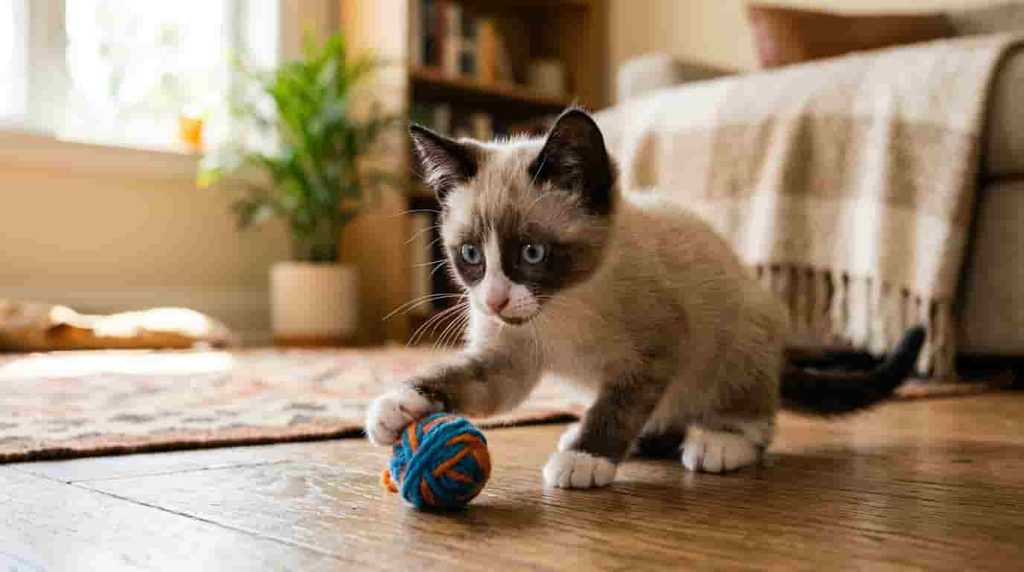
Adopting a Snowshoe through an animal shelter or breed-specific rescue organization is an excellent option. Adoption fees typically range from $100 to $300 USD.
These fees usually cover essential veterinary preparation, including:
- Complete medical assessment
- Spay or neuter surgery
- Current vaccinations and microchip installation
- Flea and parasite treatment
While purebred Snowshoes are uncommon in general shelters, domestic shorthair mixes displaying point coloration and white paws (“Snowshoe mixes”) are more frequently available.
What Does It Cost to Own a Snowshoe Cat?
Ongoing ownership expenses extend beyond the initial purchase price. Budgeting for these annual costs helps ensure your cat receives consistent care.
- High-Quality Food: $350 – $600 per year
- Cat Litter: $150 – $250 per year
- Routine Veterinary Care & Vaccines: $200 – $400 per year
- Preventative Medications (Fleas/Parasites): $120 – $200 per year
- Grooming Tools, Toys & Scratching Posts: $50 – $150 per year
- Pet Insurance (Optional): $300 – $600 per year
- Total Estimated Annual Expense: $1,170 – $2,200 per year
Is a Snowshoe Cat Rare?
Yes, the Snowshoe Cat is considered a relatively rare breed worldwide. Although they enjoy steady popularity, their availability remains limited due to the complex genetics required to produce their signature coat markings.
The primary reasons for their rarity include:
- Genetic Complexity: The preferred coat pattern relies on a delicate combination of recessive point genes and piebald white spotting genes. Even when two ideal Snowshoes are bred, predicting the exact coat patterns of their offspring remains difficult.
- Strict Show Standards: Many kittens in a litter may possess charming asymmetrical markings that fail to satisfy official breed show standards, leading to a smaller pool of recognized breeding stock.
- Small Breeder Network: Compared to widespread breeds like the Maine Coon or Persian, there are fewer active, registered Snowshoe breeders operating internationally.
Prospective owners should anticipate spending time on a breeder waitlist when searching for a pedigree kitten.
What Is Special About Snowshoe Cats?
The Snowshoe Cat stands out due to its unique blend of visual, physical, and behavioral traits:
- Striking Physical Contrast: The combination of dark points, bright white feet, an inverted facial “V”, and deep blue eyes creates an instantly recognizable appearance.
- “Dog-Like” Personality: Their preference for following family members, playing fetch, and welcoming guests earns them a reputation for loyalty similar to canine companions.
- Melodic Communication: Their voice is distinct—communicative and expressive without being overly loud or harsh.
- Water Curiosity: Unlike many domestic cats, Snowshoes often exhibit a fascination with moving water, adding a unique dynamic to daily interactions.
- Balanced Temperament: They combine the high intelligence and playfulness of Oriental breeds with the calm, stable nature of American Shorthairs.
Snowshoe Cat vs. Siamese: What Is the Difference?
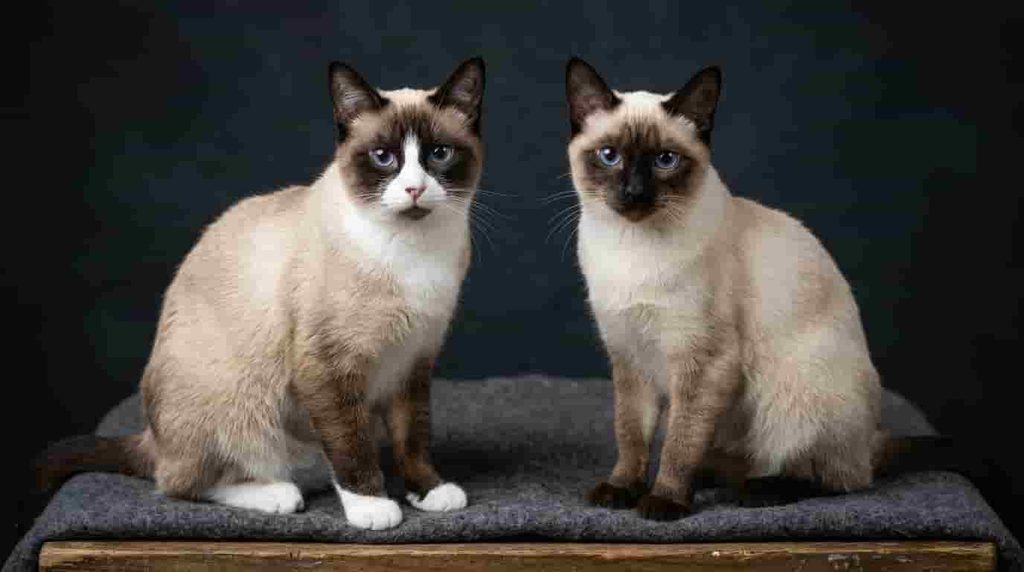
Because the Snowshoe was developed using Siamese stock, the two breeds share physical and behavioral similarities. However, key structural and visual differences set them apart.
- White Markings: Snowshoes always have white paws and a facial “V”, while Siamese cats never have white markings (points must be solid).
- Body Shape: Snowshoes feature a moderate, semi-foreign, firm build, whereas modern Siamese cats have an extremely slender, tubular, and long body.
- Head Shape: Snowshoes have a modified wedge with rounded contours, while Siamese cats display a sharp, long, angular wedge.
- Vocal Pitch: Snowshoes are soft, melodic, and moderately quiet, compared to the loud, deep, raspy, and persistent voice of the Siamese.
- Weight: Snowshoes weigh 7 to 13 pounds (heavier, solid build), while Siamese cats typically weigh 6 to 11 pounds (lighter, fine-boned).
While both breeds are intelligent, vocal, and human-attached, the Snowshoe offers a somewhat calmer vocal demeanor and a sturdier body structure. When comparing distinct feline temperaments, prospective owners often look at other domestic breeds to evaluate differences in size and care needs. For example, learning about the Ragdoll Cat: Size, Price, Personality, Colors and What Makes Them Special
helps clarify how different pointed, semi-longhaired breeds compare in physical scale and handling requirements.
Is a Snowshoe Cat Right for You?
Choosing to bring a Snowshoe into your life requires assessing how well your lifestyle matches the breed’s needs.
A Snowshoe Cat May Suit You If You Want:
- An interactive companion that actively seeks out your presence.
- A vocal, expressive cat that “talks” back in gentle tones.
- A playful, intelligent breed that can learn tricks and games.
- A short-haired cat that requires minimal grooming.
- A friendly pet that adapts well to active households and cat-friendly dogs.
Things to Consider Before Getting One
- Social Needs: They do not thrive in households where everyone is away for long stretches unless paired with another companion animal.
- Activity Demands: Their high intelligence requires regular play sessions and mental enrichment.
- Limited Availability: Finding a reputable breeder often involves travel or extended waiting lists.
- Long-Term Financial Commitment: Ensuring proper medical care, nutrition, and supplies over a 15-to-20-year lifespan requires steady budgeting.
When evaluating distinct domestic breeds and their lifestyle requirements, comparing various purebred traits is a practical next step. Reviewing resources on the Ragamuffin Cat: Personality, Price, Colors, Traits and Breed Differences
provides additional perspective on how large, affectionate, low-tendency breeds compare to the energetic Snowshoe.
Questions to Ask a Breeder or Rescue
When contacting a prospective breeder or rescue shelter, ask these key questions to evaluate kitten health and social development:
- Are the parent cats screened for common health conditions like HCM?
- Can I review the kitten’s health records, including vaccinations and deworming treatments?
- How have the kittens been socialized during their first 8 to 12 weeks of life?
- Are the kittens registered with a major feline association like TICA or CFA?
- What health guarantees and return policies do you offer in your sales contract?
Frequently Asked Questions About Snowshoe Cats
What is special about Snowshoe cats?
Snowshoe cats are known for their striking combination of Siamese-style pointed coloration, blue eyes, and bright white paws. Behaviorally, they stand out for their affectionate, human-focused personalities, often following owners around and enjoying interactive games like fetch.
Are Snowshoe cats expensive?
Initial purchase prices from registered breeders typically range from $800 to $1,800, depending on coat symmetry and pedigree. Total ownership costs include ongoing food, litter, and veterinary care expenses, which average between $1,100 and $2,200 annually.
How rare is a Snowshoe cat?
Snowshoe cats are relatively rare compared to more established breeds. The complex genetics required to produce their white paws and inverted “V” facial markings make consistent breeding difficult, leading to a small number of active breeders and occasional waitlists.
Do Snowshoe cats have health problems?
Snowshoes are generally healthy, robust cats with a long lifespan of 14 to 20 years. However, they can occasionally inherit traits like strabismus (crossed eyes), kinked tails, or feline heart conditions like HCM, making routine veterinary care essential.
Are Snowshoe cats good pets for families?
Yes, their gentle, social, and playful nature makes them well-suited for family environments. They generally get along well with children and other household pets, provided interactions are supervised and proper introductions are conducted.
Conclusion
The Snowshoe Cat is an appealing breed that brings together the handsome aesthetics of pointed markings with a friendly, deeply loyal personality. From their signature white paws and blue eyes to their soft vocalizations and dog-like devotion, these cats form lasting bonds with their households. Providing them with a safe home environment, balanced nutrition, daily mental engagement, and regular preventive veterinary care helps ensure they remain healthy and active throughout a long lifespan.
Prospective owners who can offer the time, companionship, and emotional engagement these cats thrive on will find themselves rewarded with a warm, endlessly entertaining household companion. Choosing a Snowshoe Cat means welcoming an attentive partner into your daily life for years to come.
What has your experience been with this remarkable breed? If you share your home with a Snowshoe Cat, feel free to leave a comment below describing their unique personality traits or sharing the story of how you brought them into your family!