
Cat Dehydration Tests: How to check if your cat is drinking enough
Introduction:
Cat Dehydration Tests are essential tools for every pet parent because felines naturally possess a very low thirst drive. You might rarely see your furry companion visit their water dish during the day.
Consequently, you start to wonder if they stay properly hydrated. Is your pet getting enough moisture from their daily meals alone? Alternatively, could they be quietly suffering from a hidden, dangerous fluid deficit?
Recognizing low feline hydration levels early can prevent severe stress on your pet’s internal organs. This detailed guide will walk you through easy home procedures to detect cat dehydration efficiently. You will learn exactly how to check your pet’s physical responses. Additionally, you will discover when you must seek emergency veterinary help.
Simple Home Cat Dehydration Tests for Daily Monitoring
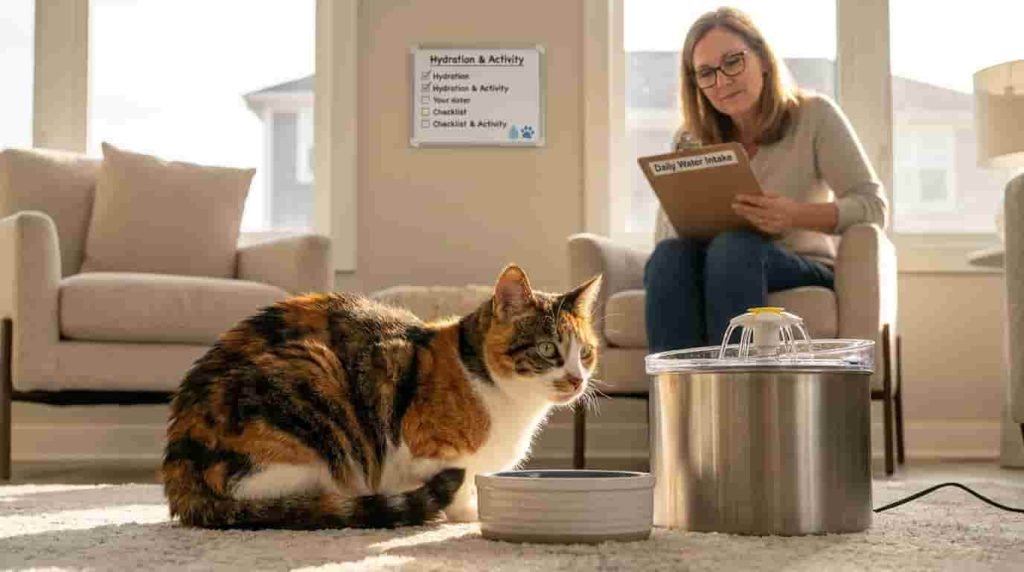
Pet parents frequently struggle when assessing cat hydration levels in a household setting. You might find it difficult to track exact water consumption in multi-pet homes. As a result, you need reliable home cat dehydration test methods to verify their health.
Checking your cat’s skin elasticity provides an excellent baseline measurement for their fluid levels. This method is often called the skin turgor test.
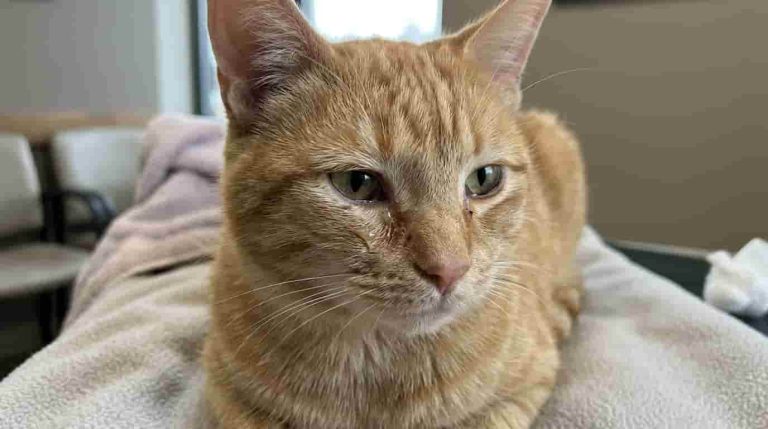
For example, my orange tabby cat Milo became very lethargic during a hot summer week. He refused to look at his standard water bowl.
I immediately pinched the loose skin between his shoulder blades to check his fluid balance. The skin stayed up like a tiny tent instead of snapping back down instantly. This clear visual indicator told me that Milo needed immediate help.
A healthy cat has highly elastic skin that snaps back in under one second. Delayed snapping indicates a moderate to severe lack of cellular moisture. Therefore, you should practice this test when your cat is completely healthy.
Furthermore, tracking daily behavior changes helps you monitor your pet’s ongoing health. You can easily catch subtle signs of cat dehydration before dangerous physical decline begins.
Easy Physical Checks You Can Perform Today

You can easily evaluate your pet’s current physical state using simple touch observations. These regular home checks require absolutely no special training or medical tools.
- The shoulder scruff test: Lift the loose skin gently to observe how quickly it flattens.
- The sticky gum test: Feel the upper gums to check for a moist texture.
- The sunken eye check: Look directly at the eyes to spot an unusually dull appearance.
- The cool paw check: Touch the pads of the feet to feel for poor circulation.
You must utilize these simple methods whenever your pet seems unusually sleepy or quiet. Early home tracking prevents minor fluid loss from turning into an expensive medical emergency.
Veterinary Tests for Dehydration and Advanced Diagnosis
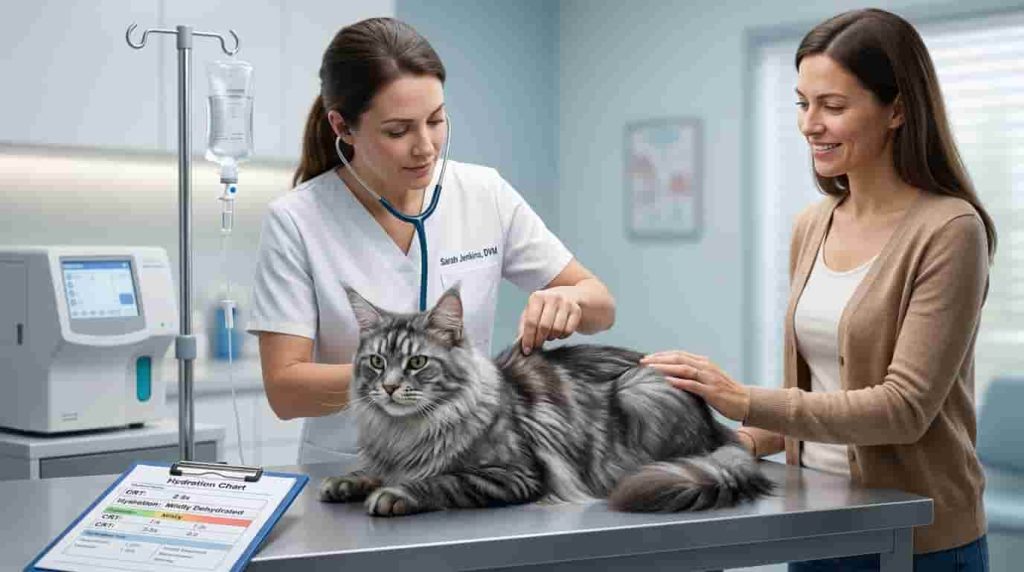
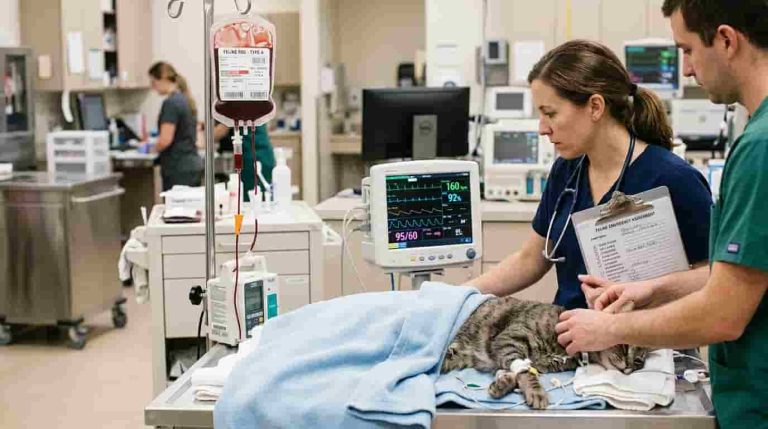
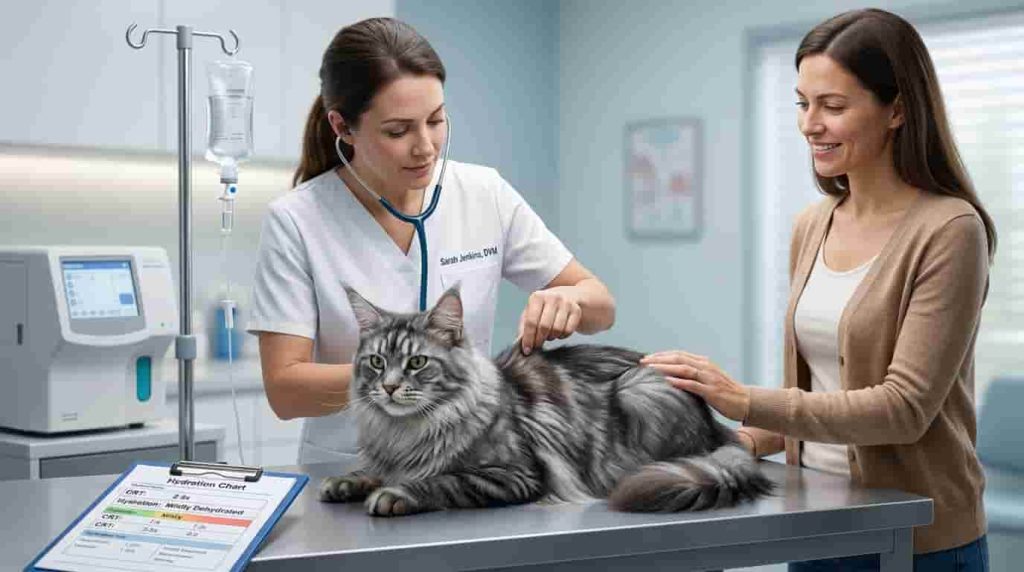
You should understand that home evaluations cannot replace official veterinary tests for dehydration. A professional clinic uses precise scientific measurements to confirm a definitive cat dehydration diagnosis.
Your veterinarian will first check your pet’s packed cell volume through a quick blood draw. This specific test measures the total percentage of red blood cells in the bloodstream.
A high cell percentage indicates concentrated, sludge-like blood caused by a lack of daily fluids. Additionally, the medical team will evaluate total protein levels in the blood serum.
The veterinary team will also perform a comprehensive urinalysis to check kidney concentration performance. Dehydrated kidneys work extra hard to conserve every single drop of fluid.
According to professional data from PetMD, a specific gravity reading helps determine exact feline fluid assessment levels. Highly concentrated urine means the body is actively starved for water. Therefore, these professional tests provide the most accurate look inside your pet’s body.
Recognizing Feline Dehydration Symptoms through Gum Health
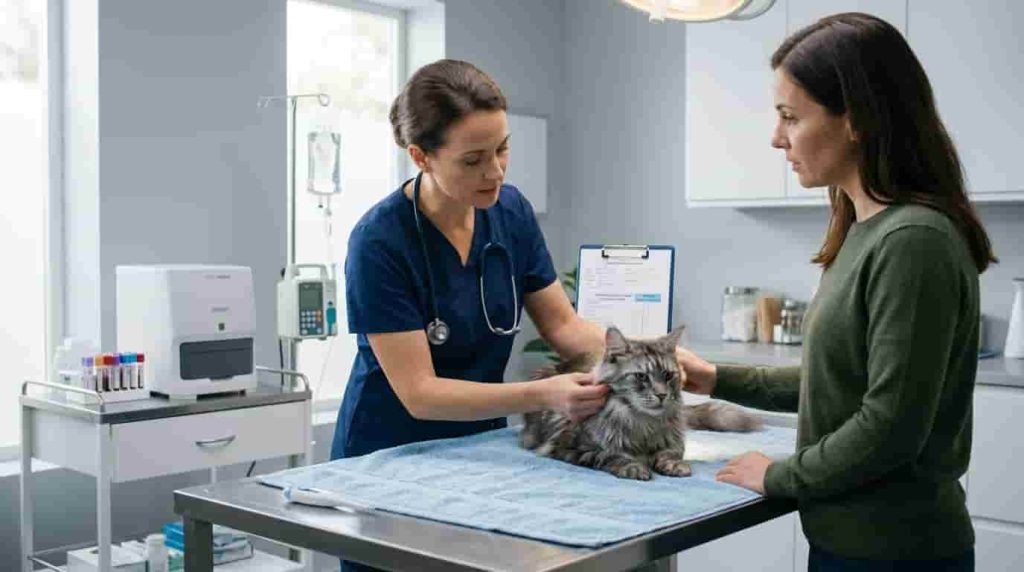
Checking your cat’s mouth provides immediate data about their current internal moisture levels. You can master this technique with just a little bit of regular practice.
First, gently lift your cat’s upper lip using your thumb while supporting their chin. The underlying tissue should normally look bright pink and feel completely slippery.
Next, press your finger firmly against the pink tissue for two seconds to stop local blood flow. The pressed spot will turn pale white temporarily before returning to pink.
Finally, time how long the color takes to change back to a normal pink shade. This recovery period is called the capillary refill time. A delay of more than two seconds confirms that you are diagnosing dehydration in cats.
Hidden Risks and Major Health Triggers
You must identify the underlying issues that cause rapid fluid loss in domestic pets. Chronic medical conditions often disrupt a pet’s normal feline water retention evaluation.
Kidney disease and feline diabetes frequently cause pets to urinate excessively throughout the day. Consequently, these animals struggle to stay hydrated even if they visit their bowls often.
You must also watch out for acute physical illnesses that drain moisture rapidly. For instance, look for sudden Cat Vomiting Causes because frequent vomiting expels crucial stomach fluids.
This problem gets much worse if your pet also experiences elevated body temperatures. Keep a close watch for obvious Cat Fever Signs like hot ears and heavy panting.
Critical Warning Sign: Persistent fluid loss combined with total food refusal will cause a kitten to crash within hours. You must implement emergency Cat First Aid protocols and call a veterinary hospital immediately.
Dangerous Behavioral Shifts to Monitor

You need to know when your pet’s behavior indicates a major medical crisis. Contact your local veterinary clinic immediately if you notice any of these serious signs:
- Your cat stands over the water bowl constantly but never actually drinks.
- The pet seems dizzy, stumbles while walking, or cannot stand up straight.
- The litter box remains completely dry for over twenty-four hours straight.
- Your cat pants with an open mouth after minimal physical movement.
Acting quickly protects your pet from irreversible kidney damage. Never wait for symptoms to disappear on their own when dealing with low fluids.
Smart Daily Habits for Checking Cat’s Water Intake

You can easily improve your pet’s health by monitoring cat’s fluid balance more closely. Knowing how to test cat’s hydration helps you manage their environment effectively.
First, look closely at the cleanliness of their water setup every single morning. Cats possess highly sensitive noses and will completely reject stale or dirty water.
Therefore, you should wash their dishes daily using mild soap and warm water. This simple chore ensures your pet always has access to fresh fluids.
Next, consider upgrading your standard dishes to an automatic circulating fountain. Many felines prefer drinking running water because instinct tells them moving water is safe.
Finally, adjust their daily diet to include more moisture-rich foods. Wet canned food contains up to seventy-eight percent water by volume. This dietary shift boosts their overall hydration levels effortlessly without changing their drinking habits.
Effective Management and Prevention Strategies
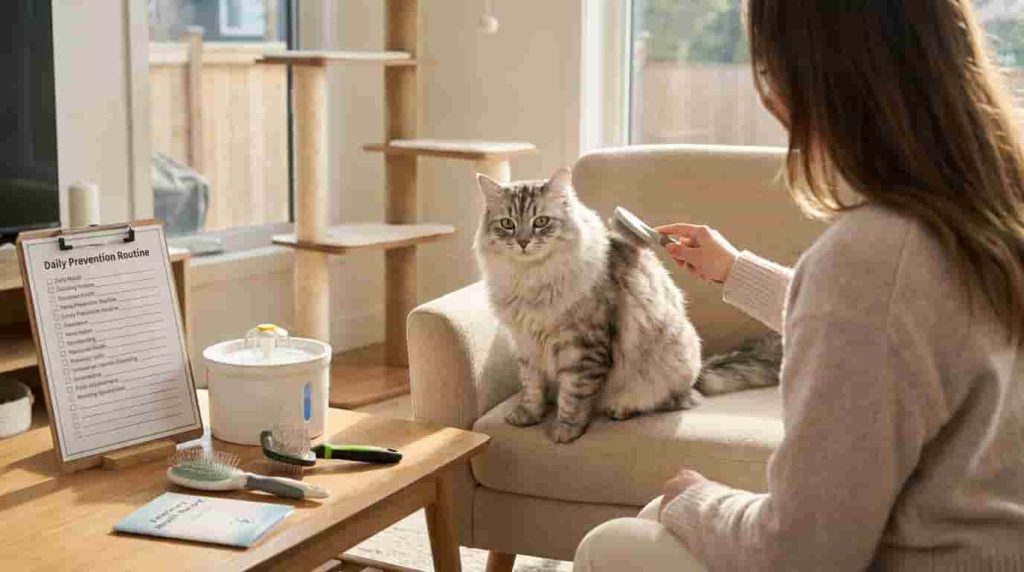
You can successfully prevent dehydration in cats symptoms by using a few creative household tricks. Proactive pet owners find unique ways to encourage daily water consumption.
Try placing multiple water stations throughout your entire home. Keep these drinking bowls far away from their litter boxes and food dishes.
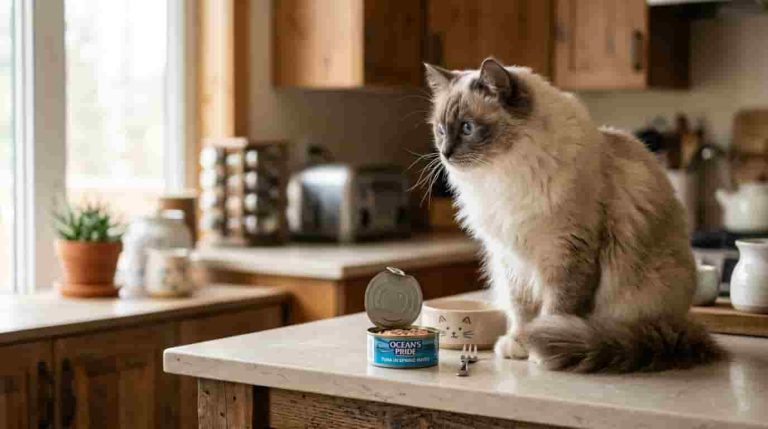
Consequently, your pet will feel much safer while drinking in different rooms. You can also add a splash of low-sodium tuna juice to their water bowl. This tasty addition creates an irresistible flavor that encourages continuous drinking.
Additionally, keep a written log of their daily litter box habits. Count how many wet clumps you scoop out of the clay every afternoon. A sudden drop in urine output means you need to perform home testing cats for dehydration immediately.
Conclusion
Using regular cat dehydration tests ensures your favorite feline companion stays healthy and active. You can easily protect your pet by checking their skin elasticity and gum moisture every week. Remember that proper hydration prevents dangerous strain on their kidneys and urinary tract.
You must act quickly if you notice a delayed skin snap or sticky gums. Always consult your veterinarian for official fluid therapy options.
Do you want to help other cat owners keep their pets hydrated? Please share your favorite tips for encouraging your cat to drink water in the comments section below.
Frequently Asked Questions
You can perform a quick skin turgor test by lifting the loose scruff between the shoulder blades. Healthy skin snaps back down instantly while dehydrated skin remains tented up in a ridge. You should also check if their gums feel wet or sticky.
A dehydrated cat will usually hide in dark rooms and show zero interest in playing. They might also walk with an unsteady gait or refuse their favorite wet foods. You will notice fewer wet clumps inside their litter box.
You should switch their main diet from dry kibble to moisture-rich canned wet food immediately. You can also place automated water fountains around the house to encourage active drinking. Adding small amounts of plain bone broth to their food also helps.
Cats evolved from desert animals and naturally conserve body fluids very efficiently. They rarely show obvious signs of thirst until they are already facing a major fluid deficit. Regular physical checks are necessary to spot the problem early.
Sudden drops usually happen due to acute illnesses like overheating or severe digestive trouble. Chronic issues like kidney failure or thyroid disease also cause steady fluid depletion. You must address the root illness to cure the dehydration permanently.