
7 Cat Behaviors Scientists Finally Understand.
Introduction:
Cat behaviors often leave pet parents feeling completely baffled by their furry friends. Why does your kitty knock glasses off the counter? Why do they zoom through the hallway at 3 a.m. for no reason?
Fortunately, researchers have spent years studying these strange feline habits. We can finally stop guessing because science now provides real answers for us. This guide will help you understand your kitty better than ever before. You will learn the hidden meanings behind the things your cat does every single day.
1. The cat Midnight Zoomies

Many owners wonder about sudden bursts of midnight energy. Your cat might sprint across the room out of nowhere. This common cat behaviors puzzle has a very simple evolutionary explanation.
Wild felines must hunt multiple times each day to survive. However, house cats get their meals served in a bowl. Therefore, they accumulate massive amounts of trapped energy throughout the day.
They use zoomies to release this extra energy quickly. According to the Cornell University College of Veterinary Medicine, indoor cats need active daily play to mimic hunting. You can reduce midnight running by playing with your cat before bed.
Understanding Cat Behavior and Predator Instincts
Feline behavior experts note that cats are naturally crepuscular creatures. This term means they are most active during dawn and dusk. Because of this biological clock, their bodies tell them to hunt while you sleep.
You can redirect this instinct by using feather wands or laser pointers. Regular evening play sessions will satisfy their predatory drive. Consequently, your cat will sleep much better through the night.
2. Knocking Things Off Tables

You might think your cat knocks your keys off the counter just to annoy you. However, decoding cat behaviors reveals a much more innocent motive. Cats actually use their paws to explore their immediate environment.
Your cat pushes objects to check if they are safe or alive. Additionally, they quickly learn that dropping items gets your attention. They see you run over to pick up the object immediately.
“Cats often use object play to practice their hunting skills.” – PetMD
This behavior simply means your pet wants to play with you. You can find more insights on this in our article about 9 Surprising Facts About How Cats Think That Explain Their Odd Behavior.
Simple Cat Behavior Solutions for Your Home
You can easily solve this annoying habit with proper cat behavior training methods. First, you should remove fragile items from your counters. Next, you can provide puzzle feeders to keep their paws busy.
Furthermore, you must ignore the cat when they knock things down. Walk away quietly so they do not get a reward. This strategy teaches them that dropping items will not earn your attention.
3. The Slow Blink

Have you ever noticed your cat staring at you and blinking very slowly? This specific cat behavior signs is actually a wonderful compliment. Scientists have studied this interaction closely to find out what it means.
A slow blink is the ultimate sign of feline love and trust. Because closing eyes around a human shows total vulnerability, it means they feel completely safe. Researchers found that cats feel happy when humans copy this slow blink back to them.
Improving Cat Communication with Your Pet
You can use this cat body language to bond deeply with your kitty. Sit quietly near your cat and mimic their slow eye movements. This silent language reduces stress and builds a strong mutual connection.
It proves that cats possess deep emotional intelligence. In fact, you can discover more about their hidden talents in our article titled 7 Cat Mental Abilities That Scientists Say Are Extraordinary.
4. Headbutting Your Legs
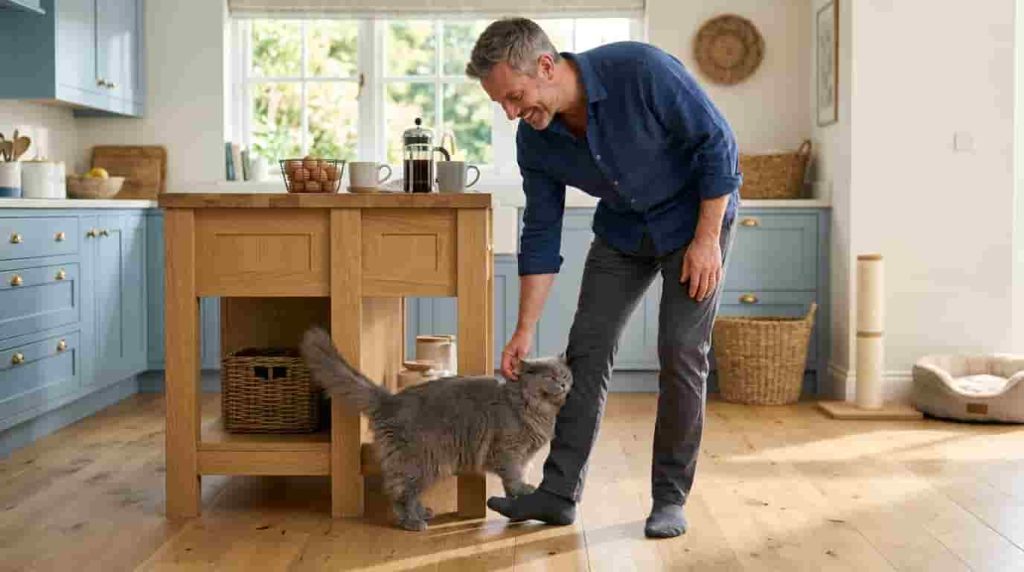
Cats frequently rub their cheeks and foreheads against your legs or face. This feline behavior is scientifically known as “bunting.” It represents a crucial part of cat communication within their daily lives.
Cats possess special scent glands located on their cheeks, lips, and foreheads. Therefore, they rub against you to leave their personal scent behind. This action marks you as a safe and familiar part of their territory.
How to Recognize Cat Behavior Cues
When your cat bunts, they are claiming you as family. This scent marking behavior helps them feel secure in their home. It also shows they view you as a source of comfort.
You should always accept these gentle headbutts with soft praise or scratches. Understanding these cues helps prevent common cat behavior problems like anxiety. It creates a peaceful environment where your cat feels truly valued.
5. Sitting inside Cardboard Boxes

You might buy an expensive bed only to watch your cat sleep in the delivery box. This funny choice highlights essential facts about understanding cat behavior. Small spaces offer a distinct survival advantage in the wild.
Boxes provide excellent safety because predators cannot sneak up from behind. Additionally, cardboard offers great insulation to keep your kitty warm. Small spaces reduce stress levels significantly for shelter animals.
Managing Cat Behavior Issues with Safe Spaces
You should keep a few empty boxes around your living space. This affordable choice provides an excellent hiding spot for a stressed kitty. It helps prevent common cat behavioral issues caused by sudden environmental changes.
For instance, a box helps them cope with loud noises or new guests. You can learn more about what your pet perceives in our article about 6 Things Your Cat Understands Better Than You Think.
6. The Sudden Tail Flick

Your cat might wag or flick its tail while you pet them. Many owners mistake this for happiness because dogs wag their tails when glad. However, this cat body language usually means something very different.
A twitching tail indicates growing irritation or overstimulation. Your cat is telling you that they need some space right now. If you ignore this warning sign, it might lead to aggressive cat behavior like scratching.
Preventing Aggressive Cat Behavior During Play
You must watch the tail closely whenever you interact with your pet. Stop petting them immediately if the tail begins to thrash. This respectful action prevents bites and keeps the interaction positive.
Additionally, you can consult sources like the ASPCA for tips on managing overstimulation. Learning to read these physical signs prevents misunderstandings between you and your pet. It ensures both of you stay happy and safe.
7. Purring When Unhappy

Most people believe that purring always signifies a completely happy cat. However, science reveals that cats also purring when they feel frightened, sick, or injured. This discovery changed how vets look at cat communication entirely.
The low frequency of a purr actually helps heal bones and muscles. Therefore, purring acts as a natural self soothing mechanism for a stressed feline. It functions much like a human child humming to feel better.
Finding Cat Behavior Solutions for Anxiety
You should check for other physical signs if your cat purrs continuously. Look at their ears and posture to ensure they feel truly relaxed. If their body seems tense, they might need a quiet room to rest.
Always visit a veterinarian if you notice sudden changes in their normal purring habits. This care ensures you catch medical problems before they turn into serious issues. Your quick action keeps your beloved pet healthy.
Conclusion
We used to view cat behaviors as completely mysterious and unpredictable. Thanks to modern science, we can now understand our pets better than ever before. We know that zoomies release energy, while slow blinks show deep love.
Paying close attention to cat body language helps you solve common cat behavior problems easily. It turns confusing habits into clear messages you can read daily. This knowledge builds a much stronger bond between you and your feline friend.
Which of these cat behaviors does your kitty show the most? Please share your funny pet stories in the comments below!
Frequently Asked Questions
Your cat follows you because they are highly curious creatures who dislike closed doors. The bathroom also contains your strong scent, which makes them feel safe. Additionally, they know they have your full attention in that small space.
Cats knead blankets because it reminds them of nursing when they were tiny kittens. This behavior releases happy hormones and helps them relax before sleeping. It means your cat feels completely safe and comfortable in that spot.
This biting happens because your cat becomes overstimulated by too much physical contact. They use a gentle nip as a clear warning sign to stop petting. You should watch their tail for twitching to avoid this problem.
You can stop this habit by placing sturdy scratching posts right next to the sofa. Use catnip to attract them to the new post instead of the couch. Additionally, trim their nails regularly to reduce the urge to scratch.
Yes, scientists have proven that cats recognize the unique sound of their names. They often choose to ignore you because they do not feel like responding. However, you can train them to come using delicious treats.