Cat Staring Secrets: Why your cat watches you while you sleep.
Introduction:
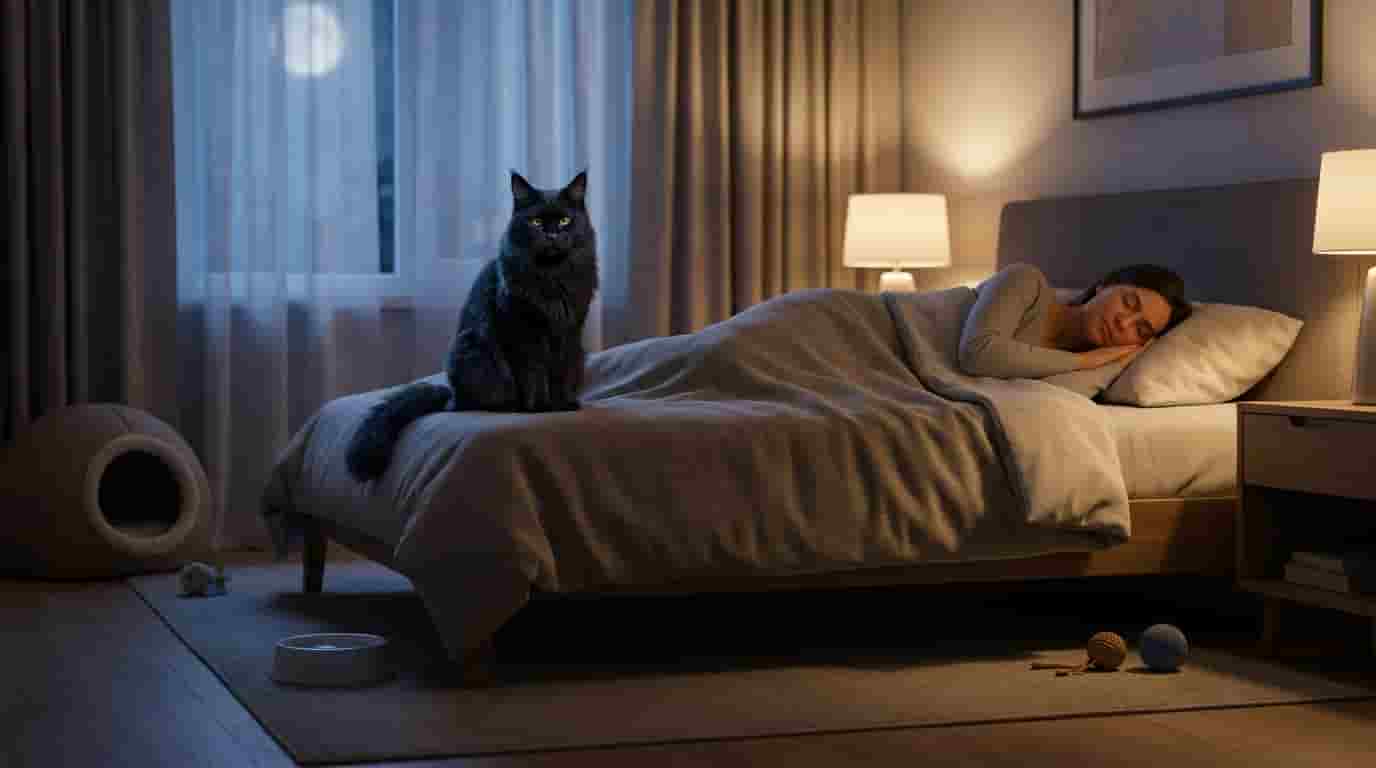
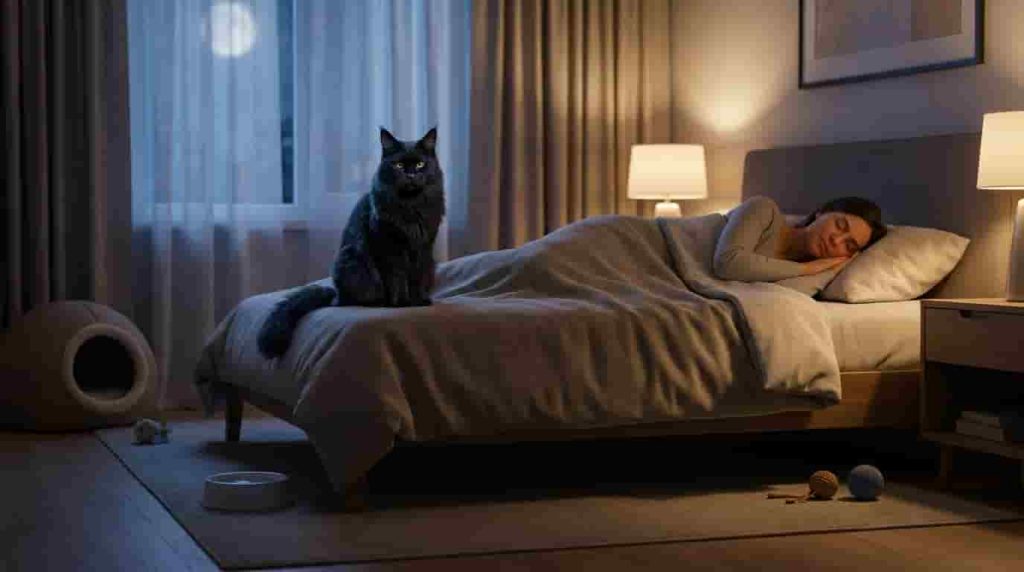
Cat Staring Secrets reveal the mysterious reasons behind your feline companion’s intense midnight gaze. You might wake up at 3 AM and feel a sudden, creepy sensation that someone is watching you. Then, you turn your head slowly only to find your pet sitting completely still right next to your pillow. They fix their unblinking eyes onto your face with an incredibly deep, unwavering intensity that puzzles many owners. Fortunately, you can unlock these cat behavior secrets easily by studying how felines communicate using subtle facial movements.
Understanding why do cats stare at you helps you strengthen the emotional bond within your household safely. Most amateur pet parents assume that a fixed look always signals an impending attack or hidden irritation. However, specialized animal behaviorists view these steady glazes as highly complex tools for daily social interaction. This detailed guide will walk you through the fascinating world of feline ocular communication step by step. Let us discover the exact science behind these mysterious looking habits right now together.
Observing your pet’s steady gaze allows you to identify subtle shifts in their daily moods quite easily. You might also notice intense behavioral changes when they interact with other animals inside your home space. If your felines lick each other frequently before fighting, read our helpful guide on Cat Grooming Others to understand communal cleaning. Reviewing diverse feline habits allows you to build a highly peaceful and completely stress free home environment. Now, let us dive deep into the specific mechanics of these unblinking looks.
The Biological Reasons behind Cat Staring Secrets Explained
The core evolutionary driver behind Cat Grooming Others or Cat Staring Secrets involves basic survival instincts. Felines are natural predators, meaning their eyes possess a remarkably high density of motion detecting rod cells. Therefore, they watch you while you sleep because your slow, rhythmic breathing movements captivate their hunting brain. They also view your resting body as a highly stable source of warmth and absolute safety. Consequently, they position themselves close to your face to guard you from potential dangers throughout the night.
Additionally, your pet uses their impressive vision to monitor subtle changes within their surrounding domestic territory. They can detect microscopic dust particles drifting through a beam of moonlight while you rest peacefully. This incredible visual focus explains why do cats stare at empty walls for long periods without moving. They are simply tracking tiny bugs or distant sounds that human senses cannot pick up. Therefore, a fixed gaze usually indicates high alertness rather than a hidden behavioral problem.
If your pet appears highly agitated while looking at you, evaluate their current home setup carefully. You can identify hidden environmental stressors by reviewing our comprehensive list on Cat Anxiety Triggers in modern apartments. Eliminating these stressful environmental factors helps your feline relax completely, which reduces tense or anxious looking habits. Providing a completely secure sanctuary space allows your pet to display normal, happy looking behaviors every day.
How to Decode Your Cat’s Stare Using Body Language
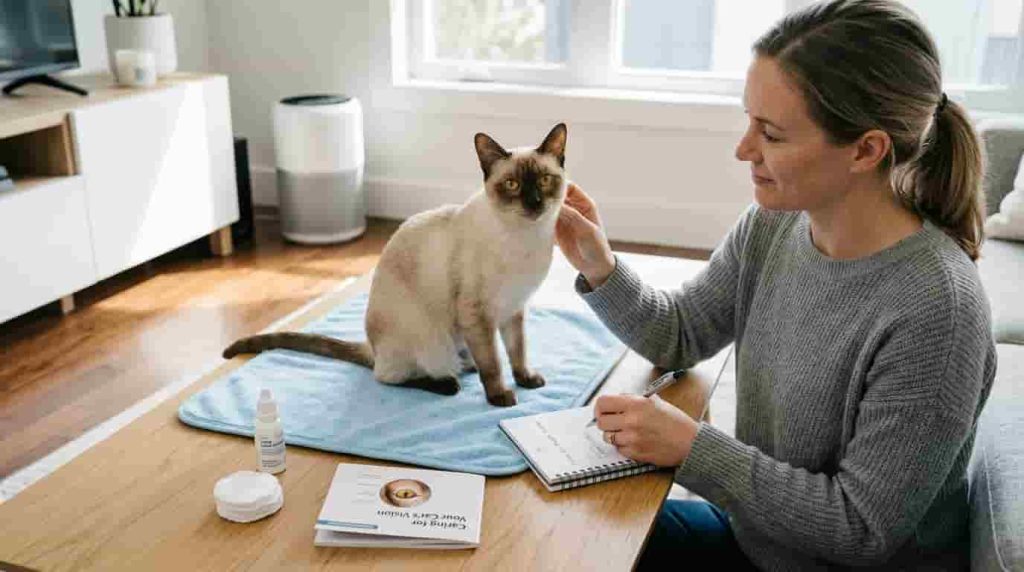
You can decode your cat’s stare easily by examining the exact shape of their pupils alongside their ears. A relaxed feline usually displays soft, half closed eyelids that signal deep trust and complete emotional comfort. Furthermore, a very slow blink during direct eye contact acts like a warm, loving human kiss. You should always copy this slow blinking action to reassure your pet that they are totally safe. This simple physical interaction forms the foundation of excellent, positive cat communication through staring.
In contrast, a wide eyed glare with fully dilated pupils often indicates extreme fear or intense excitement. The animal expands their pupils wide to gather as much environmental light as possible before moving. This dramatic visual shift often happens right before your pet starts sprinting wildly across your living room furniture. Consider a real life example involving a passionate cat owner named Jude who lived in urban Lagos. He owned a beautiful Siamese cat that loved resting on his bedroom desk every night.
- Soft Eyelids: Indicate complete relaxation, deep affection, and high emotional security.
- Dilated Pupils: Signal intense fear, sudden excitement, or impending predatory movement.
- Constricted Slits: Express extreme anger, high irritation, or a clear warning to back away.
- Flattened Ears: Command immediate personal space and signal a high risk of scratching.
Jude often noticed his pet staring at his computer mouse with incredibly wide, circular eyes. The cat would twitch its long tail rapidly before pouncing directly onto the moving device playfully. Jude’s experience proves that decoding cat stares requires looking at the entire animal rather than just their eyes. It helps you anticipate their playful actions and prevents unnecessary accidental scratches during evening relaxation times.
Deciphering Cat Behavior When Licking and Staring Coexist
Understanding feline behavior becomes much more fascinating when your pet combines an intense look with strange eating habits. For example, some stressed felines will stare at plastic grocery bags before chewing on them obsessively. This unusual condition can indicate a hidden psychological issue that requires immediate attention from an owner. If you notice these bizarre habits, read our comprehensive guide on Cat Pica Signs to protect your pet. Addressing these strange medical tendencies early keeps your beloved domestic companion perfectly safe.
Furthermore, a fixed gaze during mealtime often represents a direct, confident demand for fresh wet food. Your clever pet learns quickly that looking at you unblinkingly forces you to get up. They use this silent communication technique to manipulate your morning schedule because they know you will respond. Therefore, you should establish a highly consistent feeding routine to manage these demanding looks successfully. Consistency teaches your animal friend that food arrives at specific times regardless of how long they look.
According to veterinary behavior specialists at the ASPCA, direct eye contact meanings vary wildly across different animal species. In the wild world, a prolonged unblinking look usually signals an aggressive challenge between two competing predators. However, domestic felines modify this behavior significantly when interacting with their favorite human caretakers over time. They utilize a soft, steady gaze to express deep affection and request reassuring physical touch from you. Your positive response reinforces their confidence and builds incredible mutual trust throughout their lifetime.
Practical Tips for Understanding Cats and Managing Ocular Demands

Implementing effective tips for cat staring behavior requires you to establish clear boundaries inside your household. You should avoid shouting at your pet when their midnight looks disrupt your normal sleeping habits. Instead, gently redirect their intense visual attention by placing a comfortable cat bed near your mattress. This dedicated sleeping zone allows them to stay close to you without stepping onto your face. Having these boundaries prepared guarantees a highly peaceful and comforting night for everyone.
- Avoid staring back aggressively at a tense feline because this can trigger an attack.
- Provide multiple interactive food puzzles to keep their hunting brains fully occupied during afternoons.
- Establish a calming bedtime routine by playing with a feather wand before turning off lights.
- Reward relaxed, soft looks with delicious meat treats to encourage peaceful communication habits.
Learning these secrets of cat communication allows you to build a highly rewarding and stress free relationship. It eliminates unnecessary misunderstandings and helps you respond correctly to your pet’s silent requests every day. A well understood animal is a remarkably calm companion that brings endless joy to your family life. Your initial behavioral investments will create a highly harmonious living space for your entire household.
Long Term Behavioral Health and Wellness Management

Maintaining your pet’s mental well being requires you to provide ample environmental enrichment throughout their life. You should install high window perches so your feline can look at outdoor birds safely during mornings. This stimulating visual activity satisfies their predatory instincts and reduces demanding, attention seeking looking habits at night. Regular veterinary checkups are also highly necessary to ensure that sudden behavioral shifts do not stem from pain. These small wellness investments guarantee your beautiful companion remains happy, healthy, and vibrant for fifteen years.
According to clinical research published by PetMD, elderly felines sometimes develop cognitive dysfunction as they age over time. This medical condition can cause older cats to stare blankly at open corners due to confusion. Therefore, you must consult an expert veterinarian if your senior pet exhibits sudden, aimless looking habits. Your steady devotion will protect your precious pedigree companion from experiencing unnecessary disorientation or hidden physical discomfort.
Conclusion
Mastering the hidden Cat Staring Secrets empowers you to understand your feline family member with total confidence. While these unblinking midnight looks can feel quite spooky, they usually express deep affection and protective instincts. By studying their pupil shapes and providing excellent home enrichment, you ensure a highly peaceful domestic environment. Your careful behavioral observation today creates a remarkably secure, loving relationship with your favorite furry companion.
Are you completely ready to utilize these Cat Staring Secrets to decode your pet’s midnight expressions? Have you already set up a cozy window perch to keep their hunting mind active during the day? Please share your ultimate cat stories and behavioral questions in our comment section below to help other owners!
Frequently Asked Questions
Your pet watches you because your rhythmic breathing movements captivate their natural predatory visual senses. They also view you as a highly stable source of warmth, safety, and deep emotional comfort. This nocturnal behavior is a clear sign of protective instincts and trust.
You should look closely at their pupil dilation, ear positions, and tail movements simultaneously to gauge tension. Wide open pupils combined with flattened ears indicate extreme fear, heavy stress, or immediate predatory excitement. A slow blink signals complete relaxation and love.
Soft, half closed eyelids indicate complete contentment, high security, and deep affection toward an owner. Narrow, constricted slits represent high irritation and serve as a clear warning to give the animal space. Fully dilated pupils signal high stimulation or fear.
Felines possess incredibly sharp motion detection senses that can easily track microscopic dust particles or tiny insects. They also have highly sensitive hearing that picks up distant sounds hidden behind the drywall structure. They are simply investigating their local territory.
A sudden shift to blank or aimless looking can indicate localized pain or age related cognitive changes. You should schedule a comprehensive veterinary checkup immediately to rule out hidden medical conditions or high stress. Monitor their daily eating habits closely too.