Bathe a Fluffy Kitten: A Safe Step-by-Step Guide
Introduction:
Bathe a fluffy kitten without causing total chaos or getting scratched? Many pet parents think this task is completely impossible. Cats notoriously hate water, so the mere thought of a bath can feel terrifying. However, a time will come when your little ball of fur gets into a sticky mess.
You cannot always rely on self-grooming when mud or spilled food covers a long coat. Therefore, learning how to wash a kitten properly is a vital skill for every new pet owner. The process does not have to be a battle of wills if you know the right secrets. You can actually turn this chore into a peaceful bonding experience.
A successful bath depends entirely on your preparation and patience. Young animals learn habits quickly, so a positive first experience sets the tone for their entire life. If you rush the process, your pet may fear water forever. This guide will show you how to handle the situation with ease and confidence.
Why Your Long-Haired Pet Needs Extra Help
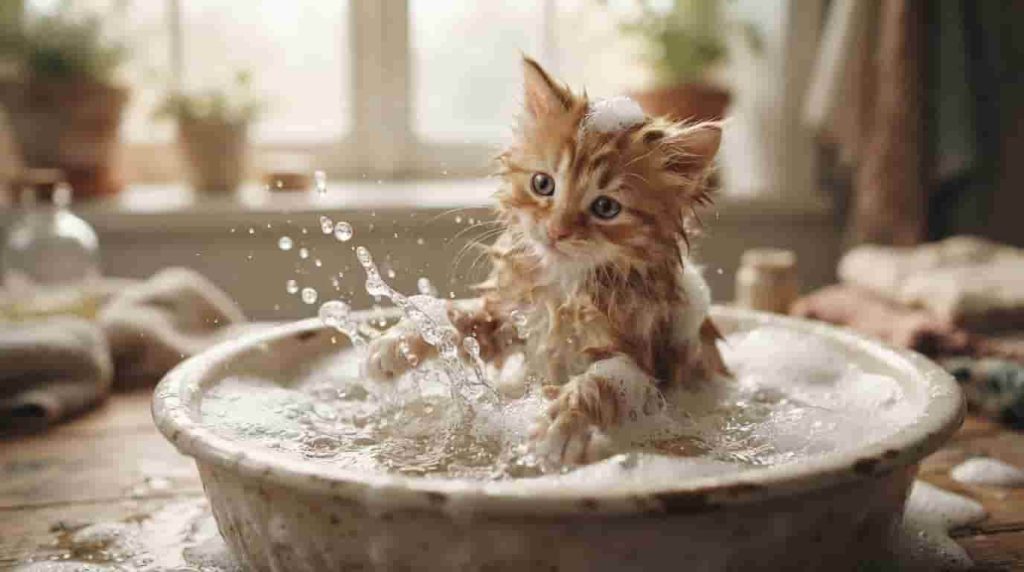
Most adult cats spend hours grooming themselves every single day. However, young animals lack the skill to keep a thick coat perfectly clean. Dirt and debris easily trap themselves in long fur, which leads to painful mats. If you do not step in, these tangles can cause severe skin irritation over time.
Regular grooming kittens keeps the fur healthy and prevents painful mats from forming. This routine also reduces the amount of loose hair in your home. For more advice on daily maintenance, you can read our complete guide on Fluffy Kitten Grooming: How to Keep Your Kitten Soft and Tangle-Free. Good grooming habits prevent painful skin conditions before they even start.
Proper feline hygiene also protects your pet from swallowing too much loose hair. When cats lick their fur, they swallow dead strands. This habit leads to uncomfortable hairballs in their stomachs. Therefore, a regular bath for cats helps minimize this common problem significantly.
Getting Ready to Bathe a Fluffy Kitten Safely
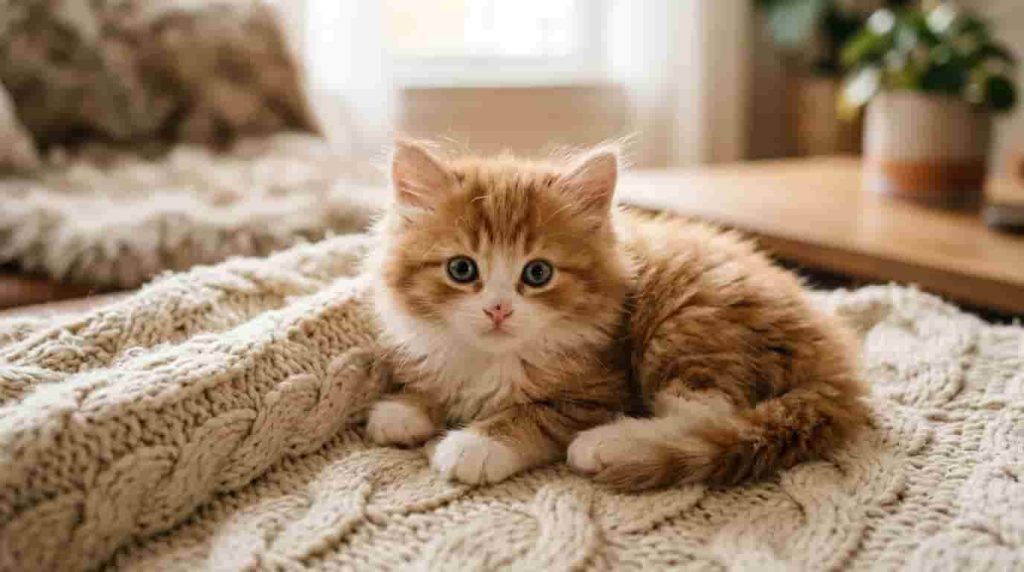
You must gather all your supplies before you bring your pet near the water. Never leave a wet animal alone in the sink to grab a forgotten item. First, place a rubber mat or a thick towel at the bottom of your sink. This simple step gives your pet a secure grip so they do not slip and panic.
Next, fill the sink with a few inches of warm water. The water temperature must feel lukewarm to your wrist, never hot or cold. Additionally, make sure the room stays warm and free from sudden cold drafts. A chilled young animal can become sick very quickly.
You will need a gentle cat shampoo that contains no harsh chemicals or strong perfumes. Human shampoo can damage feline skin because the pH levels are completely different. According to the experts at PetMD, using the wrong soap can strip away natural oils and cause severe dryness. Always choose a product made specifically for young cats.
Step-by-Step Guide to Fluffy Kitten Washing
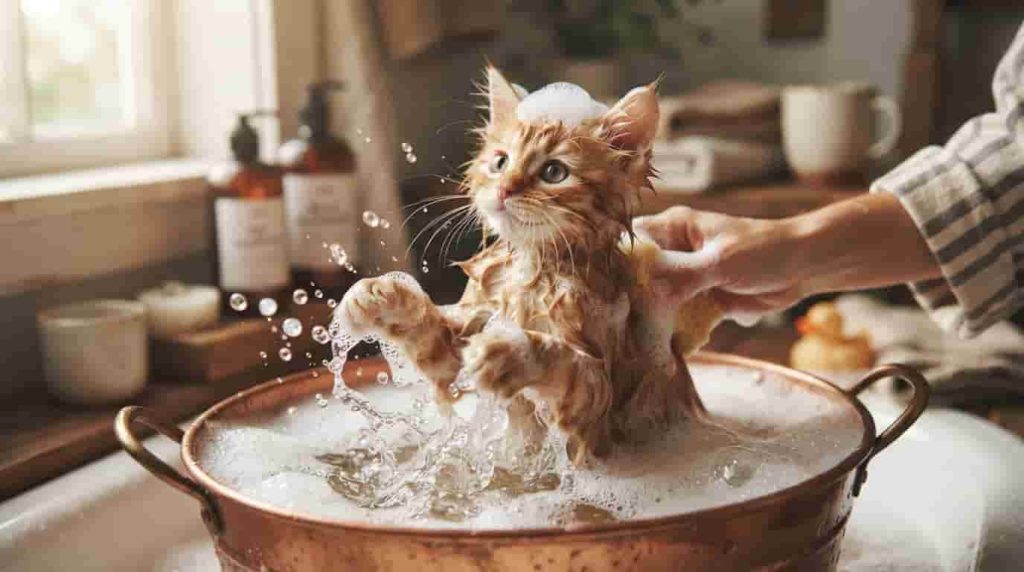
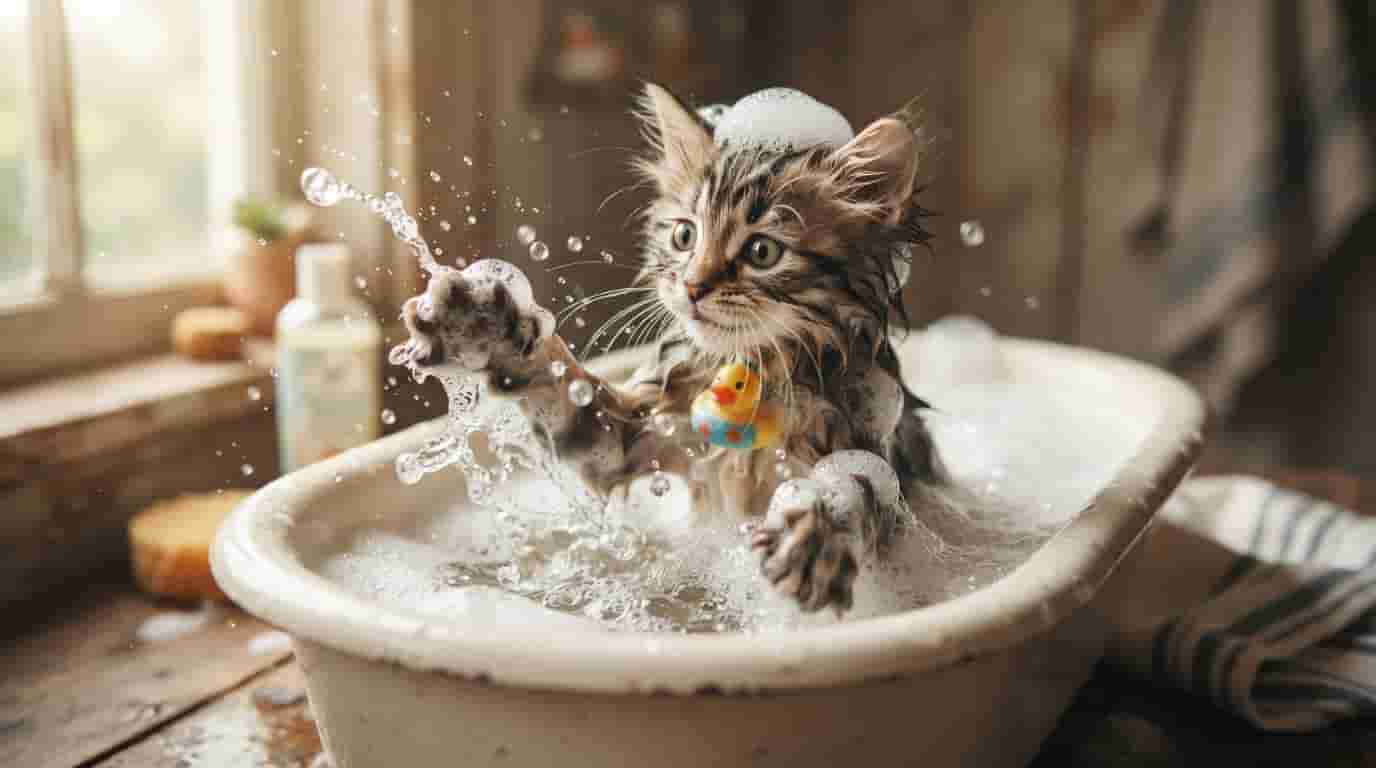
First, brush your pet thoroughly to remove any tangles or loose hair before the water touches them. Wetting a knot makes it much tighter and harder to remove later. Next, gently lower your pet into the warm water while speaking in a calm, soothing voice. Use a small cup to pour water over their body slowly.
Avoid splashing water directly onto their face, ears, or eyes. Instead, use a damp washcloth to wipe their face clean. Apply a small amount of the gentle cat shampoo to their back and massage it in softly. Work the lather down through the thick layers of fur to reach the skin.
Finally, rinse the coat thoroughly with clean, warm water. You must remove every trace of soap because left-over residue causes itchy skin. Furthermore, your pet will lick themselves dry and swallow any remaining shampoo. Check the belly and underarms carefully to ensure no soap bubbles remain.
Essential Kitten Bathing Tips for Success
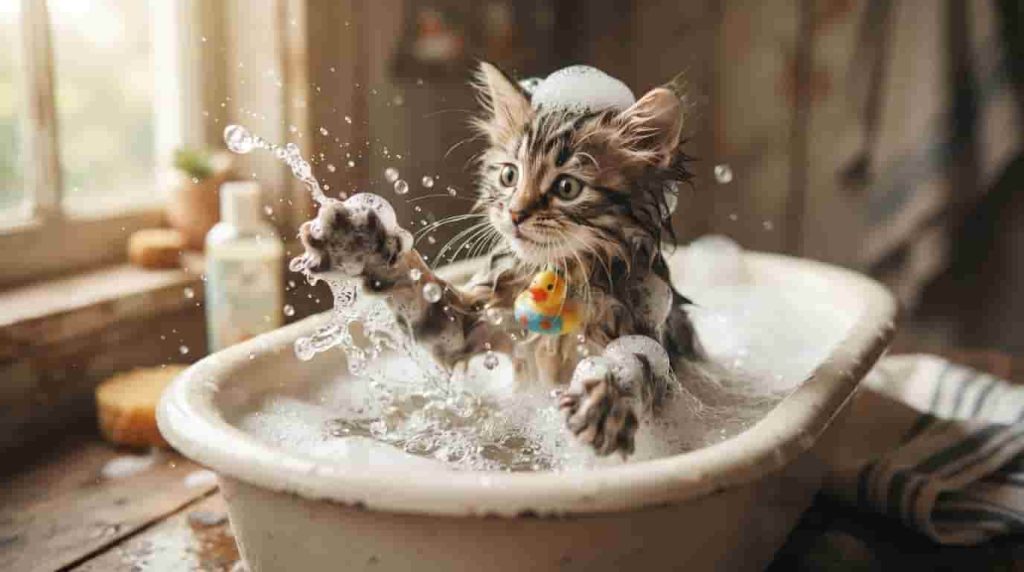
A calm environment is the most important factor when you bathe a fluffy kitten at home. You should choose a quiet time of day when the household is peaceful. Do not try to wash your pet right after a high-energy play session. Instead, wait until they feel relaxed or slightly sleepy.
You can use tasty treats to create a positive association with the bathroom. Give your pet a treat when they enter the room. Place another treat on the edge of the sink during the bath. These small rewards distract them from the water and reduce anxiety.
If your pet panics, stop the process immediately and try again the next day. Forcing a terrified animal will only make the next attempt much harder. For comprehensive advice on raising a happy pet, check out our guide titled Raise a Fluffy Kitten: The Complete Beginner’s Guide. Patience always wins when dealing with young animals.
Drying and Aftercare for Cute Kitten Care
Once the rinse is complete, wrap your pet in a large, warm towel immediately. Rub them gently to absorb as much water from the thick fur as possible. You may need to use multiple towels because long fur holds an incredible amount of moisture. Keep your pet in the warm room until they dry completely.
Never use a human blow dryer on a high heat setting. The loud noise can terrify your pet, and the intense heat can easily burn sensitive skin. If you must use a dryer, select the lowest heat and noise settings. Hold the machine far away from the body and move it constantly.
After the fur dries, use a wide-toothed comb to brush the coat out smoothly. This step prevents new tangles from forming as the hair dries. Reward your brave pet with their favorite food or a fun game. For tips on supporting a healthy coat from the inside out, read Best Food for a Fluffy Kitten: Nutrition for a Healthy Coat.
Professional Advice on Feline Hygiene
How often should you actually wash your young cat? The ASPCA states that cats rarely need frequent full baths unless they get exceptionally dirty. Over-washing can dry out the skin and strip away essential oils. Generally, a bath every few months is more than enough for regular maintenance.
If your pet stays clean, rely on daily brushing instead of water. Brushing distributes natural oils throughout the coat and removes trapped dirt. However, occasional washing remains necessary for long-haired breeds to maintain optimal fluffy cat care.
Always watch for signs of skin problems during your regular kitten grooming sessions. Look for redness, flakes, or small bumps hidden beneath the thick fur. If you notice any unusual skin conditions, contact your veterinarian for advice right away.
Conclusion
Learning to bathe a fluffy kitten requires patience, the right tools, and a very gentle touch. By preparing your workspace and staying calm, you can make the experience stress-free. Always prioritize your pet’s comfort and warmth throughout the entire process.
Remember to use a specialized shampoo and reward your pet for their cooperation. With time, your companion will learn that bath time is nothing to fear. Now, we want to hear from you. How did your pet behave during their very first bath? Please share your stories and favorite kitten grooming tips in the comments below.
Frequently Asked Questions
You should wait until your pet is at least eight weeks old before giving a full bath. Younger animals cannot regulate their body temperature well and can catch a chill very easily. Use a damp cloth for spot cleaning if they get dirty before this age.
No, you should never use human baby shampoo on a young cat. Feline skin has a completely different balance of acidity compared to human skin. Baby shampoo can cause severe dryness, irritation, and discomfort for your pet.
Wrap your pet tightly in a warm towel right after the bath to absorb the water. Use multiple dry towels to remove the bulk of the moisture from the thick coat. Keep the room completely warm and draft-free while they air dry naturally.
Trimming your pet’s nails a day before the bath can help prevent painful scratches. You can also use a thick washcloth to wash them instead of submerging them in water. If they panic completely, stop the process immediately to ensure safety.
Long-haired cats generally only need a bath once every few months. Daily brushing is usually enough to remove dirt and prevent mats from forming. Only wash them more frequently if they get into sticky messes or mud.