How to Help a Kitten Poop Without Its Mother Safely
Introduction:
Kitten pooping routines surprise many new foster parents who expect newborn pets to use bathroom boxes naturally. Why does a full, well-fed newborn suddenly struggle to pass waste after drinking warm milk formula?
Marcus adopted a tiny three day old orphaned pet named Oliver on a rainy Thursday afternoon. He carefully prepared warm bottles, supplied cozy blankets, and fed Oliver every three hours around the clock.
Yet, after twenty four full hours, Marcus noticed Oliver’s small belly felt tight, swollen, and unusually round.
Marcus checked the soft blankets inside the sleeping box, expecting to find typical newborn mess.
Nothing was there.
Instead, Oliver squeaked softly, squirming in discomfort while pushing his small legs against the soft towel.
Why was this healthy baby failing to eliminate waste naturally after enjoying every full warm meal?
Newborn felines lack the neurological muscle control required to eliminate urine or solid waste independently.
In nature, mother cats lick their babies continuously after meals to stimulate crucial nerve endings.
Without maternal licking, toxic waste builds up internally, causing painful swelling and life-threatening digestive blockages.
Learning proper manual stimulation techniques allows human caregivers to save fragile newborn lives during early weeks. Let us explore how you can safely prompt daily waste elimination for your rescued pet today.
1. Mastering Manual Stimulation for Kitten Pooping Success
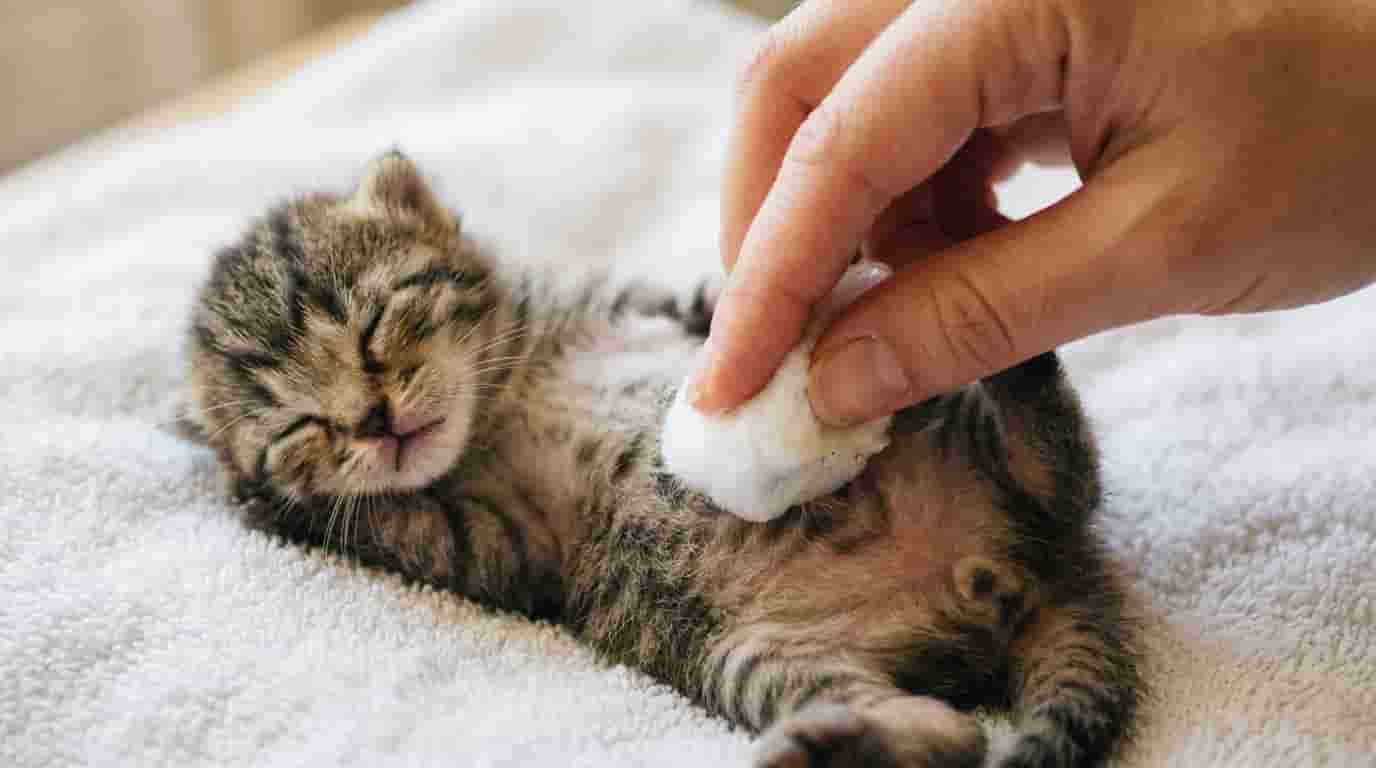
Understanding proper physical stimulation ensures consistent success when helping an orphaned newborn eliminate waste safely. Always wash your hands thoroughly before handling fragile young pets to prevent spreading unwanted bacteria.
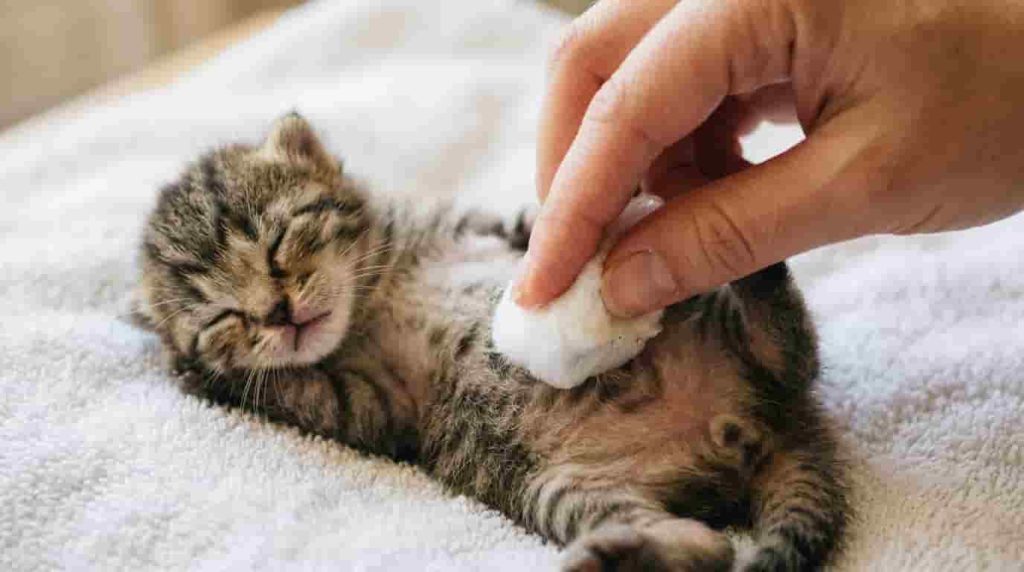
Start by warming a clean cotton ball or soft paper towel using lukewarm tap water.
Gently squeeze out excess water so the cloth feels comfortably warm rather than soaking wet.
Gentle Techniques for Kitten Bowel Movements and Daily Care
Prompting regular kitten bowel movements requires imitating the soft, warm strokes of a mother cat’s tongue. Hold your pet securely on his back or belly in one hand over a soft towel.
You can learn complete rescue care procedures by reading How to Care for an Orphaned Kitten from Rescue to Adoption today.
Rub the genital and anal areas gently using small circular motions for thirty seconds continuously.
According to veterinary experts at the Cornell Feline Health Center, gentle friction triggers involuntary muscle reflexes, releasing waste smoothly. Warm wiping keeps your pet comfortable, relaxed, and physically healthy throughout early developmental stages.
2. Solving Common Obstacles in Kitten Potty Training
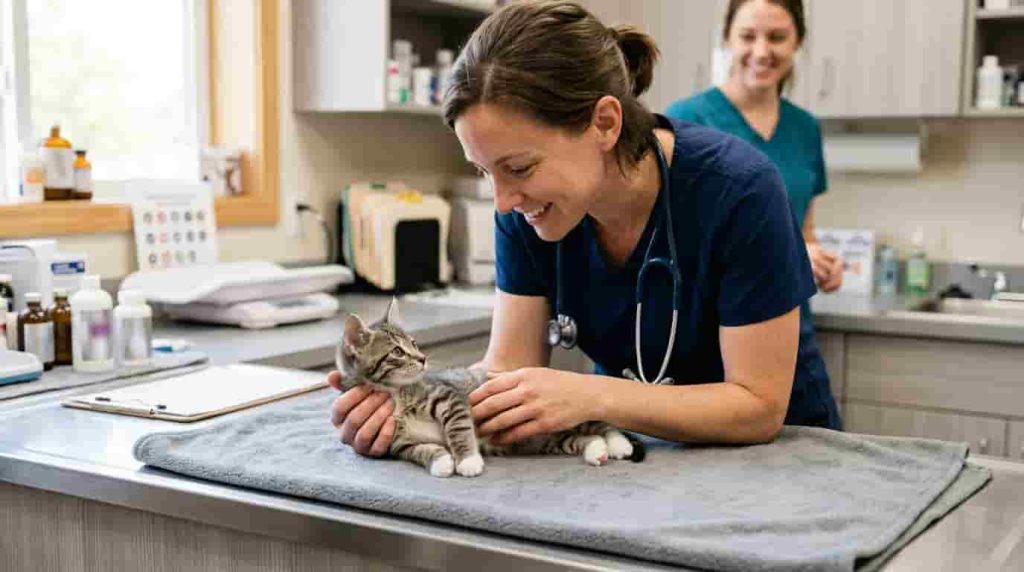
Experiencing temporary delays during early routines causes unnecessary worry for dedicated foster caregivers working at home. Newborns usually pass soft, mustard-colored waste once or twice daily after warm formula meals.
If your pet skips a full day without eliminating waste, small adjustments restore normal digestive functions.
For example, check formula temperatures because cold liquid slows down natural gut movement significantly.
Spotting Signs of Cat Constipation Remedies and Hydration Fixes
Applying practical cat constipation remedies prevents painful digestive blockages from developing inside small intestines. Adding a few extra drops of warm sterile water to formula bottles improves daily body hydration.
You can explore detailed age-based feeding schedules by reading What to Feed a Motherless Kitten at Every Age right now.
- Massage the belly using soft clockwise fingertip circles to encourage steady intestinal movement.
- Check that replacement formula milk remains warm throughout the entire bottle feeding session.
- Wipe bottom areas with warm damp cloths immediately after every meal without skipping.
- Avoid pressing hard on delicate abdominal organs while performing daily stimulation routines.
Simple home adjustments usually resolve minor intestinal delays, restoring comfortable digestive rhythm within hours.
3. Managing Kitten Poop Scheduling and Hygiene
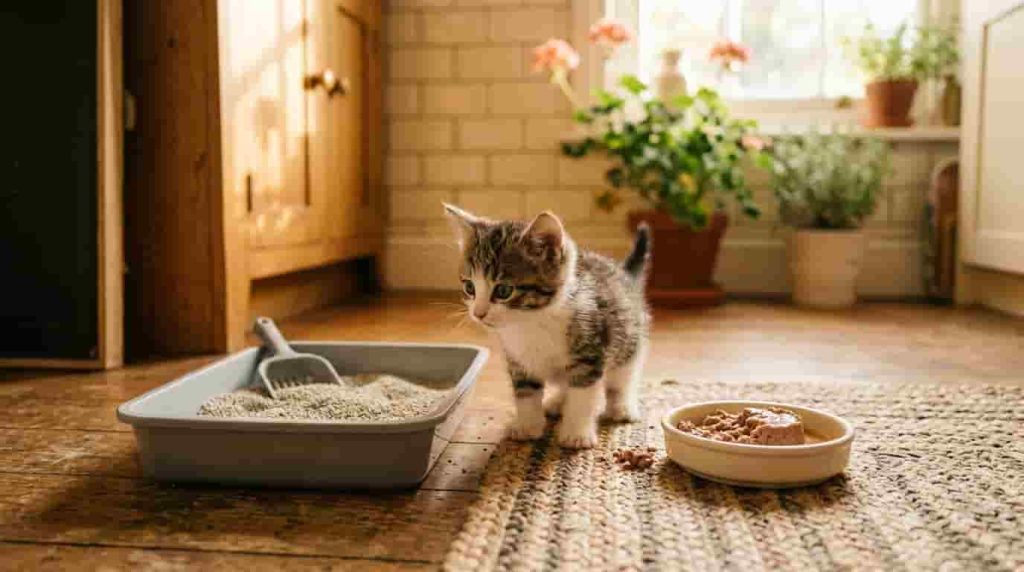
Establishing a steady routine makes managing daily care easier while maintaining high home sanitation standards. Stimulate your pet after every bottle feeding session to align physical elimination with natural digestion.
Because newborn waste stains soft fabrics quickly, place disposable pads underneath your workspace beforehand.
Clean skin thoroughly after every bathroom session to prevent painful diaper rash or irritation.
Preventing Skin Irritation and Cleaning Kitten Poop Safely
Learning methods for cleaning kitten poop properly keeps young skin clean, smooth, and free from infections. Use mild baby wipes or warm damp cloths to wipe away residual waste gently.
You can check age-related survival milestones in When Can a Kitten Survive Without Its Mother? A Week-by-Week Guide today.
Official health guidelines from the American Veterinary Medical Association advise drying skin completely after every cleaning. Applying thin layers of safe pet-friendly ointment protects sensitive skin from painful moisture breakdown.
4. Identifying Cat Health and Hygiene Issues Early
Monitoring waste color and consistency provides clear insights into overall feline health and digestive balance. Healthy newborn waste appears firm yet soft, displaying dark yellow or light brown coloration consistently.
Conversely, liquid stools signal dangerous intestinal irritation caused by sudden dietary changes or parasites.
Because small bodies lose fluid rapidly, persistent loose stools require immediate veterinary medical attention.
Treating Cat Diarrhea and Feline Bowel Movements Promptly
Addressing cat diarrhea quickly prevents severe dehydration and dangerous weakness in young growing bodies. Consult a veterinarian if loose stools persist for more than twelve hours despite careful home feedings.
Doctors test waste samples for microscopic parasites while providing specialized oral rehydration fluids safely.
- Inspect waste color daily to catch early signs of intestinal infections quickly.
- Separate sick pets from littermates to prevent spreading contagious stomach viruses.
- Provide oral electrolyte solutions under professional veterinary direction when loose stools appear.
- Keep nesting boxes clean by replacing soiled towels with fresh cotton bedding daily.
Early medical intervention protects fragile digestive systems, ensuring smooth recovery from unexpected health setbacks.
5. Transitioning to Independent Cat Litter Training
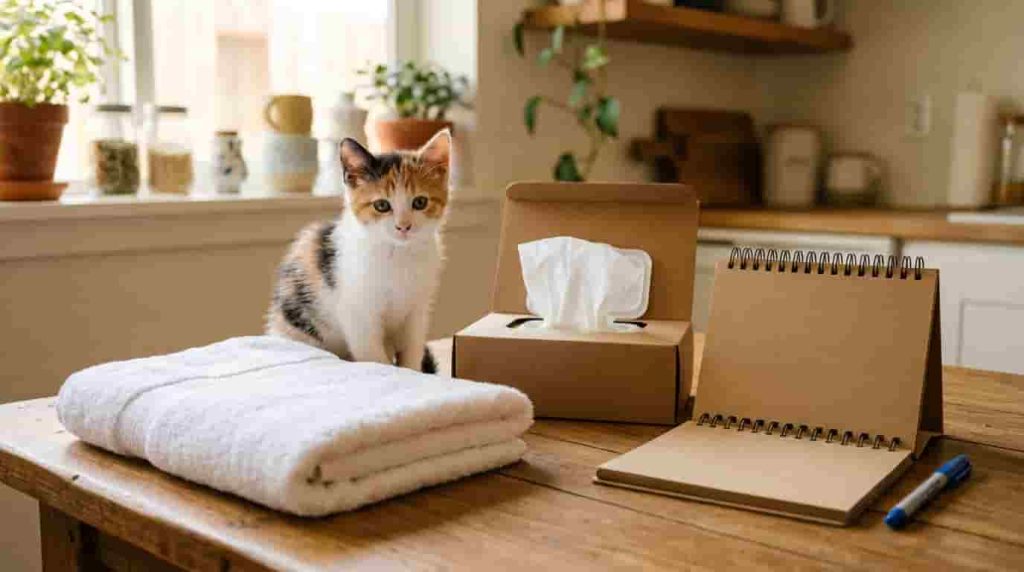
Reaching three to four weeks of age brings exciting physical progress as motor skills improve rapidly. Young pets begin walking steadily, exploring quiet rooms, and showing interest in adult cat bathroom habits.
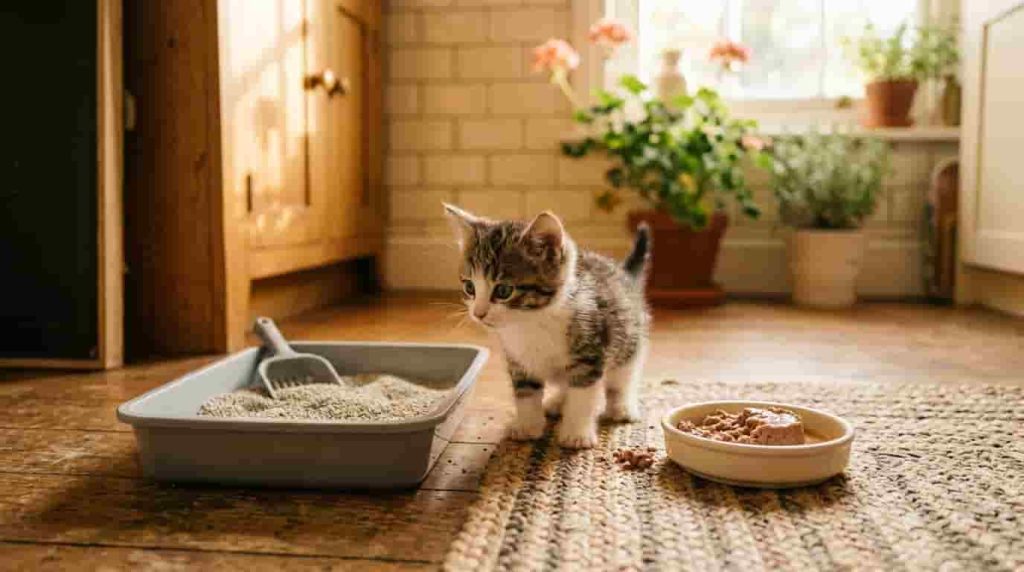
At this stage, you can phase out manual wiping and introduce shallow bathroom boxes.
Select low-sided plastic trays so small legs step inside without tripping or falling over.
Essential Litter Box Tips for Kittens During Weaning
Applying proven litter box tips for kittens speeds up bathroom learning during early weaning transitions. Place your pet inside the shallow box immediately after meals to encourage natural digging instincts.
Fill the tray with non-clumping paper pellets to keep curious young pets safe if ingested.
- Place shallow trays near sleeping areas so young pets locate boxes quickly.
- Use non-clumping paper litter to prevent dangerous intestinal blockages if swallowed accidentally.
- Gently guide front paws in soft digging motions to demonstrate natural burying behaviors.
- Reward successful bathroom use with warm verbal praise and gentle head strokes.
Patience and positive encouragement turn early training into lifelong bathroom habits for your companion.
Final Thoughts on Kitten Pooping Care
Mastering kitten pooping care requires warm wipes, gentle physical stimulation, consistent routines, and attentive health monitoring. You now understand why newborns need manual help, how to stimulate waste elimination, and when to start litter training.
Taking time to stimulate your pet after meals guarantees comfortable digestion during critical early weeks.
Replacing fear with practical care techniques gives every rescued orphan a fair chance at life. Your patient daily efforts build strong health, preparing your young companion for a happy, independent future.
Have you ever helped an orphaned newborn pet learn to use the bathroom safely at home? Share your personal care stories and helpful foster tips in the comments section below!
Frequently Asked Questions
A newborn pet should eliminate solid waste at least once or twice daily with manual stimulation. Caregivers should stimulate genital areas after every feeding to prompt urination and encourage regular bowel movements. If your pet skips twenty four hours without passing waste, adjust hydration levels or consult a veterinarian.
Help a constipated pet by massaging the abdomen gently in smooth clockwise circles with your warm fingertips. Add a few extra drops of warm water to formula bottles to improve overall body hydration levels. Use warm, damp cotton balls to stimulate the anal area gently for several minutes after meals.
Healthy newborn waste appears mustard yellow, light brown, or golden yellow with a soft paste texture. White or grey waste indicates severe milk malabsorption or liver issues that require immediate veterinary inspection. Green or watery stools signal intestinal infections, overfeeding, or internal parasites needing prompt treatment.
Young felines begin eliminating waste independently around three to four weeks of age as nervous systems mature. At this stage, introduce shallow litter boxes filled with safe non-clumping paper litter near sleeping areas. Stop manual wiping gradually as your pet uses the litter tray consistently without human assistance.
Standard human baby wipes contain harsh synthetic fragrances and chemicals that irritate sensitive feline skin surfaces. Always use warm water on plain cotton balls, soft washcloths, or specially formulated pet-safe wipes instead. Dry the skin thoroughly after wiping to prevent painful rashes or moisture irritation.