How Do I Know If My Cat Loves Me? 15 Signs of a Strong Bond
Introduction
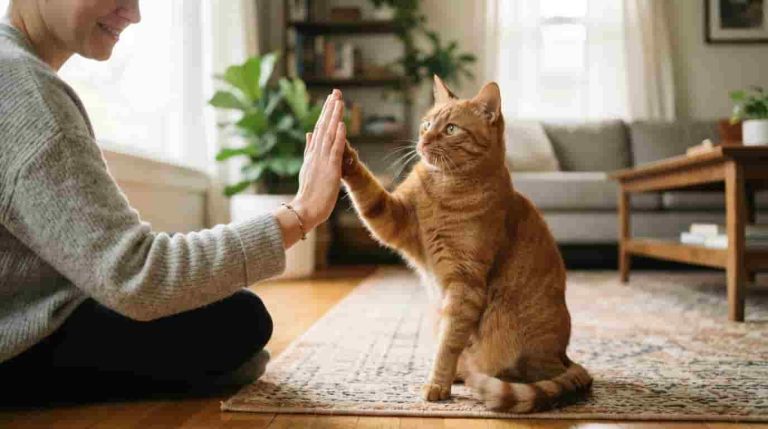
How Do I Know If My Cat Loves Me? Many cat owners experience moments of doubt when trying to decode feline affection. Unlike dogs, which often display overt enthusiasm, cats rarely express love through human-like gestures or constant validation. Because of this, it is common to wonder what goes on inside a cat’s mind. Feline affection is rarely visible through a single, isolated action; instead, it reveals itself through consistent patterns of behavior over time.
Cats communicate their emotions through subtle cues, including slow blinking, sleeping nearby, following you from room to room, head rubbing, grooming, and maintaining relaxed body language. Personality also plays a massive role in how these bonds manifest. A quiet, independent cat can share just as deep a connection with its owner as an outgoing, clingy companion. Understanding these nuances requires looking closely at everyday habits. Here are 15 distinct signs that point directly to a strong bond with your feline friend.
How Do I Know If My Cat Loves Me? 15 Signs of a Strong Bond
No single behavior proves exactly what a cat feels on its own. Instead, the strongest evidence of feline affection comes from several consistent behaviors occurring together over time.
1. Your Cat Gives You Slow Blinks
A slow blink is one of the most peaceful gestures a cat can offer. It involves a cat looking at you, slowly closing and opening its eyes, and occasionally looking away or keeping a soft gaze. In the feline world, closing one’s eyes in the presence of another creature is an ultimate act of vulnerability and trust.
This relaxed eye contact indicates comfort and friendly interaction. When your cat slow blinks at you, you can respond by gently slow blinking back. This behavior ties directly into broader cat body language and effective cat communication, serving as one of the clearest signs that my cat loves me.
2. Your Cat Sleeps Near You
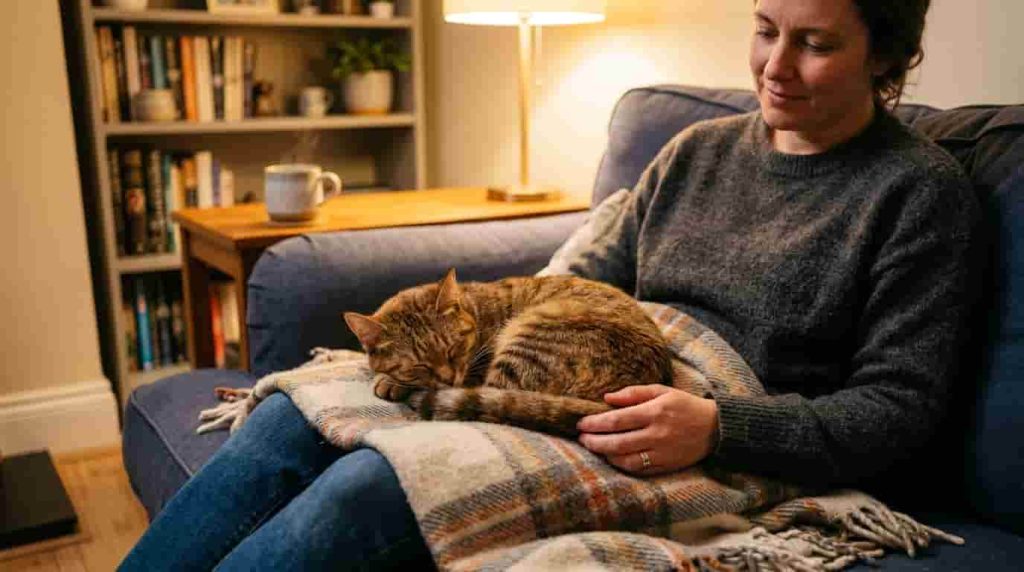
When a cat chooses to sleep near you, it demonstrates a high level of security. In the wild, cats are most vulnerable when resting. By choosing your immediate vicinity for sleep, your cat shows that it feels entirely safe in your care.
- “Does my cat love me if she sleeps next to me?” Yes, proximity during sleep is a strong indicator of trust and attachment.
- “Does my cat love me if she sleeps on my bed?” Absolutely, as beds hold your strong scent and provide a secure haven.
- “Does my cat love me if she sleeps on my lap?” This is an even more intimate sign of warmth and affection.
Even if your cat prefers the foot of the bed or a chair across the room, choosing to sleep within your sightline remains deeply meaningful.
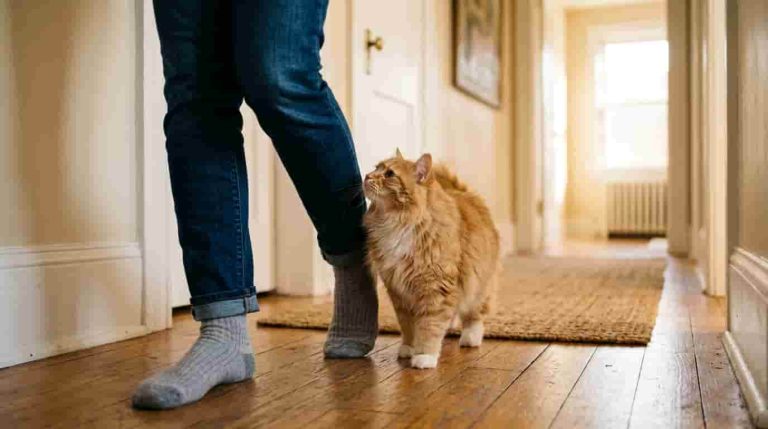
3. Your Cat Follows You Around the House
If your cat constantly trails behind you from the kitchen to the living room, you are witnessing social attachment in action. While cats can sometimes follow out of sheer curiosity or anticipation of food, repeated following across different situations points to a genuine desire for your company. This regular cat behavior towards owner signifies that your cat views you as an important part of its daily territory and routine.
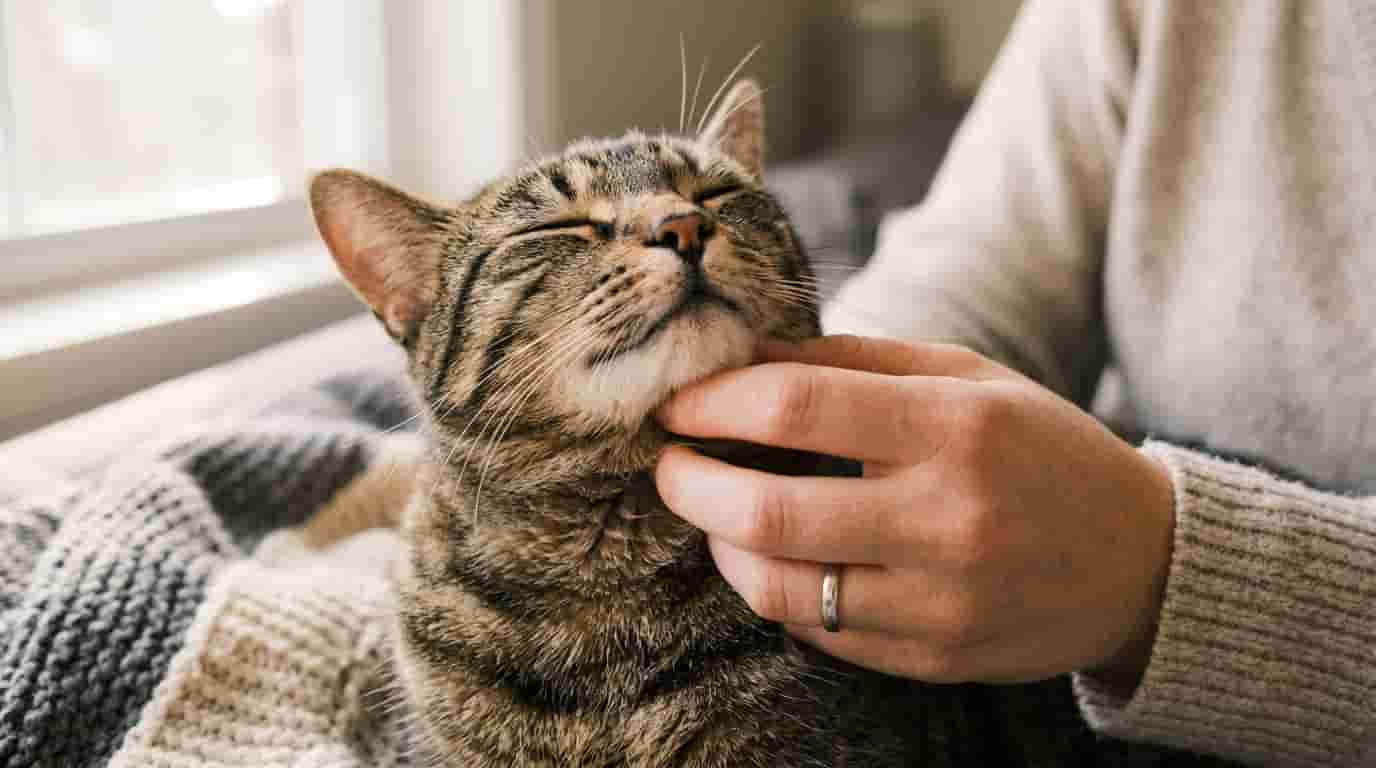
4. Your Cat Headbutts or Rubs Against You
Head bunting and cheek rubbing are classic affectionate behaviors. Cats possess scent glands on their cheeks, lips, and forehead. When your cat rubs its head or body against you, it is depositing facial pheromones, effectively marking you as part of its family and safe group. These behaviors happen during friendly interactions and should be welcomed, ideally allowing the cat to initiate contact whenever possible.
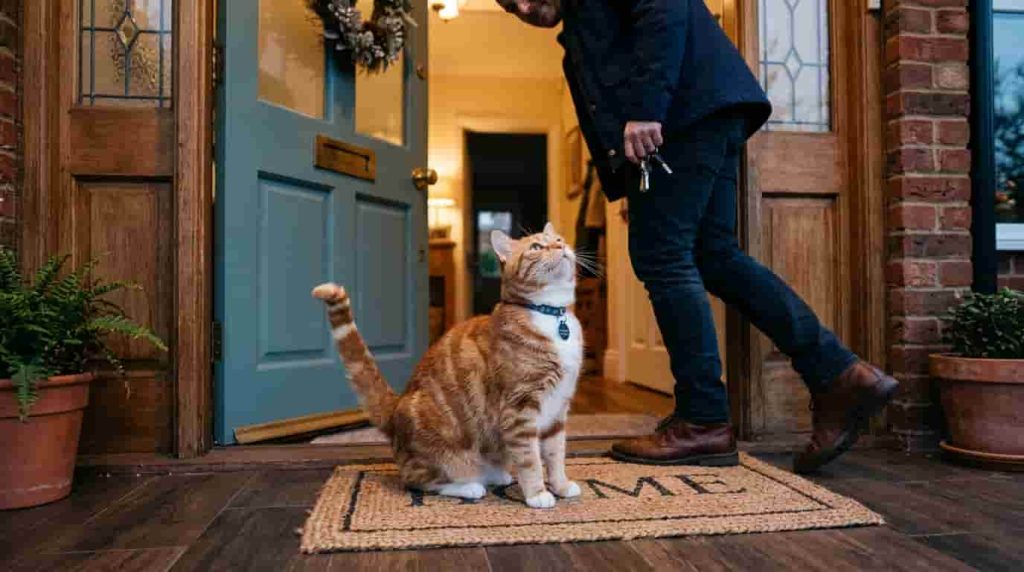
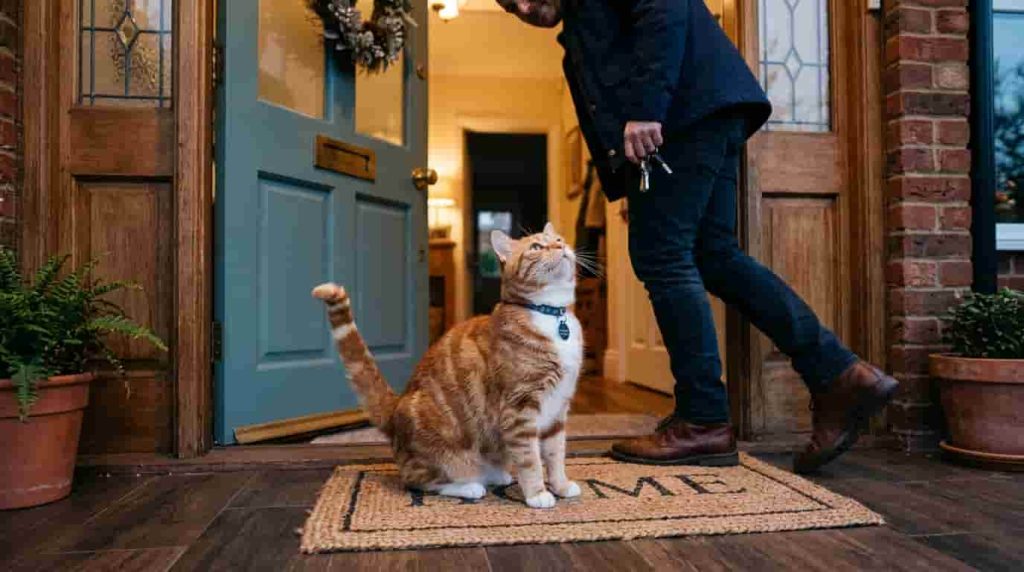
5. Your Cat Greets You When You Come Home
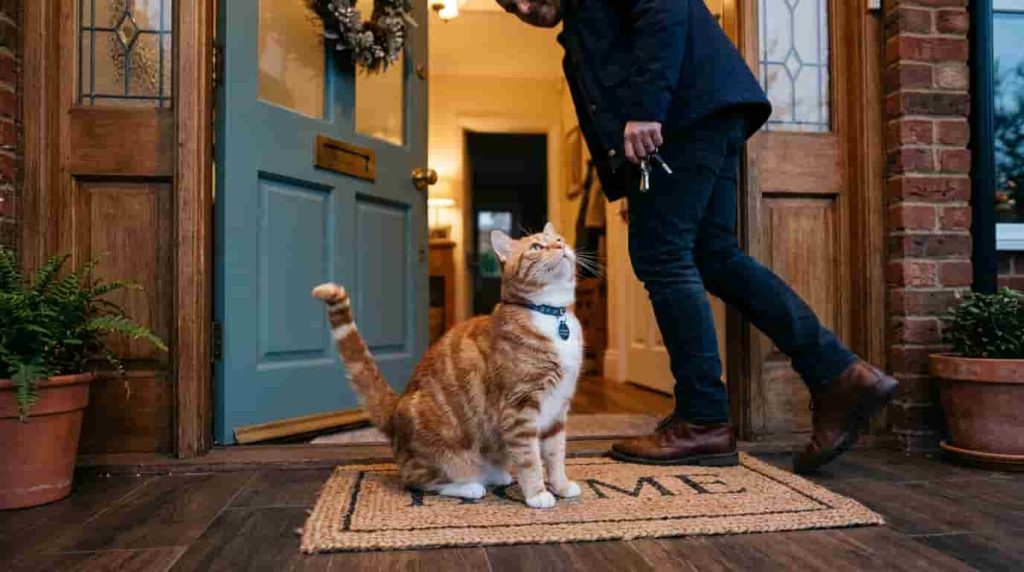
Coming home to an awaiting cat is a wonderful feeling. Greeting styles vary wildly between individual cats:
- Soft meowing or trilling to announce their presence
- Rubbing against your ankles
- Following you around immediately after your arrival
- Approaching you with an upright, question-mark-shaped tail
Not every cat will greet you dramatically at the door. The key indicator is the repeated, enthusiastic desire to reconnect with you after a period of separation.
6. Your Cat Kneads You
Often called “making biscuits,” kneading involves rhythmically pushing paws in and out against a soft surface. Cats may knead laps, blankets, beds, and chests. This behavior originates from kittenhood, where nursing kittens knead their mothers to stimulate milk flow. In adult cats, kneading is an expression of deep contentment, security, and nostalgia. While kneading alone should not be treated as definitive proof of love, interpreting it alongside other relaxed behaviors paints a clear picture of affection.
7. Your Cat Licks or Grooms You
- “Does my cat love me if he licks me?” Yes, this is known as allogrooming, or social grooming.
In feline colonies, cats groom each other to strengthen bonds, establish group scent, and show trust. If your cat licks your hand, arm, or hair, it is treating you like family. Keep in mind that alternative reasons for licking can include a liking for the salty taste of human skin or simple curiosity, but combined with gentle purring, it is a clear sign of love.
8. Your Cat Shows You Their Belly
Exposing the belly is one of the most misunderstood feline behaviors. In predatory animals, the abdomen houses vital organs, making it the most vulnerable part of the body. When a cat rolls over and exposes its belly to you, it shows supreme trust and comfort. However, this does not automatically mean the cat wants a belly rub. Grabbing a displayed belly can trigger a defensive scratch or bite because many cats view it as a violation of physical boundaries.
9. Your Cat Holds Their Tail Up Around You
A cat’s tail is an emotional barometer. A tail held high in the air with a slight curve at the tip signals happiness, confidence, and a welcoming attitude. Interpreting cat emotions requires looking at multiple signals rather than just one body part. Combine tail position with relaxed ear placement, soft eyes, and loose posture to fully understand your cat’s loving mood.
10. Your Cat Chooses to Sit Near You
Affection does not always demand physical contact. Many cats are perfectly content simply sharing space with their favorite humans. Examples include:
- Sitting right beside you on the couch
- Resting peacefully at your feet while you work
- Staying in the same room while you move around
- Sitting quietly across the room keeping watch
Independent cats often express affection entirely through proximity rather than constant cuddling.
11. Your Cat Wants to Play With You
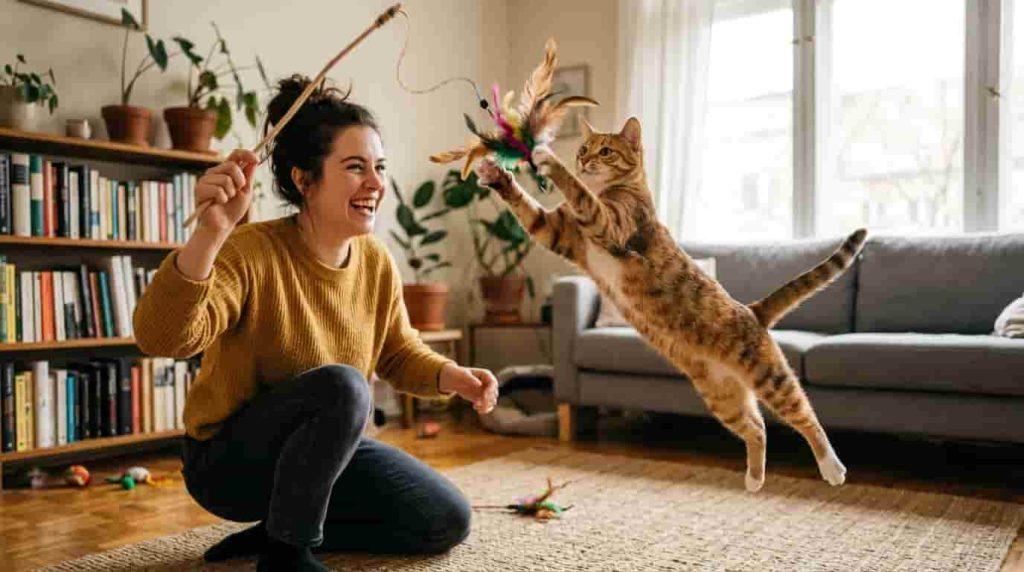
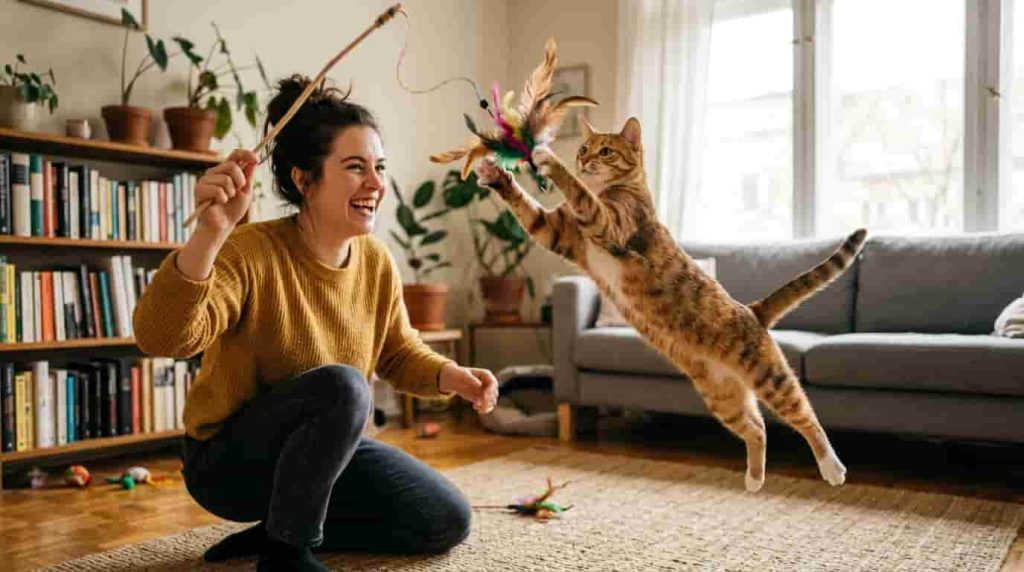
Play is a vital outlet for feline energy and a fantastic way to create positive shared experiences. Whether your cat brings you a wand toy, initiates a chasing game, or bats at your ankles playfully, seeking engagement indicates strong social interest. Shared play sessions significantly strengthen your bond with your cat.
12. Your Cat Communicates With You
Cats develop unique vocalizations and body language specifically for their human companions. From soft meows and trills to gentle chirps, cats communicate differently with individual people in their lives. While vocalization alone does not automatically mean affection (as it is often used to request food or attention), paying attention to the context of these sounds reveals a deep conversational partnership.
13. Your Cat Brings You Toys
When a cat drops a toy, a stuffed mouse, or even a household item at your feet, it is engaging in a meaningful interaction. While this behavior does not necessarily mean the cat views you as a poor hunter needing food, it does show that they want to share their prized possessions with you. The core takeaway is that the cat actively chooses to interact with you during playtime.
14. Your Cat Completely Relaxes Around You
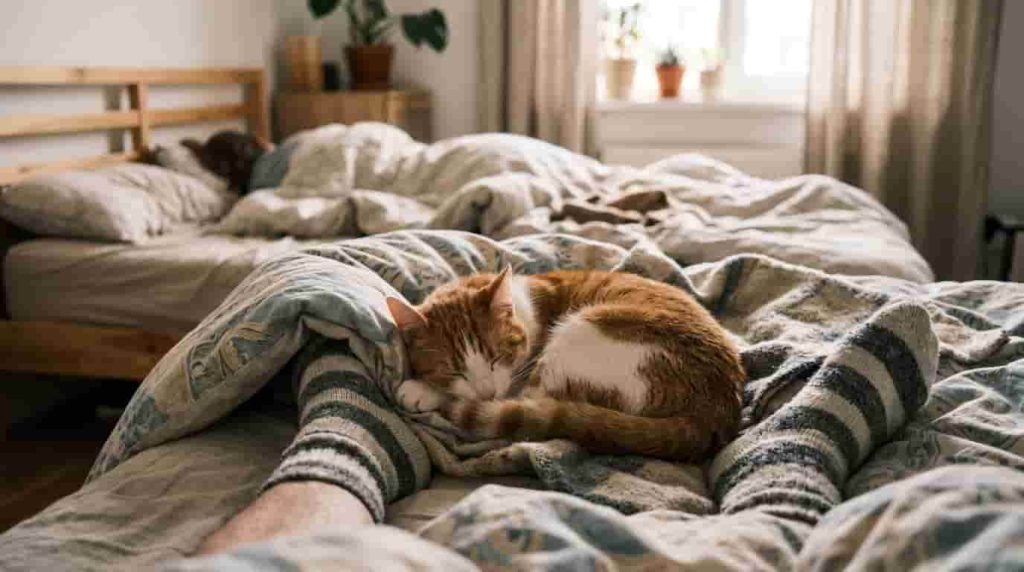
True relaxation is a hallmark of a loving relationship. Signs of relaxed body language include a loose posture, soft blinking eyes, comfortable stretching, and grooming themselves openly in your presence. This contrasts sharply with defensive behavior, flattened ears, tense posture, or hiding. Knowing that you provide an environment where your cat feels safe enough to let its guard down completely is a powerful reassurance of love.
15. Your Cat Chooses You When Food Is Not Involved
This serves as an ultimate test of the relationship. Ask yourself whether your cat seeks you out when:
- It is not mealtime
- No treats are available
- There is no obvious reward or toy involved
If your cat walks across the room simply to curl up next to you when food is completely out of the picture, you know the affection is genuine. Affection is best understood through repeated voluntary interaction.
Does My Cat Love Me or Just Want Food?
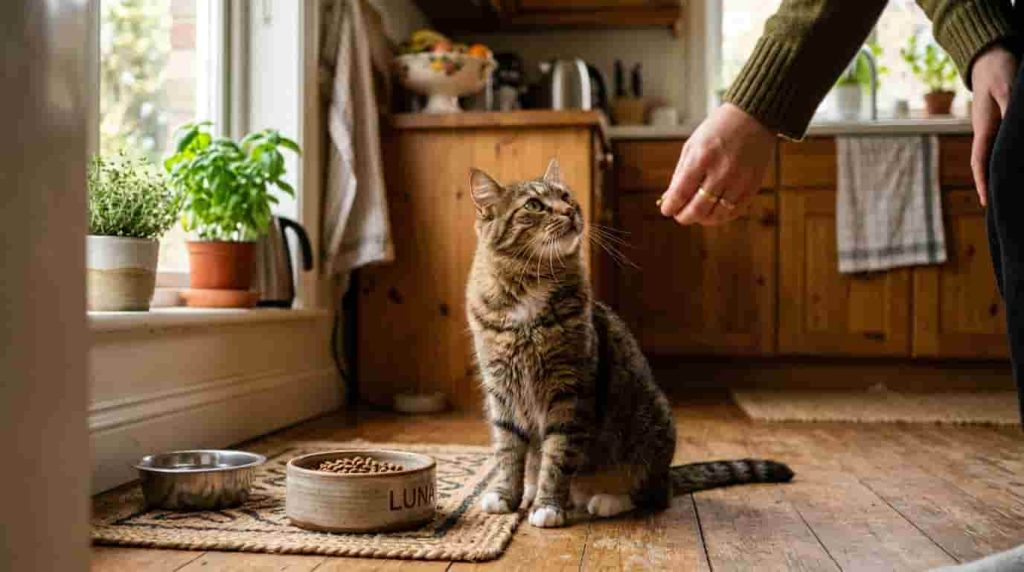
Many owners wonder if their feline companion genuinely cares about them or if they are simply viewed as a convenient food dispenser. Cats naturally associate their human owners with survival, meals, and overall care. However, food motivation does not mean a relationship lacks emotional attachment.
To identify behaviors that occur outside feeding routines, look for voluntary interactions. Does your cat approach you when food bowls are full and mealtime is hours away? Does your cat seek play, sleep near you, or greet you at the door when no food is involved? If the answer is yes, your cat loves you for who you are, not just what you feed them.
For a deeper look into how cats build emotional foundations, check out [How Do I Know If My Cat Trusts Me? 15 Signs of Feline Trust].
Does My Cat Love Me If She Sleeps on Me?
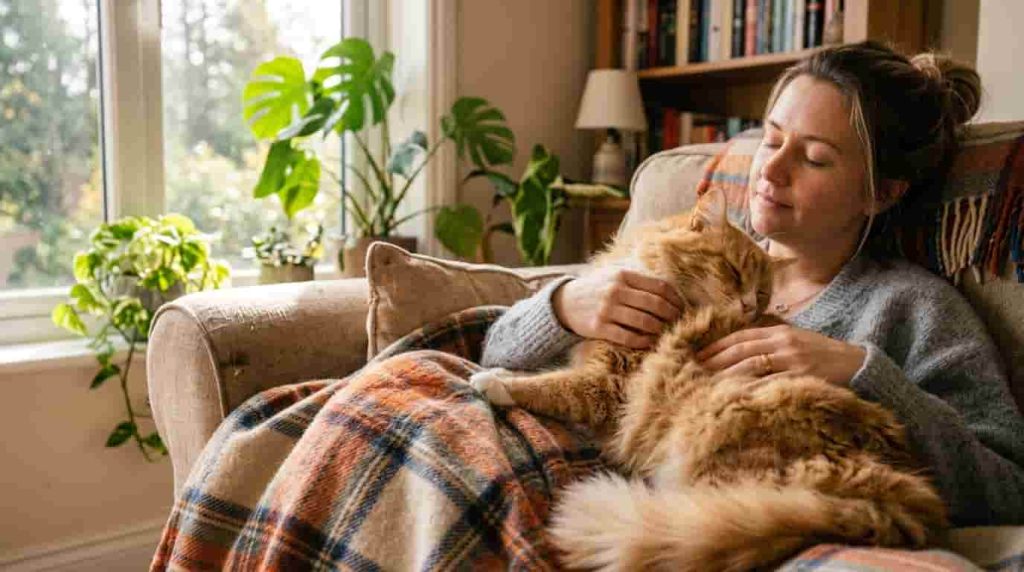
Sleeping directly on a human is a massive compliment in the cat world. Cats seek out warmth, familiarity, security, and ultimate comfort when choosing a sleeping spot. Variations include sleeping on the chest, resting on the lap, stretching out beside the owner, or curling up at the top of the bed.
Cats have distinct individual preferences. Some cats love physical contact and will demand lap time daily, while others prefer sleeping nearby. Remember that a cat does not need to sleep directly on top of you to have a deeply secure bond.
Can My Cat Feel That I Love Him?
Human concepts of love differ significantly from observable feline behavior, but cats are acutely perceptive creatures. They learn to recognize positive associations through gentle handling, consistent care, a soothing voice, predictable routines, and patient interaction.
Respecting your cat’s physical boundaries matters immensely. Forcing cuddles or picking up an unwilling cat can damage trust. Showing love to a cat often means granting them choice and control over when and how they interact with you.
To understand the foundational steps of emotional security, read [How Do I Know If My Cat Trusts Me? 15 Signs of Feline Trust].
Does My Cat Love Me as Much as I Love Them?
Measuring whether a cat’s feelings equal human emotional intensity is impossible, as cats experience the world through their own unique social and emotional patterns. Comparing human and feline affection often creates unrealistic expectations. Instead, focus on what is observable: comfort, trust, voluntary interaction, and consistent companionship. Your cat may express love quietly, but that does not make it any less real.
How Can You Tell If a Cat Really Likes You?
A concise summary of the strongest indicators of feline approval includes:
- Approaches you voluntarily
- Slow blinks at you
- Sleeps near you
- Rubs against you
- Seeks out play
- Follows you around
- Greets you upon arrival
- Grooms you
- Relaxes in your presence
- Consistently chooses your company
Shy, rescued, or independent cats may show fewer obvious signs of affection, making individual personality differences something to always keep in mind.
To evaluate whether your cat’s overall quality of life is thriving, explore [Is My Cat Happy? How to Tell If Your Cat Is Truly Happy].
What Is the 3-3-3 Rule of Cats?
The 3-3-3 rule is a widely discussed adjustment framework used when welcoming a new cat into a home: 3 days to decompress, 3 weeks to learn the routine, and 3 months to feel completely at home. While it is a general guideline rather than a strict scientific timetable, it is invaluable for newly adopted cats.
Hiding or avoiding contact early on does not mean rejection. Patience and predictable routines help a new cat settle safely into its environment, paving the way for affection to bloom naturally over time.
How Can I Strengthen My Bond With My Cat?
- Let your cat approach you: Avoid forcing contact and give your cat complete control over interactions.
- Use interactive play: Create positive shared experiences using wand toys tailored to your cat’s preferred play style.
- Learn cat body language: Watch eyes, ears, tail movements, and overall posture carefully.
- Keep routines predictable: Consistency helps cats feel secure in their territory.
- Provide comfortable resting spaces: Give your cat safe, elevated areas where they can retreat and observe.
- Try slow blinking: Use relaxed eye contact instead of staring to communicate safety.
- Respect boundaries: Stop petting immediately when the cat signals that it has had enough.
To discover why cats form strong attachments to specific individuals, read [How Do Cats Choose Their Favorite Person? What Makes Them Pick You?].
Frequently Asked Questions About Cat Love
Sleeping on the bed indicates comfort, warmth, and security. It serves as one reassuring sign of affection rather than definitive proof on its own.
Physical closeness demonstrates deep comfort and trust. Seeking your body heat is another primary motivator for this behavior.
Licking is a form of social grooming meant to bond and share scents. While it can also stem from curiosity, it is a friendly gesture.
Voluntary lap sleeping is a wonderful sign of affection and relaxation. Remember that individual cats vary greatly in their preference for physical contact.
Assess behavior patterns outside feeding times. Voluntary interaction, relaxation, playful engagement, and quiet companionship all point firmly toward love rather than mere tolerance.
Conclusion: How Do I Know If My Cat Loves Me?
How do I know if my cat loves me? Cats show affection quietly, often through subtle habits rather than grand gestures. The strongest evidence of a loving relationship is a consistent pattern of trust, relaxed body language, voluntary proximity, play, grooming, and everyday companionship. Not every cat is built to be a lap cat, and individual personalities heavily dictate how feline affection looks in practice. By noticing the small, everyday ways your cat chooses to spend time with you, you can appreciate the unique bond you share.
What is your cat’s favorite way of showing affection? Share it in the comments.