Why Does My Cat Meow When I Talk to It? What It Means
Introduction
Why Does My Cat Meow When I Talk to It is a common question because many cats seem to answer when their owners speak to them. In most cases, a cat’s response is part of normal cat-human interaction. Your cat may be seeking attention, responding to your voice, expecting something, greeting you, or using a familiar form of feline communication.
Cats do not all meow for the same reason. The meaning often depends on the situation, body language, tone, timing, and the cat’s usual vocalization patterns. This article will help readers understand why cats meow back, how to interpret the context, and when increased vocalization may need veterinary attention.
Why Does My Cat Meow When I Talk to It?
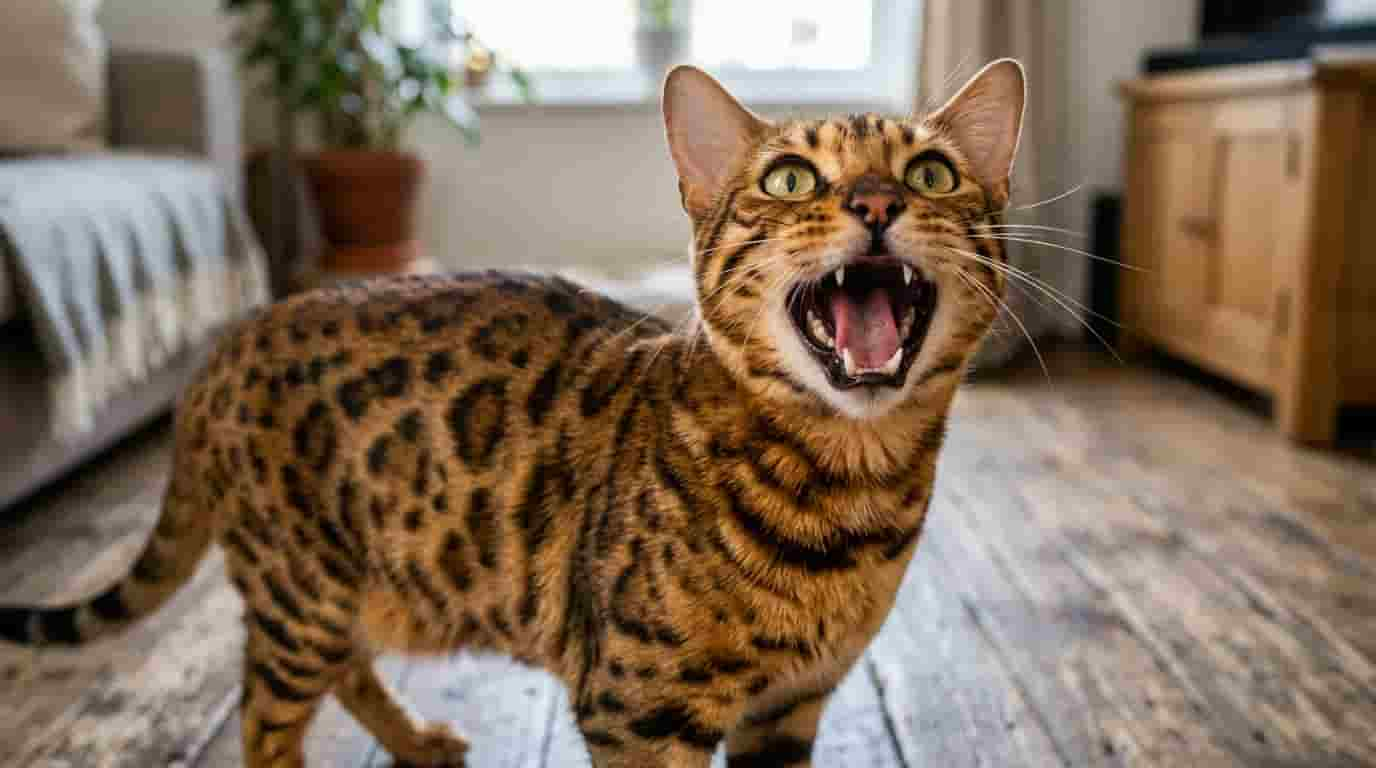
Cats may meow when spoken to because they have learned that vocalizing is an effective way to communicate with people. A cat may also respond to attention, recognize a familiar voice, anticipate food or interaction, or simply participate in a familiar social exchange. A meow does not have one universal translation.
The meaning depends heavily on:
- What happened immediately before the meow occurred.
- The cat’s overall body language and posture.
- The type, pitch, and intensity of the sound.
- The time of day and daily environmental routines.
- The cat’s normal, individual personality.
- Whether the behavior is brand new or an established habit.
Examining these nuances ensures you decode your cat’s intent accurately rather than guessing blindly.
Cats Often Meow More to People Than to Other Cats
Adult cats commonly use meowing as part of communication exclusively with humans, while communication between cats relies more heavily on body language, scent marking, posture, and non-meow vocalizations.
This behavior stems from the unique nature of cat-human interaction. Over thousands of years of domestication, cats have learned that people respond to auditory vocalizations in ways other cats do not. Over time, this makes meowing a highly effective, learned part of pet communication. However, this does not suggest that every meow is a deliberate, linguistic attempt to “talk” in the same complex way humans use language.
Common Reasons Your Cat Meows Back When You Talk

Your Cat Is Responding to Your Attention
Your voice signals that you are focused on your cat. A cat may meow because it wants to continue the interaction or has learned that responding brings positive attention.
Common examples include:
- You walk into a room and say your cat’s name.
- You approach the cat while it is resting.
- You make direct eye contact and smile.
- You begin talking in a warm, familiar tone of voice.
The meow in these instances is simply part of a reciprocal social exchange.
Your Cat Recognizes Your Voice or Tone
Cats process human vocal patterns and can distinguish their owners’ voices from strangers. The tone of your voice matters greatly; for example, a calm, soothing greeting produces a very different physiological and behavioral response compared to an excited call right before mealtime. Cats develop these learned associations over years of living closely with humans, without necessarily needing to understand every individual spoken word.
Your Cat Wants Something

Cat meowing reasons are frequently linked to a specific need or expectation.
Common triggers include:
- Hunger or anticipation of food.
- A desire for a tasty treat.
- A sudden urge to play with a wand toy.
- Craving focused attention or cuddles.
- Asking for access to a closed room or patio.
- Wanting a door opened.
Context gives the best clue. If your cat meows every time you speak near the kitchen counter, food is likely part of the pattern.
Your Cat Is Greeting You
Addressing the common search intent behind cat meows at me when I come home, many cats vocalize when a familiar person enters the room or returns from work. These greetings often include other feline vocalization sounds, such as friendly trills or high-pitched chirps. Observing relaxed body language, such as an upright tail with a slight curve, confirms they are simply saying hello.
Your Cat Has Learned That Meowing Gets a Response
Repeated interactions shape pet vocalization patterns over time. For instance, a cat meows whenever its owner asks, “What do you want?” The owner then approaches, pets the cat, or offers a snack. Over time, the cat learns that vocalizing is a reliable way to keep the interaction going. This is learned communication rather than manipulation, highlighting why consistency matters when managing cat meowing.
What Does It Mean If a Cat Meows at You?
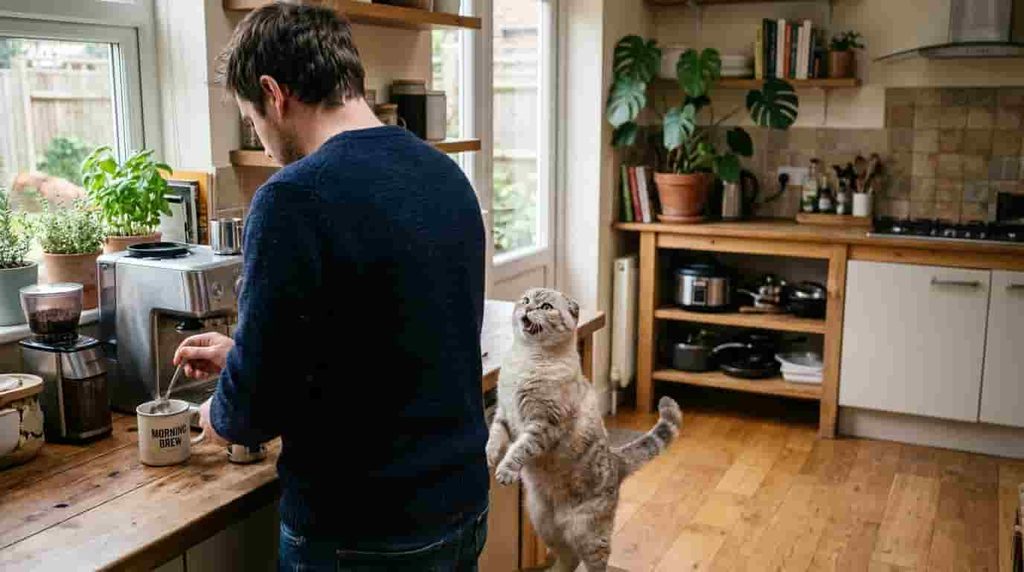
The meaning can range from a friendly greeting to a direct request, a complaint, a conversational response, or an urgent attempt to gain attention. To decipher it, evaluate the full situation using a practical framework:
Look at the Timing
Ask yourself these questions:
- Did you just arrive home from outside?
- Did you speak to the cat first?
- Is it close to the cat’s scheduled mealtime?
- Are you walking toward a closed door?
- Did you just stop petting or interacting with the cat?
Look at Body Language
Observe these physical indicators:
- Tail position and movement (e.g., question mark tail versus twitching tail).
- Ear position (forward-facing versus flattened back).
- Overall body tension or relaxation.
- Distance from you and direction of movement.
Look at What Happens Next
Notice whether the cat:
- Walks directly toward the food bowl.
- Leads you toward a closed door or hallway.
- Rubs its face and body against your legs.
- Guides you toward a favorite toy basket.
- Walks away calmly after meowing.
Analyzing this sequence reveals the true meaning behind the vocalization.
Are Cats Happy When They Meow at You?
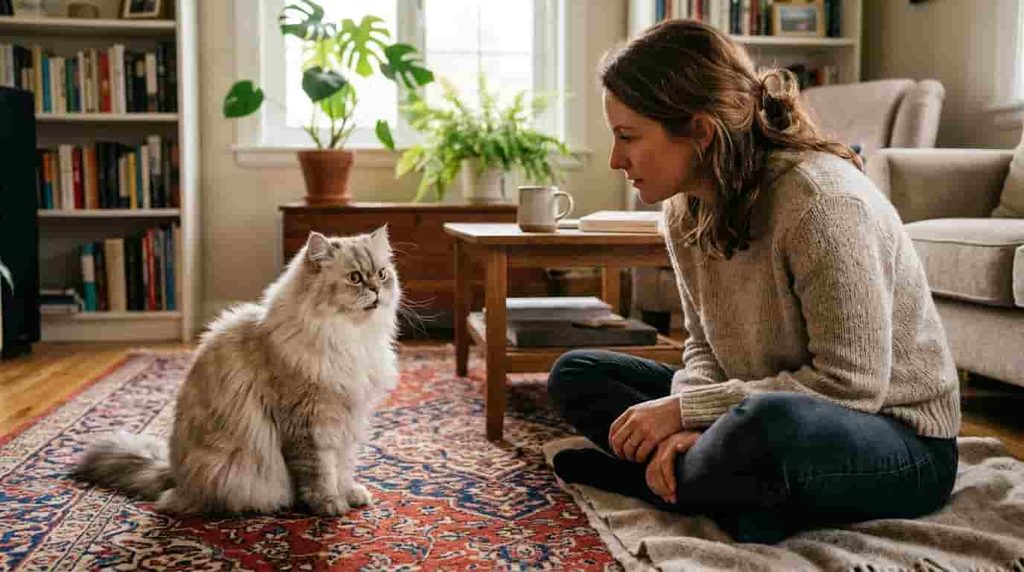
A meow alone cannot reliably prove happiness. Some cats vocalize when they are content, excited, or curious, but others meow due to frustration, hunger, or anxiety.
Examining relaxed body language alongside the surrounding environment provides a clearer window into your cat’s emotional state. Vocalizations must always be interpreted alongside overall behavior rather than in isolation.
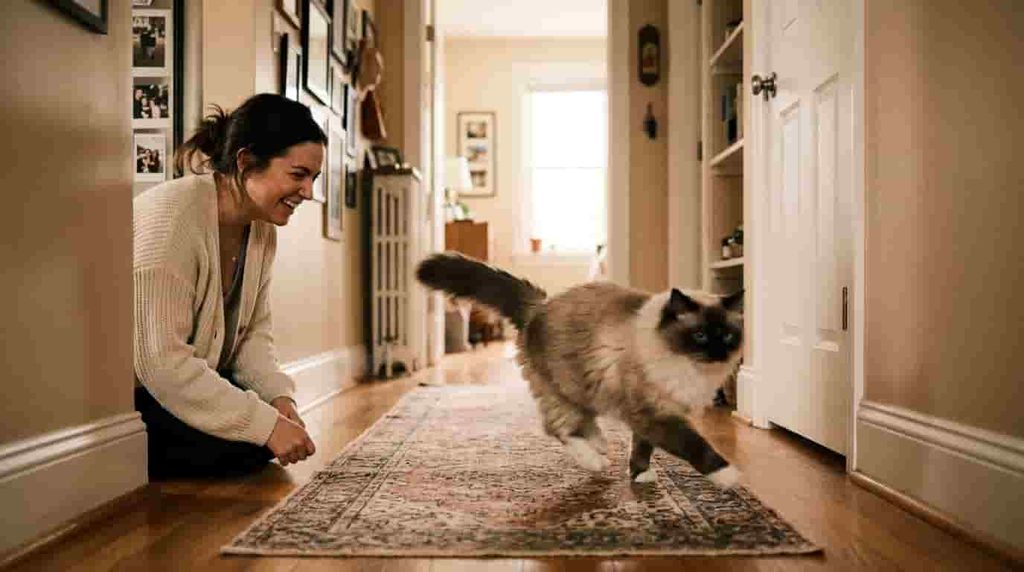
Why Does My Cat Meow at Me and Then Run Away?
This common PAA variation can be confusing, but several explanations exist:
- The cat wants you to follow it somewhere specific.
- It is inviting playful interaction or a game of chase.
- It wants your attention but prefers distance over physical contact.
- Something in the environment caught its sensory attention.
- The cat feels momentarily unsure, startled, or overstimulated.
Running away after meowing is rarely a sign of rejection. Pay attention to where the cat goes; leading you to a food bowl or toy basket provides an obvious clue.
Why Does My Cat Meow When I Pet It?
The Cat Wants More Interaction
A relaxed cat may vocalize softly while enjoying physical attention, signaling that it is content and wants the petting session to continue.
The Cat Is Becoming Overstimulated
Some cats tolerate petting for only a limited time before becoming overwhelmed. Look for signals like increasing body tension, rippling skin, tail swishing, or turning the head toward your hand. Stop petting before the cat reaches its threshold.
The Cat Is Uncomfortable
Vocalizing during touch—especially if it is new behavior, accompanied by sudden withdrawal, or paired with signs of pain—deserves careful attention, bridging into potential medical concerns.
Why Does My Cat Meow at Me When I Walk By?
Cats often use a passing owner as a convenient opportunity to communicate. Possible motivations include seeking attention, expecting a routine event like dinner, wanting to play, greeting you warmly, or asking you to follow. Repeated timing reveals these patterns; a cat that meows every time you walk down the hallway toward the kitchen has formed a clear feeding expectation.
Why Does My Cat Meow at Me All the Time?
Frequent vocalization can stem from a naturally talkative personality, strong learned habits, environmental needs, stress, or medical issues. It is vital to distinguish between a cat that has always been vocal since kittenhood and a cat that suddenly starts meowing much more than usual. A sudden shift warrants immediate attention.
Why Is My Cat Meowing More Than Usual?
Transitioning from normal communication to possible welfare concerns, non-medical causes include routine changes, increased boredom, environmental stress, new household members, or altered feeding patterns.
However, increased vocalization frequently occurs alongside medical problems, chronic pain, sensory decline, or age-related cognitive dysfunction. According to guidance from veterinary resources like the Cornell Feline Health Center, sudden or excessive vocalization should always be evaluated in context.
When Should Cat Meowing Be a Reason to Call the Veterinarian?
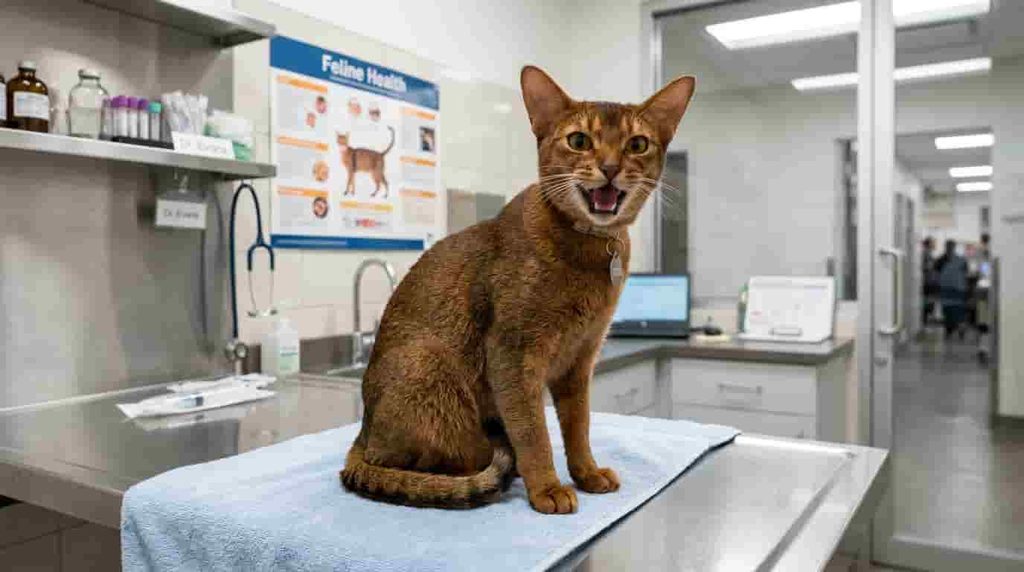
Consult a veterinarian when vocalization is:
- Sudden, dramatic, or significantly increased from baseline.
- Accompanied by changes in appetite or drinking habits.
- Linked with unexplained weight loss or weight gain.
- Accompanied by litter box changes or accidents outside the box.
- Associated with visible signs of pain or stiffness.
- Accompanied by confusion, pacing, or unusual nighttime crying.
- Paired with withdrawal, weakness, or lethargy.
Veterinary professionals can rule out underlying medical causes before assuming the issue is purely behavioral.
How to Understand Your Cat’s Meows Better
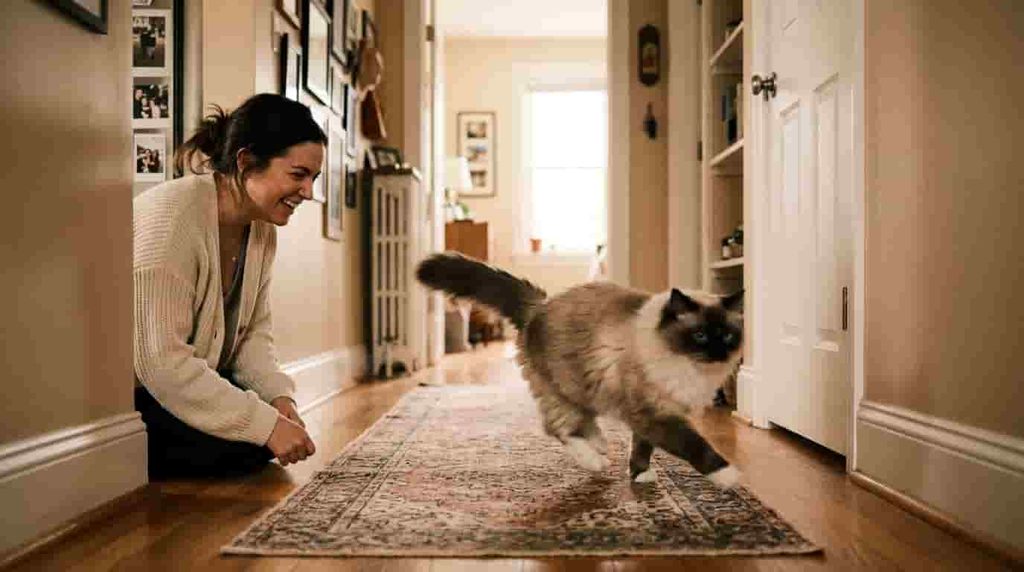
Notice Patterns Instead of One Isolated Meow
Ask yourself: When does the cat meow? Who is in the room? What happens immediately afterward? Does the cat lead you somewhere? Does it repeat the same sound in identical situations?
Pay Attention to Changes in Sound
Pitch, duration, and intensity vary. Rather than looking for a rigid dictionary, learn your own cat’s individual communication baseline.
Watch the Whole Cat
Understanding feline behavior requires looking at eyes, ears, tail, posture, movement, and the surrounding environment simultaneously.
Should I Ignore My Cat Meowing at Me?
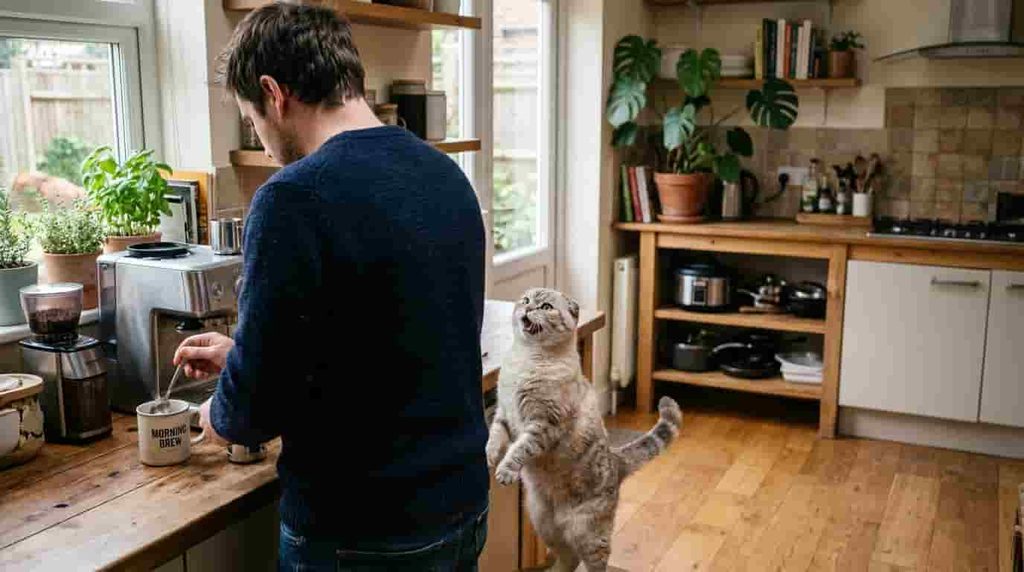
The best response depends entirely on why the cat is vocalizing.
When Responding Makes Sense
- The cat genuinely needs food or fresh water.
- The litter box is dirty and needs cleaning.
- The cat appears distressed or trapped.
- The cat may be injured or unwell.
- The cat is making a calm, reasonable request for social interaction.
When Repeated Responses May Reinforce the Behavior
Constantly responding with treats or heavy attention to every non-urgent meow strengthens an attention-seeking habit. Never punish or yell at your cat; the goal is to understand the root cause and respond appropriately, not to ignore genuine communication.
How Talking to Your Cat Can Improve Cat-Human Interaction
Regularly speaking to your cat builds a predictable social routine. Cats learn associations between their names, familiar phrases, tone of voice, mealtime words, and play invitations. This strengthens your bond, provided you respect your cat’s boundaries and desire for downtime.
Common Mistakes When Interpreting Cat Vocalization
- Assuming Every Meow Means the Same Thing: Context completely alters the meaning of a vocalization.
- Treating Loud Meowing as Bad Behavior: Vocalization is communication and should be understood, never punished.
- Ignoring Sudden Changes: A sudden increase in meowing indicates an unmet need or health shift.
- Focusing Only on the Sound: Disregarding body language leads to misinterpretation.
- Assuming Cats Understand Every Word: Cats learn sound associations rather than human language syntax.
Other Sounds That Help You Understand Your Cat
Cats use a rich vocabulary beyond meows, including trills, chirps, purrs, yowls, hisses, and chatters. For a broader explanation of unusual sounds, check out Why Does My Cat Make Weird Noises? Common Sounds Explained
What If My Cat Hisses When I Talk or Approach?
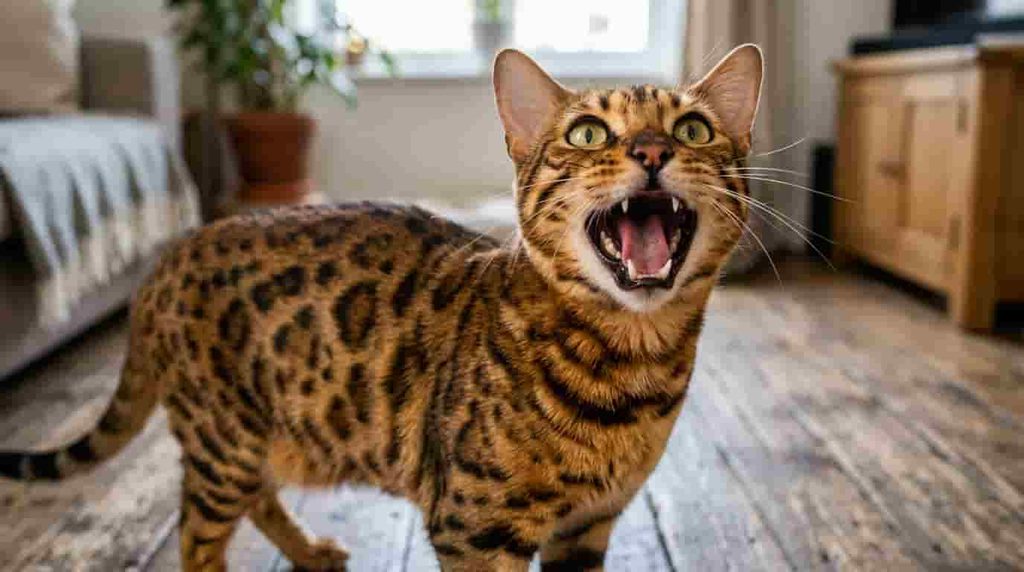
Hissing requires a different interpretation than ordinary meowing, as it usually signals fear, discomfort, stress, feeling threatened, or a strong desire for space. For detailed guidance on defensive behaviors, read Why Does My Cat Hiss at Me? Causes and What It Means
What If My Cat Meows When I Leave?
A cat that responds when spoken to may also vocalize when its owner walks out the door, though these separation behaviors have distinct triggers like routine changes, access barriers, or distress. Learn more in Why Does My Cat Meow When I Leave? Causes and What It Means
Why Does My Cat Meow When I Talk to It? The Bottom Line
Cats meow back because they are responding to attention, greeting their owner, making a request, continuing a familiar interaction, or reacting to a learned routine. Never try to translate a single sound in isolation. Look at the preceding context, watch the cat’s body language, and observe what happens next. Sudden or unusual increases in vocalization always warrant veterinary advice.
Does your cat seem to answer when you talk? Share the sounds or situations you have noticed in the comments below!
Frequently Asked Questions
Do cats understand when you talk to them?
Cats learn to recognize familiar sounds, human voices, names, and household routines. They respond to tone and learned associations even if they do not understand human language structure.
Why does my cat meow at me in the morning?
Morning meowing is usually connected with hunger, established morning routines, attention-seeking, or the anticipation that you are about to wake up.
Why does my cat meow when I sneeze?
A sudden, loud sneeze can surprise or startle a cat, triggering an immediate vocal reaction. If this happens consistently, your cat has simply formed a sound association.
Why does my cat meow at me but not want to be touched?
Your cat may want social attention or a specific resource without desiring physical contact. Observe its body language and movement rather than assuming a meow is an invitation to pet.
Why is my cat suddenly meowing so much?
A sudden increase in vocalization can stem from behavioral stress or underlying medical issues. If the change is pronounced or paired with other symptoms, consult a veterinarian.