How to Bathe a Kitten That Hates Water: Safe Steps, Age, Shampoo and Tips
Introduction:
How to Bathe a Kitten That Hates Water is a scenario that nearly every cat owner faces at some point. Waking up to a muddy, sticky, or soiled young cat can turn a quiet morning into a stressful ordeal. Most felines have an innate aversion to being submerged in water, and when forced into a bath, their natural instinct is to panic, scratch, struggle, or try to escape. Handling a frightened young cat requires extreme patience, a gentle touch, and an environment structured to keep both you and your pet safe.
It is important to realize that not every young cat requires frequent full-body baths. Because felines are fastidious self-groomers, routine washing is rarely necessary unless they have encountered a mess they cannot safely clean themselves. The safest approach to bathing a water-averse cat depends on their age, coat type, overall health, and the specific reason a bath is required. In this comprehensive guide, we will cover when a bath is genuinely necessary, the appropriate age precautions, essential supplies to gather, a detailed step-by-step bathing process, safe shampoo choices, techniques to prevent scratches, proper post-bath drying, and how to handle special situations like fleas or severe distress.
Does a Kitten Really Need a Bath?
Before gathering supplies and filling a basin, the first question every pet owner should ask is whether a full bath is truly required. Felines possess specialized, barbed tongues designed to comb through their fur and remove daily dirt and loose hair. Forcing a bath on a water-averse animal when it is not strictly necessary can cause undue trauma and strain your bond.
Common reasons a kitten may need bathing
While self-grooming handles daily maintenance, certain situations override a cat’s ability to clean itself:
- Heavy Environmental Soil: Tracking through deep mud, sticky outdoor debris, or wet paint.
- Sticky or Toxic Substances: Getting engine oil, sap, household cleaners, or toxic foods stuck to the fur. A bath is vital here to prevent the animal from ingesting harmful chemicals during self-grooming.
- Fecal or Urinary Contamination: Long-haired breeds or young animals recovering from digestive upset often get diarrhea or urine trapped in their hindquarter fur.
- Specialized Grooming Needs: Sphynx or other hairless breeds require routine skin washing to remove accumulated body oils.
- Parasite Management: Severe flea infestations in young animals where chemical topical treatments cannot yet be safely applied.
- Medical Skin Conditions: Veterinary-prescribed medicated baths to treat ringworm, fungal infections, or severe dermatitis.
When a bath may not be the best solution
If your pet only has a small spot of dirt on their paw or a dusty coat from playing under furniture, a full submersion bath is usually overkill. Minor dirt can often be removed simply by brushing the coat thoroughly once it dries. Alternatively, spot-cleaning the dirty area with a damp washcloth or using cat-safe grooming wipes can resolve the issue without the stress of a full bath.
At What Age Can a Kitten Be Bathed?
Age and body mass are critical factors when deciding whether it is safe to immerse a young cat in water. Very young animals lack the physiological capability to regulate their own body temperature efficiently.
Why very young kittens need extra care
Newborn and very young animals rely on their mother’s body heat and maternal grooming to stay warm and clean. Getting a young cat soaked in water strips away their body heat rapidly, putting them at severe risk for hypothermia—a dangerous drop in body temperature that can be fatal.
Furthermore, young animals have delicate skin and vulnerable immune systems. The physical stress of panicked struggling combined with chilled skin can quickly lead to respiratory illness or severe distress. As a general rule, full-body submersion baths should be avoided in animals under eight weeks of age unless explicitly directed by a veterinarian for emergency parasite or medical management.
Before bathing a very young kitten
If an animal under eight weeks of age becomes heavily soiled with feces or a toxic substance, take these precautions:
- Perform Spot-Cleaning Only: Wash only the specific soiled area (e.g., the hindquarters) rather than soaking the entire body.
- Warm the Room First: Ensure the room is draft-free and heated to a comfortable temperature before getting any part of the coat wet.
- Use Warm Water: Double-check that the water is comfortably warm to the touch (around 100°F or 38°C).
- Prepare Heavy Towels: Have warm, dry towels ready to wrap and dry the animal the instant washing is complete.
Why Does My Kitten Hate Water?
Understanding why your pet panics around water helps you adjust your handling technique to minimize fear. A cat’s aversion to water stems from key biological and sensory factors:
- Evolutionary Ancestry: Domestic cats descended from desert-dwelling ancestors with minimal exposure to large bodies of water.
- Physical Discomfort: Fur absorbs significant water weight, leaving cats feeling restricted, weighed down, and vulnerable.
- Sensory Overload: Loud rushing taps, strong soap fragrances, and shifting temperatures overwhelm their acute senses.
- Loss of Traction: Slippery sink or tub basins eliminate stability, triggering instant panic.
Signs your kitten is becoming too stressed
Recognizing early warning signs of fear allows you to pause and de-escalate before struggling turns into aggressive scratching:
- Excessive, high-pitched meowing, howling, or yowling.
- Rapid, shallow breathing or open-mouth panting.
- Dilated pupils and ears flattened tightly against the head.
- Tense, rigid body posture or frantically trying to climb up your arms.
- Involuntary urination or defecation.
What Should You Prepare Before Bathing a Kitten?
Organization is the secret to a successful, low-stress bath. Trying to reach for a bottle of shampoo or searching for a dry towel while holding a slippery, struggling pet is a recipe for disaster.
Bathing supplies checklist
Gather all of the following items before bringing your pet into the bathing area:
- Cat-Safe Shampoo: Formulated specifically for felines (never human soap).
- Multiple Dry Towels: At least two to three clean, absorbent bath towels.
- A Non-Slip Mat: A rubber bath mat or small towel placed at the bottom of the sink or basin to provide grip.
- A Pouring Cup or Handheld Sprayer: For gentle wetting and rinsing without loud faucet noises.
- A Soft Washcloth: For gently cleaning the face separately.
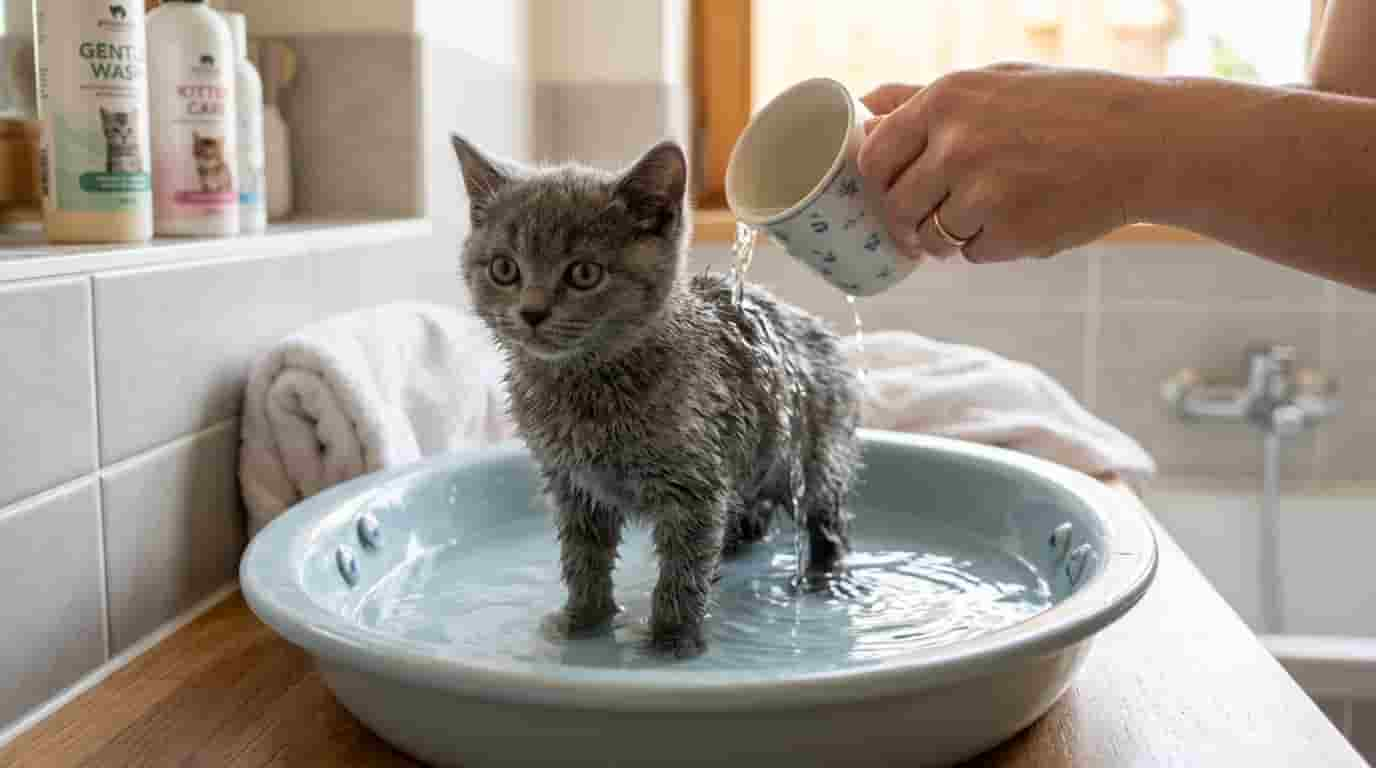
- Lukewarm Water: Pre-filled in a basin to a depth of only 2 to 3 inches.
Prepare the room first
Choose a small, enclosed room—such as a warm bathroom—and close all doors, windows, and toilet lids. A small space prevents the animal from escaping and hiding under large furniture if they slip out of your hands. Keep the room comfortably warm, and place all your supplies within easy arm’s reach of the washing basin.
If you share your home with other pets, make sure they are secured outside the room to prevent sudden intrusions during bath time. If you are also managing multi-pet dynamics, check out our guide on How to Introduce a Kitten to a Dog: Safe Steps, Good Signs and Common Problems
to ensure all interactions in your household stay calm and stress-free.
Prepare the kitten
Never snatch an active, energetic young cat mid-play and dump them directly into a sink. Wait for a quiet moment when they are calm. Gently brush their coat first to remove loose fur, tangles, and dry dirt mats. Matting traps water and shampoo against the skin, leading to severe irritation if left unbrushed.
What Shampoo Can You Use on a Kitten?
Using the wrong cleaning agent is one of the most common mistakes pet owners make. A cat’s skin has a significantly different pH balance than human skin, and their thin epidermal layer absorbs topical chemicals rapidly.
| Skin Type | Average pH Level | Recommended Care | Potential Risks |
| Cat Skin | 6.0 – 7.5 (Slightly Neutral/Alkaline) | Cat-safe or kitten-formulated products | Human products cause flaking & irritation |
| Human Skin | 5.5 – 5.8 (Slightly Acidic) | Human soaps & baby shampoos | Too acidic for feline skin barrier |
Choose a shampoo made for kittens or cats
Always select an unfragranced or mildly scented shampoo specifically labeled for felines. Look for hypoallergenic formulas containing gentle, soothing ingredients like aloe vera or oat protein. If you are bathing an animal under 12 weeks of age, verify that the label explicitly states it is safe for young cats.
Can you bathe a kitten with baby shampoo?
While human baby shampoo is tearless and formulated for sensitive human skin, it is still not ideal for regular use on felines. Human skin is acidic, whereas cat skin is more neutral to slightly alkaline. Using human baby shampoo can disrupt the natural acid mantle of your pet’s skin, leading to dryness, scaling, and severe itching. It should only be used as an absolute last resort in an emergency when no cat shampoo is available.
Can you bathe a kitten with Dawn?
Original blue Dawn dish soap is famous for its use in wildlife rescue operations to remove oil spills, and it is frequently cited online as a DIY flea remedy. However, dish soap is a harsh surfactant designed to strip heavy grease off cookware. Routine use on a young cat strips away essential natural skin oils, causing extreme cutaneous dryness, flaking, and irritation. Dish soap should never be used as a routine grooming shampoo.
How to Bathe a Kitten That Hates Water Step by Step
Following a structured, methodical routine reduces fear and keeps bath time efficient. Here is the step-by-step process for washing a water-averse pet safely.
1. Choose the right time
Select a time of day when your home is quiet and free of chaotic activity. Avoid bathing your pet right after a high-energy play session or immediately after they have eaten. A relaxed, slightly sleepy animal is much easier to manage than an overstimulated one.
2. Set up a secure bathing area
A bathroom or kitchen sink is far superior to a deep, full-sized bathtub. A sink allows you to stand comfortably without leaning over, giving you better physical control. Place a rubber non-slip bath mat or a wet hand towel directly on the bottom of the sink basin. Having a secure surface to grip with their claws instantly lowers a cat’s panic levels.
3. Introduce water gradually
Pre-fill the sink with 2 to 3 inches of lukewarm water before bringing your pet into the room. Running water from a faucet creates loud splashing and hissing noises that terrify water-averse animals. Never place your pet into an empty sink and turn the faucet on over them.
4. Keep the kitten secure without squeezing
Lower your pet gently into the sink, allowing their paws to make contact with the non-slip mat. Hold them firmly but gently by the scruff of the neck or place one hand securely under their chest. Support their body weight at all times. Never squeeze, clamp down, or wrestle aggressively with a struggling pet, as physical restraint escalates panic.
5. Wet the coat carefully
Using a small plastic cup, scoop warm water from the basin and gently pour it over your pet’s back, shoulders, and hindquarters. Start from the neck and work backward toward the tail. Keep the stream of water low and controlled. Never pour water over the head.
6. Apply kitten-safe shampoo
Pour a small, dime-sized amount of cat shampoo into your palm, rub your hands together to lather it, and massage it gently into the wet fur. Work the lather down to the skin, paying special attention to the underbelly, paws, and tail base. Avoid vigorous scrubbing; use smooth, massaging strokes in the direction of fur growth.
7. Rinse thoroughly
Rinsing is the most crucial part of the bath. Dried shampoo residue left on the skin causes severe contact dermatitis, scaling, and intense itching. Furthermore, your pet will ingest any remaining soap residue when self-grooming after the bath. Use clean, warm water to rinse the coat repeatedly until the runoff water is 100% clear and free of bubbles.
8. Clean the face separately
Never pour water directly over a cat’s head, and never apply shampoo to their face. Water entering the ear canal can cause painful bacterial ear infections, while soap in the eyes causes chemical conjunctivitis. To clean the facial area, use a soft, damp washcloth dipped in plain warm water. Gently wipe around the mouth, chin, and forehead.
If you notice tear staining, crusting, or discharge while wiping around the facial area, refer to our dedicated guide on How to Clean a Kitten’s Eyes Safely: What to Use, Infection Signs and When to See a Vet
for proper wipe-down steps and warning signs.
9. Finish quickly and calmly
Keep the entire washing process under five minutes. The faster you complete the bath, the less stressed your pet will be. Once rinsing is complete, gently squeeze excess water from the legs, tail, and coat with your hands before lifting them directly into a dry towel.
How to Bathe a Kitten Without Scaring It
Minimizing fear requires controlling the environmental stimuli that trigger a cat’s panic response:
- Eliminate Running Water Noises: Pre-fill all washing water into cups or basins before bringing the animal into the room.
- Provide Footing Traction: Never force a cat to stand on slick porcelain; always use a wet towel or non-slip mat.
- Control the Air Temperature: Ensure the room is warm and draft-free so the animal does not shiver when wet.
- Maintain Calm Handler Energy: Speak in a soft, low-pitched, soothing voice. Felines pick up on human tension and frantic energy immediately.
How to Bathe a Kitten Without Getting Scratched
Scratches occur when an animal feels unsupported and tries to climb up your arms to escape the water. Protecting yourself and your pet involves smart physical positioning:
- Trim Claws Ahead of Time: Gently clip the sharp tips of your pet’s claws 24 hours prior to bath time to minimize scratch severity.
- Use the Towel-Shield Method: Have an extra towel draped over your forearm to block accidental scratches if the animal reaches out.
- Never Scruff Excessively: While a light scruff grip can steady a cat, dragging or suspending an animal by their scruff causes pain and intense defensiveness.
- Stop If Aggression Escalates: If your pet begins flailing, biting, or screaming hysterically, stop immediately. Wrap them in a towel, lift them out of the water, and allow them to calm down. Forcing a bath on a violently resistant cat leads to severe injuries for both handler and pet.
How to Bathe a Kitten With Fleas
Fleas are a dangerous nuisance in young animals. Because severe flea burdens can cause life-threatening anemia, removing parasites quickly is critical.
Why flea products need extra caution in kittens
Chemical flea shampoos, spot-on treatments, and dips designed for adult cats contain organophosphates, pyrethrins, or permethrins that are highly toxic to young animals. Always read product labels strictly; most chemical flea shampoos cannot be used on animals under 12 weeks of age.
Bathing method for fleas
If you are washing a young animal to remove fleas safely:
- Create a Soap Barrier: Before wetting the body, apply a ring of cat-safe shampoo around the animal’s neck. When fleas feel water, they instinctually migrate upward toward the dry fur on the head and face. The soap barrier traps and smothers them before they reach the eyes and ears.
- Use a Flea Comb: Gently submerge the body, lather with cat-safe shampoo, and use a fine-toothed flea comb to pull trapped parasites out of the fur, dipping the comb into hot soapy water to kill the fleas.
- Seek Veterinary Guidance: For heavy infestations, consult a veterinarian for safe, age-appropriate oral or topical flea preventatives.
What to Do After Bathing a Kitten
The post-bath drying phase is just as critical as the bath itself. Wet fur evaporates body heat rapidly, leaving young animals vulnerable to chilling.
Dry the kitten immediately
Lift your pet straight out of the basin and wrap them securely in a plush, dry towel. Gently rub the coat in small circular motions to absorb surface water. If the towel becomes saturated, replace it immediately with a second dry towel.
Never use a human hair dryer unless it has a specific “cool/no-heat” setting and operates at an ultra-quiet noise level. The high heat from a hair dryer can easily burn thin feline skin, and the roaring noise causes severe psychological terror.
Keep the kitten warm
Keep your pet confined in a warm, draft-free room until their coat is 100% dry. You can place a pet-safe heating pad (set on low and covered with a thick blanket) or a warm water bottle in their resting area to provide gentle supplemental heat.
Check the skin and coat
Once dry, inspect the skin for any residual soap flakes, redness, or irritation. Brush the coat gently to restore fluffy texture and prevent tangles.
Common Kitten Bathing Mistakes to Avoid
- Using Hot or Cold Water: Water must be strictly lukewarm (tested on your inner wrist).
- Using Human Soaps or Dish Soap: Strips essential skin oils and causes severe dryness.
- Pouring Water Over the Face: Causes ear infections and eye damage.
- Forgetting Non-Slip Mats: Slick surfaces cause immediate panic.
- Rushing the Drying Process: Leaving a young cat damp in a cold room risks hypothermia.
- Extending Bath Time: Prolonging the session beyond 5 minutes causes severe psychological stress.
What If My Kitten Still Refuses to Bathe?
If your pet panics violently despite every precaution, abandon full-body submersion entirely. Alternatives include:
- Cat-Safe Waterless Grooming Foams: Massaged into dry fur and brushed out to absorb dirt.
- Grooming Wipes: Pre-moistened, cat-safe wipes ideal for cleaning dirty paws and hindquarters.
- Spot-Cleaning: Washing only the dirty paw or tail section under a slow trickling tap while the animal remains wrapped in a towel.
How Do I Get My Kitten to Like Water?
While few cats will ever love water, you can desensitize them to the bathroom environment over time:
- Positive Association: Place your pet in a dry sink with a non-slip mat and feed them high-value treats or lickable snacks.
- Low-Volume Exposure: Turn on a faucet to a tiny trickle in another room so they become accustomed to water sounds.
- Gentle Handling: Frequently touch their paws and belly during calm petting sessions so facial and body handling feels normal.
When Should You Avoid Bathing a Kitten at Home?
Skip home bathing and contact a veterinarian immediately if:
- The animal is under 8 weeks old and heavily soiled or sick.
- The animal shows symptoms of an upper respiratory infection (sneezing, coughing, lethargy).
- The coat is contaminated with unknown chemicals, motor oil, or toxic substances.
- The animal exhibits extreme, uncontrollable panic or aggression.
When Should a Vet or Professional Groomer Help?
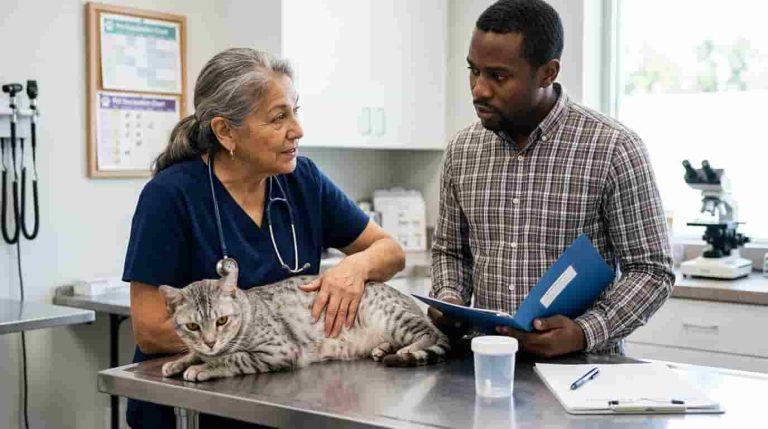
Seek professional assistance when self-grooming issues stem from underlying medical problems, such as severe diarrhea, skin infections, or mobility deficits. Professional groomers have specialized equipment, including feline-handling hammocks and quiet dryer enclosures, designed to handle water-averse pets safely.
Case Examples: Managing Bath Time Scenarios
Scenario 1: Controlled, Low-Stress Bathing
A 10-week-old kitten named Milo gets covered in wet garden mud. His owner pre-fills a bathroom sink with 2 inches of lukewarm water, places a non-slip rubber mat on the bottom, and drapes a towel over their forearm. Milo meows anxiously upon touching the water, but because the room is quiet and his paws have solid footing, he remains manageable. The owner wets his body with a cup, applies cat shampoo, rinses thoroughly in 3 minutes, and wraps him in a warm towel. Milo dries comfortably next to a wrapped warm water bottle and recovers quickly.
Scenario 2: Severe Panic requiring Alternative Methods
An 8-week-old kitten named Bella becomes terrified of the water, screaming loudly, flailing wildly, and biting at her owner’s hands when lowered into a basin. Recognizing severe panic, the owner immediately aborts the bath, wraps Bella in a thick towel, and allows her to calm down in a warm room. Instead of forcing a full bath, the owner uses cat-safe grooming wipes and a damp cloth to spot-clean the soiled areas over the next few hours, avoiding injury and severe trauma.
Quick Kitten Bath Checklist
Before the Bath
- [ ] Pre-fill sink with 2–3 inches of lukewarm water.
- [ ] Place a rubber non-slip mat in the sink.
- [ ] Gather cat-safe shampoo, pouring cup, and soft washcloth.
- [ ] Stack 2–3 dry towels within easy reach.
- [ ] Close all doors and windows to keep the room warm.
During the Bath
- [ ] Lower pet gently onto the non-slip mat.
- [ ] Wet the coat using a pouring cup (keep water off the head).
- [ ] Lather gently with cat-safe shampoo.
- [ ] Rinse repeatedly until runoff water is crystal clear.
- [ ] Wipe the face gently with a damp washcloth.
After the Bath
- [ ] Wrap immediately in a plush towel and gently dry.
- [ ] Keep in a warm, draft-free room until 100% dry.
- [ ] Reward with high-value treats and quiet praise.
Frequently Asked Questions About Bathing Kittens
Can you bathe a kitten?
Yes, young cats can be bathed when genuinely necessary due to heavy dirt, sticky toxins, or medical needs. However, their age, overall health, and ambient room temperature must be carefully managed to prevent chilling.
How often should you bathe a kitten?
Routine bathing is generally unnecessary because cats groom themselves efficiently. Unless your pet encounters heavy soil, parasites, or a medical condition, baths should only occur on an occasional, as-needed basis.
Can I bathe a kitten with baby shampoo?
Human baby shampoo should not be used regularly because human products have an acidic pH that disrupts a cat’s neutral skin barrier. It should only be used in an emergency when cat-specific shampoo is completely unavailable.
Can I bathe a kitten with Dawn?
Original blue Dawn dish soap should not be used as a routine shampoo because it severely strips natural skin oils. While sometimes used in emergencies for oil removal, cat-safe formulations are far better for skin health.
How can I clean my kitten if it does not like water?
If your pet strongly dislikes water, use cat-safe waterless grooming foams, pre-moistened pet wipes, or damp spot-cleaning cloths to remove dirt without full submersion.
Conclusion — How to Bathe a Kitten That Hates Water
Successfully mastering How to Bathe a Kitten That Hates Water comes down to thorough preparation, gentle handling, and prioritizing your pet’s emotional and physical safety. Always evaluate whether a full submersion bath is truly necessary before getting your pet wet. By choosing a small, warm room, using non-slip surfaces, selecting cat-safe shampoos, and drying your pet thoroughly, you can transform a chaotic ordeal into a quick, manageable routine.
Always respect your pet’s limits—if an animal exhibits extreme distress, back off and utilize waterless grooming alternatives or seek professional veterinary guidance.
Does your young cat tolerate bath time, or do they strongly dislike water? What gentle handling tricks have worked best for your home routine? Share your experiences in the comments below!