Oriental Shorthair Cat: Price, Personality, Health Issues, Vocal Traits and Care
Introduction:
The Oriental Shorthair Cat is one of the most distinctive, expressive, and captivating breeds in the feline world. Known for its sleek silhouette, oversized ears, and intensely social demeanor, this breed is built for people who want an active, highly involved pet rather than a distant roommate. Born out of selective breeding programs that blended the iconic Siamese body type with a massive spectrum of colors and patterns, these cats are as visually stunning as they are personality-packed.
Before bringing one of these sleek companions into your home, prospective owners must understand what daily life with an Oriental Shorthair truly entails. From their energetic daily antics and high demand for mental enrichment to their legendary vocal chatter—including unique chirps, trills, and honks—these cats make their presence known in every corner of the household.
Beyond their personalities, it is essential to consider practical ownership factors like typical price, ongoing care requirements, coat maintenance, and known health issues. This comprehensive guide covers every aspect of the breed, helping you evaluate whether you can provide the environment, attention, and lifestyle these highly interactive felines need to thrive.
What Is an Oriental Shorthair Cat?
Oriental Shorthair Breed Overview
The Oriental Shorthair Cat is an athletic, medium-sized feline belonging to the Siamese breed group. Characterized by a long, svelte body, fine boning, and strikingly large ears set on a wedge-shaped head, this breed combines high intelligence with a deeply affectionate nature. Unlike breeds bred for independent living, the Oriental Shorthair is an intensely people-oriented cat that craves constant engagement, interactive play, and close physical proximity with its human family.
How Is the Oriental Shorthair Related to the Siamese?
The Oriental Shorthair was developed in the mid-20th century, primarily in the United Kingdom, when breeders sought to create a cat that possessed the exact body conformation, elegance, and sharp intelligence of the Siamese, but without the restricted pointed coat pattern.
By crossing Siamese cats with Russian Blues, British Shorthairs, Abyssinians, and domestic shorthairs, breeders successfully introduced a vast rainbow of coat colors and patterns while preserving the signature refined physical structure. Today, the Oriental Shorthair shares the same official body standard as the Siamese in most major cat registries, differing almost entirely in coat color, pattern, and eye color variations.
Oriental Shorthair at a Glance
| Feature | Overview |
| Breed Type | Oriental / Siamese Breed Group |
| Coat Length | Short, fine, close-lying |
| Personality | Social, highly active, affectionate, inquisitive |
| Vocal Level | High; frequent chatter and distinctive vocalizations |
| Grooming Needs | Low to moderate |
| Exercise Needs | Very high; requires daily interactive play and vertical space |
| Social Needs | Extremely high; prone to boredom if left alone |
| Coat Varieties | Over 300 color and pattern combinations |
| Average Lifespan | 12 to 15+ years |
| Ideal Household | Active homes, families, or multi-pet households wanting an interactive companion |
What Does an Oriental Shorthair Cat Look Like?
Face and Head Shape
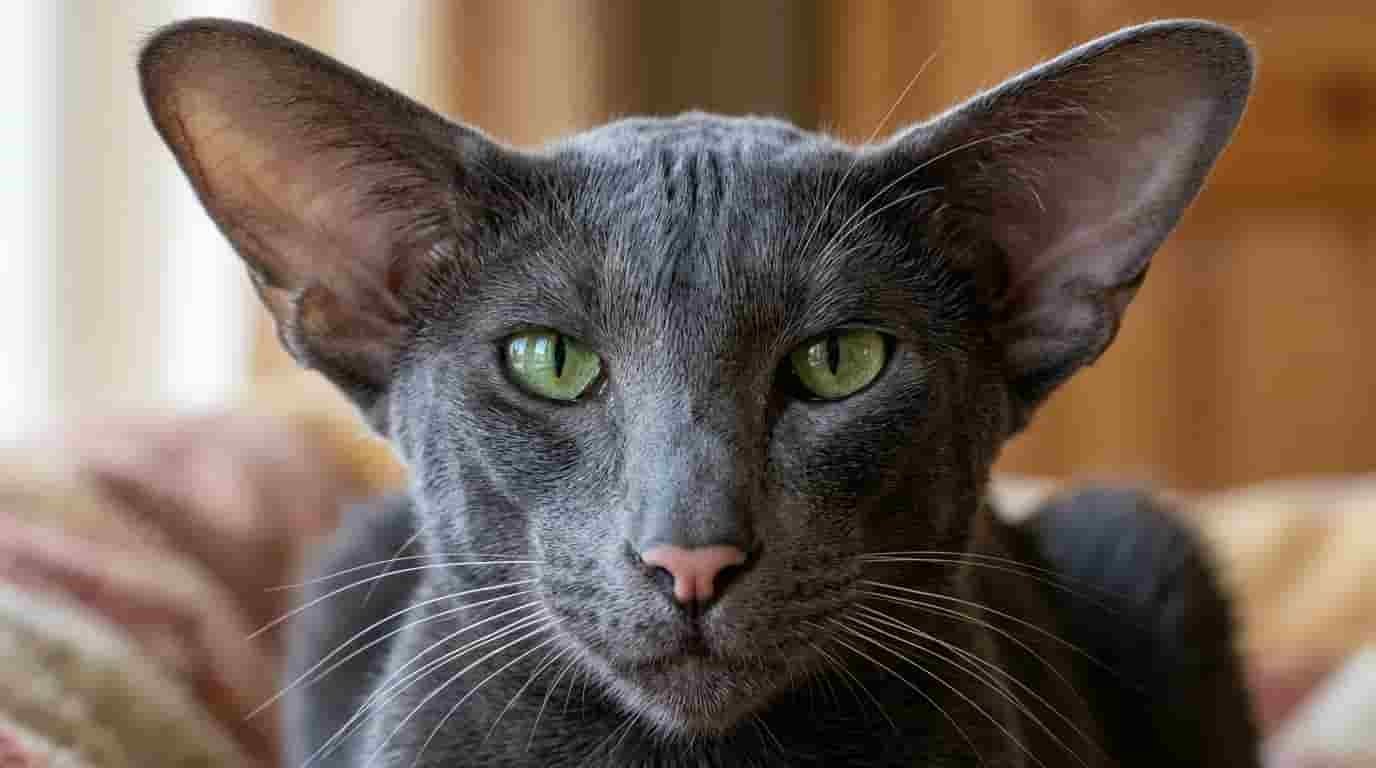
The head of the Oriental Shorthair is one of its most defining features. It forms a remarkably smooth, straight wedge shape starting from the nose and flaring out in straight lines to the tips of the ears, forming an equilateral triangle.
The ears themselves are exceptionally large, wide at the base, and striking in their placement, continuing the line of the wedge. The eyes are almond-shaped, medium-sized, and slanted toward the nose, offering an alert, intense expression. Except for white-coated individuals (which may have blue or odd eyes), most Oriental Shorthairs possess vivid green eyes.
Body Shape and Size
The physical build of the Oriental Shorthair is often described as “tubular.” The body is long, slender, and svelte, combining fine, delicate boning with firm, toned muscle.
- Legs: Long and slim, with the hind legs noticeably longer than the front legs, ending in small, oval paws.
- Tail: Long, thin, and tapering gradually to a fine point.
- Weight: Typically ranges from 6 to 12 pounds, with males generally being larger than females.
It is critical for owners to understand the difference between a naturally slender, athletic build and an underweight cat. Despite their delicate appearance, a healthy Oriental Shorthair should feel firm, muscular, and surprisingly heavy when picked up, showing no visible hip bones or prominent spine protrusions.
Coat Texture
The coat of the Oriental Shorthair is short, fine, glossy, and lies extremely close to the body. It lacks a heavy undercoat, giving the fur a satin-like texture that highlights the cat’s sharp muscular contours. Because the coat is so close-lying, simple petting easily maintains its sleek appearance.
What Are Oriental Shorthair Colors and Patterns?
Common Oriental Shorthair Colors
One of the most remarkable aspects of this breed is its incredible color diversity. With over 300 recognized color and pattern combinations, the Oriental Shorthair boasts the broadest range of coat appearances in the entire pedigree cat fancy.
- Solid Colors: Includes deep ebony (black), pure white, chestnut (brown), blue (grey), lavender (frost), red, cream, and cinnamon.
- Tabby Patterns: Expressed as classic, mackerel, spotted, or ticked tabbies across various base shades.
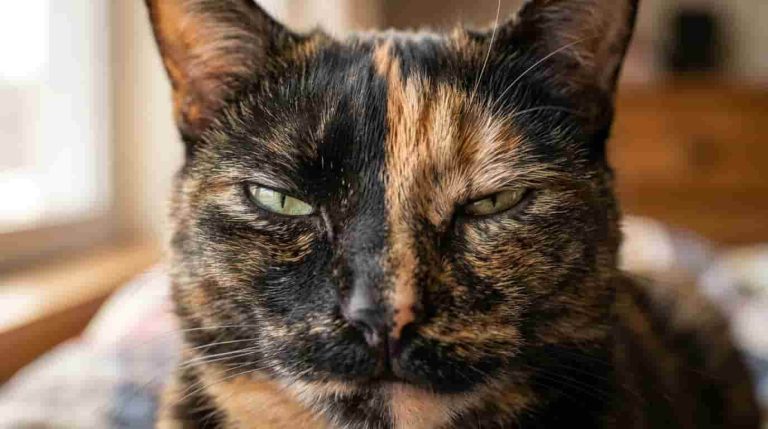
- Tortoiseshell Patterns: Striking mixtures of red or cream with black, blue, chestnut, or cinnamon.
- Smoke and Shaded: Featuring hairs with white roots tipped in rich color, creating a shimmering effect during movement.
- Bicolor Patterns: Any recognized color or pattern combined with clear white markings.
Why Do Oriental Shorthairs Come in So Many Colors?
The massive spectrum of colors is the direct result of the intentional crossbreeding programs used to establish the breed. Because early breeders incorporated several distinct cat breeds into the Siamese foundation line, they introduced diverse genetic color traits—such as non-pointed solid genes, silver genes, and tabby pattern genes—while selectively breeding back to maintain the slender, svelte body type.
Are All Oriental Shorthairs the Same Color?
Unlike breeds defined by a strict color standard—such as the Russian Blue or the Pointed Siamese—there is no single “signature” color for the Oriental Shorthair. While ebony and chestnut remain enduringly popular among enthusiasts, two kittens from the same litter can display entirely different colors and patterns depending on their parents’ genetic heritage.
What Is the Oriental Shorthair Personality Like?
Social and People-Oriented
Living with an Oriental Shorthair is more akin to living with a devoted canine companion than a typical independent feline. These cats thrive on human interaction and form intense bonds with their owners.
They will follow you from room to room, supervise your daily chores, sit on your laptop while you work, and burrow under the covers with you at night. They demand to be an active part of the household and will actively solicit attention if they feel ignored.
Intelligent and Curious
Oriental Shorthairs possess exceptional intelligence and an insatiable curiosity about their environment. They quickly learn how to open cabinet doors, turn on water faucets, untie shoes, and retrieve thrown toys. Without adequate mental stimulation, their sharp minds will find ways to entertain themselves—which often leads to opening drawers, clearing items off high shelves, or investigating forbidden household areas.
Active and Playful
Retaining a kitten-like playfulness well into their senior years, Oriental Shorthairs require substantial physical activity. They excel at jumping, sprinting, and climbing to the highest perches in the home.
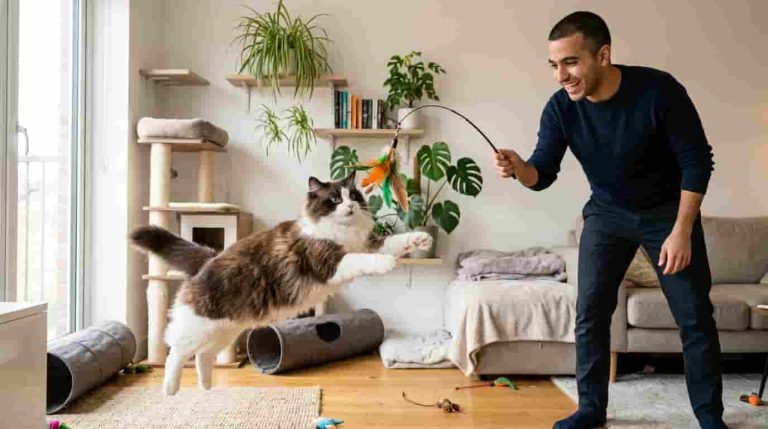
- Interactive Toys: Feathers, wand toys, and laser pointers are essential for daily play sessions.
- Fetch Games: Many individuals naturally learn to retrieve crumpled paper or small soft balls.
- Agility: Their athletic builds make them natural candidates for indoor agility courses and trick training.
Affectionate but Not Always Quiet
While deeply loving and warm-hearted, their affection is active rather than passive. An Oriental Shorthair rarely sits quietly in a corner; instead, it expresses its devotion through enthusiastic head-butts, lap-curling, loud purring, and ongoing vocal conversations.
Why Is the Oriental Shorthair Cat So Vocal?
Oriental Shorthair Cat Meow
Inheriting the vocal genes of their Siamese ancestors, Oriental Shorthairs are famous for their extensive vocal repertoire. They do not simply meow when hungry; they actively converse with their owners throughout the day. They use distinct tones to announce their presence, ask for food, request play, express disapproval when left alone, or greet you at the door after a long workday.
What Does the Oriental Shorthair Cat Honk Mean?
Prospective owners frequently search for the famous “honk” sound made by Oriental Shorthairs. Many individuals produce a unique, raspy, or nasal vocalization that sounds distinctly like a soft trumpet or a duck-like honk, alongside traditional chirps, trills, and squeaks.
This sound is completely normal for the breed and simply represents a variation in their vocal tract anatomy. However, if your cat suddenly develops a raspy voice, sounds strained, or displays respiratory distress, coughing, or lethargy, a veterinary checkup is essential to rule out upper respiratory infections or throat irritation.
Can You Teach an Oriental Shorthair to Be Quieter?
It is virtually impossible—and behaviorally harmful—to eliminate the vocal nature of an Oriental Shorthair, as it is a core genetic trait of the breed. However, you can manage excessive or unwanted vocalizations by:
- Avoiding Accidental Rewards: Do not give food, treats, or dramatic attention immediately when your cat screams or demands attention vocally.
- Providing Enrichment: Ensure mental and physical needs are met through play before quiet hours.
- Establishing Routines: Maintain consistent feeding and play schedules to reduce anxious vocal querying.
- Addressing Needs: Check for empty water bowls, dirty litter boxes, or cold resting areas that may trigger persistent calls.
Are Oriental Shorthair Cats Good Pets?
Who May Enjoy Living With an Oriental Shorthair?
An Oriental Shorthair is an exceptional companion for households that want a deeply involved, highly interactive pet. They are ideal for:
- Individuals or families who work from home or spend substantial time indoors.
- Homes with active children who handle cats respectfully and enjoy interactive play.
- Multi-pet households where other energetic cats or cat-friendly dogs can provide companionship.
- Owners willing to spend time daily on play, mental enrichment, and affection.
Who May Find the Breed Challenging?
Conversely, this breed is rarely a good fit for:
- People who prefer a quiet, low-energy, or independent cat that sleeps all day.
- Households where everyone is away for 10 to 12 hours daily for work or travel.
- Noise-sensitive individuals who are easily annoyed by frequent, loud vocalization.
- Minimalist homes where climbing structures, cat trees, and toys are unwelcome.
Can Oriental Shorthairs Live With Other Pets?
Yes. Thanks to their highly social nature, Oriental Shorthairs generally adapt exceptionally well to other animals. They thrive when paired with another active cat—especially another Oriental or Siamese—or a gentle, cat-tested dog. Proper, gradual introductions are essential to ensure a stress-free adjustment period for all animals involved.
How Much Does an Oriental Shorthair Cat Cost?
Oriental Shorthair Cat Price Factors
The purchase price for a pedigree Oriental Shorthair kitten typically ranges between $1,500 and $3,000 USD, though prices can vary based on several critical factors:
- Breeder Reputation & Experience: Established, reputable breeders who conduct extensive genetic health screening charge higher prices.
- Pedigree & Lineage: Kittens from show-winning lines or exceptional pedigrees command premium rates.
- Coat Color & Pattern: Rare or highly sought-after color patterns (such as striking bicolors or silver smokes) may cost more.
- Pet vs. Show Quality: Kittens sold as pet-only companions (with spay/neuter agreements) cost less than show-prospect felines.
What Is Included in the Purchase Price?
When purchasing from an ethical, responsible breeder, the initial cost generally covers comprehensive early healthcare, including:
- Age-appropriate vaccinations and deworming.
- Complete veterinary health examination and health certificate.
- Microchip identification installation.
- Spay or neuter surgery completed before going home.
- Registration papers (TICA, CFA, or equivalent) and pedigree documentation.
- Initial health guarantee covering congenital genetic conditions.
What Cat Cost $100,000?
Prospective owners occasionally encounter references to cats costing $100,000 in search results. Extreme prices like this do not apply to standard Oriental Shorthairs; rather, they refer to exceptionally rare, engineered hybrid breeds (such as early-generation Ashera cats) or unique historical sales of top-tier, cloned animals. Standard pedigree Oriental Shorthairs fall firmly within normal pedigree cat pricing.
Where Can You Find Oriental Shorthair Cats for Sale?
Finding a Responsible Breeder
When searching for an Oriental Shorthair kitten, identifying a responsible, ethical breeder is paramount to ensuring you receive a healthy, well-socialized pet.
Look for breeders registered with major international cat organizations such as The International Cat Association (TICA) or the Cat Fanciers’ Association (CFA). A good breeder raises kittens inside their home, prioritizes temperament and health screening, and welcomes your questions.
Questions to Ask Before Buying
- Do you screen parent cats for Progressive Retinal Atrophy (PRA) and Amyloidosis?
- Are kittens socialized in a home environment around typical household noises?
- What vaccinations, health checks, and treatments have the kittens received?
- At what age are kittens allowed to go to their new homes? (Ethical breeders keep kittens until 12 to 16 weeks).
- What written health guarantee and contract do you provide?
Oriental Shorthair Cat Adoption and Rescue
Adopting an Oriental Shorthair through a rescue organization is a wonderful alternative. While purebred kittens are rare in general shelters, specialized breed-specific rescues—such as Siamese and Oriental cat rescue networks—frequently rehome young adults and mature cats. Adopting offers the chance to give a loving home to a cat in need while paying significantly lower adoption fees (typically $150 to $400 USD).
What Are the Health Issues of Oriental Shorthair Cats?
Breed-Related Health Concerns
While generally robust and active, the Oriental Shorthair shares genetic predispositions with the broader Siamese breed family. Responsible breeders actively screen their breeding stock to minimize these risks.
- Familial Amyloidosis: A hereditary disorder where abnormal protein deposits (amyloid) accumulate in organs, primarily the liver and kidneys, potentially leading to organ failure.
- Progressive Retinal Atrophy (PRA): A genetic eye condition causing gradual degeneration of the retina, leading to night blindness and eventual total blindness. DNA testing allows breeders to eliminate this gene.
- Hypertrophic Cardiomyopathy (HCM): The most common heart disease in cats, characterized by an abnormal thickening of the muscular heart walls. Periodic echocardiograms help monitor breeding lines.
- Asthma and Respiratory Sensitivity: Their refined facial structure and long airways can make them more susceptible to feline asthma or sensitivity to dusty litter and airborne allergens.
- Crossed Eyes or Nystagmus: Inherited from Siamese roots, some individuals display slight involuntary eye movement or converging strabismus, which is generally harmless to vision.
Why Regular Veterinary Care Matters
Routine veterinary visits every 12 months (or every 6 months for senior cats) are critical for catching early health changes. Annual bloodwork, urinalysis, and physical exams allow veterinarians to evaluate liver and kidney function, monitor heart health, and maintain proper preventative care.
Signs That Should Not Be Ignored
Contact your veterinarian immediately if your Oriental Shorthair exhibits any of the following symptoms:
- Lethargy, weakness, or sudden hiding behavior.
- Loss of appetite or unexplained, rapid weight loss.
- Yellowing of the eyes, skin, or gums (jaundice, a potential sign of liver amyloidosis).
- Open-mouth breathing, panting, or chronic coughing.
- Cloudy eyes or changes in visual navigation in dim light.
How Do You Care for an Oriental Shorthair Cat?
Oriental Shorthair Grooming Needs
Grooming an Oriental Shorthair is delightfully straightforward compared to long-haired breeds. Their short, close-lying coat lacks a heavy undercoat, meaning shedding is minimal.
Weekly brushing with a soft rubber curry brush or a damp chamois cloth removes dead hairs and distributes natural skin oils, giving the coat a brilliant, satin sheen.
Dental Care
Because slender, fine-boned breeds can be prone to periodontal disease, establishing an early dental hygiene routine is crucial. Brush your cat’s teeth multiple times weekly using feline-formulated enzymatic toothpaste and a soft toothbrush. Schedule professional veterinary dental cleanings as recommended by your vet.
Nail and Ear Care
Inspect their large ears bi-weekly for wax buildup, dirt, or signs of irritation. Clean gentle outer ear folds using a cotton ball dampened with a vet-approved ear cleaner—never insert cotton swabs into the ear canal. Trim nail tips every two to three weeks to prevent snagging on carpets or furniture.
Feeding and Nutrition
To support their high energy levels and maintain lean muscle mass, Oriental Shorthairs require a high-quality, protein-rich diet formulated for cats.
- Protein Focus: Look for diets listing whole meat (chicken, turkey, salmon) as the primary ingredient.
- Hydration: Incorporating wet food into their daily routine provides essential moisture that supports kidney and urinary tract health.
- Portion Control: Despite their active nature, monitor caloric intake carefully. Their slender frames mean even a single pound of excess weight puts noticeable strain on joints and organs.
How Much Exercise Does an Oriental Shorthair Need?
Daily Physical Activity
An Oriental Shorthair needs at least 30 to 60 minutes of active play daily, divided into multiple interactive sessions. Their athletic, muscular bodies are designed for short bursts of high-speed sprinting, leaping, and climbing.
Mental Enrichment
Physical exertion alone will not satisfy an Oriental Shorthair; their sharp intellect requires constant mental stimulation:
- Puzzle Feeders: Use treat-dispensing balls, mazes, or board games for daily meals.
- Clicker Training: Teach tricks like “sit,” “high-five,” “fetch,” or leash walking using positive reinforcement.
- Toy Rotation: Hide and rotate toys weekly to keep play novelty high.
What Happens When an Active Cat Gets Bored?
A bored Oriental Shorthair will invent its own fun, which rarely aligns with an owner’s preferences. Common signs of boredom include destructive scratching, clearing knick-knacks off counters, opening pantries, nighttime zoomies, and relentless, loud vocalizations aimed at demanding attention.
Can Oriental Shorthair Cats Be Left Alone?
Because of their intense social orientation, Oriental Shorthairs do not tolerate long periods of isolation well. Leaving a single Oriental Shorthair alone for 8 to 10 hours a day on a regular basis often leads to separation anxiety, distress, and behavioral problems.
If your household is empty during standard working hours, consider adopting a bonded pair of Oriental Shorthairs or ensuring another active cat or dog is present to keep them company. Providing safe window perches, puzzle toys, and automated interactive games also helps bridge unavoidable periods of solitude.
How Do You Keep an Oriental Shorthair Cat Happy Indoors?
Creating a stimulating indoor environment allows an Oriental Shorthair to express its natural instincts safely.
Create Vertical Space
Oriental Shorthairs love being high up where they can survey their empire. Provide:
- Floor-to-ceiling cat trees with sturdy perches.
- Wall-mounted cat shelves and bridges.
- Window perches offering views of bird feeders or outdoor activity.
Provide Daily Interaction
Dedicate structured time every morning and evening to play with your cat using feather wands, chasing toys, or agility exercises. Follow play sessions with a meal or treat to satisfy their natural “hunt-eat-groom-sleep” cycle.
Give the Cat Safe Places to Retreat
Ensure your home contains quiet, cozy hideaways—such as covered cat beds, plush igloos, or heated blankets—where your cat can nap undisturbed. In multi-pet homes, keep litter boxes and feeding stations spread out across separate rooms to prevent resource competition.
Oriental Shorthair vs Other Siamese-Related Cats
Understanding how the Oriental Shorthair compares to its closest genetic relatives helps clarify your choice among the Siamese breed group.
Oriental Shorthair vs Balinese
While both breeds share the svelte body structure, large ears, and intelligent, vocal nature of the Siamese family, their primary physical distinction lies in coat length. The Balinese is essentially a long-haired Siamese, sporting a silky, medium-length coat, a plumed tail, and traditional pointed coloration.
In contrast, the Oriental Shorthair possesses a short, close-lying coat available in hundreds of colors beyond the pointed pattern. To explore the long-haired, pointed relative of this family in depth, read our guide on the Balinese Cat: Personality, Price, Lifespan, Colors and Siamese Differences
Oriental Shorthair vs Tonkinese
The Tonkinese was developed by crossing the Siamese with the Burmese, resulting in a cat that sits midway between both breeds in body structure and coat expression. While the Oriental Shorthair maintains an extremely svelte, fine-boned frame with large ears, the Tonkinese displays a medium, slightly heavier build with more rounded features.
Tonkinese cats feature mink, pointed, or solid coat patterns with soft, aqua eyes, whereas Oriental Shorthairs offer a leaner build and green eyes. To learn more about this balanced, medium-build feline companion, see our complete article on the Tonkinese Cat: Personality, Price, Colors, Lifespan and Siamese Differences
What Makes the Oriental Shorthair Different From Other Cats?
The Oriental Shorthair stands apart from the broader feline world through a unique combination of extreme physical, genetic, and behavioral traits:
- Unmatched Genetic Variety: No other pedigree breed presents over 300 accepted color and pattern combinations on a single body standard.
- Extroverted Personality: They behave more like active, social companions than detached household pets, seeking constant human involvement.
- Distinctive Vocalization: Their rich repertoire of chirps, calls, and signature “honk” sounds creates a truly conversational dynamic between pet and owner.
- Sculptural Aesthetics: The dramatic combination of large ears, wedge-shaped head, long limbs, and svelte body forms one of the most recognizable silhouettes in animal fancy.
Hypothetical Example: A Typical Day With an Oriental Shorthair
To illustrate what life with this breed looks like, consider this hypothetical daily routine:
Morning (6:30 AM – 8:00 AM): Your Oriental Shorthair wakes you up by softly “honking,” head-butting your cheek, and purring under the covers. It follows you into the kitchen, loudly discussing breakfast while supervising food preparation. After eating, it engages in a 15-minute high-speed chase after a feather wand toy.
Afternoon (12:00 PM – 4:00 PM): While you work at your desk, your cat curled up across your lap or draped over your shoulders. Later, it works on a maze puzzle feeder near a sunny window perch, watching birds outside before settling down for a mid-day nap wrapped in a fleece blanket.
Evening (6:00 PM – 10:00 PM): The moment you stand up, your cat joins you, perching on top of the refrigerator while you cook dinner. After another evening fetch session, it climbs onto the sofa, burrowing under your arm to sleep while you watch TV, purring contentedly until bedtime.
Oriental Shorthair Cat Care Checklist
Use this practical checklist to keep your Oriental Shorthair healthy, safe, and fulfilled:
- [ ] Provide High-Protein Nutrition: Feed a complete, age-appropriate wet and dry diet.
- [ ] Schedule Daily Play: Commit to 30–60 minutes of interactive exercise using wand toys or fetch games.
- [ ] Install Vertical Structures: Place tall cat trees, shelves, or window perches throughout the home.
- [ ] Offer Mental Stimulation: Use puzzle feeders, clicker training, and toy rotations daily.
- [ ] Maintain Coat Health: Brush short coat weekly with a rubber curry brush or chamois cloth.
- [ ] Practice Dental Hygiene: Brush teeth several times weekly with feline enzymatic toothpaste.
- [ ] Inspect Ears and Nails: Clean ears bi-weekly; trim nails every 2 to 3 weeks.
- [ ] Prevent Isolation: Avoid leaving a single Oriental Shorthair alone for extended workdays without a companion or enrichment.
- [ ] Keep Up Vet Appointments: Visit the veterinarian annually for wellness exams, bloodwork, and dental checks.
- [ ] Monitor Health Signals: Watch for changes in vocalization, appetite, eye clarity, or energy levels.
Frequently Asked Questions
Are Oriental Shorthair cats good pets?
Yes, Oriental Shorthairs are wonderful pets for households wanting an active, highly affectionate, and involved companion. However, their high energy levels and demand for constant attention make them less suitable for owners who prefer a quiet or independent cat.
Why are Oriental cats so expensive?
Oriental Shorthairs are priced higher due to the costs associated with responsible pedigree breeding, comprehensive genetic health screening (for PRA and amyloidosis), veterinary care, registrations, and the specialized care required to raise well-socialized kittens.
Are Oriental Shorthair cats very vocal?
Yes. Oriental Shorthairs inherited the vocal nature of their Siamese ancestors and frequently communicate using meows, chirps, trills, and their distinctive “honk” sound to converse with their owners throughout the day.
Do Oriental Shorthair cats need a lot of grooming?
No. Their short, fine coat lacks a heavy undercoat and requires minimal maintenance. A simple weekly brushing with a rubber curry brush or chamois cloth is sufficient to keep their fur glossy and healthy.
Are Oriental Shorthair cats healthy?
Oriental Shorthairs are generally healthy, active cats with a lifespan of 12 to 15+ years. However, owners should be aware of breed-associated risks like familial amyloidosis, HCM, and PRA, ensuring they source kittens from tested lines.
Conclusion
The Oriental Shorthair Cat is a remarkably unique feline that brings energy, intelligence, and deep affection into any home. With its sculptural wedge-shaped head, oversized ears, sleek athletic body, and incredible palette of over 300 coat colors, this breed is as striking to look at as it is rewarding to live with. Their conversational nature, legendary vocal traits, and playful antics ensure that life with an Oriental Shorthair is never dull.
However, owning one requires a real commitment to meeting their high social, mental, and physical needs. From providing daily interactive play and vertical climbing space to delivering proper dental care and routine veterinary health checks, fulfilling their requirements rewards you with an extraordinarily loyal companion. If you want an interactive pet that acts as a true family member, the Oriental Shorthair Cat is an unforgettable choice.
Do you currently live with an Oriental Shorthair, or are you planning to bring one home? What is your favorite coat color, and how vocal is your feline companion? Share your thoughts and stories in the comments below!