Tonkinese Cat: Personality, Price, Colors, Lifespan and Siamese Differences
Introduction:
Tonkinese Cat: Personality, Price, Colors, Lifespan and Siamese Differences are essential topics for anyone considering bringing this social, highly expressive feline into their home. The Tonkinese Cat is a distinct and captivating breed developed by crossing the classic Siamese with the muscular Burmese, creating an ideal balance of elegance, playfulness, and gentle affection.
Many prospective owners wonder: What is the Tonkinese Cat personality like? How much does a kitten cost? What colors do they come in, what health issues affect the breed, and how do they differ from their Siamese ancestors? This comprehensive guide breaks down everything you need to know about their history, physical appearance, temperament, dietary needs, exercise routines, pricing, lifespan, grooming, and differences from related breeds.
What Is a Tonkinese Cat?
Tonkinese breed history and origin
The Tonkinese Cat emerged through a deliberate effort to create a feline that combined the svelte elegance and vocal charm of the Siamese with the heavy-boned structure and sweet temperament of the Burmese. While natural crosses between pointed and solid Asian cats existed for centuries in Southeast Asia, the modern Tonkinese breed began its formal development in North America during the 1950s and 1960s.
A foundational figure in the breed’s history was “Wong Mau,” a small, walnut-colored cat imported from Burma to San Francisco in 1930. While Wong Mau was initially critical to establishing the Burmese breed, her genetic lineage also laid the groundwork for the Tonkinese. In the 1960s, Canadian breeder Margaret Conroy and American breeders crossed Siamese and Burmese lines, originally naming the offspring the “Golden Siamese.” The name was later changed to “Tonkinese”—referencing the Gulf of Tonkin, an region in Southeast Asia, purely for exotic appeal rather than exact geographic origin. By the 1970s and 1980s, major global registries including the Cat Fanciers’ Association (CFA) and The International Cat Association (TICA) recognized the Tonkinese Cat as an official pedigree breed.
Tonkinese breed characteristics
The defining characteristics of the Tonkinese Cat reflect a balanced fusion of its parent breeds:
- Body Build: Medium-sized, athletic, and surprisingly heavy due to firm muscle tone.
- Coat Structure: Short, soft, close-lying coat with a luxurious leather-like texture.
- Head Shape: A modified wedge shape with gently rounded contours and high cheekbones.
- Ears: Medium-sized, broad at the base, with oval tips set wide apart.
- Eyes: Large, peach-pit-shaped eyes displaying striking aqua, blue-green, or gold-green shades.
- Temperament: Deeply social, affectionate, playful, intelligent, and highly interactive.
- Lifespan: Long-lived; typically ranging from 12 to 18 years with proper veterinary care.
What makes the Tonkinese different?
What sets the Tonkinese Cat apart is its blend of extreme physical and behavioral traits. Where the Siamese is slender and high-pitched in vocalization, and the Burmese is compact and stocky, the Tonkinese sits in the golden middle. They possess a muscular build without feeling heavy, paired with a communicative voice that is softer and sweeter than the raspy Siamese call. However, potential owners must remember that individual cats vary, and breed tendencies provide general guidelines rather than guaranteed behaviors.
What Does a Tonkinese Cat Look Like?
Size and body shape
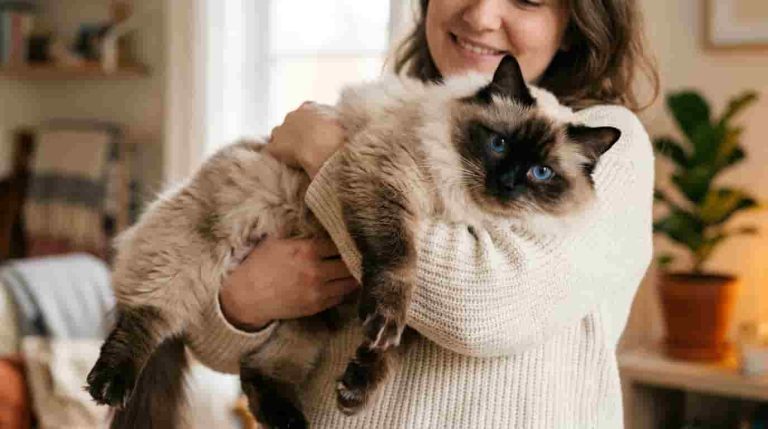
The Tonkinese Cat is a medium-sized feline with balanced proportions. Lifted off the ground, a Tonkinese feels surprisingly solid and heavy, inheriting the dense muscle structure of the Burmese. They possess a torso that is medium in length, neither tubular like the Oriental Shorthair nor short and compact like a Persian. Their legs are slim and well-proportioned, ending in neat, oval paws, while the tail is long and tapers gently toward a rounded tip.
Face, ears and eyes
The head forms a modified wedge shape, slightly longer than it is wide, featuring soft, rounded contours rather than sharp angular lines. High, prominent cheekbones frame a medium muzzle with a slight whisker break. The ears are medium in size, set as much on the side of the head as on top, and tilted forward slightly.
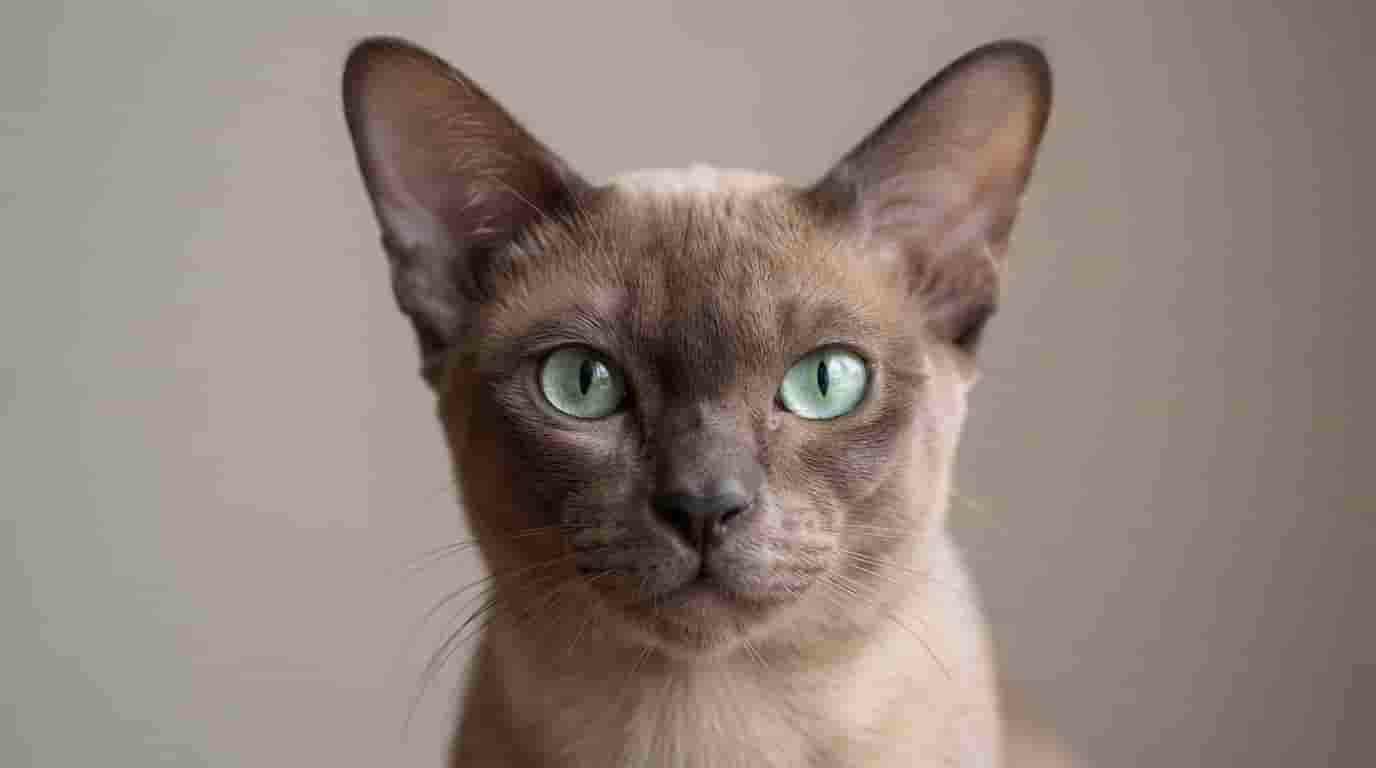
The eyes are one of the breed’s most recognized features. Uniquely shaped like a peach pit rather than a full almond or circle, they slant slightly toward the outer base of the ears. Depending on the coat pattern, eye color ranges from intense sapphire blue to luminous aqua (blue-green) and radiant yellow-green or gold.
Coat texture
The coat of a Tonkinese Cat is short, fine, and exceptionally soft. It lies very close to the body and carries a natural luster that gives the fur a luxurious sheen, often compared to the feel of fine mink fur. Because they possess minimal undercoat, grooming demands remain very low year-round.
Tonkinese Cat Colors and Coat Patterns
What coat patterns do Tonkinese cats have?
The Tonkinese breed is celebrated for its temperature-sensitive mink coat pattern, though genetic inheritance produces three distinct coat pattern variations:
- Mink (Intermediate): The signature Tonkinese pattern, featuring soft contrast between the point colors (ears, face, paws, tail) and the lighter body coat. The body color gradually shades into darker points, typically paired with aqua eyes.
- Pointed (Siamese-type): Strong contrast between a light cream or ivory body and dark, sharply defined points, typically paired with deep blue eyes.
- Solid (Burmese-type): Subtle contrast between the points and the body, resulting in a rich, deeply colored coat across the entire body, typically paired with yellow-green or gold eyes.
Common Tonkinese cat colors
Registries recognize four primary color shades across all three pattern types:
| Color Division | Base Coat Description | Point Color Description |
| Natural | Warm fawn or cream shading to rich brown | Dark seal brown or dark chocolate |
| Champagne | Soft buff or warm beige shading to ivory | Warm chocolate or cocoa brown |
| Blue | Soft slate gray with cool silver undertones | Deep blue-gray |
| Platinum | Pale, silvery ice-gray with warm undertones | Medium frosted gray |
Why can a Tonkinese’s color change with age?
Like all cats carrying the Himalayan temperature-sensitive gene, Tonkinese kittens are born almost entirely white or cream in color. As they grow, body temperature variations dictate pigment distribution: cooler extremities (ears, paws, nose, and tail) develop darker coloration, while the warmer core body remains lighter. Over time, as a cat matures or spends time in colder indoor environments, their overall body coat may darken gradually.
Tonkinese Cat Personality and Temperament
Are Tonkinese cats affectionate?
Tonkinese cats are deeply affectionate and form strong emotional bonds with their human family members. They do not enjoy observing life from a distance; instead, they insist on being actively involved in daily household tasks. Whether you are working at a desk, preparing a meal, or reading on the couch, a Tonkinese will happily perch on your lap, ride on your shoulders, or nestle under warm blankets beside you.
Are Tonkinese cats playful?
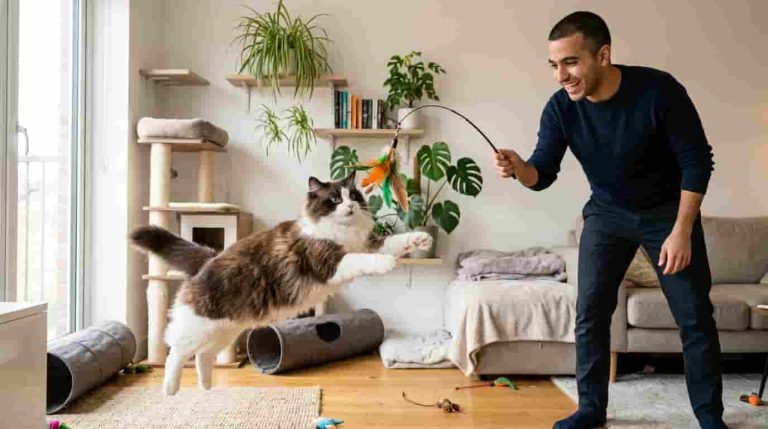
Playfulness is a lifelong trait for the Tonkinese Cat. They retain a kitten-like enthusiasm well into their senior years. They excel at interactive games such as fetch with small felt mice, leaping for feather wand toys, and climbing cat trees. Their high intelligence means they quickly figure out how to solve puzzle feeders and learn simple tricks like “sit,” “high-five,” or opening loose cupboard doors.
Are Tonkinese cats vocal?
While communicative, the Tonkinese is generally less raspy and demanding than the Siamese. They speak in a softer, pleasantly expressive tone to greet family members, announce mealtimes, or request attention. They also use extensive body language—such as head-bunting, tail-wrapping, and steady eye contact—to communicate their wishes.
Are Tonkinese cats independent?
The Tonkinese Cat is not a solitary or distant breed. While they can entertain themselves for short periods with toys or window perches, they rely heavily on companionship. They do not thrive in homes where they are routinely left entirely alone for long working hours, as isolation can cause boredom, distress, and destructive behaviors.
Are Tonkinese Cats Good Pets?
Yes, Tonkinese Cats make exceptional pets for households seeking an active, loyal, affectionate, and engaging feline companion.
Homes that may suit a Tonkinese
- Active households that enjoy engaging directly with their pets through play.
- Families with children who understand gentle, respectful pet handling.
- Work-from-home individuals or retirees who offer steady companionship.
- Multi-pet homes featuring other energetic cats or cat-friendly dogs.
What type of owner may struggle with this breed?
- Individuals who prefer a quiet, independent, or low-energy “lap-only” cat.
- Owners who spend long hours away from home every day without other pets.
- Households that dislike vocal cats or pets following them from room to room.
Tonkinese cats and children
Tonkinese cats generally thrive around children due to their sturdy build, confident nature, and endless energy for interactive play. However, adults must supervise interactions with young children to ensure gentle handling, teaching them to respect the cat’s cues when it desires quiet rest.
Tonkinese cats and other pets
Thanks to their social disposition, Tonkinese cats usually adapt quickly to other pets. They enjoy the company of other active cat breeds and frequently build close bonds with cat-tested dogs, often cuddling together in sunny spots. Gradual, controlled introductions remain essential when bringing a new animal into the household.
Are Tonkinese Cats Rare?
While the Tonkinese Cat is well-established in major registry circles, it is generally less commonly encountered than its Siamese or Burmese ancestors.
Why are Tonkinese cats harder to find in some places?
- Selective Breeding Programs: Breeding true mink-patterned kittens requires careful genetic pairing, limiting the volume of available litters.
- Regional Breeder Numbers: The total number of registered, active Tonkinese breeders varies significantly by region and country.
- Registry Recognition: Variations in local cat association rules and show standards influence regional popularity and availability.
How Much Does a Tonkinese Cat Cost?
Tonkinese kitten price
A purebred Tonkinese kitten from a reputable, registered breeder typically costs between $800 and $2,000 USD. Purchase prices fluctuate based on several factors:
- Breeder Reputation & Pedigree: Established breeders with championship lines invest heavily in health screening and command higher fees.
- Pattern & Color Demand: Signature mink patterns with bright aqua eyes are often in higher demand than solid or pointed variations.
- Registration Status: Show-quality kittens carry a higher price tag than pet-quality kittens sold under spay/neuter agreements.
- Veterinary Care Included: Prices from ethical breeders cover early vaccinations, deworming, microchipping, health guarantees, and spay/neuter procedures.
Other costs to budget for
Beside the initial purchase price, prospective owners should account for ongoing supplies and medical care:
- Initial Setup Equipment: Cat trees, litter boxes, scratchers, carriers, and grooming brushes ($150–$350).
- High-Quality Food: Protein-rich commercial cat food ($30–$60/month).
- Routine Medical Care: Annual veterinary checkups, vaccinations, and preventive dental care ($250–$500/year).
- Litter & Enrichment: Litter, replacement scratcher pads, and interactive toys ($25–$45/month).
Are Tonkinese cats expensive?
While the upfront price of a Tonkinese kitten represents a notable investment, their long-term upkeep aligns with standard purebred cat ownership. Over a lifespan of 12 to 18 years, routine veterinary care and proper nutrition represent the majority of financial commitments.
Tonkinese Cat for Sale or Adoption: Where Should You Look?
Finding a responsible Tonkinese breeder
When purchasing a kitten, select an ethical breeder affiliated with organizations such as TICA or the CFA. Ensure the breeder:
- Displays clear knowledge of feline genetics and breed standards.
- Provides written genetic health testing records for the parent cats.
- Raises kittens inside a clean, enrichment-rich home environment.
- Allows in-person or video visits to evaluate living conditions and socialization.
- Utilizes legal contracts outlining health guarantees and a return clause.
Tonkinese cat adoption options
Purebred Tonkinese cats occasionally enter general animal shelters or specialized breed rescue networks due to owner lifestyle changes, moves, or surrenders. Adopting an adult Tonkinese through breed-specific rescues gives a loving home to a feline in need while significantly lowering acquisition costs.
Tonkinese kittens for sale: red flags to avoid
- Pressure Tactics: Sellers demanding immediate wire payments or deposits without providing verified documentation.
- Lack of Health Testing: Breeders unable or unwilling to show veterinary health certificates or parental screening.
- Underage Kittens: Sellers offering kittens younger than 12 weeks of age.
- Unsanitary Conditions: Catteries that restrict viewing of living quarters or keep animals in cramped cages.
How Long Do Tonkinese Cats Live?
Typical lifespan
The average lifespan of a Tonkinese Cat ranges between 12 and 18 years. When kept strictly indoors and provided with optimal nutrition, exercise, and medical care, many Tonkinese cats comfortably reach their late teens.
What can affect lifespan?
- Genetics: Sourcing kittens from health-tested parents lowers the risk of inherited systemic diseases.
- Indoor Living: Keeping cats safe indoors protects them from road accidents, infections, parasites, and animal attacks.
- Weight Management: Maintaining an athletic, muscular frame prevents obesity, lowering the risk of joint stress and feline diabetes.
- Dental Hygiene: Daily oral care prevents severe periodontal disease, which can otherwise affect major organs over time.
How can owners support healthy aging?
- Schedule annual veterinary examinations (bi-annual for senior cats over 10 years).
- Transition to age-appropriate diets formulated for senior joint and kidney health.
- Monitor changes in appetite, water intake, litter box habits, and activity levels.
- Provide heated bedding and accessible steps to high perches for aging joints.
Tonkinese Cat Health Issues
Are Tonkinese cats generally healthy?
The Tonkinese Cat is generally considered a robust, healthy breed, benefiting from the genetic diversity introduced by crossing Siamese and Burmese lines. However, like all pedigree felines, they remain susceptible to certain inherited and breed-influenced conditions.
Health concerns to discuss with a breeder or veterinarian
- Dental Disease & Periodontal Issues: Their narrow jaw structure predisposes them to tartar buildup, gingivitis, and early tooth loss if dental hygiene is neglected.
- Progressive Retinal Atrophy (PRA): An inherited genetic eye disorder causing gradual degradation of the retina, potentially leading to vision loss.
- Amyloidosis: A metabolic condition characterized by the abnormal deposition of protein (amyloid) in abdominal organs, particularly the liver and kidneys.
- Hypertrophic Cardiomyopathy (HCM): A structural heart disease causing thickening of the heart muscle walls.
- Feline Asthma: Sensitivity to airborne dust, perfumes, or tobacco smoke resulting in airway inflammation and coughing.
Signs that deserve veterinary attention
Contact your veterinarian immediately if your Tonkinese displays any of the following warning signs:
- Sudden loss of appetite or refusal to eat for over 24 hours.
- Unexplained weight loss or muscle wasting.
- Persistent vomiting, diarrhea, or straining in the litter box.
- Open-mouth breathing, panting, or labored coughing.
- Extreme lethargy or sudden withdrawal from family interaction.
How Do You Care for a Tonkinese Cat?
Tonkinese cat grooming guide
Caring for a Tonkinese coat requires minimal effort:
- Brushing: Brush once a week using a soft rubber curry brush or grooming mitt to remove loose hair and maintain coat shine.
- Nail Care: Clip claw tips every two to three weeks with sharp cat nail clippers.
- Ear Maintenance: Inspect ears weekly for wax buildup; wipe gently with a damp cotton pad and vet-approved cleaner if needed.
- Dental Hygiene: Brush teeth several times weekly using cat-safe enzymatic toothpaste.
- Bathing: Bathing is rarely necessary unless the cat becomes coated in dirt or sticky substances.
Tonkinese cat care and feeding
Feed a complete, balanced commercial diet rich in high-quality animal protein to support their lean muscle mass. Measure daily food portions carefully rather than free-feeding to prevent weight gain. Ensure fresh water is always available, ideally utilizing a pet water fountain to encourage regular drinking habits.
Exercise and enrichment
Keep your Tonkinese active with 30 to 40 minutes of daily play:
- Provide tall, sturdy cat trees that allow vertical climbing and stretching.
- Use wand toys, feather teasers, and laser pointers for active chasing games.
- Offer sisal-wrapped scratching posts near sleeping areas.
- Rotate toys weekly to maintain curiosity and play drive.
Mental stimulation
As intelligent, social cats, Tonkinese benefit greatly from mental challenges:
- Introduce puzzle feeders and treat mazes during mealtime.
- Teach simple tricks using positive reinforcement and clicker training.
- Set up window perches facing bird feeders for environmental viewing.
Tonkinese Cat vs Siamese: What’s the Difference?
Understanding how the Tonkinese compares to its ancestral parent breed, the Siamese, helps prospective owners choose the right companion:
| Feature | Tonkinese Cat | Siamese Cat |
| Origin / Development | Cross between Siamese and Burmese lines | Ancient Thai-derived breed |
| Body Build | Medium, muscular, balanced frame | Very slender, elongated, and tubular |
| Head Shape | Softly rounded, modified wedge | Sharp, flared wedge |
| Coat Patterns | Mink, Solid, and Pointed | Strictly Color-Pointed |
| Eye Color | Aqua, Blue, or Gold-Green | Deep Sapphire Blue |
| Vocal Traits | Moderate, soft, expressive voice | Loud, persistent, raspy voice |
| Grooming Needs | Low | Low |
What is the difference between Siamese and Tonkinese cats?
The primary difference between these two breeds lies in body structure, coat coloration, and vocal intensity. While the Siamese possesses an extreme, tubular build, sharp triangular head features, and a famously loud voice, the Tonkinese offers a moderately built, muscular frame, rounded facial features, soft mink coat patterns, and a softer vocal tone.
Which breed suits different lifestyles?
- Choose the Tonkinese if you prefer a balanced, muscular cat with a softer voice, unique aqua eyes, and a sweet, adaptable temperament.
- Choose the Siamese if you love an extremely sleek, high-energy cat with intense blue eyes and an expressive, talkative vocal presence.
Tonkinese vs Other Related Breeds
Tonkinese vs Balinese
The Balinese is essentially a long-haired variant of the Siamese, possessing a silky single coat and a feathered tail paired with classic pointed coloration. While both breeds are affectionate and intelligent, the Tonkinese features a short, mink-like coat and a sturdier body build. To explore long-haired Siamese relatives, read our guide on the Balinese Cat: Personality, Price, Lifespan, Colors and Siamese Differences
Tonkinese vs Oriental Shorthair
The Oriental Shorthair shares the extreme physical build, wedge-shaped head, and large ears of the Siamese, but comes in over 300 non-pointed coat colors and patterns. While both breeds are highly energetic and social, the Oriental Shorthair is finer-boned and more intense in appearance. To learn more about this angular breed, read our article on the Oriental Shorthair Cat: Price, Personality, Health Issues, Vocal Traits and Care
What Are the Most Common Tonkinese Cat Traits?
Positive traits
- Highly social, loving, and affectionate with family members.
- Energetic and playful throughout their adult life.
- Exceptionally intelligent and fast at learning games or tricks.
- Adaptable to busy homes, respectful children, and other pets.
- Low-maintenance coat that requires minimal grooming.
Traits requiring owner preparation
- Demands frequent attention and human interaction.
- Prone to boredom or distress if left alone for extended periods.
- Communicative tone that can be persistent when demanding food or play.
- High energy level requiring daily exercise and climbing outlets.
A Realistic Day With a Tonkinese Cat
(The following hypothetical scenario illustrates a typical daily routine with an adult Tonkinese Cat.)
- Morning (7:00 AM – 9:00 AM): Your Tonkinese greets you at the bedroom door with soft vocalizations, follows you into the kitchen, and supervises meal preparation. After eating, they engage in a 15-minute game of fetch with a small felt mouse.
- Midday (12:00 PM – 3:00 PM): The cat naps in a warm sunspot on top of a tall cat tree, occasionally watching birds outside before exploring a treat-dispensing puzzle toy.
- Evening (6:00 PM – 10:00 PM): As family members gather, the Tonkinese joins the activity, jumping onto lap spaces or curling up beside you on the couch while purring softly throughout the evening.
Tonkinese Cat Care Checklist
Daily Care
- [ ] Provide fresh water in a clean bowl or water fountain.
- [ ] Serve measured, high-protein meals according to age and weight.
- [ ] Engage in 30+ minutes of interactive play using wand or fetch toys.
- [ ] Scoop the litter box at least once daily.
- [ ] Spend dedicated time cuddling and interacting with your cat.
Weekly Care
- [ ] Brush the short coat once a week with a soft curry brush.
- [ ] Inspect ears and eyes for dirt or debris.
- [ ] Check and trim claw tips as needed.
- [ ] Rotate interactive toys and refresh puzzle feeders.
Regular & Medical Care
- [ ] Brush teeth multiple times per week with cat enzymatic toothpaste.
- [ ] Schedule annual veterinary examinations and keep vaccinations current.
- [ ] Monitor body weight, appetite, and litter box habits closely.
- [ ] Apply veterinarian-recommended parasite prevention year-round.
Frequently Asked Questions About Tonkinese Cats
Are Tonkinese cats hypoallergenic?
No cat breed is completely hypoallergenic. While Tonkinese cats possess a short, low-shedding single coat that releases less dander into the home, they still produce the Fel d 1 allergen protein in their saliva, dander, and urine.
Do Tonkinese cats get along with other cats?
Yes, Tonkinese cats are naturally social and thrive in multi-pet households. They enjoy having feline companions to play with, chase, and snuggle beside when owners are away.
Do Tonkinese cats need a lot of attention?
Yes, this is an emotionally dependent breed that thrives on human companionship. They prefer being an active part of the family and may develop separation distress if left isolated for long stretches.
Are Tonkinese cats easy to train?
Thanks to their high intelligence and desire for interaction, Tonkinese cats learn quickly. Using positive reinforcement and treats, owners can easily teach them to play fetch, solve puzzles, and walk on a harness.
Can Tonkinese cats live indoors?
Yes, Tonkinese cats adapt remarkably well to indoor living as long as owners provide adequate physical exercise, vertical climbing spaces, interactive play, and environmental enrichment.
Conclusion: Is a Tonkinese Cat Right for You?
The Tonkinese Cat is an exceptional companion breed that brings together the best physical and behavioral qualities of the Siamese and Burmese. Their striking eye colors, soft mink coats, playful intelligence, and affectionate personalities make them unforgettable family members. While caring for a Tonkinese requires dedicated daily time for play, social interaction, and mental stimulation, the love, warmth, and lifelong loyalty they return make every moment worthwhile.
Do you currently live with a Tonkinese Cat, or are you thinking about bringing one into your home? Share your thoughts, questions, and experiences in the comments below!