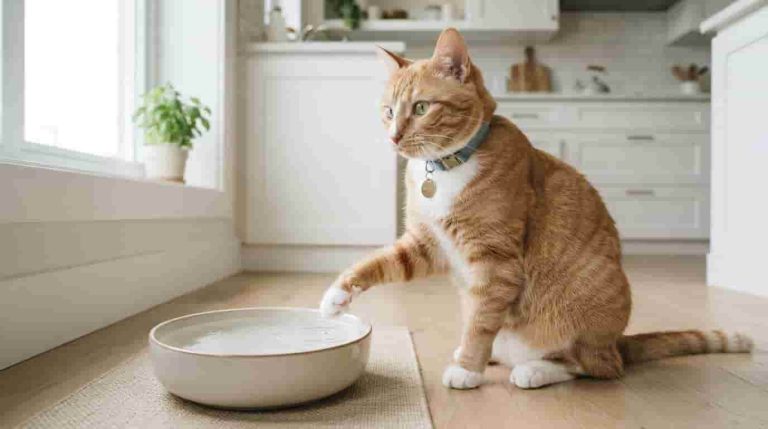

Cat Kneading Habits: Why Your Cat Makes Biscuits on Your Lap
Introduction
Cat kneading habits puzzle millions of cat owners every single day. One moment your cat lies quietly on your lap. The next, it pushes its paws rhythmically into your thighs like it is making bread dough from scratch.
The behavior looks strange, and sometimes it genuinely hurts. However, cat kneading behavior carries deep emotional meaning that most owners completely misunderstand. Understanding why cats knead changes how you respond to it entirely.
Additionally, cat kneading habits connect directly to your cat’s earliest memories and deepest feelings of safety. This is not random pawing or a sign of something wrong. It is actually one of the clearest signals of trust and comfort your cat ever shares with you.
This guide explains where kneading truly comes from, what different kneading styles mean, why cats knead on humans rather than blankets, and what to do when those sharp claws become a real problem. By the end, you will see this quirky behavior in a completely new light.
Cat Kneading Habits: Where This Behavior Actually Comes From
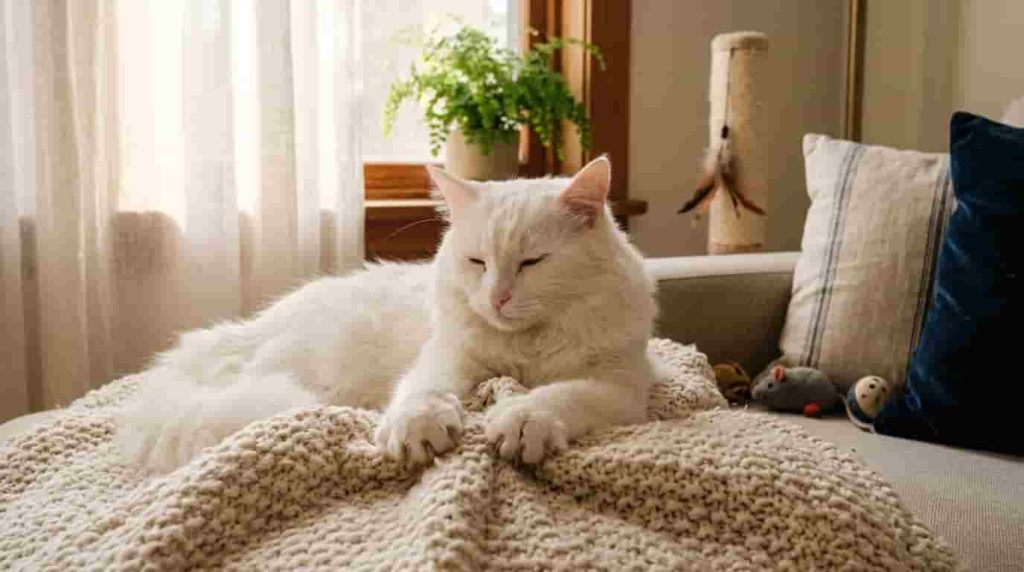
Cat kneading habits start in the very first days of a kitten’s life. Newborn kittens knead their mother’s belly to stimulate milk flow while nursing. The rhythmic push-and-release motion of kneading paws triggers milk release and provides warmth and nourishment during those critical early weeks.
As kittens grow into adults, most stop needing milk entirely. However, the behavior stays deeply embedded in their emotional memory. Therefore, adult cats continue kneading because it connects to feelings of warmth, safety, and complete comfort from their earliest experiences.
This is why kitten kneading habits carry so naturally into adult life. The action becomes a comfort reflex rather than a practical need. Additionally, intact female cats sometimes knead more intensely during heat cycles as part of their natural hormonal patterns.
According to PetMD, kneading is a completely normal feline behavior that signals comfort and contentment in most healthy cats. Therefore, when your cat kneads on you, it is essentially reliving the safest and most nourishing experience of its entire life.
What Different Kneading Styles Tell You About Your Cat

Not all cat kneading behavior looks the same, and the differences actually matter. Some cats knead gently with soft paws and no claws at all. Others dig in firmly with extended claws in an intense and focused rhythm. Understanding these variations helps you read your cat’s emotional state more accurately.
Here are the most common kneading styles and what they typically mean:
- Soft and slow kneading with retracted claws: Your cat feels deeply relaxed and completely at ease. This is the purest expression of feline contentment.
- Firm kneading with extended claws: Your cat feels highly stimulated or especially affectionate. The intensity reflects the strength of the emotion behind it.
- Kneading paired with purring: Your cat has reached maximum comfort and trust in that moment. These two behaviors together are the clearest sign of genuine feline happiness.
- Kneading followed immediately by biting: Your cat may feel overstimulated or is mixing play instincts with comfort behavior. This pattern needs careful management.
Furthermore, cat kneading and purring together create one of the most recognizable combinations in feline behavior. For more on what that purring actually means at a scientific level, read our article on Cat Purring Science: Why they vibrate and what it means for your health.
Why Cats Knead on Humans More Than on Blankets or Soft Surfaces
The meaning of cat kneading changes significantly depending on where your cat chooses to do it. Cat kneading a blanket and cat kneading a human are related behaviors but carry distinctly different emotional messages.
When your cat kneads a blanket, soft cushion, or bed, it is usually:
- Preparing a comfortable sleeping spot, similar to how wild ancestors would flatten grass or leaves
- Self-soothing during moments of anxiety or overstimulation
- Marking its territory using scent glands located in the paw pads
- Performing a comfort ritual before settling down for sleep
When your cat kneads directly on you, the message is far more personal. Your cat is not just seeking comfort in general. It is actively choosing you as the source of that comfort. Cat kneading human behavior signals a deep bond, genuine trust, and real affection built over time.
Additionally, the warmth of your body and your familiar scent both encourage cats to knead on the people they love most. Therefore, being chosen as your cat’s kneading spot is a significant compliment in the feline world.
To understand the full picture of how your cat shows affection through its body, our guide on Cat Body Language: How to read your pet’s silent signals covers everything your cat communicates without making a single sound.
When Cat Kneading With Claws Becomes Painful or Problematic
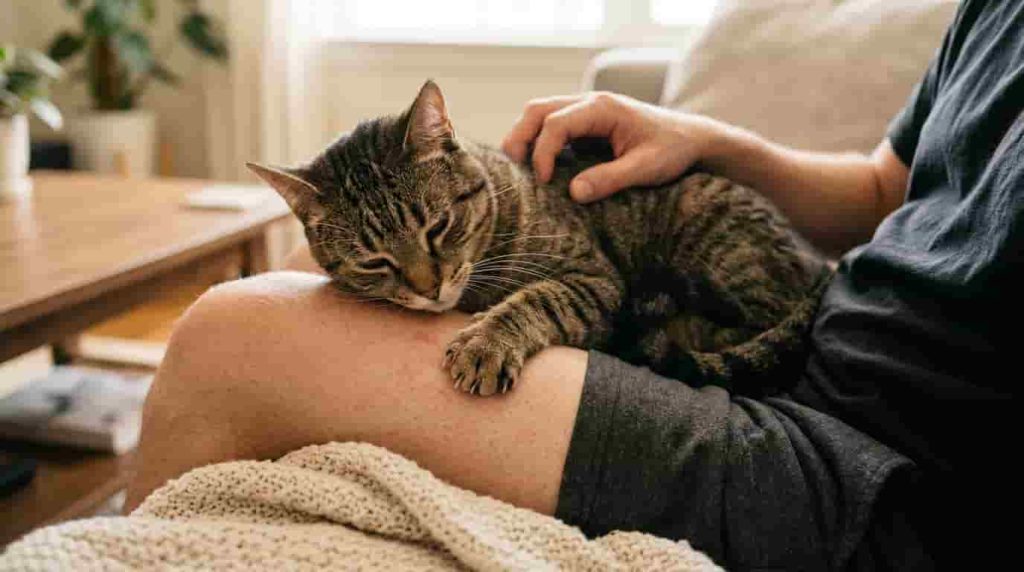
Cat kneading with claws can shift quickly from sweet to genuinely painful. Many cat owners want to enjoy this bonding moment but find themselves wincing as those sharp tips press in. The good news is you can manage this discomfort without disrupting the connection at all.
Here are practical steps to handle painful kneading sessions:
- Place a thick blanket on your lap before your cat settles. This creates a comfortable barrier between claws and skin while letting your cat knead freely.
- Keep your cat’s claws trimmed regularly. Shorter claws reduce sharpness significantly without changing the behavior itself.
- Gently redirect the kneading to a soft toy or folded blanket. Move your cat slowly and kindly rather than pushing it away, which can feel like rejection.
- Never punish your cat for kneading. Punishment breaks trust and creates anxiety without addressing the root behavior.
Cat kneading and biting in the same session often signals overstimulation. If your cat starts biting while kneading, end the session gently and offer space. For deeper help with biting behavior specifically, visit our article on Cat Aggression Issues: How to stop biting and scratching for good.
Also, some cats combine kneading with loud meowing or trilling sounds before settling down. Our article on Cat Meowing Meanings: What your cat is trying to tell you explains exactly what those sounds are adding to the emotional message.
The Real Emotional Meaning Behind Your Cat Choosing You

Real life example: Emma from New York rescued a three-year-old cat named Fig who had spent most of its early life in a shelter. For the first two months at home, Fig never kneaded at all. Then one afternoon, Fig climbed slowly onto Emma’s lap and began kneading deliberately for nearly twenty minutes. Emma knew immediately that something important had shifted. Fig had finally decided the new home was safe and that Emma was completely trustworthy. The kneading never stopped after that afternoon.
This is one of the most powerful truths about cat kneading behavior. It does not just signal that your cat feels good right now. It signals that your cat has genuinely chosen you as a source of lasting safety and comfort.
According to Cornell University College of Veterinary Medicine, many adult cat behaviors including kneading trace directly back to early kitten experiences and reflect deep emotional attachments formed with trusted caregivers over time.
How Kneading Connects to Your Cat’s Broader Comfort Rituals
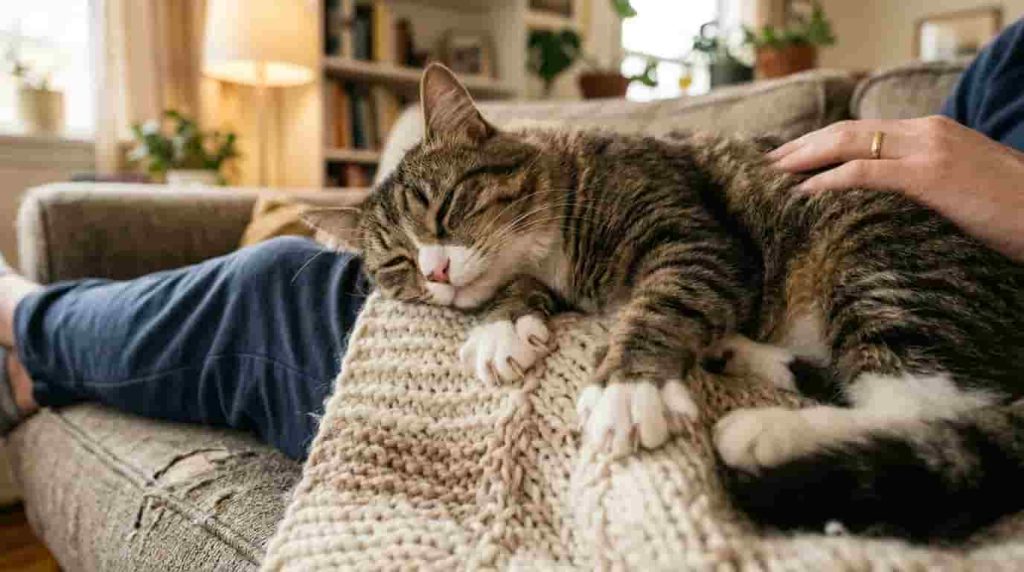
Cat kneading habits rarely happen in complete isolation. They connect naturally to a wider set of comfort behaviors your cat performs when it feels safe, settled, and content. Understanding these connections helps you recognize your cat’s full emotional well-being at a glance.
Here are the most common behaviors that appear alongside kneading:
- Purring: Almost always accompanies relaxed kneading and signals peak contentment in the moment.
- Slow blinking: Your cat may pause mid-session to blink slowly at you as a gesture of deep trust.
- Light drooling: Some cats drool gently while kneading because the behavior connects so strongly to early nursing memories.
- Circling before lying down: Often follows a kneading session as your cat prepares its chosen resting spot.
Additionally, cats sometimes knead contentedly in the evening before their energy suddenly explodes into a sprint around the house. If your cat kneads on you and then tears through every room twenty minutes later, our article on Cat Night Zoomies: Why your pet runs wild at 3 AM explains exactly why that shift happens so reliably.
Conclusion
Cat kneading habits are one of the most personal and emotionally rich behaviors your feline ever shares with you. Therefore, the next time those paws start pressing rhythmically into your lap, recognize it for what it truly is. Your cat is telling you that you are its safe place in the world.
Cat kneading habits become even more meaningful when you understand the full story behind them. As a result, you can respond with patience, manage the claws comfortably, and deepen the bond between you and your pet every single day you spend together.
Did this guide help you understand your cat’s kneading better? Share your experience in the comments below and tell us where your cat loves to knead most and what you do to make it comfortable for you both.
Frequently Asked Questions
Your cat kneads you specifically because it has formed a deep bond and feels completely safe with you. Cats choose their kneading spots intentionally, and being chosen is a genuine sign of trust and affection.
Cat kneading and biting together usually signal overstimulation. Your cat starts in a relaxed state but becomes increasingly stimulated by the physical contact and sensation. End the session gently when you notice the kneading intensity rising to prevent a bite.
Yes, cat kneading with claws is completely normal for many cats. Some cats simply knead more intensely than others based on personality and emotion. Keeping claws trimmed and placing a blanket on your lap both reduce discomfort without discouraging the behavior.
Drooling during kneading happens because the behavior connects deeply to nursing memories from kittenhood. Some cats relive that early comfort so strongly that they begin to salivate automatically. It is entirely harmless and actually signals deep relaxation and contentment.
Yes, allowing your cat to knead on you strengthens the bond between you significantly. Simply manage the claw discomfort with a thick blanket and regular trimming. Never punish the behavior, as it is one of the most meaningful ways your cat expresses love and trust.