Cat jealousy signs: Introducing a New Kitten to Your Old Cat
Introduction
Cat jealousy signs are something most owners do not expect until a new kitten walks through the front door. Your resident cat has lived as the undisputed center of your world for months or years. Then suddenly there is a tiny, loud, chaotic newcomer demanding your time and attention from every direction.
Your older cat does not understand what just happened. It simply notices that its food bowl is closer to a stranger, its sleeping spot smells different, and you keep disappearing behind a closed door. These changes feel like a threat, and the behavioral response to that threat is what most people call cat jealousy.
Therefore, recognizing cat jealousy signs early is the difference between a smooth introduction and months of stress and conflict in your home. Additionally, understanding what your older cat is actually experiencing helps you respond with empathy rather than frustration when the behavior problems start appearing.
This guide explains exactly what jealous behavior looks like in cats, how a new kitten disrupts your resident cat’s world, and the step-by-step process that makes the introduction as peaceful as possible for everyone involved.
Cat jealousy signs: What Jealousy Actually Looks Like in Cats
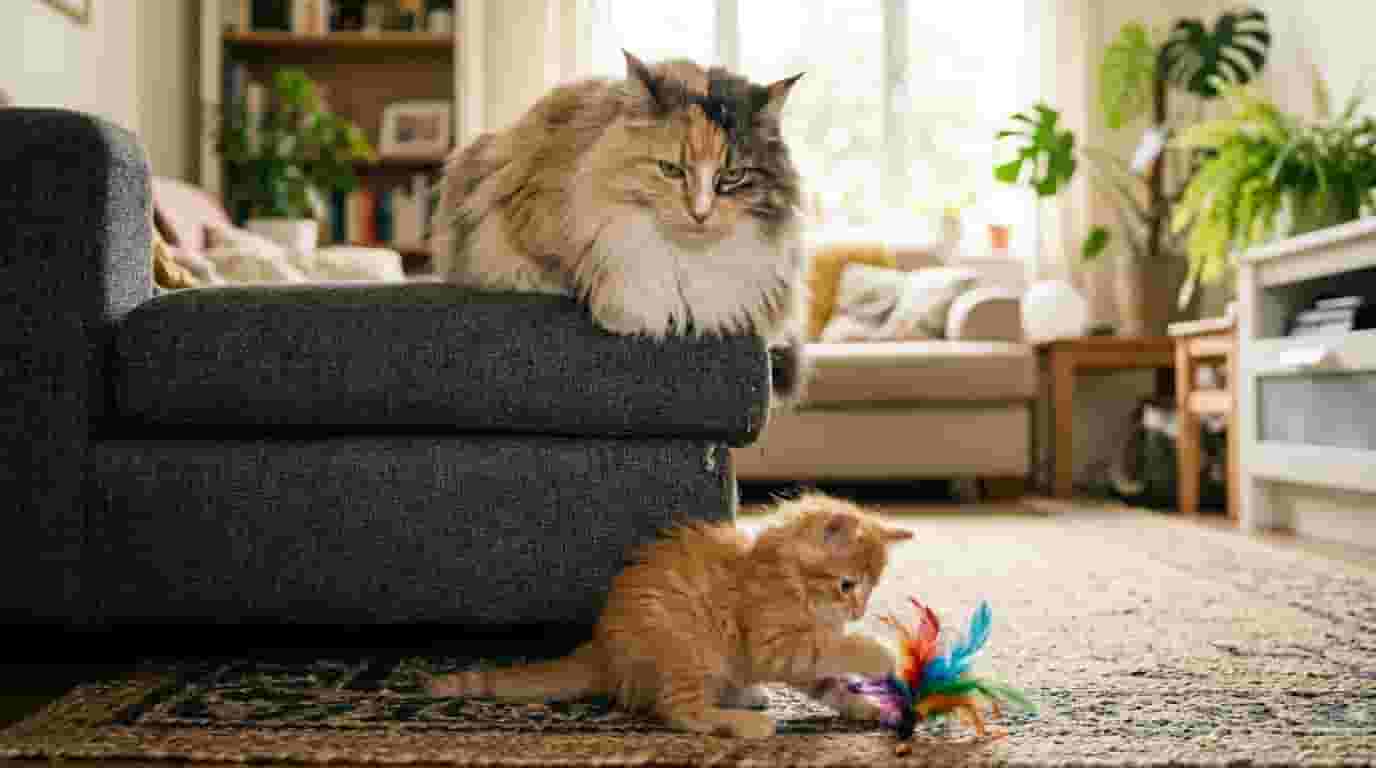
Cat jealousy signs are not always what owners expect to see. Many people expect hissing and swatting, and those certainly happen. However, jealous behavior in cats often shows up in subtler and more unexpected ways that are easy to misread as unrelated problems.
Here are the most common signs of jealousy in cats after a new pet arrives:
- Attention-seeking behavior that feels extreme: Your older cat suddenly wants to be on your lap constantly, vocalizes more than usual, and interrupts every interaction you have with the kitten.
- Aggression toward you rather than the kitten: Some cats redirect their frustration onto the owner rather than the newcomer. You may notice increased biting or swatting when you return from handling the kitten.
- Territorial marking: Your resident cat may start spraying or rubbing its face intensely on furniture and doorways to reassert ownership of the space.
- Food guarding: Your cat may hover aggressively over its bowl or refuse to eat if the kitten is anywhere nearby during mealtimes.
- Withdrawal and hiding: Some cats respond to jealousy not with aggression but with depression. They stop engaging, eat less, and spend most of the day hidden away alone.
- Litter box problems: A previously perfect cat may start eliminating outside the box as a stress response to the new household dynamics.
According to VCA Animal Hospitals, inter-cat tension during introductions is one of the most common reasons cat owners seek behavioral guidance from veterinarians. Therefore, catching these signs early and responding correctly prevents short-term jealousy from becoming a permanent household problem.
How a New Kitten Disrupts Your Resident Cat’s Entire World
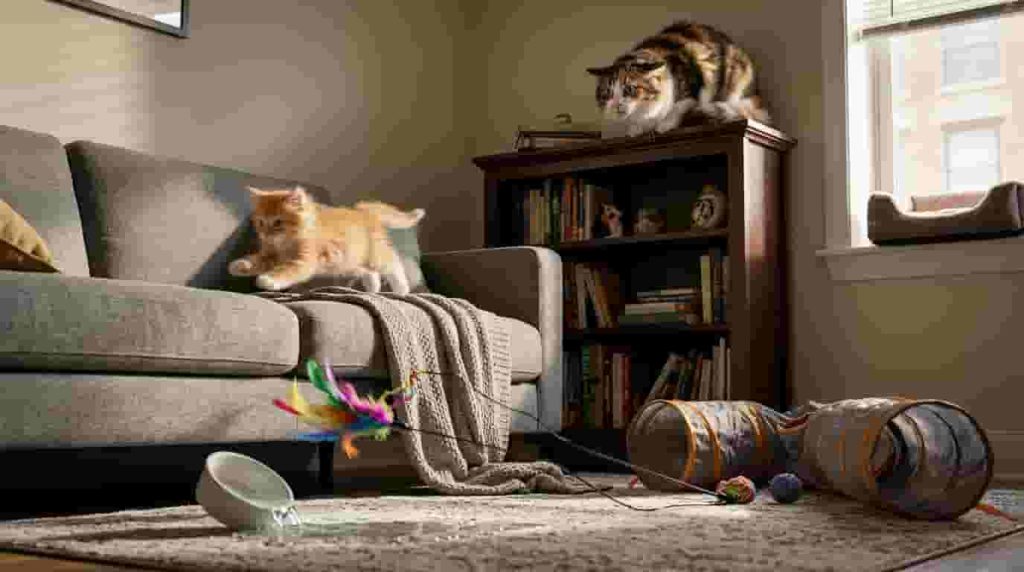
To understand cat jealousy signs fully, you need to see the introduction from your older cat’s perspective. Cats are territorial animals that build their sense of security around predictable routines, familiar scents, and a stable social hierarchy. A new kitten disrupts every single one of these foundations simultaneously.
Here is what your resident cat experiences during the first days of a new kitten’s arrival:
- Scent disruption: Your home suddenly carries an unfamiliar scent that your cat did not choose and cannot remove. This alone triggers significant anxiety in most cats.
- Resource competition: Food, water, litter boxes, sleeping spots, and human attention all feel suddenly limited and contested.
- Social status uncertainty: Your cat held a clear position in the household hierarchy. A new arrival throws that entire structure into question.
- Routine breakdown: Your schedule, your movements, and your availability change immediately when a kitten arrives. Cats rely heavily on routine for emotional stability.
Furthermore, if your resident cat already tends toward anxiety when left alone, a new kitten intensifies that stress significantly. Our article on Cat separation anxiety: Tips for Nigerians working 9-to-5 jobs covers the baseline anxiety patterns that can make jealousy-related transitions even harder to manage.
The Behavioral Signals That Reveal a Jealous Cat
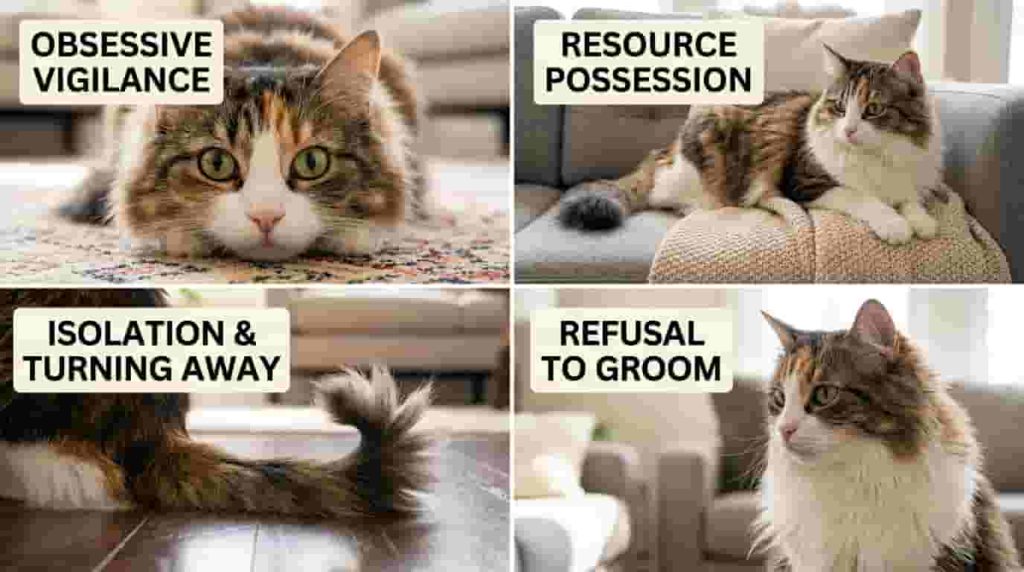
Recognizing cat jealousy signs in the early days prevents small tensions from escalating into serious household conflict. Jealous cat symptoms follow a recognizable pattern that intensifies the longer the introduction remains poorly managed.
Watch for this escalating sequence of jealous behavior in cats:
- Stage one: Your resident cat watches the kitten with intense focus, stays physically close to you at all times, and vocalizes more than usual.
- Stage two: Your cat begins hissing and growling when the kitten enters the same room. It may block doorways or prevent the kitten from accessing shared spaces.
- Stage three: Active aggression begins. Your cat swats, chases, or pins the kitten. This stage requires immediate intervention and a full restart of the slow introduction process.
- Stage four: Chronic stress behaviors appear. Your cat stops eating normally, hides for most of the day, or begins inappropriate elimination consistently.
Most cats stay at stage one or two if the introduction follows a proper protocol. Additionally, cats that play-bite more aggressively after a new kitten arrives often need separate guidance on managing that specific behavior. Our article on Cat biting during play: How to train your kitten to be gentle covers that pattern in full detail.
How to Introduce a New Kitten Without Triggering Cat jealousy signs

Managing cat jealousy signs during an introduction requires patience and a specific process that respects your resident cat’s need for gradual adjustment. Rushing this process is the single most common mistake owners make, and it nearly always makes the jealousy worse.
Follow these steps in sequence for the smoothest possible introduction:
- Separate completely on day one. Keep the kitten in a dedicated room with its own food, water, litter box, and bedding. Your resident cat needs time to detect the new scent without any visual or physical contact.
- Swap bedding between day two and day four. Place a piece of the kitten’s bedding near your resident cat’s food bowl and vice versa. This links the new scent with positive associations like eating.
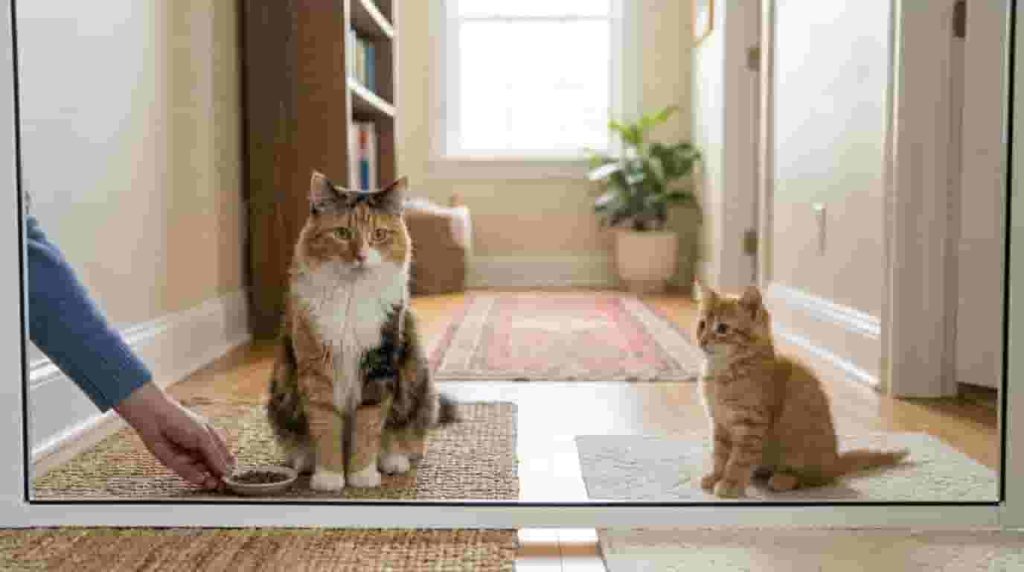
- Allow scent exploration through a closed door. Let your cats sniff each other under the door before any face-to-face contact happens. Feed both cats on opposite sides of the same door to create calm, positive associations.
- Introduce visual contact through a barrier. Use a baby gate or cracked door so they can see each other without direct access. Watch both cats for signs of stress and keep these sessions under five minutes at first.
- Allow supervised face-to-face meetings in neutral space. Choose a room that is not your resident cat’s primary territory. Keep sessions short, calm, and always end before tension rises.
- Maintain your older cat’s routine exactly. Feed it first, give it attention before the kitten, and preserve its favourite spaces without interference from the newcomer.
Additionally, your resident cat may increase scent marking on furniture and doorways during this period. This behavior is actually a reassurance mechanism rather than defiance. Our article on Cat scent marking: Why your pet rubs their face on your legs explains exactly why this happens and when it becomes excessive.
Managing Your Older Cat’s Emotional Needs During the Transition
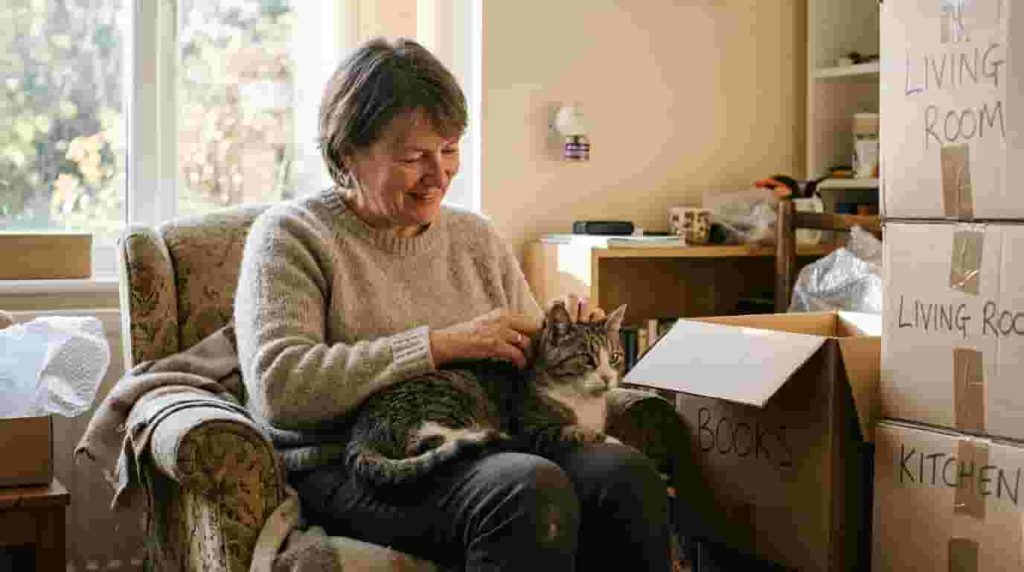
The most overlooked aspect of managing cat jealousy signs is actively protecting and prioritizing your resident cat’s emotional experience throughout the introduction. Most of the time and energy goes toward settling the kitten in. However, your older cat needs deliberate reassurance to feel secure during this period.
Here are the most effective ways to support your resident cat emotionally:
- Spend dedicated one-on-one time daily. Even fifteen minutes of undivided attention helps your older cat maintain its sense of priority in the household.
- Never scold your resident cat for hissing at the kitten. Hissing is communication, not aggression. Punishing it increases anxiety and makes the jealousy symptoms worse.
- Provide elevated spaces the kitten cannot access. Cat trees, shelves, and high perches give your older cat a jealousy-free retreat where it can observe without feeling threatened.
- Keep resources generous and separate. Follow the one-plus-one rule: one litter box and one food station per cat, plus one extra. Shared resources create ongoing competition and fuel jealousy symptoms long after the initial introduction ends.
Real life example: Chinwe from Abuja adopted a kitten named Pepper for her four-year-old cat Ebony. She skipped the slow introduction and put both cats in the same room on the first day. Within hours, Ebony stopped eating, hid under the bed, and hissed at Chinwe when she tried to offer comfort. After researching the proper introduction process, Chinwe separated them completely and restarted from scratch. Three weeks later, both cats were eating near the same door calmly. Today they sleep on the same couch without incident.
It is also worth noting that jealous cats sometimes become intensely interested in small creatures like geckos as a displacement activity when stressed. If you notice your cat fixating on wall geckos during this adjustment period, read our article on Cat hunting geckos: Is it safe for cats to eat wall geckos? for important safety information.
Conclusion
Cat jealousy signs are completely normal during any new kitten introduction, but they do not have to escalate into lasting household conflict. Therefore, take the introduction slowly, protect your older cat’s routine deliberately, and give both animals time to adjust at their own pace. Additionally, watch for the early behavioral signals so you can intervene before stage-three aggression ever develops.
Recognizing cat jealousy signs is the first step toward creating a genuinely peaceful multi-cat home. As a result, both your resident cat and your new kitten get to settle in without chronic stress or fear. With the right approach, most cats reach a comfortable coexistence within four to eight weeks of a properly managed introduction.
Did this guide help you navigate your introduction? Share your experience in the comments below and tell us how long it took your cats to reach peace with each other.
Frequently Asked Questions
Watch for sudden attention-seeking, hissing when the kitten is nearby, food guarding, hiding, or litter box changes after the new arrival. These are the most reliable cat jealousy signs in a multi-cat household. The earlier you catch and respond to these signals, the easier the resolution becomes.
Yes, most cats reach a comfortable level of coexistence within four to eight weeks of a properly managed introduction. Some cats become genuinely affectionate companions over time. Others simply establish respectful boundaries and live peacefully in shared spaces without bonding closely.
A second cat can benefit some cats but creates stress for others, particularly those with territorial or anxious personalities. Observe your resident cat’s baseline behavior first and research the breed tendencies before deciding. A slow and well-managed introduction is essential regardless of your cat’s personality type.
Hissing is a warning rather than an attack. Your resident cat is communicating its discomfort and setting a boundary. This is actually healthy behavior because it means your cat is using communication rather than immediately resorting to physical conflict. Give your resident cat more space and slow down the introduction timeline.
Most behaviorists recommend a minimum of one to two weeks of full separation before any face-to-face contact begins. However, the real guide is your resident cat’s stress level rather than a fixed number of days. Move to each new stage only when both cats show calm and relaxed behavior at the current stage.