

AC safety for young kittens: Avoiding sudden chilly flu drops.
Introduction:
AC safety for young kittens is a critical topic that many new pet parents completely overlook during summer days. Do you know if your cold air conditioner is actually making your fragile feline companion sick? Many owners try to keep their homes comfortable but accidentally expose their tiny pets to dangerous shivering drops. Therefore, understanding the hidden risks of cooling systems for kittens helps you prevent sudden veterinary emergencies.
This comprehensive guide will show you how to manage your home climate control units safely. First, we will examine why newborn felines struggle to regulate their own internal body temperatures. Next, you will discover the best ways to position your vents to avoid creating direct icy blasts. Finally, we will share important air conditioning safety tips to ensure your pet stays perfectly healthy.
Protecting your pet requires careful environmental planning and a good understanding of feline development milestones. Let us look at the best ways to implement AC safety for young kittens inside your modern apartment.
AC safety for young kittens: Understanding Thermoregulation Risks
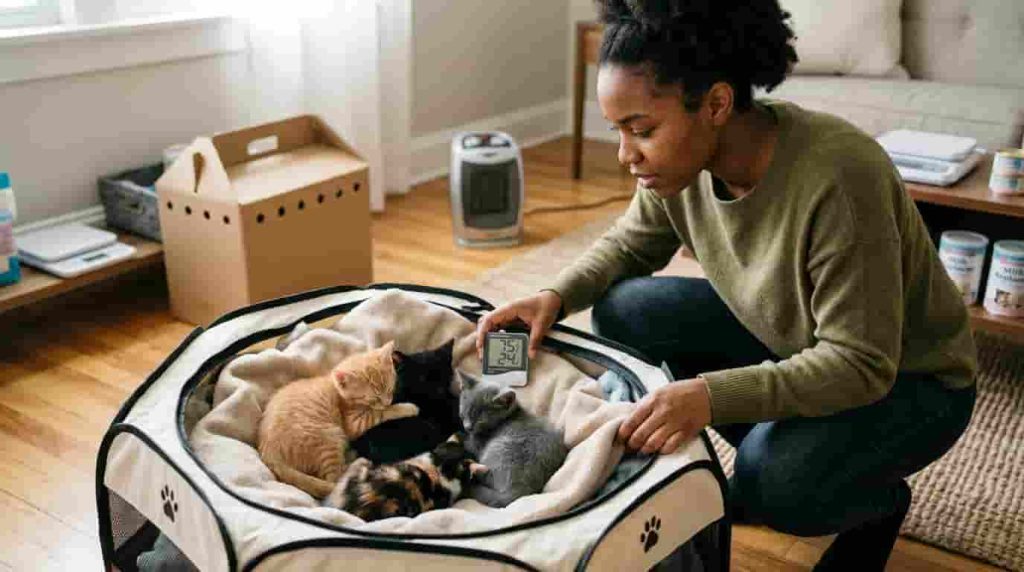
Implementing proper AC safety for young kittens is necessary because tiny felines cannot generate sufficient body heat. During the first few weeks of life, their internal survival systems remain highly underdeveloped. Because of this physiological limitation, young pets easily develop hypothermia when placed in freezing rooms.
Additionally, standard cooling units extract vital moisture from the air while lowering the surrounding room temperature. This drying action can irritate delicate nasal tissues and cause severe sneezing fits in healthy animals. Many owners mistake these cold induced symptoms for a standard viral infection.
Consider keeping your home thermostat set to a moderate level rather than a freezing setting. This simple precaution forms the foundation of your seasonal indoor kitten cooling strategies. Let us look at the specific environmental parameters your young pet needs to survive.
| Age of Kitten | Ideal Room Temperature | Essential Climate Protection Need |
| 1 to 3 Weeks | 29 to 32 Degrees Celsius | Complete isolation from cold AC vents |
| 4 to 6 Weeks | 26 to 28 Degrees Celsius | Thick blankets and elevated nesting boxes |
| 7 Weeks and Older | 22 to 25 Degrees Celsius | Safe pet-friendly ac solutions and drafts checks |
Essential Air Conditioning Safety Measures for Home Use
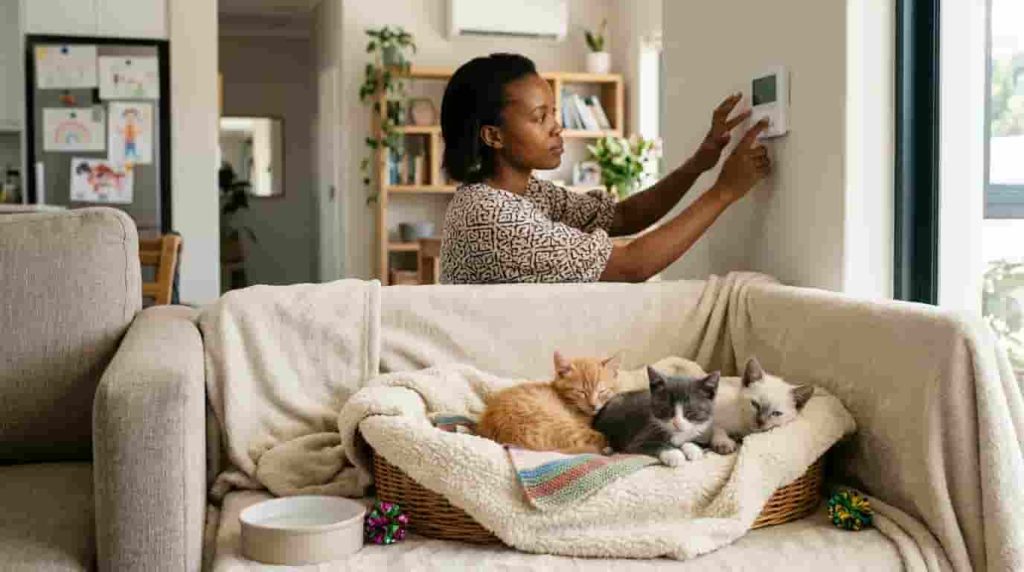
Applying smart air conditioning safety measures keeps your curious pets safe from sudden respiratory illness. Cold air naturally drops toward the floor where small animals spend most of their time playing. Therefore, practicing reliable AC safety for young kittens requires checking the airflow patterns at ground level. You should physically feel the floor to ensure no freezing drafts exist there.
Furthermore, you should utilize heating pads wrapped in thick towels to provide an optional warm escape zone. This setup allows your pet to choose its preferred temperature spot easily. However, you must avoid leaving young pets unsupervised near exposed electrical cords.
Curious animals often chew on hanging wires when exploring new cooling appliances around the house. This dangerous habit highlights the need for strict hvac safety precautions for kittens. Protecting your pet means securing every part of your cooling system from sharp teeth.
Managing Vents to Prevent Direct Chilly Drafts
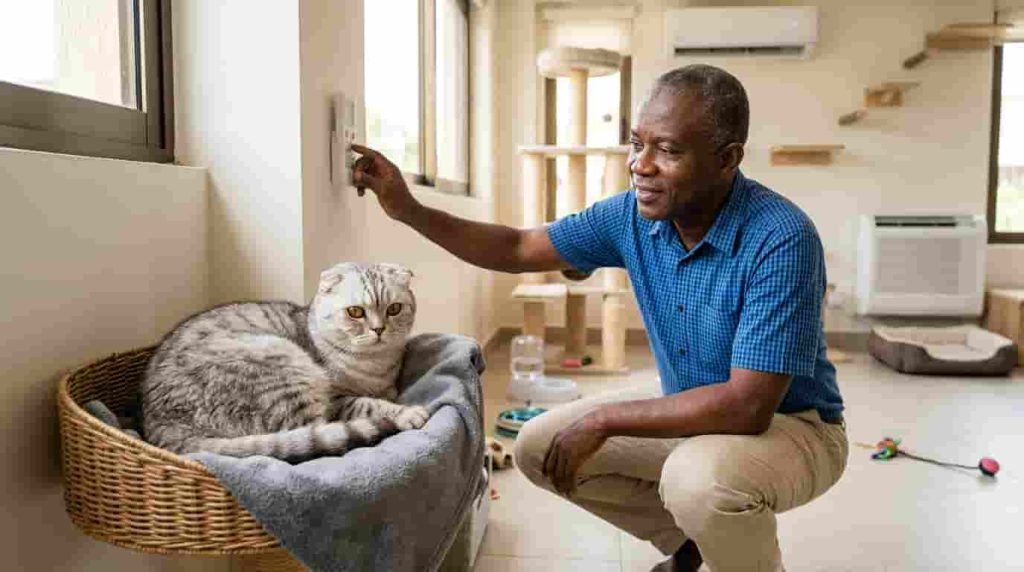
Proper vent management is a vital part of your kitten ac precautions checklist. You must adjust the directional louvers upward toward the ceiling rather than down toward pet beds. Also, ensure your nesting box sits far away from the direct path of the air stream.
Keeping Your Indoor Air Free from Smoke Hazards
Maintaining clean indoor air quality involves removing other respiratory dangers while your cooling system runs. For instance, you should read our comprehensive guide on Mosquito coil fumes and cats: Respiratory safety adjustments for essential safety tips. Trapping toxic chemical smoke inside a sealed air conditioned room can severely damage delicate kitten lungs.
Preventing Heatstroke and Managing Summer Temperatures
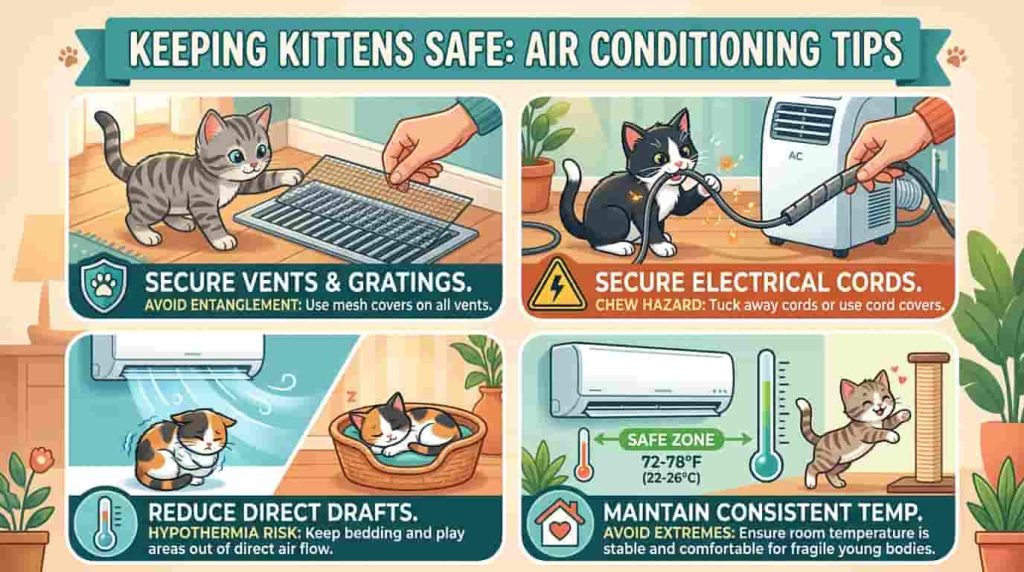
Balancing AC safety for young kittens with general kitten safety in hot weather requires constant observation. While cold air poses distinct risks, extreme heat can also turn fatal very quickly. As a result, you must learn how to navigate the common dangers of heat for young kittens.
To achieve this balance, keep your cooling units running on a low eco mode setting. This strategy assists with active kitten heat stroke prevention without creating a freezing environment. According to clinical veterinary research published by PetMD, heatstroke causes rapid organ failure in young felines.
Therefore, you must never turn off all cooling options for young cats during peak summer afternoons. Instead, use a smart fan to circulate air gently without pointing it directly at the nest. This careful approach ensures successful staying cool in summer with a kitten. Let us examine how to maintain your cooling equipment safely.
HVAC Maintenance Habits for Pet Owners

Maintaining high HVAC safety for kittens involves cleaning your air filters much more frequently than normal. Dirty filters accumulate thick pet dander, loose hair, and outdoor dust particles very quickly. Additionally, these trapped particles blow back into your living spaces and trigger severe asthma attacks.
You should wash or replace your system filters every two weeks to guarantee clean airflow. This maintenance habit matches the protective steps needed for other seasonal weather changes. For example, you can check our post on Harmattan care for cats: Protecting skin and eyes from dust to manage airborne irritants. Both situations require active dust control to keep your feline companion completely healthy.
Furthermore, ensure that your external drainage pipes remain completely clear of mold blockages. Standing water inside cooling units can breed dangerous bacteria that pollute your indoor air. Regular system inspections prevent these hidden health hazards from hurting your growing family pet.
Safeguarding Outdoor Condenser Units from Curious Pets
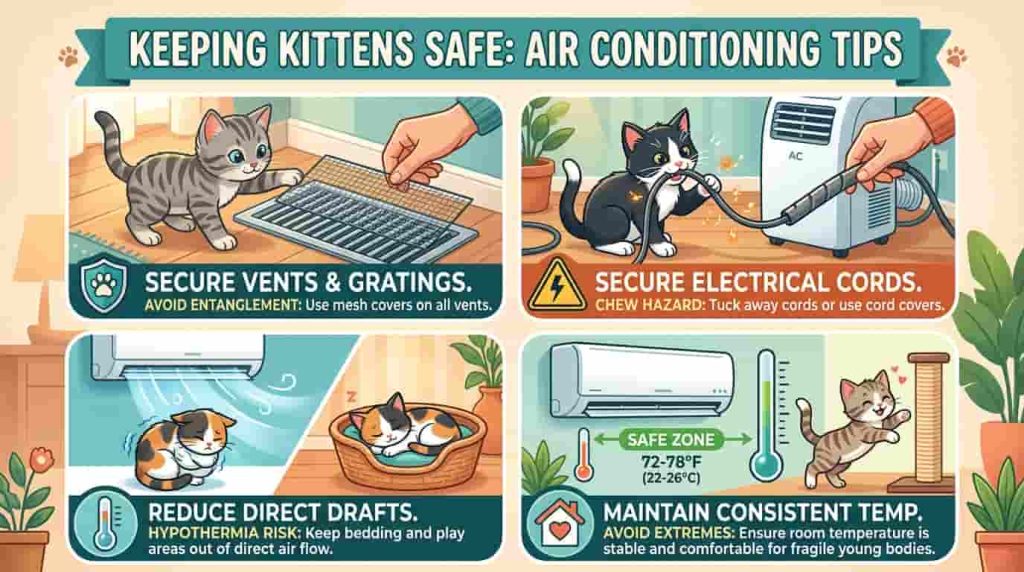
Your outdoor cooling equipment also requires reliable ac precautions for young pets. You must install a sturdy mesh barrier around the compressor unit to block access entirely. This structure prevents playful pets from trapping their paws inside spinning fan blades.
Controlling Household Risks During Cleaning Routines
Using strong chemical sprays to clean your cooling vents can introduce dangerous toxins into the room. If you struggle with local household pests, read our advice on Rat poison dangers for cats: Protecting pets from sniper lines to avoid chemical accidents. Always keep your young animals in a separate room when applying any intense cleaning products.
Creating Safe Temperatures for Kittens Indoors

Establishing clear guidelines for safe temperatures for kittens protects your home from sudden medical complications. You can tell your pet is too cold if it starts shivering or huddling tightly. Furthermore, cold felines often refuse to eat their food because their body energy drops too low.
To solve this issue, invest in a simple digital wall thermometer to monitor your rooms. This tool helps you maintain the perfect environmental balance for indoor cat cooling tips. Additionally, talk to your local vet to get personalized kitten care tips for your specific breed.
Taking these proactive steps will help you master understanding ac risks for kittens without much stress. Your dedication ensures your fragile pet enjoys the benefits of modern climate control machinery safely. Let us review the primary steps for keeping kittens cool in hot weather safely.
- Maintain the room temperature between 24 and 26 degrees Celsius.
- Provide elevated bedding choices to avoid cold floor drafts.
- Clean all your air conditioning filters every two weeks.
- Offer fresh drinking water to prevent seasonal dehydration issues.
Conclusion
In conclusion, maintaining proper AC safety for young kittens involves balancing reliable heat protection with draft prevention. By monitoring your thermostat and keeping vents directed upward, you can prevent sudden respiratory chills. These simple adjustments shield your vulnerable pets from the dangers of modern cooling equipment.
Always provide warm blanket options so your growing felines can regulate their body heat naturally. Your daily care choices will help your animal companion grow into a strong adult cat. With the right climate setup, your household will remain comfortable and safe all year long.
Are you currently using an air conditioner around your new litter of young kittens? Please share your setup experiences and drop your unique safety questions in the comment section below!
Frequently Asked Questions
The main signs include continuous body shivering, cold ear tips, and a complete lack of playing energy. You may also notice the kitten crying constantly while trying to hide deep under furniture pieces.
An air conditioner cannot directly cause a viral flu because infections come from specific biological pathogens. However, the cold air can stress the immune system and make your pet more vulnerable to illnesses.
The safest place is an elevated corner located completely away from the direct path of the air vent. You can place the bed inside a high sided box to block sneaky floor drafts effectively.
Yes, it is safe if you set the system to a moderate eco temperature like 26 degrees Celsius. You must also provide a warm blanket zone so the kitten can escape the cold easily.
You can stop this behavior by covering all visible wires with heavy duty plastic cord protectors. Additionally, spray the protectors with a pet safe bitter apple deterrent to discourage curious chewing habits.