Cat Raw Feeding: The pros and cons of a biological diet
Introduction:
Cat raw feeding is a hot topic that leaves many pet parents feeling completely overwhelmed. You want the absolute best for your feline friend, but contradictory internet advice can confuse anyone. This detailed guide will help you weigh the facts carefully so you can make an informed choice.
Many owners switch to a raw meat diet for cats because they want a species-appropriate diet for cats. However, preparing homemade cat food requires strict safety rules to avoid harmful bacteria. Therefore, you must look at both sides of this nutritional debate before changing your pet’s bowl.
The Benefits of Holistic Cat Nutrition
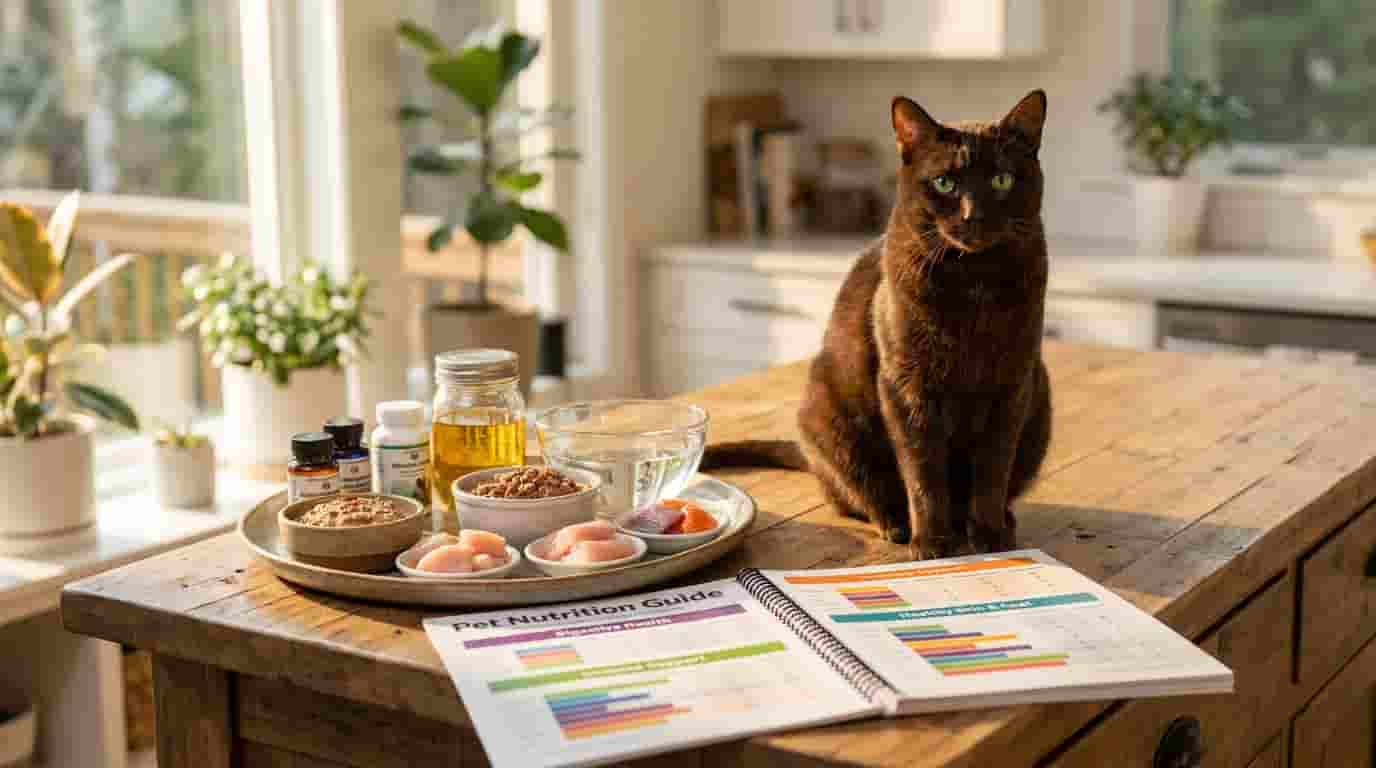
Advocates of holistic cat nutrition often report amazing changes in their pets. For instance, my friend Sarah noticed her cat Luna had a dull coat and constant energy crashes. She researched how to feed cats a raw diet safely and switched Luna’s food under careful guidance. Within a few weeks, Luna developed a incredibly glossy coat and gained much more energy.
The benefits of raw feeding for cats often start with vastly improved digestion. Raw food for cats contains highly digestible proteins that lead to smaller, less smelly litter box deposits. Additionally, chewing raw meat and bones naturally cleans plaque from your cat’s teeth. This diet also provides excellent natural hydration, which mimics the high moisture content found in wild prey. If you prefer standard commercial products instead, you can read about the benefits of high moisture diets.
Understanding Cat Raw Feeding Risks
The practice of cat raw feeding requires immense care because raw meat carries dangerous pathogens. Salmonella and Listeria can easily infect raw cat food if you handle the ingredients carelessly. Furthermore, these dangerous pathogens can spread from your cat’s saliva to your family members. Consequently, the Centers for Disease Control and Prevention strongly warn against feeding raw diets due to these public health risks.
Nutritional deficiencies pose another massive threat to your cat’s long-term health. A truly balanced raw diet for cats must contain the perfect ratio of meat, organs, and calcium. Many homemade raw cat food recipes lack essential vitamins like taurine, which can cause severe heart failure. Therefore, you must never guess the ingredient measurements when preparing a raw meal. You can also learn how to manage things in your kitchen that can kill your pet to keep your home safe.
Choosing the Best Cat Food for Raw Feeding
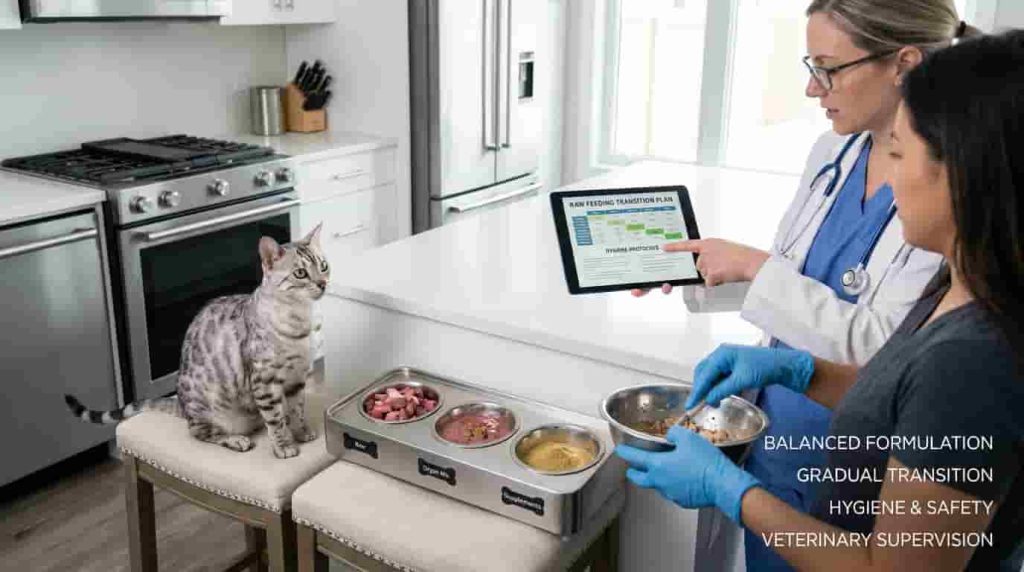
If you want to try raw feeding for felines, commercial freeze-dried options offer a safer starting point. These commercial products undergo high-pressure processing to destroy harmful pathogens while preserving nutrients. Thus, you get the benefits of raw food without the dangerous mess of raw meat.
Always look for products that meet strict nutritional standards set by veterinary scientists. According to the Cornell University College of Veterinary Medicine, unpasteurized raw diets carry significant risks of bacterial contamination and nutritional imbalances. Because of these risks, commercial raw brands offer much better safety controls than standard home preparation.
Essential Raw Feeding Supplements for Cats
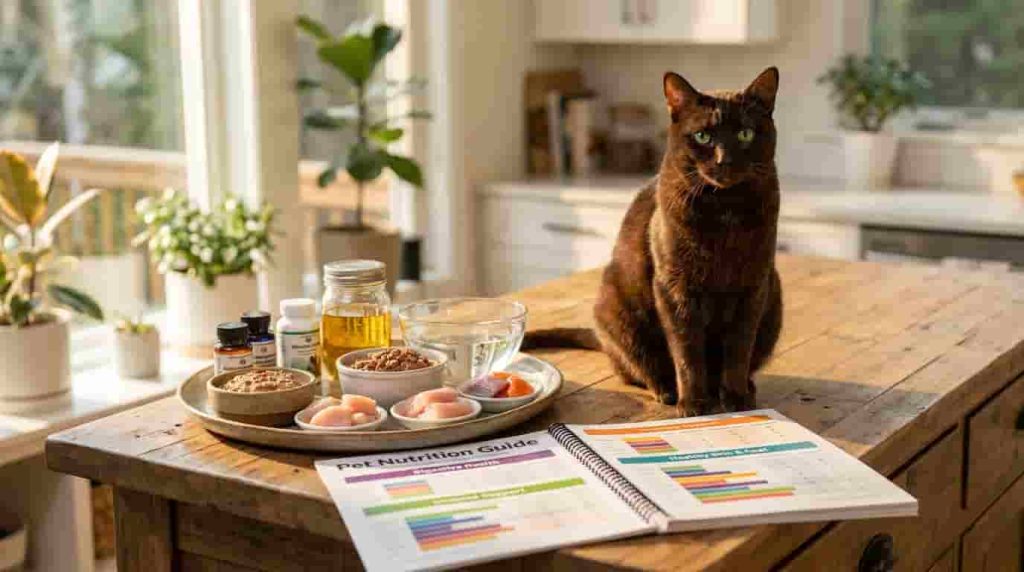
You cannot simply feed your cat plain chicken breast from the local grocery store. Pure meat lacks the vital minerals that a wild cat gets from consuming whole prey bones. Therefore, you must use specific raw feeding supplements for cats to prevent painful bone diseases.
- Calcium powder stabilizes bone growth.
- Taurine supplements protect heart health.
- Fish oil provides crucial omega fatty acids.
- Vitamin E boosts the immune system.
How to Start Raw Feeding for Cats Safely
Transitioning to raw feeding for cats requires a very slow and patient approach. First, talk to a board-certified veterinary nutritionist to create a balanced plan. Next, introduce tiny amounts of the new food alongside your cat’s regular meals. This gradual method prevents sudden stomach upset and allows your cat to accept the new texture.
Good hygiene is the most critical part of this entire dietary transition. Always wash your hands with hot soapy water after handling raw products. Use stainless steel bowls because plastic dishes can trap bacteria in tiny scratches. For a cleaner feeding area, many owners pair this diet with running water over bowls to encourage drinking.
Raw Feeding vs. Commercial Cat Food
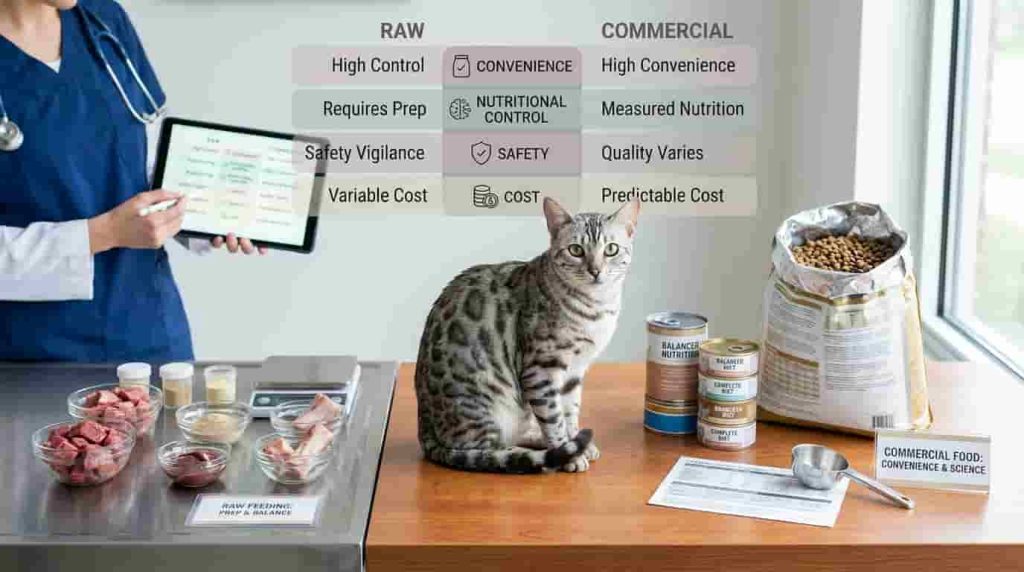
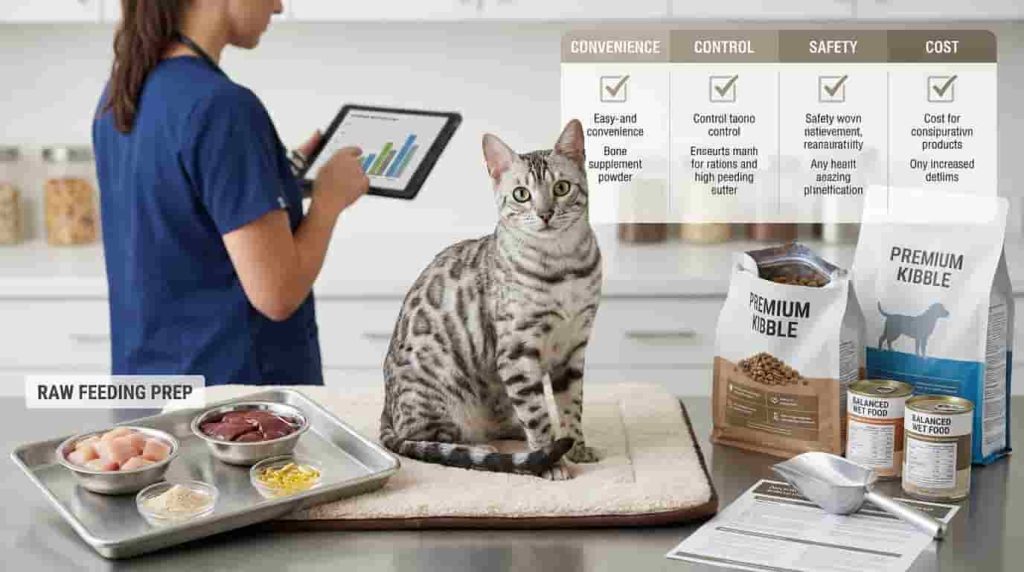
The debate between raw feeding vs. commercial cat food usually comes down to convenience and safety. Traditional kibble provides a shelf-stable option that requires zero preparation time. However, commercial food often contains high levels of carbohydrates that cats do not actually need.
- Raw food provides pure animal protein.
- Commercial kibble offers guaranteed nutrient balance.
- Raw diets require strict kitchen sanitation.
- Standard pet food carries lower contamination risks.
If your kitty needs to gain weight, you must choose their protein sources very carefully. You can read our guide on how to bulk up a skinny or rescued cat for healthy weight tips.
Vital Raw Feeding Guidelines for Cats
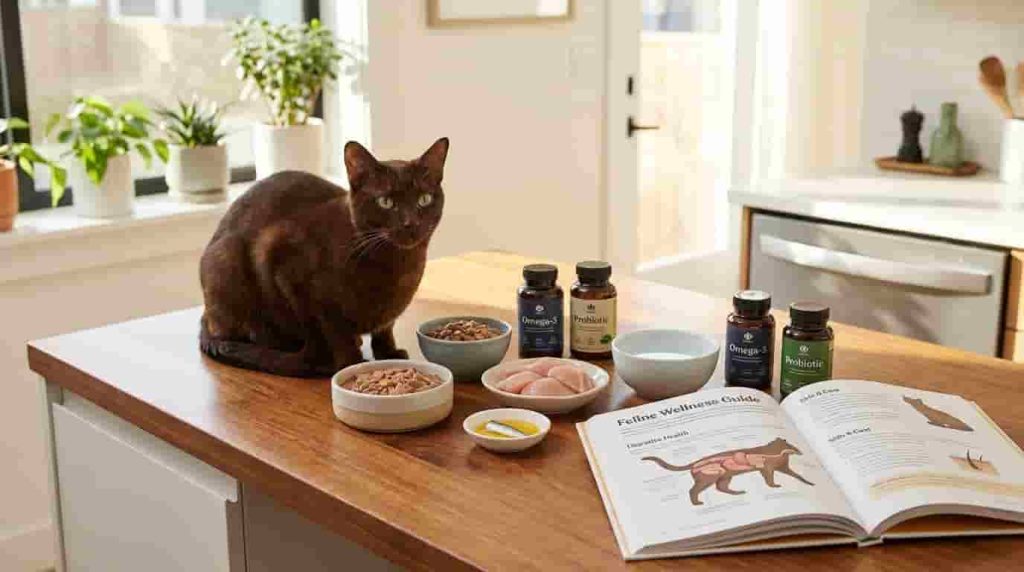
Every pet parent must follow strict raw feeding guidelines for cats to ensure success. Never leave raw meat sitting out in the open for more than twenty minutes. Throw away any uneaten portions immediately to prevent dangerous bacterial growth in your kitchen.
Keep your preparation tools entirely separate from your own human cooking utensils. Sanitize your counters with a pet-safe disinfectant immediately after preparing any raw meals. Finally, monitor your cat’s behavior and energy levels closely during the first month.
Final Thoughts on Cat Raw Feeding
In conclusion, cat raw feeding offers both exciting health benefits and significant health risks. A raw food diet for cats can give your pet a shiny coat and better digestion. However, you must ensure the meals remain fully balanced and free of bacteria. Always consult a veterinarian before you begin transitioning cats to raw diet plans.
What are your thoughts on this biological diet style? Have you ever tried preparing homemade meals for your pets? Please share your personal experiences in the comments below!
Frequently Asked Questions
No, raw feeding is not safe for kittens or cats with weak immune systems. Young kittens lack the developed immune defenses needed to fight off raw meat bacteria. Always consult your vet before changing the diet of a vulnerable pet.
No, grocery store meat is meant for human cooking and contains high bacterial loads. It also lacks the organs and bones needed for a balanced feline diet. You must use specialized raw feeding resources for cats instead.
You must follow expert raw feeding recipes for cats that include specific organ weights. Additionally, you need to mix in essential vitamins like taurine and calcium powder. Never guess the ingredient amounts because mistakes cause severe nutritional deficiencies.
Cats with nutrient deficiencies often develop a dull coat and lose their energy. They may also experience frequent diarrhea or show sudden muscle weakness. Contact a veterinarian immediately if you notice these warning signs.
The transition process usually takes between two to four weeks of gradual mixing. Some stubborn cats take even longer to accept the new raw texture. Go very slowly to avoid upsetting your cat’s sensitive stomach.