Savannah Cat: The Exotic Cat That Looks Like a Serval
Introduction
Savannah cat owners hear one question again and again. Visitors walk in, freeze, and ask if that is a wild animal sitting on the couch.
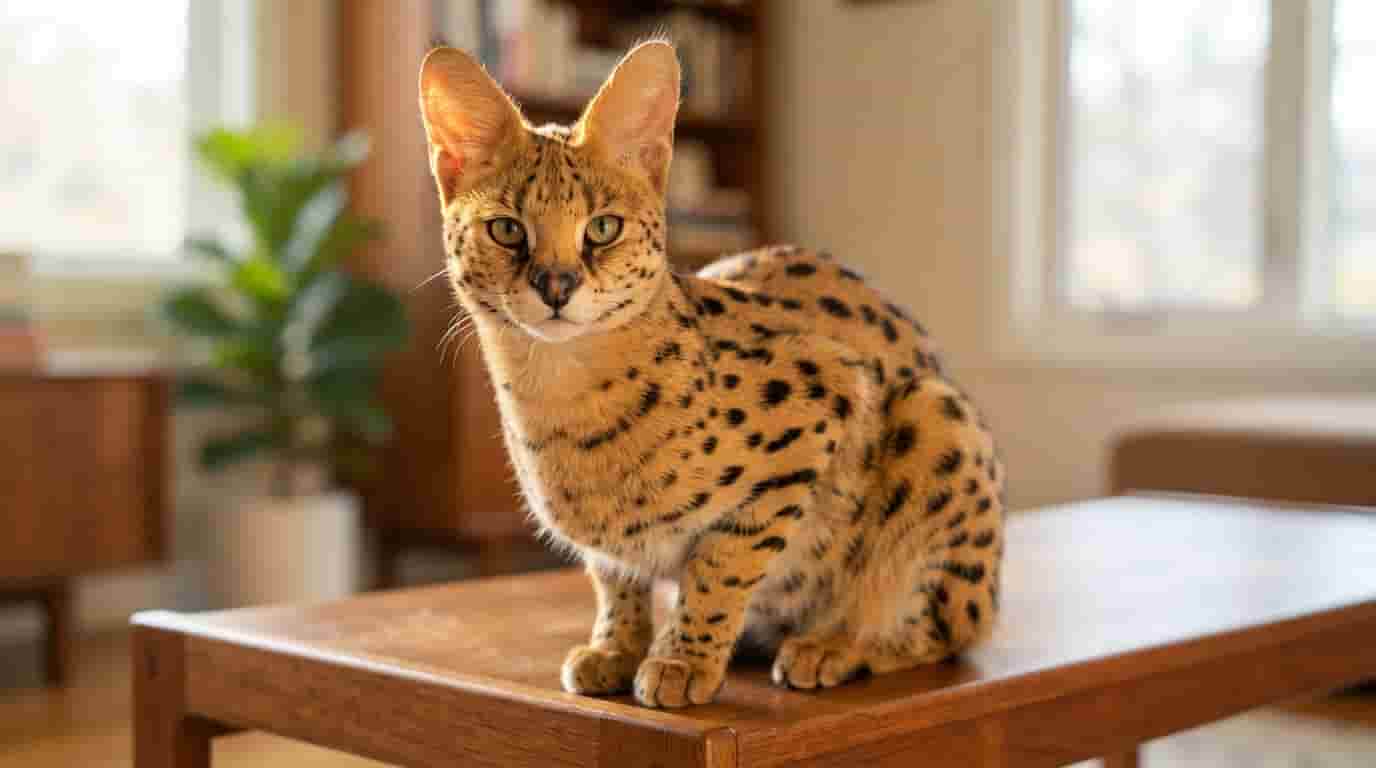
It is a fair question. This breed has long legs, huge ears, and a spotted coat that looks straight out of the African grasslands. However, the story behind that look is stranger than most people expect.
The savannah cat comes from a real cross between a domestic cat and a wild African serval. That single fact explains almost everything about this breed, from its size to its personality. Additionally, it explains why this cat behaves so differently from the average house pet.
This article walks through where this breed came from and what makes it different from other exotic hybrid cats. It also covers what daily life with one actually looks like. There is a twist along the way that surprises even longtime cat owners.
By the end, you will know why so many people fall for this wild-looking cat breed. You will also know what to weigh before bringing one home.
The Wild Origin Story Behind The Savannah Cat

Every savannah cat traces back to one unusual pairing. In 1986, a Bengal cat breeder crossed a domestic cat with a male African serval.
That first kitten, named Savannah, gave the breed its name. Breeders then continued the line, crossing later generations back with domestic cats.
This is where the F1-F3 generations come in. Here is how it breaks down:
- F1 generation: the closest to the wild serval parent, usually the largest and most serval-like
- F2 generation: one generation further removed, still large and bold
- F3 generation and beyond: smaller, calmer, and closer to a typical house cat in temperament
As a result, an F1 savannah cat and an F5 cat can look and act quite differently. Therefore, buyers should always ask which generation they are considering before adopting.
According to Cornell University College of Veterinary Medicine, hybrid cats with recent wild ancestry often need extra space and enrichment. They also need an experienced owner. This matters because early generations still carry strong instincts from their African serval ancestry.
What Makes This Exotic Hybrid Cat Stand Out
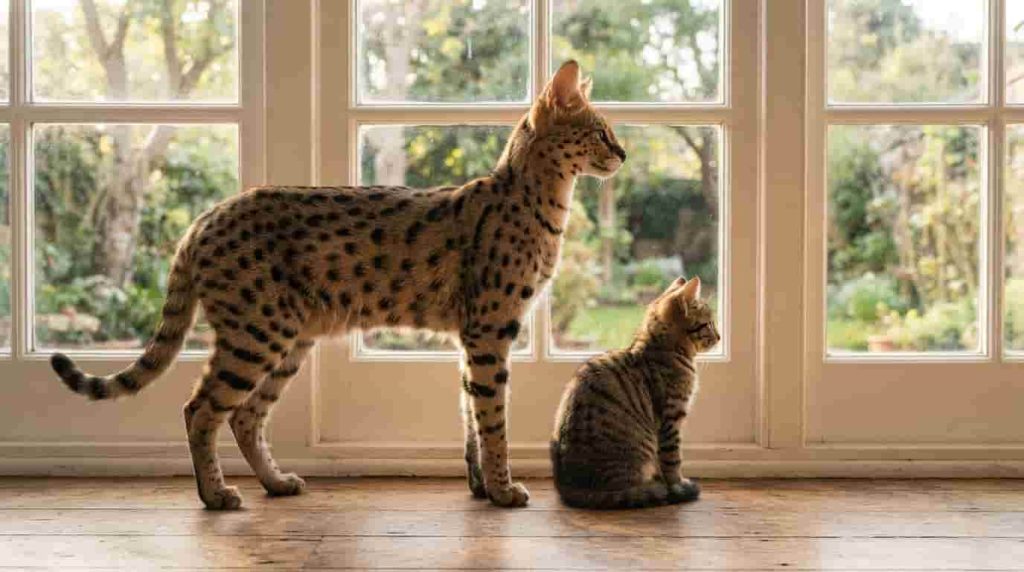
The savannah cat is not just another pretty face among exotic hybrid cats. Its body tells a story all on its own.
Long legs let it jump remarkably high, sometimes clearing kitchen counters or tall bookshelves in one leap. A lean, muscular frame supports a large domestic breed reputation. Some cats of this breed reach 20 pounds or more.
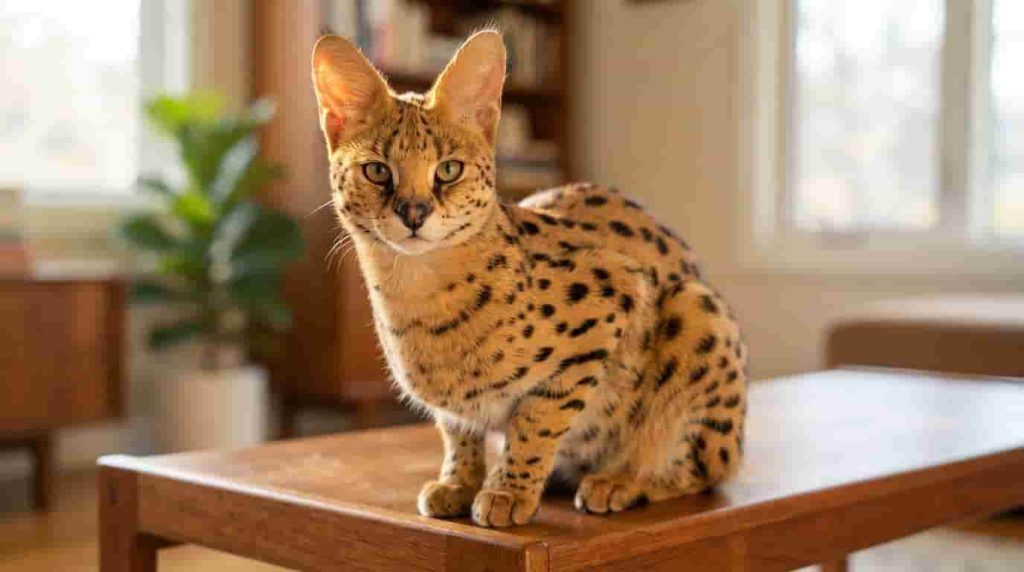
Its unique spotted coat pattern is the detail most people notice first. Dark spots sit against a golden, silver, or brown background, almost identical to the serval pattern it descends from.
Furthermore, those big ears are not just for show. They sit high and wide, helping this cat pick up sounds most house cats would miss entirely.
Next comes the part that surprises new owners the most: personality.
Living With A Highly Intelligent And Social Feline
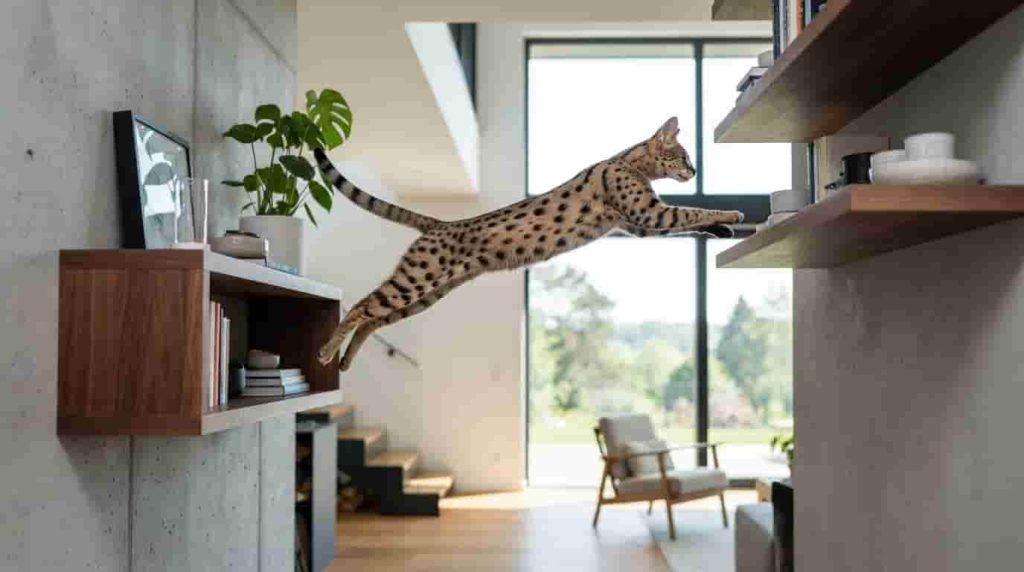
This is not a cat that naps all day on a windowsill. The savannah cat is an intelligent and social feline that treats boredom like an enemy.
Many owners compare their savannah kitty to a dog rather than a typical cat. It often follows people from room to room, learns simple tricks, and even plays fetch.
A real example helps explain this. One owner in Texas taught her F2 cat to walk on a leash within a few months. The cat even learned to open cabinet doors, something she never expected.
However, this energetic and playful pet also needs an equally active household. Because these cats crave interaction, long hours alone can lead to frustration or destructive habits.
Consider these needs before adopting one:
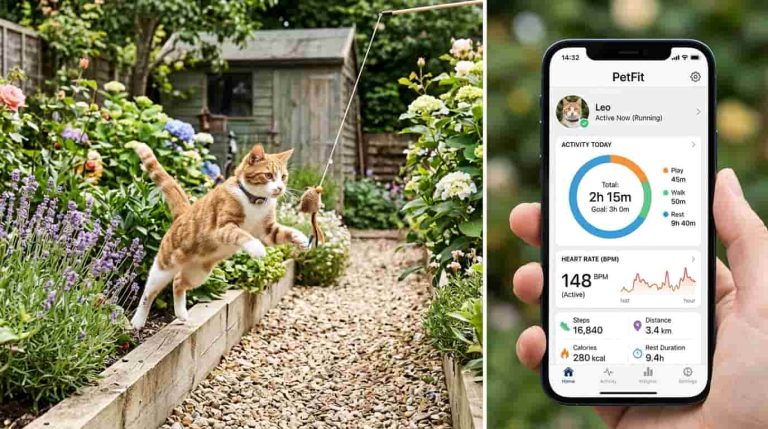
- Daily playtime with interactive toys, not just a few tossed balls
- Tall cat trees or shelves, since jumping is part of their nature
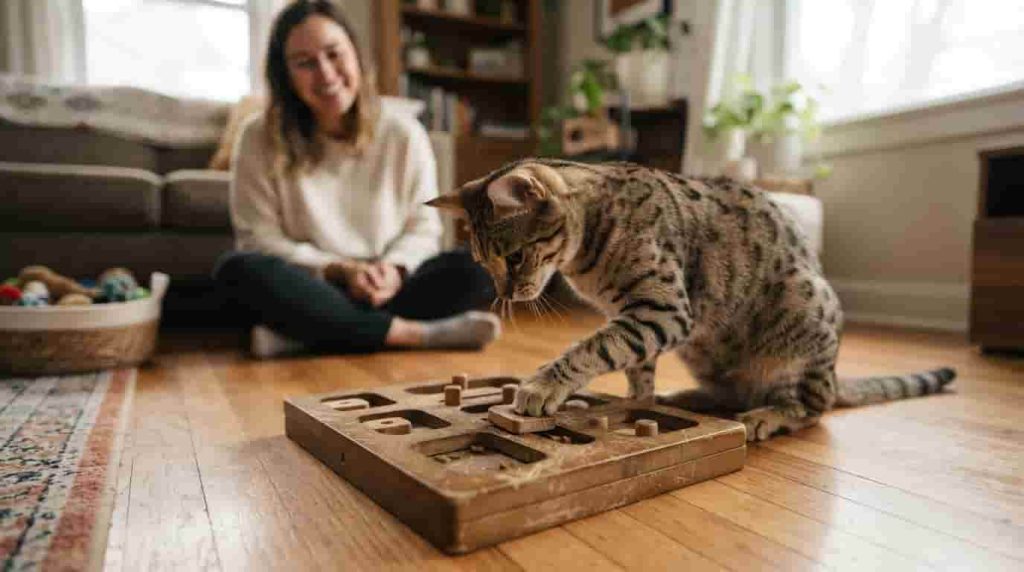
- Puzzle feeders to satisfy their sharp, curious minds
- Secure enclosures or leash training for safe outdoor time
As a result, this breed suits active households far better than quiet, low-energy homes.
Health, Legality, And What Every Owner Should Know
Not every state or country allows ownership of a savannah cat, especially earlier generations. Local laws vary widely, so checking regulations first prevents heartbreak later.
Health-wise, this breed is generally hardy. Still, PetMD notes that hybrid cats should see a veterinarian familiar with exotic breeds. Some health markers differ slightly from typical domestic cats.
Because this is a popular hybrid pet with wild ancestry, diet and enrichment matter even more. They matter more than they would for an average house cat. A bored, under-stimulated cat is far more likely to develop stress-related behaviors.
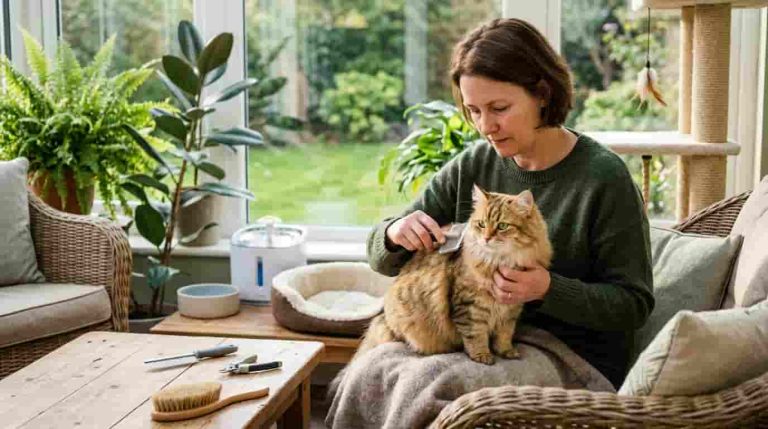
Grooming stays simple, thankfully. A quick weekly brush handles shedding, and nail trims prevent damage to furniture from those powerful jumps.
How This Exotic Hybrid Cat Compares To Other Wild-Looking Breeds
Curious readers often want to know how this breed compares to similar hybrid cats. Three related breeds come up again and again in these conversations.
Readers exploring energetic hybrid breeds may enjoy Chausie Cat: The Wild-Looking Cat With Endless Energy. It shares a similar drive for activity and play.
Those drawn to that serval-inspired look might also enjoy Serengeti Cat: The Cat That Looks Like a Wild Serval. This breed was created purely for appearance, not direct wild ancestry.
Meanwhile, fans of bold patterns often compare this breed to Toyger Cat: The Domestic Cat That Looks Like a Tiger. It is another fine example of selective breeding.
Each of these breeds offers a different piece of the exotic hybrid cat puzzle. Comparing them helps narrow down the right fit.
Final Thoughts On This Popular Hybrid Pet
The savannah cat is not for everyone, and that is fine. It rewards owners who want an intelligent feline breed with true energy and personality.
This unique domestic cat blends wild ancestry with genuine affection, creating a companion unlike almost anything else on four legs. For the right household, few pets offer this much daily entertainment and connection.
Before bringing one home, weigh the generation, the legal rules in your area, and your own daily schedule. A savannah cat thrives with owners ready to match its energy.
Have you lived with a savannah cat, or are you thinking about adopting one? Share your experience or questions in the comments below.
Frequently Asked Questionns
They can be, especially in active households with older children. Their high energy means they do best with people who can match their playfulness daily.
Prices vary widely by generation, with F1 cats often costing far more than F4 or F5 cats. Breeder reputation and location also affect the final price.
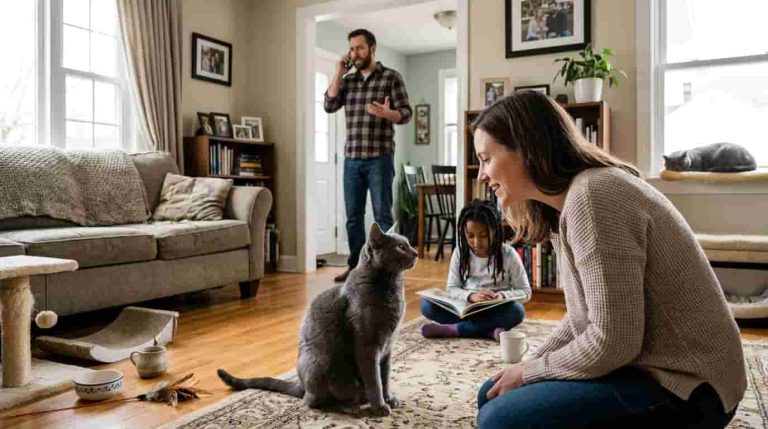
Many do, especially when raised together from a young age. Early socialization makes a noticeable difference in how well they adapt.
No, some states and countries restrict or ban ownership, particularly of early generations. Always check local laws before adopting.
Weight varies by generation, with some F1 cats reaching 20 pounds or more. Later generations tend to stay closer to typical domestic cat size.