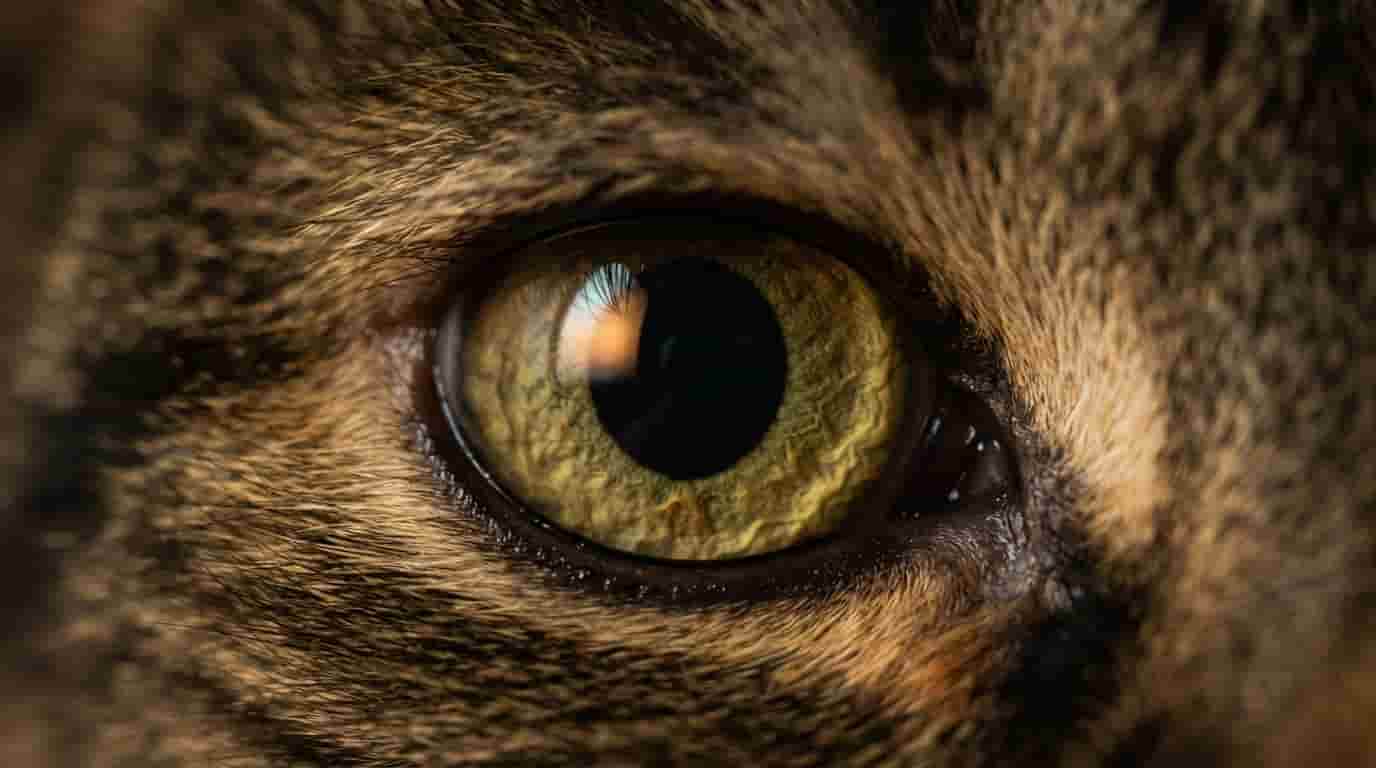
Why Do Cats’ Pupils Get So Big? What Dilated Pupils Mean
Introduction
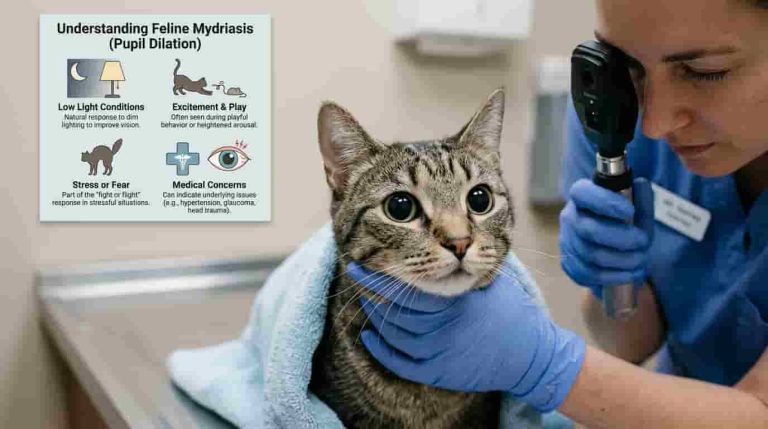
Why Do Cats’ Pupils Get So Big? Cats’ pupils can become large because of low light, excitement, fear, play, attention, or other physical and emotional responses. While large pupils are very often entirely normal, persistent dilation or unequal pupils can sometimes require veterinary attention.
This article helps readers understand normal pupil dilation, feline body language, nighttime eye changes, and critical warning signs that every cat owner should know.
Why Do Cats’ Pupils Get So Big?
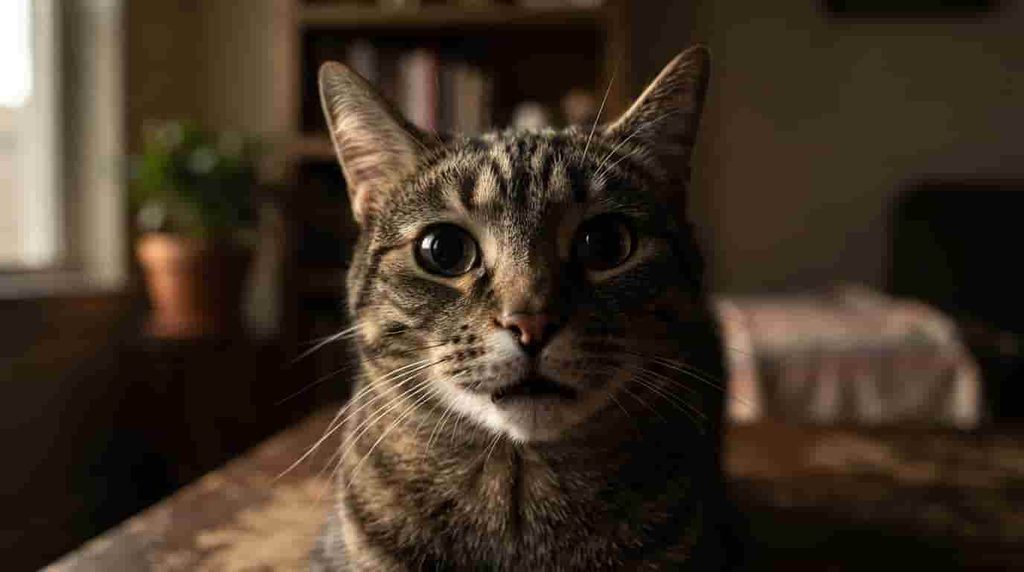
A cat’s pupils change size dynamically to control how much light enters the eye. However, dilation can also occur during emotional arousal, excitement, fear, or intense focus. Pupil size should always be interpreted in context; lighting, behavior, and accompanying physical symptoms help determine whether the change is normal.
What Is Pupil Dilation?
Pupil dilation means the pupil becomes larger. The iris, which is the colored ring of muscle surrounding the central opening, relaxes to expand the aperture, a fundamental aspect of basic cat eye anatomy.
Why Pupil Size Can Change So Quickly
Cats can move from narrow slits to large, round pupils within a fraction of a second. This ability is connected to sudden shifts in light and environmental stimulation, representing a standard part of normal cat eye behavior.
Why Do Cats’ Pupils Get So Big at Night?
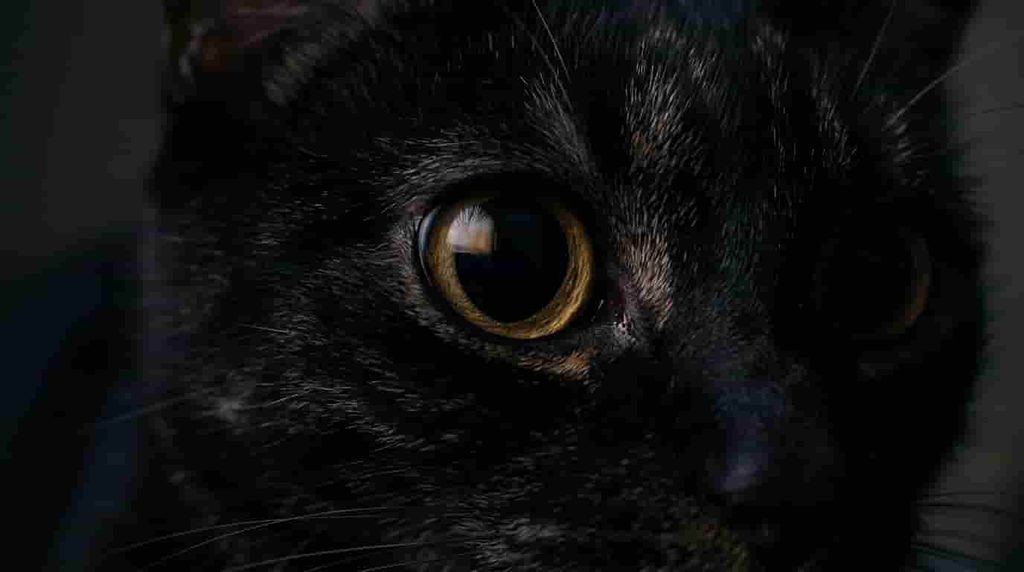
Pupils usually widen in dim conditions to allow more available light to enter the eye. However, dilated pupils are only one component of feline vision in low light.
Dilated Pupils Help Collect Available Light
A larger pupil acts like a wide camera lens, capturing as much environmental light as possible to boost feline vision in low light and enhance night vision in cats. Cats cannot see in complete darkness, but they make the absolute most of faint light.
Other Eye Adaptations Also Support Low-Light Vision
The tapetum lucidum, a reflective layer of tissue positioned right behind the retina, bounces light back through the light-sensitive cells to maximize overall visual sensitivity. This contributes to classic feline eye shine.
For a complete breakdown of these nocturnal adjustments, read Can Cats See in the Dark? How Well Can Cats See at Night? and Why Do Cats’ Eyes Glow at Night? The Science Behind Their Eye Shine
Why Do Cats’ Pupils Get Big When Playing?
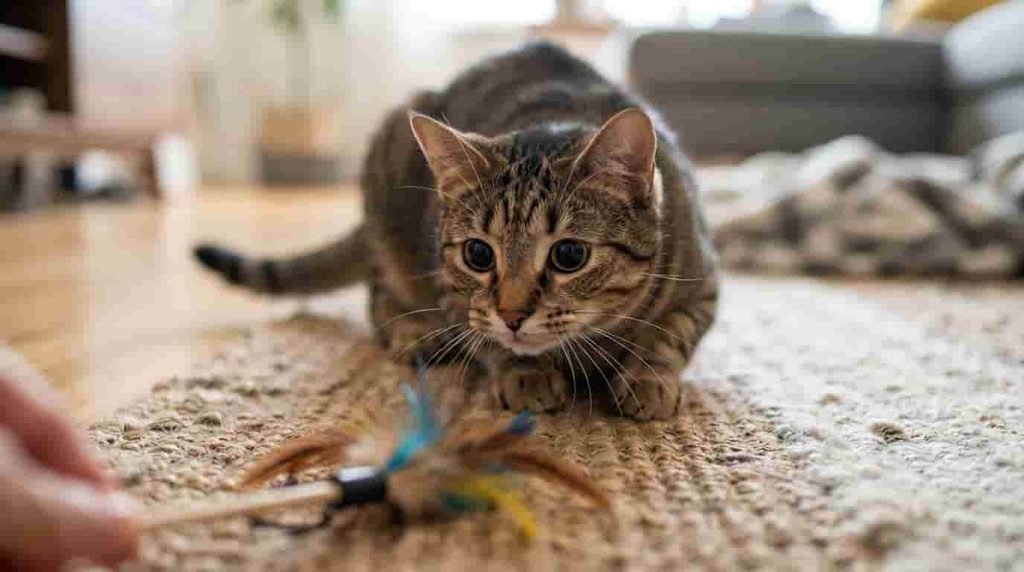
Large pupils during play connect directly to high excitement, intense stimulation, and unwavering visual focus as a cat tracks movement.
Play Can Trigger a Strong Arousal Response
A cat stalking, chasing, or preparing to pounce will often show wide pupils paired with other behavioral signs like crouching, twitching tail movements, and focused attention.
Excitement and Fear Can Sometimes Look Similar
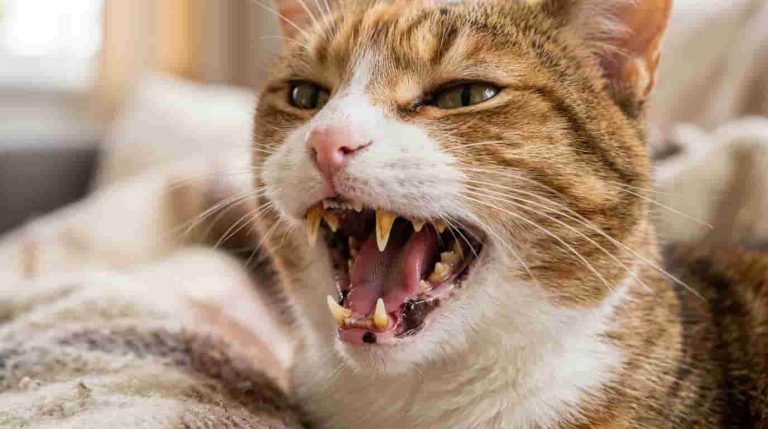
Wide pupils do not automatically mean a cat is happy. Relaxed playful body language differs drastically from tense or fearful body language.
| Playful Behavior Indicators | Fearful or Stressed Indicators |
| Relaxed or forward-facing ears | Flattened or sideways-turned ears |
| Bouncy, fluid movements | Tense, rigid body posture |
| Play bows or hunting stalks | Hiding or scrambling to escape |
| High interest in toys or interaction | Hissing, growling, or defensive swatting |
Why Do My Cat’s Pupils Get Big When They Look at Me?

A cat may have large pupils while looking at an owner for several reasons, including interest, anticipation, excitement, lighting shifts, or emotional arousal.
Large Pupils Alone Do Not Prove Affection
Do cats’ pupils dilate when they love you? Pupil dilation happens for many physiological reasons. Large pupils should never be used alone as concrete proof of love or trust.
Look at the Whole Body Language Picture
- Slow blinking
- Relaxed posture
- Tail position and movement
- Ear position
- Vocalization style
- Willingness to stay close and seek interaction
Hypothetical Example: A cat looks at its owner before dinner with wide pupils and focused attention. This dilation reflects acute anticipation for food rather than affection alone, showcasing why contextual awareness matters.
Is It Good If My Cat’s Pupils Are Big?

Large pupils are frequently completely normal, and the situational context matters far more than the raw pupil size.
When Large Pupils Are Likely a Normal Response
- A dark room or nighttime setting
- Active hunting or playing games
- Sudden environmental excitement
- Heightened attention toward a sound or object
- A temporary adjustment reaction to a new place
When Persistently Large Pupils May Be More Concerning
Seek professional veterinary advice if the dilation is persistent in bright lighting, unequal between the two eyes, sudden and unexplained, accompanied by squinting or eye pain, paired with redness or cloudiness, associated with vision changes, or noticed right after a physical injury.
Why Are My Cat’s Pupils So Large All the Time?
Persistent dilation requires closer inspection, especially if it occurs under normal or bright lighting conditions.
Compare Both Eyes
Always observe both pupils together. Unequal pupil sizes, clinically known as anisocoria, should be evaluated by a veterinarian, as owners should never attempt to diagnose the cause at home.
Watch for Changes Beyond the Pupils
- Bumping into furniture or misjudging jumps
- Squinting or excessive pawing at the face
- Visible eye discharge or watering
- Redness in the whites of the eyes
- Cloudiness or haziness across the surface
- Sudden shifts in overall behavior or energy
Understanding Cat Eye Anatomy and Pupil Changes
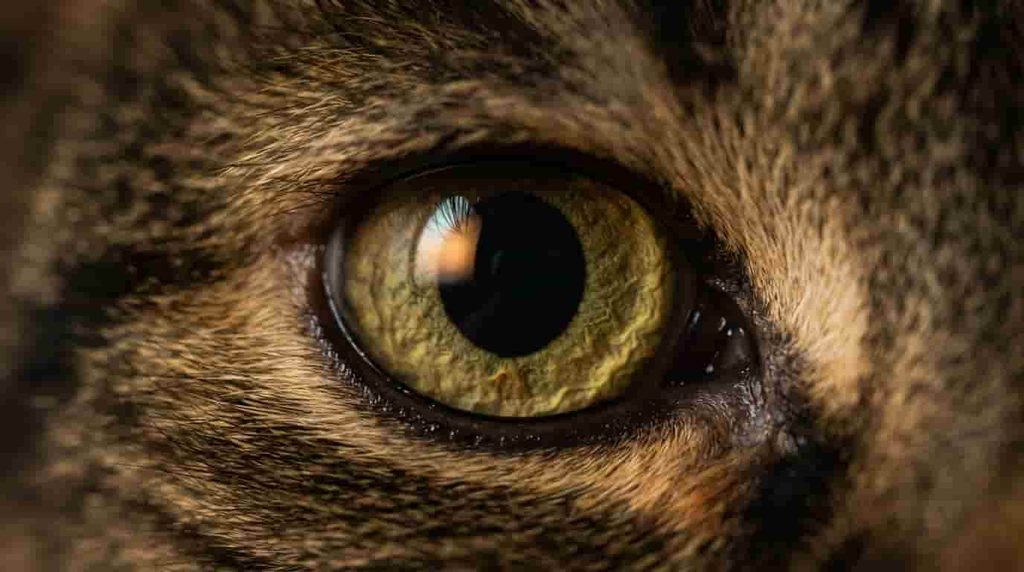
The pupil functions as the open gateway through which light enters the eye, while the iris actively adjusts its diameter.
Why Cats Can Have Both Slit-Like and Round-Looking Pupils
In bright light, a cat’s pupils contract into narrow, vertical slits. In dim light, they expand into wide, round circles. To understand why their evolutionary shape is slit-like, read Why Do Cats Have Vertical Pupils? The Surprising Reason Behind Them
.
Common Reasons Cats’ Pupils Become Dilated
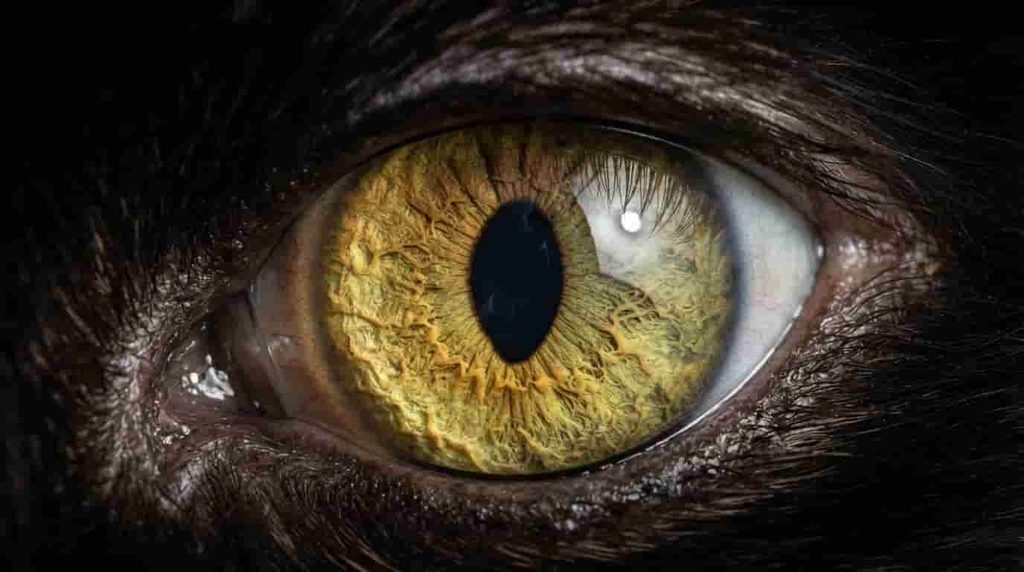
- Low light: Pupils widen to pull in maximum available illumination.
- Play and excitement: High stimulation and hunting instincts trigger dilation.
- Fear or stress: Adrenaline surges when a cat feels threatened.
- Curiosity and attention: Intense visual focus locks the eyes wide open.
- Sudden environmental changes: Unfamiliar noises or sudden movements cause instant arousal.
- Health or eye problems: Unusual, persistent, or uneven pupil changes signal potential medical issues requiring professional care.
How to Tell Whether Dilated Pupils Are Normal
- Is the room dark or dimly lit?
- Has my cat been playing actively or chasing a toy?
- Does my cat seem excited, curious, or startled?
- Are both pupils changing symmetrically?
- Do the pupils shrink when exposed to bright light?
- Are there physical signs of eye pain or vision loss?
- Has this dilation lasted much longer than expected?
When Should You Call a Veterinarian About Dilated Pupils?
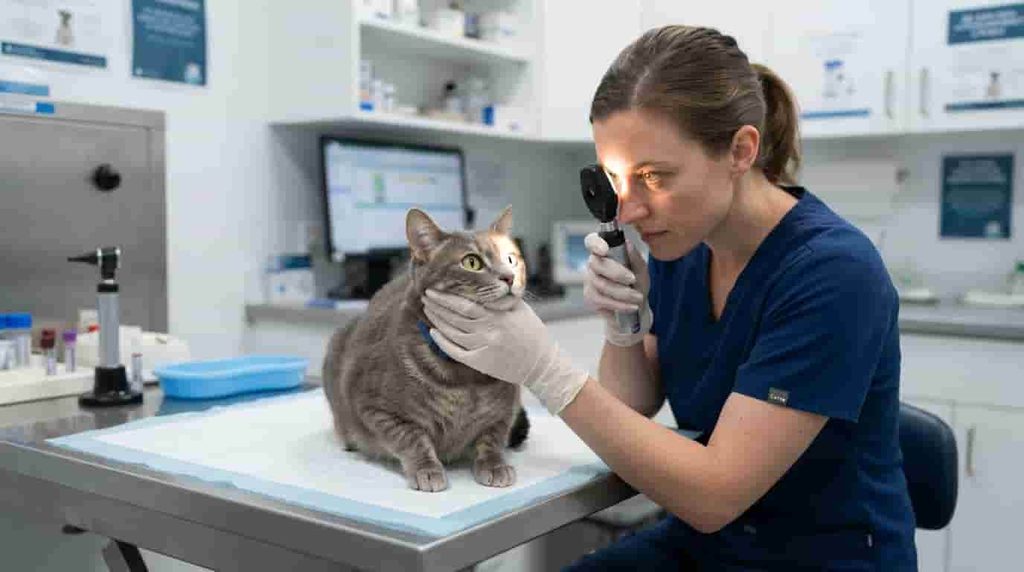
Seek veterinary guidance if pupil changes are sudden, persistent, unequal, or accompanied by other neurological or ophthalmological signs:
- One pupil is consistently larger than the other.
- Both pupils remain locked wide open in bright lighting conditions.
- The cat appears clumsy or unable to navigate normally.
- There is eye redness, cloudiness, swelling, or discharge.
- The cat squints or shows signs of pain.
- The change follows head trauma or an injury.
- The pupil shift occurs alongside sudden weakness or disorientation.
Authoritative veterinary associations and veterinary medical centers emphasize that abnormal pupil responses can indicate underlying neurological, toxicological, or severe ocular conditions requiring immediate clinical diagnostics.
Common Mistakes When Interpreting a Cat’s Pupils
- Mistake: Assuming large pupils always mean happiness. Reality: Excitement, fear, curiosity, and lighting all trigger wide pupils.
- Mistake: Ignoring the lighting. Reality: Environment dictates baseline pupil size.
- Mistake: Looking only at the eyes. Reality: Always evaluate body posture, ear placement, and behavior together.
- Mistake: Ignoring unequal pupils. Reality: Asymmetry is a medical red flag.
- Mistake: Assuming eye glow and pupil dilation are the same thing. Feline eye reflection (via the tapetum lucidum, as detailed in Why Do Cats’ Eyes Glow at Night? The Science Behind Their Eye Shine) is a light reflection mechanism, whereas pupil dilation dictates light intake volume.
Why Do Cats’ Pupils Get So Big? What Cat Owners Should Remember
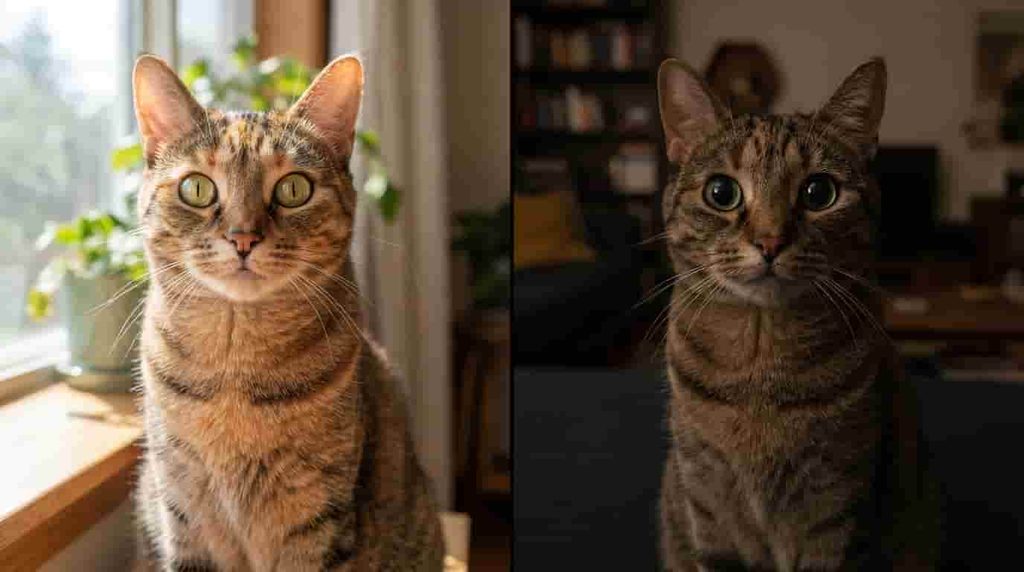
Why Do Cats’ Pupils Get So Big? Dilated pupils are frequently a normal physiological response to darkness, play, excitement, fear, curiosity, or intense attention. However, pupil size cannot be interpreted in isolation. Always consider lighting conditions, overall behavior, and bilateral symmetry. Persistent, unequal, painful, or unusual changes should always be evaluated by a veterinarian.
Have you ever caught your cat staring at you with massive, dinner-plate eyes? What were they doing right before you noticed? Share your story below!
Frequently Asked Questions
Interest, anticipation, excitement, lighting shifts, and emotional arousal all contribute, though wide pupils alone do not guarantee affection.
Cats may have dilated pupils during positive interactions, but pupil size cannot independently confirm love or emotional attachment.
Yes, dilation in dim light is a normal mechanism designed to flood the retina with available light for low-light adaptation.
Unequal pupils indicate an abnormal medical condition that should never be diagnosed at home; contact a veterinarian immediately.
Persistent dilation, particularly in bright light or when accompanied by squinting, pain, or vision changes, warrants a prompt veterinary exam.