Kitten Potty Training: Easy Ways to Teach Litter Box Habits
Introduction:
Kitten potty training is often the very first challenge you face after bringing a furry new family member home. You might feel overwhelmed when your sweet pet leaves an unexpected puddle on your favorite living room rug. This common issue causes great stress for many new cat owners who want a clean house. Fortunately, teaching kittens to use the litter box is highly achievable when you follow a structured plan.
Most young felines actually possess a natural instinct to bury their waste in soft soil or sand. Therefore, your main goal is simply to guide that existing behavior toward an appropriate indoor location. You can easily prevent accidents by setting up the perfect bathroom environment from the very first day. This helpful guide will walk you through the entire process with proven, stress free methods.
Your tiny companion is adjusting to a brand new world during these initial weeks in your house. You probably already reviewed the kitten care guide for their first day to prepare your home safely. Now, you must focus your energy on developing successful habits that will last a lifetime. Let us explore the easiest ways to master this essential training milestone together.
Why Successful Kitten Potty Training Matters Early
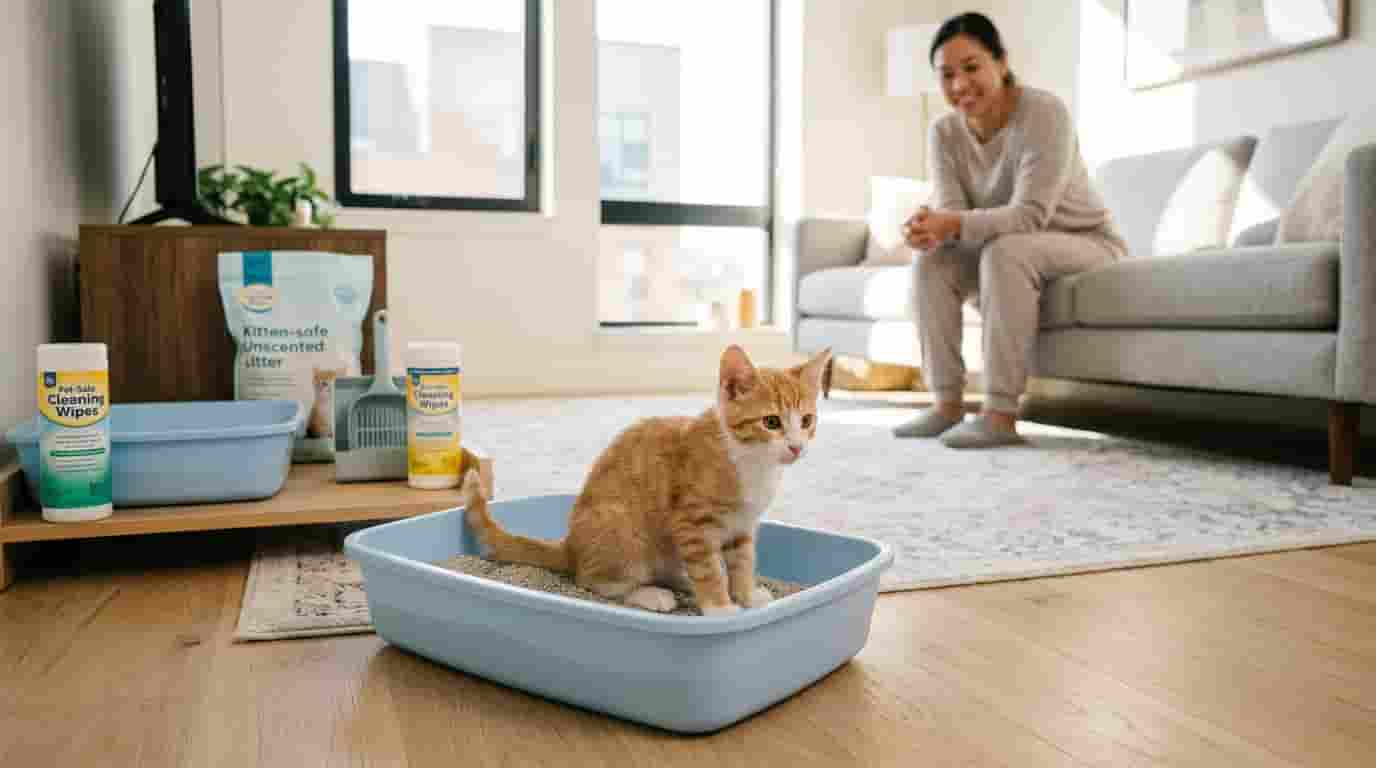
Starting the kitten house training process immediately ensures your pet feels secure and confident in their new environment. Young animals learn fastest during their first two months of life because their brains adapt very quickly. Delays in training can allow bad habits to form, which become much harder to correct later. Consequently, early intervention saves your carpets and reduces your daily cleaning frustration significantly.
Many people assume that cats automatically know exactly where to go without any human guidance. However, a new household contains many confusing surfaces that might look attractive to a young animal. Soft blankets, plush bath mats, and potted plants can easily confuse a learning pet. You must define their bathroom boundaries clearly to achieve effective kitten potty training results.
According to the experts at the ASPCA, a consistent routine is the absolute foundation of all animal education. Sudden changes in the household can disrupt their progress and cause temporary regression. Therefore, you should keep their bathroom area quiet, safe, and easily accessible at all times. Understanding these basic behavioral needs prevents common mistakes and guarantees a much smoother training journey.
Setting Up Your Litter Box Training for Kittens
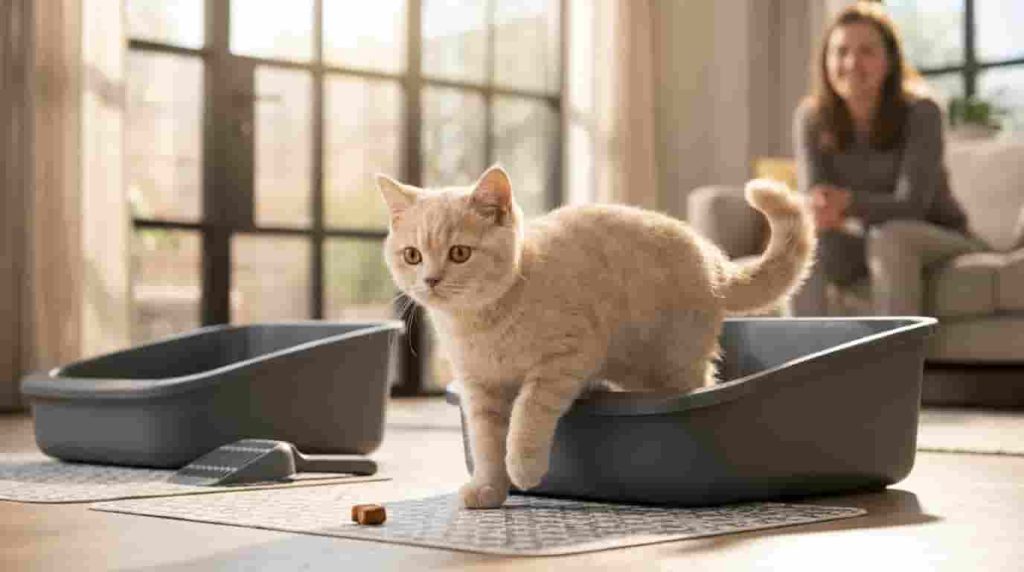
Choosing the right equipment is the first major step toward successful methods for kitten potty training. You must purchase a box with very low sides so tiny legs can step inside easily. High walls will discourage a small animal because climbing over them requires too much physical effort. Additionally, leave the hood off the box initially so your pet does not feel trapped inside.
The type of substrate you place inside the tray also plays a massive role in their comfort. Most feline behaviorists recommend unscented, fine grained clumping clay because it feels natural on sensitive paws. Strong artificial scents can easily repel a young animal with a highly sensitive nose. Fill the tray with about two inches of material so they can dig comfortably.
Consider a real life example involving a young cat named Bella who consistently avoided her bathroom tray. Her owner realized the box sat right next to a loud, vibrating washing machine. Bella felt terrified every time the appliance started its noisy spin cycle during her private moments. Her owner moved the tray to a peaceful hallway corner, and Bella immediately used it without any further trouble.
Step-by-Step Kitten Potty Training Guide
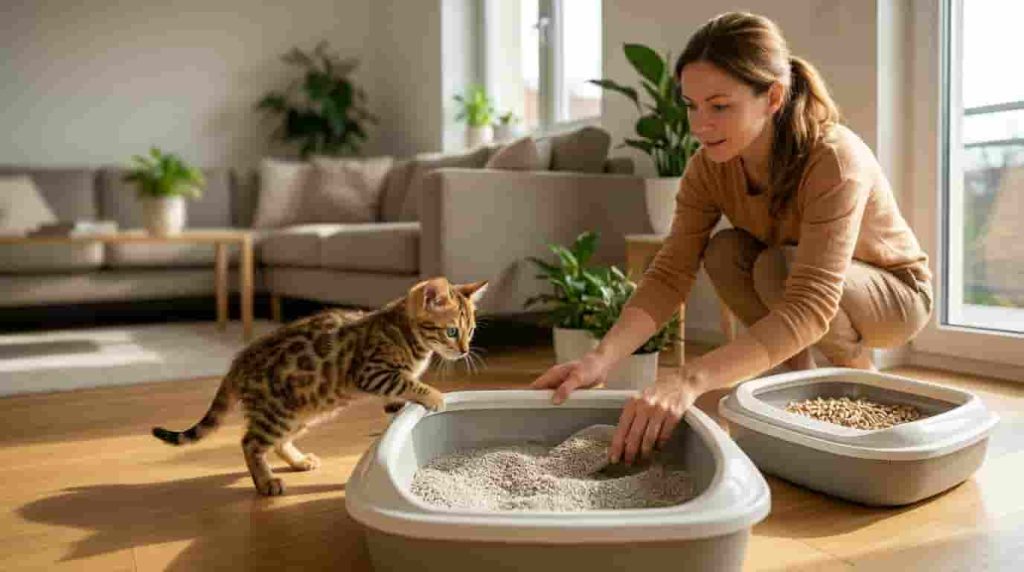
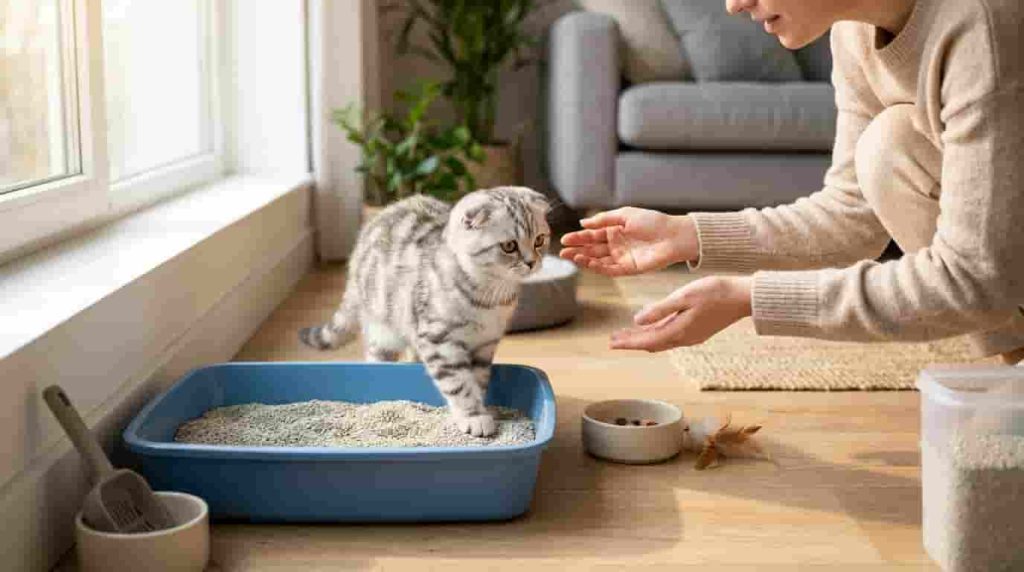
You can begin training by placing your pet in the tray at specific times throughout the day. First, carry them to the box immediately after they wake up from a nap. Next, place them inside the litter area roughly twenty minutes after they finish eating a meal. This timing aligns perfectly with their natural digestive reflexes.
- Watch for clear signs like sniffing the floor, circling a specific spot, or pawing at carpets.
- Gently pick up your pet when these signs appear and carry them directly to their designated box.
- Allow them to explore the texture of the material completely undisturbed for a few minutes.
- Praise them with a soft voice when they successfully finish using the box.
If you are currently following the kitten weaning steps to solid food, their digestive schedule will change rapidly. Solid meals create more predictable bathroom habits than a purely liquid diet. Therefore, coordinate your feeding schedule closely with your bathroom training sessions for the best results.
Best Tips for Kitten Potty Training Routines
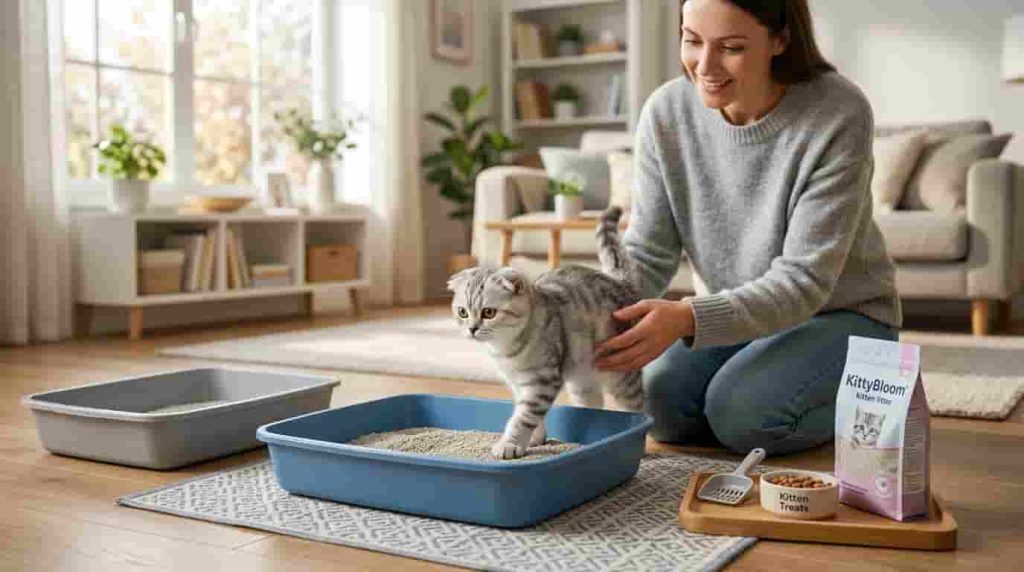
Consistency is the ultimate secret to effective kitten potty training in any busy household. You should establish a regular feeding schedule instead of leaving food out all day long. Scheduled meals create highly predictable elimination patterns, which makes your monitoring job much easier. Furthermore, clean the box at least twice a day to maintain an appealing environment.
Never punish your young animal if they make a mistake on your floor or furniture. Rubbing their nose in an accident creates intense fear and actually worsens the behavioral problem. Instead, silently clean the soiled area with an enzymatic cleaner to remove all residual odors. This special cleaner breaks down proteins so your pet does not return to the exact same spot.
During this active growth phase, you might also face challenges like kitten teething pain and finger chewing. Distressed animals sometimes express discomfort by avoiding their bathroom box temporarily. Ensure you address all physical discomforts promptly so your pet can focus completely on learning their household rules.
Overcoming Common Litter Box Obstacles
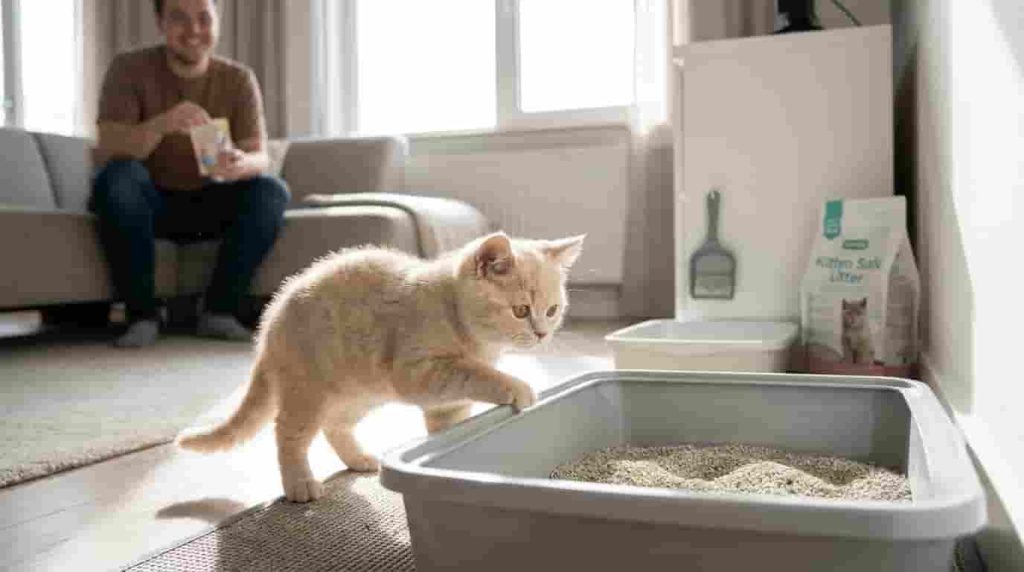
Even the best methods for potty training kittens can hit a few unexpected snags along the way. If your pet avoids the box, check the cleanliness of the substrate immediately. Cats are incredibly clean creatures who refuse to step into a dirty or smelly tray. Scoop out waste frequently and replace the entire contents weekly to ensure freshness.
Another common issue involves having too few boxes in a multi floor home. A tiny pet cannot run up two flights of stairs when they suddenly need to go. Therefore, you should place at least one tray on every level of your house. This accessibility prevents frantic accidents and reinforces training a kitten to use the litter box successfully.
You can also consult professional veterinary resources like VCA Animal Hospitals for extra guidance on behavioral issues. Sometimes, health problems like urinary tract infections can mimic poor training progress. A quick veterinary checkup ensures that physical illness is not hindering your animal’s educational success.
Positive Reinforcement and Rewards
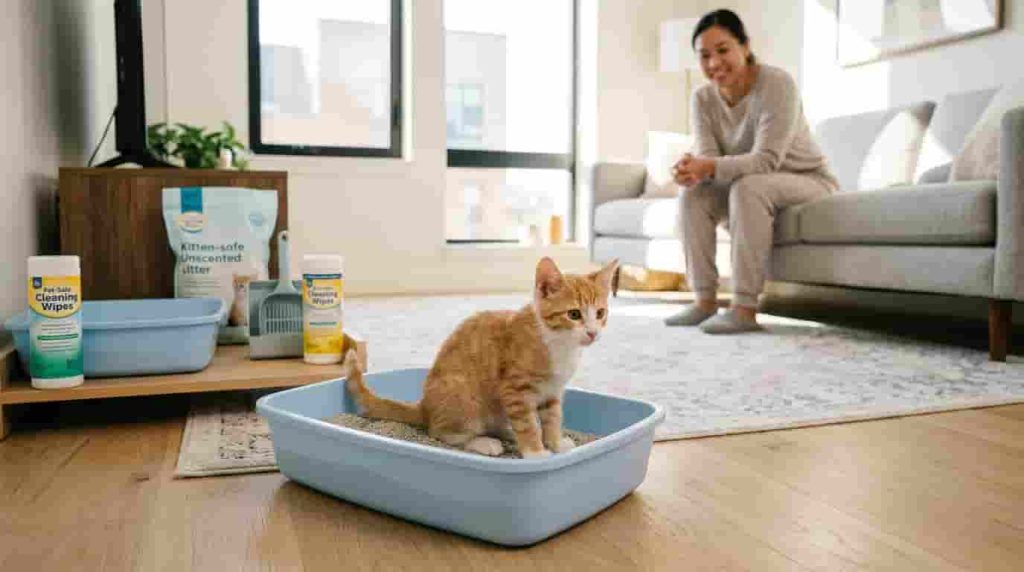
Using positive reinforcement is the fastest way to achieve how to train a kitten to use the litter box safely. When your pet finishes their business in the right spot, reward them immediately with a tasty treat. You must deliver the reward within three seconds so they connect the treat with the good behavior. Additionally, offer gentle chin scratches or favorite playtime sessions as excellent non food rewards.
- Keep a small jar of healthy treats directly next to the bathroom area for quick access.
- Avoid shouting or making sudden loud noises while your pet is inside the tray.
- Let them see you scoop the box so they understand the area remains clean.
- Be patient because every animal learns at their own unique individual pace.
Eventually, your pet will use the box automatically without expecting a reward every single time. You can slowly phase out the treats once the habit becomes completely permanent. This positive approach builds a beautiful bond of trust between you and your growing animal companion.
Managing Multiple Pets Together
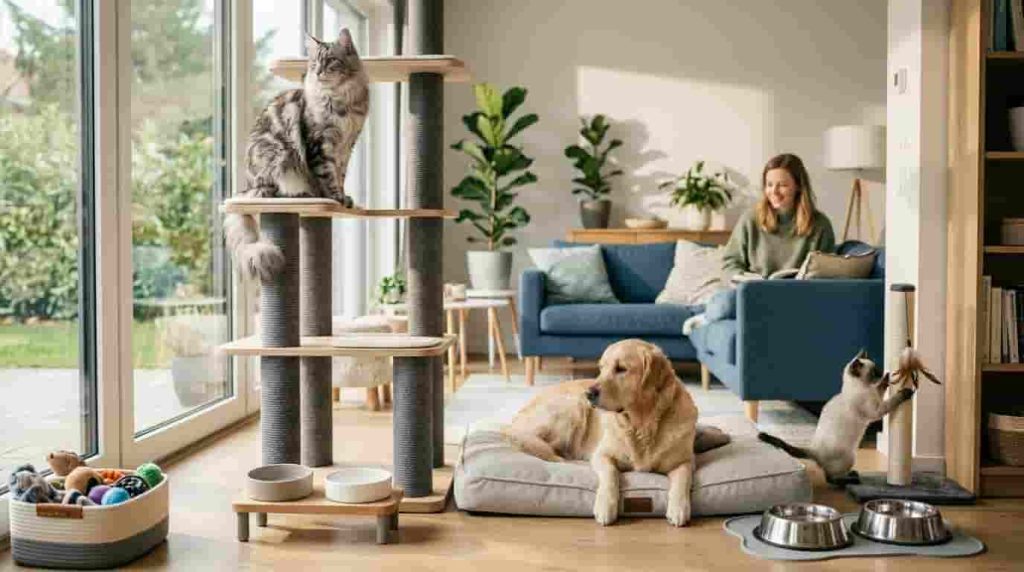
Introducing a new animal to a home with existing pets requires extra bathroom planning. Felines are highly territorial creatures who dislike sharing their private bathroom spaces with others. The golden rule is to provide one box per cat, plus one extra bonus box. This setup prevents dominant animals from blocking access and ensures training a kitten to use the litter box goes smoothly.
Spread the multiple trays across different rooms rather than lining them up in a single row. A rival cat can easily guard a single room, which terrifies the learning youngster. Separation gives your new pet choices and reduces household tension significantly. Happy, stress free animals are much more likely to maintain excellent bathroom habits.
Maintaining Long Term Success
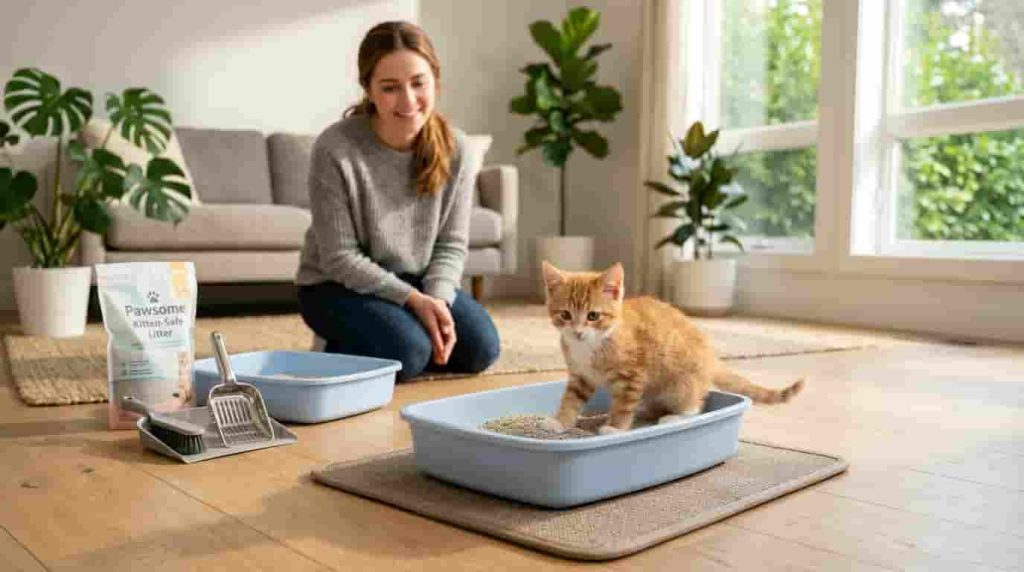
As your companion grows, you must upgrade their equipment to match their larger physical size. A box that fit a two month old animal will feel cramped and uncomfortable by month six. Swap out the small starter tray for a spacious adult model that allows easy turning. This simple adjustment maintains successful kitten potty training throughout their transition into adulthood.
Conclusion
Mastering kitten potty training requires clear structure, proper equipment, and a tremendous amount of positive encouragement. You can easily guide your pet toward perfect habits by maintaining a clean box in a quiet location. Remember that mistakes are simply a normal part of the learning process for any young animal. Your consistency today will create a clean, harmonious home for many wonderful years to come.
How is your new furry companion doing with their household education? What unique tricks helped you achieve successful kitten potty training in your own home? Please share your personal experiences in the comment section below to help other new owners.
Frequently Asked Questions
First, place a low sided box in a quiet, accessible corner of your home. Next, carry your pet to the tray immediately after meals and naps. Finally, praise them gently whenever they use the area correctly.
Sudden accidents usually happen because the box is dirty or located in a noisy area. Additionally, medical issues like a urinary infection can cause a sudden lapse in training. Clean the box daily and consult your vet if the problem continues.
The most effective strategy is keeping a very strict feeding and monitoring routine every day. Always use unscented material and clean the tray multiple times to keep it highly appealing. Never punish your pet for accidental messes.
You can gently mimic the digging motion with your own finger in the clean material to show them how. Furthermore, ensure the substrate is soft and fine grained so it feels comfortable on their paws. Avoid coarse pellets during the initial learning phase.
Most young animals master their bathroom habits completely within three to four weeks of consistent training. However, minor accidents can still happen occasionally until they reach six months of age. Total success depends heavily on your daily consistency.