

Cat Biting Softly: Understanding the meaning of love bites.
Introduction:
Cat Biting Softly stands as a confusing form of feline communication that leaves many devoted pet parents feeling completely startled. Have you ever relaxed with your purring companion only to feel sharp teeth press gently into your bare skin? Many owners feel deeply hurt because they mistake these tiny nips for sudden random moments of household aggression. Therefore, exploring the true reasons behind Cat Biting Softly helps you understand your favorite animal companion with greater clarity.
This detailed guide will analyze why domestic felines use their teeth to convey affection, boundaries, or intense playful energy. First, we will decode the hidden psychological motivations that drive this common, gentle cat biting behavior during quiet moments. Next, you will discover useful cat training techniques to redirect your pet away from human fingers during active games. Finally, we will share simple steps to build a more peaceful and balanced lifestyle for your growing animal.
Protecting your bond requires reading the subtle shifts in your pet’s body language right before teeth touch your skin. Let us look at how managing Cat Biting Softly can elevate your pet parenting skills and build mutual trust.
Cat Biting Softly: Decoding Affection and Physical Overstimulation
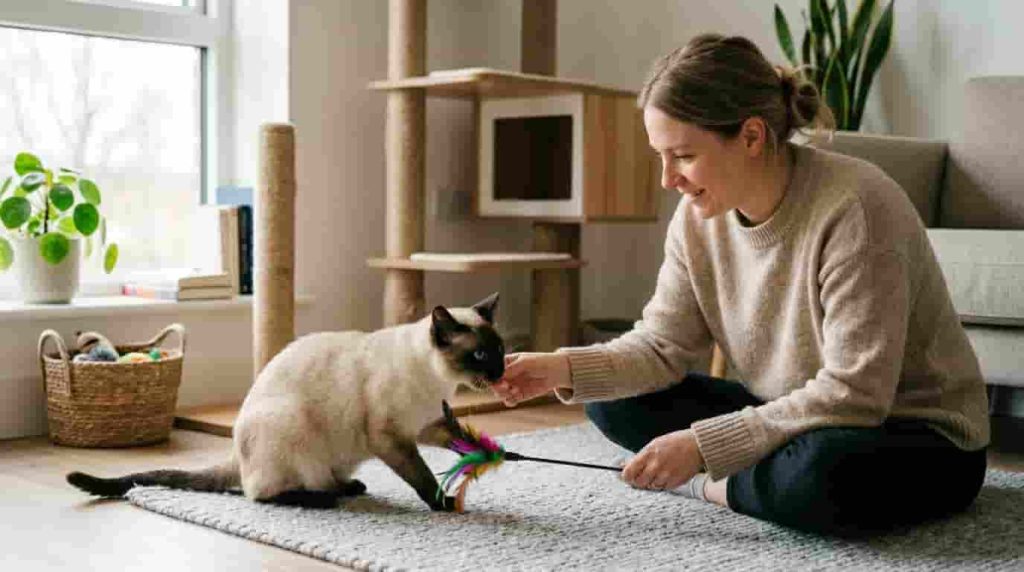
Analyzing the common phenomenon of Cat Biting Softly requires looking closely at how mother felines groom their young kittens. In the nest, queen felines use soft cat nibbles to clean their babies and show deep familial affection. As a result, your adult domestic companion often replicates this comforting kittenhood behavior to bond with their human family. This natural instinct explains why your animal might purr loudly while holding your hand between its front paws.
Additionally, continuous human petting can trigger a sudden spike in physical sensitivity along the spine of your animal. This state of hyperesthesia turns a pleasant massage session into an uncomfortable or overwhelming sensory experience for your pet. Therefore, a sudden cat play bite acts as a polite warning sign that your animal needs immediate space. Many people think their pets love long petting sessions just because they continue to sit on their lap.
However, ignoring the subtle indicators of sensory overload can cause your pet to escalate their nips into painful injuries. This behavioral shift shows why studying Cat Biting Softly remains a vital part of understanding cat communication correctly. Let us examine how normal feline behaviors compare when animals try to express their daily needs at home.
| Behavioral Expression | Primary Physical Action | Main Message to the Owner |
| Soft Nibbling Gesture | Light skin pressure without breaking tissue | High affection or a polite request to stop petting |
| Destructive Scratching | Deep claw marks on vertical household items | High physical boredom or a need to shed claw husks |
| Vocal Hissing Sounds | Open mouth posture with fast air expulsion | High territorial fear or immediate physical pain warnings |
The Hidden Connection to Natural Predatory Drives

Spotting regular Cat Biting Softly sessions often reveals that your pet possesses a lot of unspent hunting energy. Indoor felines need a safe outlet for their predatory wiring because their domestic environment lacks live birds or mice. If you do not provide active games, your companion might stalk your moving ankles as you walk past. For example, a local pet owner named Chinedu once struggled with his young calico cat nipping his fingers.
He discovered that his pet was simply trying to treat human hands like moving prey targets during the day. He read our helpful guide on Cat Hunting Instincts: How to satisfy their need to kill indoor toys to alter his routine. Providing structured daily chasing games helped his active animal satisfy its natural urge to track and catch moving targets.
Consequently, the calm feline stopped targeting human skin because its physical energy went toward appropriate fabric toys instead. This positive change shows how analyzing cat biting behavior helps you build better solutions for common household challenges. Let us look at how monitoring other subtle gestures can improve your communication with your animal companion.
Reading Tiny Ear Micro Movements to Prevent Sudden Bites

Monitoring your pet’s head movements can help you stop an unwanted cat play bite before teeth touch your skin. You should watch for tiny rotations or flickers that indicate your companion is growing tired of your touch. For excellent insights on this topic, review our post on Cat Ear Twitches: What those subtle ear movements actually say right away. Recognizing these rapid physical vibrations allows you to withdraw your hands before your companion feels pushed to nip.
Managing Household Tension in Multi Pet Apartment Layouts
Unchecked physical stress can cause a sensitive animal to bite softly as a way to manage territorial anxiety. When multiple felines argue over territory, they often direct their frustration toward the nearest human parent in the room. To resolve these spatial disputes, look at our comprehensive guide on Cat Territory Marking: How to stop spraying inside the house today. Creating separate feeding zones lowers baseline anxiety and reduces the occurrence of stress induced feline nibbling behavior.
Effective Cat Training Techniques to Redirect Playful Nipping

Correcting persistent Cat Biting Softly issues requires a calm and consistent response from every single member of the household. If your companion nips your skin during a game, emit a high pitched ouch sound quite clearly. Next, remove your hands immediately and look away from your pet for at least thirty seconds of silence. This simple action teaches your companion that gentle cat biting causes all the fun attention to vanish instantly. According to clinical veterinary behavior guides published by PetMD, positive reinforcement works best for feline learning.
Therefore, you must never hit or yell at your pet because punishment will only cause deep territorial fear. Fearful felines often develop defensive cat aggression signs, which makes the biting problem much worse over time. Instead, keep a soft plush kicker toy nearby so you can slip it to your pet when they bite.
This smart replacement strategy redirects the feline behavior modification process toward an object that they can chew safely. As a result, your animal learns to satisfy their chewing needs without turning your hands into chew toys. Let us explore the steps to help you manage kitten biting tips for growing young cats.
When to Seek Professional Veterinary Advice for Biting

Differentiating behavioral Cat Biting Softly from sudden health problems requires tracking how fast the behavior appears in your pet. If a normally gentle cat suddenly begins biting your hands fiercely, they might be experiencing deep physical pain. For instance, severe dental disease or hidden arthritis can make your pet very sensitive to standard human handling.
Therefore, you should schedule a complete clinical checkup at VCA Animal Hospitals to rule out hidden medical conditions. A professional veterinarian will examine the mouth, joints, and spine to ensure your pet is completely healthy.
If the doctor finds a sore tooth, addressing the medical issue will usually stop the biting behavior immediately. Taking these protective steps ensures you do not ignore a hidden medical emergency while trying to modify behavior. Your careful attention helps guarantee that your companion stays comfortable, healthy, and happy through every life stage. Let us review the primary checklist for preventing soft cat nibbles from turning into a habit.
- Stop all physical hand wrestling games to prevent your pet from targeting human fingers.
- Keep your body perfectly still when your pet nips because pulling away triggers their chase drive.
- Reward quiet relaxation with small pieces of dried chicken to encourage calm household manners.
- Provide a variety of safe cardboard chew options to satisfy their natural chewing urges.
Conclusion
In conclusion, addressing consistent Cat Biting Softly issues requires a patient blend of behavioral tracking and gentle redirection habits. By learning to recognize the signs of physical overstimulation, you can stop petting before your pet feels overwhelmed. These simple lifestyle adjustments protect your hands while allowing your companion to feel secure inside your home.
Always offer appropriate plush kicker toys to satisfy their natural hunting drives without causing any painful skin injuries. Your calm, non punitive training choices will help your domestic pet learn excellent boundaries while maintaining a deep bond. With the right techniques, you can manage Cat Biting Softly and enjoy a peaceful relationship with your feline.
Has your companion ever given you a soft love bite to signal that they need some quiet alone time? Please share your funny behavior stories and drop your unique training questions in the comment section down below!
Frequently Asked Questions
Belly touching often triggers a deep defensive reflex because the abdomen houses all of a feline’s vital internal organs. When you touch this sensitive zone, your pet may nip softly to request that you move away immediately.
The fastest strategy involves freezing your hand completely and ignoring your pet for thirty seconds after a nip occurs. Moving your fingers around mimics running prey, which accidentally encourages your animal to bite down much harder.
You can use targeted kitten biting tips by never using your bare fingers as toys during your daily games. Always keep a plush toy between your skin and the mouth of your pet to build great boundaries.
You should worry if the soft nips suddenly turn into deep, aggressive punctures that break through your skin. This sudden behavioral shift often indicates that your companion is dealing with hidden medical pain or severe anxiety.
Yes, high environmental stress from moving houses or loud noises can make your animal companion highly reactive to touch. You must fix the underlying environmental triggers before your behavioral modification training can succeed completely.