
Why Does My Cat Sleep on Me? Reasons, Meanings and What It Says About Your Bond
Introduction
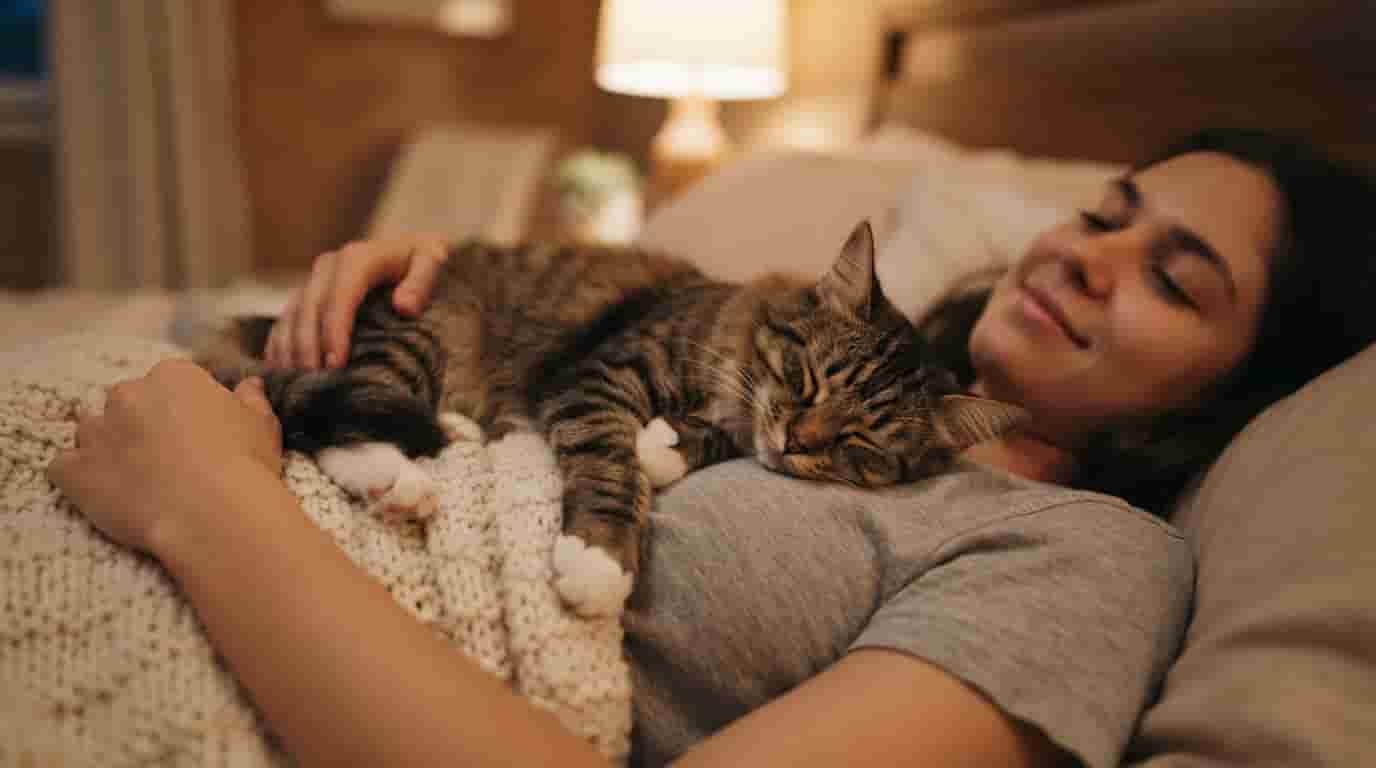
Why does my cat sleep on me? If you share your bed or couch with a feline friend, you have likely asked yourself this question. When your furry companion curls up on your chest, legs, or lap, it is usually a heartwarming sign of trust, warmth, comfort, security, and bonding.
There are several reasons behind this affectionate cat behavior, rooted deeply in feline sleeping habits and instincts. In this guide, you will learn why cats choose specific people, what different sleeping positions mean, when the behavior is completely normal, and when sudden changes could indicate a medical or behavioral problem.
Why Does My Cat Sleep on Me?
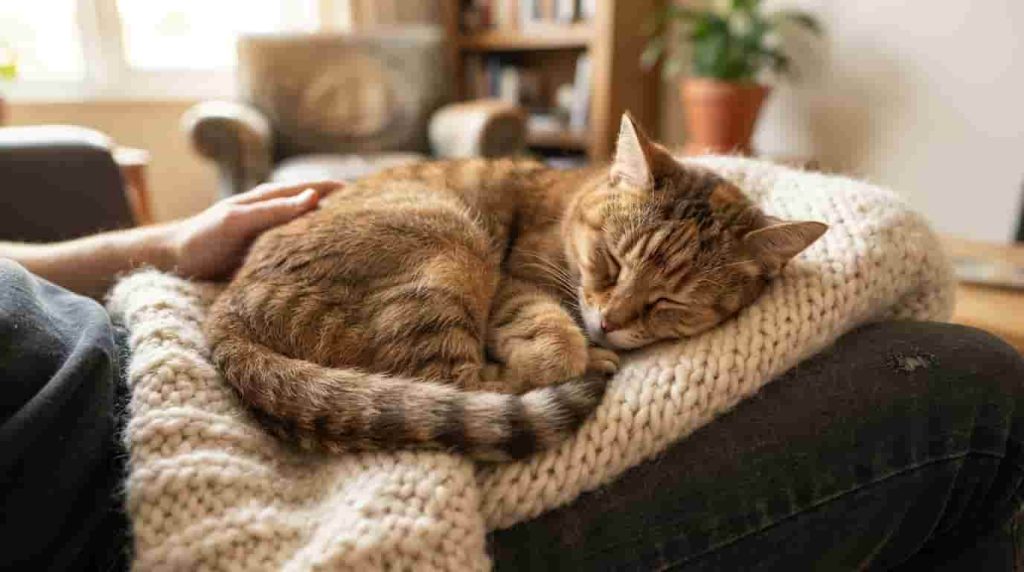
Cats commonly sleep on their owners because they trust them, feel safe, want warmth, enjoy familiar scents, want to strengthen social bonds, and feel completely relaxed.
In the animal kingdom, sleeping is one of the most vulnerable activities for a cat. When they close their eyes, they are defenseless against potential threats. Choosing to sleep on top of you is the ultimate expression of confidence in your protection.
8 Common Reasons Your Cat Sleeps on You

Your Cat Feels Safe Around You
Cats only drift into deep sleep where they feel entirely secure. Sleeping directly on someone demonstrates deep-seated confidence. Wild cat instincts still influence domestic cats, meaning vulnerability requires a trusted environment. For instance, a cat choosing your lap over a secluded cat tree shows they view you as a safe zone.
You’re a Warm and Comfortable Sleeping Spot
Cats naturally seek out warm environments, and human body heat is exceptionally appealing to them. A cat’s normal body temperature is around 101.5°F to 102.5°F, making them continuously hunt for external warmth. Older cats and kittens especially enjoy external heat sources due to regulation needs, aligning closely with natural feline sleeping habits and overall pet sleeping preferences.
They’re Strengthening Your Bond
Social bonding is crucial for domestic cats. When they curl up against you, they participate in scent sharing, affection, and mutual companionship. This physical closeness facilitates feline bonding through sleeping, cementing your relationship as part of their core social group.
Your Scent Helps Them Relax
Familiar smells naturally reduce stress in felines. Your personal scent provides deep reassurance, signaling safety, consistency, and comfort. Cats rely heavily on their sense of smell to navigate their emotional world, and your scent is the ultimate comfort blanket.
They Feel Protected
By sleeping on you, humans provide security. This proximity elevates their confidence and reduces anxiety. If your cat suffers from mild environmental stressors, your steady breathing and heartbeat act as natural sedatives.
They’re Marking You as Part of Their Family
Cats possess specialized scent glands located around their cheeks, paws, and flanks. When they knead, rub against you, or sleep nearby, they leave behind pheromones. This behavior is about marking family and establishing safety rather than dominance. According to insights from International Cat Care (iCatCare)
, scent-swapping is a primary method cats use to define their social community.
They Like Your Routine
Felines thrive on predictability. If you maintain a consistent bedtime and routine, your cat learns to anticipate relaxation time. This shared habit formation creates a comforting anchor in their daily lives.
They’re Simply Comfortable
Sometimes, there is no deeper psychological meaning—your cat simply finds you comfortable! Whether it is soft blankets, ergonomic laps, or supportive shoulders, cats naturally seek out the coziest textures available in their territory.
Why Does My Cat Sleep on Me Every Night?
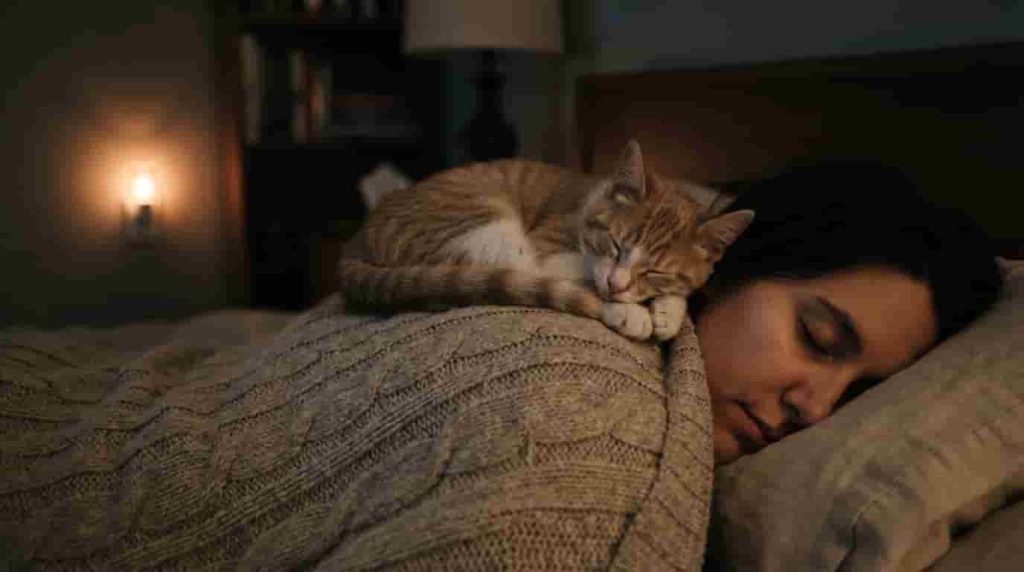
Consistency in cat behavior is usually driven by routine, attachment, and learned habits. If your cat occupies the exact same spot on your body every single night, it means they have successfully integrated you into their sleep architecture. This dependable habit signifies a deeply established bond and a predictable sense of security.
Why Does My Cat Sleep on Me All of a Sudden?
If your cat adopts this behavior overnight, it could stem from several normal adjustments or potential concerns:
- Normal reasons: Colder seasonal weather, a strengthening bond, or household changes (such as a new schedule or rearranged furniture).
- Possible concerns: Underlying illness, anxiety, aging, joint pain, or cognitive dysfunction.
If a sudden change in sleeping habits is accompanied by lethargy, withdrawal, or vocalization, consult authoritative guidance from the American Veterinary Medical Association (AVMA)
or schedule an evaluation with your veterinarian.
Why Does My Cat Sleep on Me but Not My Partner?

Cats can be selective about their sleeping arrangements. Factors influencing this choice include:
- Stronger attachment styles
- Preference for a specific human’s unique scent
- Daily interaction patterns and feeding routines
- Personality and body temperature compatibility
- Individual sleeping habits (e.g., whether someone tosses and turns)
This choice rarely implies favoritism; rather, it reflects subtle environmental and sensory preferences.
What Your Cat’s Sleeping Position Says
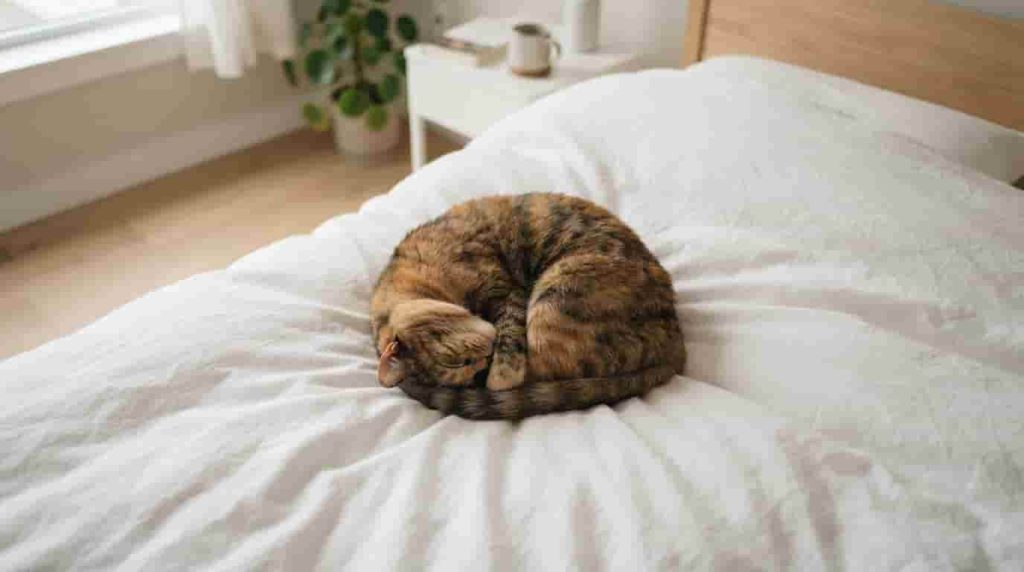
Sleeping on Your Chest
Resting on your chest provides direct access to your heartbeat, rhythmic breathing, and maximum warmth. This position signifies an intense level of trust and affection.
Sleeping on Your Legs
Sleeping on your legs offers stability, warmth, and minimal disturbance if you shift positions during the night. It allows the cat to stay close while retaining an easy exit strategy.
Sleeping on Your Head
Curling up near your head provides access to your hair (which holds your scent strongly) and keeps them away from restless limbs. For a deeper dive into this specific posture, check out our guide on Why Does My Cat Sleep on My Head? Reasons, Meanings and What It Says About Your Bond
.
Sleeping Beside You
Sleeping flush against your side or back demonstrates trust coupled with a degree of physical independence, keeping them comfortable without restricting your movement.
Sleeping Across Your Lap
A lap position signifies deep relaxation, security, and easy access to ongoing petting when they wake up.
Is It Good to Let Your Cat Sleep on You?

Benefits
- Enhances emotional bonding
- Provides mutual stress relief and lowers blood pressure
- Deepens companionship
Possible Drawbacks
- Disrupted human sleep cycles
- Potential allergy triggers
- Hygiene concerns if the cat spends time outdoors
- Accidental movement or startling the cat
If nighttime disruptions affect your well-being, introducing alternative cozy spaces may be necessary.
Do Cats Sleep on Their Favourite Person?
Your cat’s favorite person is not always the individual who fills their food bowl. Trust is built through gentle handling, consistent interaction, respectful boundaries, and predictable routines. Multiple family members can develop strong individual bonds with the same cat, even if the cat selects only one person for nighttime snuggles.
How to Tell If Your Cat Is Imprinted on You
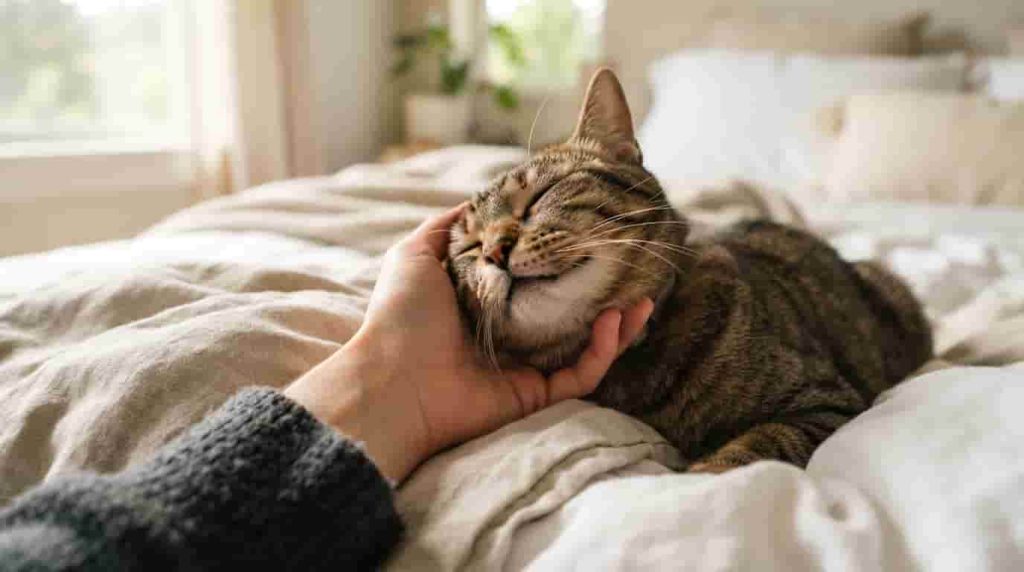
If you wonder whether your cat views you as their primary attachment figure, look for behaviors such as:
- Following you from room to room (learn more in our article on Why Does My Cat Follow Me Everywhere? Reasons, Signs and Meaning)
- Watching you intently across the room or holding steady eye contact (explore the reasons behind this in our guide on Why Does My Cat Stare at Me? Meanings, Reasons and When to Worry)
- Slow blinking to show affection
- Kneading (making biscuits) on your lap
- Loud purring and tail-up greetings
- Mutual grooming and sleeping near or on you
When Sleeping Behavior May Signal a Problem
While sleeping on you is typically healthy, contact a veterinarian if the behavior changes drastically and is accompanied by:
- Lethargy or weakness
- Sudden appetite loss
- Hiding or avoidance
- Signs of pain (e.g., reluctance to jump)
- Breathing difficulty
Guidance from the Cornell Feline Health Center
emphasizes that sudden shifts in routine or clinginess can occasionally be a cat’s way of masking discomfort or illness.
Tips If You Want Better Sleep Without Hurting Your Cat’s Feelings
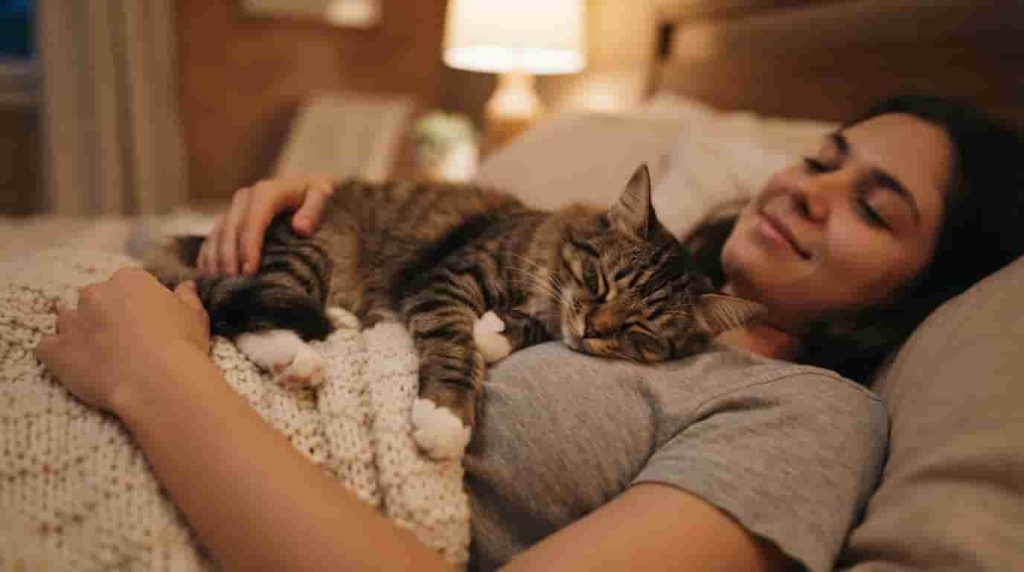
If you love your cat dearly but need uninterrupted sleep, try these gentle strategies:
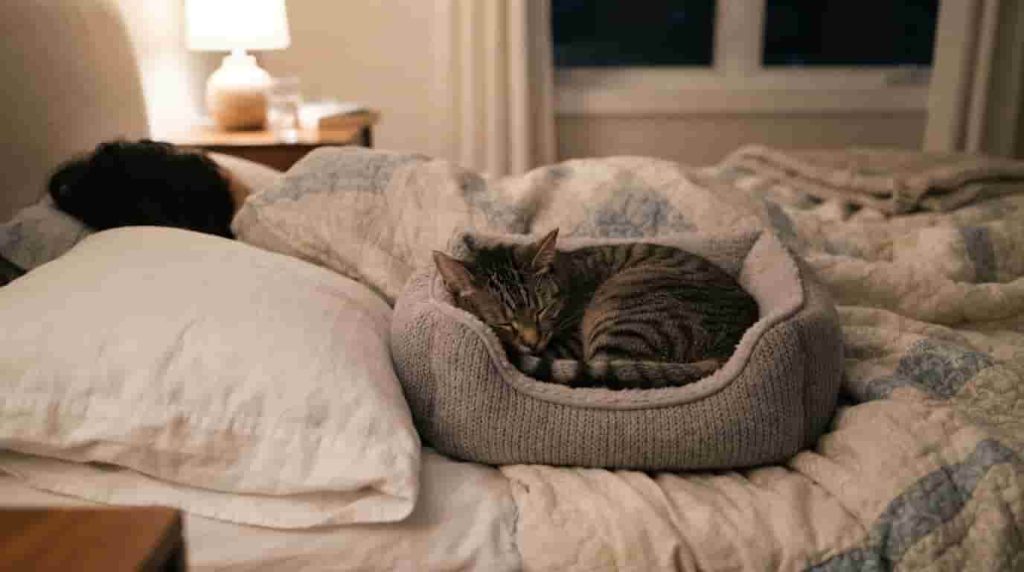
- Create attractive, cozy alternatives nearby, such as a heated cat bed or plush blankets.
- Establish a consistent evening playtime and feeding routine to tire them out before bed.
- Use gradual training and positive reinforcement (rewards when they use their own bed).
- Avoid punishment, which only creates anxiety and damages your bond.
Common Myths About Cats Sleeping on People
Myth: Cats sleep on people to dominate them.
Fact: Cats do not operate out of a desire for dominance; sleeping on you is entirely about comfort, safety, and affection.
Myth: Cats only sleep on the person who feeds them.
Fact: Feline bonding involves scent preferences, calm energy, trust, and gentle interaction far beyond mealtime.
Myth: Sleeping on you always means separation anxiety.
Fact: While clinginess can sometimes indicate stress, the vast majority of cats sleep on their owners simply because they feel safe and loved.
Conclusion
When your furry companion curls up on your body, it is a testament to the trust, warmth, security, affection, and routine you share. Understanding these behaviors allows you to appreciate your cat’s unique instincts while fostering a deeper connection.
Does your cat have a favorite sleeping spot? Share your experience in the comments below!
Frequently Asked Questions
When a cat remains settled on you for an extended period, they have reached a state of deep, restorative sleep enabled by your stable body heat, reliable heartbeat, and secure environment.
Morning snuggling is often driven by a combination of seeking leftover warmth, anticipating your waking routine, and prompting you for breakfast or morning attention.
Your sleeping body provides a completely stable, predator-free zone where your cat feels safe from environmental disturbances while enjoying your comforting scent.
Most sleeping attachments are healthy expressions of affection. However, if a cat shows extreme distress, vocalization, or destructive behavior when separated at night, it may point toward underlying separation anxiety worth addressing with a vet or behaviorist.
If the arrangement works for both of you, there is no need to change it. If it causes sleep deprivation or physical discomfort, you can gently transition them to a nearby bed without breaking your bond.