Why Does My Cat Stare at Me? Meanings, Reasons and When to Worry
Introduction
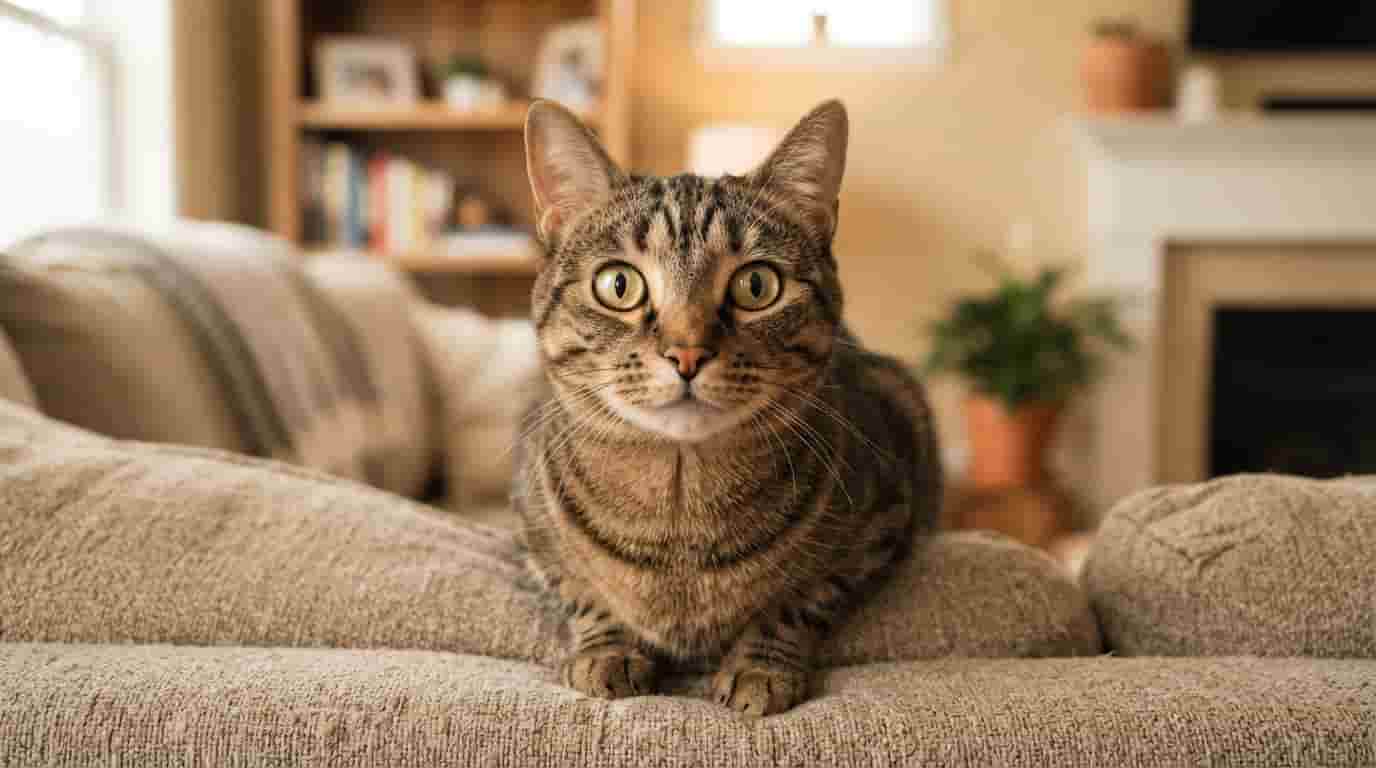
Why does my cat stare at me? It is one of the most common questions pet parents ask when locking eyes with their feline companion. Whether you are working at your desk, relaxing on the couch, or waking up in the morning, finding your cat silently gazing at you can feel flattering, amusing, or downright eerie.
Cats stare for many normal reasons. It can be a way to communicate, observe your movements, ask for something, or express deep affection. However, in certain contexts, prolonged or rigid staring can signal stress, anxiety, or underlying illness. Understanding feline body language and environmental context helps you recognize when this cat behavior is completely harmless and when it deserves closer attention.
Why Does My Cat Stare at Me?
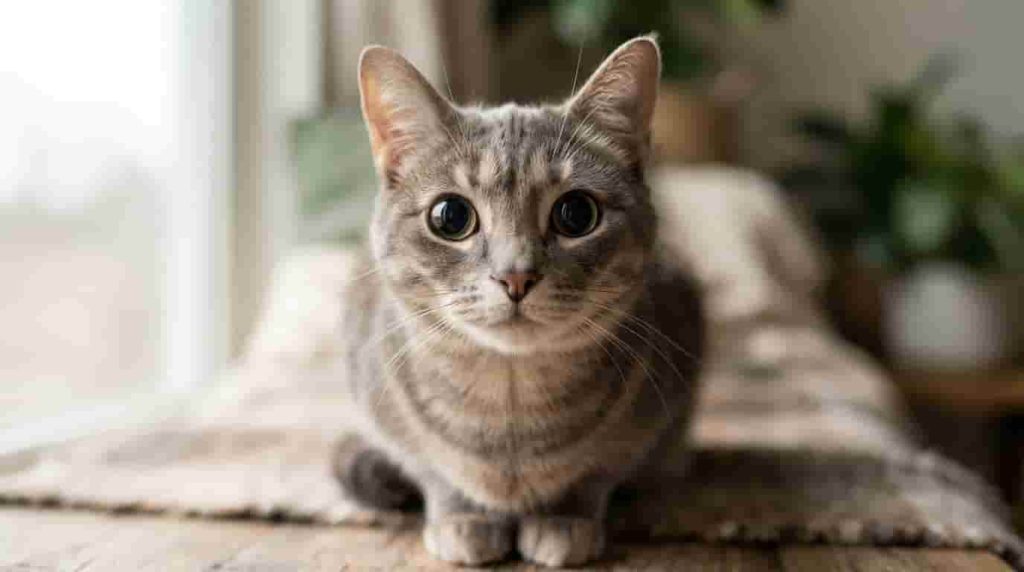
At its core, a cat staring at you is a form of active engagement. Unlike humans, who rely heavily on spoken language, cats communicate predominantly through subtle visual signals, body posture, and scent cues. When your cat fixates their gaze on you, they are rarely doing so for no reason.
Generally, cats stare because they are:
- Communicating a desire, preference, or emotional state
- Watching movement to track what is happening in their environment
- Expecting something routine, such as a scheduled meal or playtime
- Expressing affection and feelings of safety around you
- Curious about human actions and habits
- Feeling uncertain or assessing potential changes in their surroundings
- Reacting to their environment, including subtle sights or sounds you might miss
In natural feline communication, direct eye contact can be interpreted as an assertion of dominance or a potential threat. However, domesticated cats have learned to adapt their visual communication specifically for humans, using eye contact as a primary tool to get our attention and navigate their relationship with us.
10 Common Reasons Your Cat Stares at You
1. Your Cat Wants Your Attention
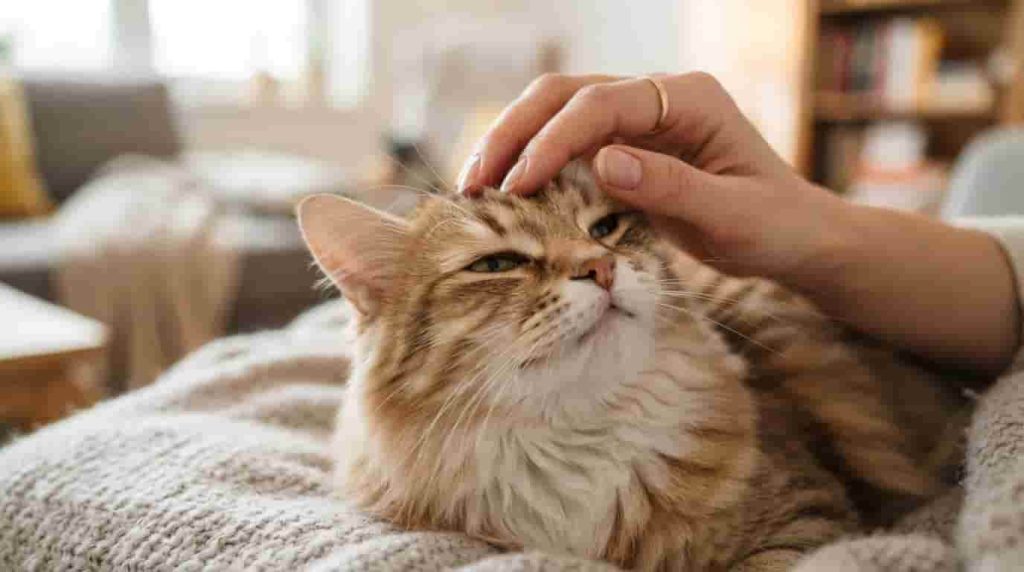
Cats quickly learn that staring at their humans gets results. If your cat sits quietly in front of you and locks eyes without blinking, they may simply be asking for interaction. Whether they want gentle chin scratches, a play session with a feather wand, or simple recognition, your cat knows that an unblinking gaze will eventually cause you to look back and interact with them.
2. They’re Waiting for Food
One of the most frequent reasons behind an intense feline gaze is meal anticipation. Cats are creatures of strict habit with remarkably accurate internal clocks. If it is close to feeding time—or if you walk anywhere near the kitchen—your cat may stare at you intently to remind you of your responsibilities.
3. They’re Curious About What You’re Doing
Cats are naturally inquisitive animals. Curious cat behavior often manifests as silent observation. If you are typing on a keyboard, folding laundry, or cooking, your cat may stare at you simply to learn and absorb what you are doing. Following your movements gives them mental stimulation and keeps them engaged with their environment.
4. They’re Showing Affection
Not all stares are demands. A soft, relaxed gaze accompanied by slow blinking is one of the clearest signs of feline love and trust. Often called a “cat kiss,” a slow blink demonstrates that your cat feels safe enough around you to let down their guard.
5. They’re Reading Your Body Language
Cats are master observers when it comes to understanding cat communication and interpreting human cues. They closely monitor your facial expressions, tone of voice, posture, and movement to predict what will happen next. By staring at you, your cat is gauging your mood and trying to anticipate your next move—such as standing up to grab a treat or preparing for bedtime.
6. They Want Something
Beyond food and attention, staring often precedes vocalization when a cat wants a specific need fulfilled. Your cat might stare at you because:
- Their water bowl needs fresh water
- A favorite toy is trapped under the couch
- A door is closed, restricting access to a room
- The litter box requires cleaning
7. They’re Protecting Their Territory
Cats possess strong territorial instincts and maintain constant environmental awareness. Staring can be a way for your cat to monitor their territory and supervise everyone inside it. This behavior is usually not aggressive; rather, it reflects an innate desire to stay informed about everything occurring within their home domain.
8. They’re Hunting or Focused
When a cat enters “hunt mode,” their eyes widen, their pupils dilate, and their gaze becomes locked onto a target. If your cat is staring intently at your moving fingers, your feet under a blanket, or an insect buzzing nearby, they are relying on their predatory instincts. This intense concentration reflects focused tracking behavior.
9. They’re Feeling Anxious or Uncertain
If something in the environment makes your cat feel uneasy, they may stare intently while evaluating the situation. Unfamiliar visitors, sudden loud sounds, or household changes can trigger an anxious gaze. Accompanied by flattened ears, a tense posture, or a low-swishing tail, this type of stare indicates that your cat is feeling insecure or on high alert.
10. Medical or Vision Problems
Sometimes, unusual or fixed staring can stem from underlying medical issues. Age-related cognitive changes, vision impairment, systemic pain, or neurological problems can cause a cat to stare blankly into space or directly at their owner. If your cat’s staring appears sudden, vacant, or uncharacteristic, a veterinary evaluation is recommended.
Why Does My Cat Stare at Me When I Pet Them?
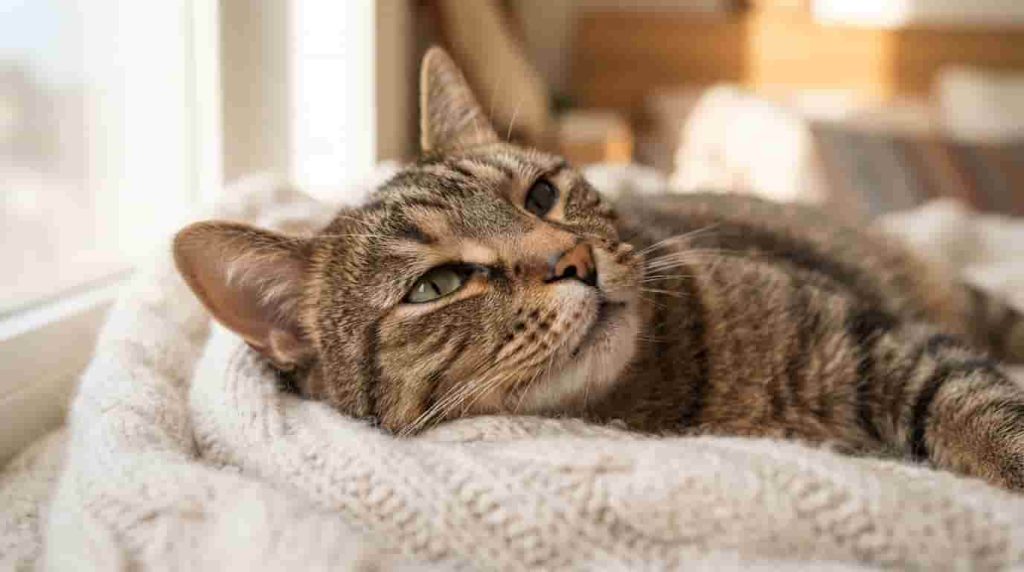
When your cat stares at you during a petting session, they are giving you direct feedback about the interaction. There are a few different possibilities:
- Enjoying Affection: They are relaxed, content, and maintaining connection while you stroke their fur.
- Anticipating More Petting: They are watching your hands to see where you will pet them next.
- Overstimulation: Cats have sensitive skin. If petting continues too long, they can experience overstimulation.
To determine how your cat feels, check their overall cat body language. If their ears are turned forward, their eyes are soft, and their body is loose, they are enjoying the affection. However, if their eyes are wide, their ears are flattened sideways, or their tail begins to twitch, the stare is a sign to stop petting and give them space.
Why Does My Cat Stare at Me Without Blinking?
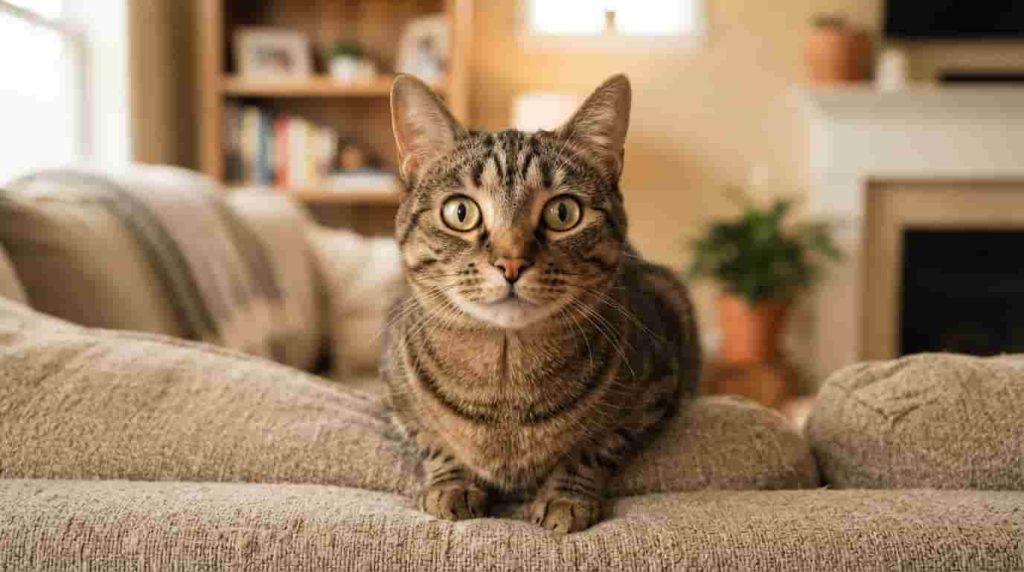
Unlike humans, who blink frequently to lubricate their eyes, cats can keep their eyes open much longer without discomfort. When a cat stares without blinking, it typically signifies:
- Focused Attention: They are intensely interested in something you are doing or holding.
- Predatory Focus: Their hunting drive is activated, keeping their visual focus entirely unbroken.
- Vigilance or Stress: A tense, unblinking glare paired with a rigid spine suggests discomfort or defensiveness.
Differentiating between a relaxed posture (content focus) and a tense posture (stress or anxiety) is key to understanding whether this prolonged gaze is friendly or cautious.
Why Does My Cat Stare at Me and Purr?
Combining an attentive stare with purring is almost always a sign of deep comfort, affection, and security. It shows that your cat feels safe in your presence and enjoys being near you.
However, it is worth noting that cats occasionally purr to self-sooth when experiencing physical discomfort or anxiety. Always assess their overall posture—if the body is loose and relaxed, the purring and staring indicate pure happiness.
Why Does My Cat Stare at Me and Meow?
When a cat pairs eye contact with vocalization, they are actively engaging you in direct conversation. Staring establishes the connection, while the meow delivers the message. Common requests include:
- Demanding food or treats
- Greeting you when you enter a room
- Asking for door access or play
- Signaling distress or asking for help
Cats rarely meow at other adult cats; vocalization is a behavior developed primarily to communicate with humans. Combining vocal cues with eye contact ensures their request is heard.
Why Does My Cat Stare at Me While I Eat?
If your cat locks eyes with you during mealtime, they are exhibiting learned behavior mixed with natural curiosity. They may be hoping for a treat or simply curious about the scents coming from your plate.
To avoid encouraging unwanted begging habits, refrain from feeding your cat table scraps directly from your plate. Consistent boundaries help reduce persistent mealtime staring.
Why Does My Cat Stare at Me While Kneading or Making Biscuits?
Kneading—often called “making biscuits”—is a rhythmic behavior rooted in kittenhood, when nursing kittens push against their mother’s belly to stimulate milk flow.
When an adult cat kneads your lap or a soft blanket while staring at you, it indicates immense relaxation, trust, and contentment. It is one of the highest compliments a cat can give, showing they view you as a source of comfort and warmth.
Why Does My Cat Stare at Me While I Sleep?
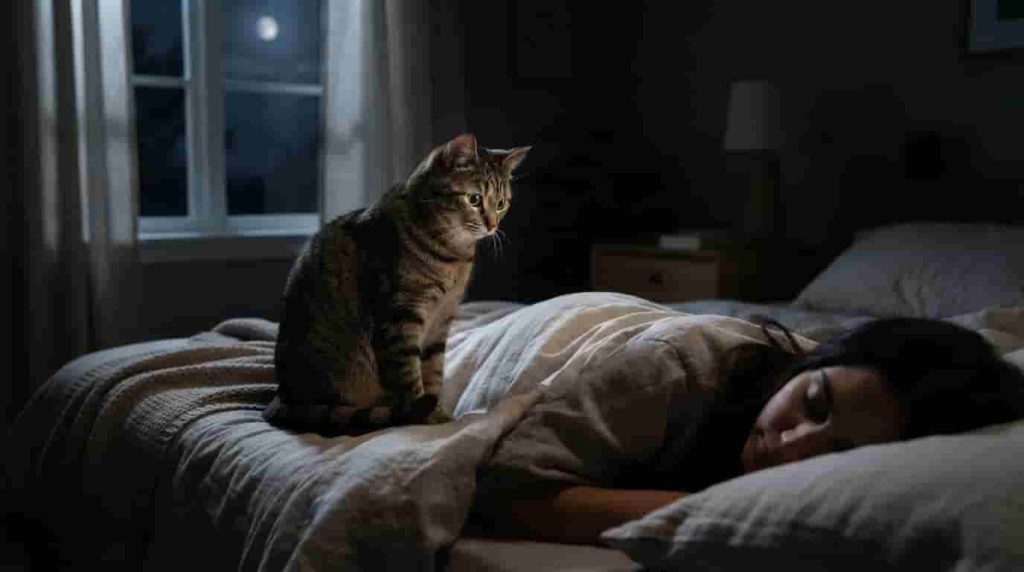
Waking up to find your cat silently staring down at you can be a funny—and slightly startling—experience. Cats are crepuscular, meaning they are naturally most active during dawn and dusk. Reasons for nighttime staring include:
- Routine: They know morning approaches and are waiting for you to wake up and feed them.
- Curiosity: They are watching your breathing patterns or minor shifts in your sleep.
- Security: Cats feel safe near their favorite humans when resting.
If your cat also likes to snooze right on top of you, you can learn more about this behavior in our detailed guide on Why Does My Cat Sleep on Me? Reasons, Meanings and What It Says About Your Bond
. Additionally, if they tend to settle near your face, read about Why Does My Cat Sleep on My Head? Reasons, Meanings and What It Says About Your Bond
to decode their nighttime habits.
What Different Types of Cat Stares Mean
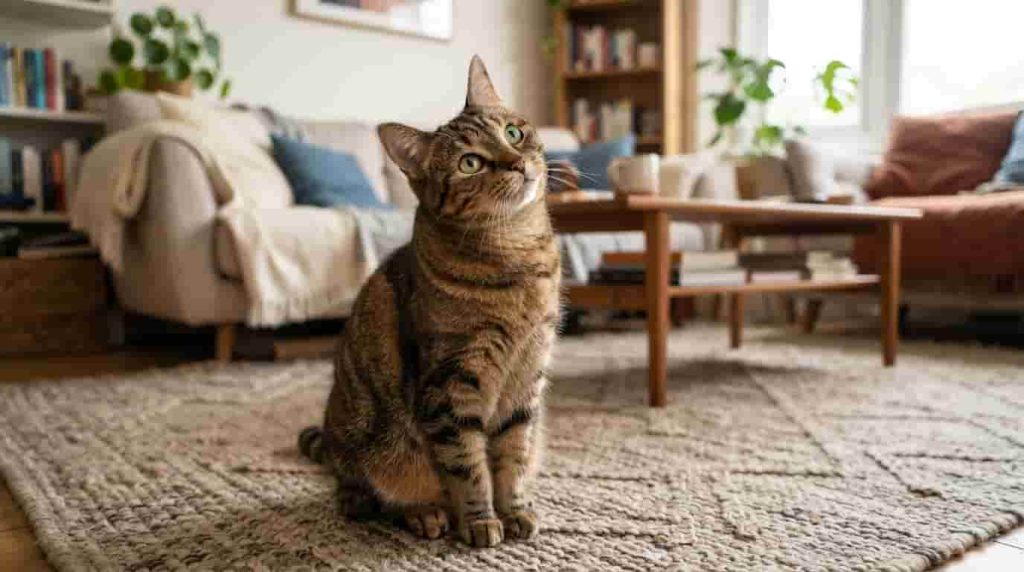
Decoding cat staring meanings requires paying close attention to eye shape and pupil size.
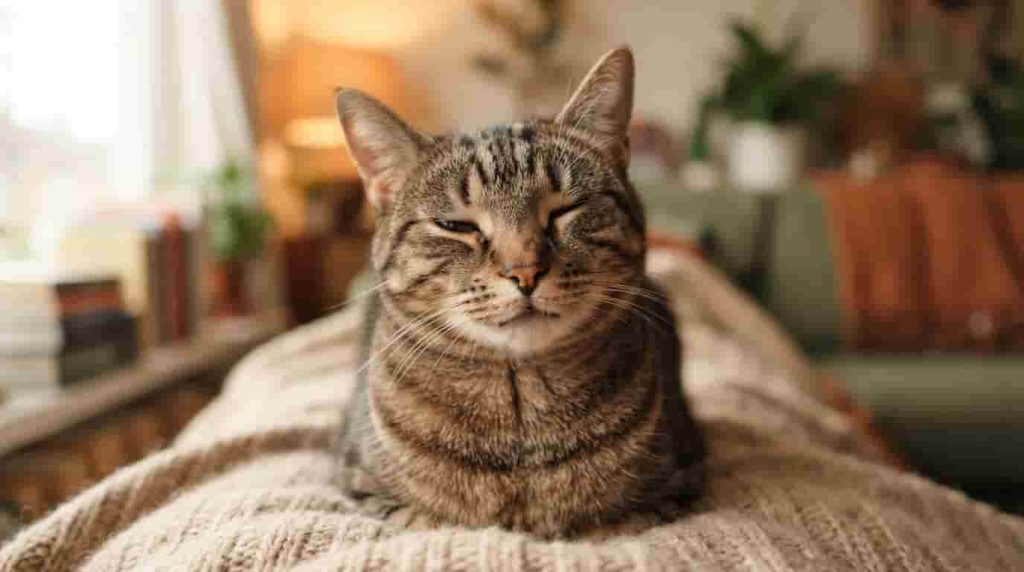
Soft Relaxed Eyes
- Appearance: Eyes are partially open or gently blinking; pupils are normal size.
- Meaning: Signals trust, comfort, and emotional contentment.
Wide Eyes
- Appearance: Eyes are fully open; pupils may be enlarged.
- Meaning: Indicates excitement, surprise, or curiosity. If accompanied by tense body posture, it can signal fear.
Narrow Eyes
- Appearance: Eyes are squinted or half-closed.
- Meaning: Demonstrates calm affection, confidence, or drowsiness.
Intense Unbroken Stare
- Appearance: Rigid posture, unblinking gaze, dilated pupils, stiff tail.
- Meaning: Can serve as a warning sign of stress, fear, aggression, or physical pain.
Should You Stare Back at Your Cat?
In the feline world, prolonged unbroken eye contact between unfamiliar individuals is considered a threat or a challenge. If you stare back intensely at a stressed or unfamiliar cat, they may interpret it as confrontation.
Instead of engaging in a staring contest:
- Offer a slow blink to show friendliness and lower tension.
- Break eye contact naturally by looking away smoothly.
- Allow the cat to decide when to end the visual interaction.
How Can You Tell If Your Cat Loves You?
Staring is just one of many ways cats express affection. If you want to confirm whether your feline friend considers you their favorite human, look for these common affection cues:
- Giving you frequent slow blinks
- Purring and kneading on your lap
- Head-bunting (bunting) against your hands or face
- Resting nearby or sleeping in your bed
- Rubbing their cheeks against your legs
- Bringing you favorite toys as gifts
If your pet also insists on remaining by your side throughout the day, explore our article on Why Does My Cat Follow Me Everywhere? Reasons, Signs and Meaning
to understand their loyal attachment.
Can Cats Sense a Good Person?
There is no scientific evidence proving that cats judge human moral character. However, cats are exceptionally sensitive to behavioral cues. Rather than judging morality, cats respond directly to:
- Calm, predictable energy
- Quiet voices and soft movements
- Respect for their physical boundaries
- Positive reinforcement and gentle handling
A cat may favor someone who ignores them initially over someone who enthusiastically tries to pick them up, simply because non-intrusive behavior feels safer in feline psychology.
When Should You Worry About a Cat That Stares?
While most staring is normal, sudden changes in eye contact or gaze patterns warrant attention. You should consult a veterinarian if prolonged staring is accompanied by any of the following warning signs:
- Fixed, permanently dilated pupils
- Bumping into furniture or signs of vision loss
- Disorientation, vocalizing loudly at night, or confusion
- Loss of balance, head tilting, or seizures
- Sudden shifts in personality, extreme hiding, or lethargy
- Loss of appetite or sudden weight changes
For expert veterinary guidance on feline neurological and vision changes, refer to medical resources provided by the Cornell Feline Health Center
.
How to Respond When Your Cat Stares at You
When you notice your cat gazing at you, follow these practical steps:
- Check Body Language: Look at their ears, tail, and posture to gauge their emotional state.
- Review Needs: Ensure their food, water, and litter box are clean and accessible.
- Offer Interaction: Respond with a gentle slow blink or extend your hand for a chin scratch.
- Provide Enrichment: If they seem bored, engage them with interactive toys.
- Avoid Punishment: Never scold or startle a cat for staring, as this creates anxiety.
- Maintain Routines: Keep feeding and play schedules consistent to minimize stress.
Common Myths About Cats Staring
| Myth | Fact |
| Cats stare because they are plotting against you. | Staring reflects curiosity, communication, or bonding—not negative intentions. |
| Every stare means your cat is hungry. | Cats stare for many reasons, including play, affection, and simple observation. |
| Direct eye contact always means aggression. | Context matters; eye contact combined with a relaxed body shows love and trust. |
Conclusion
Understanding why does my cat stare at me comes down to observing context and overall feline body language. Staring is a fundamental element of feline visual communication, whether your cat is asking for a meal, monitoring their environment, or sending you a loving slow blink.
By paying attention to subtle physical cues, you can better understand your cat’s needs and strengthen your bond. Remember that sudden, uncharacteristic shifts in staring behavior or eye appearance should always be evaluated by a veterinarian.
Does your cat have a unique staring habit? Share your experience in the comments below!
Frequently Asked Questions
Staring from a distance allows your cat to monitor household activities while keeping a comfortable space. It is a classic example of curious cat behavior combined with territorial observation.
Cats do not need to blink as frequently as humans do. A long stare usually means they are deeply focused on reading your body language, waiting for a routine event like dinner, or feeling cozy in your presence.
Wide eyes with enlarged pupils can mean your cat is excited, surprised, or focused on play. However, if paired with flattened ears and a crouched posture, big eyes indicate fear or anxiety.
In unfamiliar or tense situations, unbroken eye contact can be a sign of dominance or discomfort. However, if your cat is relaxed and slow-blinking, holding eye contact is a sign of affection and trust.
If your cat stares at toys rather than playing, they may be assessing the movement, waiting for you to move the toy differently, or feeling tired. Staring is often the first phase of a cat’s natural hunting sequence before they pounce.