Why Does My Cat Sleep on My Head? Reasons, Meanings and What It Says About Your Bond
Introduction
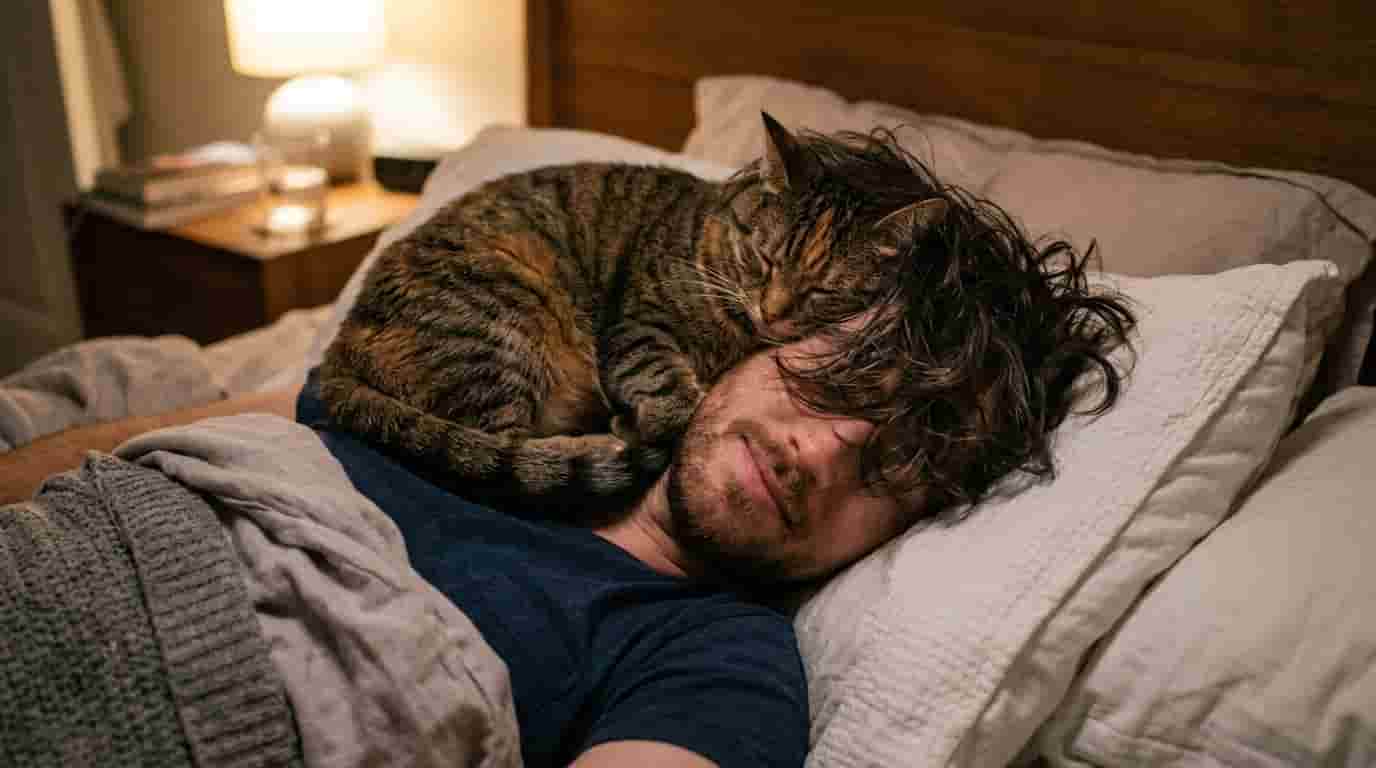
Why Does My Cat Sleep on My Head? If you have ever woken up with a furry feline draped directly across your pillow, you are definitely not alone. This common and quirky habit is usually completely normal and often linked to warmth, comfort, scent, trust, and routine. Although it is often a sweet sign of affection, there are situations where owners may want to discourage it due to sleep disruption or hygiene preferences. In this article, we will explore the science and psychology behind cat behavior, examine feline sleeping habits, look at how this impacts cat bonding, and help you decide whether you need to adjust your nightly routine.
Why Does My Cat Sleep on My Head?
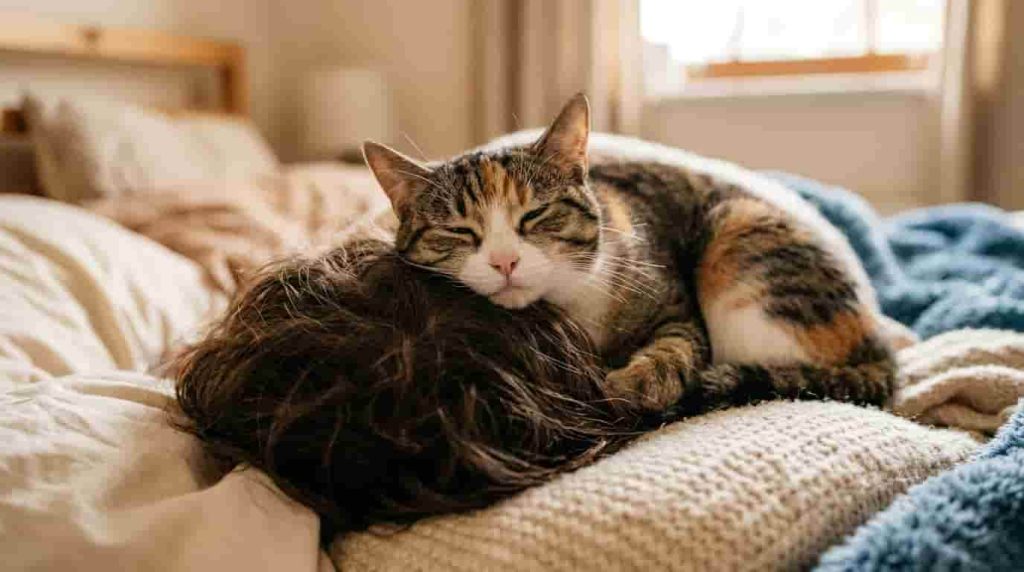
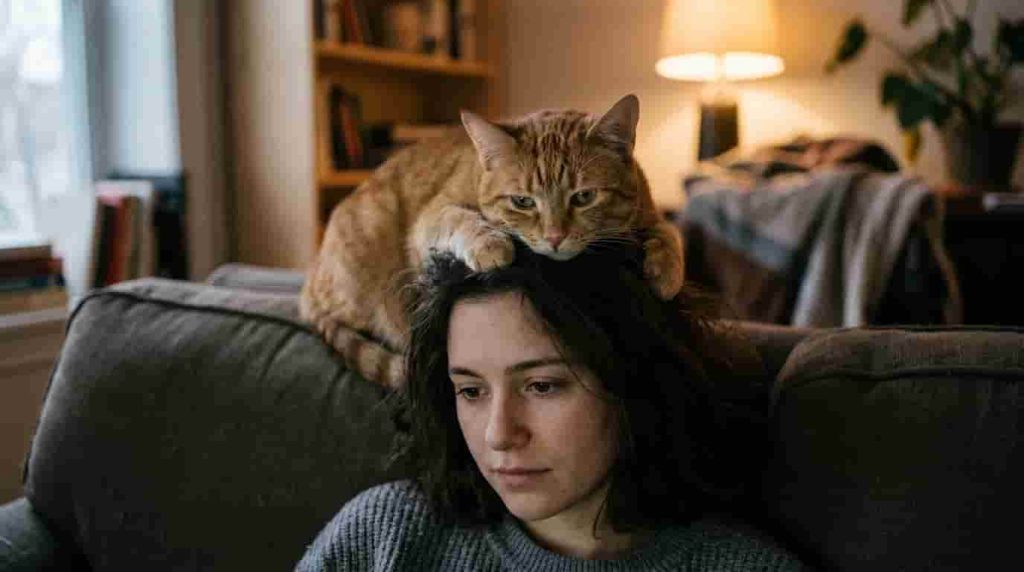
Cats sleep on your head for a combination of practical and emotional reasons. Primarily, cats seek warmth, and your head gives off a significant amount of body heat compared to the rest of your covered body. Additionally, your skin carries a familiar scent that provides comfort and security. Because cats are naturally inclined to choose elevated sleeping positions for safety, your pillow acts as the ultimate lookout post. Many cats also develop specific bedtime routines, incorporating this cozy habit into their nightly wind-down process. Often, several of these motivations occur together, blending feline companionship and natural sleeping patterns into a cozy nightly ritual.
What Does It Mean When a Cat Sleeps on Your Head?
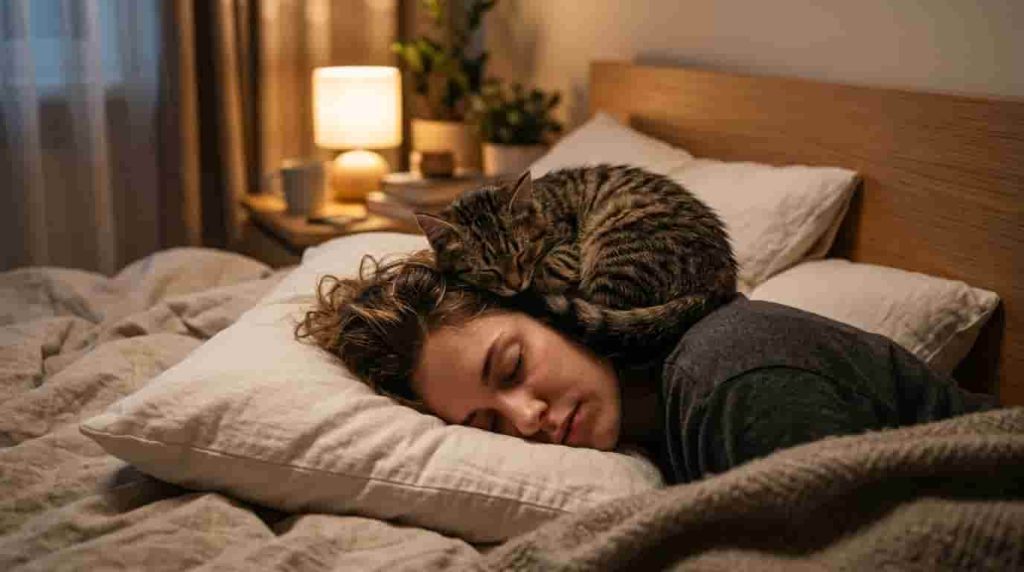
Your Cat Feels Safe Around You
When a cat chooses to sleep on your head, it is a massive vote of confidence. In the wild, cats are most vulnerable when sleeping. Choosing your head—the most sensitive part of your body—shows deep trust, relaxation, and a feeling of being protected by you.
Your Cat Enjoys Your Scent
Your face and hair hold a concentration of your personal pheromones. Cats rely heavily on scent to navigate their world and feel secure. By resting against your head, they reinforce their bond with you using the scent glands located around their own face and chin.
Warmth Is a Major Attraction
Heat rises, and human bodies lose a substantial amount of heat through the head. Pillows trap this ambient warmth, and human hair acts like a natural blanket. For a creature that loves ambient warmth, your head is essentially a luxury heated mattress.
Your Cat Likes Elevated Sleeping Spots
Instinctively, cats prefer high vantage points. Elevated sleeping spots give them a better field of vision and a sense of control over their environment, keeping them out of the reach of perceived ground-level disturbances.
Why Does My Cat Sleep on My Head and Purr?
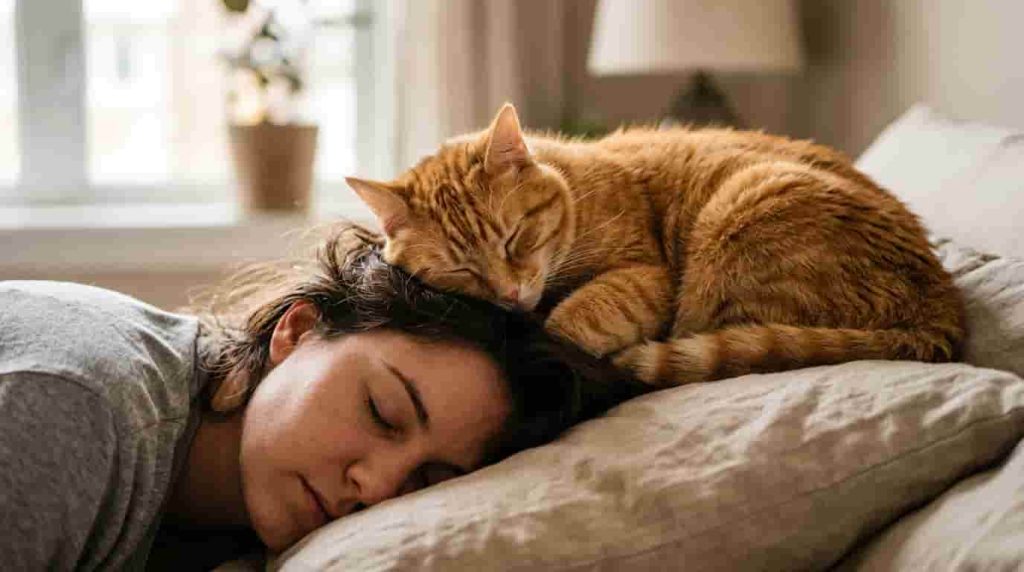
When a cat sleeps on your head and purrs at the same time, it is usually a sign of supreme happiness, deep relaxation, and contentment. Purring releases endorphins that soothe the cat, and doing so while pressed against your head shows that your presence brings them ultimate peace. While purring can occasionally indicate stress or pain, combining it with sleep positions of high vulnerability strongly points to pure satisfaction.
Why Does My Cat Sleep on My Head While Sleeping?
Bedtime routines are deeply comforting to felines. Cats have exceptional internal clocks and remember routines exceptionally well. They often wait patiently until you settle in and fall asleep before moving up to your pillow. Nighttime is when your house is quietest, which is when they feel safest to claim their favorite spot.
Why Does My Cat Sleep on My Head and Neck?
Resting on your head, neck, or upper chest allows cats to share your body heat while staying close to the rhythmic sound of your breathing and heartbeat. This proximity mimics the comfort they felt with their mother and littermates as kittens, enhancing their sense of security. Soft pillows also make the neck and shoulder area physically comfortable to curve against.
Why Does My Cat Sleep on My Head and Face?
Having a cat drape across your face usually comes down to a mix of your strong personal scent, warm breath, affection, and ingrained habit. While comforting for the cat, it can block your airways or tickle your nose. If this becomes disruptive, you can gently redirect the behavior without pushing the cat aggressively, maintaining good hygiene and a peaceful environment.
Why Does My Kitten Sleep on My Head at Night?
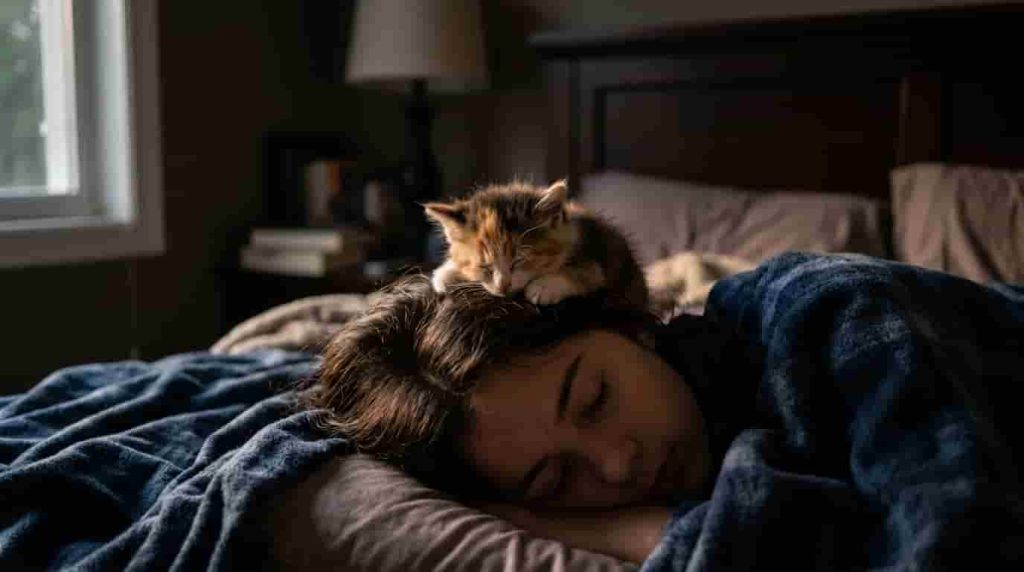
Kittens have a harder time regulating their body temperature than adult cats and are hardwired to seek maximum security after being separated from their littermates. Sleeping on your head provides warmth, comfort, and safety. Reassuringly, many kittens gradually change their sleeping habits as they mature and grow more independent.
Why Does My Cat Sometimes Sleep on My Head?
Inconsistent behavior in cats is entirely normal. If your cat only occasionally sleeps on your head, it might be due to seasonal weather changes (seeking more warmth in winter), daily mood variations, household stress, or shifting preferences. Changing sleeping spots from night to night is simply part of normal feline adaptability.
Does Sleeping on Your Head Mean Your Cat Has Chosen You?
While sleeping on your head is a strong indicator of affection, it isn’t the only sign that a cat has chosen you as their favorite human. Other signs of feline bonding
include:
- Sleeping nearby during the day
- Following you from room to room
- Slow blinking at you
- Grooming you
- Greeting you at the door with a raised tail
- Purring whenever you are near
Clarification: Sleeping on your head alone isn’t foolproof proof you’re the absolute favorite, as some cats rotate sleeping partners based entirely on who has the warmer room or softer pillow.
Do Cats Sleep With Their Favorite Person?
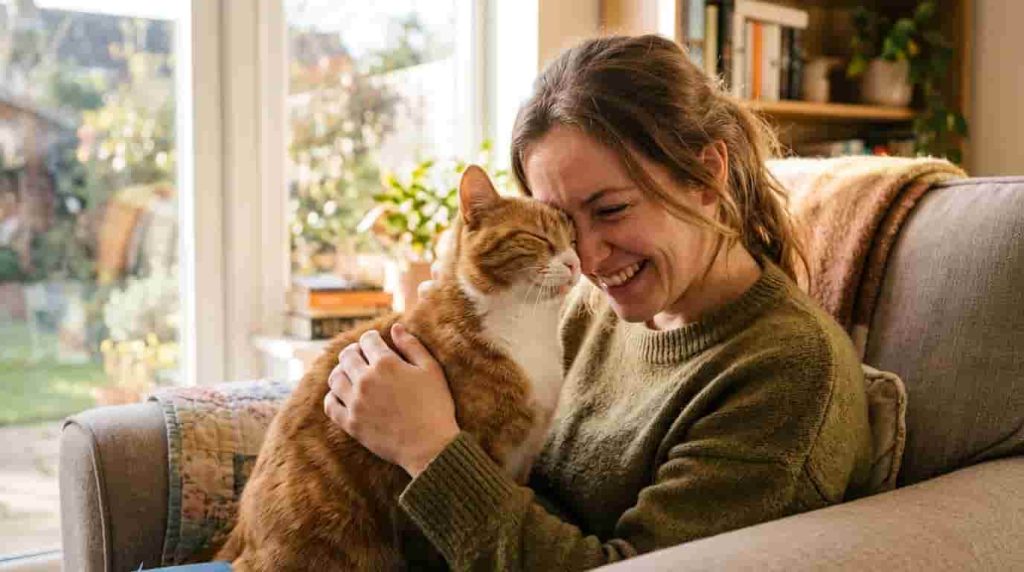
Cats frequently choose to sleep with their preferred human because of trust, warmth, predictable routines, and a deep sense of safety. However, because cats are opportunistic sleepers, some will rotate sleeping partners depending on comfort levels, room temperature, and household activity.
Is It Bad to Let Your Cat Sleep on Your Head?
Benefits
- Strengthens the human-animal bond
- Provides deep comfort and emotional security
- Enhances feelings of companionship
Drawbacks
- Interrupted sleep cycles for light sleepers
- Potential trigger for allergies due to dander and dust
- Accumulation of facial oils, hair, and dander on skin
- Risk of accidental facial scratches during sudden startles
Note: Individuals with weakened immune systems, severe asthma, or chronic allergies may prefer to establish alternative sleeping arrangements.
How to Gently Stop Your Cat From Sleeping on Your Head
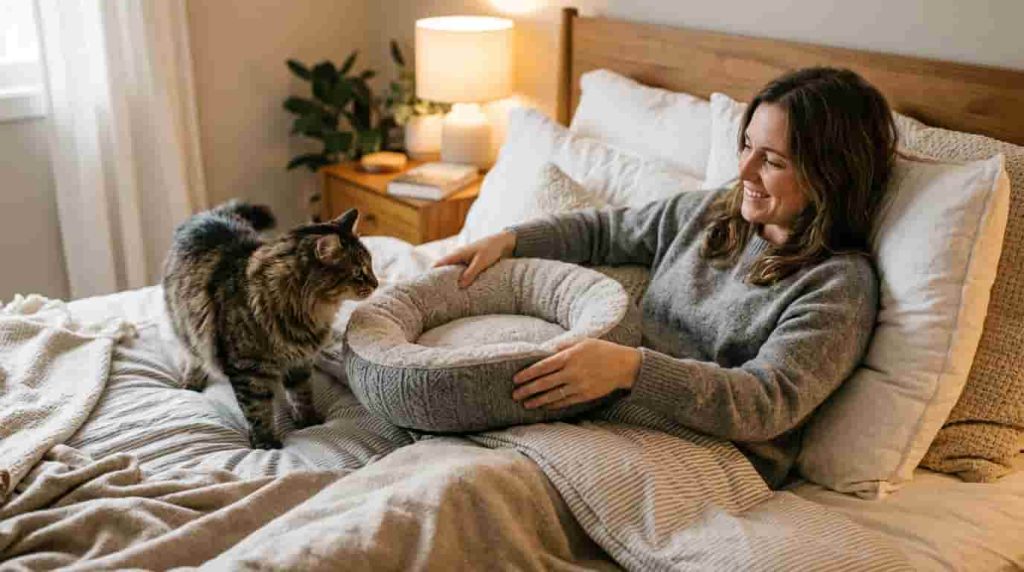
If your cat’s nighttime pillow-hogging is ruining your sleep, you can redirect them with patience and consistency:
- Offer an appealing alternative: Place a warm, comfortable cat bed or a heated pet pad right next to your pillow.
- Use positive reinforcement: Reward your cat with treats and praise when they choose their designated bed instead of your head.
- Stay consistent: Gently move them to their bed every single time they climb onto your head without scolding them.
- Avoid punishment: Never yell or spray water, as this damages trust and causes anxiety.
- Establish a bedtime routine: Feed your cat right before your own bedtime to encourage a post-meal grooming and sleeping cycle.
Example: If your cat hops onto your pillow at 2:00 AM, calmly lift them, place them into their cozy nearby heated bed, and drop a small treat inside to build a positive association with the new spot.
When Sleeping on Your Head May Signal a Problem
While usually harmless, sudden changes in behavior—such as extreme clinginess, anxiety, or excessive vocalization accompanying head-sleeping—can sometimes point to underlying health issues, stress, or pain. According to guidance from VCA Animal Hospitals, if unusual symptoms accompany these behavior shifts, it is always wise to schedule a veterinary evaluation.
Understanding the Bigger Picture of Cat Sleeping Habits
Normal feline sleeping habits involve sleeping anywhere from 12 to 16 hours a day. Analyzing your cat’s sleeping positions reveals a lot about their comfort level and trust in their environment. Every cat develops unique routines that reflect their personality, instincts, and relationship with their household.
Related Cat Behaviors Worth Understanding
To deepen your understanding of your pet, be sure to explore our other detailed guides:
- Read our guide on Why Does My Cat Sleep on Me? Reasons, Meanings and What It Says About Your Bond.
- Explore Why Does My Cat Stare at Me? Meanings, Reasons and When to Worry.
- Discover the motivation behind Why Does My Cat Follow Me Everywhere? Reasons, Signs and Meaning.
These distinct behaviors frequently complement head-sleeping and provide a complete picture of your cat’s emotional state.
Conclusion
Ultimately, Why Does My Cat Sleep on My Head comes down to a blend of warmth, trust, scent, comfort, and routine. For the vast majority of pet owners, this behavior is completely normal, endearing, and a testament to a healthy relationship.
Does your cat sleep on your head every night or only occasionally? Share your experience in the comments below!
Frequently Asked Questions
Kneading is a comforting, instinctive behavior left over from kittenhood that stimulates milk flow during nursing. When an adult cat kneads your pillow or hair, it means they feel completely safe, relaxed, and ready to sleep.
Cats naturally seek out external heat sources when ambient room temperatures drop. Because your head radiates body heat and pillows trap warmth, your pillow becomes an ideal thermal refuge during colder months.
Stopping them is a personal preference depending on your sleep quality and allergy levels. If their fur triggers breakouts or allergies, or if they disrupt your rest, gently redirecting them to a nearby cat bed is completely fine.
Cats often alternate sleeping locations based on room temperature, how much you move around, or which spot feels cozier at that moment. Your feet offer warmth and a quick escape route, while your head offers scent and security.
Yes, cats thrive on predictable routines and comfort. If your cat successfully claims your head as their nightly sleeping spot for weeks, it will likely become a long-term habit unless you actively redirect them.